Family Law For Dummies
Description
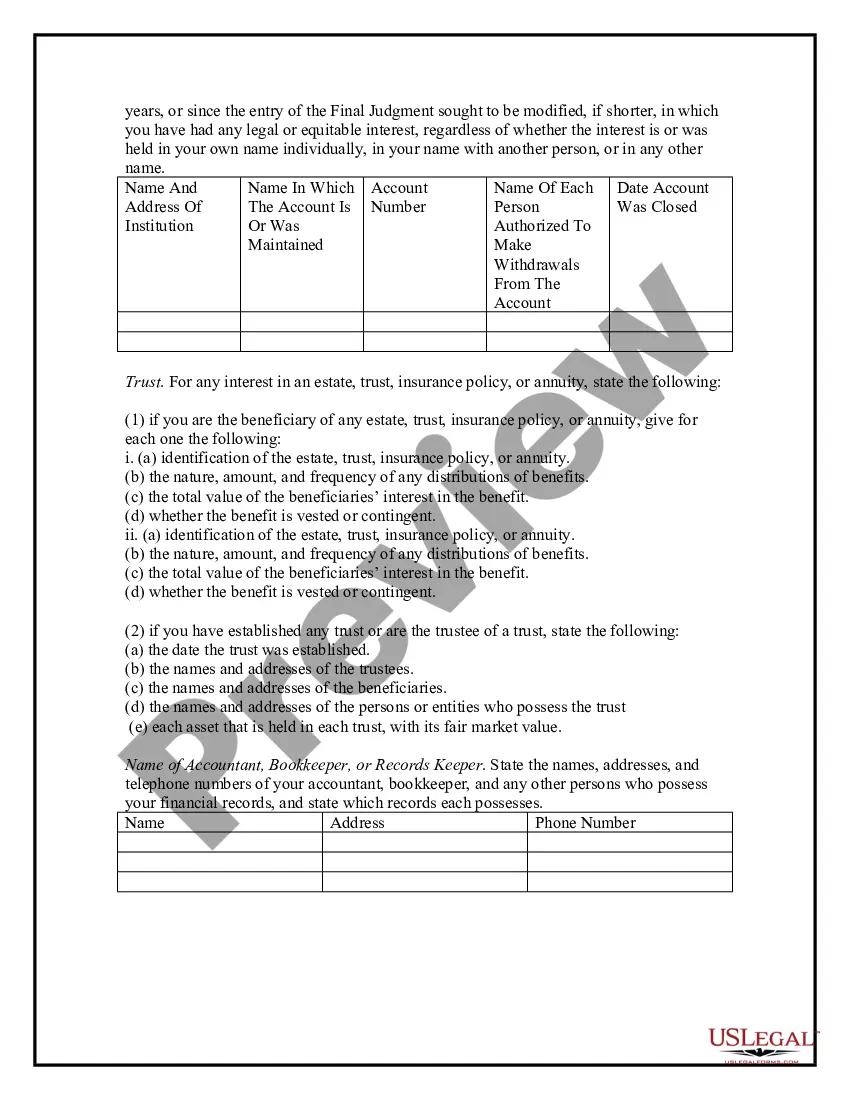
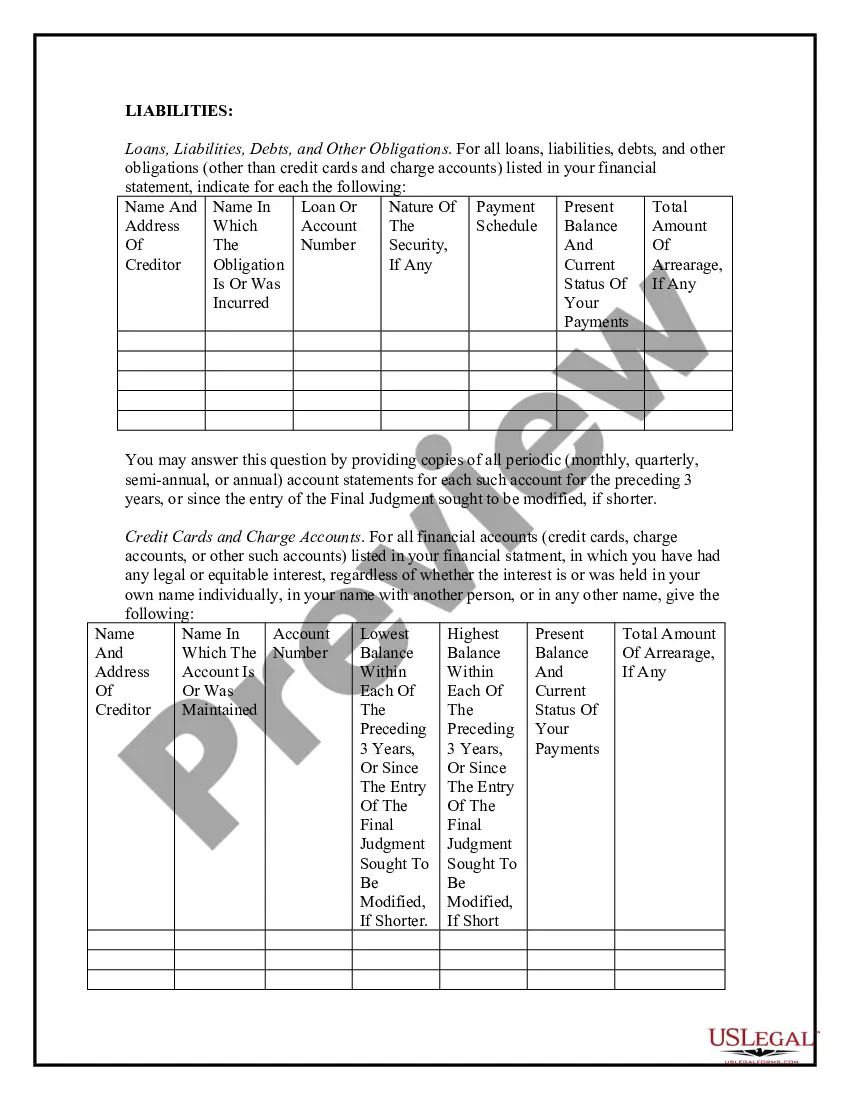
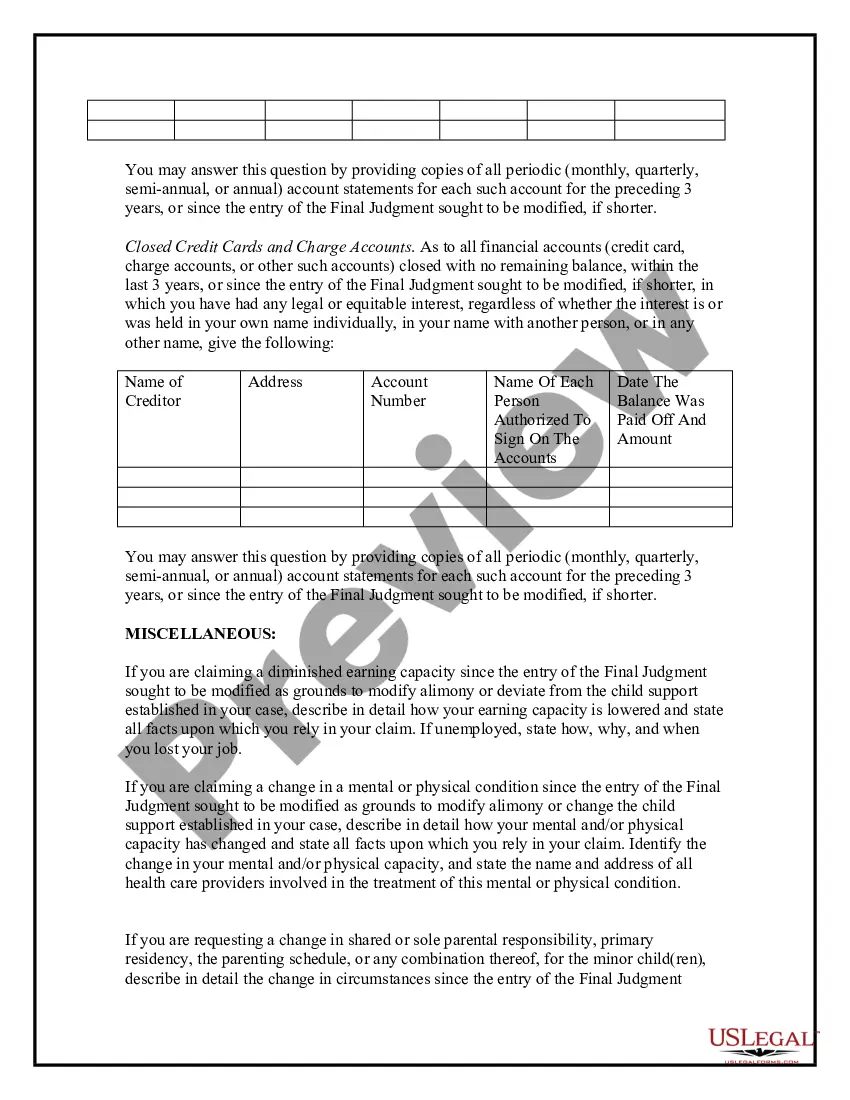
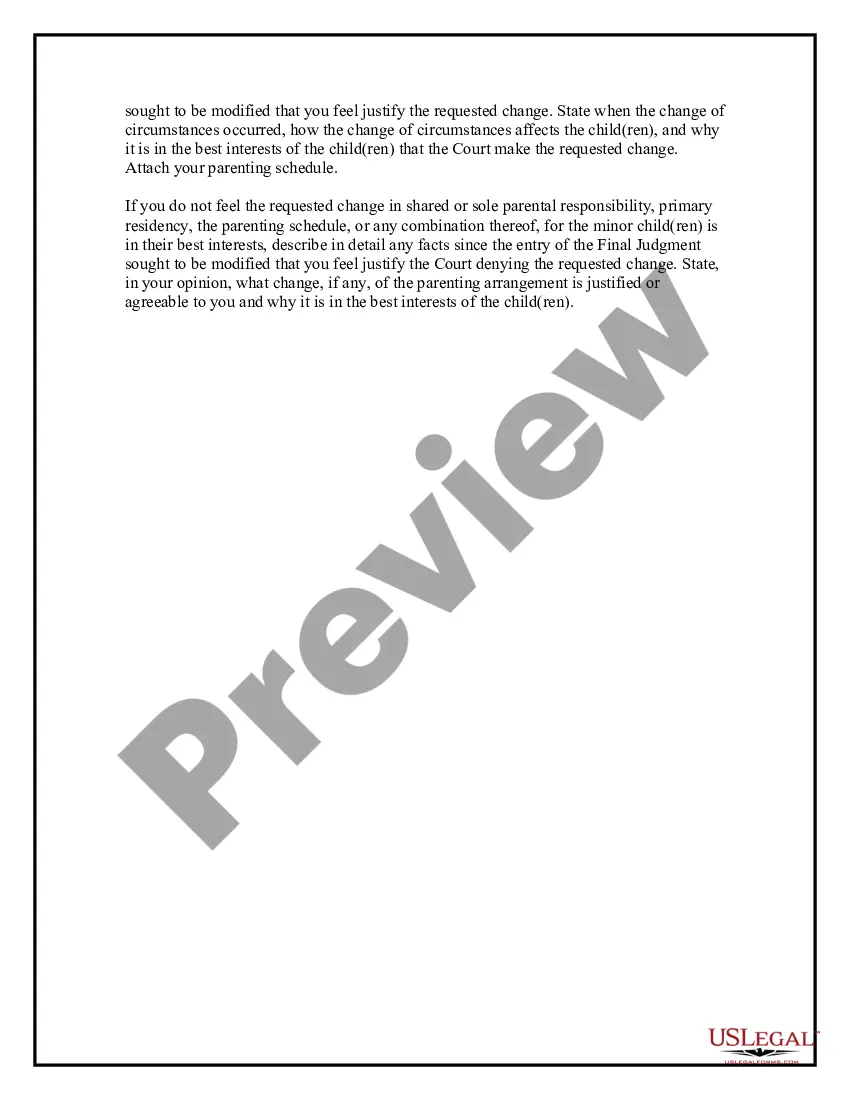
Get your form ready online
Our built-in tools help you complete, sign, share, and store your documents in one place.
Make edits, fill in missing information, and update formatting in US Legal Forms—just like you would in MS Word.
Download a copy, print it, send it by email, or mail it via USPS—whatever works best for your next step.
Sign and collect signatures with our SignNow integration. Send to multiple recipients, set reminders, and more. Go Premium to unlock E-Sign.
If this form requires notarization, complete it online through a secure video call—no need to meet a notary in person or wait for an appointment.
We protect your documents and personal data by following strict security and privacy standards.

Make edits, fill in missing information, and update formatting in US Legal Forms—just like you would in MS Word.

Download a copy, print it, send it by email, or mail it via USPS—whatever works best for your next step.

Sign and collect signatures with our SignNow integration. Send to multiple recipients, set reminders, and more. Go Premium to unlock E-Sign.

If this form requires notarization, complete it online through a secure video call—no need to meet a notary in person or wait for an appointment.

We protect your documents and personal data by following strict security and privacy standards.
Looking for another form?







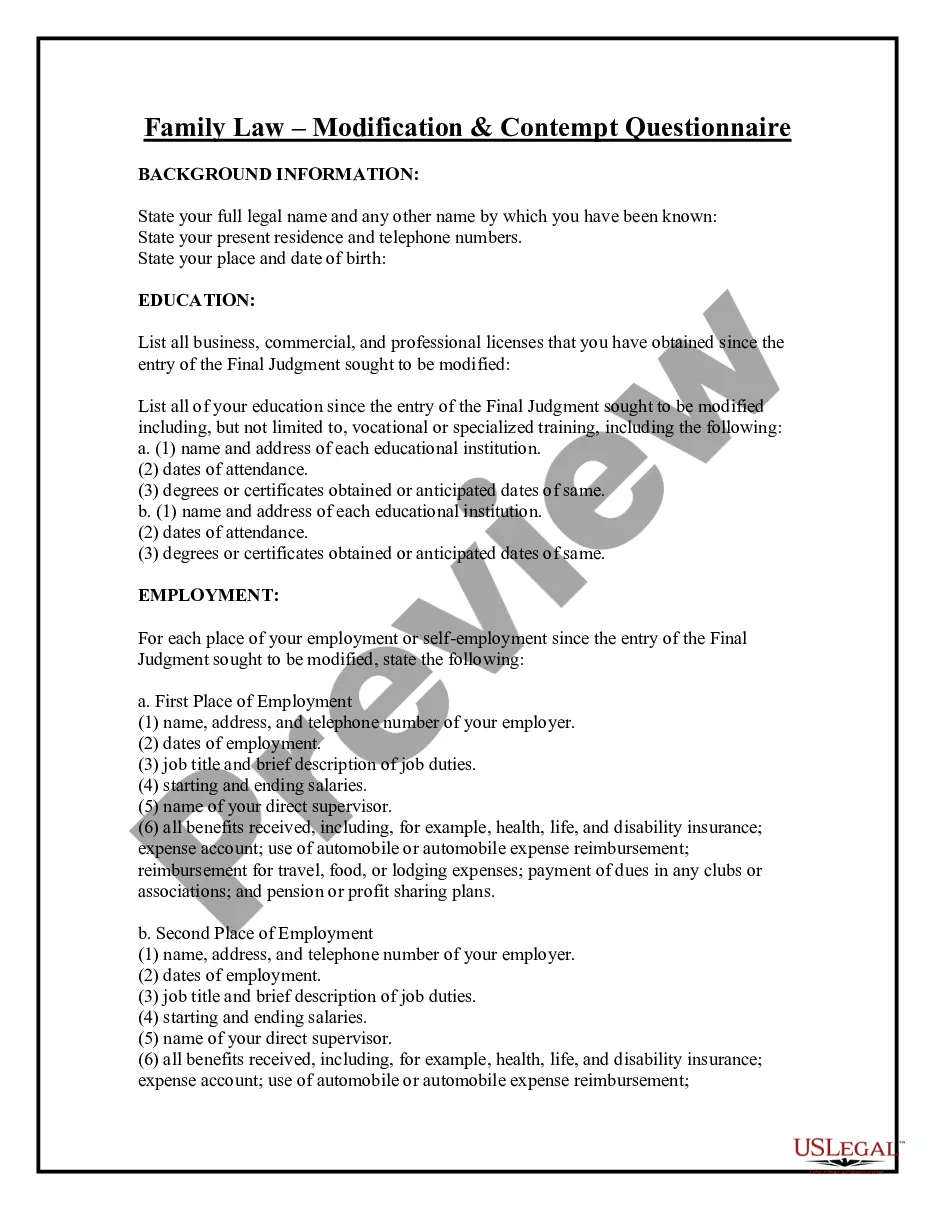
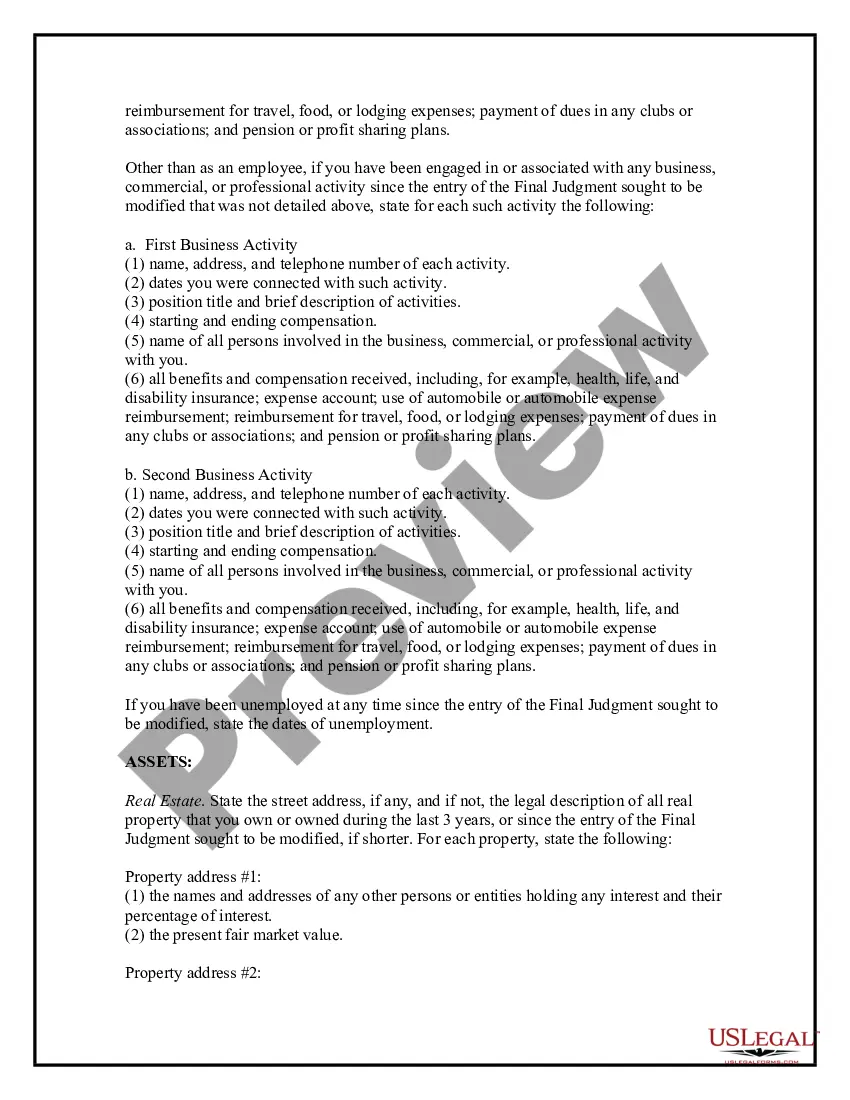
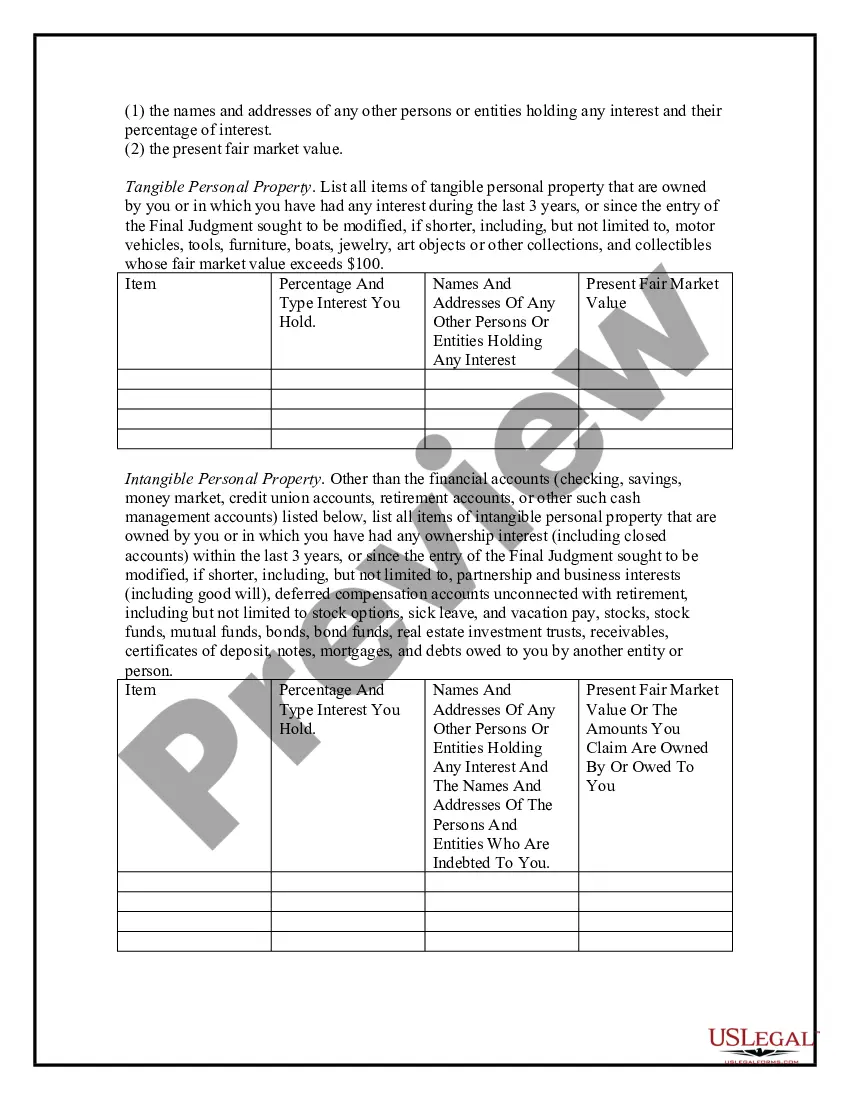
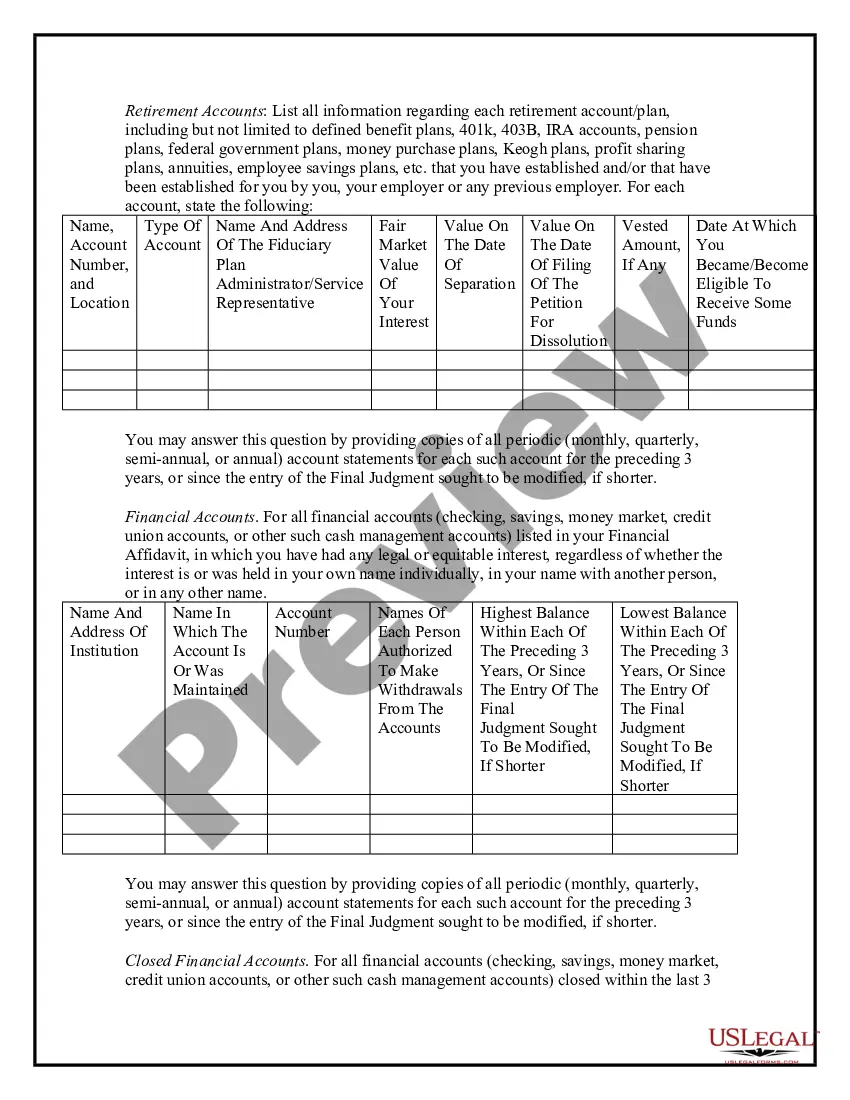
How to fill out Family Law - Modification - Contempt Questionnaire?
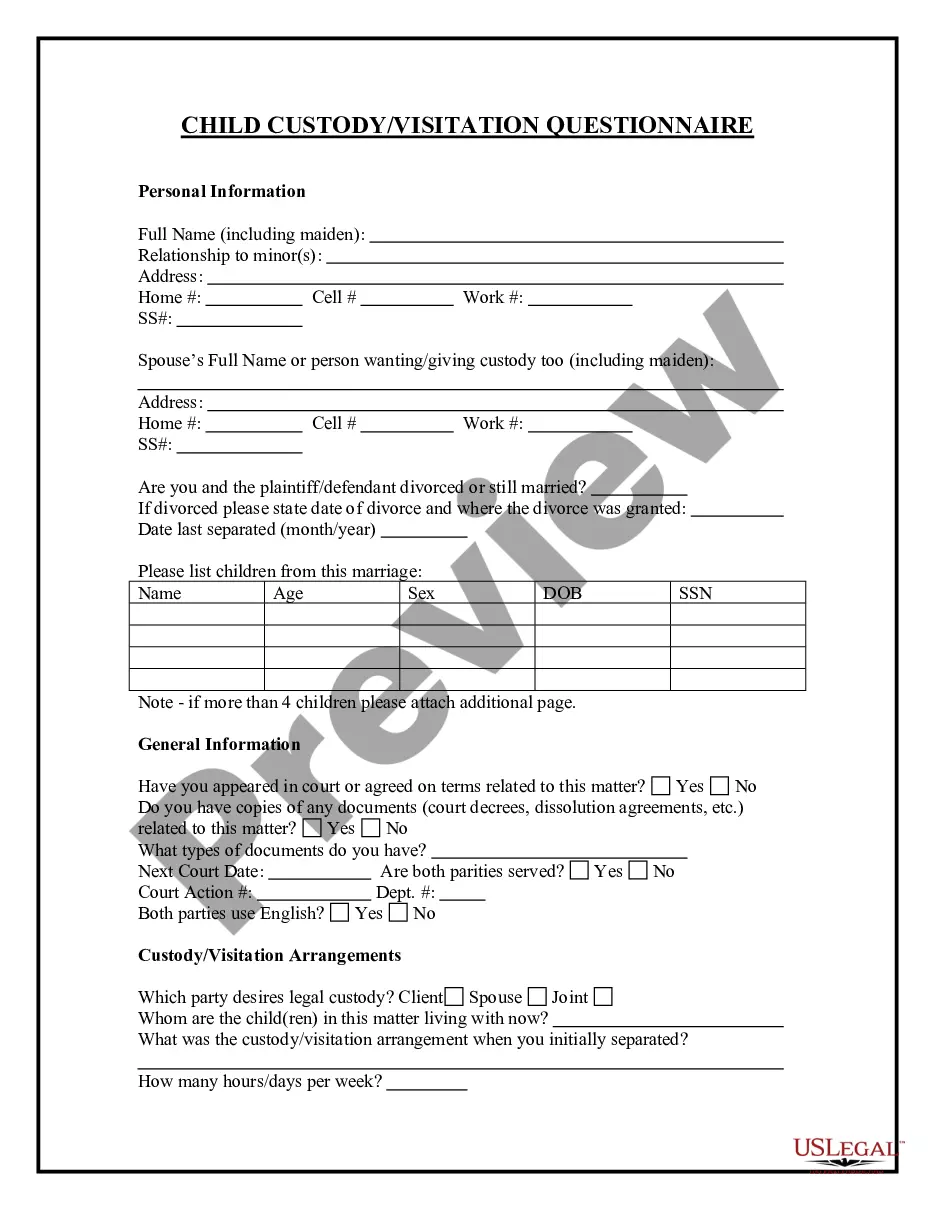
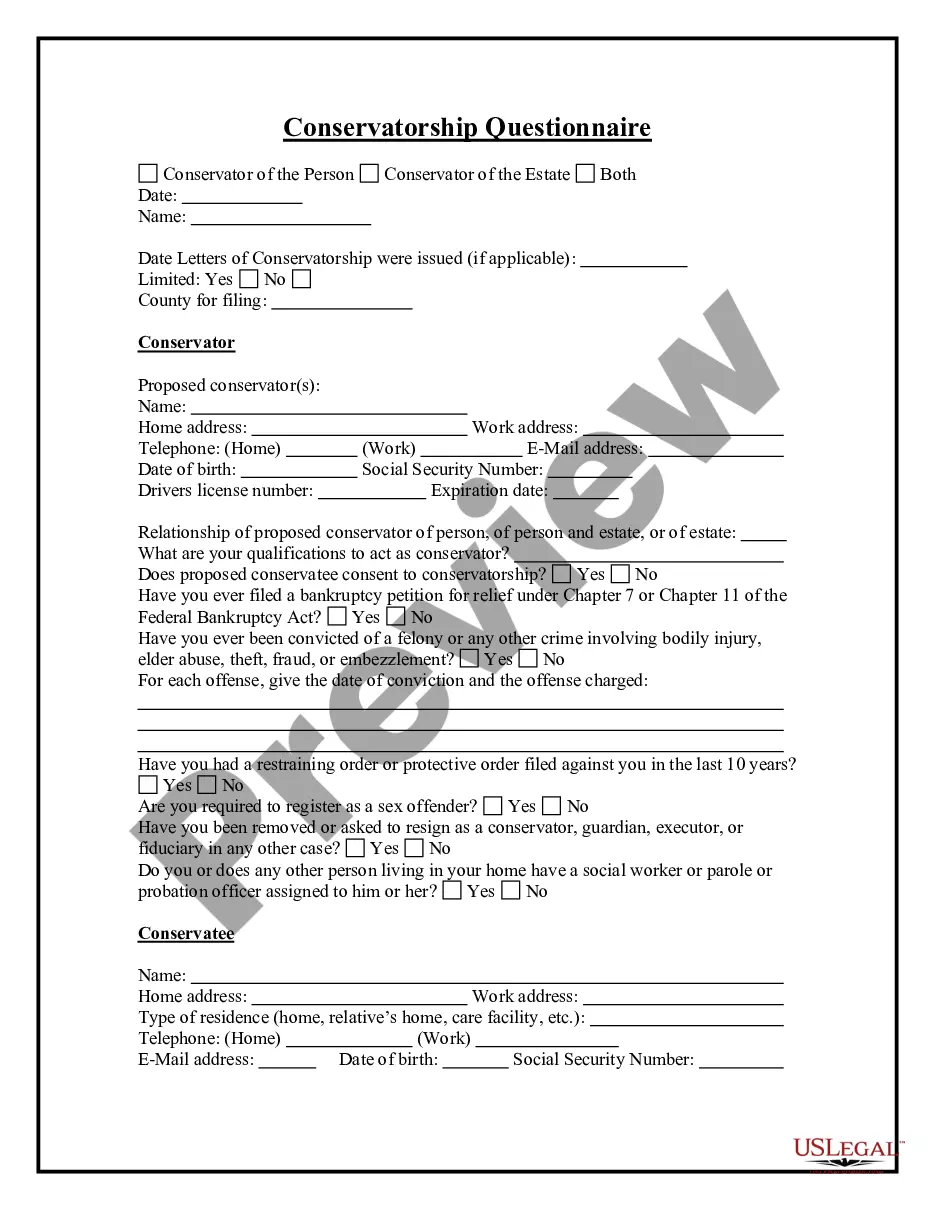
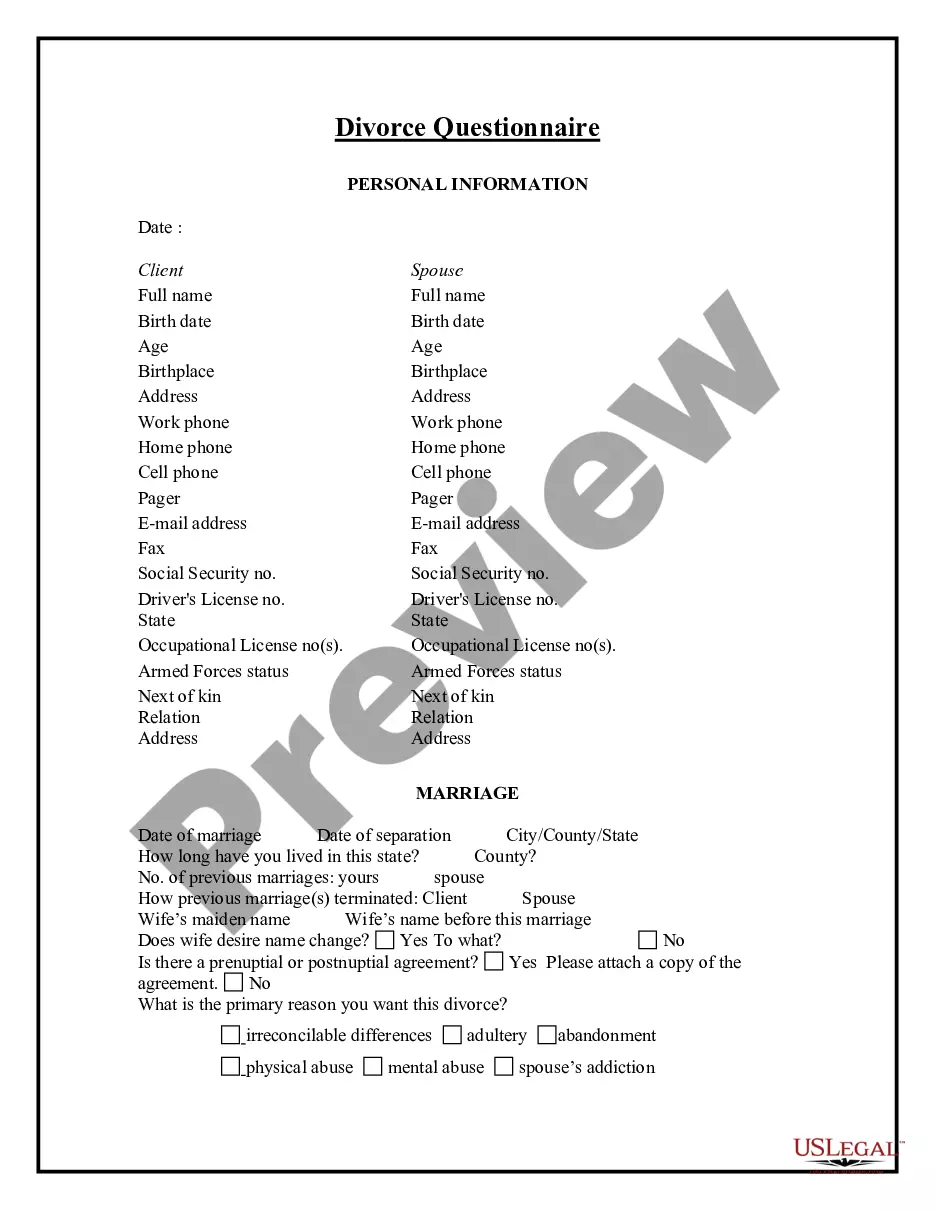
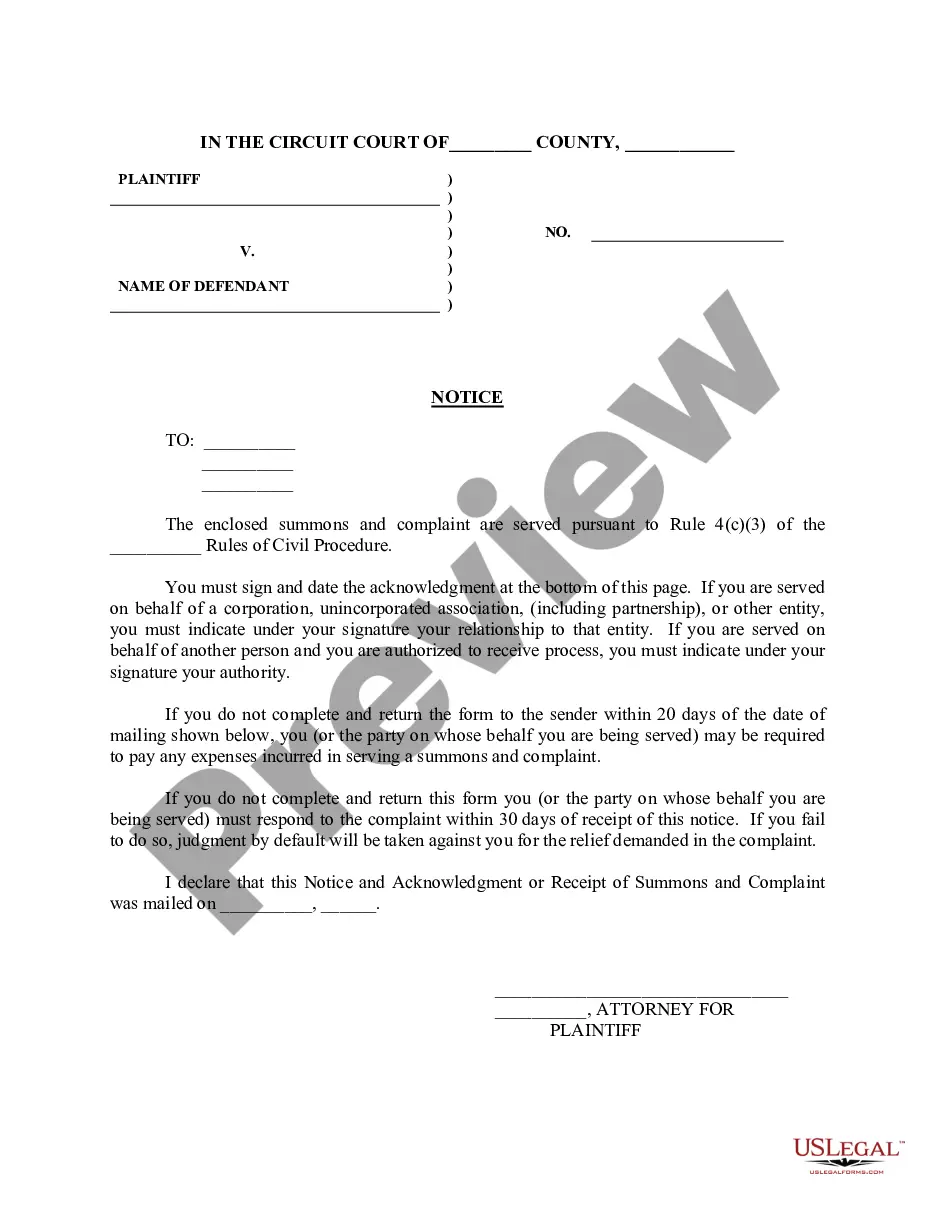
The Family Law For Dummies displayed on this page is a reusable formal framework created by expert attorneys according to federal and state regulations.
For over 25 years, US Legal Forms has offered individuals, associations, and lawyers more than 85,000 validated, state-specific templates for any business and personal events. It’s the quickest, most direct, and most dependable method to obtain the documents you require, as the service ensures the highest level of data security and anti-malware safeguards.
Choose the format you want for your Family Law For Dummies (PDF, Word, RTF) and save the document on your device. Fill out and sign the paperwork. Print the template to fill it out manually. Alternatively, use an online multifunctional PDF editor to quickly and accurately complete and sign your form with a legally-binding electronic signature. Re-download your files as needed. Use the same document again whenever necessary. Visit the My documents tab in your profile to redownload any previously saved forms. Subscribe to US Legal Forms to have verified legal templates available for all life's circumstances.
- Browse for the document you require and examine it.
- Review the file you searched and see a preview or check the form description to ensure it meets your requirements. If it doesn’t, use the search bar to find the appropriate one. Click Buy Now when you have found the template you need.
- Sign up and Log In to your account.
- Select the pricing plan that fits you and create an account. Use PayPal or a credit card to make a swift payment. If you already have an account, Log In and verify your subscription to continue.
- Obtain the editable template.
Form popularity
FAQ
Family law refers to the area of law that governs legal issues involving family relationships. This includes matters like divorce, child custody, and adoption. For those looking to understand family law for dummies, this area of law seeks to resolve disputes while prioritizing the well-being of children and family members.
It is essential to avoid disrespectful language when addressing a judge. Statements that undermine the authority of the court or question the judge's capabilities can worsen your standing. In family law for dummies, always address the judge respectfully and stick to the facts of your case.
Certain behaviors and actions can create a negative impression in family court. Arriving late, being unprepared, or failing to communicate with your legal team can all reflect poorly on your case. Understanding family law for dummies, you can ensure that you present yourself and your situation positively to the judge.
The biggest mistake in a custody battle often involves putting children in the middle of conflict. Parents may unintentionally use kids to communicate negative feelings about the other parent, which can harm the children's well-being. In family law for dummies, maintaining a child-focused approach is crucial for achieving favorable outcomes.
Judges do not appreciate when parties come to court unprepared or fail to follow court procedures. Disrespectful behavior, such as interrupting or arguing, can also create a negative impression. In family law for dummies, the key is to show respect for the court and to communicate clearly and calmly.
To prepare for your first meeting with a lawyer, compile all relevant documentation and support materials. Write down key points you want to discuss, including your expectations. This will help you articulate your needs clearly, which is especially important when learning about family law for dummies.
Family law can be challenging due to the emotional weight involved in cases like divorce or custody battles. The interplay of various state laws further complicates matters, making legal navigation crucial. Grasping these difficulties can help you approach family law for dummies with a clearer perspective.
Common family law cases include divorce, child custody disputes, and adoption proceedings. Each of these cases involves distinct legal processes and challenges. By understanding these common situations, you can better prepare yourself to manage your own legal issues related to family law for dummies.
Preparing for a family lawyer involves gathering relevant documents such as financial records and any existing legal agreements. Make a list of your specific concerns and goals to discuss during your consultation. This preparation will streamline the meeting, making it easier to address your situation in a straightforward way, especially within the context of family law for dummies.
Family lawyers often face emotional challenges as they deal with sensitive issues like custody and divorce. Balancing a client’s needs with legal constraints requires both empathy and a strong legal strategy. Understanding these complexities is essential, especially if you are navigating through family law for dummies.