Forms Of Poder In Spanish
Description
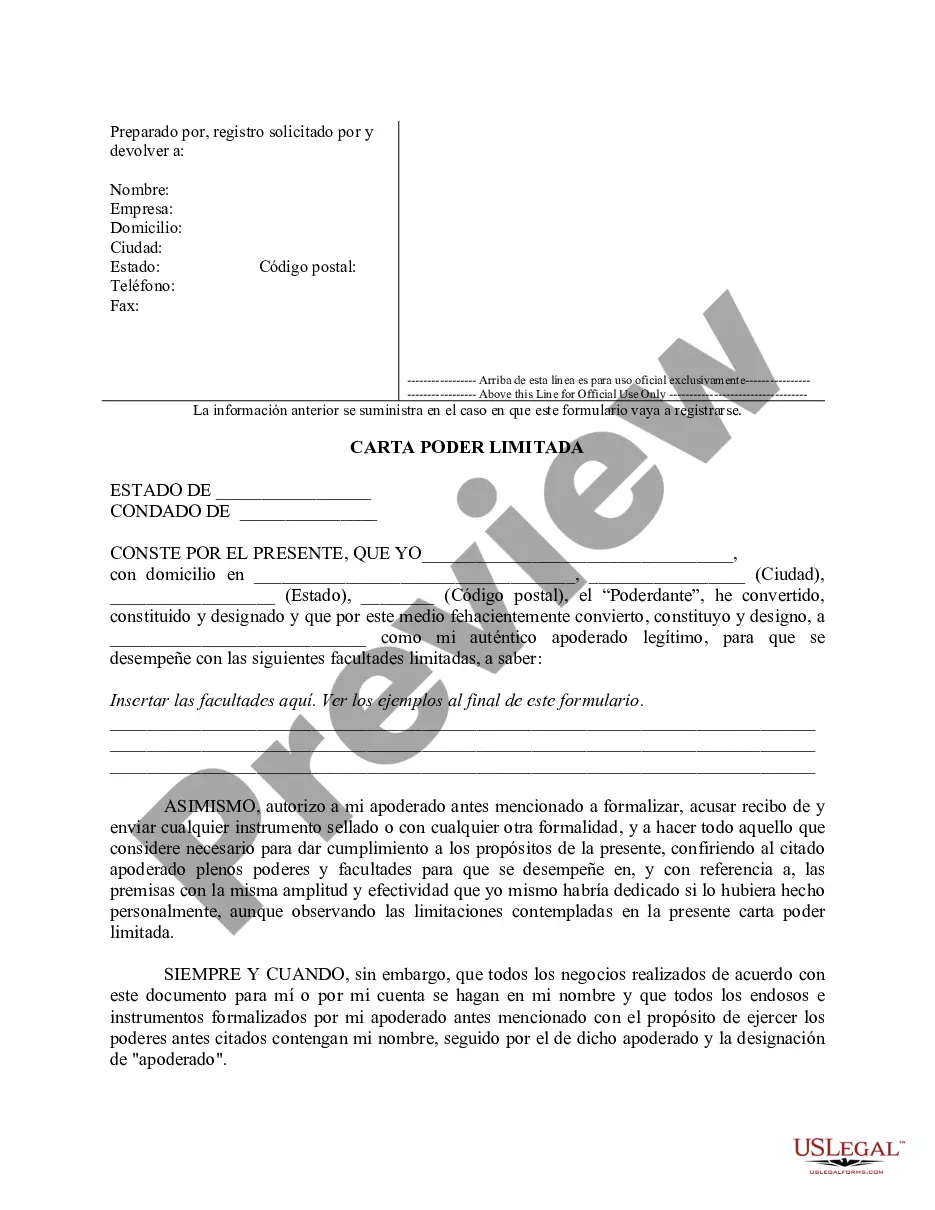
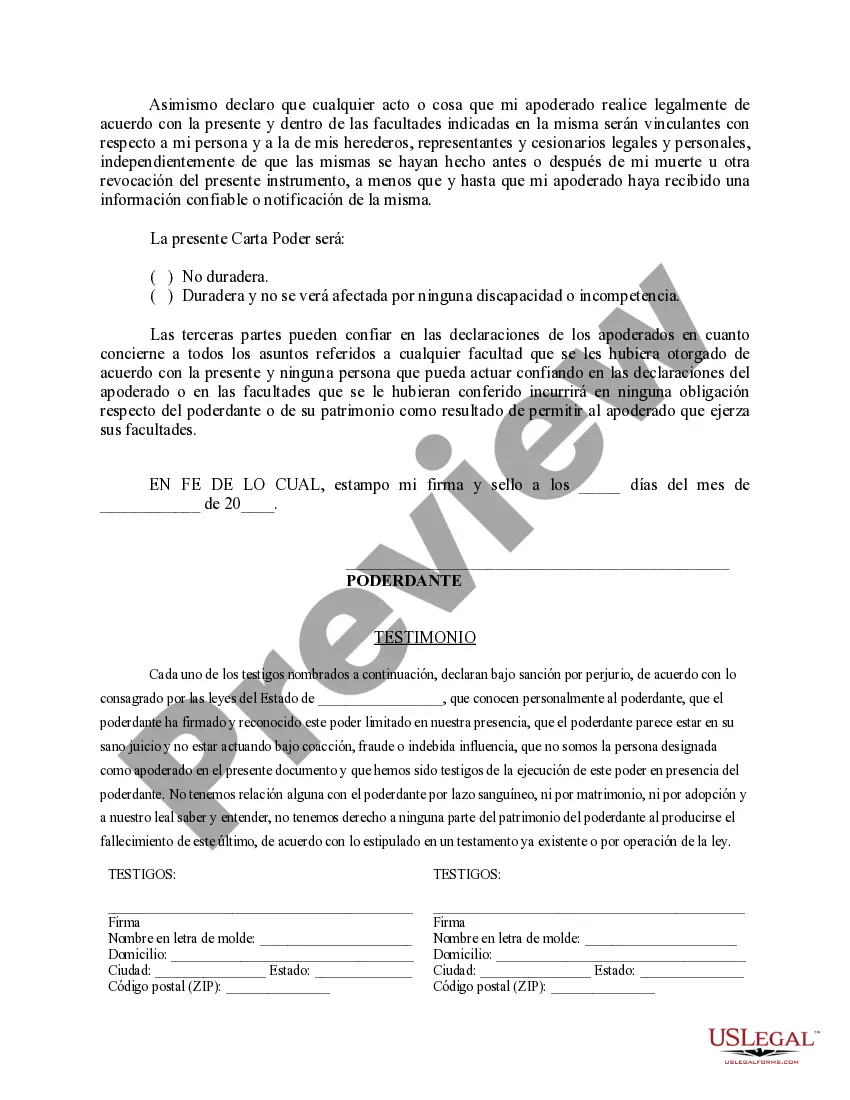
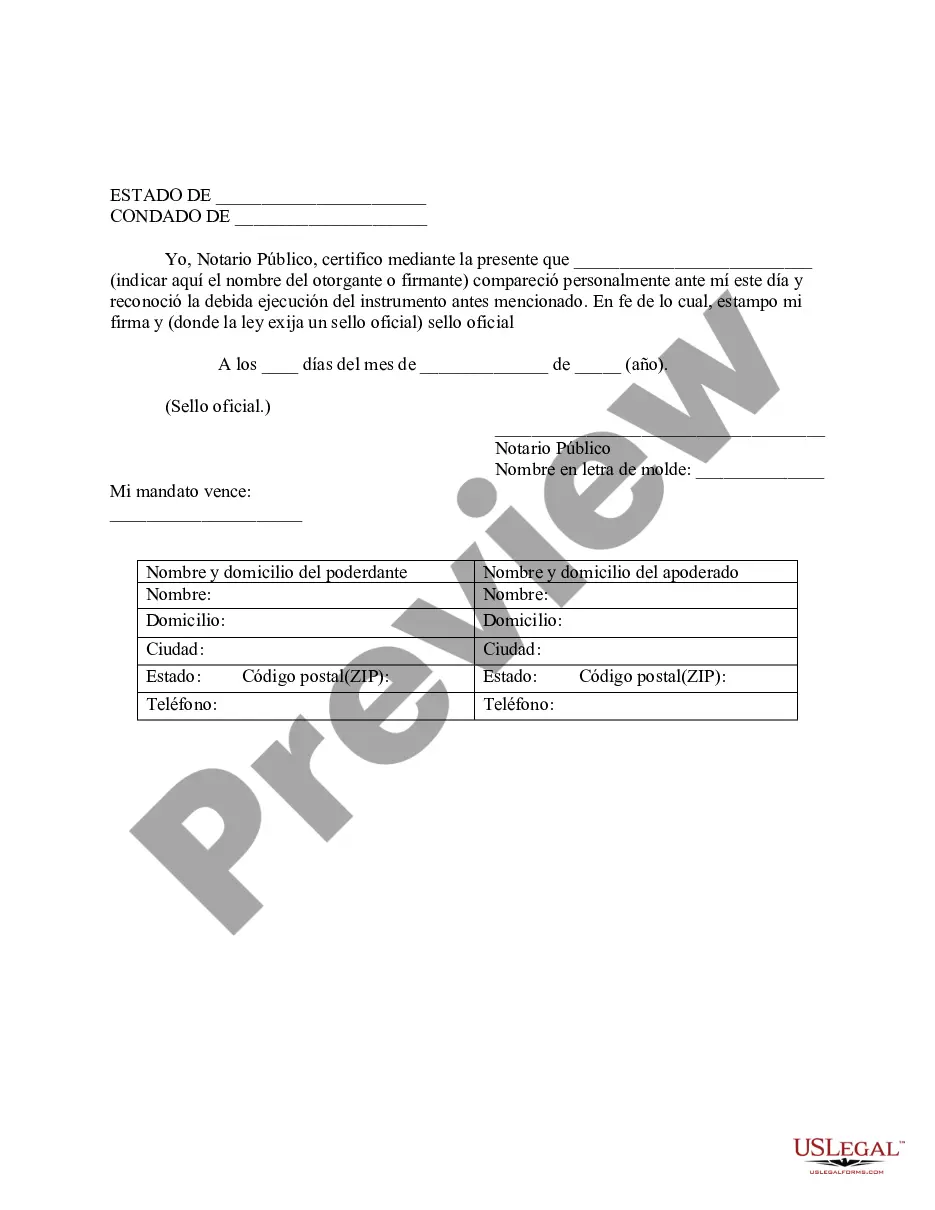
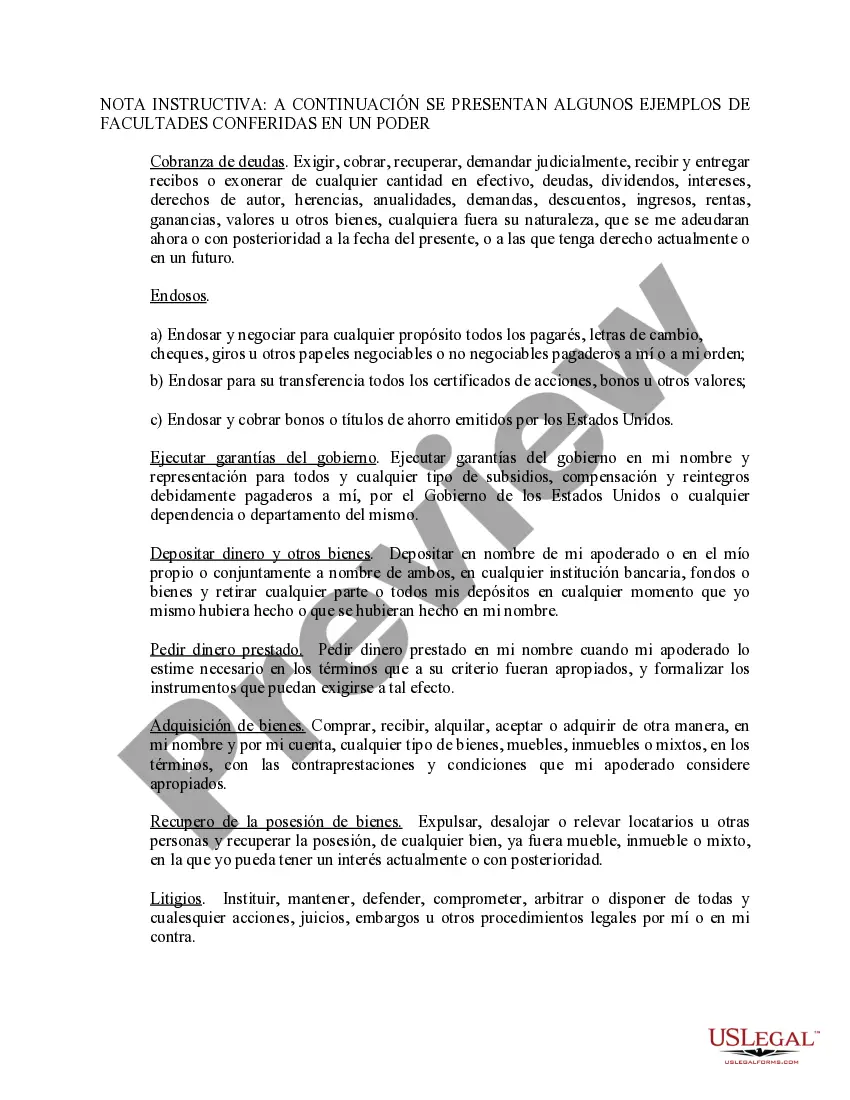
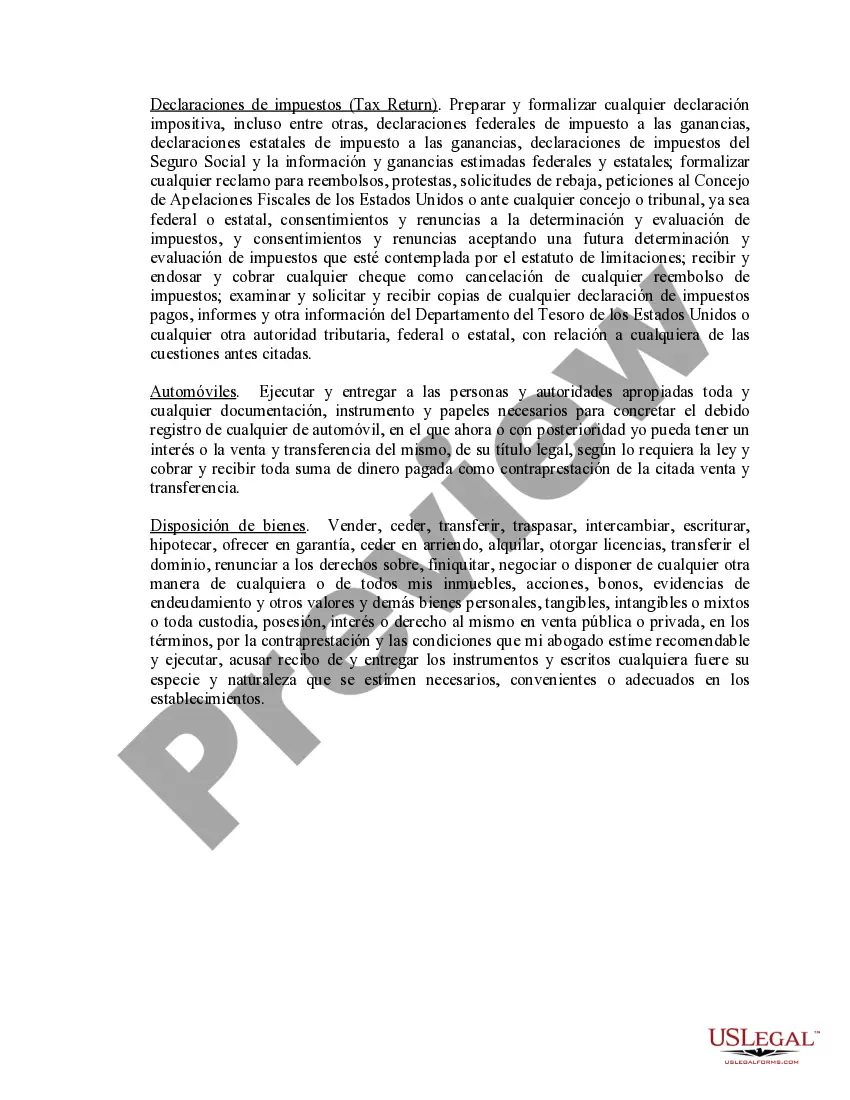
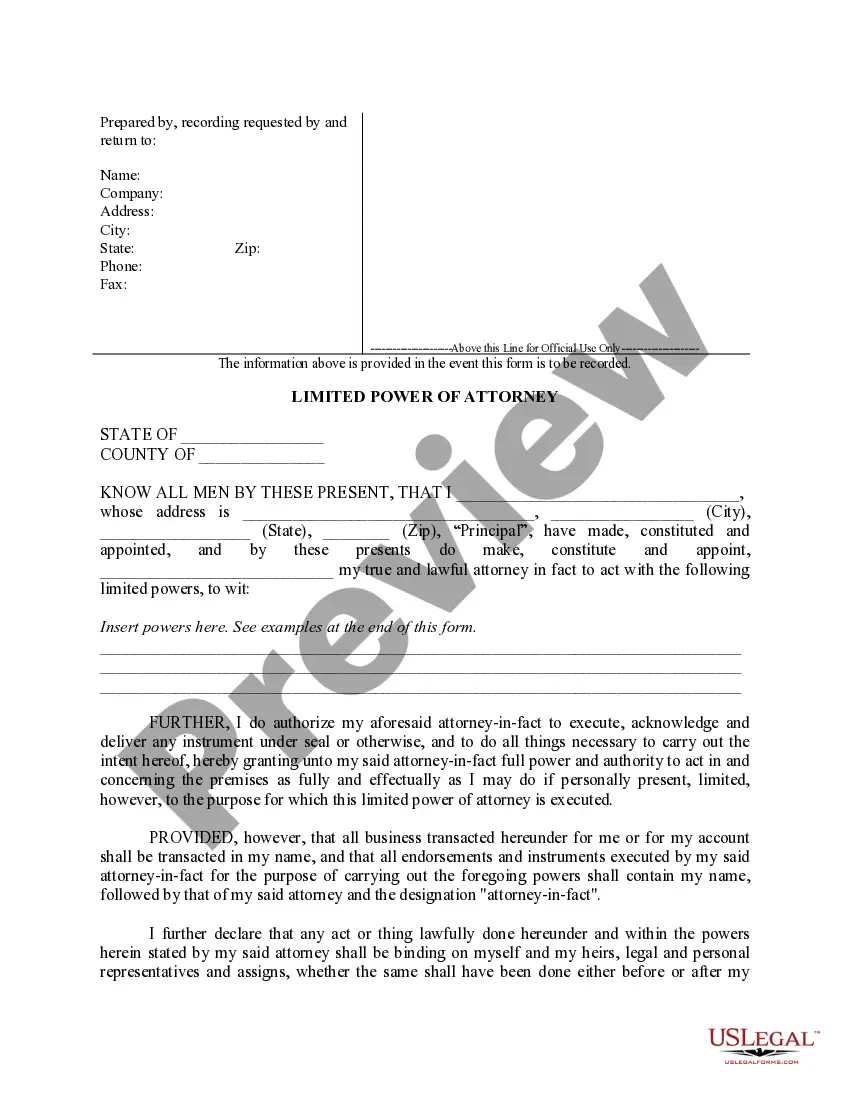
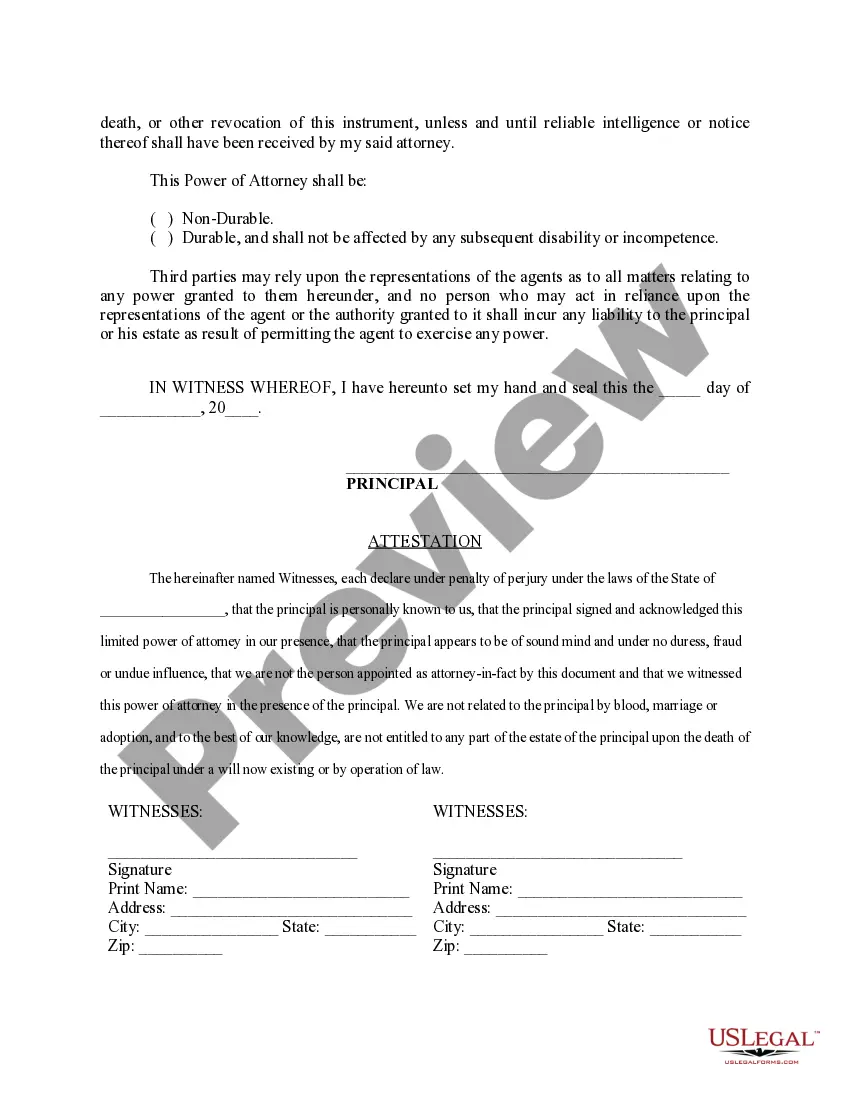
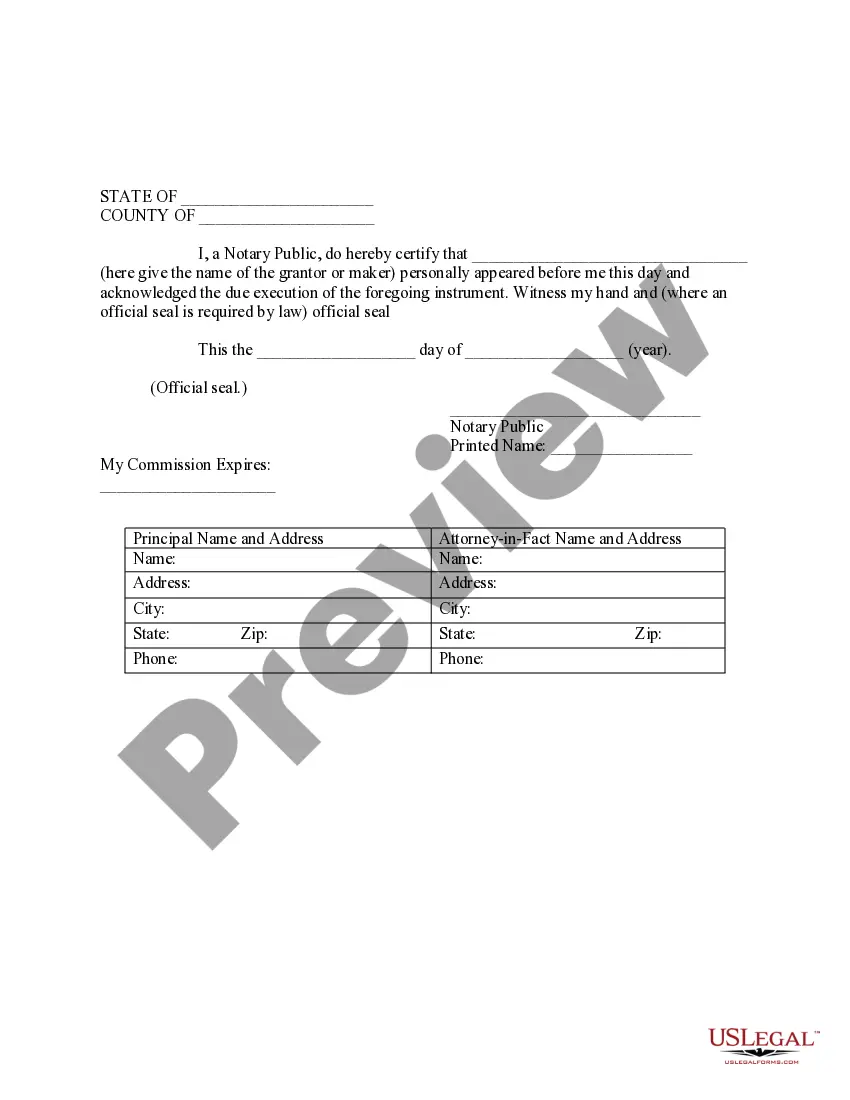
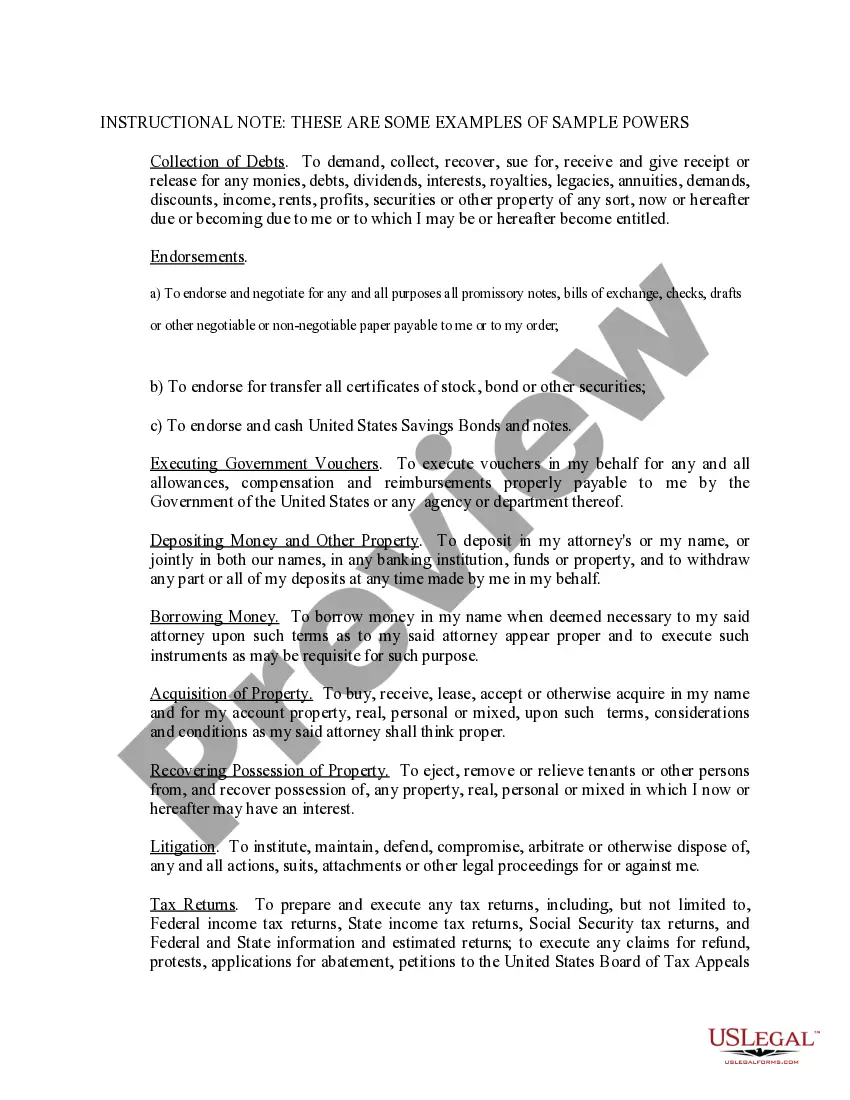

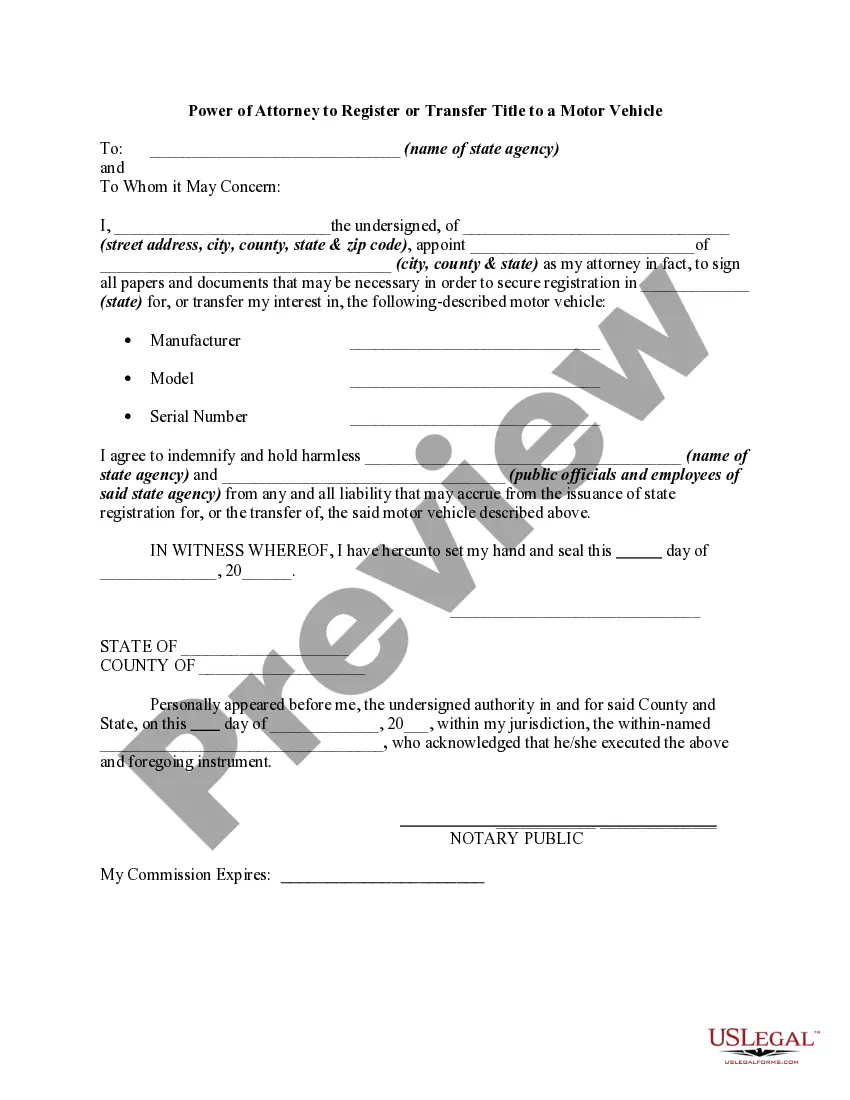
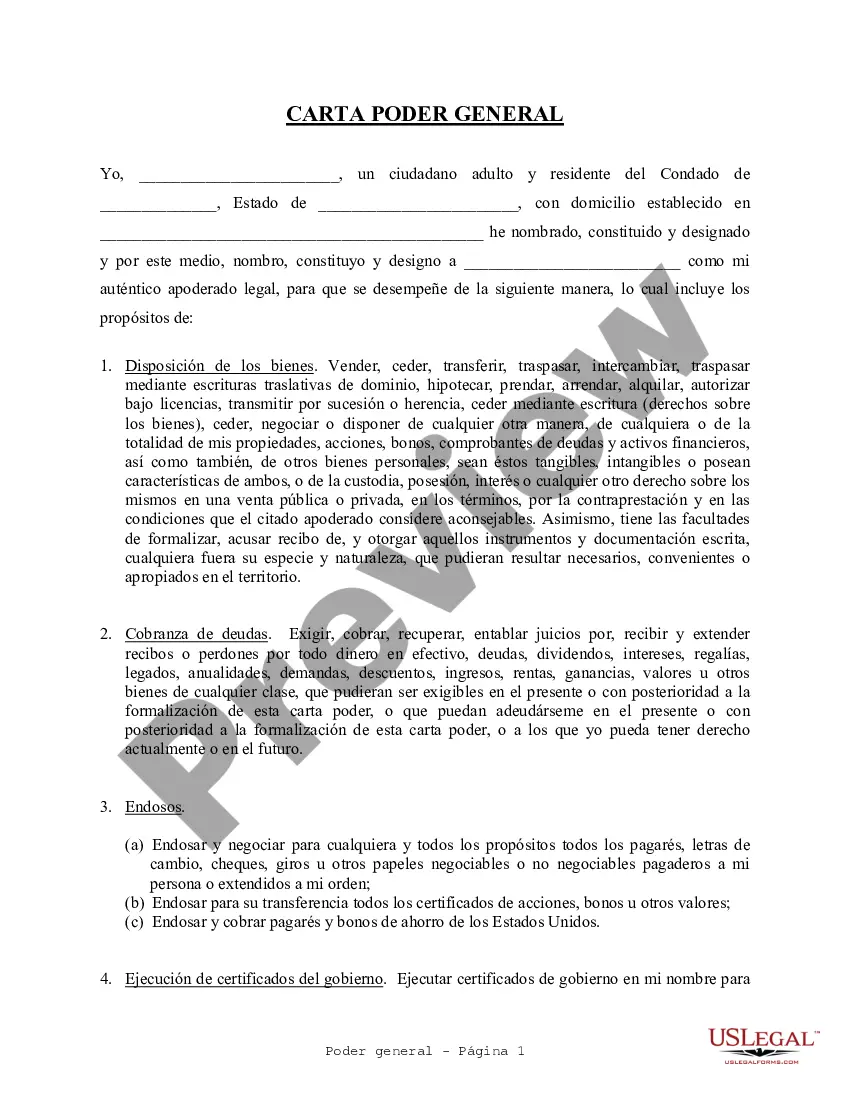
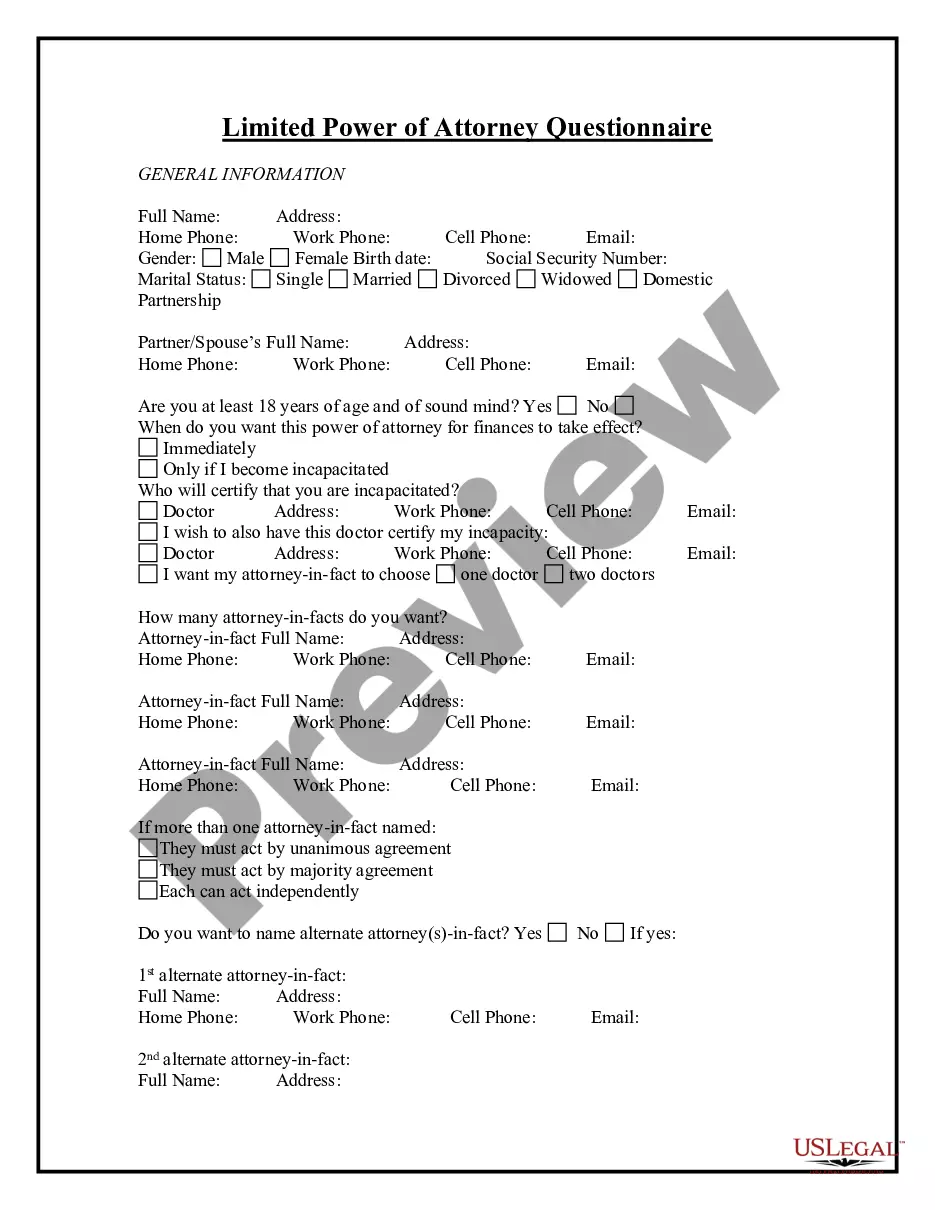
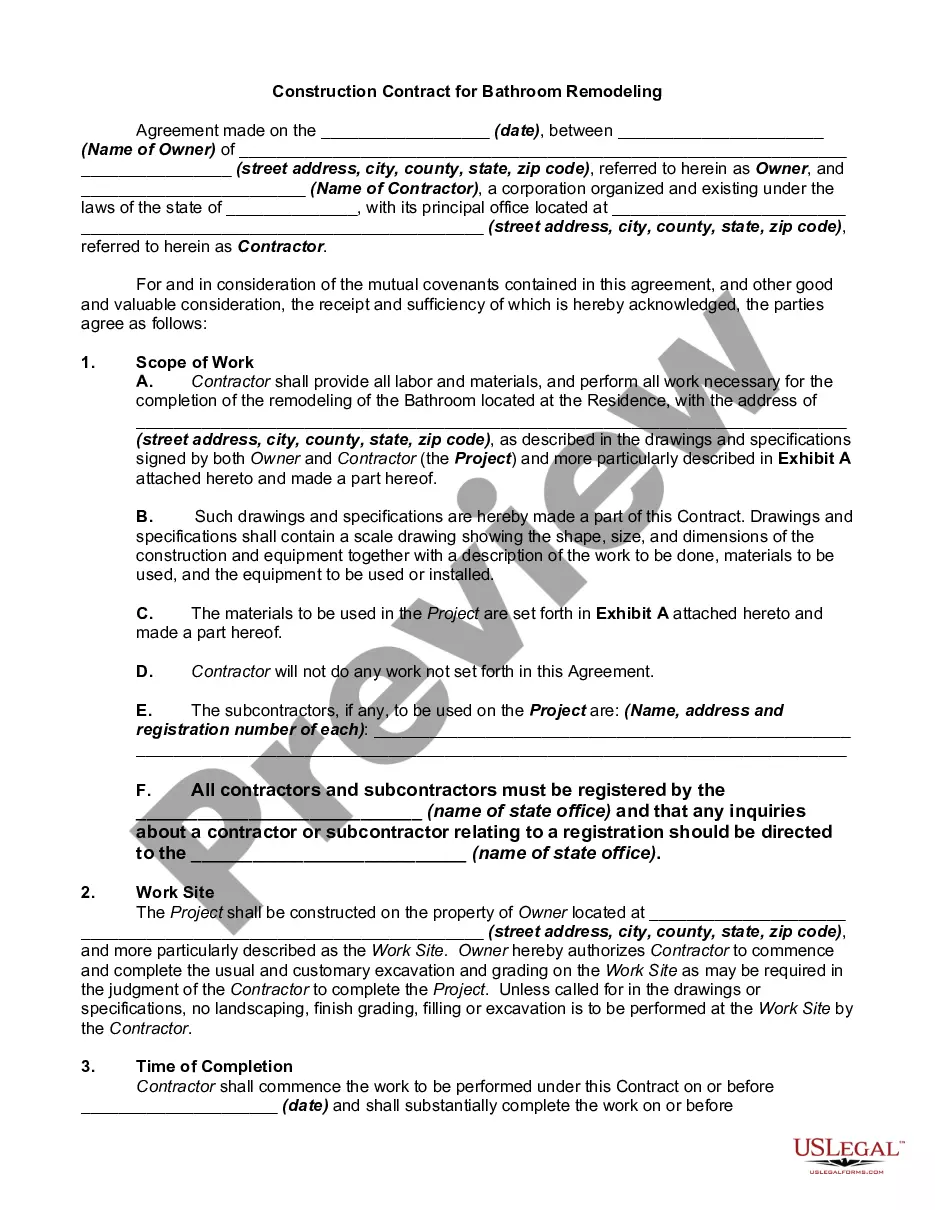
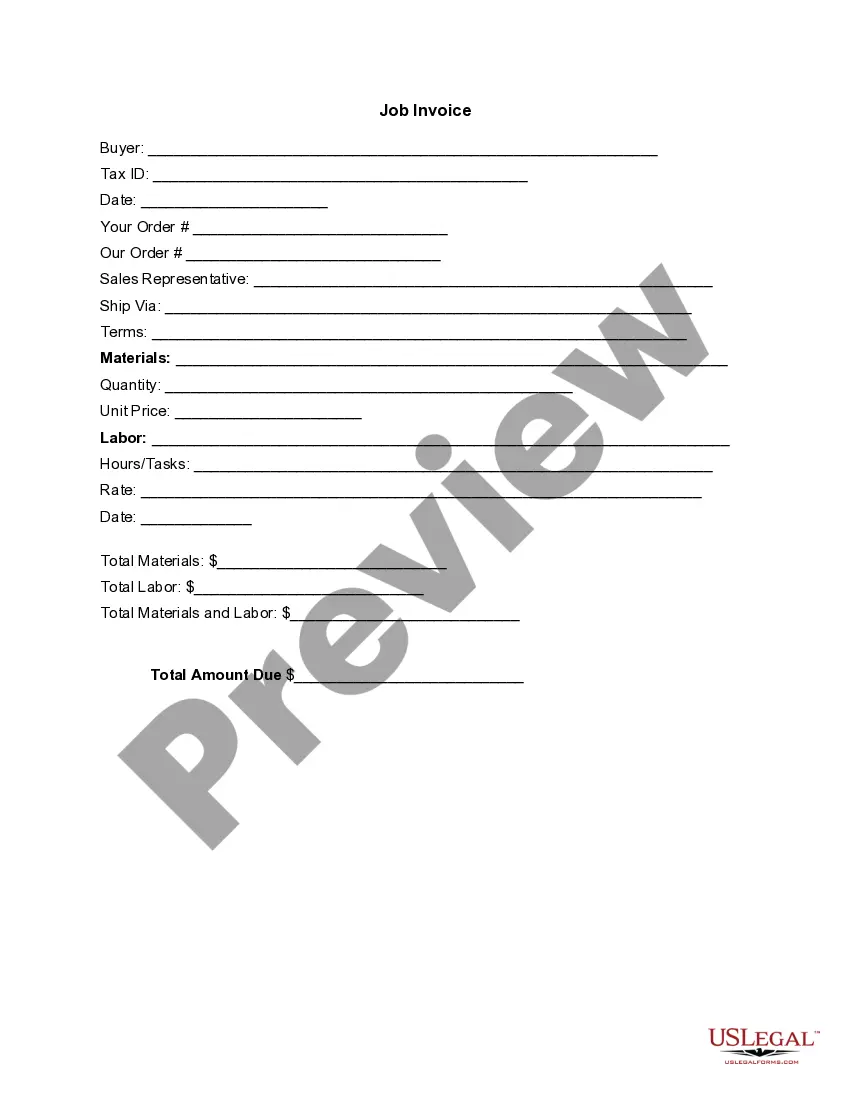
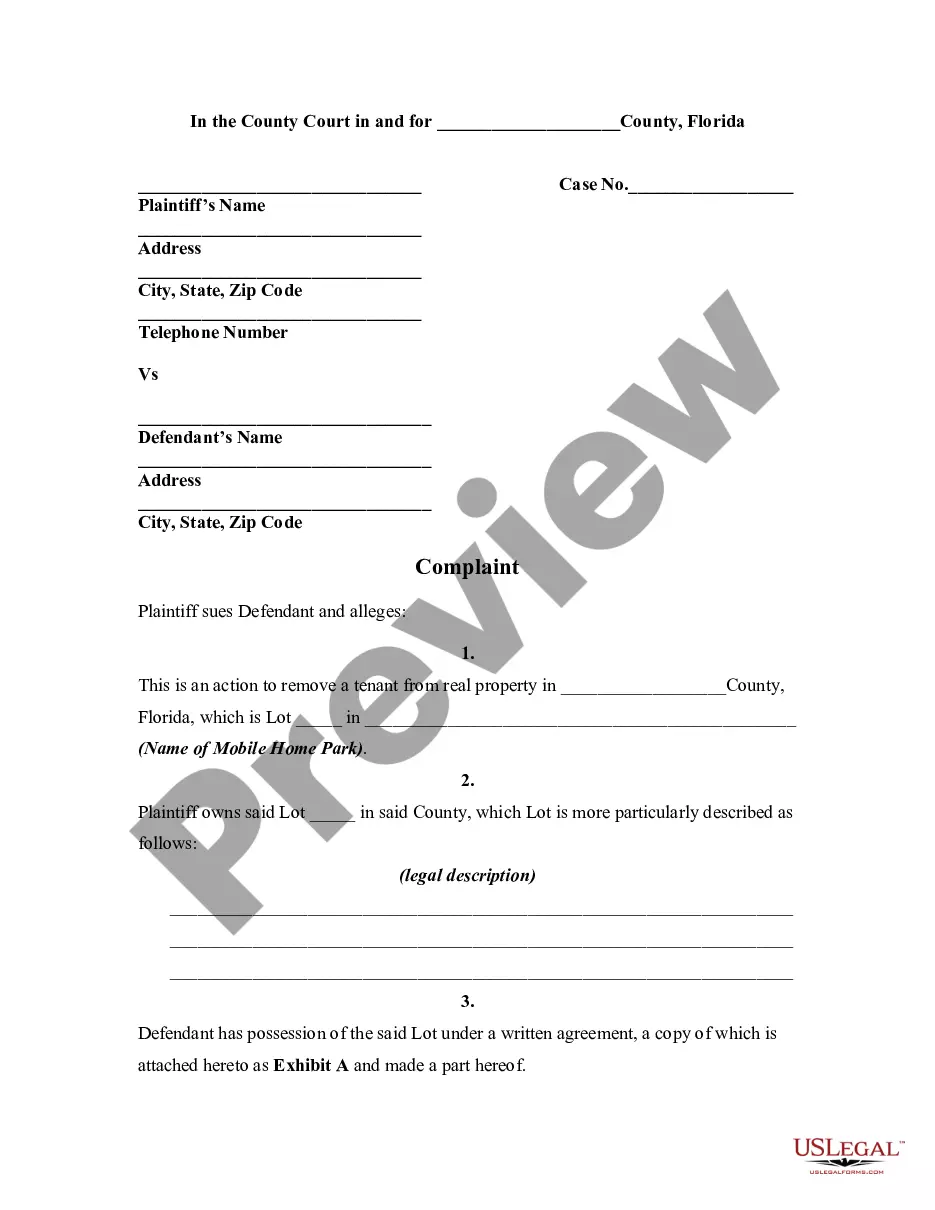
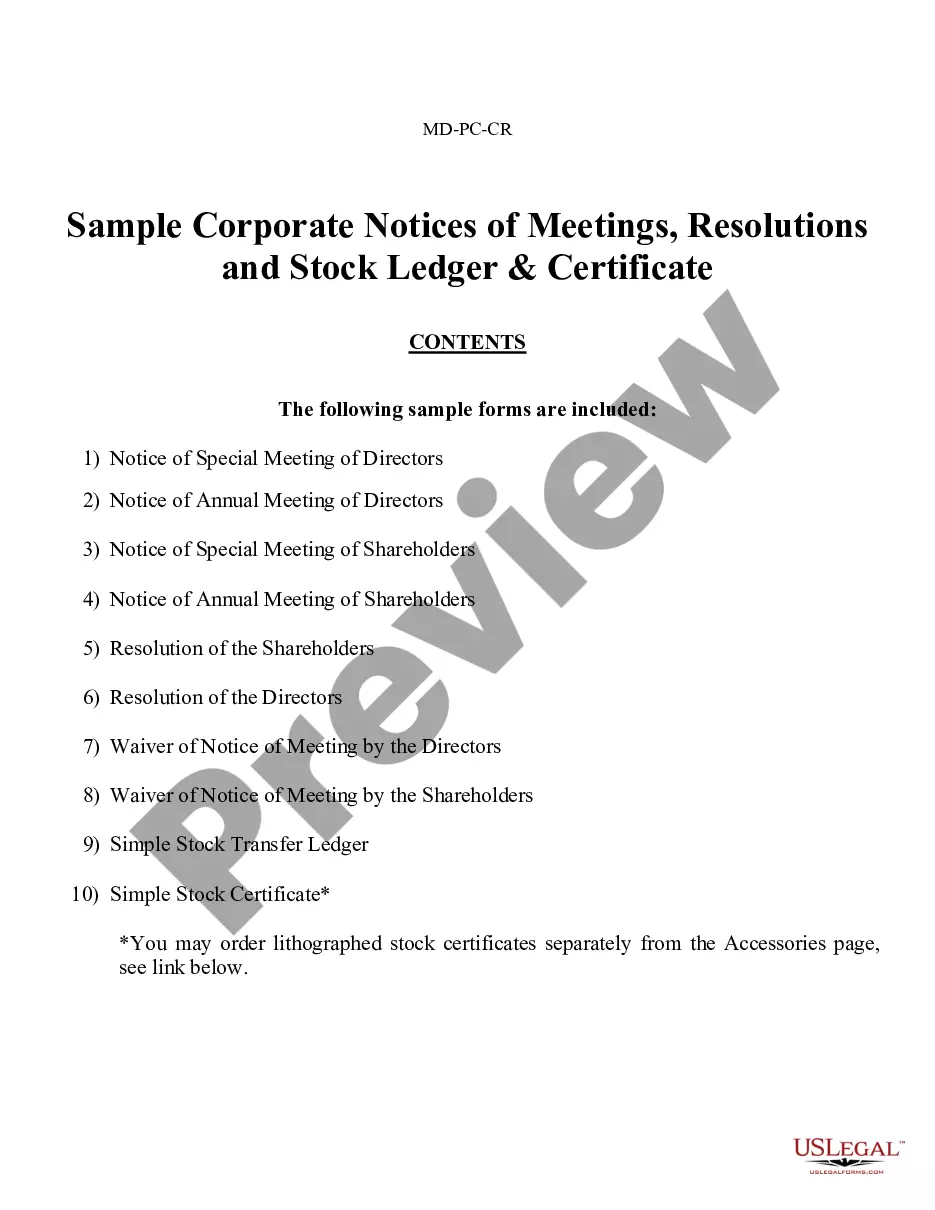
How to fill out Carta Poder Limitada - Limited Power Of Attorney?
Regardless of whether it's for professional reasons or personal issues, everyone must confront legal matters at some point in their lives. Filling out legal forms necessitates meticulous attention, starting with selecting the correct template. For example, if you choose an incorrect version of the Forms Of Poder In Spanish, it will be rejected upon submission. Thus, it is crucial to find a reliable source of legal documents like US Legal Forms.
Should you need to acquire a Forms Of Poder In Spanish template, adhere to these simple steps: Access the template you require by using the search field or browsing through the catalog. Review the form’s details to ensure it aligns with your circumstances, state, and locality. Click on the form’s preview to examine it. If it is the wrong document, return to the search feature to find the Forms Of Poder In Spanish template you need. Download the file if it satisfies your criteria. If you have a US Legal Forms account, simply click Log in to access previously saved documents in My documents. If you do not have an account yet, you can obtain the form by clicking Buy now. Choose the appropriate pricing option. Complete the profile registration form. Select your payment method: a credit card or PayPal account can be used. Choose the file format you desire and download the Forms Of Poder In Spanish. Once downloaded, you can fill out the form using editing software or print it and complete it by hand.
Choose the appropriate pricing option. Complete the profile registration form. Select your payment method: a credit card or PayPal account can be used. Choose the file format you desire and download the Forms Of Poder In Spanish. Once downloaded, you can fill out the form using editing software or print it and complete it by hand.
- Regardless of whether it's for professional reasons or personal issues, everyone must confront legal matters at some point in their lives.
- Filling out legal forms necessitates meticulous attention, starting with selecting the correct template.
- For example, if you choose an incorrect version of the Forms Of Poder In Spanish, it will be rejected upon submission.
- Thus, it is crucial to find a reliable source of legal documents like US Legal Forms.
- Should you need to acquire a Forms Of Poder In Spanish template, adhere to these simple steps.
- Access the template you require by using the search field or browsing through the catalog.
- Review the form’s details to ensure it aligns with your circumstances, state, and locality.
- Click on the form’s preview to examine it.
- If it is the wrong document, return to the search feature to find the Forms Of Poder In Spanish template you need.
- Download the file if it satisfies your criteria.
- If you have a US Legal Forms account, simply click Log in to access previously saved documents in My documents.
- If you do not have an account yet, you can obtain the form by clicking Buy now.
Form popularity
FAQ
'Poder' is considered irregular because it does not follow the standard conjugation patterns that most regular verbs do in Spanish. This irregularity can pose challenges for learners, as it requires memorization of its unique forms. Understanding the reasons behind the irregularity of poder will help you navigate the complexities of Spanish verb conjugations. To facilitate learning, check out US Legal Forms for comprehensive guides and exercises on the forms of poder in Spanish.
You can use 'poder' in a sentence to express ability or permission. For example, you might say 'Yo puedo ir al cine' which means 'I can go to the movies'. Using 'poder' correctly in sentences can significantly improve your conversational skills. Explore different examples of the forms of poder in Spanish to enrich your vocabulary.
The forms of poder in Spanish include various conjugations based on the subject, such as 'puedo' for 'I can', 'puedes' for 'you can', and 'puede' for 'he/she/it can'. Each form changes according to the tense and the subject, making it essential for learners to grasp these variations. Mastering the forms of poder in Spanish can enhance your fluency and comprehension. Consider using resources like US Legal Forms to access structured learning materials.
The Spanish word 'poder' is pronounced as 'poh-der'. This pronunciation consists of two syllables, with the emphasis on the second syllable. Understanding how to pronounce 'poder' correctly is essential for effective communication. If you want to learn more about the forms of poder in Spanish, practicing pronunciation can be very helpful.
Yes, poder is an irregular verb in Spanish. It does not follow the standard conjugation patterns, which makes it important to learn its unique forms. Grasping the irregular nature of poder enables you to use it correctly in conversations. For further assistance, check out US Legal Forms, which offers helpful resources for mastering Spanish verbs.
The six conjugations of poner in Spanish are: pongo, pones, pone, ponemos, ponéis, and ponen. This verb is essential as it means 'to put' or 'to place.' Knowing these conjugations helps you communicate effectively in various situations. Utilize US Legal Forms to find examples that incorporate these conjugations in practical contexts.
In Spanish, the five forms of past tense include the preterite, imperfect, past perfect, pluperfect, and simple past. Each form serves a unique purpose, allowing you to convey completed actions, ongoing past actions, or actions that occurred before another past event. To master these tenses, refer to resources like US Legal Forms that provide clear examples and context.
The five forms of poder in Spanish are: puedo, puedes, puede, podemos, and pueden. Each form corresponds to different subjects, allowing you to express ability or permission. Understanding these forms enhances your command of the Spanish language. For practical applications, consider using US Legal Forms for templates that utilize these verbs.