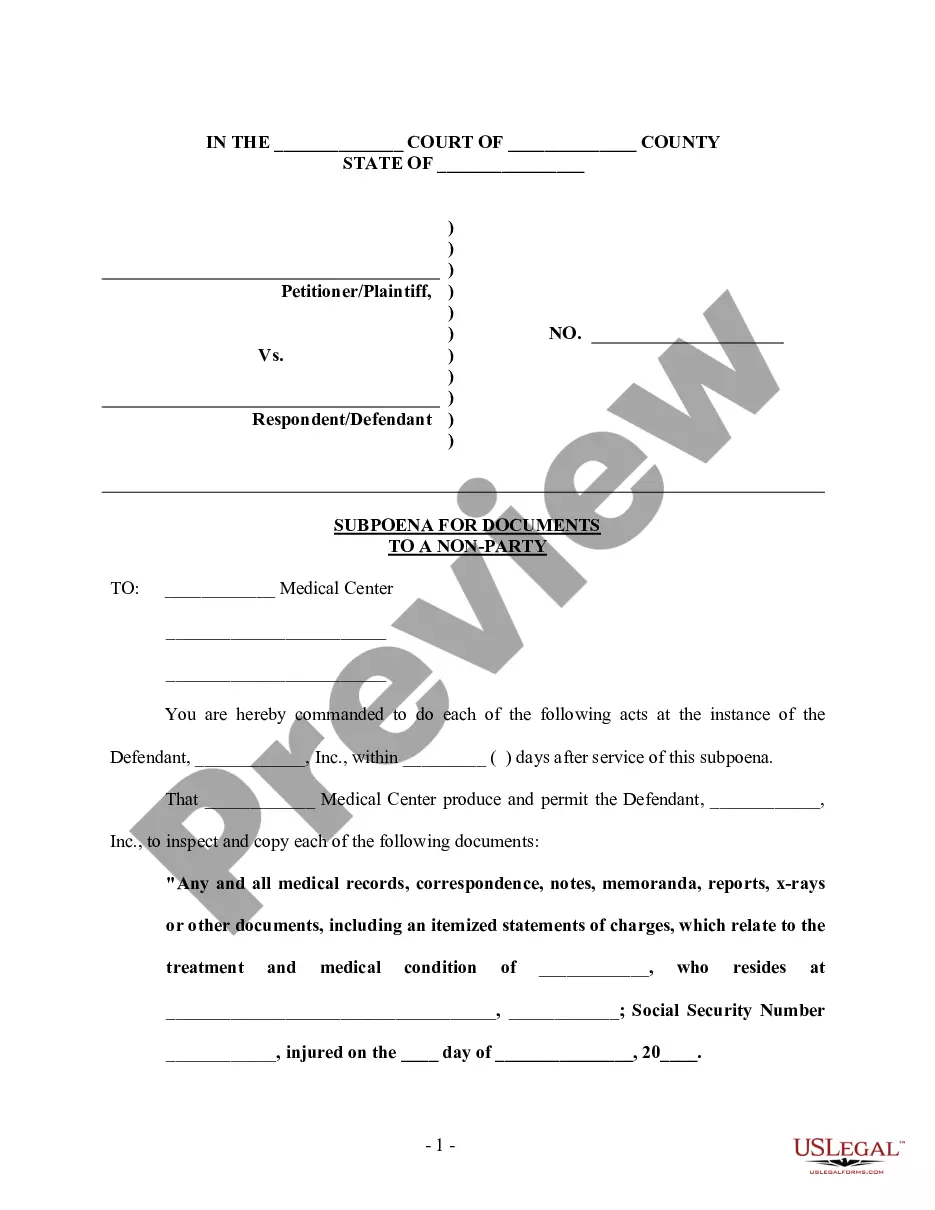
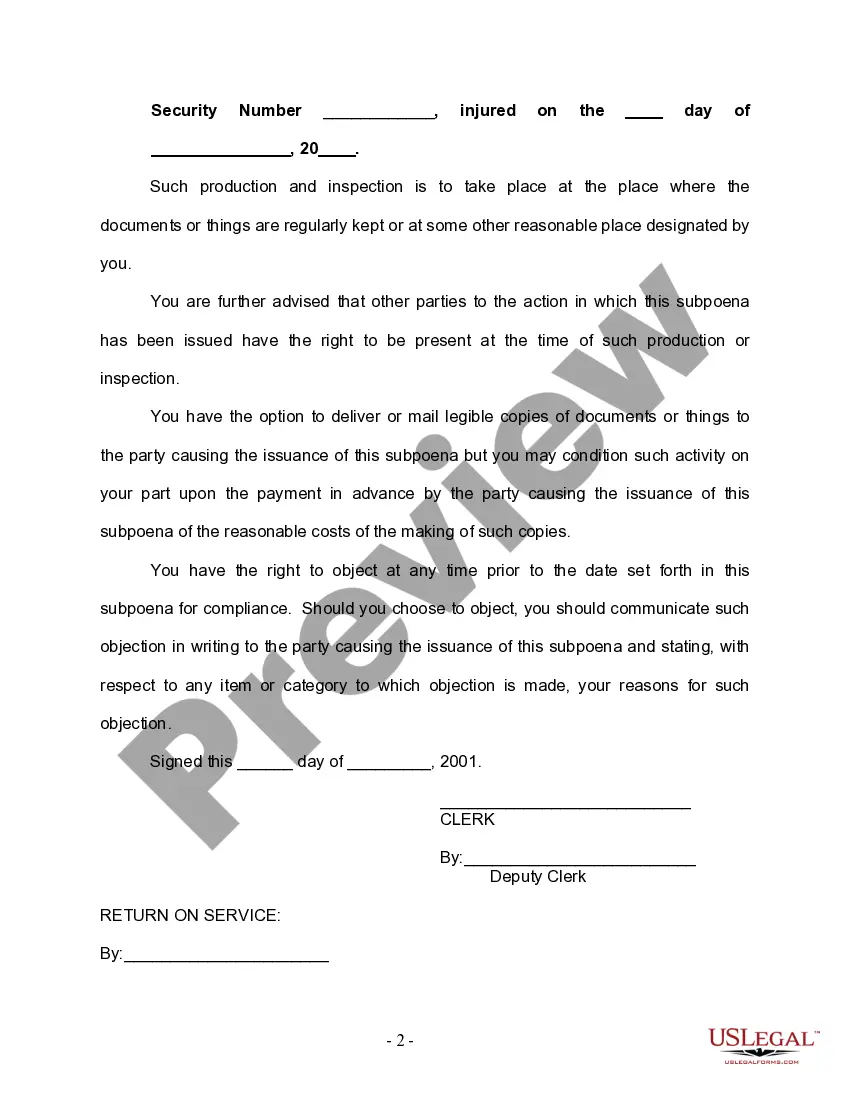
Subpoena Form Blank For Federal Court
Description
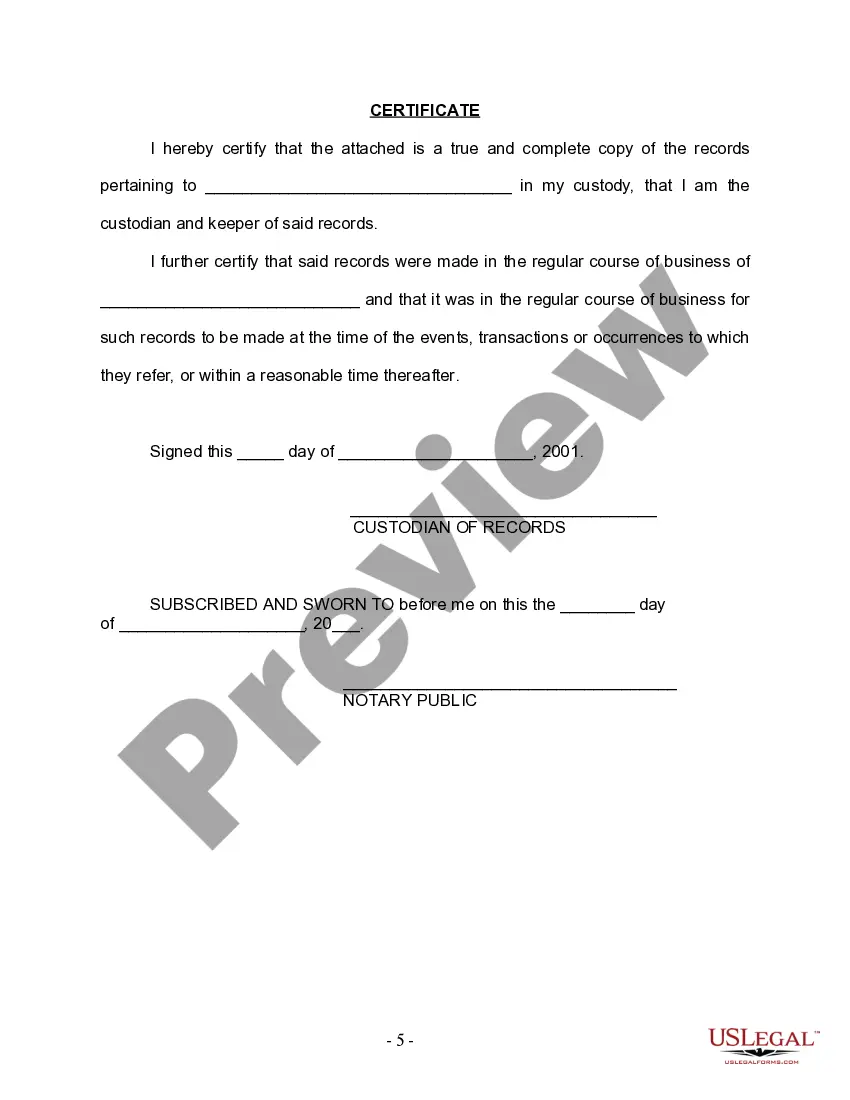
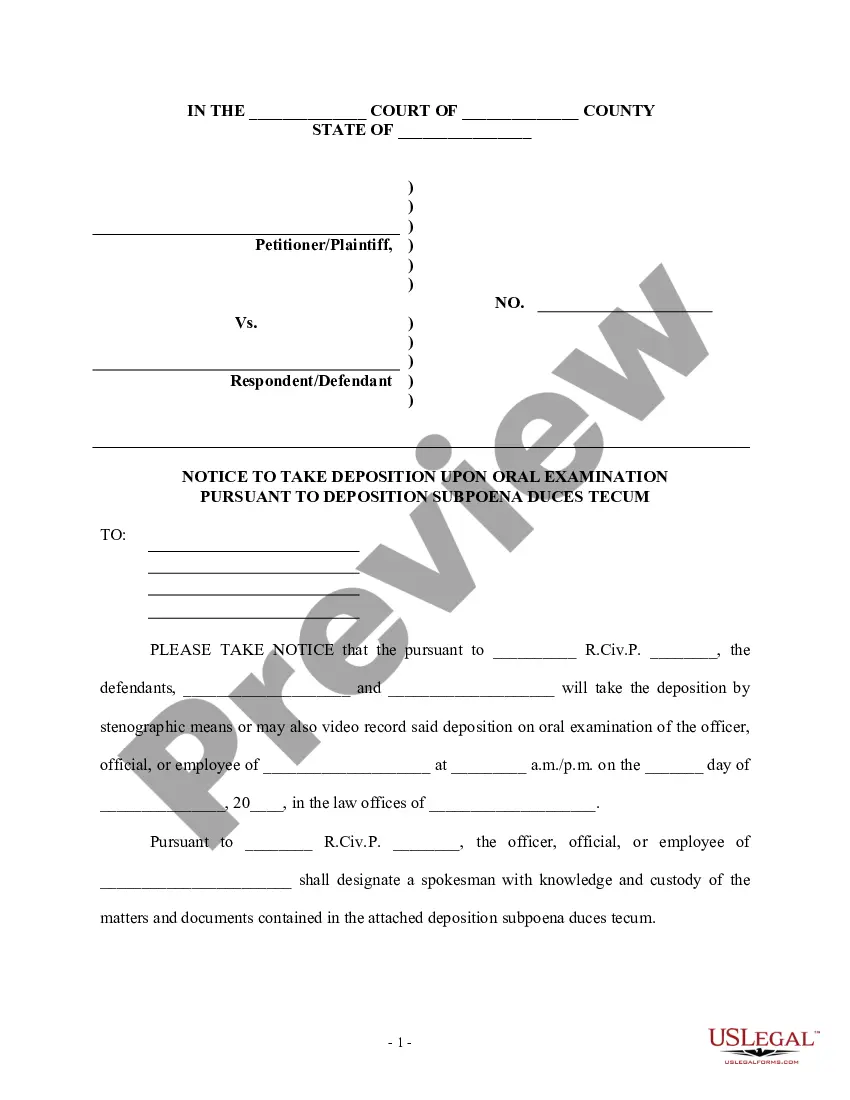
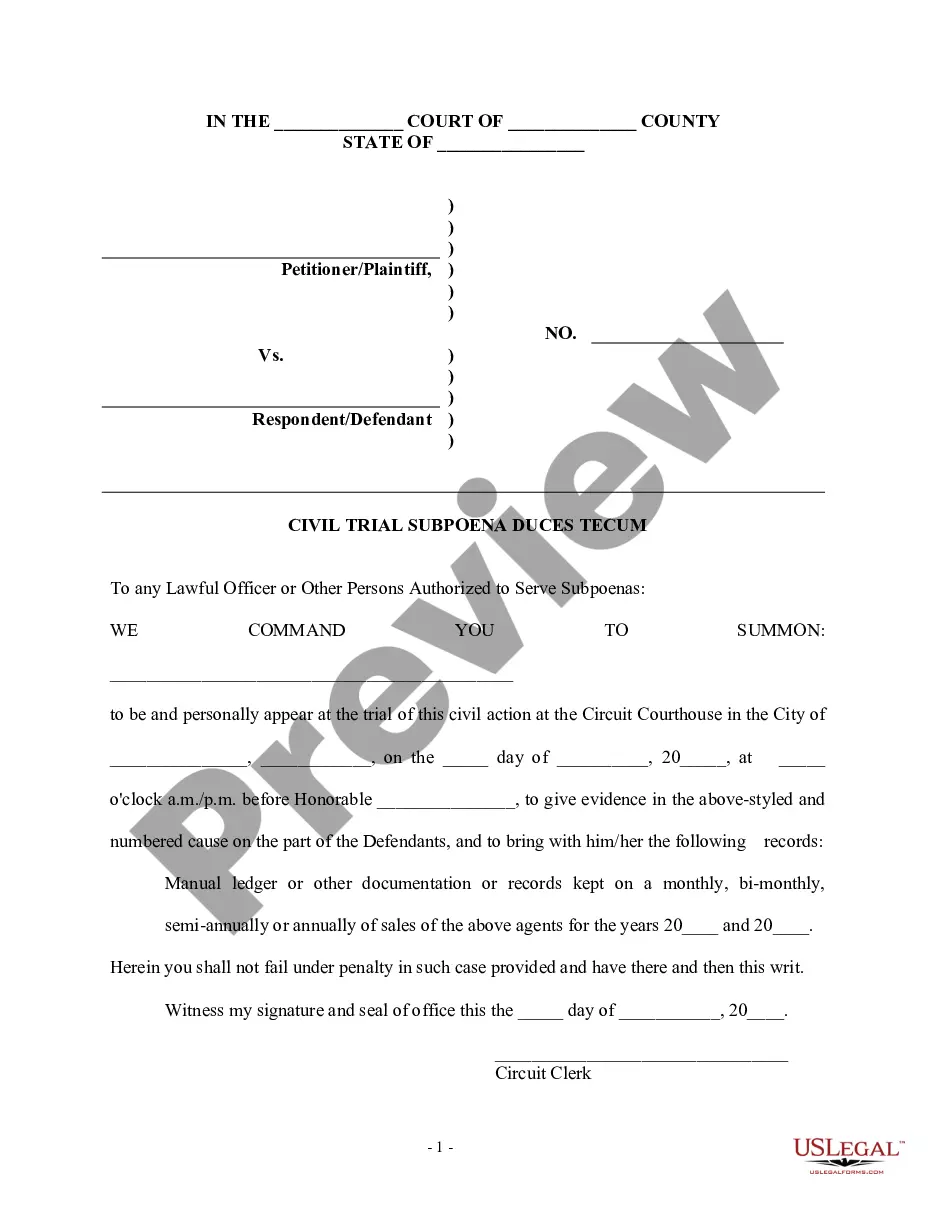
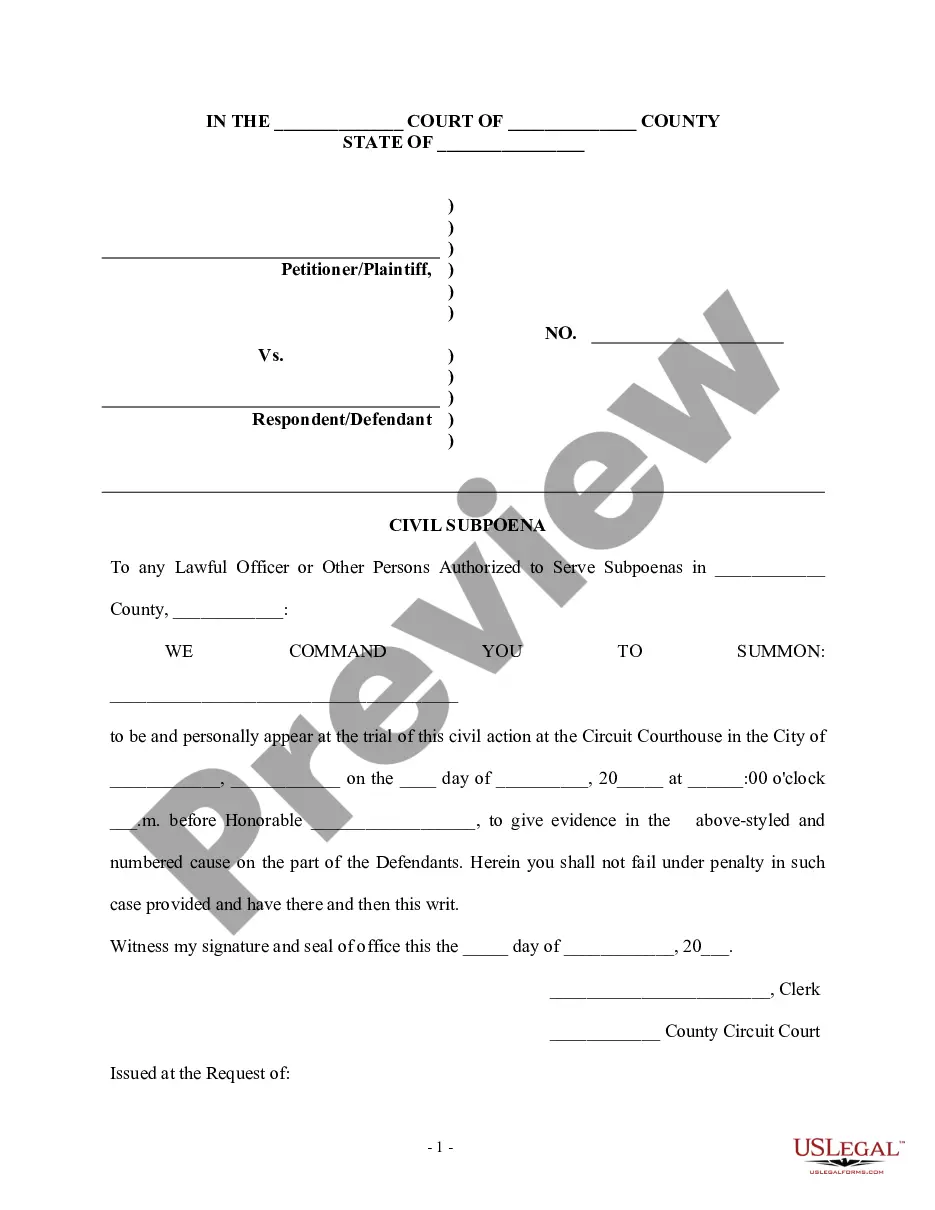
Get your form ready online
Our built-in tools help you complete, sign, share, and store your documents in one place.
Make edits, fill in missing information, and update formatting in US Legal Forms—just like you would in MS Word.
Download a copy, print it, send it by email, or mail it via USPS—whatever works best for your next step.
Sign and collect signatures with our SignNow integration. Send to multiple recipients, set reminders, and more. Go Premium to unlock E-Sign.
If this form requires notarization, complete it online through a secure video call—no need to meet a notary in person or wait for an appointment.
We protect your documents and personal data by following strict security and privacy standards.

Make edits, fill in missing information, and update formatting in US Legal Forms—just like you would in MS Word.

Download a copy, print it, send it by email, or mail it via USPS—whatever works best for your next step.

Sign and collect signatures with our SignNow integration. Send to multiple recipients, set reminders, and more. Go Premium to unlock E-Sign.

If this form requires notarization, complete it online through a secure video call—no need to meet a notary in person or wait for an appointment.

We protect your documents and personal data by following strict security and privacy standards.
Looking for another form?
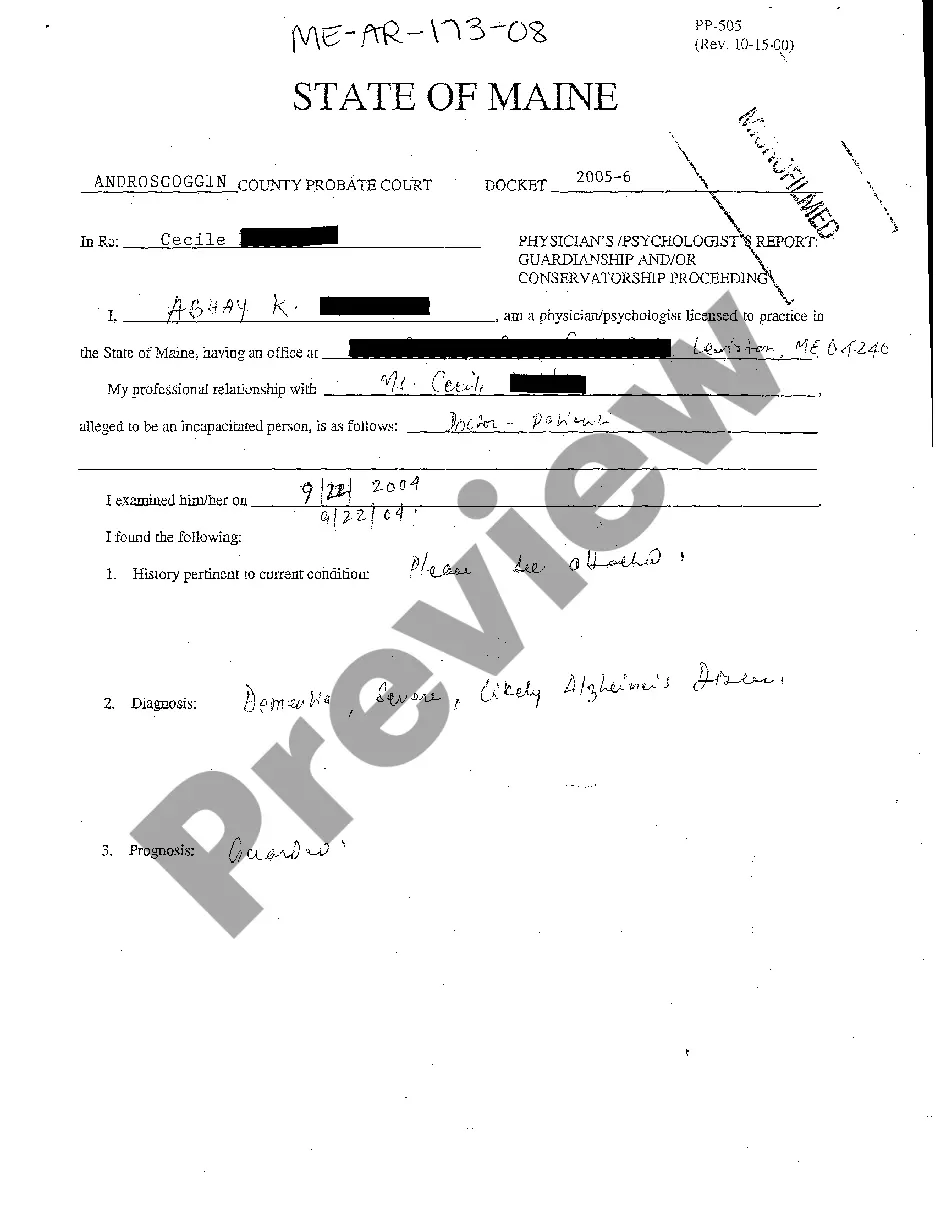

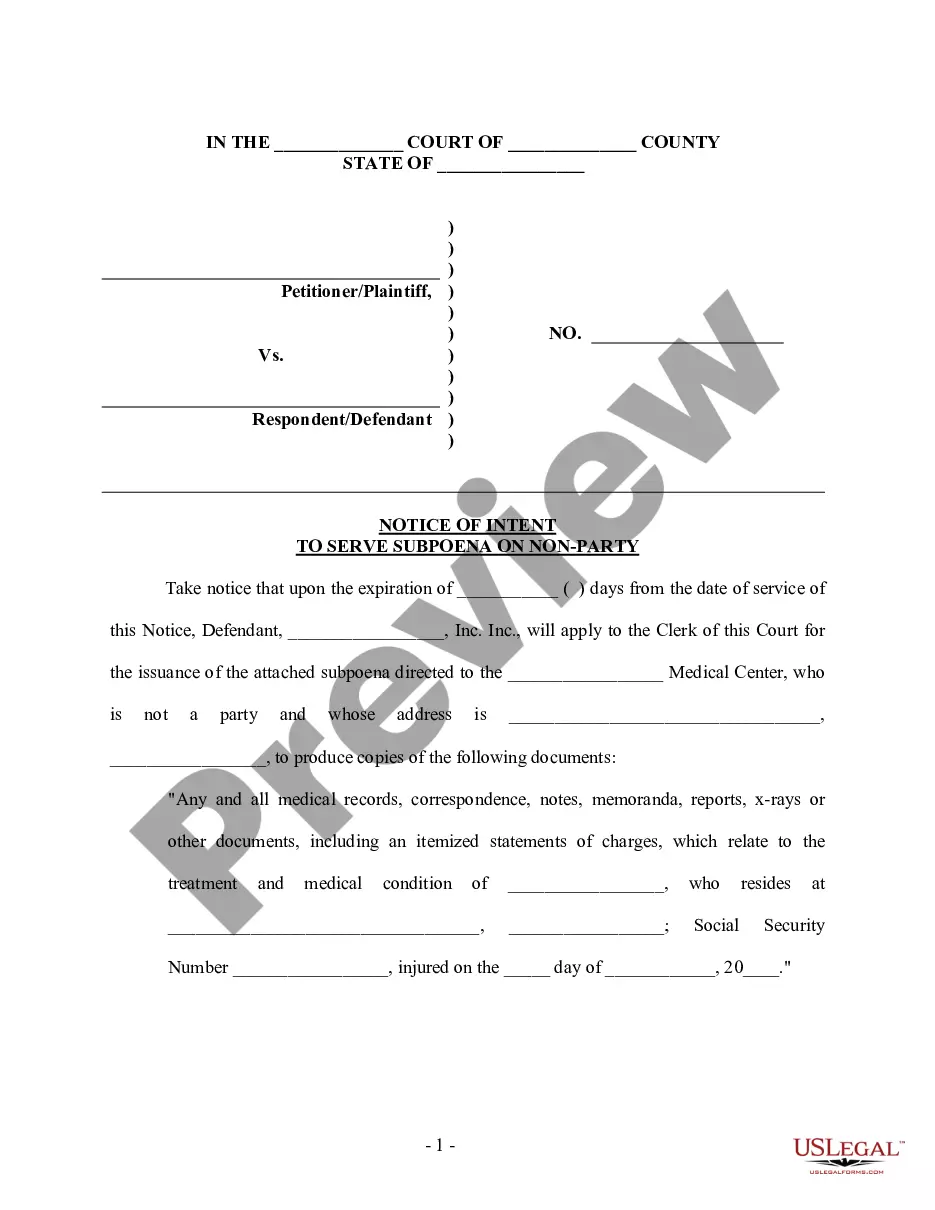
How to fill out Subpoena For Documents To A Nonparty?
Managing legal documents can be exasperating, even for the most seasoned experts.
When you are in search of a Subpoena Form Blank For Federal Court and lack the time to look for the right and current version, the processes can be anxiety-inducing.
Utilize state- or county-specific legal and business forms.
US Legal Forms accommodates any requirements you may have, ranging from personal to business documents, all in one platform.
If this is your first experience with US Legal Forms, create an account to gain unlimited access to all library benefits. Here are the steps to follow after locating the form you need.
- Use cutting-edge tools to fill out and manage your Subpoena Form Blank For Federal Court.
- Access a wealth of articles, guides, and resources related to your situation and needs.
- Save time and effort searching for the documents you require by utilizing US Legal Forms’ advanced search and Review tool to find and acquire the Subpoena Form Blank For Federal Court.
- If you have a subscription, Log In to your US Legal Forms account, search for the form, and download it.
- Check your My documents tab to view the documents you’ve previously downloaded and manage your files as needed.
- A robust online form repository can be transformative for anyone aiming to navigate these scenarios effectively.
- US Legal Forms is a leading provider in online legal documents, offering over 85,000 state-specific legal forms accessible at any time.
- With US Legal Forms, you can.
Form popularity
FAQ
Absent an agreement or court order stating otherwise, a subpoena recipient must serve any written objections on the party or attorney designated in the subpoena before the earlier of: The subpoena's return date (which issuing counsel sets). 14 days after the subpoena is served. (FRCP 45(d)(2)(B).)
Common grounds for objecting to a third-party subpoena for documents include: Improper service. Improper issuance. Vague, ambiguous, and unreasonable requests. Insufficient time to reply. Disclosure of privileged or confidential information. Disclosure of trade secrets. Undue burden or expense. Inaccessible data.
For example, if you are being investigated for a federal crime and investigators believe there is evidence on your computer, they may serve you with a subpoena duces tecum ordering you to produce the computer for inspection.
A subpoena commands the appearance of an individual and/or the production of specified items before the court of issuance.