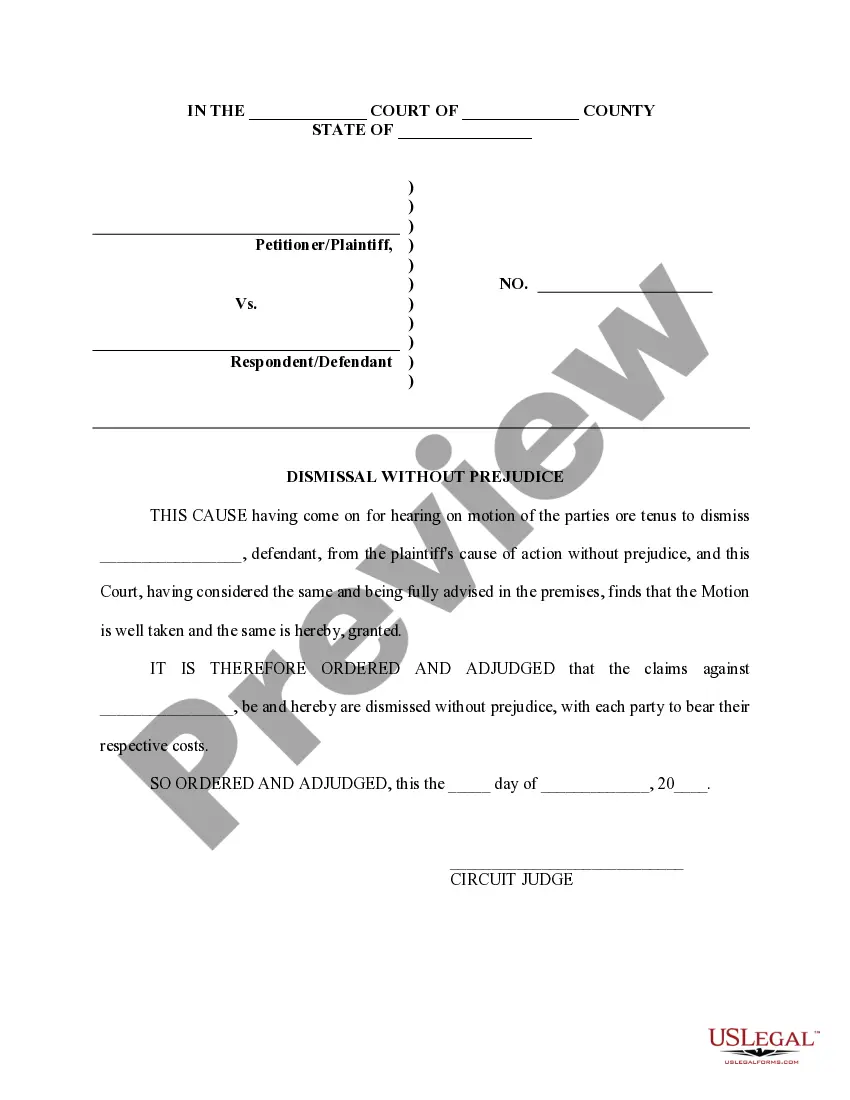
Dismissal Without Prejudice In Florida
Description
Get your form ready online
Our built-in tools help you complete, sign, share, and store your documents in one place.
Make edits, fill in missing information, and update formatting in US Legal Forms—just like you would in MS Word.
Download a copy, print it, send it by email, or mail it via USPS—whatever works best for your next step.
Sign and collect signatures with our SignNow integration. Send to multiple recipients, set reminders, and more. Go Premium to unlock E-Sign.
If this form requires notarization, complete it online through a secure video call—no need to meet a notary in person or wait for an appointment.
We protect your documents and personal data by following strict security and privacy standards.

Make edits, fill in missing information, and update formatting in US Legal Forms—just like you would in MS Word.

Download a copy, print it, send it by email, or mail it via USPS—whatever works best for your next step.

Sign and collect signatures with our SignNow integration. Send to multiple recipients, set reminders, and more. Go Premium to unlock E-Sign.

If this form requires notarization, complete it online through a secure video call—no need to meet a notary in person or wait for an appointment.

We protect your documents and personal data by following strict security and privacy standards.
Looking for another form?
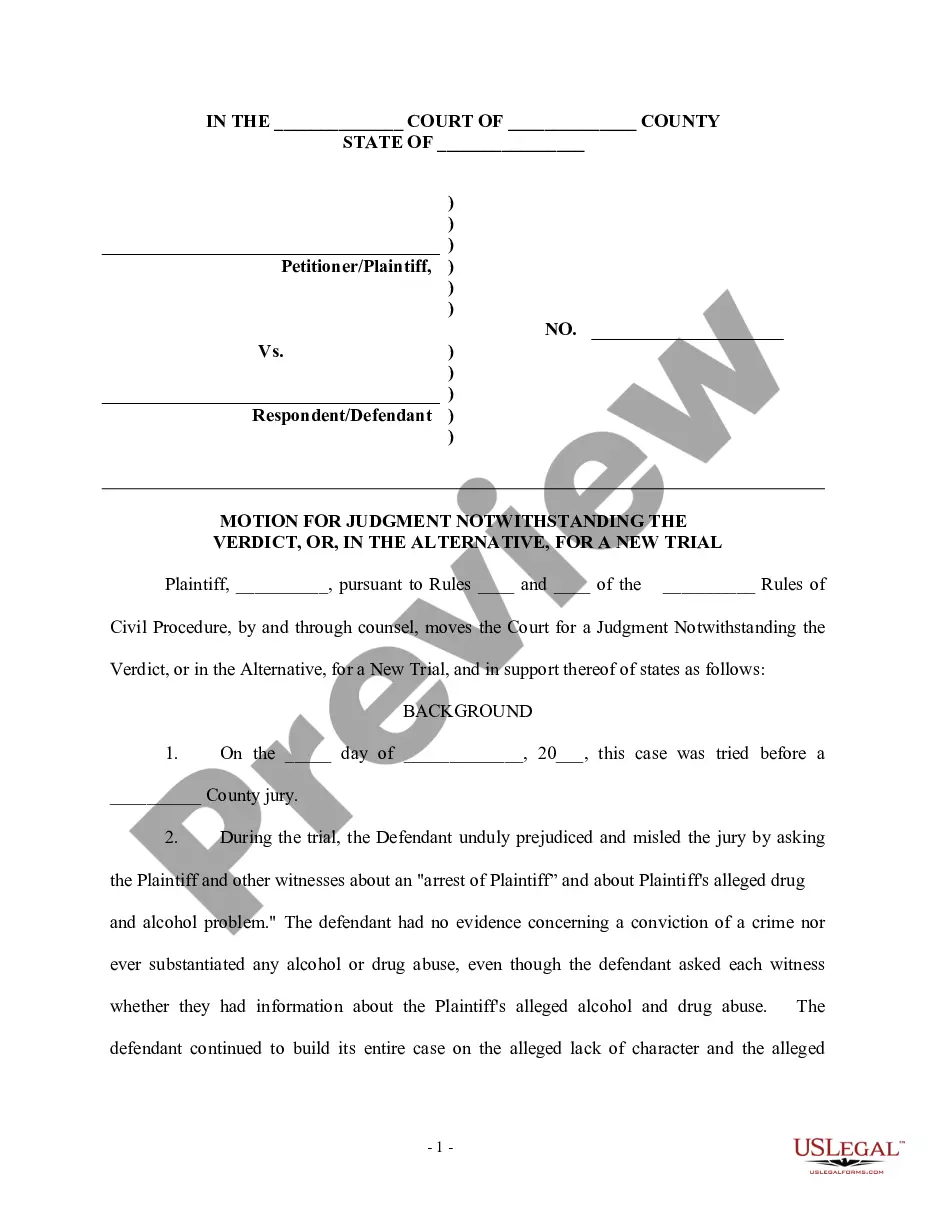
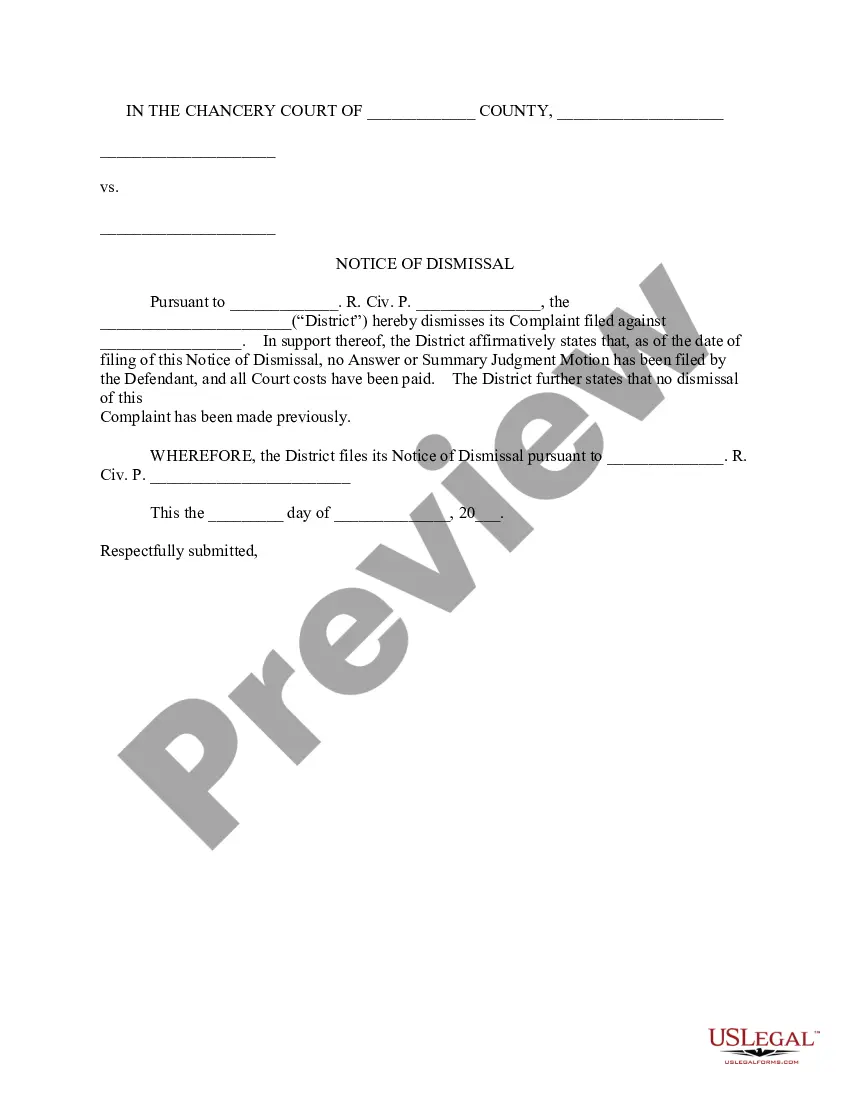
How to fill out Personal Injury - Order Dismissing Cause Without Prejudice?
Regardless of whether it's for professional reasons or personal issues, everyone ultimately encounters legal matters in their lifetime.
Filling out legal documents requires meticulous care, starting with selecting the correct form template. For instance, if you choose an incorrect version of the Dismissal Without Prejudice In Florida, it will be rejected once submitted. Thus, it is crucial to obtain a reliable source of legal forms like US Legal Forms.
- Acquire the template you require by using the search box or catalog navigation.
- Review the form’s details to ensure it aligns with your needs, jurisdiction, and area.
- Select the form’s preview for your review.
- If it is the wrong document, return to the search feature to locate the Dismissal Without Prejudice In Florida form you require.
- Obtain the file once it fits your criteria.
- If you possess a US Legal Forms account, simply click Log in to retrieve previously saved documents in My documents.
- If you do not yet have an account, you can download the form by selecting Buy now.
- Choose the appropriate pricing option.
- Fill out the account registration form.
- Select your payment method: you can use a credit card or PayPal account.
- Choose the file format you prefer and download the Dismissal Without Prejudice In Florida.
- Once saved, you may complete the form using editing software or print it out and fill it in by hand.
- With an extensive US Legal Forms inventory available, you do not need to waste time searching for the correct template online. Utilize the library’s straightforward navigation to find the right form for every circumstance.
Form popularity
FAQ
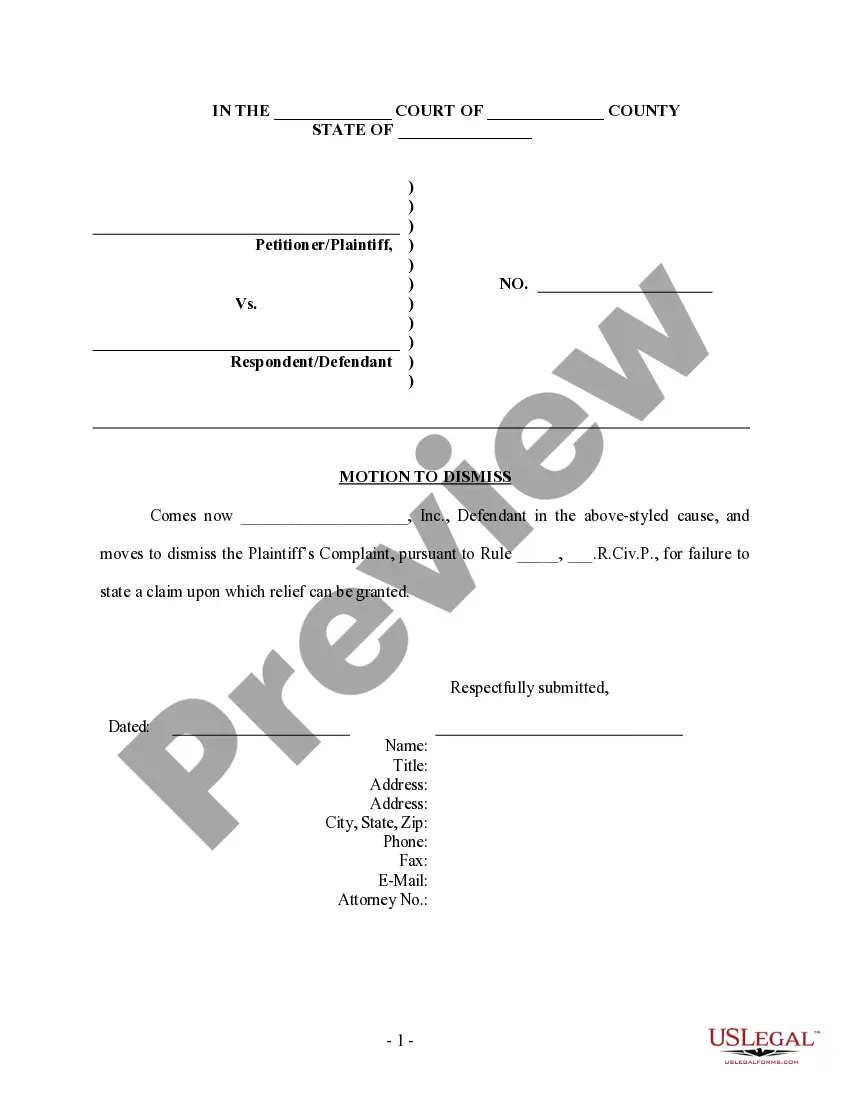
The basic requirements for filing a motion to dismiss in a criminal case include: Be in writing and signed by the party or party's attorney making the motion. State the grounds for the case. A copy of the motion must be served on the adverse party. Be sworn by the defendant. Be accompanied by a certificate of service.
Dismissal without prejudice means that the judge dismissed the plaintiff's or prosecutor's case without damaging their right to have their matter heard in court later. A prosecutor may ask to withdraw the case against a person to have more time to make a case stronger, find more evidence or question other witnesses.
Whereas a case that is dismissed ?with prejudice? is dismissed permanently, a case that is dismissed ?without prejudice? is only dismissed temporarily. This temporary dismissal means that the plaintiff is allowed to re-file charges, alter the claim, or bring the case to another court.
Unless otherwise stated in the notice or stipulation, the dismissal is without prejudice, except that a notice of dismissal operates as an adjudication on the merits when served by a plaintiff who has once dismissed in any court an action based on or including the same claim.
Florida's ?two-dismissal rule? holds that a second voluntary dismissal will operate as a denial of adjudication ?of any claim for benefits previously subject to voluntary dismissal.? In other words, if your claim is dismissed twice, that specific claim is forever barred from being brought again.