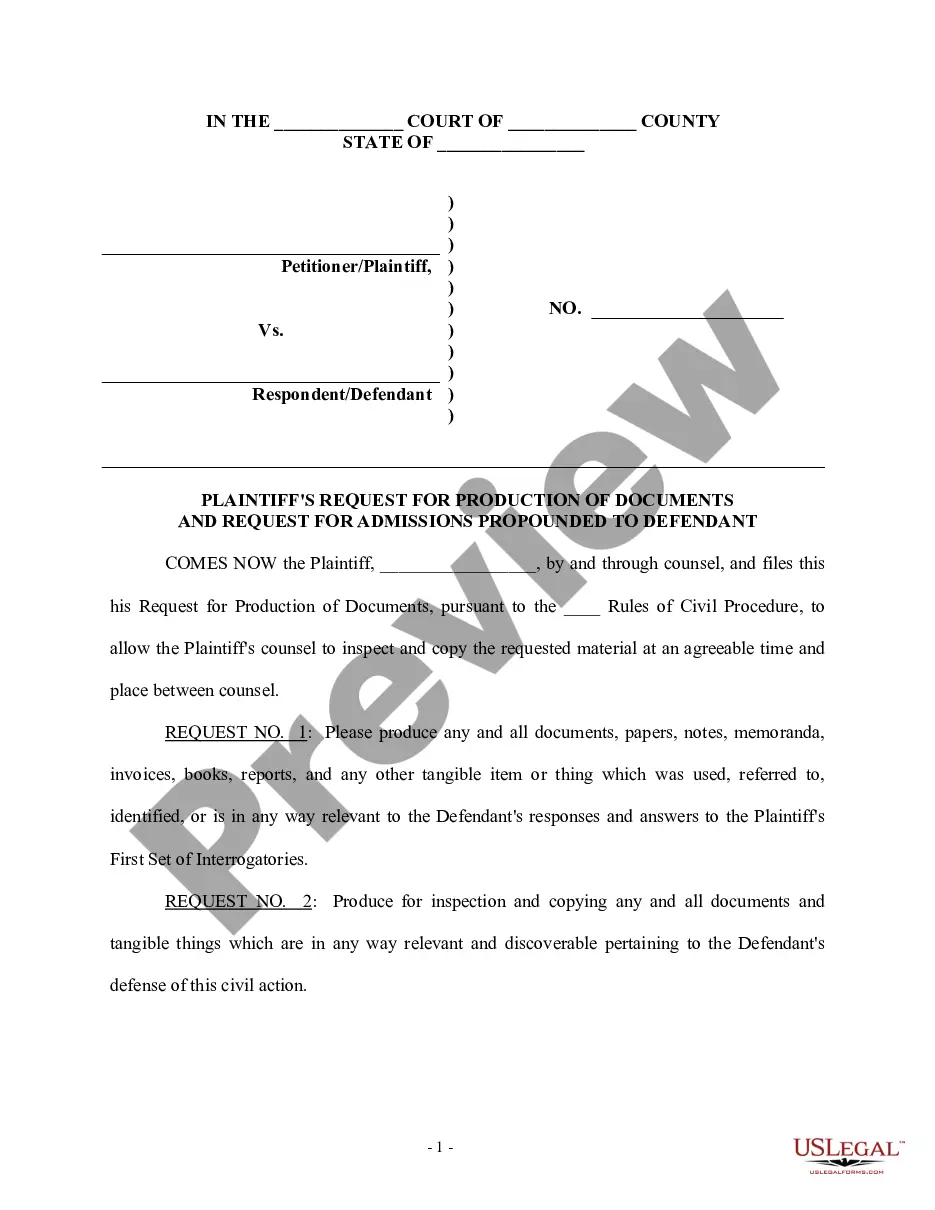
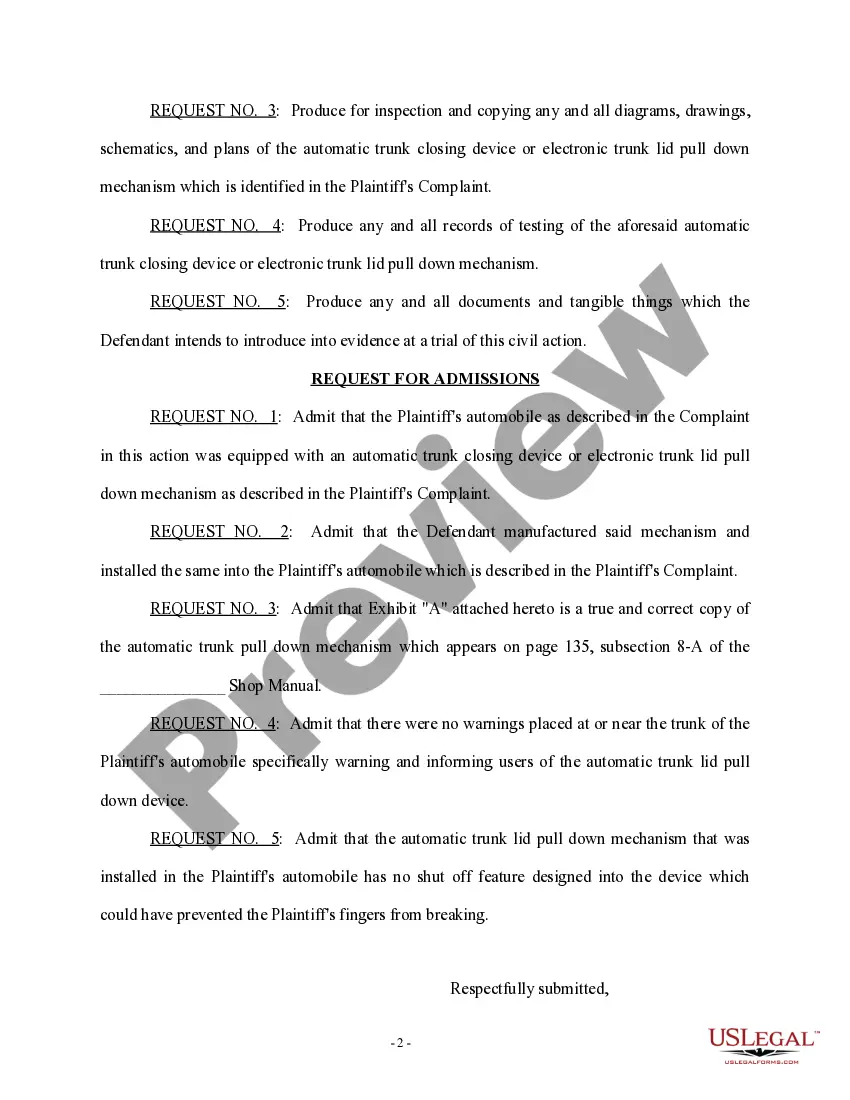
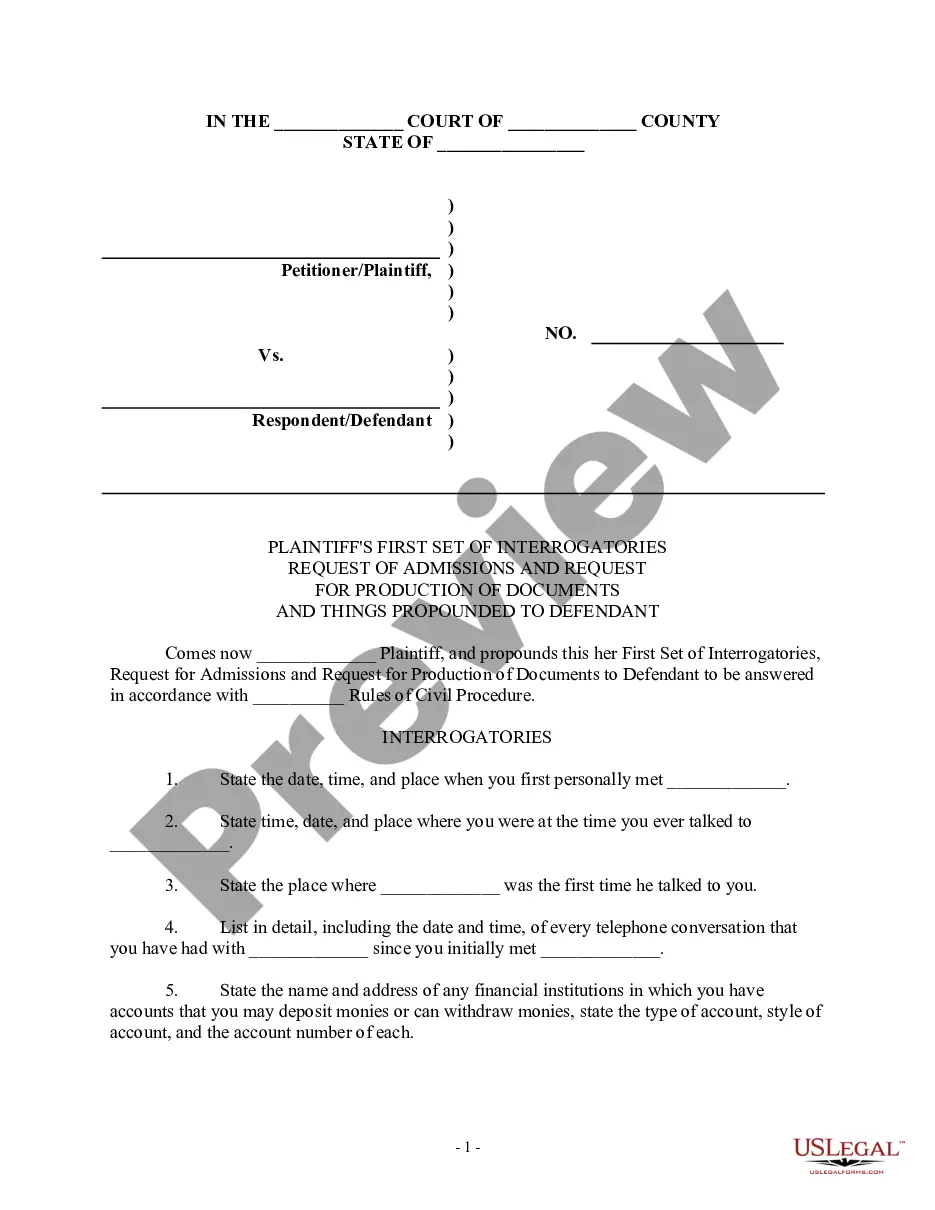
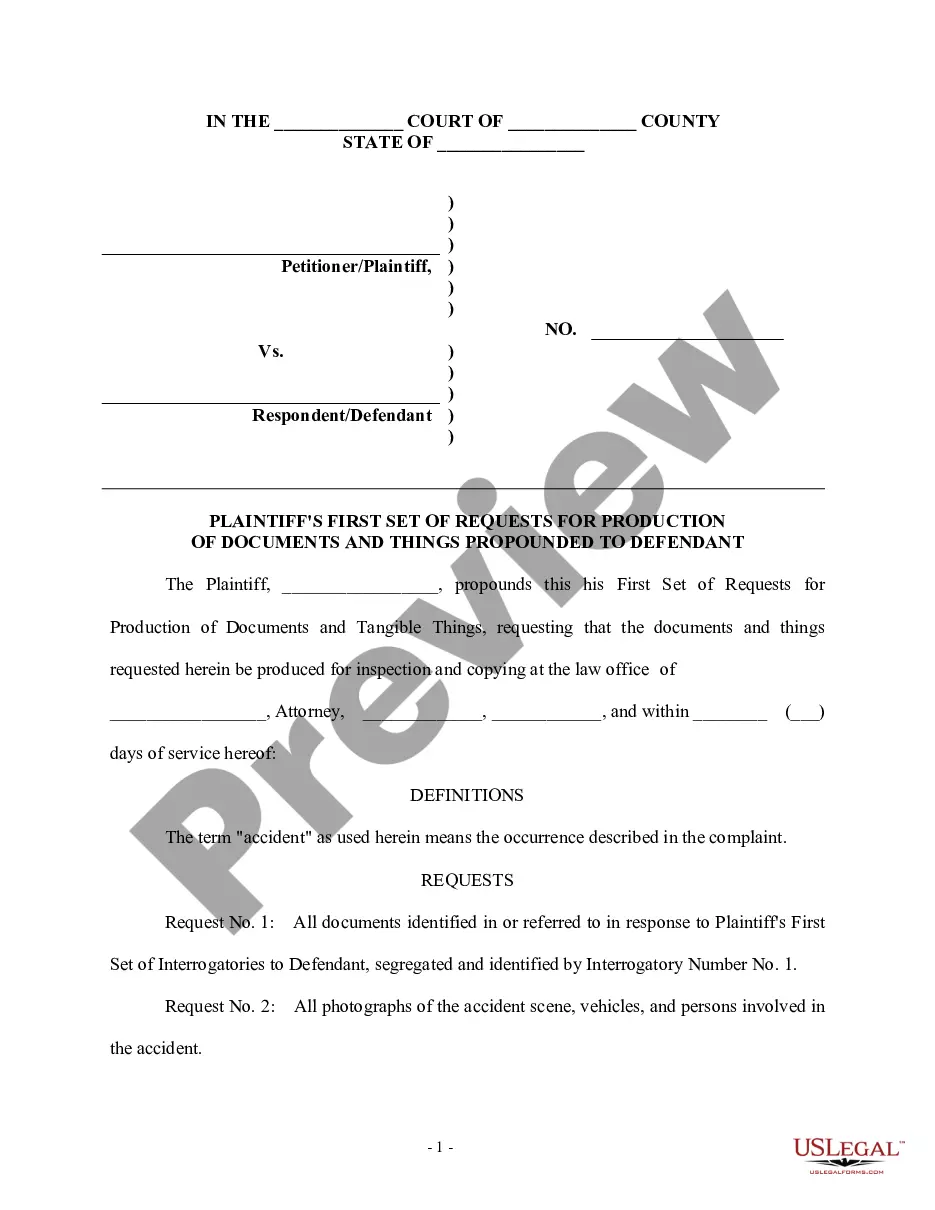
Request For Production Of Documents In Divorce
Description
Get your form ready online
Our built-in tools help you complete, sign, share, and store your documents in one place.
Make edits, fill in missing information, and update formatting in US Legal Forms—just like you would in MS Word.
Download a copy, print it, send it by email, or mail it via USPS—whatever works best for your next step.
Sign and collect signatures with our SignNow integration. Send to multiple recipients, set reminders, and more. Go Premium to unlock E-Sign.
If this form requires notarization, complete it online through a secure video call—no need to meet a notary in person or wait for an appointment.
We protect your documents and personal data by following strict security and privacy standards.

Make edits, fill in missing information, and update formatting in US Legal Forms—just like you would in MS Word.

Download a copy, print it, send it by email, or mail it via USPS—whatever works best for your next step.

Sign and collect signatures with our SignNow integration. Send to multiple recipients, set reminders, and more. Go Premium to unlock E-Sign.

If this form requires notarization, complete it online through a secure video call—no need to meet a notary in person or wait for an appointment.

We protect your documents and personal data by following strict security and privacy standards.
Looking for another form?



Form popularity
FAQ
The rule of 35 in California refers to a limit on the number of requests for admission a party can serve, capped at 35. This rule aims to streamline litigation and encourage parties to focus on essential matters. By understanding this rule, you can navigate your divorce proceedings more effectively and utilize uslegalforms to help manage your legal documents and requests.
The RFP limit in California does not impose an exact number on how many requests for production of documents one can file in a divorce case. Rather, the focus is on the relevance and reasonableness of the requests. Striking a balance between thoroughness and practicality is key, and services like uslegalforms can assist in drafting manageable requests.
In California, the recipient of a request for production of documents in divorce typically has 30 days to respond. This period allows parties ample time to gather the necessary documents while maintaining efficient discovery. If you’re unsure about your obligations, consider using resources from uslegalforms to ensure timely compliance with your requests.
A request for production of documents in California is a formal legal request that one party sends to another in divorce proceedings, asking for specific documents relevant to the case. These requests may include financial records, correspondence, or any other pertinent materials. Properly crafted, these requests aid in uncovering important information and supporting your arguments during the divorce process.
In California, a party may serve up to 35 requests for admission, unless otherwise agreed by both parties or ordered by the court. This limit helps streamline the discovery process during divorce proceedings, allowing parties to clarify issues early on. Utilizing tools like uslegalforms can help you effectively manage your requests while ensuring compliance with court rules.
In California, there is no fixed numerical limit on a request for production of documents in divorce cases. However, the requests must be relevant to the issues of the case and not excessively burdensome. Courts often assess the reasonableness of the requests, ensuring that they facilitate fair information exchange between both parties.