Order Of Protective Custody Louisiana
Description
Get your form ready online
Our built-in tools help you complete, sign, share, and store your documents in one place.
Make edits, fill in missing information, and update formatting in US Legal Forms—just like you would in MS Word.
Download a copy, print it, send it by email, or mail it via USPS—whatever works best for your next step.
Sign and collect signatures with our SignNow integration. Send to multiple recipients, set reminders, and more. Go Premium to unlock E-Sign.
If this form requires notarization, complete it online through a secure video call—no need to meet a notary in person or wait for an appointment.
We protect your documents and personal data by following strict security and privacy standards.

Make edits, fill in missing information, and update formatting in US Legal Forms—just like you would in MS Word.

Download a copy, print it, send it by email, or mail it via USPS—whatever works best for your next step.

Sign and collect signatures with our SignNow integration. Send to multiple recipients, set reminders, and more. Go Premium to unlock E-Sign.

If this form requires notarization, complete it online through a secure video call—no need to meet a notary in person or wait for an appointment.

We protect your documents and personal data by following strict security and privacy standards.
Looking for another form?

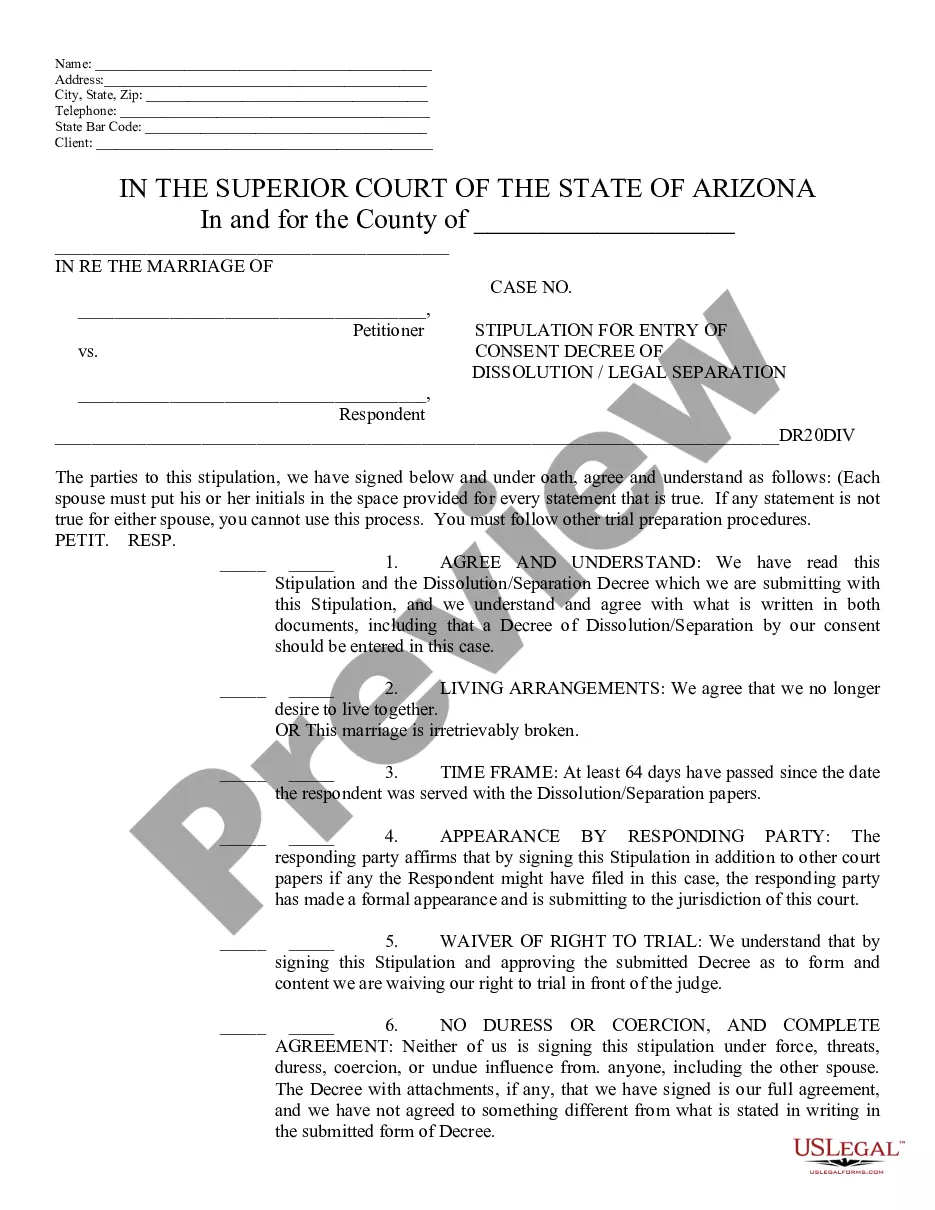
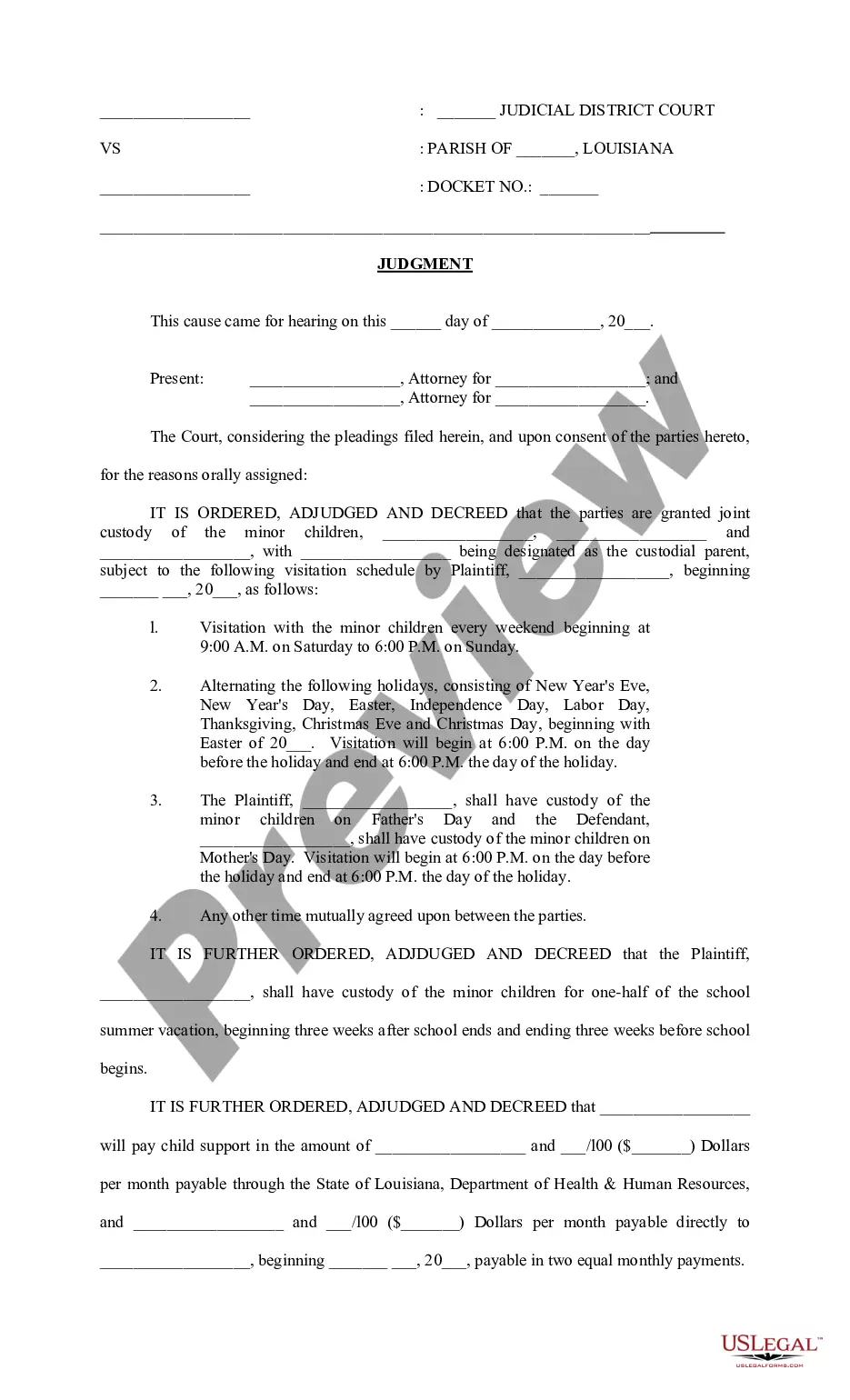
How to fill out Protective Order - Civil Trial?
Regardless of whether it's for professional reasons or private matters, everyone encounters the necessity to handle legal issues at various times in their lives.
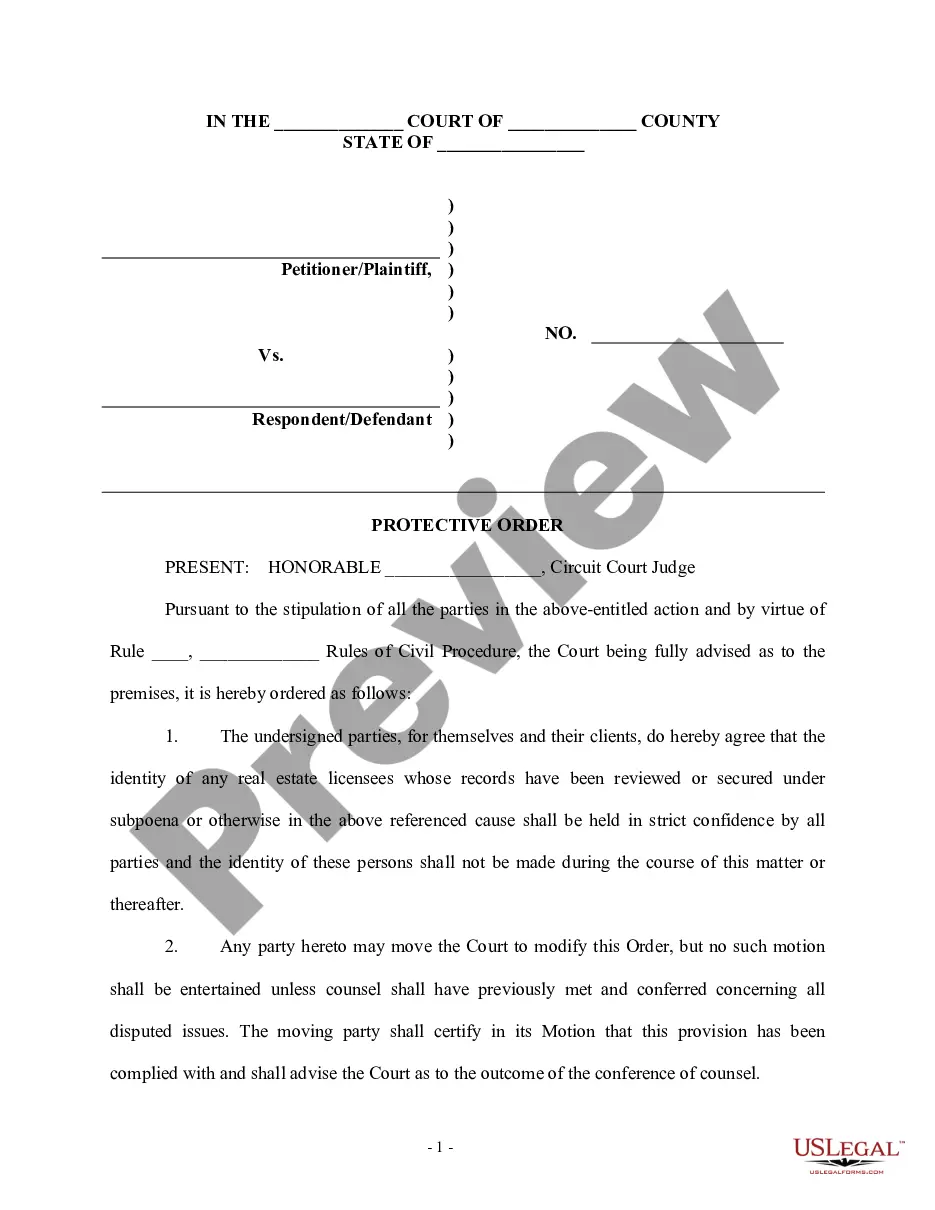
Filling out legal documentation requires meticulous consideration, starting with selecting the right form template. For example, if you opt for an incorrect version of the Order Of Protective Custody Louisiana, it will be rejected upon submission. Thus, it's vital to have a reliable source of legal documents like US Legal Forms.
With a comprehensive US Legal Forms catalog available, you don’t need to waste time searching for the suitable template online. Take advantage of the library’s easy navigation to find the right form for any situation.
- Obtain the template you need by using the search feature or browsing the catalog.
- Review the details of the form to ensure it aligns with your situation, state, and locality.
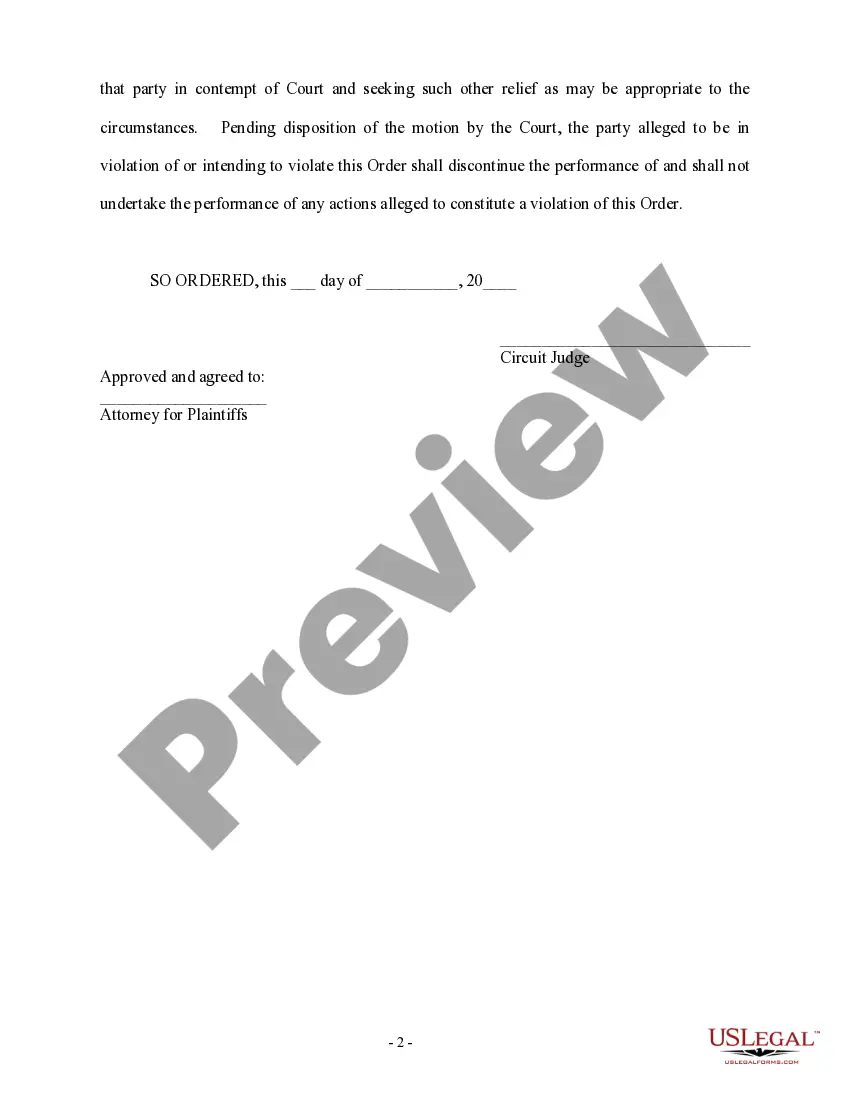
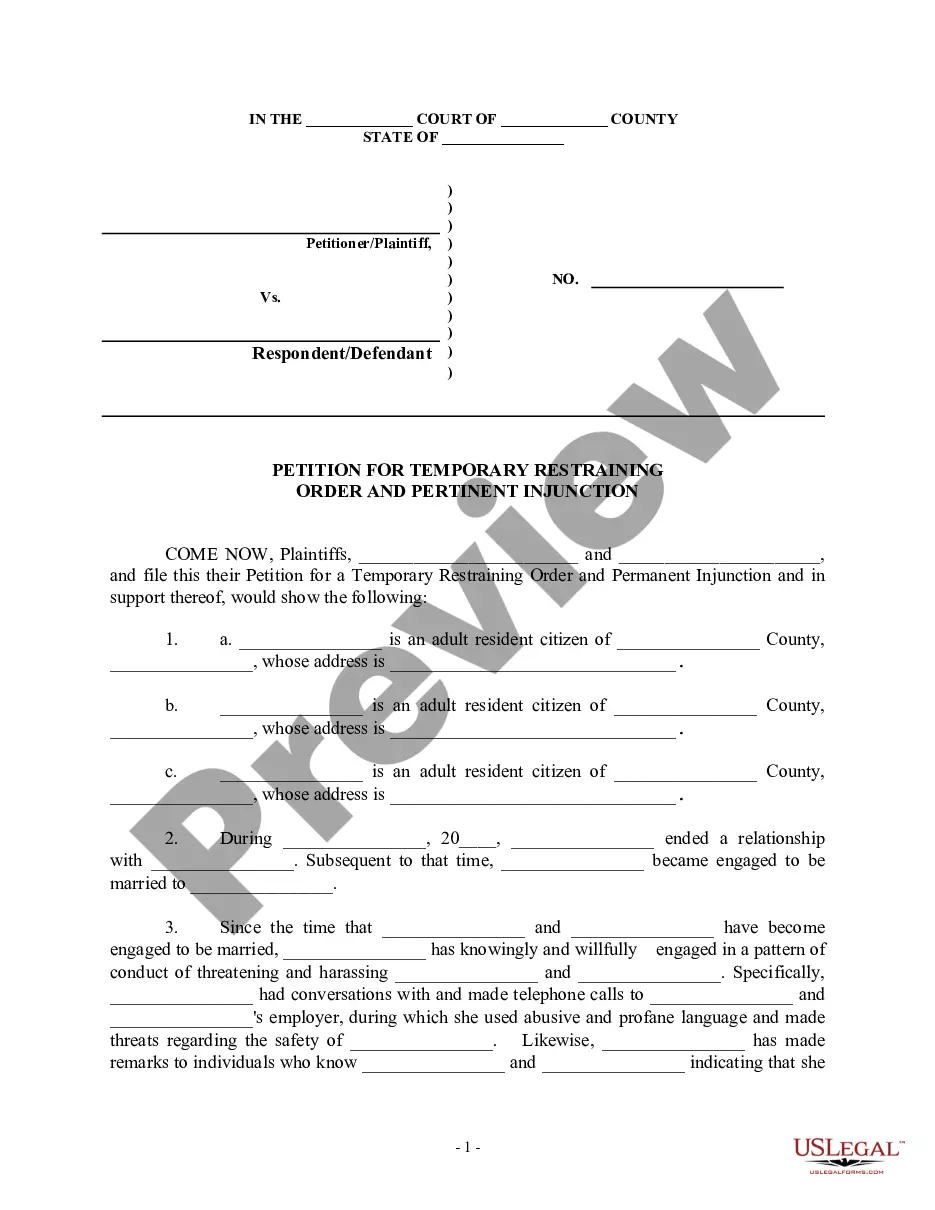
- Click on the form’s preview to examine it.
- If it’s not the correct document, return to the search option to find the Order Of Protective Custody Louisiana template you need.
- Download the file if it satisfies your criteria.
- If you possess a US Legal Forms account, simply click Log in to access previously stored documents in My documents.
- If you don’t have an account yet, you can acquire the form by clicking Buy now.
- Choose the suitable pricing plan.
- Fill out the registration form for your profile.
- Select your payment method: credit card or PayPal.
- Choose the format of the document you want and download the Order Of Protective Custody Louisiana.
- Once saved, you can complete the form using editing software or print it out and finish it by hand.
Form popularity
FAQ
The fastest way to obtain a restraining order in Louisiana is to gather all necessary documentation and file your request in person at the local courthouse. Be prepared to present your case clearly and provide supporting evidence to streamline the process. Using services like US Legal Forms can assist you in completing your paperwork efficiently, helping you achieve the order of protective custody Louisiana offers without unnecessary delays.
To get an order of protective custody in Louisiana, you must file a petition with the local court, outlining your reasons for requesting the order. It's essential to include any supportive evidence, as this will help the court understand your situation better. US Legal Forms offers resources that guide you through this process, making it easier to secure the order of protective custody Louisiana provides.
Filing an Order of Protective Custody (OPC) in Louisiana requires you to complete specific court forms, detailing your situation. You must submit these forms to the appropriate court, often alongside your evidence. Additionally, you may want to consider using platforms like US Legal Forms for guidance and efficient filing, ensuring your order of protective custody Louisiana meets all requirements.
An order of protective custody (OPC) in Louisiana generally remains in effect for a specified duration set by the court but can be extended if conditions warrant. Typically, these orders are reviewed periodically to ensure ongoing safety needs are met. Understanding the terms and intervals of an OPC is crucial, particularly when dealing with situations related to an order of protective custody Louisiana. Seeking legal advice can clarify any questions on duration and renewal processes.
The law of protective custody in Louisiana refers to legal provisions that allow authorities to detain an individual for their own safety or the safety of others. This legal framework ensures that vulnerable individuals receive timely interventions during crises. It's vital to understand how this law interacts with an order of protective custody Louisiana, as both aim to provide safety and protection for individuals in distress. Partnering with professionals can clarify your rights under these laws.
In Louisiana, a temporary restraining order (TRO) can last for up to 15 days, with an option for extension if necessary. Following this period, a court hearing is scheduled to assess whether to convert the TRO into a more permanent order. If you need immediate protection, obtaining an order of protective custody Louisiana may be the first step in that process. This ensures that your safety remains a priority.
An involuntary psychiatric hold in Louisiana typically lasts for up to 72 hours. During this time, mental health professionals evaluate the individual's condition to determine if further treatment is necessary. If more time is needed, a court order may be required for an extension, similar to how an order of protective custody Louisiana mandates safety measures. It is essential for individuals in crisis to receive the appropriate care quickly.
Mineral rights in Louisiana can remain valid indefinitely, provided the rights holder actively develops or produces the resources. If the minerals aren't developed, rights may expire after a specified period due to inactivity. This differs from an order of protective custody Louisiana, which serves a specific purpose related to personal safety rather than property rights. Regular review of mineral rights can ensure they remain intact.
In Louisiana, a civil case can remain open until it reaches a resolution or a judgment is made. There is generally no strict time limit for how long a case can be pending; however, key milestones and deadlines must be met to prevent dismissal. Additionally, an order of protective custody Louisiana may influence the timeline if the case involves urgent safety concerns. Staying engaged with your legal representation can help navigate the duration effectively.
An order of protective custody in Louisiana is a court order that allows law enforcement to take an individual into custody for their safety. This typically occurs in situations where a person poses a risk to themselves or others. It is a critical intervention used to prevent harm, ensuring that individuals at risk receive the help they need. Such orders are especially relevant in cases of mental health crises or domestic situations.