Property Rights Easements For Land
Description
Get your form ready online
Our built-in tools help you complete, sign, share, and store your documents in one place.
Make edits, fill in missing information, and update formatting in US Legal Forms—just like you would in MS Word.
Download a copy, print it, send it by email, or mail it via USPS—whatever works best for your next step.
Sign and collect signatures with our SignNow integration. Send to multiple recipients, set reminders, and more. Go Premium to unlock E-Sign.
If this form requires notarization, complete it online through a secure video call—no need to meet a notary in person or wait for an appointment.
We protect your documents and personal data by following strict security and privacy standards.

Make edits, fill in missing information, and update formatting in US Legal Forms—just like you would in MS Word.

Download a copy, print it, send it by email, or mail it via USPS—whatever works best for your next step.

Sign and collect signatures with our SignNow integration. Send to multiple recipients, set reminders, and more. Go Premium to unlock E-Sign.

If this form requires notarization, complete it online through a secure video call—no need to meet a notary in person or wait for an appointment.

We protect your documents and personal data by following strict security and privacy standards.
Looking for another form?




How to fill out Assignment Of Easements - Short Form?
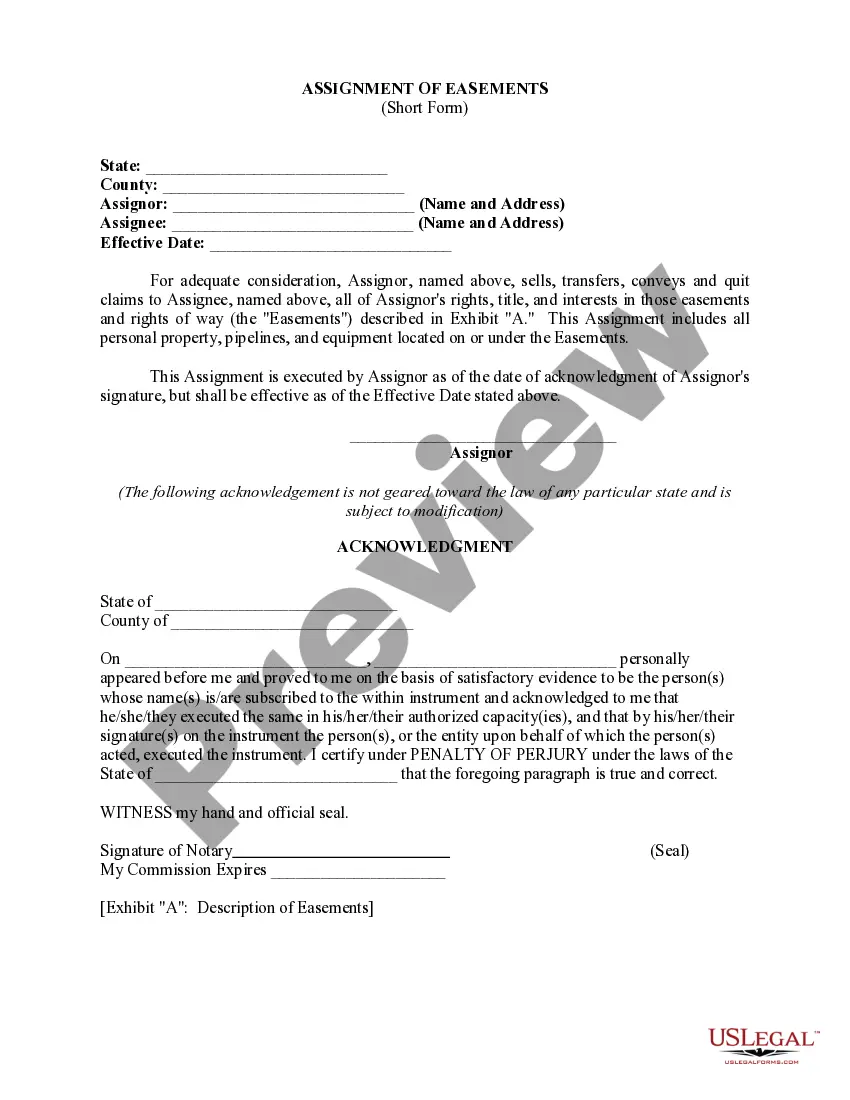
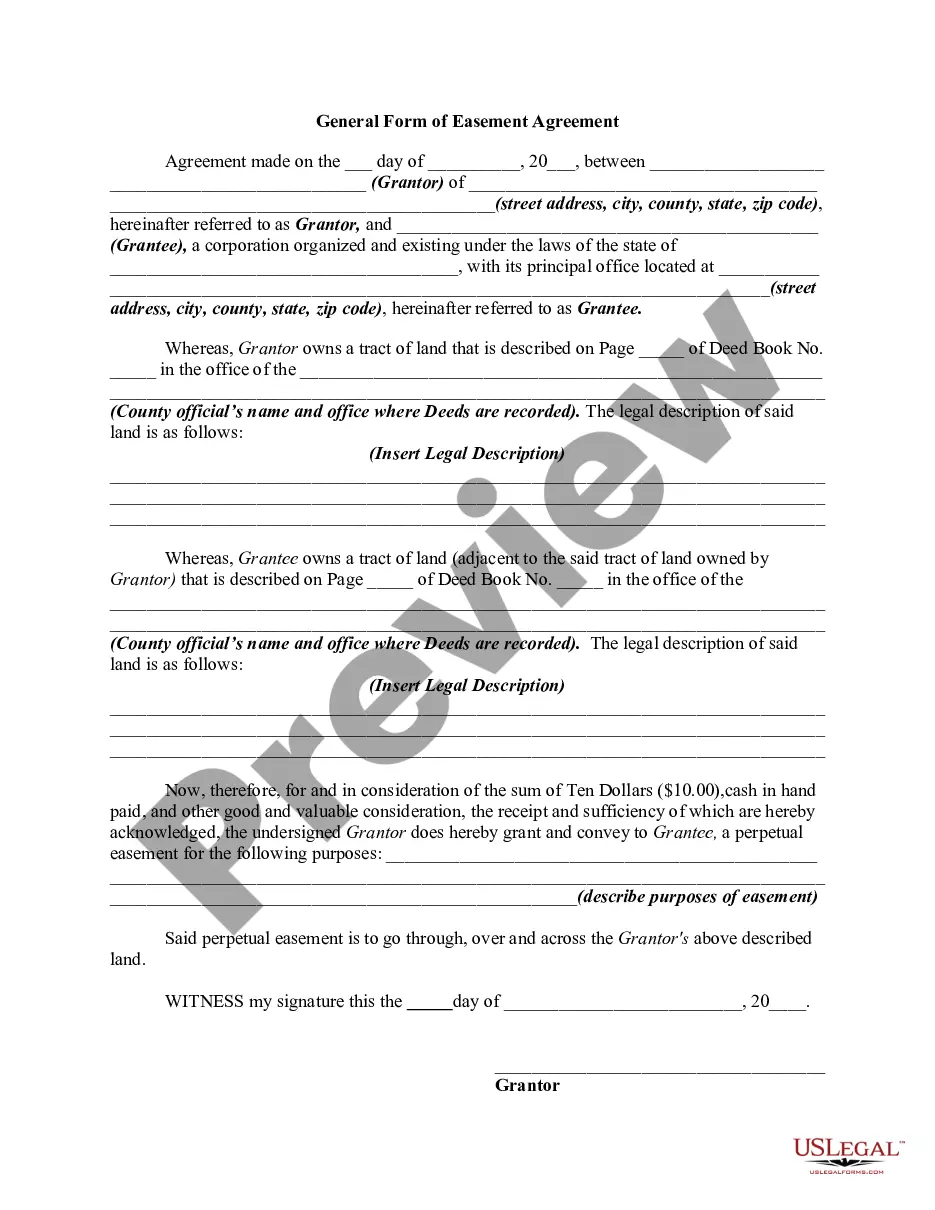
The Property Rights Easements For Land displayed on this page is a versatile legal template crafted by experienced attorneys in accordance with federal and local laws and regulations.
For over 25 years, US Legal Forms has supplied individuals, organizations, and lawyers with more than 85,000 authenticated, state-specific documents for any business and personal circumstances. It’s the quickest, easiest, and most reliable method to acquire the paperwork you require, as the service ensures bank-grade data security and anti-malware safeguards.
Select the format you prefer for your Property Rights Easements For Land (PDF, DOCX, RTF) and save the document on your device.
- Search for the document you require and review it.
- Examine the sample you found and preview it or read the form description to confirm it meets your requirements. If it doesn’t, utilize the search bar to find the correct one. Click Buy Now when you have identified the template you need.
- Register and Log In.
- Choose the pricing option that works for you and create an account. Use PayPal or a credit card to make a quick payment. If you already possess an account, Log In and check your subscription to proceed.
- Obtain the editable template.
Form popularity
FAQ
Yes, for property rights easements for land to be legally enforceable, they typically must be recorded with the local government. Recording the easement provides public notice and protects the rights of the easement holder. Failing to record can lead to disputes or challenges in asserting the easement, so utilizing a platform like USLegalForms can simplify the process of creating and recording your easement.
Easements come with specific rules that govern their use and maintenance. Generally, property rights easements for land must respect the terms outlined in the easement agreement, including limitations on how the easement can be used. Property owners should be aware of these rules to protect their interests and avoid conflicts with easement holders.
In Minnesota, property rights easements for land can be created through written agreements or can be implied by use. The state recognizes different types of easements, such as public and private easements, each with distinct rules. Understanding how easements function in Minnesota can help property owners navigate potential disputes and ensure proper land use.
As a property owner, you have the right to refuse an easement request, but there are exceptions. If a neighbor has a valid claim to a right of way or if the easement is necessary for access to landlocked property, you may be legally obligated to grant it. It's important to consult with a legal expert to understand your rights and responsibilities regarding property rights easements for land.
In Florida, property rights easements for land are governed by state law, which allows for both express and implied easements. Express easements must be in writing and recorded to be enforceable, while implied easements arise from the circumstances surrounding the property. Understanding these laws is crucial, as they can impact how you use your land and the rights of others.
To establish property rights easements for land, the parties involved must clearly define the purpose and extent of the easement. This typically includes written consent from the property owner and an understanding of how the easement will affect the land. Additionally, the easement should be specific about the rights granted, ensuring clarity for both the easement holder and the property owner.
The concept of easement has been defined under Section 4 of The Indian Easements Act, 1882. ing to the provisions of Section 4, an easementary right is a right possessed by the owner or occupier of the land on some other land, not his own, the purpose of which is to provide the beneficial enjoyment of the land.
An easement may be imposed by any one in the circumstances, and to the extent, in and to which he may transfer his interest in the heritage on which the liability is to be imposed. (a) A is tenant of B's land under a lease for an unexpired term of twenty years, and has power to transfer his interest under the lease.
Easements, both temporary and permanent, are specific as to use and cannot be utilized for a purpose other than what is specified. An easement area purchased to construct and maintain roadway slopes cannot be used to place a drainage facility or a sidewalk. Thus all intended uses of the easement must be specified.
Right to air, light, and right of way are some basic examples of easement property rights. Dominant heritage and dominant owner- The landowner that enjoys certain rights over the property that is not owned by them legally is known as the dominant owner.