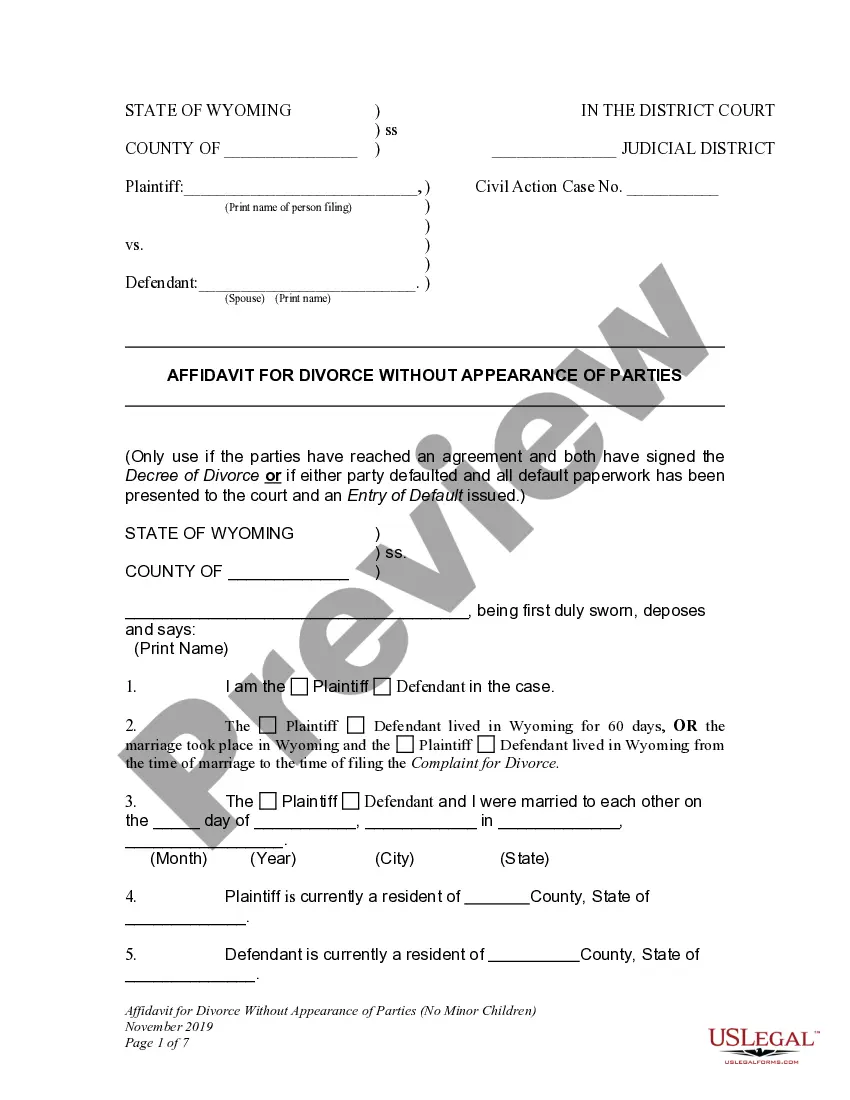
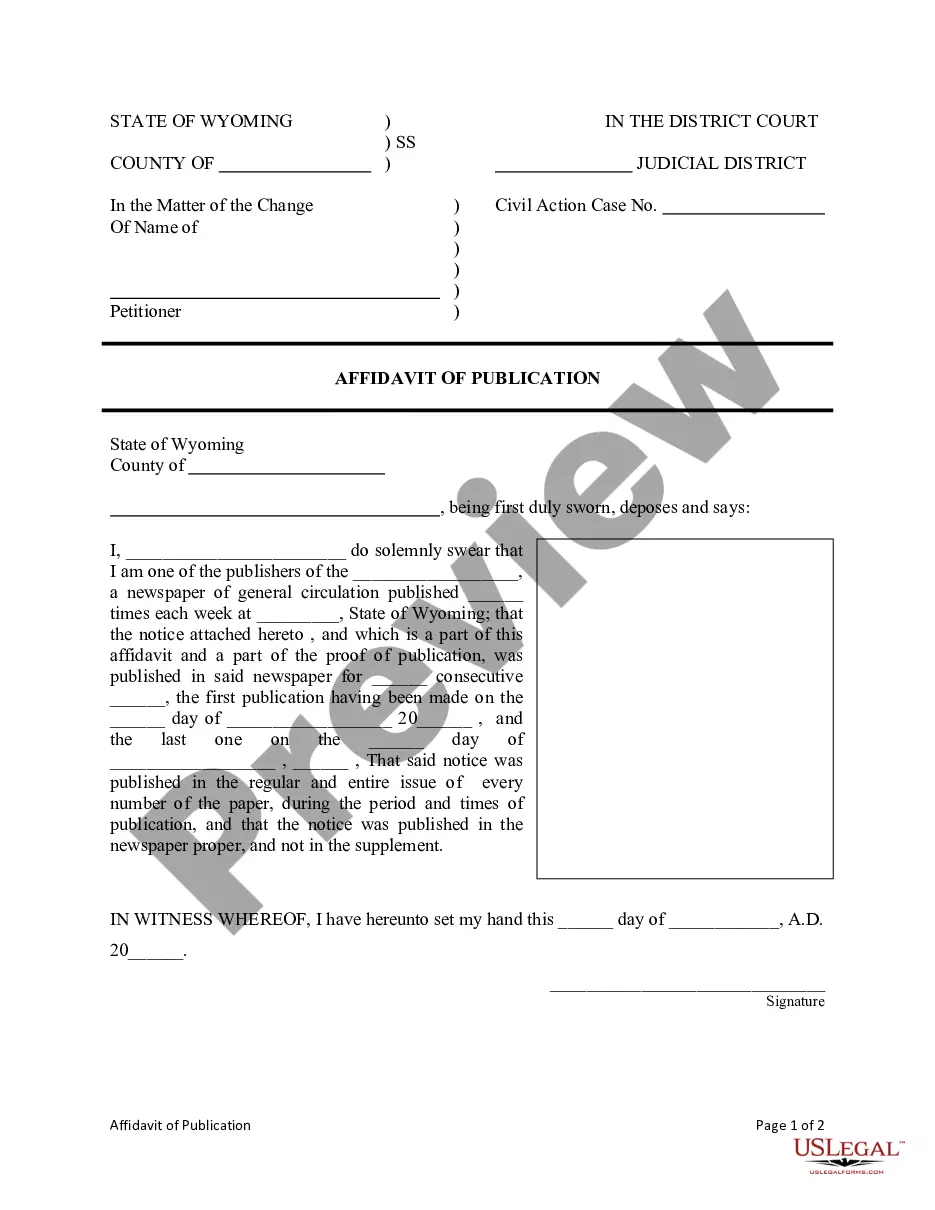
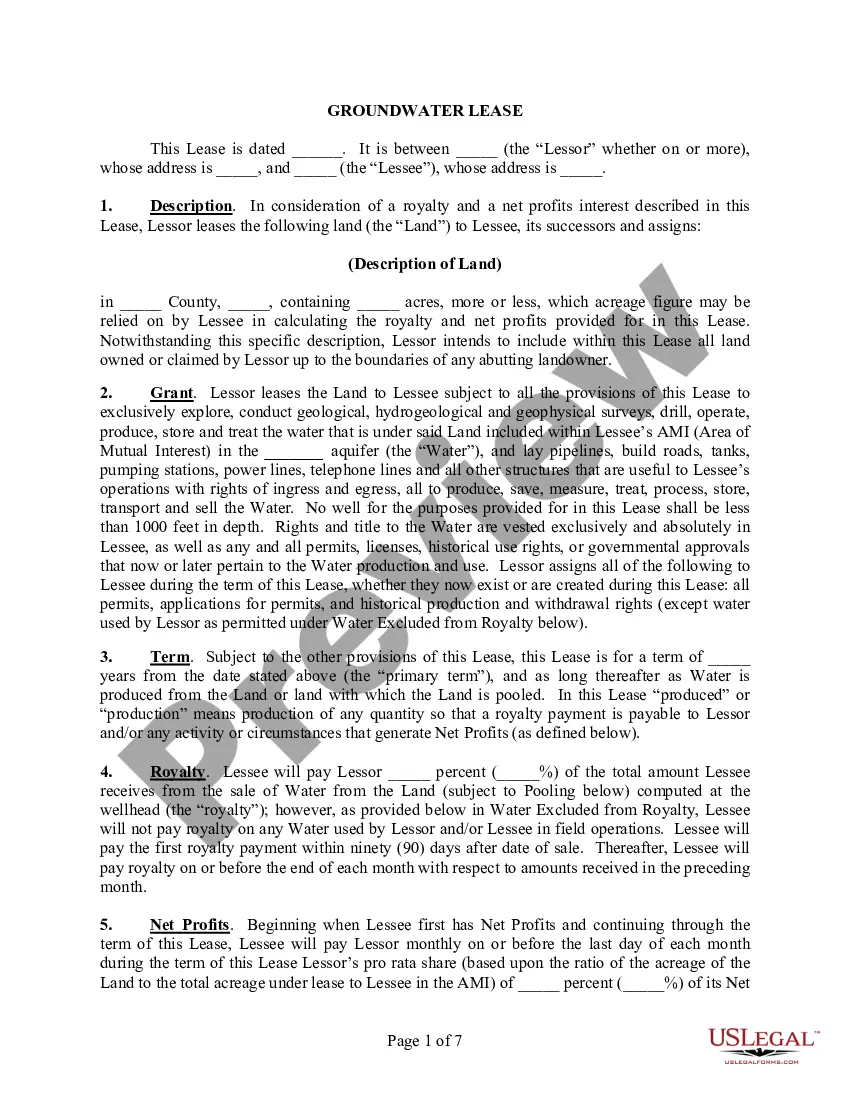
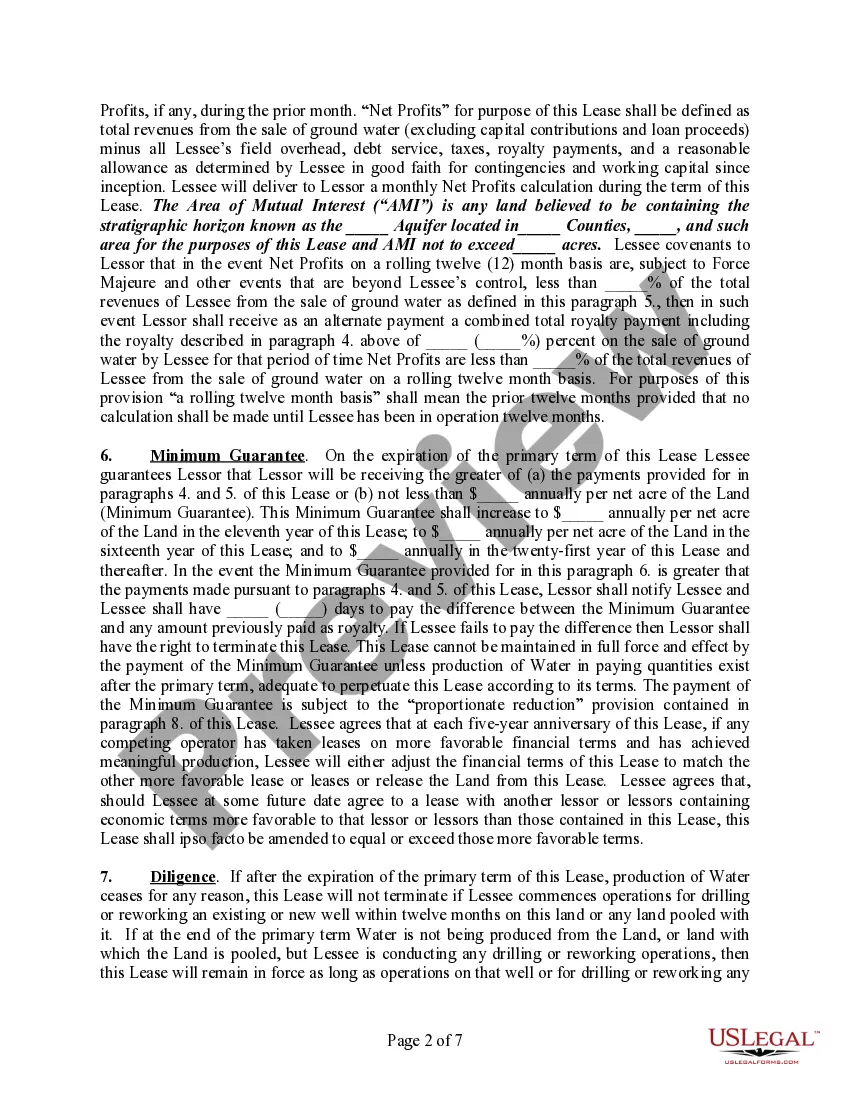
Ground Water Lease Formed
Description
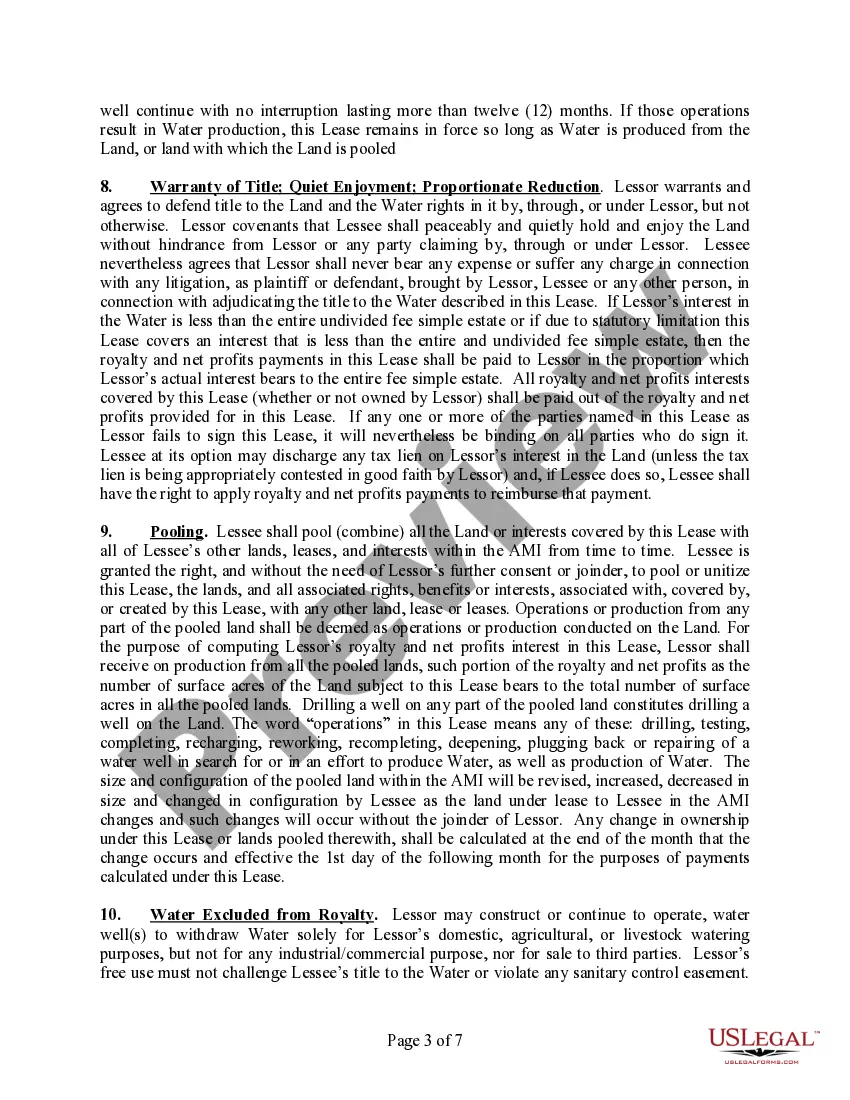
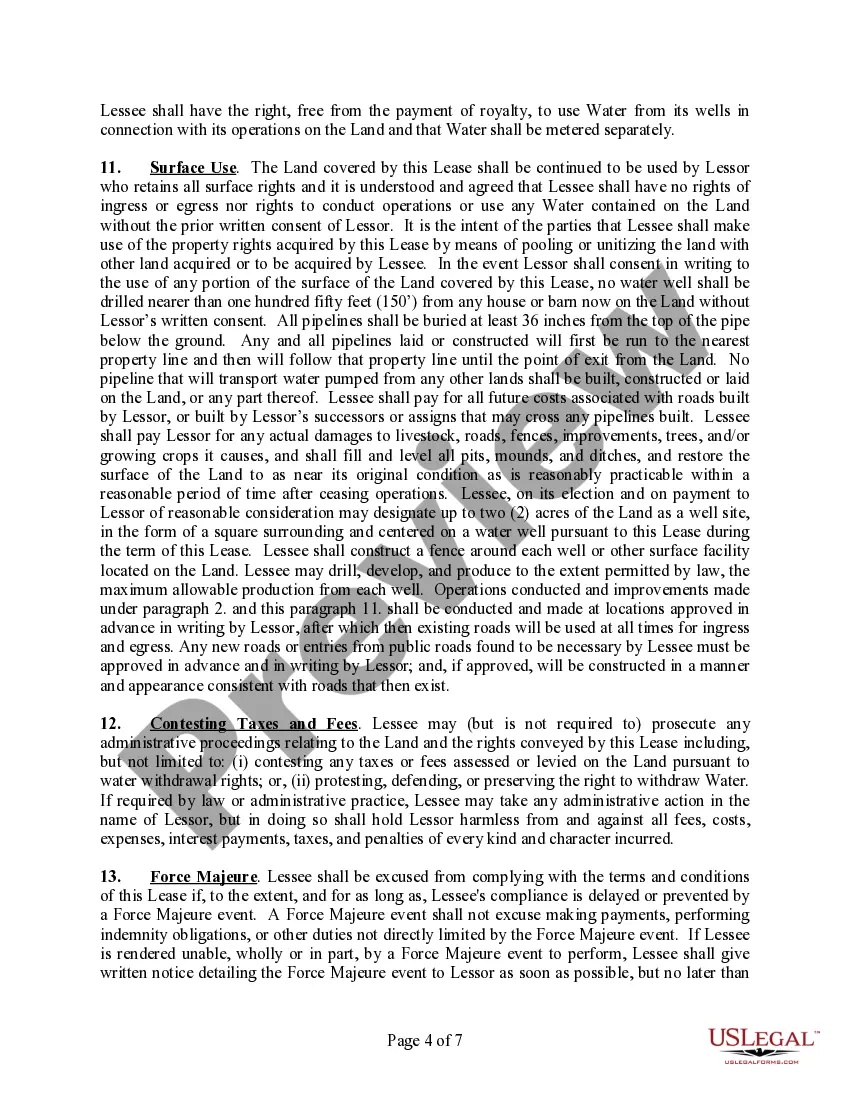
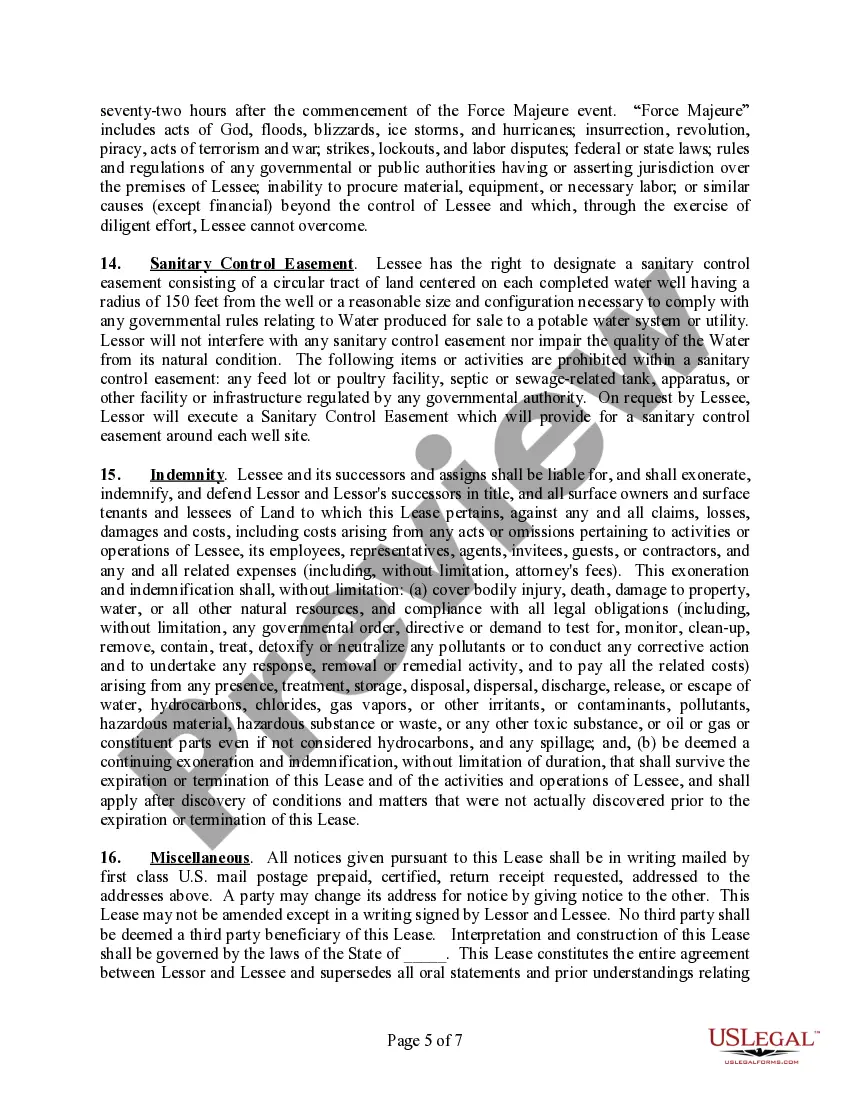
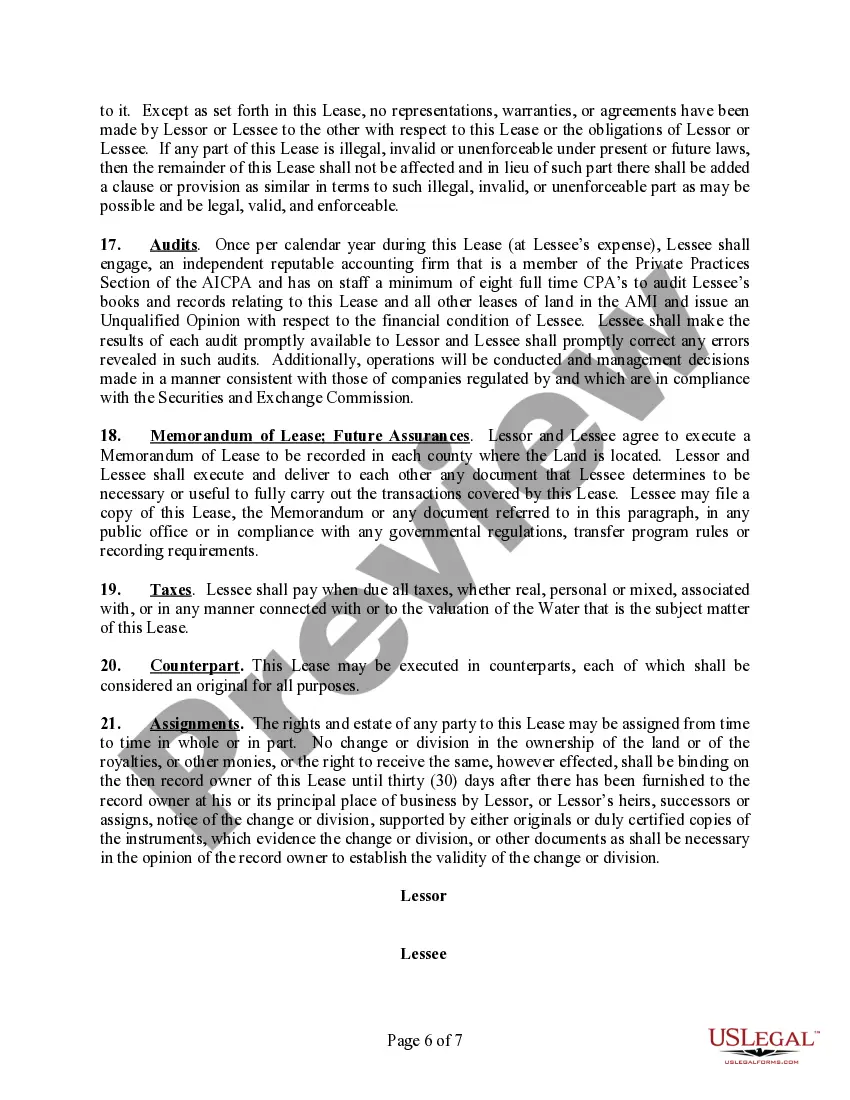
Get your form ready online
Our built-in tools help you complete, sign, share, and store your documents in one place.
Make edits, fill in missing information, and update formatting in US Legal Forms—just like you would in MS Word.
Download a copy, print it, send it by email, or mail it via USPS—whatever works best for your next step.
Sign and collect signatures with our SignNow integration. Send to multiple recipients, set reminders, and more. Go Premium to unlock E-Sign.
If this form requires notarization, complete it online through a secure video call—no need to meet a notary in person or wait for an appointment.
We protect your documents and personal data by following strict security and privacy standards.

Make edits, fill in missing information, and update formatting in US Legal Forms—just like you would in MS Word.

Download a copy, print it, send it by email, or mail it via USPS—whatever works best for your next step.

Sign and collect signatures with our SignNow integration. Send to multiple recipients, set reminders, and more. Go Premium to unlock E-Sign.

If this form requires notarization, complete it online through a secure video call—no need to meet a notary in person or wait for an appointment.

We protect your documents and personal data by following strict security and privacy standards.
Looking for another form?







How to fill out Groundwater Lease?
Bureaucracy necessitates accuracy and meticulousness.
If you do not manage the completion of documentation like the Ground Water Lease Form regularly, it can lead to some misunderstandings.
Choosing the appropriate sample from the outset will guarantee that your document submission proceeds smoothly and avert any hassles of resubmitting a document or repeating the same tasks from the start.
Review the form descriptions and download the ones you require at any time. If you are not a subscribed user, locating the needed template will take a few additional steps.
- Access the correct sample for your paperwork at US Legal Forms.
- US Legal Forms is the largest online collection of forms with over 85 thousand templates for various sectors.
- You can find the latest and most pertinent version of the Ground Water Lease Form by simply searching on the platform.
- Discover, save, and download templates in your profile or review the description to confirm you have the right one readily available.
- With a US Legal Forms account, you can conveniently gather, store in one location, and navigate through the templates you've saved for quick access.
- When on the site, click the Log In button to authenticate.
- Then, go to the My documents page, where your forms are organized.
Form popularity
FAQ
The amount of water leased shall not exceed 25 percent of the water that would have been applied or stored by the lessor in the absence of the lease agreement in any given hydrological year.
Generally, Texas groundwater belongs to the landowner. Groundwater is governed by the rule of capture, which grants landowners the right to capture the water beneath their property.
Some states, including California, have systems in place for buying and selling water rights, either on a temporary or permanent basis. Between 2009 and 2018, water rights holders in California leased an average of over 1 million acre-feet of water per year, a total of $295 million dollars annually.
Landowners may obtain a water right by applying for a permit from the Texas Commission on Environmental Quality (TCEQ). After obtaining a permit, the landowner can use surface water for domestic, agricultural, industrial, and other beneficial uses.
Water that has travelled down from the soil surface and collected in the spaces between sediments and the cracks within rock is called groundwater. Groundwater fills in all the empty spaces underground, in what is called the saturated zone, until it reaches an impenetrable layer of rock.