Property Partition Suit With Self Acquired
Description
Get your form ready online
Our built-in tools help you complete, sign, share, and store your documents in one place.
Make edits, fill in missing information, and update formatting in US Legal Forms—just like you would in MS Word.
Download a copy, print it, send it by email, or mail it via USPS—whatever works best for your next step.
Sign and collect signatures with our SignNow integration. Send to multiple recipients, set reminders, and more. Go Premium to unlock E-Sign.
If this form requires notarization, complete it online through a secure video call—no need to meet a notary in person or wait for an appointment.
We protect your documents and personal data by following strict security and privacy standards.

Make edits, fill in missing information, and update formatting in US Legal Forms—just like you would in MS Word.

Download a copy, print it, send it by email, or mail it via USPS—whatever works best for your next step.

Sign and collect signatures with our SignNow integration. Send to multiple recipients, set reminders, and more. Go Premium to unlock E-Sign.

If this form requires notarization, complete it online through a secure video call—no need to meet a notary in person or wait for an appointment.

We protect your documents and personal data by following strict security and privacy standards.
Looking for another form?







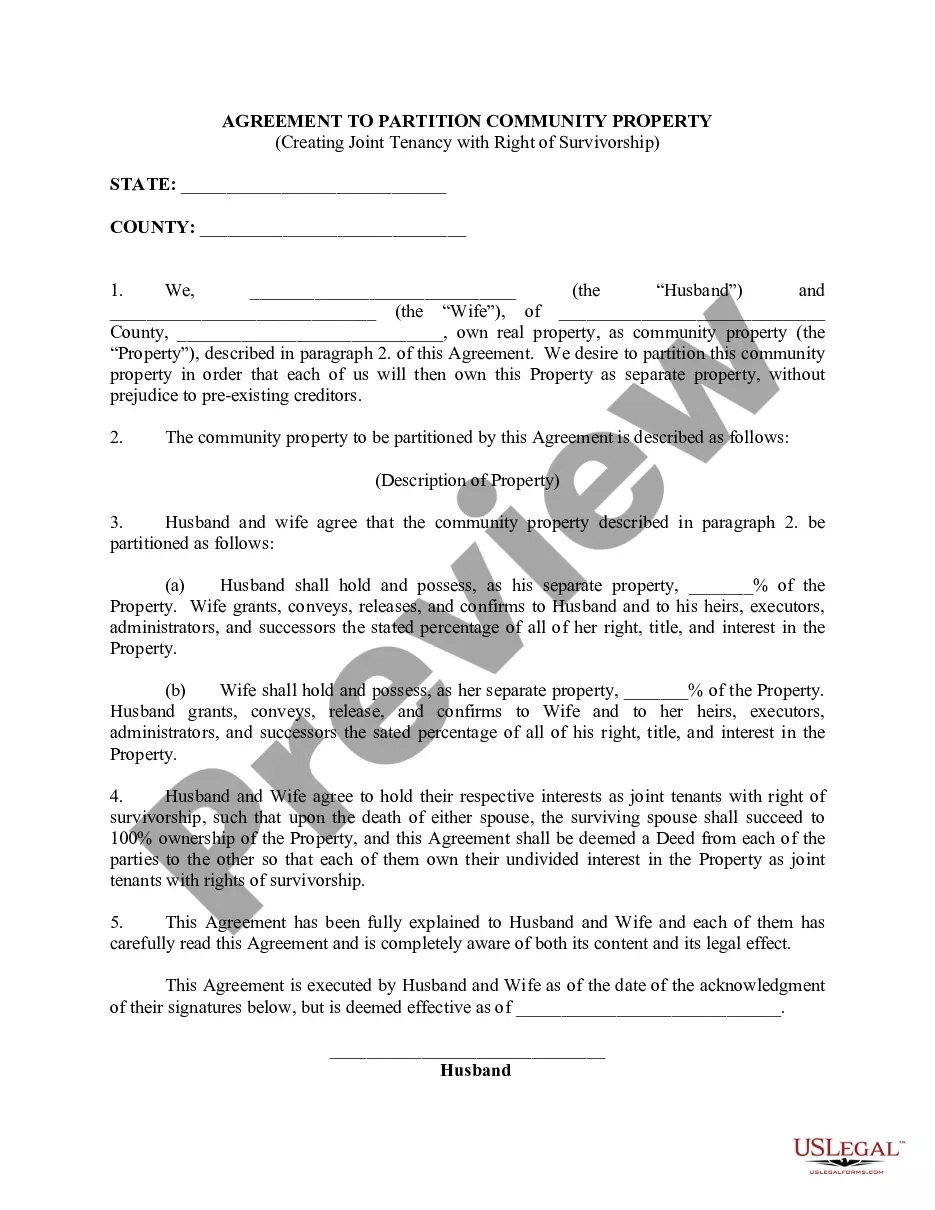
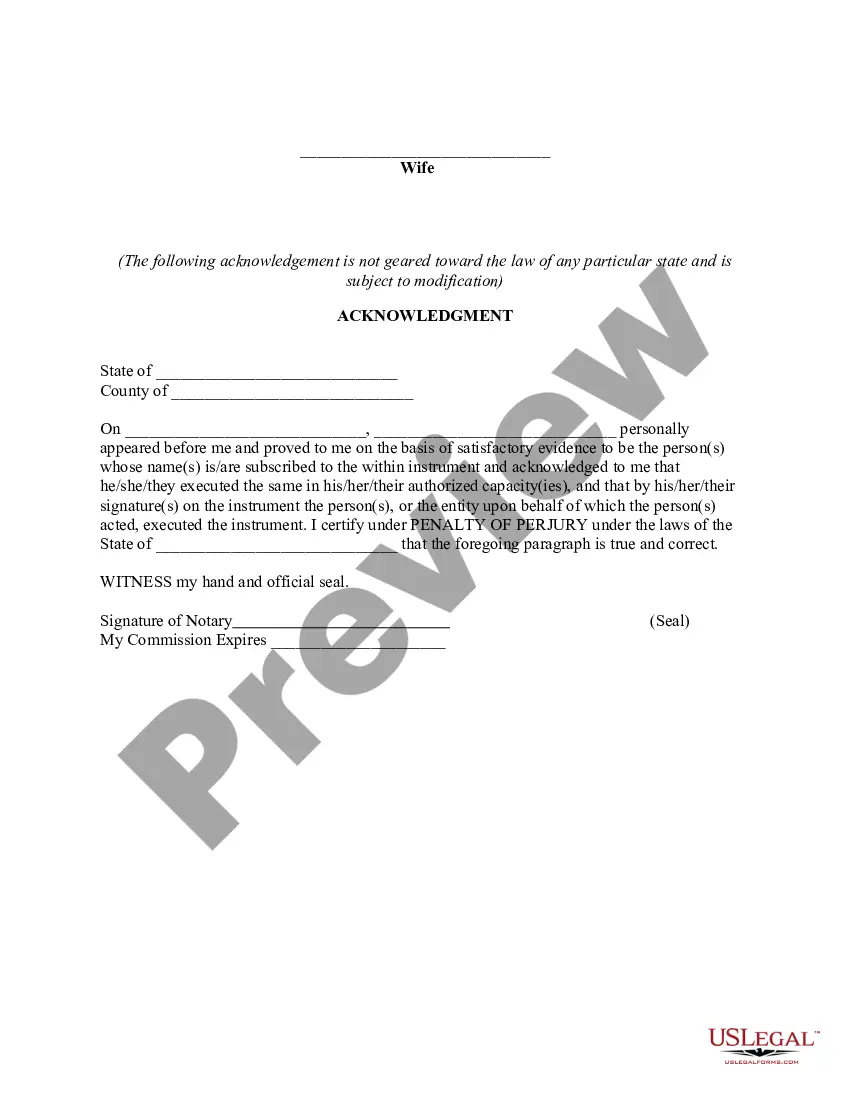
How to fill out Agreement To Partition Community Property Creating Joint Tenancy With Right Of Survivorship?
Acquiring legal templates that comply with federal and state laws is essential, and the internet provides a plethora of choices.
However, why squander time hunting for the accurately prepared Property Partition Suit With Self Acquired template online when the US Legal Forms digital library has such documents gathered in one location.
US Legal Forms is the largest online legal repository with more than 85,000 editable templates created by attorneys for any professional and personal situation. They are easy to navigate, with all documents categorized by state and purpose.
Find another sample using the search tool located at the top of the page if necessary. Click Buy Now when you've located the appropriate form and select a subscription option. Create an account or Log In and complete the payment using PayPal or a credit card. Choose the most suitable format for your Property Partition Suit With Self Acquired and download it. All documents accessible through US Legal Forms are reusable. To re-download and fill out previously saved forms, visit the My documents section in your account. Experience the most comprehensive and user-friendly legal document service!
- Our experts keep abreast of legislative updates, ensuring your documents are current and compliant when obtaining a Property Partition Suit With Self Acquired from our site.
- Acquiring a Property Partition Suit With Self Acquired is quick and easy for both existing and new users.
- If you already possess an account with an active subscription, Log In and download the required document sample in the appropriate format.
- If you are new to our platform, follow the steps outlined below.
- Review the template using the Preview feature or through the text outline to confirm it meets your requirements.
Form popularity
FAQ
Yes, self acquired property can be partitioned, allowing co-owners to divide ownership interests. This process helps resolve disputes when co-owners cannot agree on property use or sale. If you find yourself in a situation requiring a property partition suit with self acquired property, platforms like uslegalforms can assist you in navigating the legal requirements effectively.
Winning a partition suit involves presenting a strong case that demonstrates your ownership rights and the need for division. Gather evidence such as deeds, property appraisals, and any relevant agreements. If you face challenges with a property partition suit with self acquired property, consulting a legal professional can provide you with the guidance needed to strengthen your position.
Legally dividing property often requires a clear understanding of ownership rights and state laws. You may need to create a written agreement outlining each party's share, or you might opt for a court-ordered partition. In cases involving a property partition suit with self acquired property, seeking legal advice can ensure your rights are protected and the division is fair.
The new partition law in California allows co-owners to file a partition action more efficiently. This law aims to simplify disputes over property ownership, enabling faster resolution through mediation or court proceedings. If you are dealing with a property partition suit with self acquired property, understanding these new provisions can be crucial for your case.
Dividing inherited property between siblings can be a complex process. Typically, the first step involves determining the property's fair market value and assessing each sibling's share. You can agree on a buyout or sell the property and split the proceeds. Utilizing a property partition suit with self acquired property can help streamline this process if disagreements arise.
To win a partition action, you must demonstrate your legal interest in the property and prove that partition is necessary. Gather all relevant documents, such as ownership records and any agreements with co-owners. It's essential to present a clear case that outlines why dividing the property is the best solution, especially when dealing with a property partition suit with self acquired assets. Utilizing resources from platforms like US Legal Forms can help streamline the process by providing necessary legal documents and guidance.
Partition by sale constitutes a forced sale of the land, followed by division of the profits thus realized among the tenants.
A partition action should be filed with the assistance of an experienced partition attorney. The cost of attorney fees in a simple, uncontested partition lawsuit could exceed $5,000 due to the amount of paperwork and filings. If the partition action is contested or overly complex, costs can exceed $20,000 to $30,000.
How to Force the Sale of Jointly Owned Property (step-by-step) Step 1: Confirm title to the jointly owned property. ... Step 2: Identify the benefits and burdens of ownership. ... Step 3: Attempt a voluntary sale, buyout, or alternate solution. ... Step 3: File and serve a partition lawsuit.
A California partition action happens when one co-owner of real property wants to sell but other co-owners do not want to sell their ownership rights. Partition means division.