Joint Tenancy With 3 People
Description
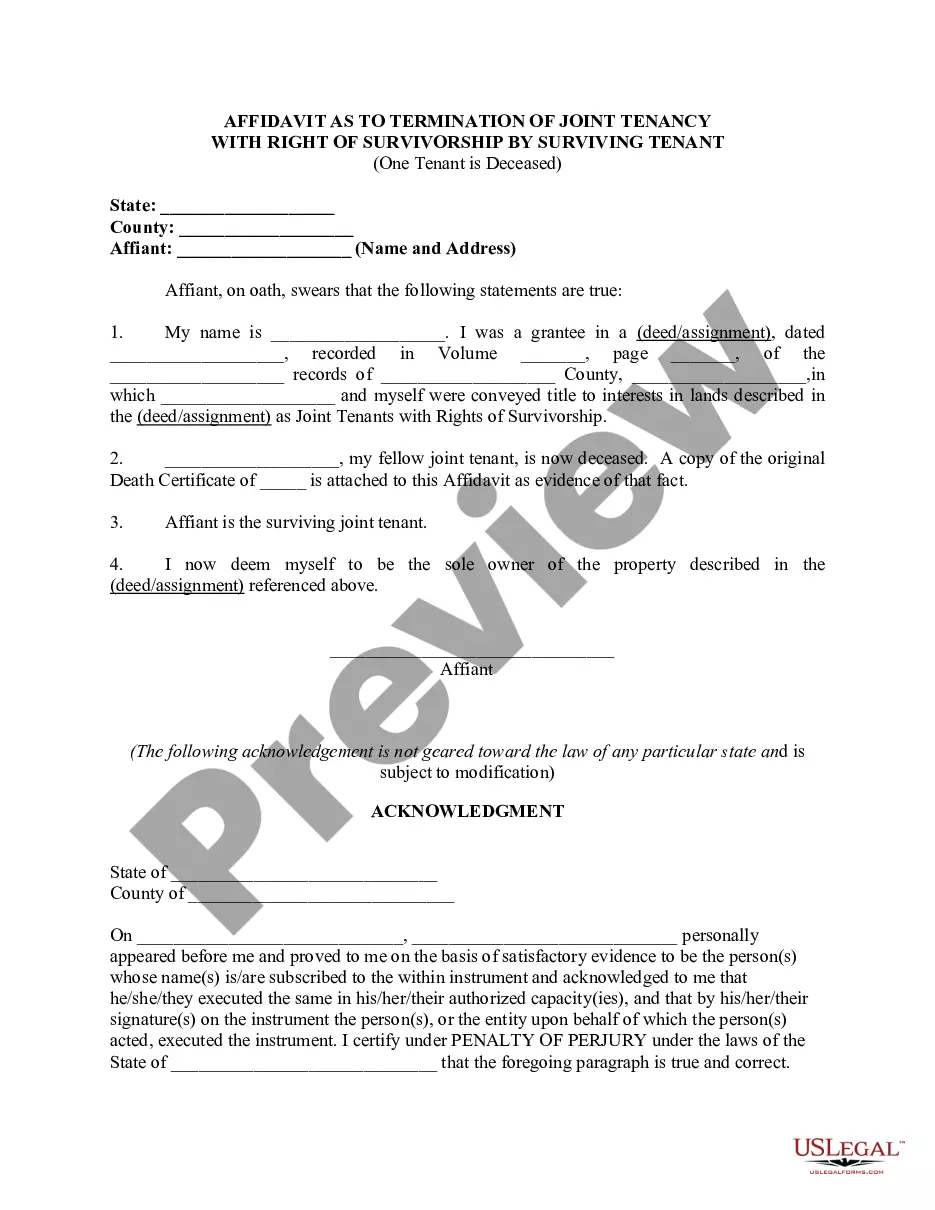

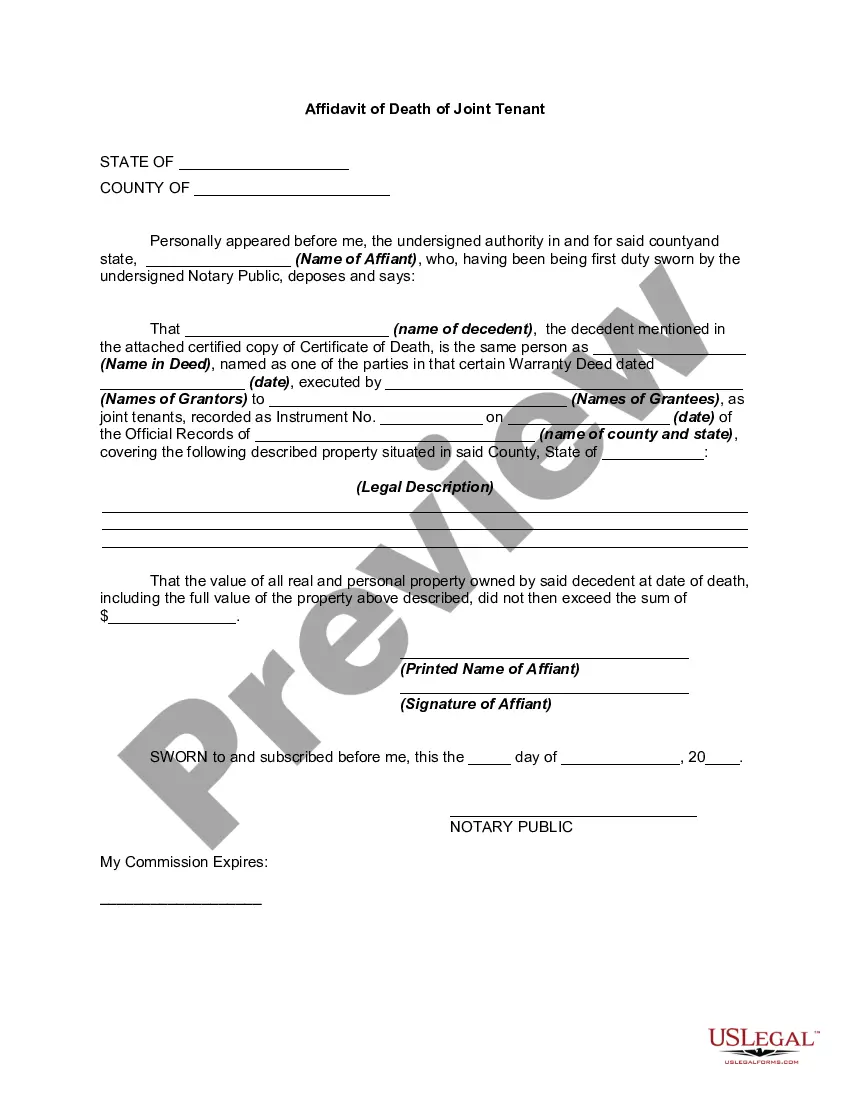
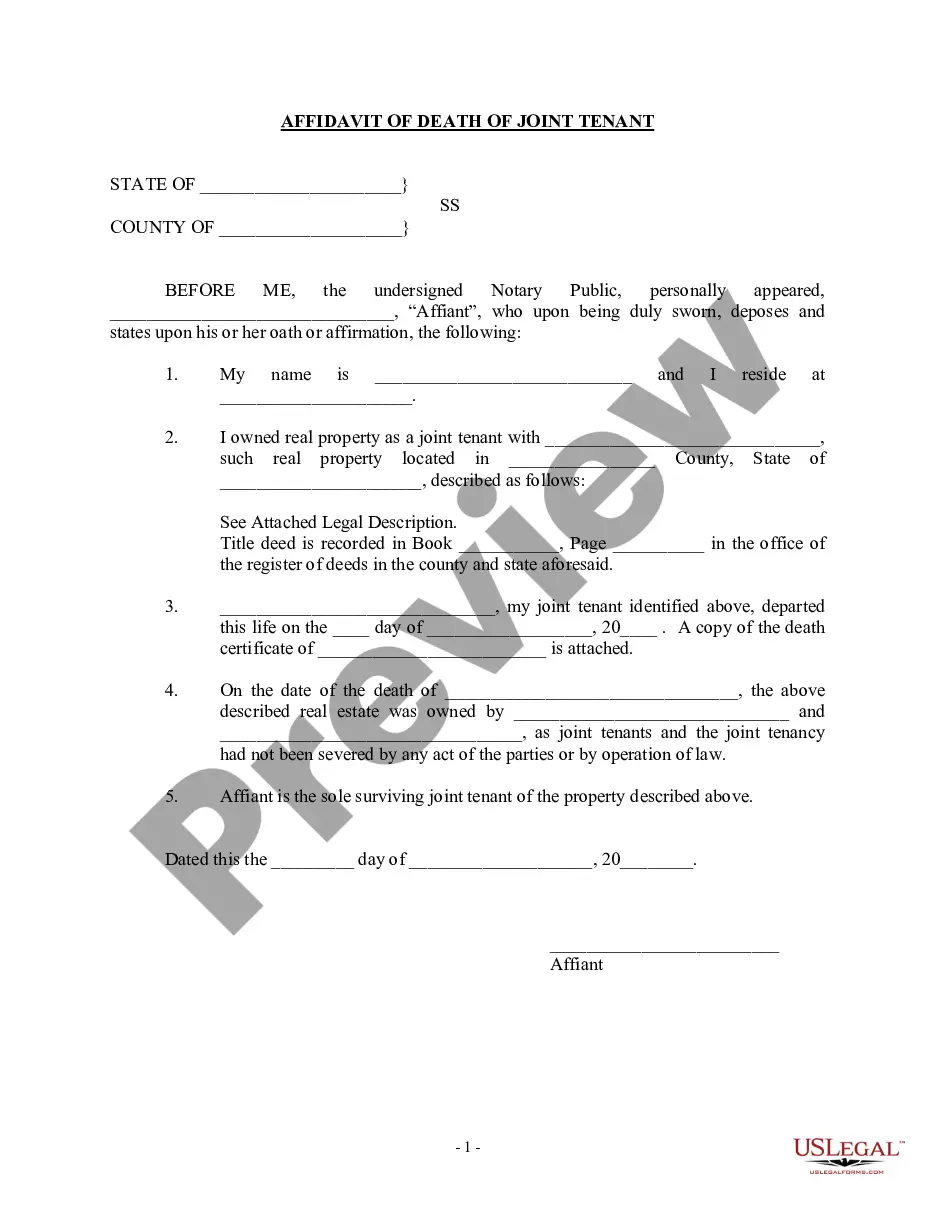
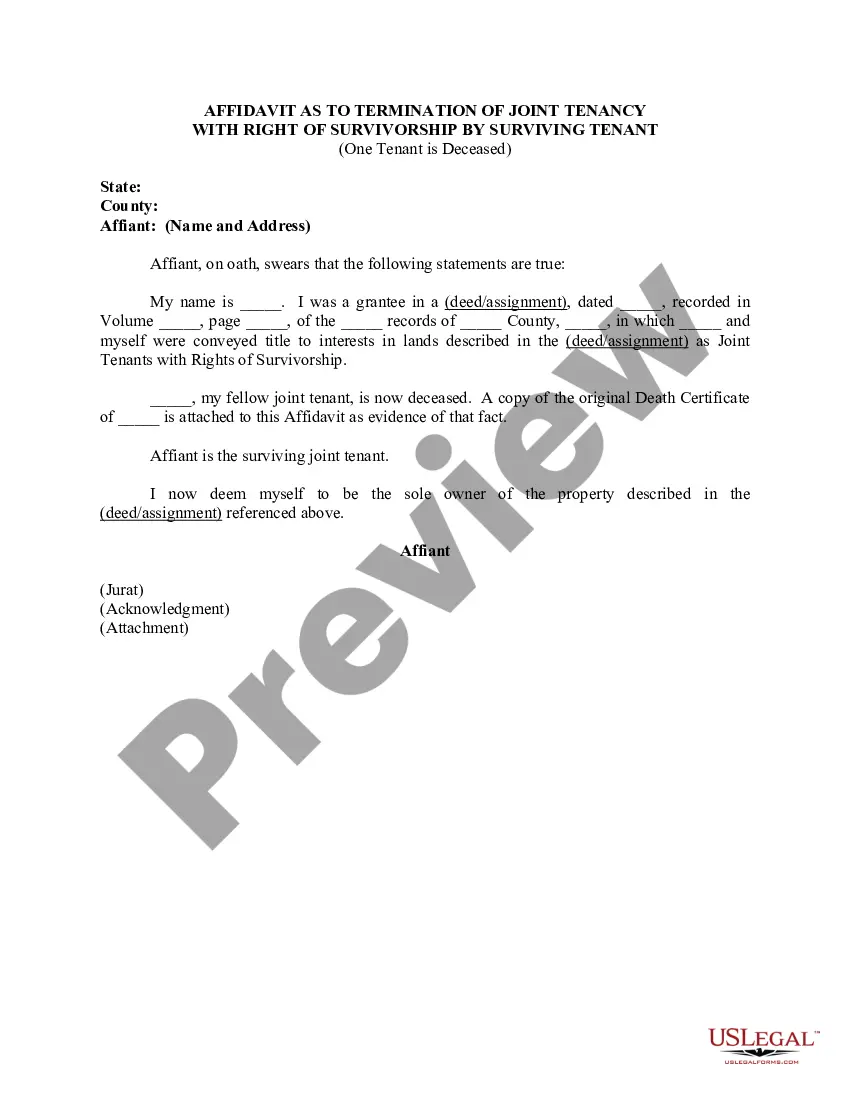
Get your form ready online
Our built-in tools help you complete, sign, share, and store your documents in one place.
Make edits, fill in missing information, and update formatting in US Legal Forms—just like you would in MS Word.
Download a copy, print it, send it by email, or mail it via USPS—whatever works best for your next step.
Sign and collect signatures with our SignNow integration. Send to multiple recipients, set reminders, and more. Go Premium to unlock E-Sign.
If this form requires notarization, complete it online through a secure video call—no need to meet a notary in person or wait for an appointment.
We protect your documents and personal data by following strict security and privacy standards.

Make edits, fill in missing information, and update formatting in US Legal Forms—just like you would in MS Word.

Download a copy, print it, send it by email, or mail it via USPS—whatever works best for your next step.

Sign and collect signatures with our SignNow integration. Send to multiple recipients, set reminders, and more. Go Premium to unlock E-Sign.

If this form requires notarization, complete it online through a secure video call—no need to meet a notary in person or wait for an appointment.

We protect your documents and personal data by following strict security and privacy standards.
Looking for another form?








How to fill out Affidavit For Transferring Property After Death In Joint Tenancy With Right Of Survivorship By Surviving Tenant When One Tenant Is Deceased?
- If you're a returning user, log in to your account at US Legal Forms and select the required template. Click 'Download' to save it to your device, ensuring your subscription is active.
- For first-time users, begin by exploring the Preview mode to review the form description. Confirm that it meets your particular needs and adheres to your local laws.
- If the form doesn't fit your requirements, utilize the Search tab to find an alternative template that suits your needs.
- Select the document by clicking the 'Buy Now' button and choose a suitable subscription plan. Creating an account grants you access to a variety of legal resources.
- Complete your payment using a credit card or PayPal. This transaction secures your access to the forms library.
- Once you've made the purchase, download your chosen document. You can find it anytime in the 'My Forms' section of your account.
US Legal Forms is dedicated to empowering users with a vast collection of over 85,000 legal documents that are easily fillable and editable. This comprehensive resource simplifies the process of executing legal agreements.
By choosing US Legal Forms, you also gain access to knowledgeable experts who can guide you in completing forms correctly. Start your journey today and secure your joint tenancy arrangement seamlessly!
Form popularity
FAQ
While joint tenancy offers benefits, it also has disadvantages that you should consider. For instance, all joint tenants must agree on property decisions, which can lead to conflicts. Additionally, joint tenancy doesn't always provide the same level of asset protection in case of legal issues. Understanding these potential drawbacks is crucial for effective property management when dealing with joint tenancy with 3 people.
Adding someone to an existing joint tenancy can be done, but it requires the current tenants to agree and properly re-title the property. You may need to create a new deed that includes the name of the new joint tenant. This process ensures that all parties maintain equal ownership rights, aligning with the principles of joint tenancy with 3 people. USLegalForms can provide templates to simplify this legal process.
Yes, you can have multiple joint tenants when setting up joint tenancy with 3 people or more. This arrangement allows all tenants to share equal rights to the property and enables a seamless transfer of ownership. Everyone involved gains the right of survivorship, which means that if one tenant passes away, their share automatically goes to the remaining tenants. This is a key advantage of joint tenancy structures.
To add joint tenancy with 3 people, you typically need to file a deed with your local county office. This deed must include the names of all parties involved and specify that the property is held in joint tenancy. It’s important to ensure that all individuals sign the deed to establish their ownership rights. You may find resources on USLegalForms helpful for completing this process smoothly.
When multiple individuals co-own a property, it is often referred to as joint tenancy. Specifically, in joint tenancy with 3 people, all owners share equal rights and responsibilities regarding the property. This arrangement supports the principle of 'right of survivorship,' which means the ownership automatically passes to the remaining tenants if one owner dies. It is essential to understand this term to navigate ownership arrangements effectively.
Certainly, joint tenancy with 3 people can be used in a single family home. This arrangement allows three individuals to live in and share ownership of the property. By doing so, they can benefit from shared responsibilities and decision-making regarding the home. Utilizing platforms like uslegalforms can simplify the process of creating a joint tenancy agreement.
In the case of joint tenancy with 3 people, you can have up to four joint tenants in total. This arrangement allows multiple individuals to own a property together. Each tenant shares equal ownership rights, ensuring that if one tenant passes away, their share automatically transfers to the remaining tenants. Therefore, understanding the maximum number of joint tenants can help you plan effectively.
A notable disadvantage of joint tenancy with 3 people is the potential lack of flexibility in property decisions. If one owner wants to proceed with a sale or renovation, they must obtain agreement from the others. This requirement can slow down actions and may lead to disputes among joint tenants.
A significant disadvantage of joint tenancy ownership is that it may lead to unexpected issues during the owner's life or after their passing. Upon the death of one co-owner, the property passes automatically to the surviving owners, which can create tax implications or unwanted consequences for heirs. If you're considering a joint ownership arrangement, carefully weigh these factors.
Joint tenancy with 3 people has some downsides, such as shared liability and limited control over decisions. If one owner faces financial struggles or legal issues, it can impact the others. Additionally, if one co-owner wants to sell or transfer their interest, it could complicate or disrupt the arrangement.