Motion Response Compel Withdrawal
Description
Get your form ready online
Our built-in tools help you complete, sign, share, and store your documents in one place.
Make edits, fill in missing information, and update formatting in US Legal Forms—just like you would in MS Word.
Download a copy, print it, send it by email, or mail it via USPS—whatever works best for your next step.
Sign and collect signatures with our SignNow integration. Send to multiple recipients, set reminders, and more. Go Premium to unlock E-Sign.
If this form requires notarization, complete it online through a secure video call—no need to meet a notary in person or wait for an appointment.
We protect your documents and personal data by following strict security and privacy standards.

Make edits, fill in missing information, and update formatting in US Legal Forms—just like you would in MS Word.

Download a copy, print it, send it by email, or mail it via USPS—whatever works best for your next step.

Sign and collect signatures with our SignNow integration. Send to multiple recipients, set reminders, and more. Go Premium to unlock E-Sign.

If this form requires notarization, complete it online through a secure video call—no need to meet a notary in person or wait for an appointment.

We protect your documents and personal data by following strict security and privacy standards.
Looking for another form?




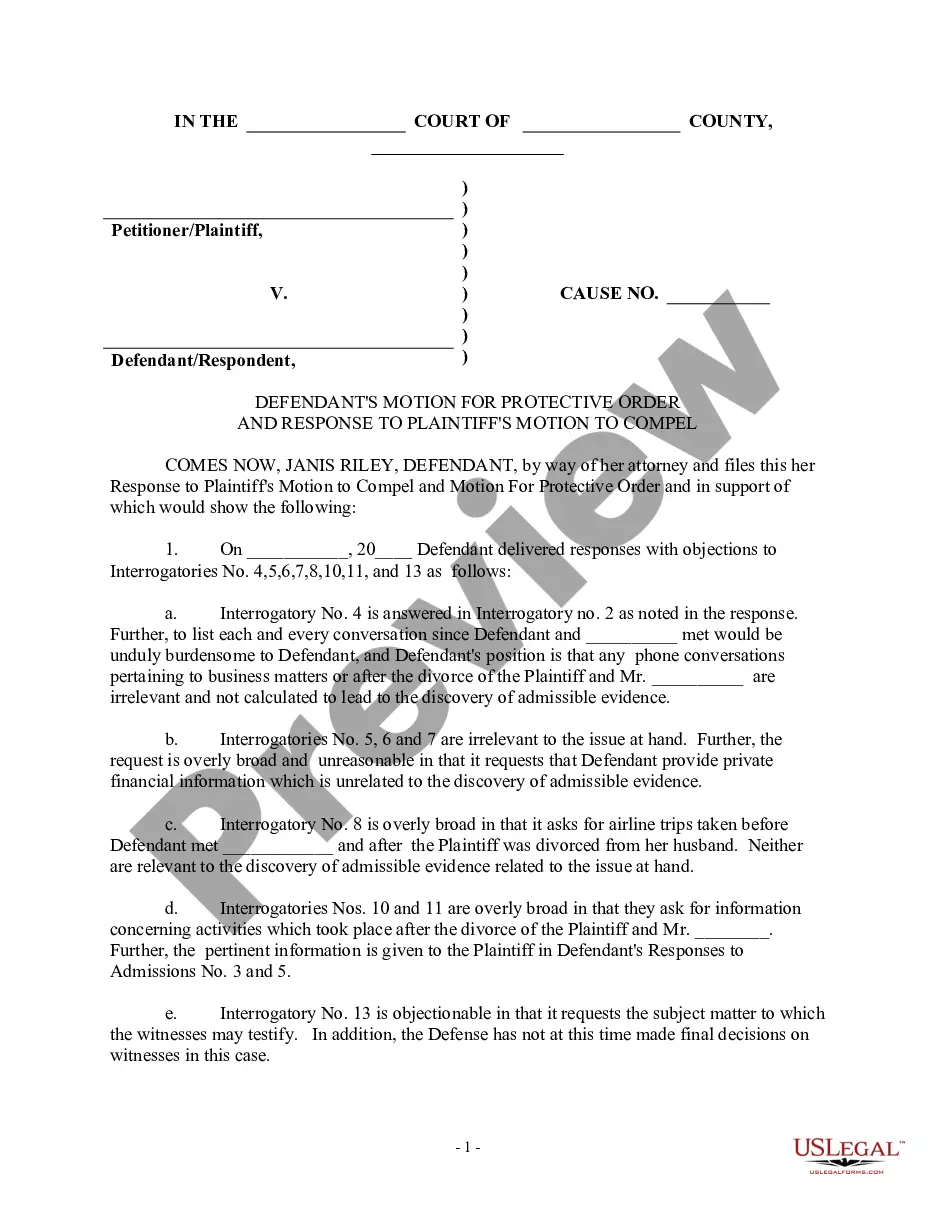
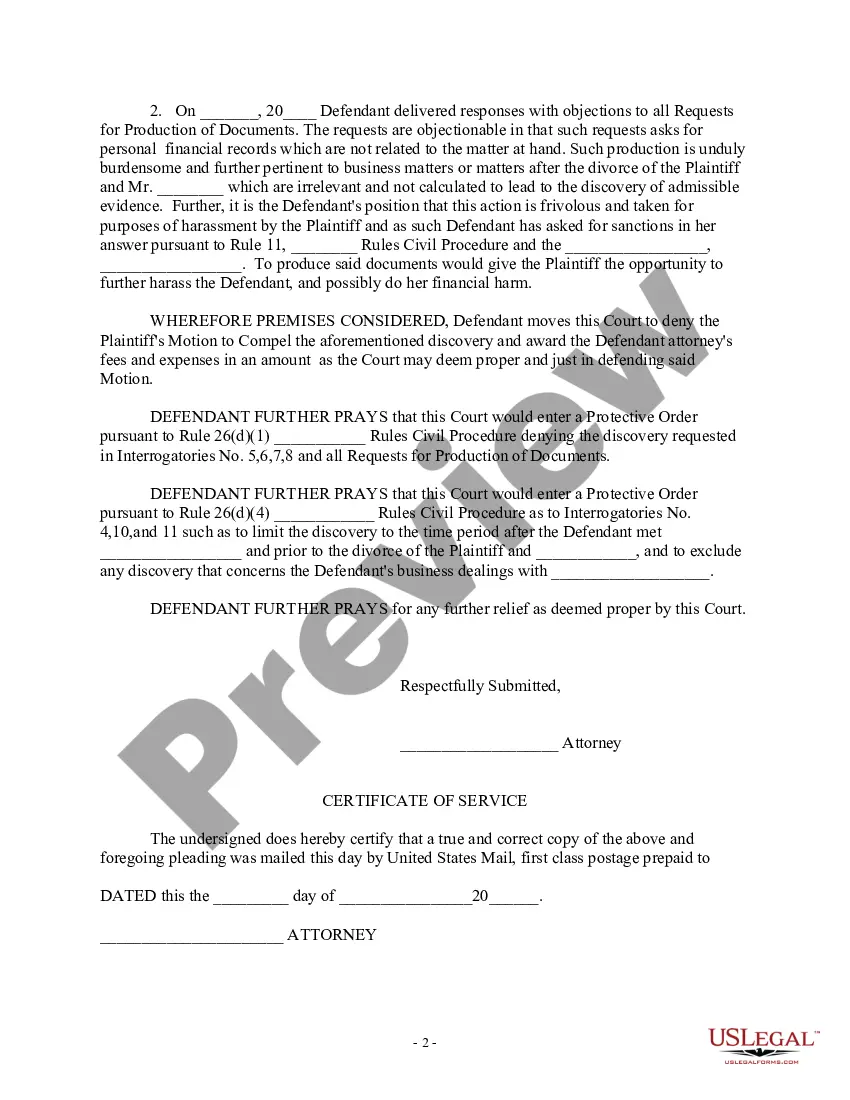
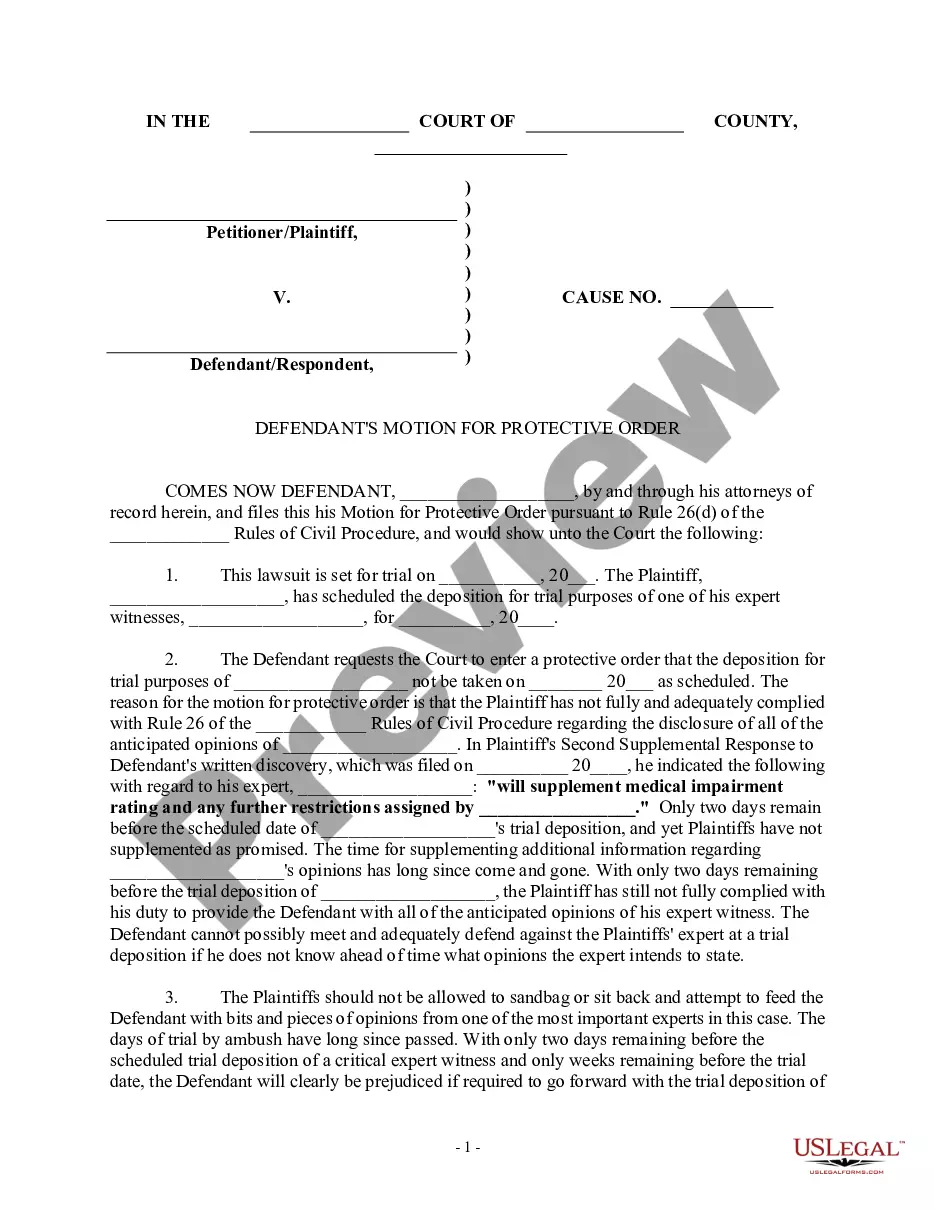
How to fill out Defendant's Motion For Protective Order And Response To Plaintiff's Motion To Compel?
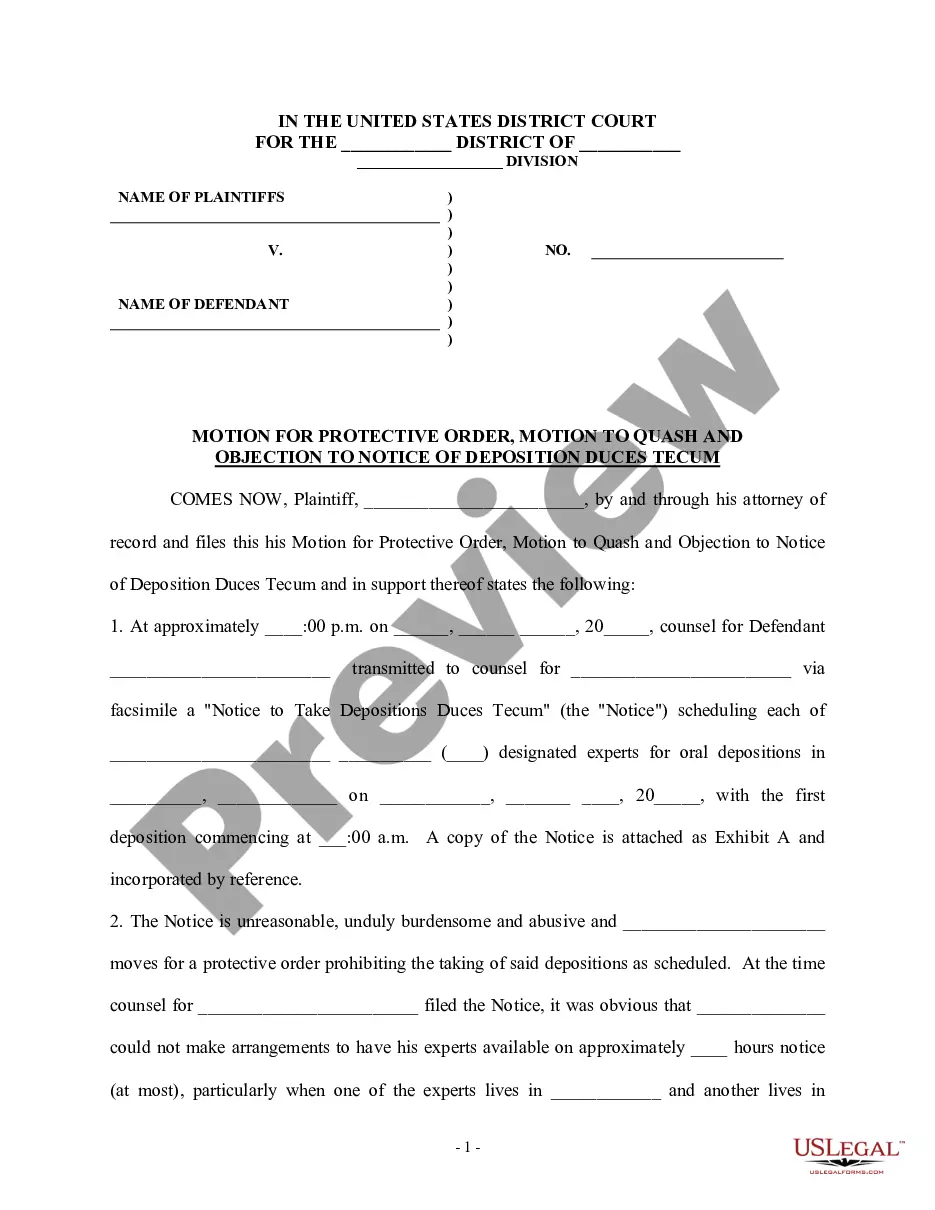
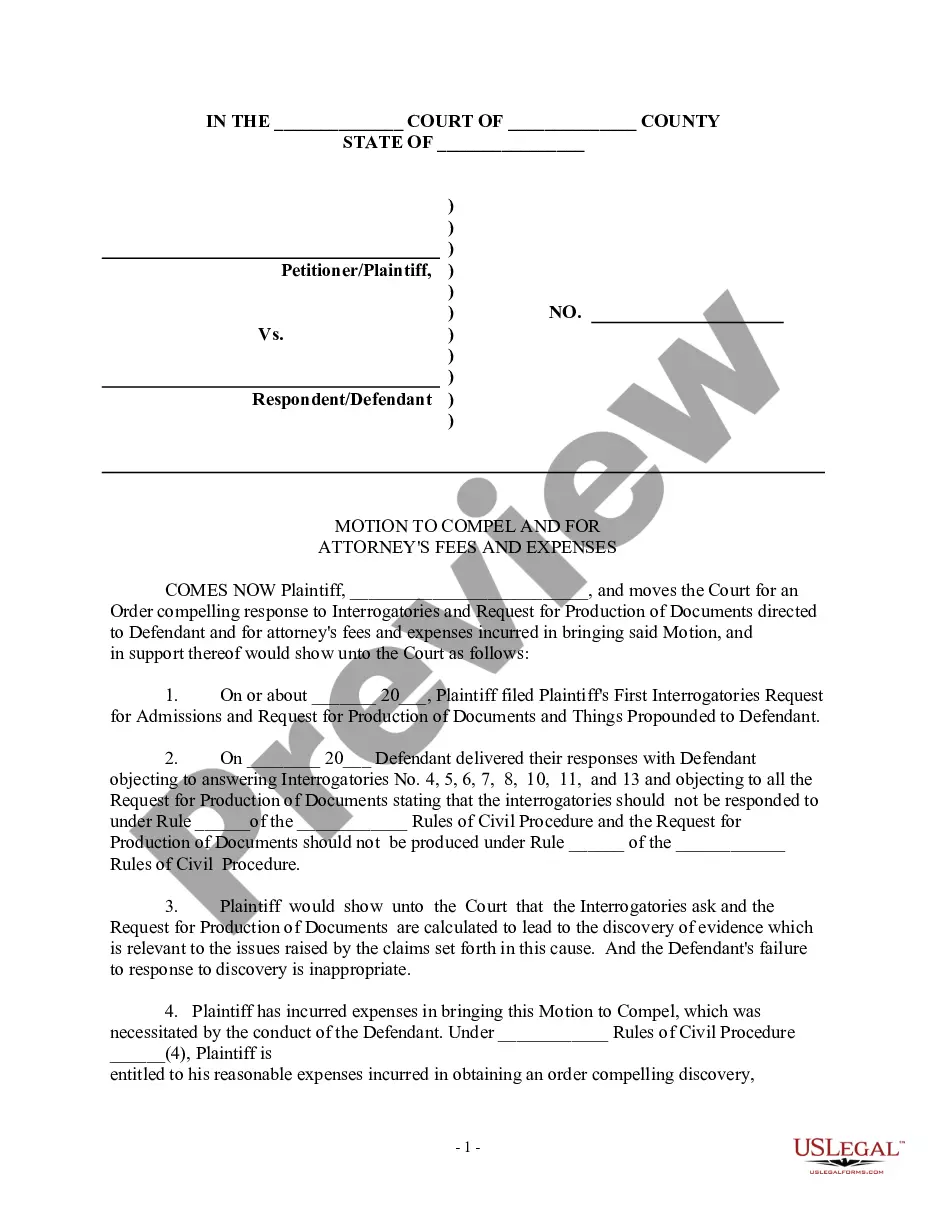
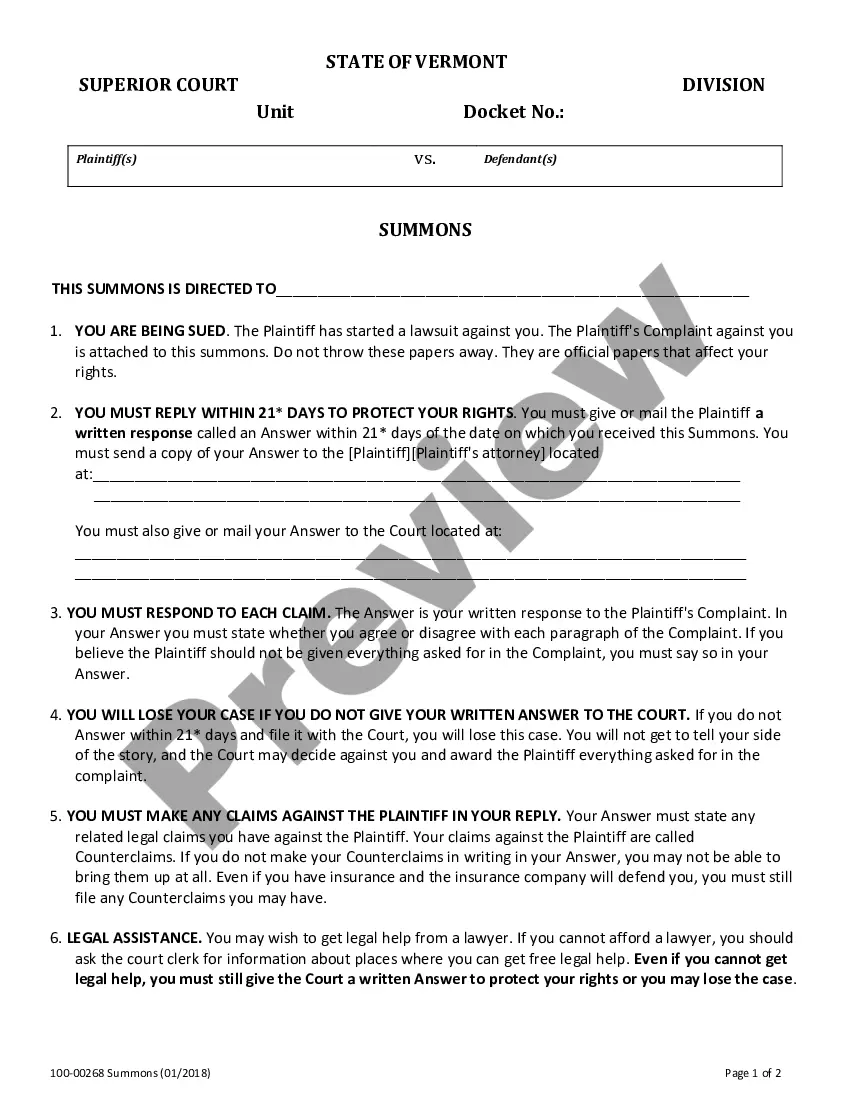
The Motion Response Compel Withdrawal displayed on this webpage is a versatile official template formulated by experienced attorneys according to federal and state laws and regulations.
For over 25 years, US Legal Forms has delivered individuals, businesses, and legal practitioners with over 85,000 authenticated, state-specific documents for any business and personal situation.
Utilize the same document again whenever needed. Access the My documents tab in your profile to redownload any previously downloaded documents.
- Search for the document you require and examine it.
- Browse the example you sought and preview it or review the form description to confirm it meets your needs. If it does not, utilize the search bar to find the correct one.
- Click Buy Now after you have identified the template you want.
- Select and Log In to your account.
- Choose the pricing plan that best fits your needs and create an account. Make a swift payment using PayPal or a credit card. If you already possess an account, Log In and check your subscription to continue.
- Obtain the editable template.
Form popularity
FAQ
The basis for a motion to compel typically stems from a failure of one party to comply with discovery requests or court orders. This can involve refusal to provide documents, information, or testimony that is crucial to the case. Establishing a strong legal reason, backed by evidence, is crucial in your motion. Utilizing services like US Legal Forms can help you structure a solid motion response compel withdrawal that effectively addresses these failures.
A motion to compel might be denied for several reasons, including insufficient evidence or lack of proper legal grounds. If the request appears to be unreasonable or overly burdensome, the court may also rule against it. Furthermore, if the opposing party has already provided adequate information, the court may find no basis for your motion to compel. Understanding these factors can guide you in preparing a stronger motion response compel withdrawal.
To successfully win a motion to compel, you should gather all relevant facts and evidence supporting your request. Craft a well-structured motion that clearly outlines the basis for your request. It's essential to address any potential counterarguments and demonstrate the necessity of compliance. Consider using resources like US Legal Forms to streamline your documents and enhance your chances of success.
If a party fails to respond to a motion to compel, the court may interpret this as an admission of the motion's validity. This lack of response can lead to a favorable ruling for the requesting party. Additionally, the court may impose sanctions on the non-responding party. In this situation, utilizing a motion response compel withdrawal could help clarify the implications of their inaction.
Winning a motion to compel requires a clear understanding of the issues at hand. You must present compelling evidence that justifies why the other party's compliance is essential. Focus on the legal grounds for your motion and ensure that your motion response compel withdrawal is firmly grounded in relevant laws and rules. Strong documentation and persuasive arguments can significantly bolster your position.
Writing a reply to a motion requires you to carefully analyze the arguments presented against you. Address each point directly, providing clear evidence that supports your position. Make sure your response is structured, staying focused on how the motion response compel withdrawal is essential in countering the initial motion. Utilizing U.S. Legal Forms can give you access to useful tools and templates that streamline your preparation for writing an effective reply.
To fill out a motion to compel, start by clearly identifying the parties involved and the specific relief you seek. Include detailed facts that support your request, ensuring you reference the legal basis for your motion. Be concise and to the point, focusing on how the motion response compel withdrawal plays a crucial role in seeking compliance. You might consider using U.S. Legal Forms as a resource for standardized templates and guidance to simplify the process.
A motion to compel is a serious request that asks the court to require a party to comply with a legal obligation, such as producing evidence or attending a hearing. If the court grants this motion, it can significantly affect the outcomes of your case, potentially leading to penalties or further legal action. Therefore, it is critical to address the motion response compel withdrawal effectively. Using the US Legal Forms platform can help you navigate this process and ensure your responses are complete and timely.
A motion for withdrawal refers to a request made to the court to remove a previous motion or legal action. It often indicates that the party who filed the original motion no longer wishes to pursue their claim. In this context, understanding the motion response compel withdrawal is crucial, as it can impact the progress of your case. You can utilize the US Legal Forms platform to find the necessary documents and guidance for filing a motion for withdrawal.
The burden of a motion to compel lies with the party that filed it, requiring them to demonstrate why the court should grant their request. This typically involves showing that the opposing party has not complied with discovery obligations. Understanding this burden is crucial, as effectively addressing it can lead to a more favorable outcome in your case. Resources like US Legal Forms can assist you in managing your motion response compel withdrawal.