Request Motion For Discovery
Description
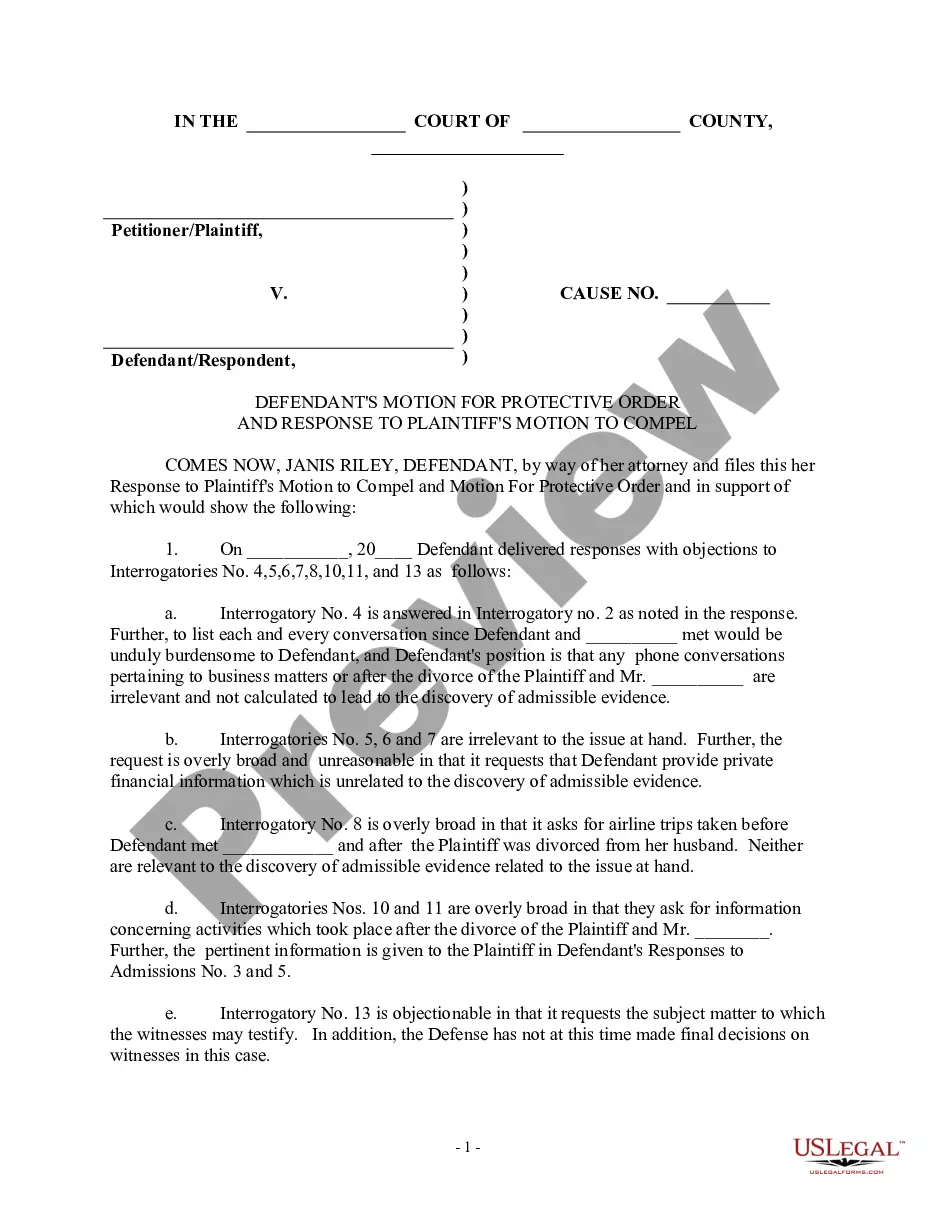
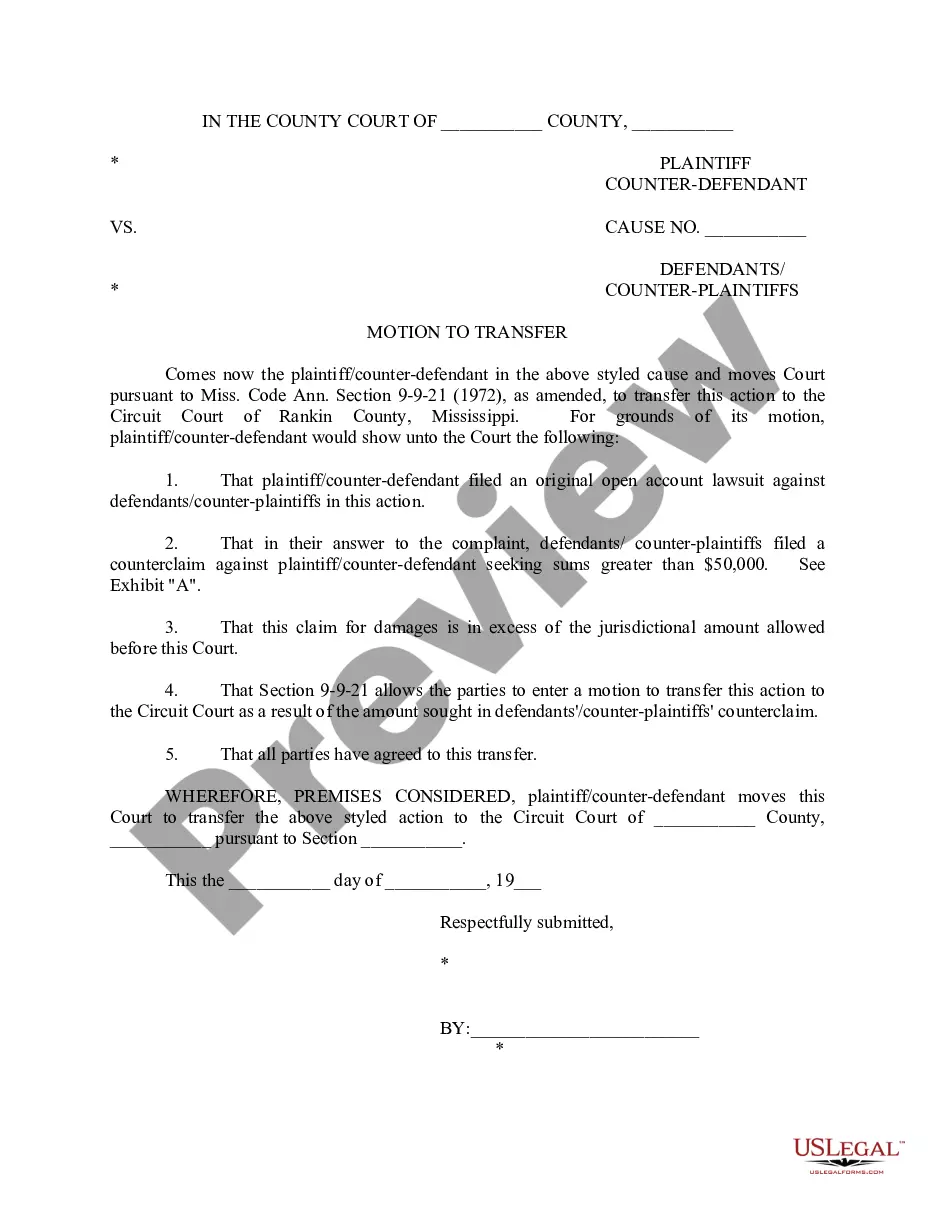
Get your form ready online
Our built-in tools help you complete, sign, share, and store your documents in one place.
Make edits, fill in missing information, and update formatting in US Legal Forms—just like you would in MS Word.
Download a copy, print it, send it by email, or mail it via USPS—whatever works best for your next step.
Sign and collect signatures with our SignNow integration. Send to multiple recipients, set reminders, and more. Go Premium to unlock E-Sign.
If this form requires notarization, complete it online through a secure video call—no need to meet a notary in person or wait for an appointment.
We protect your documents and personal data by following strict security and privacy standards.

Make edits, fill in missing information, and update formatting in US Legal Forms—just like you would in MS Word.

Download a copy, print it, send it by email, or mail it via USPS—whatever works best for your next step.

Sign and collect signatures with our SignNow integration. Send to multiple recipients, set reminders, and more. Go Premium to unlock E-Sign.

If this form requires notarization, complete it online through a secure video call—no need to meet a notary in person or wait for an appointment.

We protect your documents and personal data by following strict security and privacy standards.
Looking for another form?
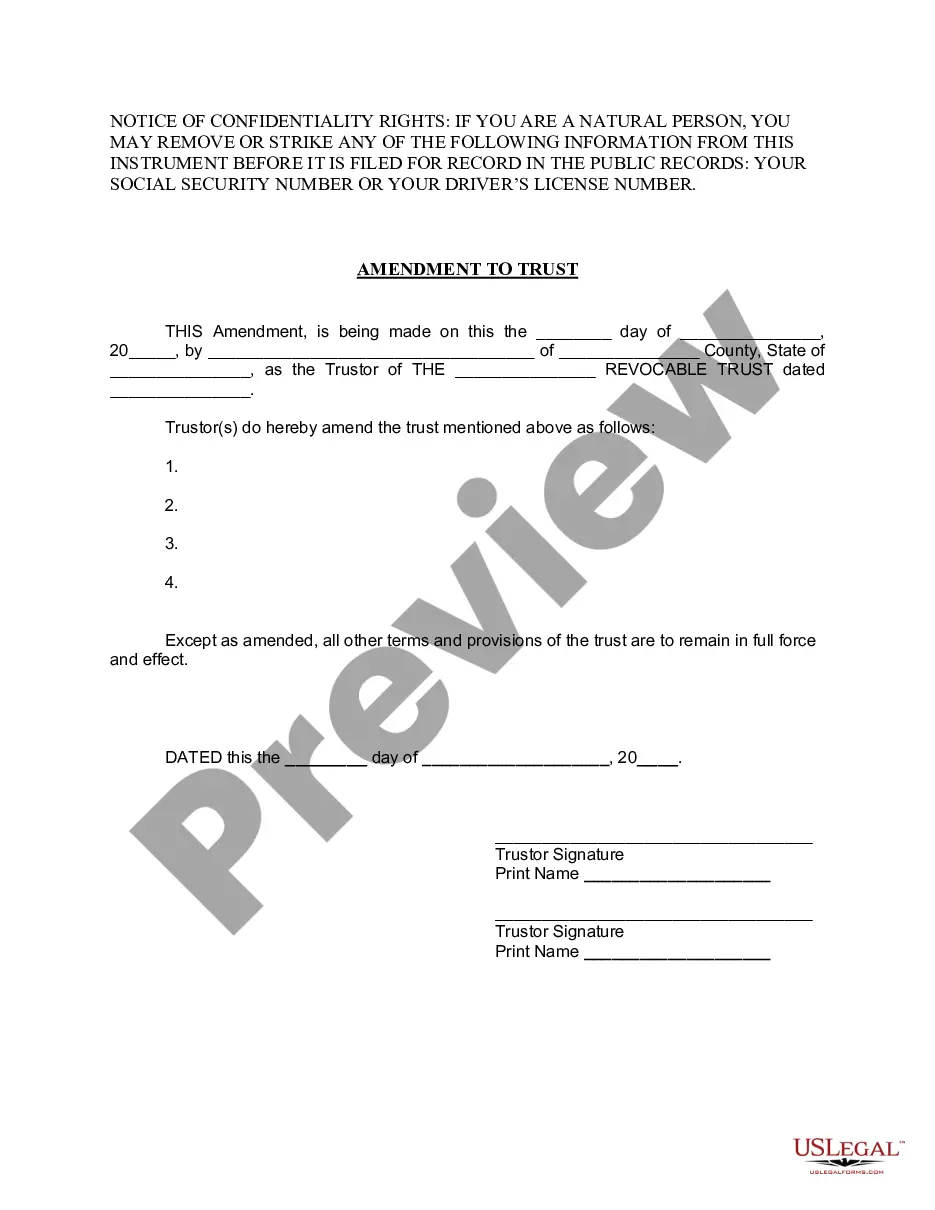

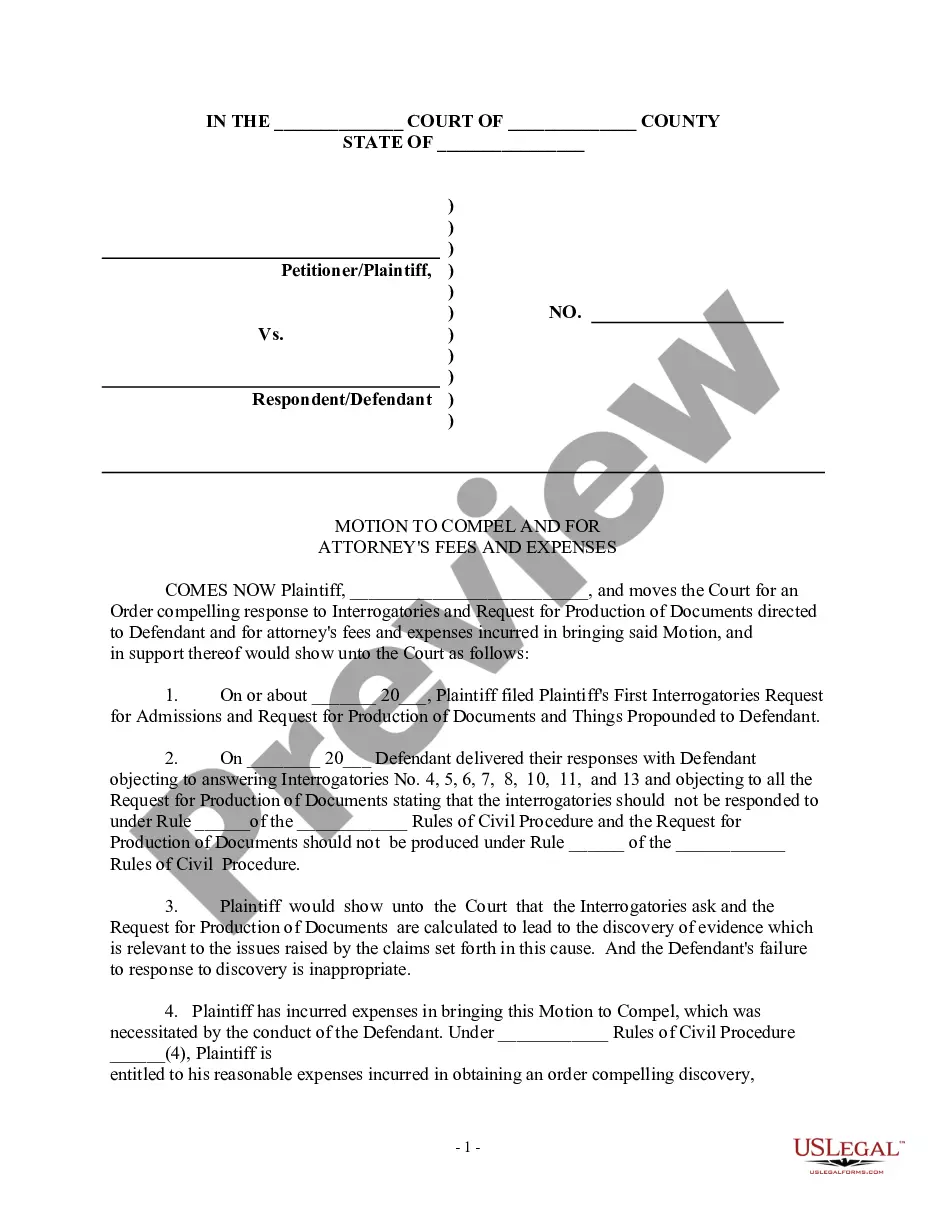
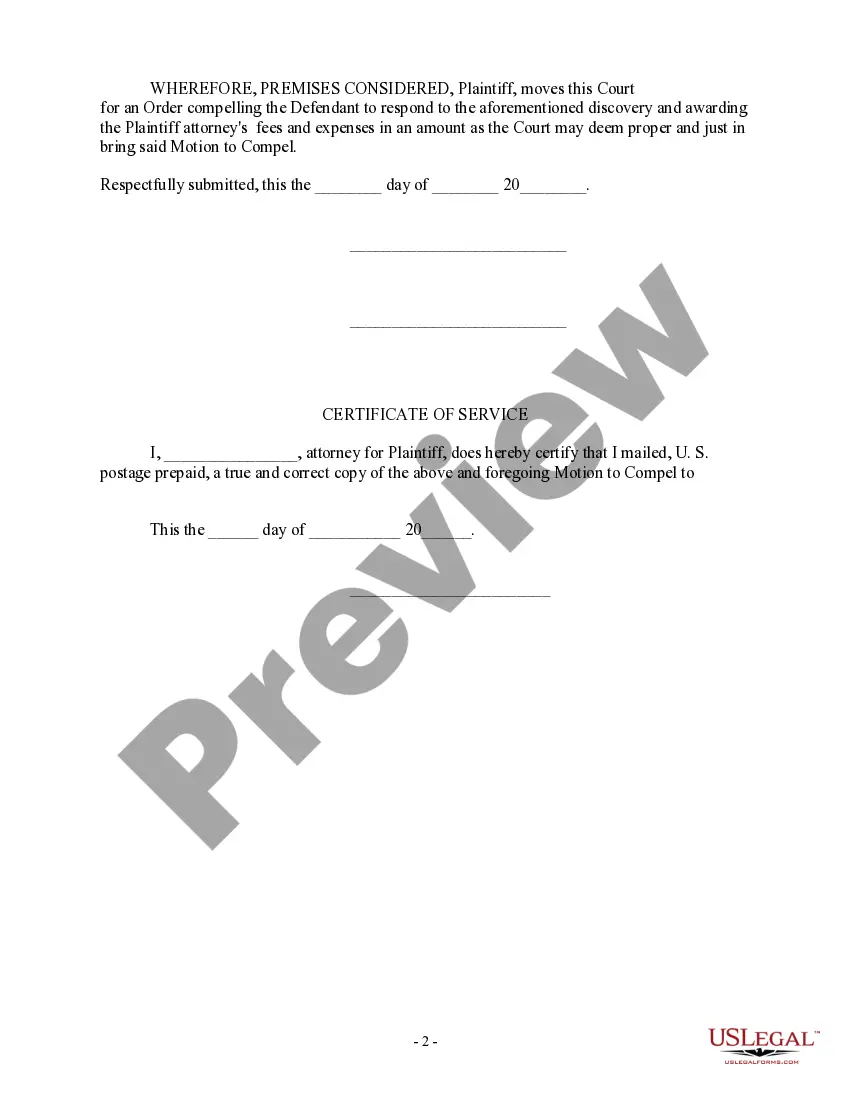
How to fill out Motion To Compel And For Attorney's Fees And Expenses?
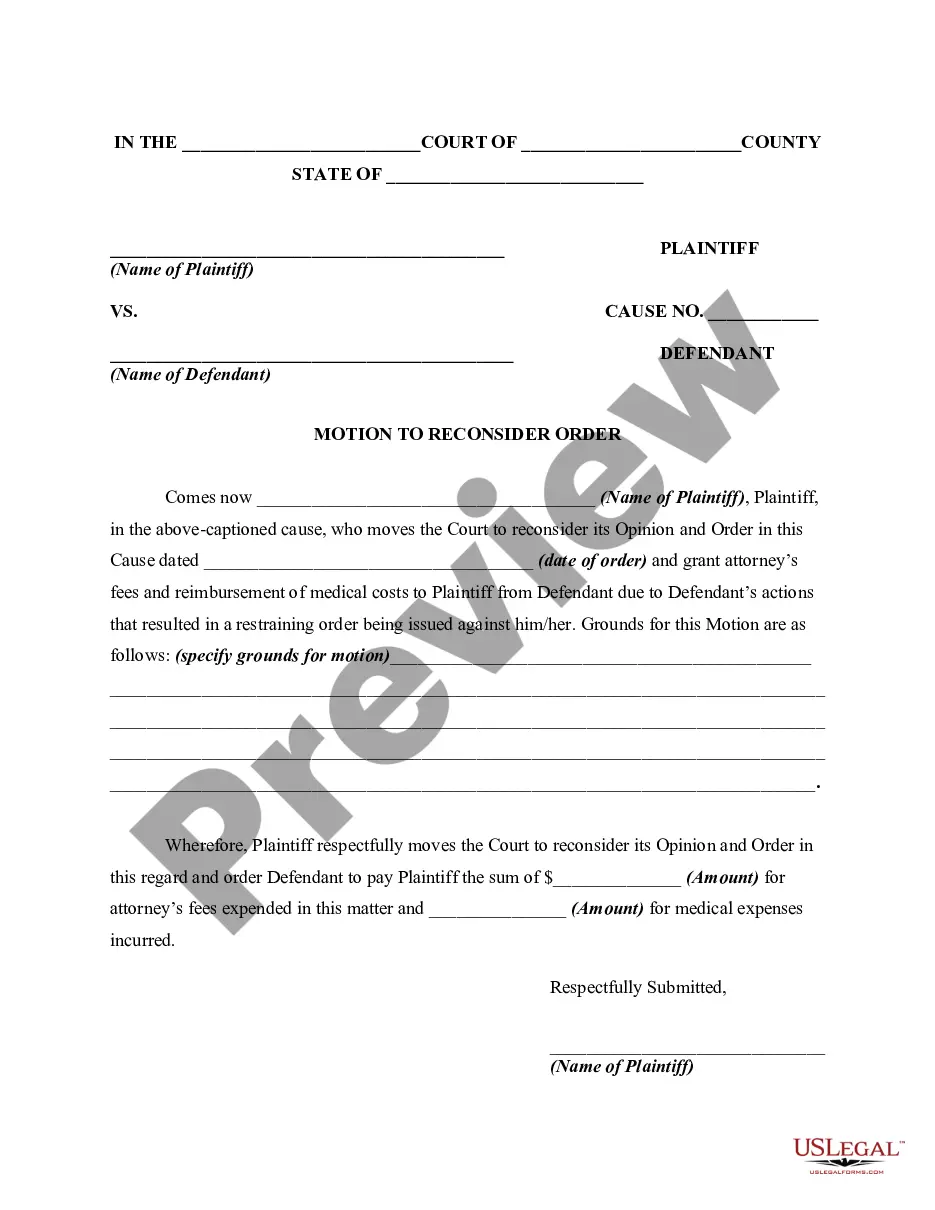
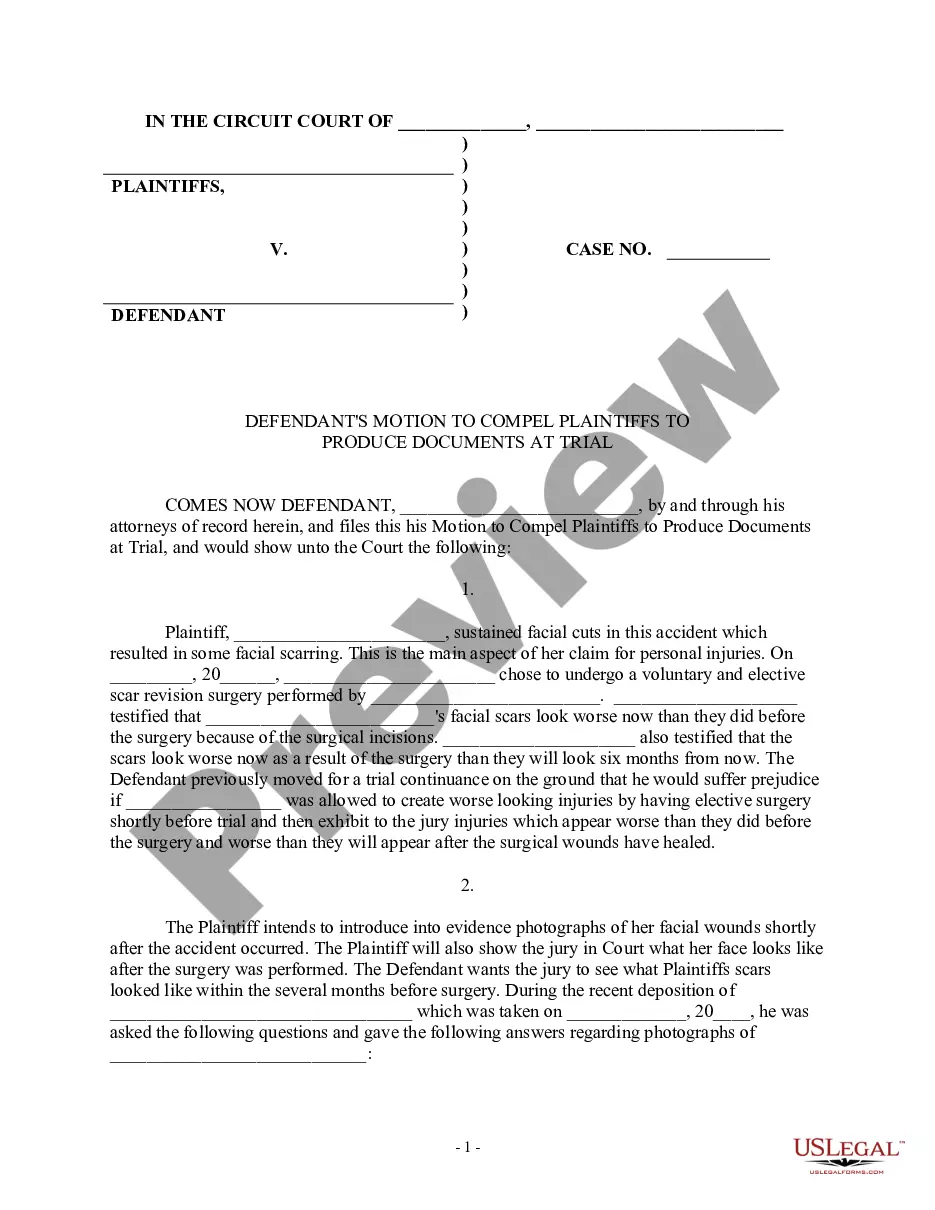
Finding a go-to place to take the most current and appropriate legal templates is half the struggle of working with bureaucracy. Choosing the right legal documents demands precision and attention to detail, which explains why it is important to take samples of Request Motion For Discovery only from trustworthy sources, like US Legal Forms. A wrong template will waste your time and delay the situation you are in. With US Legal Forms, you have very little to worry about. You can access and see all the details regarding the document’s use and relevance for the situation and in your state or county.
Consider the listed steps to finish your Request Motion For Discovery:
- Use the library navigation or search field to locate your sample.
- Open the form’s information to ascertain if it matches the requirements of your state and region.
- Open the form preview, if available, to make sure the form is definitely the one you are looking for.
- Get back to the search and look for the proper template if the Request Motion For Discovery does not suit your requirements.
- If you are positive about the form’s relevance, download it.
- When you are an authorized customer, click Log in to authenticate and access your picked forms in My Forms.
- If you do not have an account yet, click Buy now to get the template.
- Pick the pricing plan that suits your preferences.
- Proceed to the registration to complete your purchase.
- Finalize your purchase by selecting a transaction method (bank card or PayPal).
- Pick the document format for downloading Request Motion For Discovery.
- When you have the form on your gadget, you may alter it using the editor or print it and complete it manually.
Eliminate the hassle that accompanies your legal documentation. Check out the comprehensive US Legal Forms collection where you can find legal templates, check their relevance to your situation, and download them on the spot.
Form popularity
FAQ
(a) In all formal proceedings, discovery is available to the commission and the judge or justice under the Indiana Rules of Civil Procedure. A motion requesting a discovery order must be made to the circuit court, superior court, or probate court judge in the county in which the commission hearing is held.
Topics Covered: hide 1.1 # Don't ask what you already know. 1.2 # Don't Talk (too much) 1.3 # Don't pop the question, yet! 1.4 # Don't jump in without an agenda: 1.5 # Don't miss the pain points : 1.6 # Don't just call: 1.7 # Don't assume :
A discovery is recognizing something that already exists for the first time, that nobody has found before, e.g. how Christopher Columbus discovered the Americas.
Many types of discovery exist, including: Interrogatories. Requests for Admission. Production of Documents. Property Inspection. Physical and Mental Exams. Depositions.
For the most part, discovery takes place outside the courtroom, with parties exchanging written information and sitting through face-to-face questioning sessions (called "depositions"). However, if the parties can't agree on what should be handed over in discovery, a judge may have to resolve the dispute.