Restraining Loss Order Forex
Description
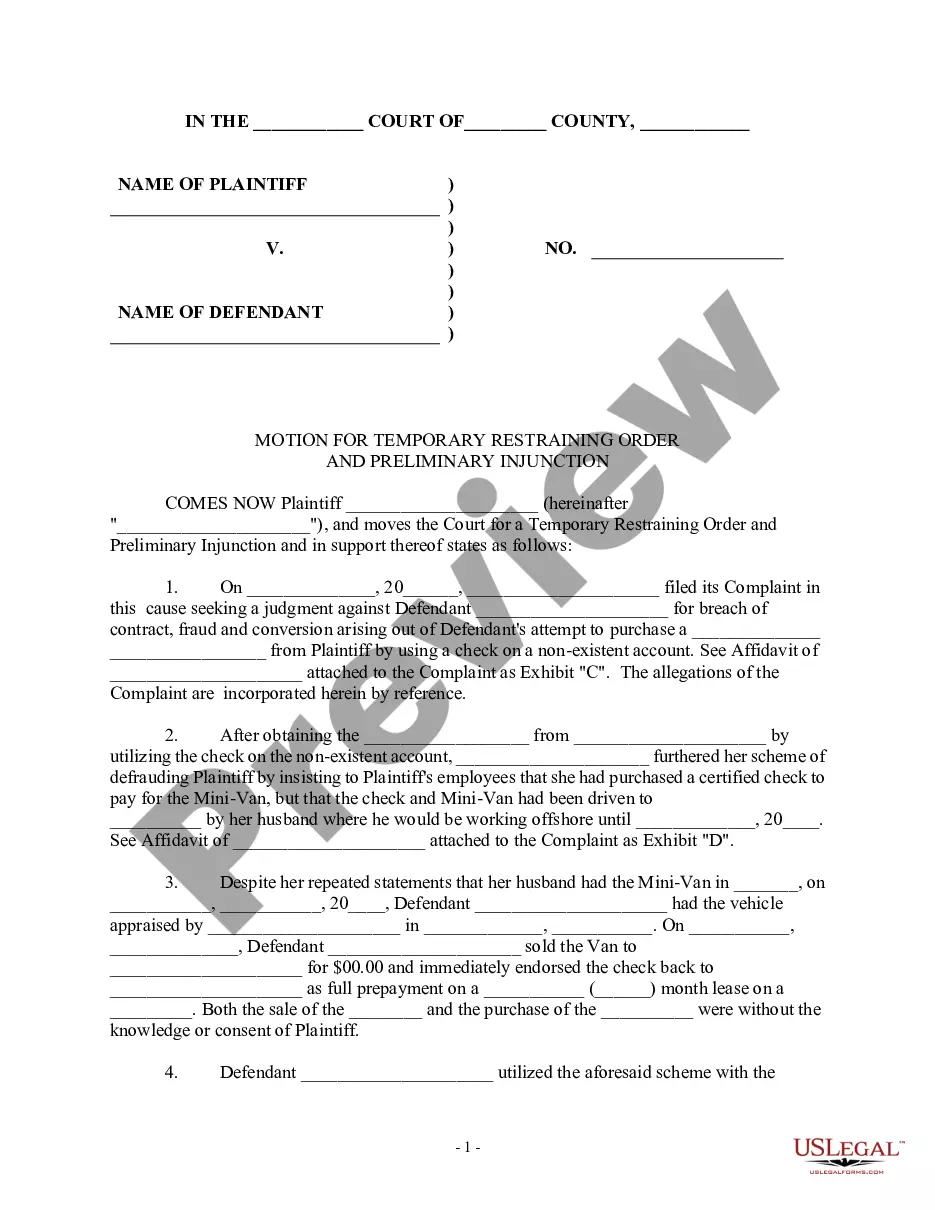
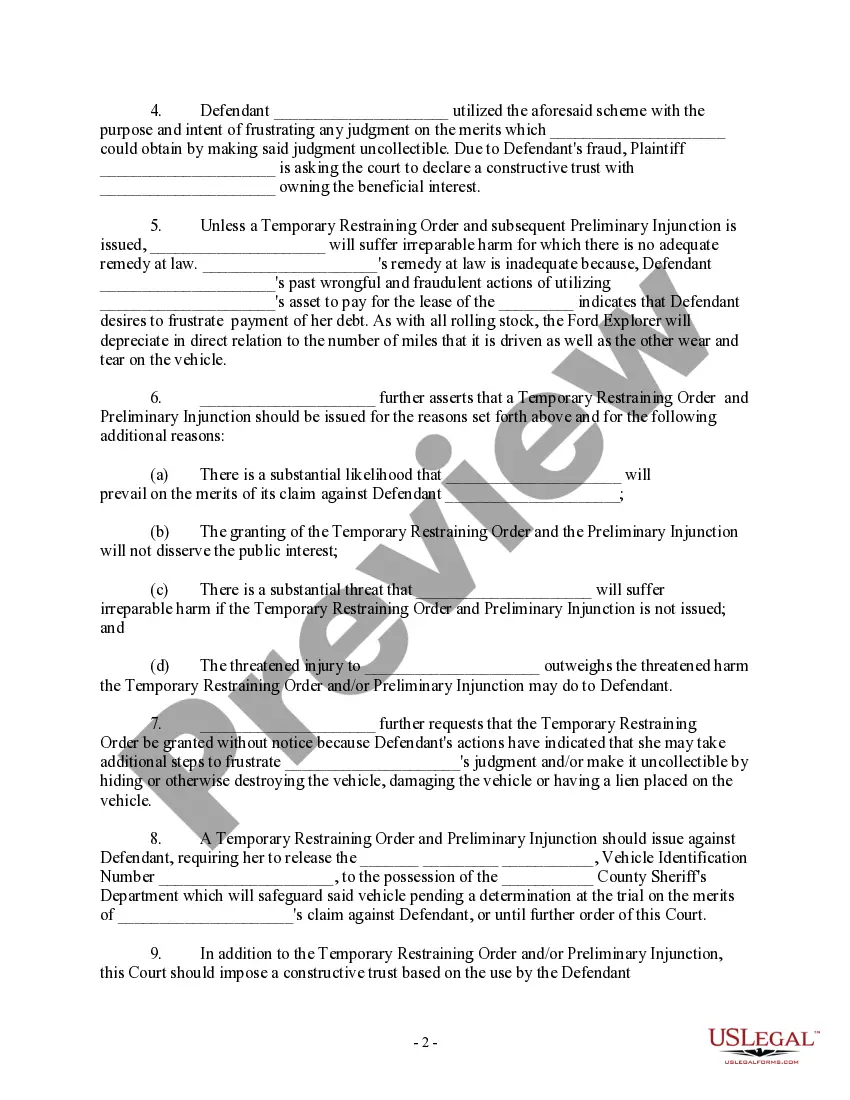
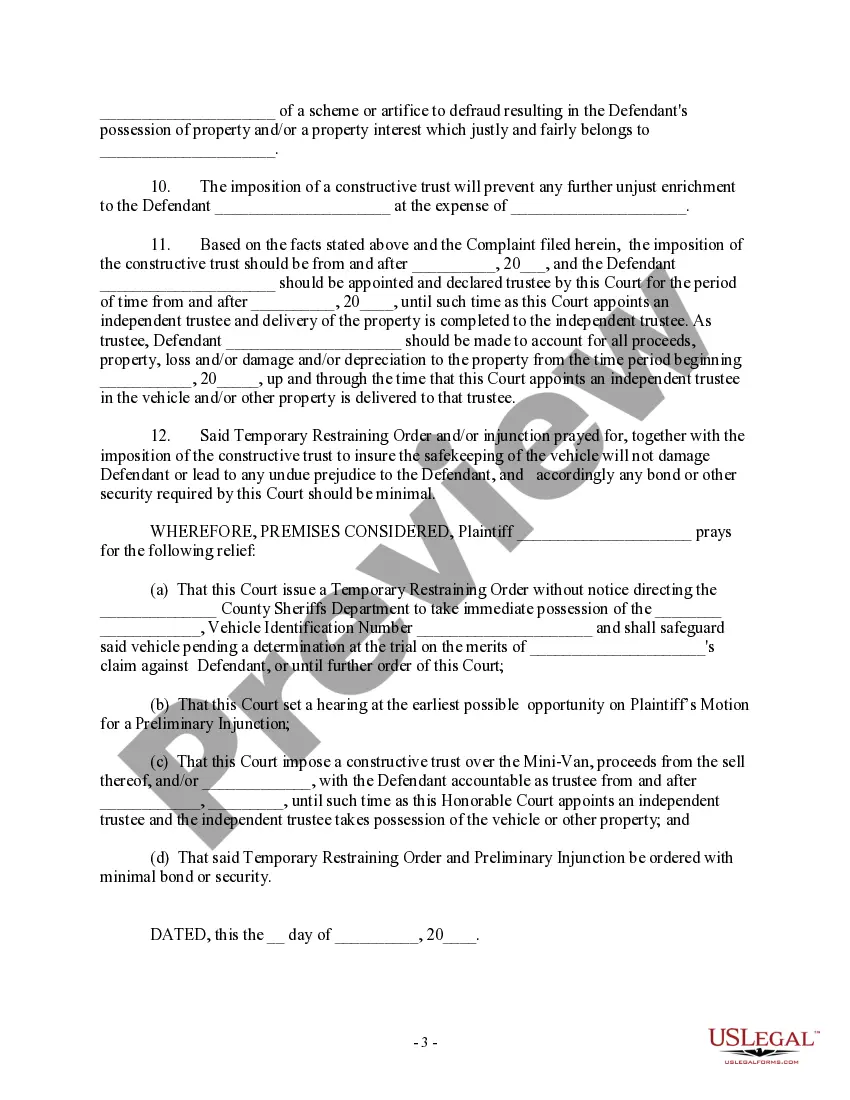

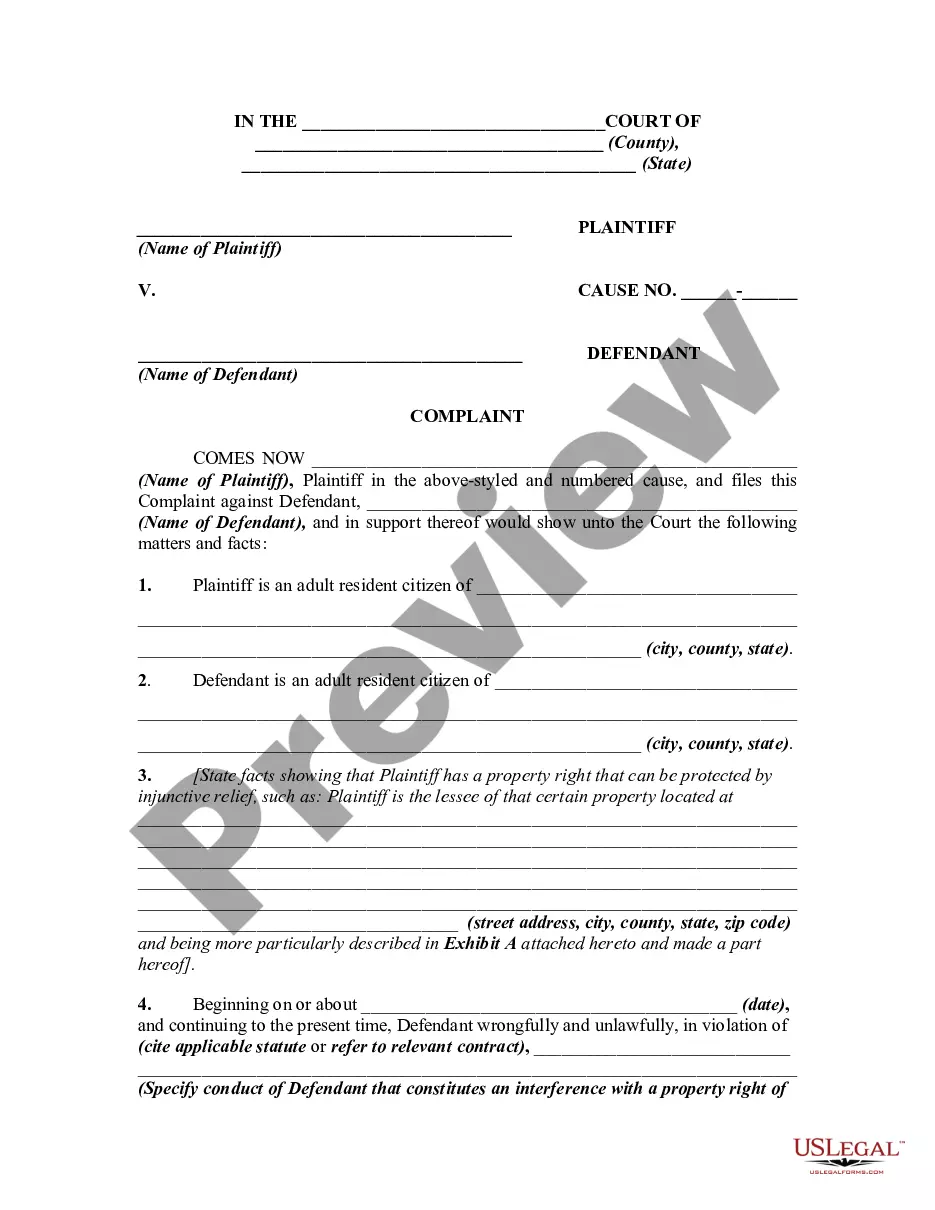
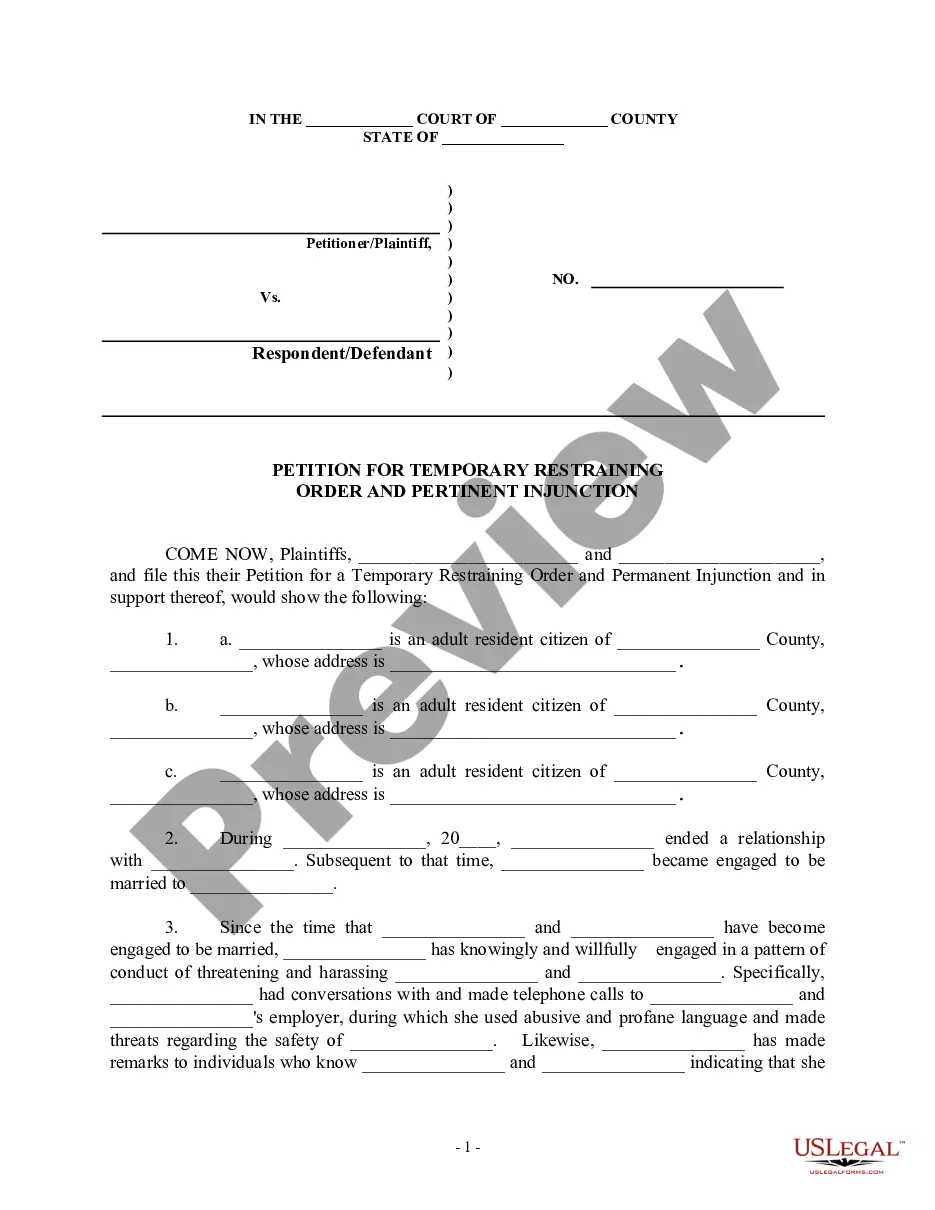

How to fill out Motion For Temporary Restraining Order And Preliminary Injunction To Prevent Vehicle Loss?
Utilizing legal templates that comply with national and local regulations is essential, and the web provides numerous choices to select from.
However, what is the benefit of spending time searching for the properly created Restraining Loss Order Forex example online when the US Legal Forms digital library already consolidates such templates in one location.
US Legal Forms is the largest online legal resource with more than 85,000 editable templates prepared by lawyers for various business and personal circumstances. They are easy to navigate with all documents categorized by state and use case. Our experts stay updated with legal changes, ensuring your documents are always current and compliant when acquiring a Restraining Loss Order Forex from our site.
All documents accessed through US Legal Forms are reusable. To re-download and complete previously acquired forms, navigate to the My documents section in your account. Benefit from the most comprehensive and user-friendly legal paperwork service!
- Obtaining a Restraining Loss Order Forex is straightforward and quick for both existing and new users.
- If you have an account with a valid subscription, Log In and download the document sample you need in the desired format.
- If you are unfamiliar with our website, follow these steps.
- Review the template using the Preview feature or through the text outline to confirm it suits your requirements.
- Search for another example using the search function at the top of the page if necessary.
- Press Buy Now when you’ve found the correct form and choose a subscription plan.
- Create an account or sign in and complete the payment process using PayPal or a credit card.
- Pick the ideal format for your Restraining Loss Order Forex and download it.
Form popularity
FAQ
To set up your take-profit (TP) and stop-loss (SL) in a restraining loss order forex context, first identify your trade's entry point. Use your predefined risk-reward ratio to calculate and place your SL and TP accordingly. Many trading platforms, including those offered by US Legal Forms, provide tools and guidelines to help you set these levels efficiently. Consistently applying this method will enhance your trading performance and risk management.
To set a stop-loss correctly with your restraining loss order forex strategy, first determine your risk tolerance. Calculate how much you are willing to lose on a trade before setting your stop-loss order. This calculation helps protect your trading capital and keeps your emotions in check. Additionally, always place your stop-loss at a strategic level based on market trends and key support or resistance points.
Choosing a 20% trailing stop is excessive. Based on the recent trends, the average pullback is about 6%, with bigger ones near 8%. A better trailing stop loss would be 10% to 12%. This gives the trade room to move but also gets the trader out quickly if the price drops by more than 12%.
How to place a stop loss order By the size in currency pairs. For example, the stop-loss will be triggered after a price movement equivalent to 1 USD. By the number of pips. The stop loss will work out after a price movement of 20 pips, for example. By the predetermined closing price.
A general rule of thumb is to set your stop loss order to 5 to 10 percent below your purchase price. This helps to keep your losses manageable. However, if the stock price starts to climb, adjust your stops upward.
An active trader might use a 5% level, while a long-term investor might choose 15% or more. Another thing to keep in mind is that, once you reach your stop price, your stop order becomes a market order. So, the price at which you sell may be much different from the stop price.
Because the orders are flexible, you can choose where you want to set the baseline percentage at which stocks should be sold. For example, if you're less comfortable with risk you might set a trailing stop at 5% or less. But if you're a more aggressive portfolio, you may bump the order up to 20% or 30%.