Tortious Interference With Contract Statute Of Limitations California
Description


Get your form ready online
Our built-in tools help you complete, sign, share, and store your documents in one place.
Make edits, fill in missing information, and update formatting in US Legal Forms—just like you would in MS Word.
Download a copy, print it, send it by email, or mail it via USPS—whatever works best for your next step.
Sign and collect signatures with our SignNow integration. Send to multiple recipients, set reminders, and more. Go Premium to unlock E-Sign.
If this form requires notarization, complete it online through a secure video call—no need to meet a notary in person or wait for an appointment.
We protect your documents and personal data by following strict security and privacy standards.

Make edits, fill in missing information, and update formatting in US Legal Forms—just like you would in MS Word.

Download a copy, print it, send it by email, or mail it via USPS—whatever works best for your next step.

Sign and collect signatures with our SignNow integration. Send to multiple recipients, set reminders, and more. Go Premium to unlock E-Sign.

If this form requires notarization, complete it online through a secure video call—no need to meet a notary in person or wait for an appointment.

We protect your documents and personal data by following strict security and privacy standards.
Looking for another form?
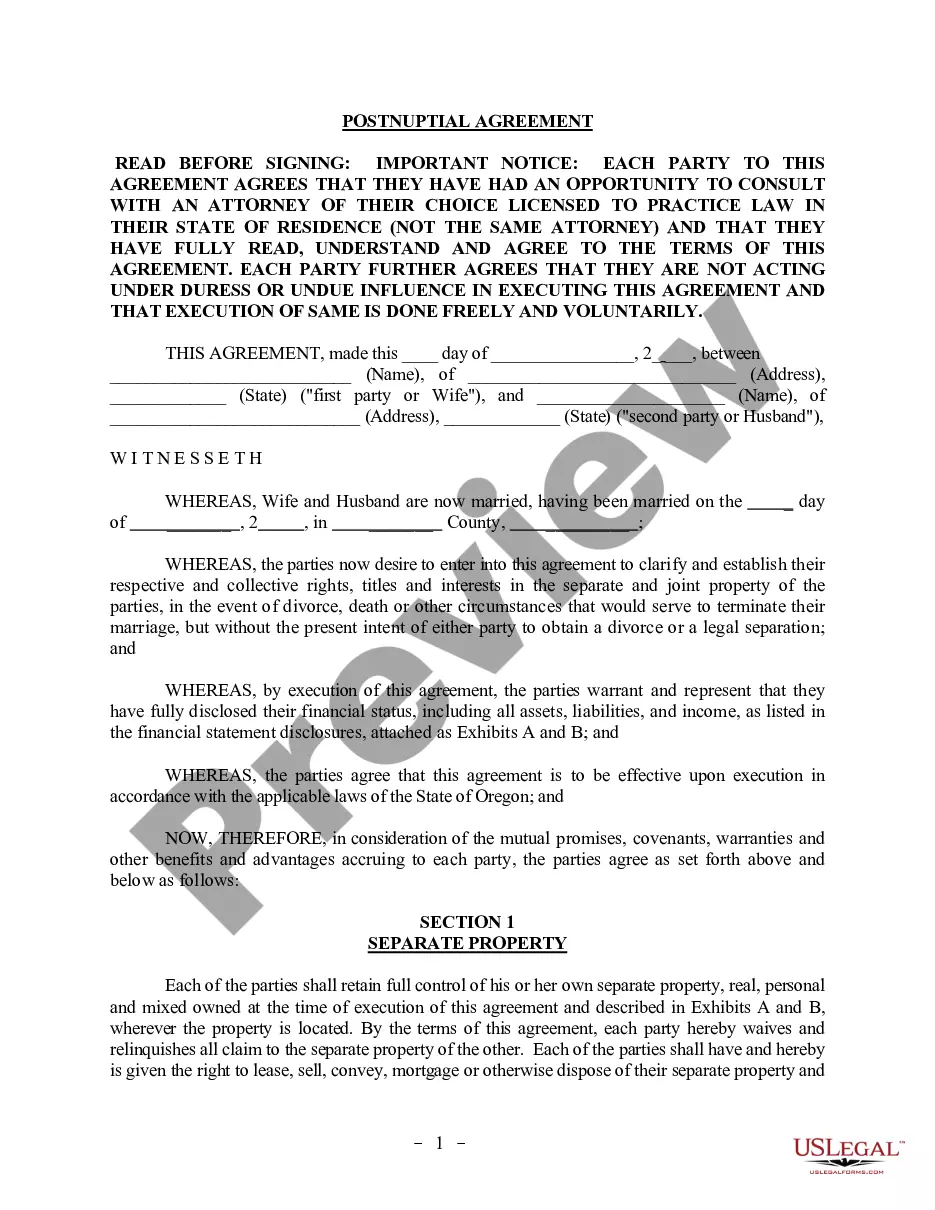
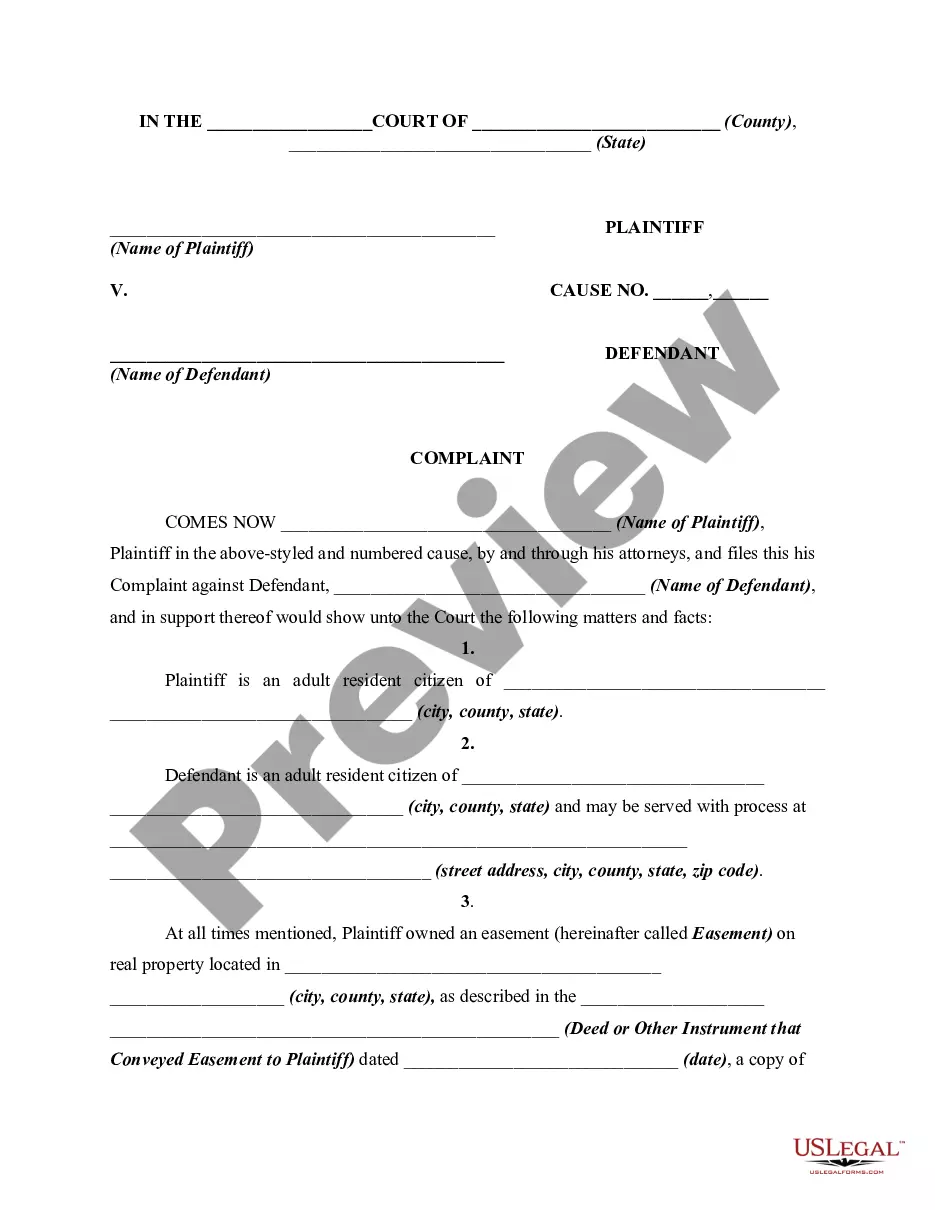
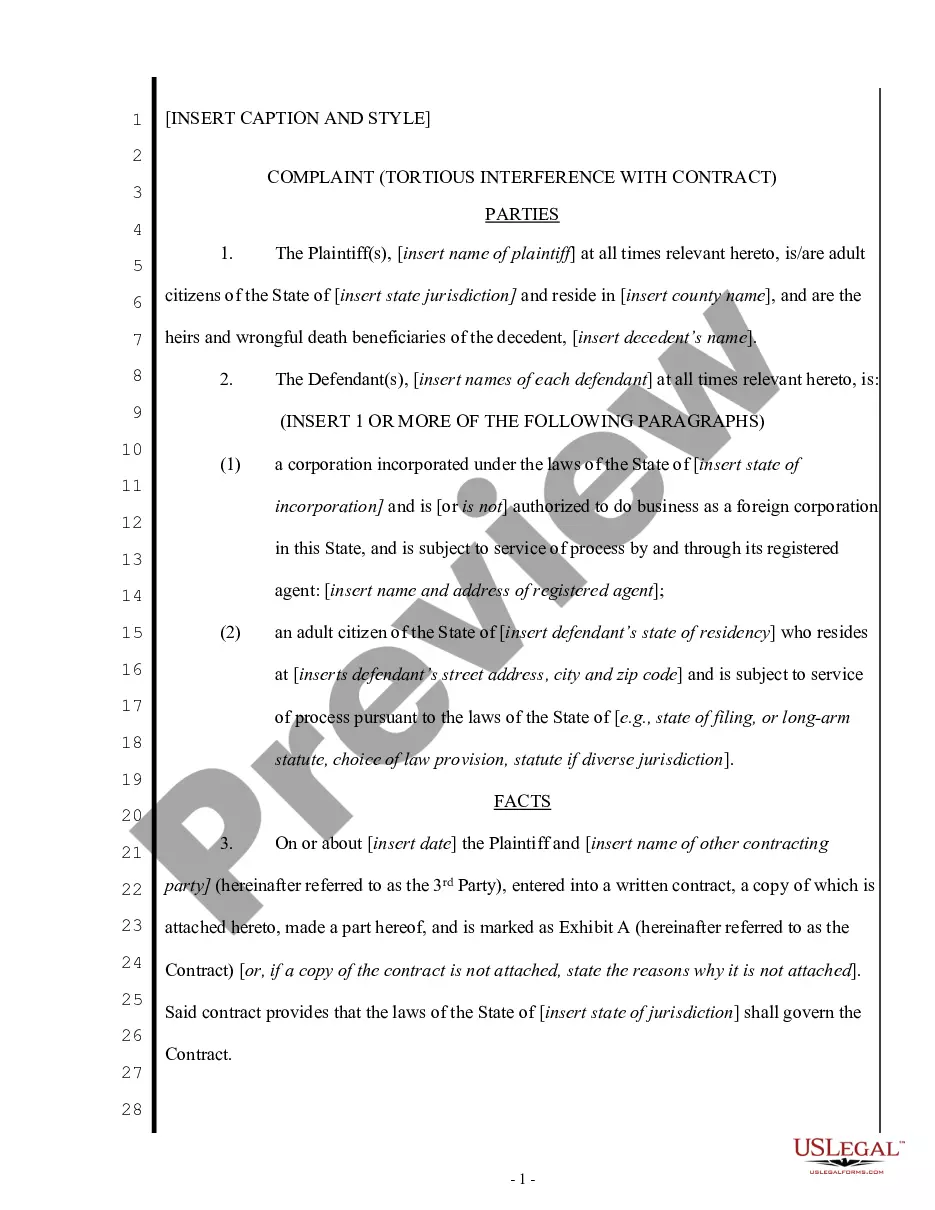
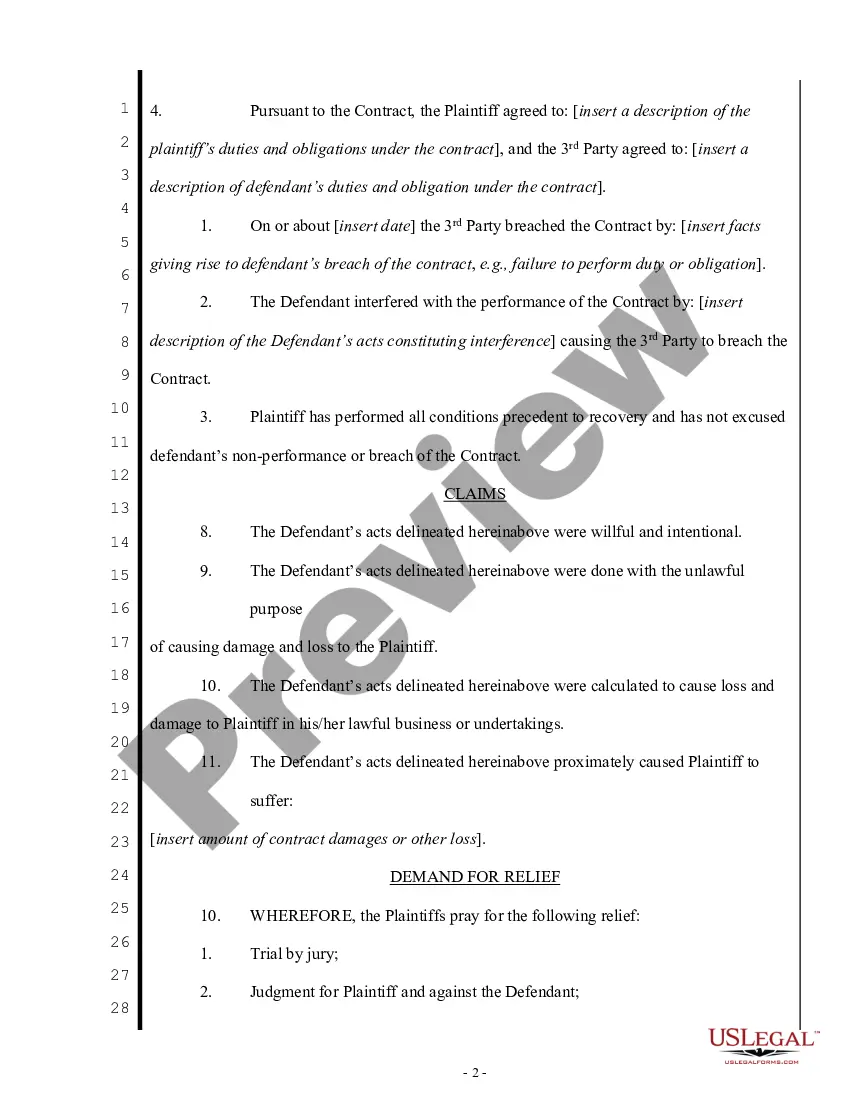
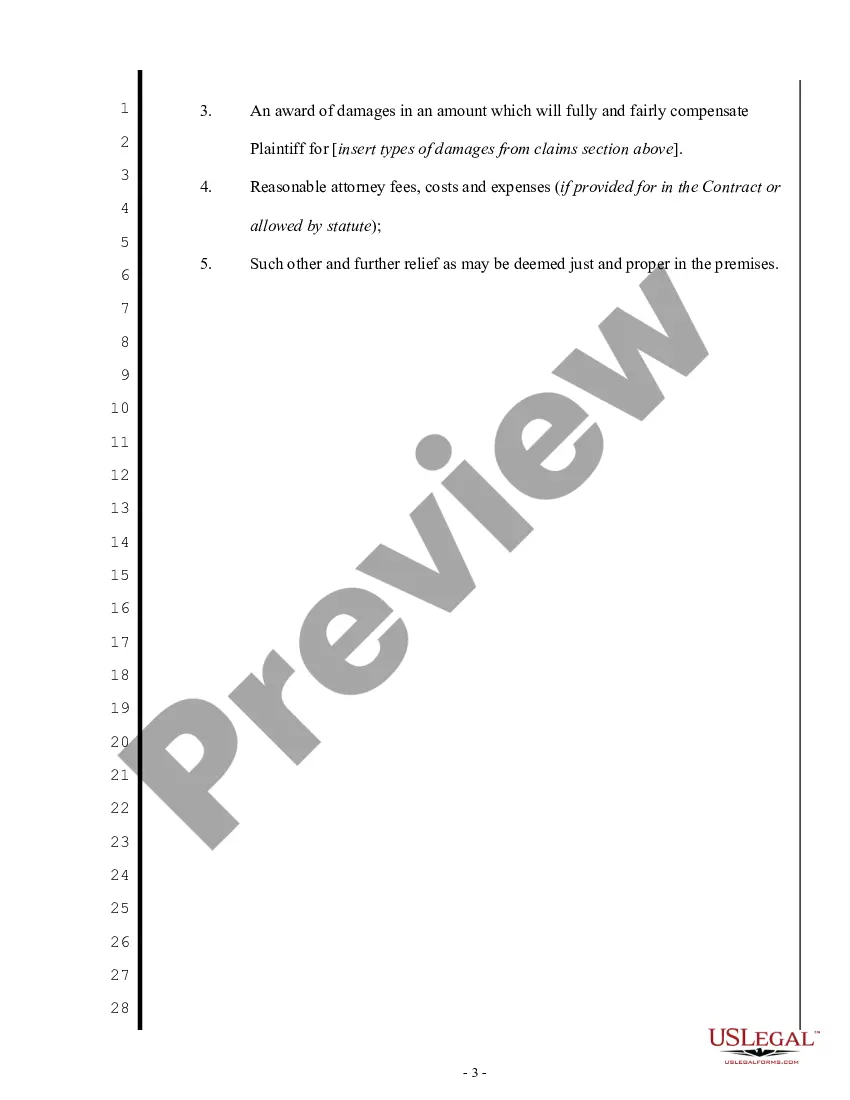
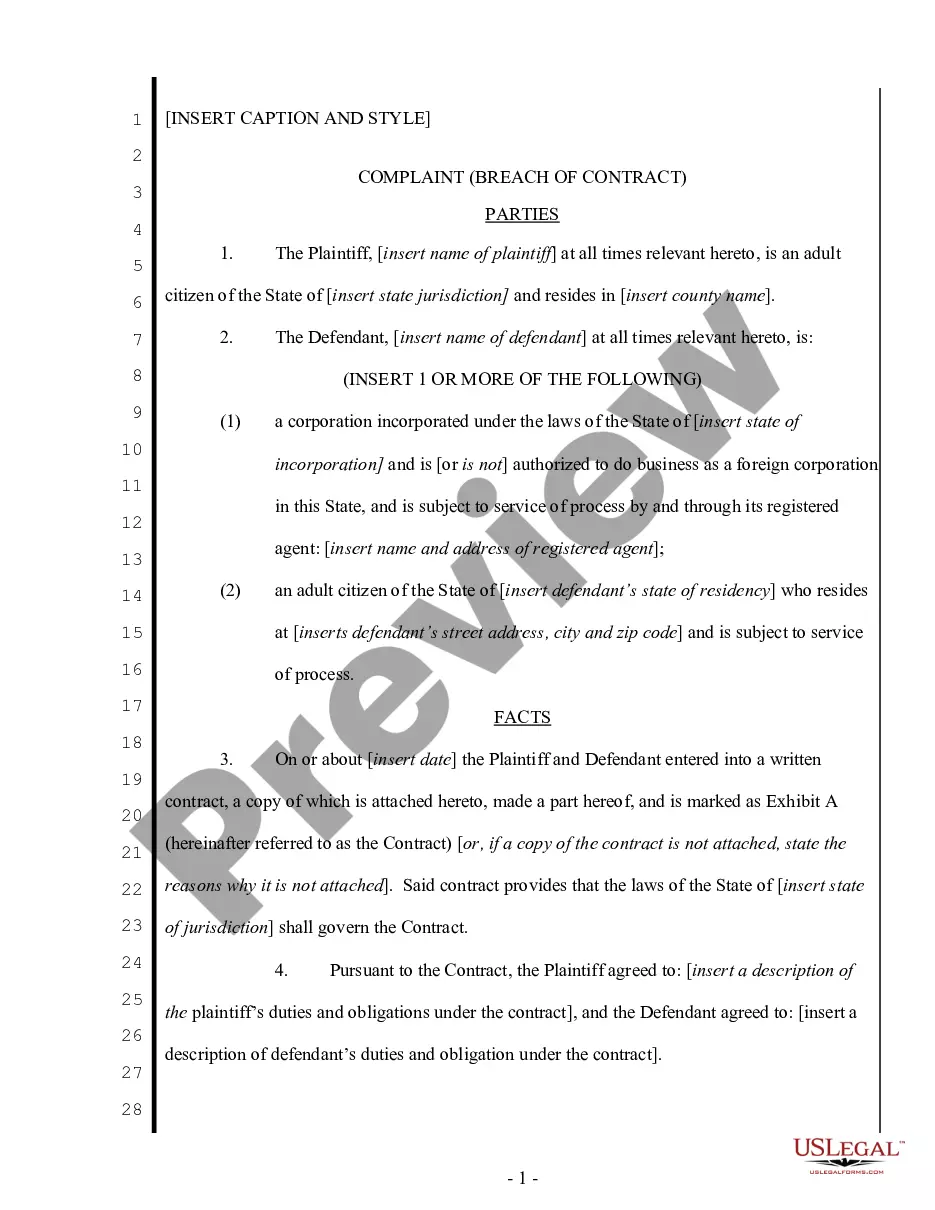
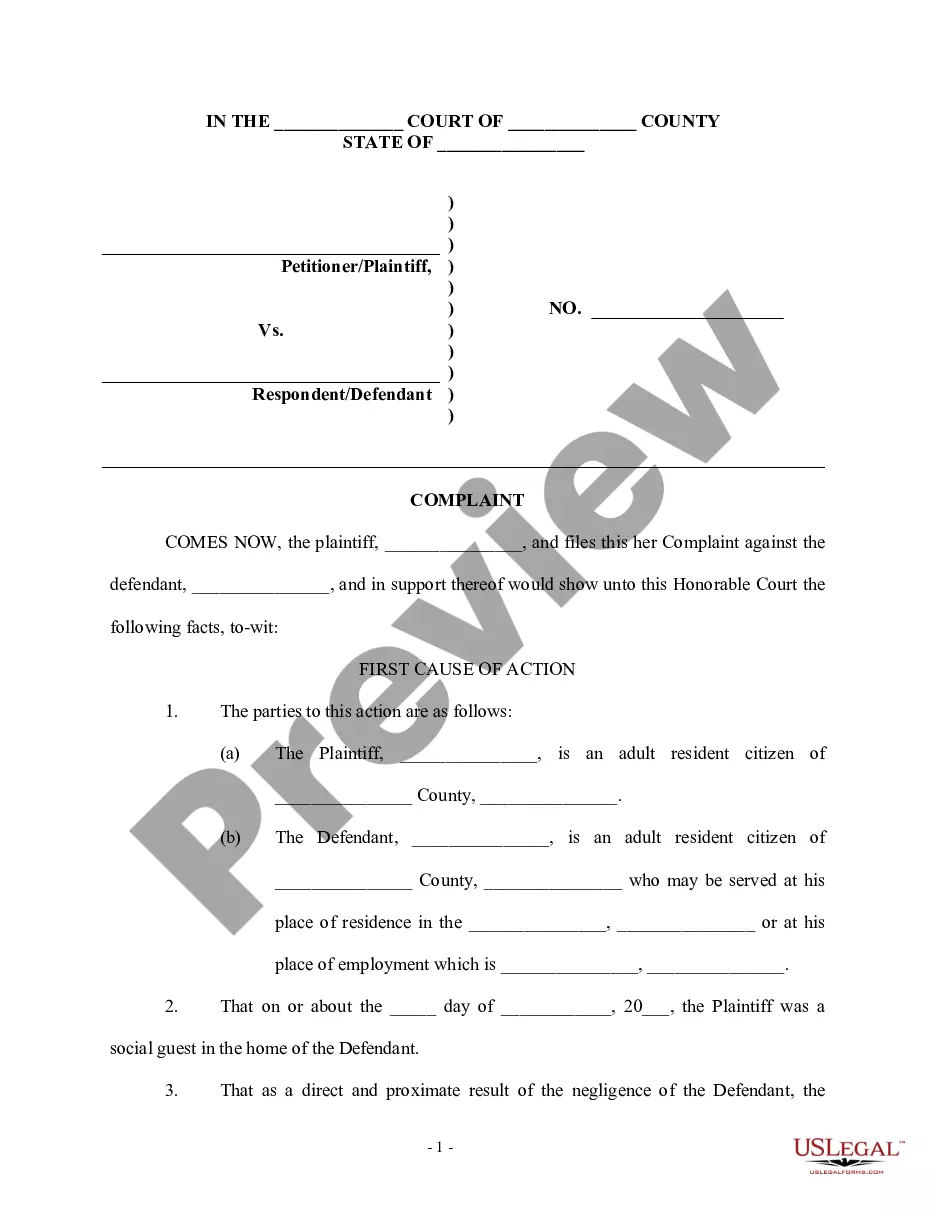
How to fill out Complaint Regarding Intentional Interference With Contract?
Regardless of whether it's for corporate reasons or personal issues, everyone is bound to encounter legal matters at some juncture in their existence.
Filling out legal documents requires meticulous care, starting with selecting the correct form template.
Once downloaded, you can fill out the form using editing software or print it and complete it by hand. With an extensive US Legal Forms catalog available, you won’t waste time searching for the suitable template on the internet. Take advantage of the library’s straightforward navigation to find the proper form for any situation.
- For instance, if you select an incorrect version of the Tortious Interference With Contract Statute Of Limitations California, it will be rejected upon submission.
- Thus, it is crucial to have a dependable source for legal documents such as US Legal Forms.
- To obtain a Tortious Interference With Contract Statute Of Limitations California template, adhere to these straightforward steps.
- Utilize the search bar or catalog navigation to locate the necessary template.
- Review the form’s description to confirm it aligns with your needs, state, and county.
- Click on the form’s preview to examine it.
- If it turns out to be the wrong document, return to the search tool to find the Tortious Interference With Contract Statute Of Limitations California template you require.
- Download the template if it satisfies your criteria.
- If you already have a US Legal Forms account, simply click Log in to retrieve saved templates from My documents.
- If you do not have an account yet, you can obtain the form by clicking Buy now.
- Select the appropriate pricing option.
- Complete the account registration form.
- Choose your payment method: use a credit card or PayPal account.
- Select the file format you desire and download the Tortious Interference With Contract Statute Of Limitations California.
Form popularity
FAQ
In California, the statute of limitations for tortious interference with a contract is typically two years. This means you have two years from the date of the interference to file your claim. It is essential to note that this time frame can sometimes be affected by exceptional circumstances or discovery rules. If you find yourself needing assistance, platforms like USLegalForms can provide you with resources to help you understand and navigate the tortious interference with contract statute of limitations in California.
Filing a lawsuit does generally pause the statute of limitations period for your claim. Once you initiate a lawsuit for tortious interference with a contract, the clock stops running on the time you have to bring a case. However, it is important to act promptly, as any delays can still be detrimental. While the statute of limitations on tortious interference with contract in California is typically two years, make sure you consult a legal expert for advice on your specific situation.
To prove tortious interference with a contract, you must establish four key elements. First, you must show that a valid contract existed between two parties. Next, you need to demonstrate that a third party knew about this contract. Then, show that the third party intentionally interfered with the contract. Finally, you must prove that this interference caused damages. Understanding these elements is crucial for navigating the tortious interference with contract statute of limitations in California.
The elements of tortious interference in California include a valid contract, knowledge of the contract by the interfering party, intentional actions to disrupt the contract, and resulting damages. Each of these components plays a critical role in establishing a successful claim. Understanding these elements is paramount when considering a case centered around tortious interference with contract statute of limitations California.
The statute of limitations for tort claims in California varies depending on the nature of the tort. Generally, personal injury claims have a limit of two years, while other torts may have different timeframes. When dealing with tortious interference, it is important to reference the specific statute of limitations for tortious interference with contract statute of limitations California.
In California, the statute of limitations for tortious interference aligns with the general tort claim timeframe of two years. This period starts from the time you discover the interference. It's critical to ensure you file your claim within this timeframe to protect your rights under tortious interference with contract statute of limitations California.
Proving tortious interference can be quite challenging as it requires solid evidence to establish all necessary elements. The burden of proof lies on the plaintiff, necessitating clear, convincing documentation of the interference and its impact. If you find yourself facing this issue, understanding the tortious interference with contract statute of limitations California will guide you in preparing your case effectively.
To prove tortious interference, you need to demonstrate several key elements: a valid contract, knowledge of that contract by the interferer, intentional interference, and resulting damages. Collecting evidence to support these elements is crucial for a successful claim. If you need help navigating the complexities of tortious interference with contract statute of limitations California, consider using a platform like US Legal Forms.
Yes, California does recognize the tort of interference with contracts. This legal recognition allows parties to seek remedies if someone wrongfully interferes with their contractual relationships. Understanding your rights under tortious interference with contract statute of limitations California can provide you with a path to accountability.
The statute of limitations for tortious interference in California typically falls under the general tort statute, which is two years. This means you have two years to file a claim from the moment you become aware of the interference. If you are dealing with tortious interference with contract statute of limitations California, it's important to act promptly to preserve your legal rights.