Wrongful Single Civil Blank With A Witness
Description
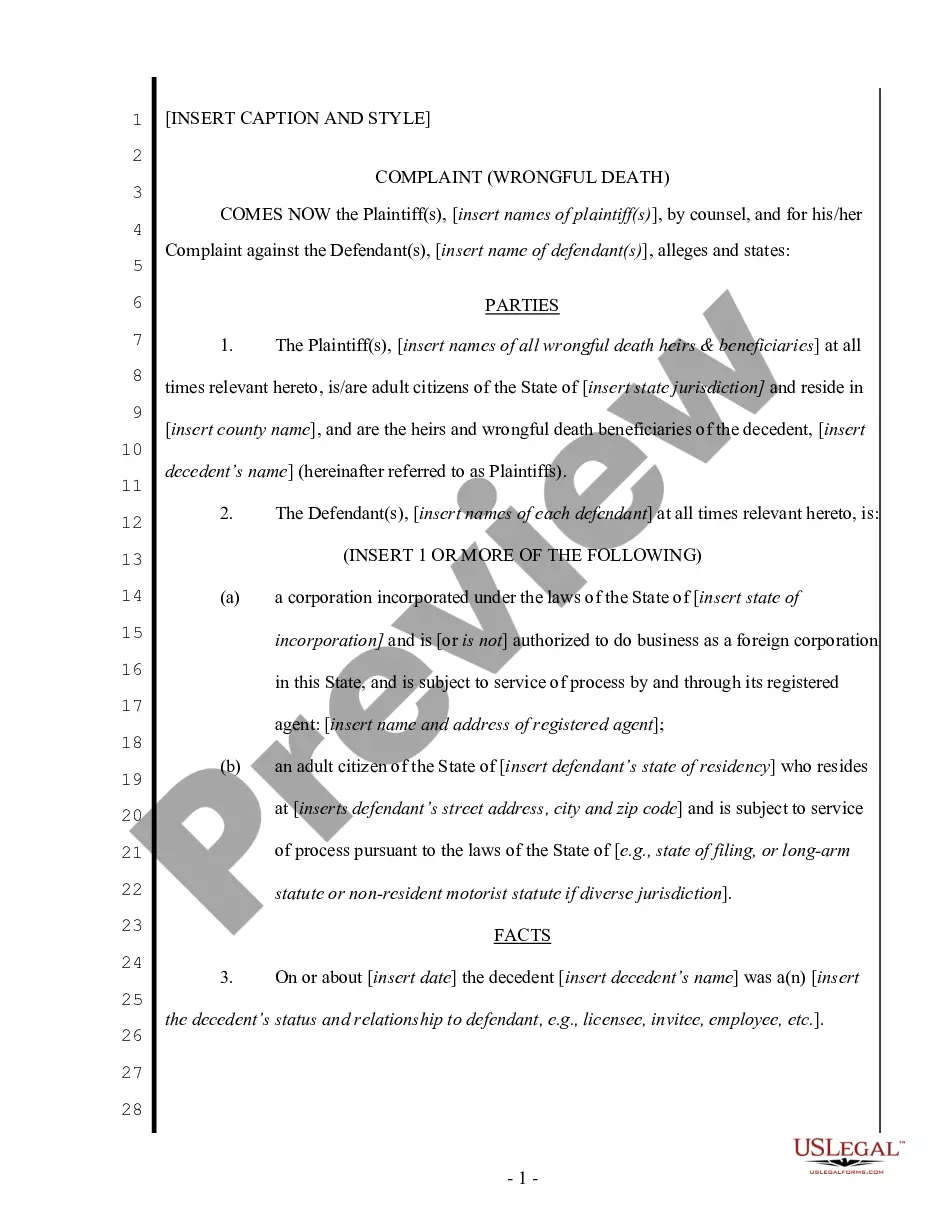

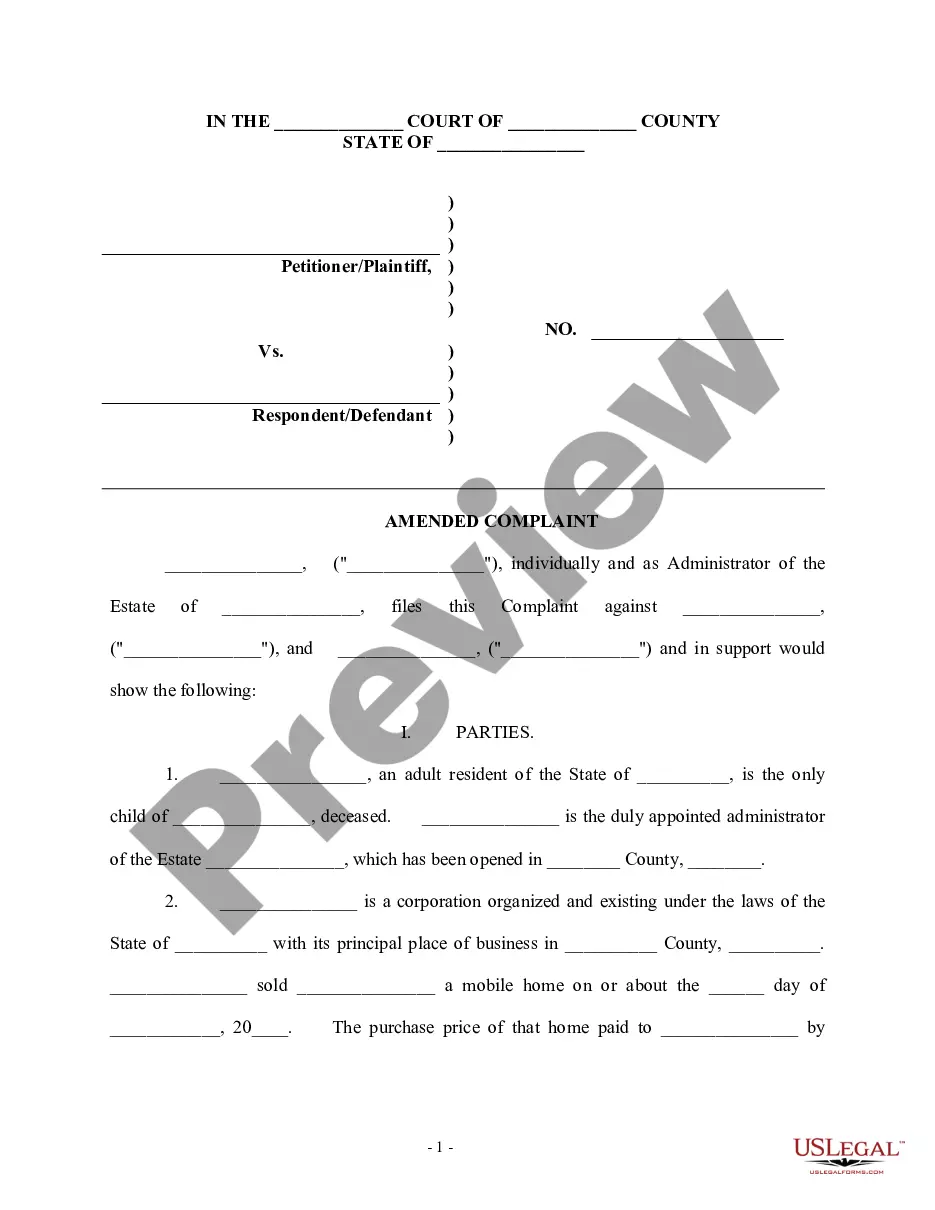
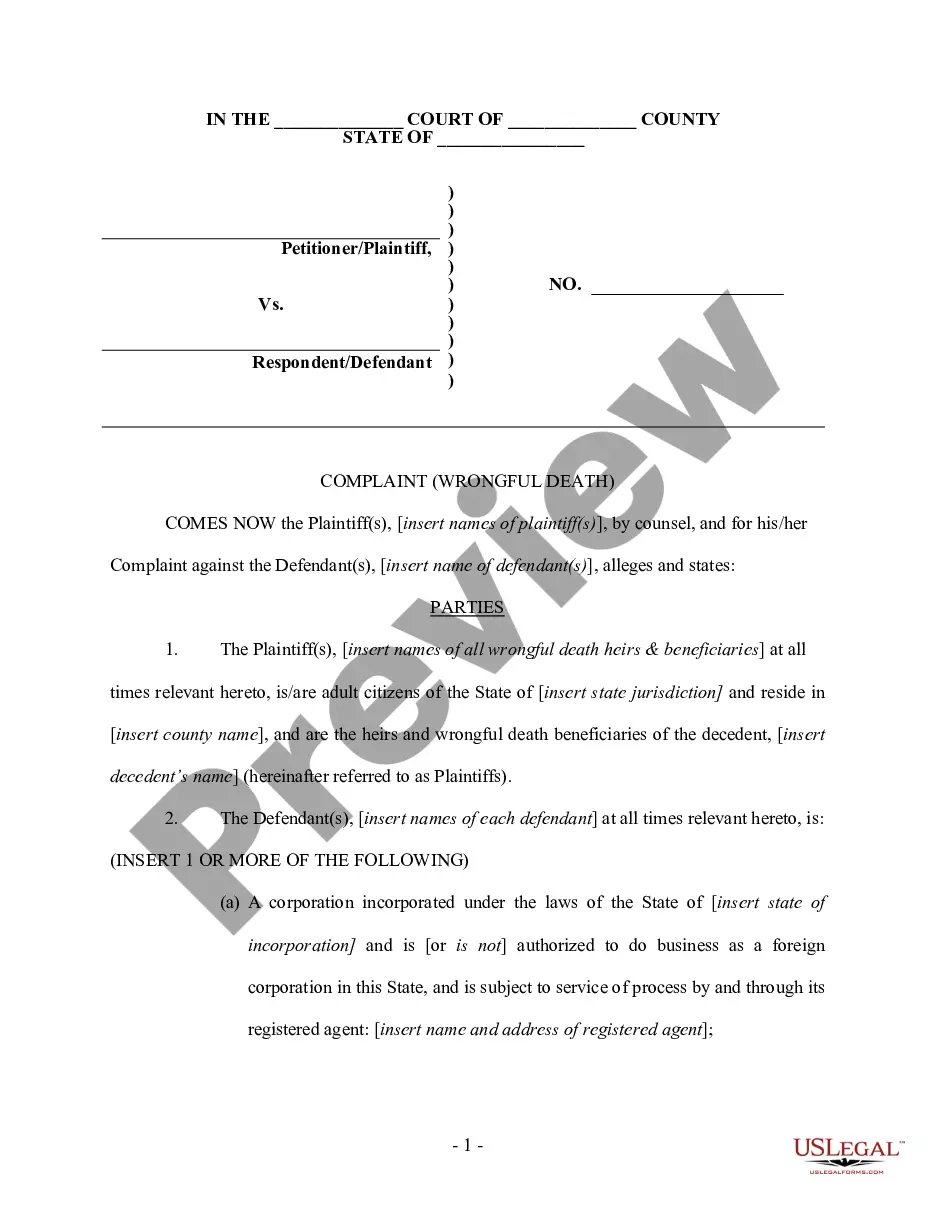
Get your form ready online
Our built-in tools help you complete, sign, share, and store your documents in one place.
Make edits, fill in missing information, and update formatting in US Legal Forms—just like you would in MS Word.
Download a copy, print it, send it by email, or mail it via USPS—whatever works best for your next step.
Sign and collect signatures with our SignNow integration. Send to multiple recipients, set reminders, and more. Go Premium to unlock E-Sign.
If this form requires notarization, complete it online through a secure video call—no need to meet a notary in person or wait for an appointment.
We protect your documents and personal data by following strict security and privacy standards.

Make edits, fill in missing information, and update formatting in US Legal Forms—just like you would in MS Word.

Download a copy, print it, send it by email, or mail it via USPS—whatever works best for your next step.

Sign and collect signatures with our SignNow integration. Send to multiple recipients, set reminders, and more. Go Premium to unlock E-Sign.

If this form requires notarization, complete it online through a secure video call—no need to meet a notary in person or wait for an appointment.

We protect your documents and personal data by following strict security and privacy standards.
Looking for another form?






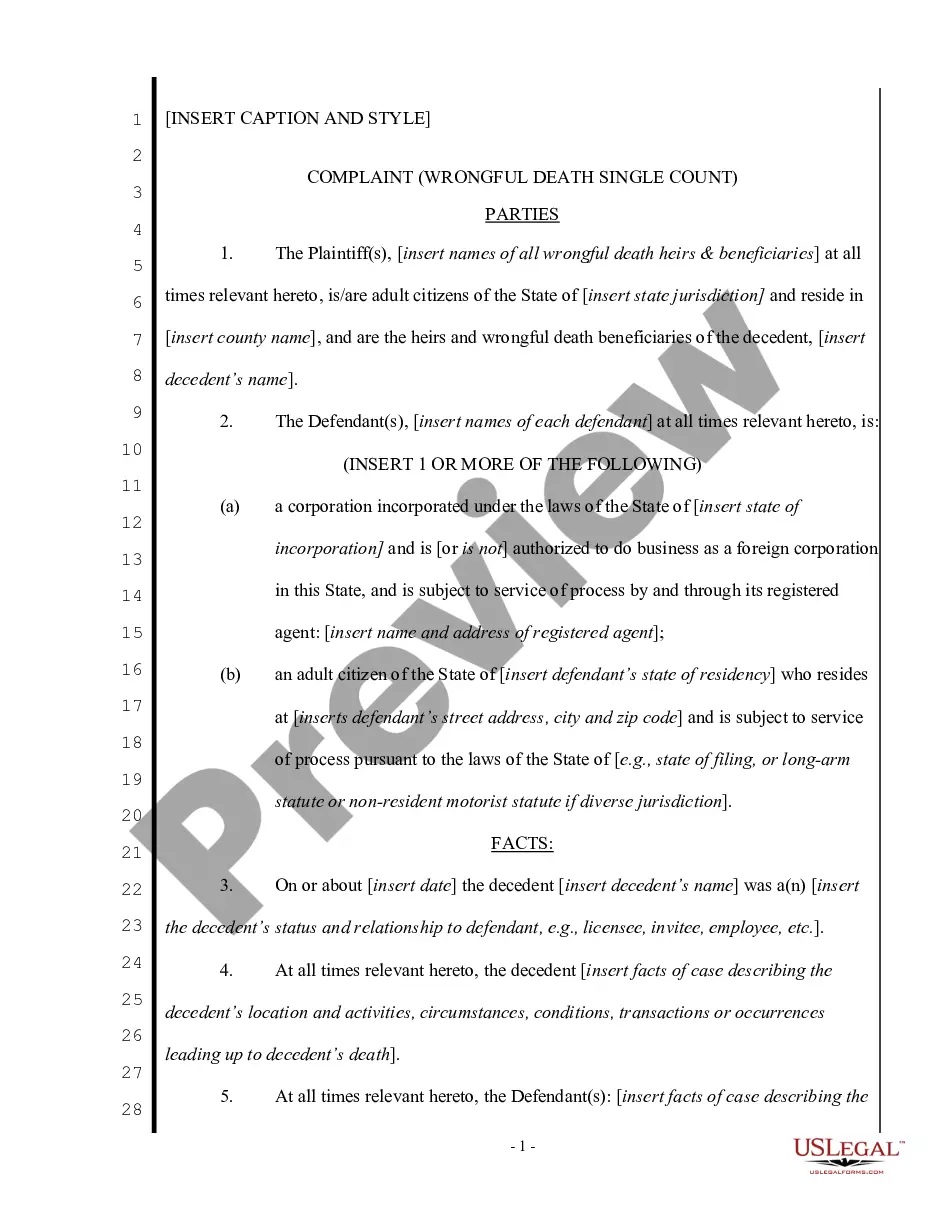
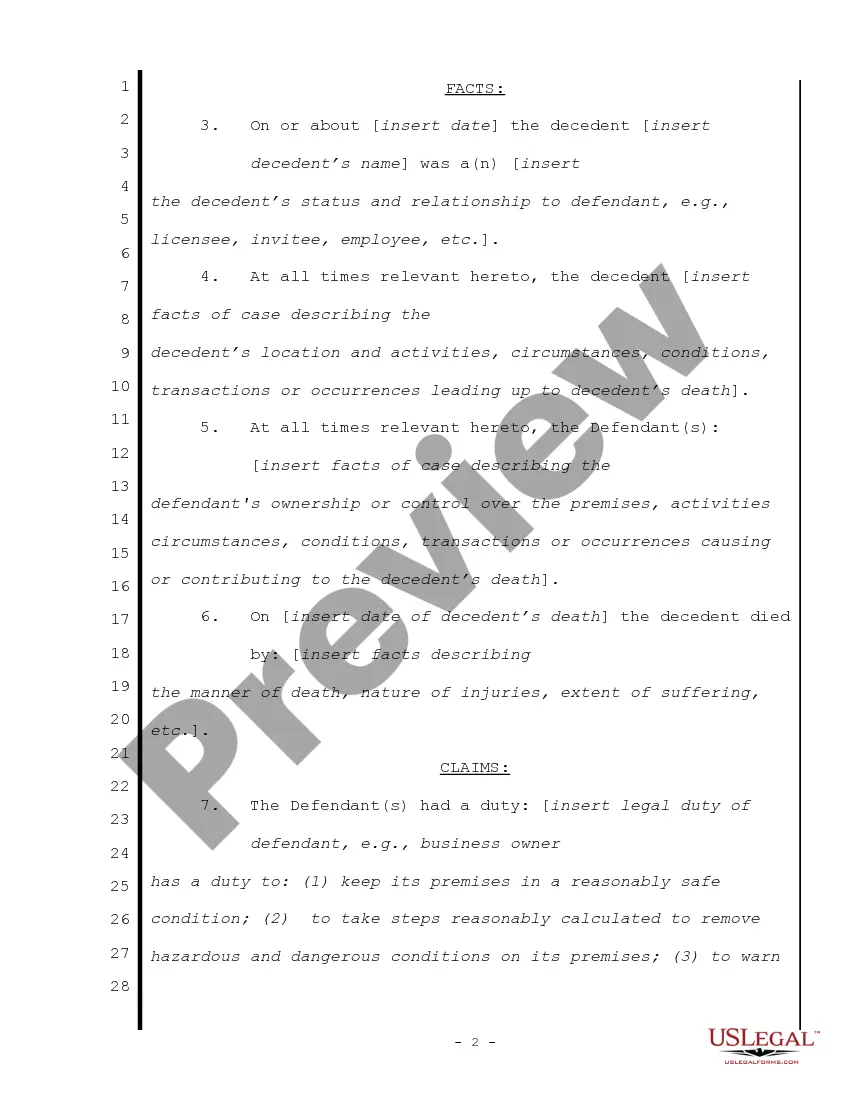
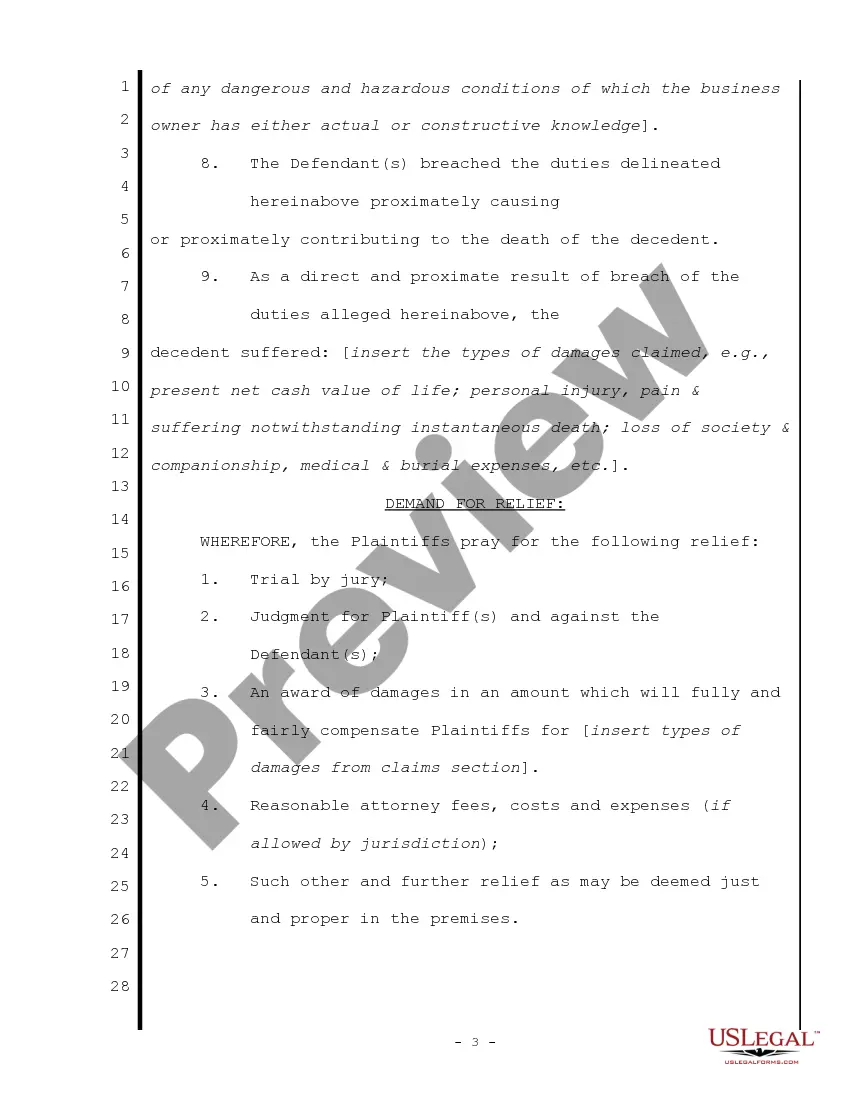
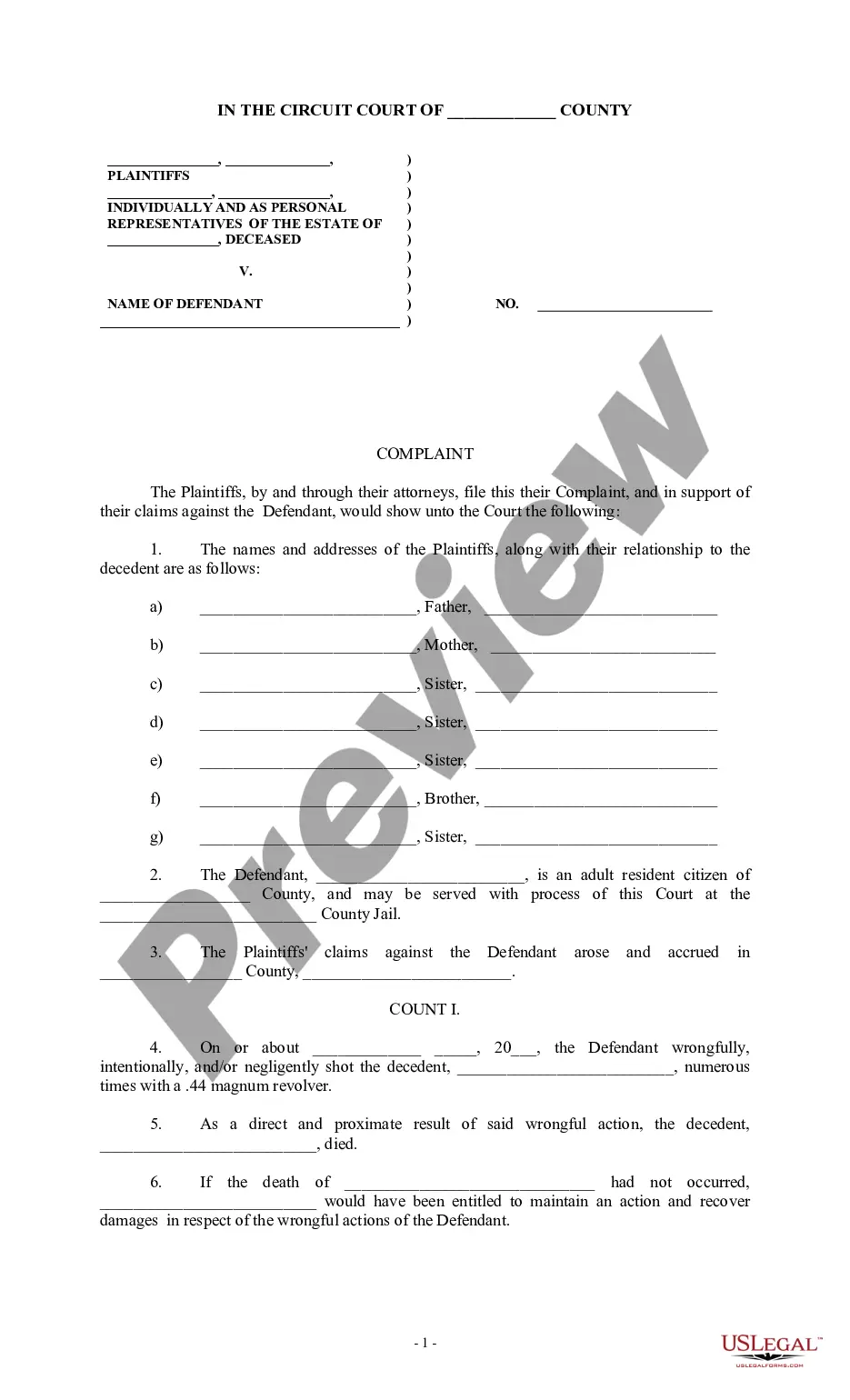
How to fill out Complaint For Wrongful Death - Single Count?
- Log into your US Legal Forms account if you’re a returning user. Ensure your subscription is active; renew if necessary.
- Explore the preview mode and form description to confirm the document matches your requirements and complies with your local jurisdiction.
- If you find any discrepancies, utilize the Search feature to locate the correct template that fulfills your needs.
- Proceed to purchase the desired form by clicking the Buy Now button and selecting a suitable subscription plan, which requires creating an account.
- Finalize the transaction by providing your credit card information or opting for PayPal for a secure payment.
- Download the form directly to your device and access it anytime through the My Forms section of your profile.
US Legal Forms provides individuals and legal professionals with the resources they need to efficiently draft and execute legal documents. With an extensive library of over 85,000 fillable and editable forms, users can easily find what they need without the hassle.
Take control of your legal documentation today. Visit US Legal Forms to get started on your 'Wrongful single civil blank with a witness' and experience the convenience and confidence that comes with professionally crafted legal documents.
Form popularity
FAQ
Rule 11 of the Federal Rules of Civil Procedure requires that all filings be well-grounded in fact and law. It aims to prevent frivolous lawsuits and holds attorneys accountable for their submissions. If a party violates this rule, they may face sanctions. In cases involving a wrongful single civil blank with a witness, abiding by Rule 11 is essential for maintaining the integrity of your claim.
The primary goal of a civil case is to obtain compensation for damages incurred due to wrongful actions. This could cover medical expenses, lost wages, or emotional distress. Civil cases also seek to hold the wrongdoer accountable for their actions. If your situation involves a wrongful single civil blank with a witness, knowing the goal can guide your approach.
In a civil case, you aim to prove that the defendant is liable for the damages caused by their wrongful actions. This involves establishing the facts that led to your harm. It's essential to present evidence and arguments that support your case clearly. When navigating a wrongful single civil blank with a witness, clarity in your evidence is key.
The burden of proof in civil cases is typically 'preponderance of the evidence.' This means that the plaintiff must prove that their claim is more likely true than not. This standard is lower than in criminal cases, where the proof must be beyond a reasonable doubt. In a wrongful single civil blank with a witness scenario, this standard is crucial to understand.
In a civil case, the plaintiff must demonstrate that the defendant acted wrongfully. This includes showing how the wrongful act caused harm or loss. The evidence presented should clearly establish this connection. If your situation involves a wrongful single civil blank with a witness, having strong evidence bolsters your case.
Yes, numerous wrongful acts can lead to a civil suit. These include personal injury, negligence, fraud, and defamation. In such cases, victims seek compensation for their losses. When dealing with a wrongful single civil blank with a witness, understanding the grounds for your claim is vital.
Witness statements can be protected under certain legal privileges, depending on the context of the case, including wrongful single civil blank scenarios. It's important to note that while a witness's statement may be confidential during specific proceedings, those protections can vary. Legal counsel can clarify how such protections apply to your case and how to effectively use witness statements in your favor.
A witness becomes inadmissible when they do not meet certain legal standards, which can be critical in cases of wrongful single civil blank with a witness. Reasons for inadmissibility include not having firsthand knowledge, being unable to communicate clearly, or having a bias that may influence their testimony. Understanding the factors that lead to inadmissibility can help you prepare better for your case.
Several factors could disqualify a witness from providing testimony, particularly in wrongful single civil blank cases. A witness may be disqualified due to conflicts of interest, lack of personal knowledge regarding the case, or if they are deemed incompetent. Additionally, prior criminal convictions may also affect a witness’s ability to testify. Evaluating potential witness qualifications early can help in forming a stronger legal strategy.
Yes, a witness statement is considered a form of evidence in legal proceedings, including cases involving a wrongful single civil blank with a witness. These statements can offer essential insights and support claims made by the parties involved. However, the admissibility of witness statements depends on their relevance and how they were collected. Proper adherence to legal procedures enhances their weight in court.