Wrongful Count Civil With A Criminal Record
Description
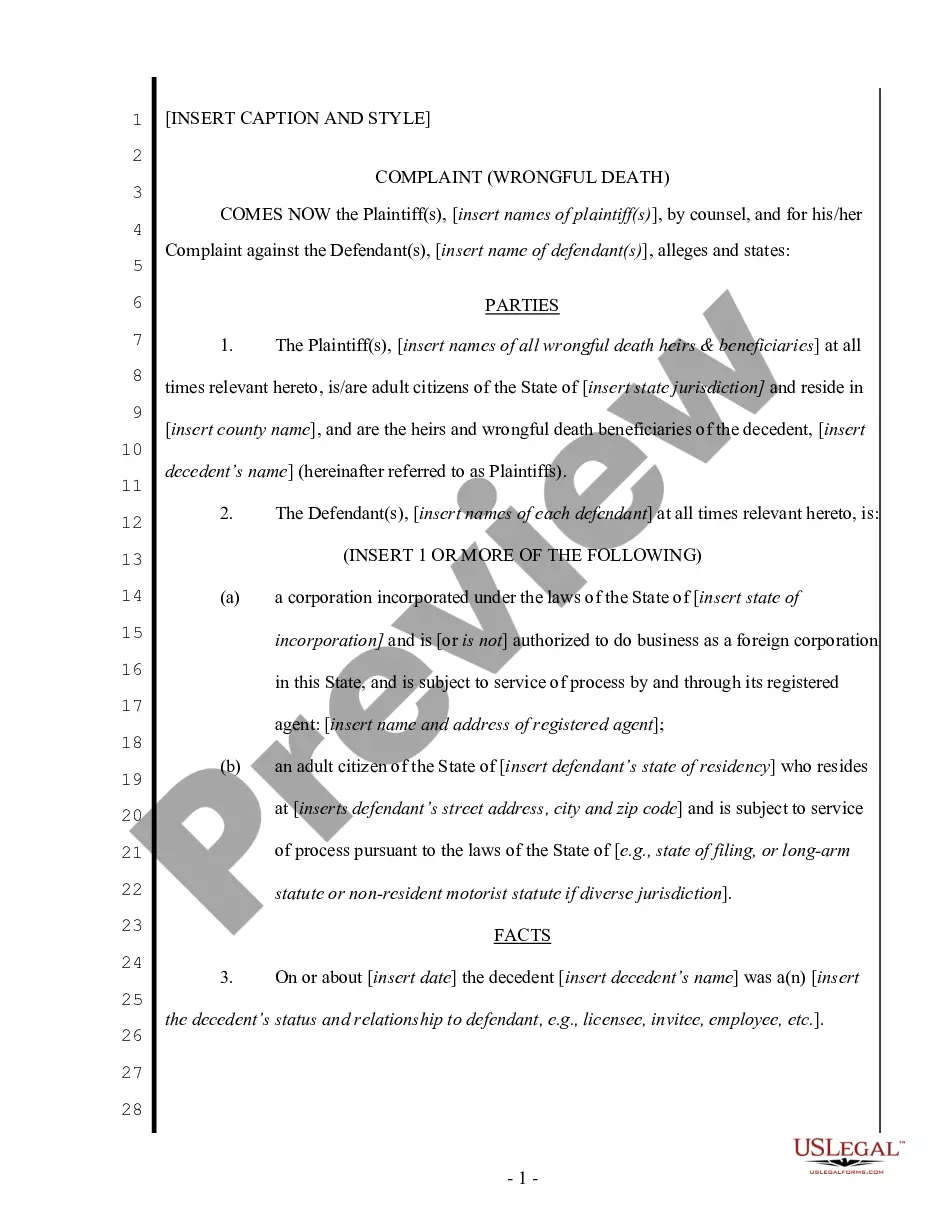

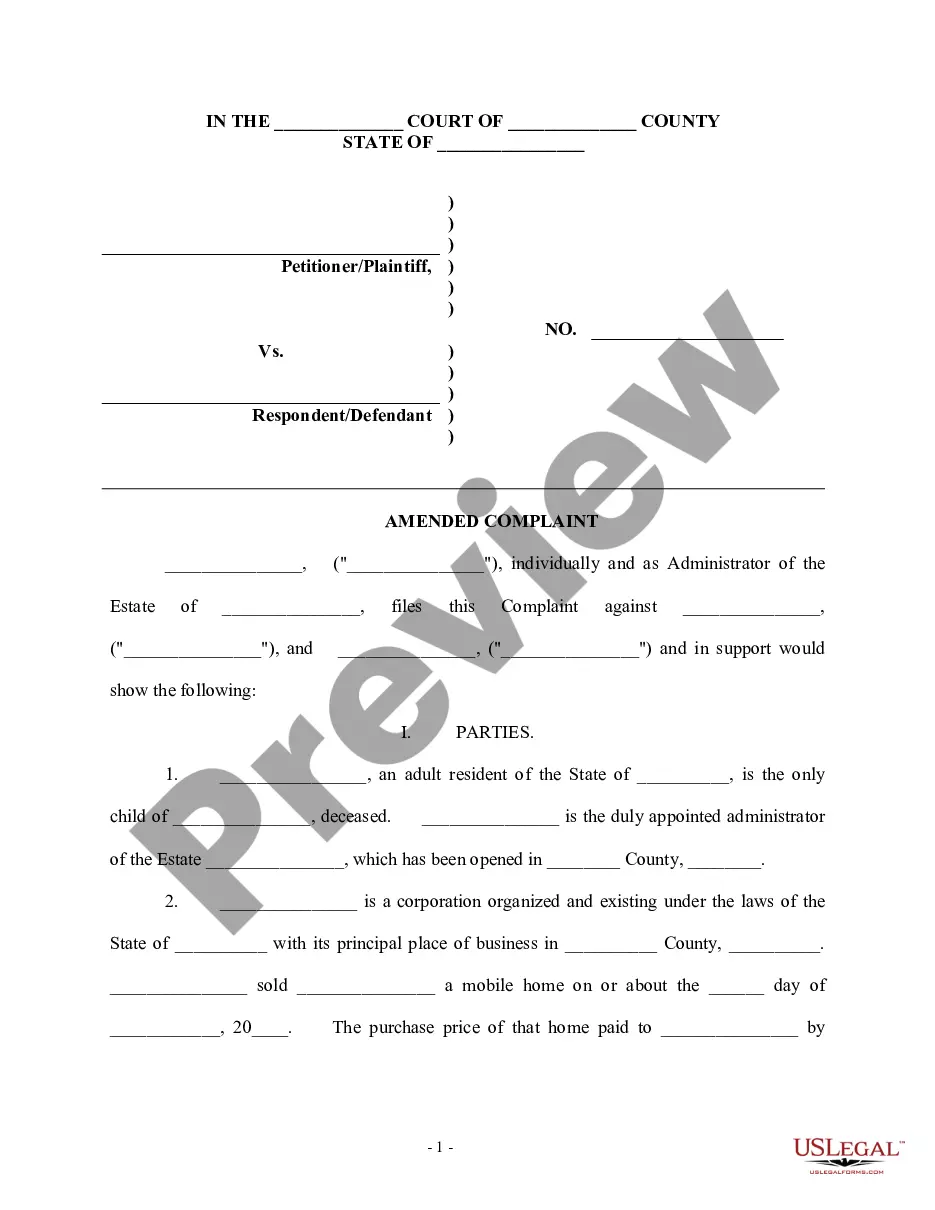
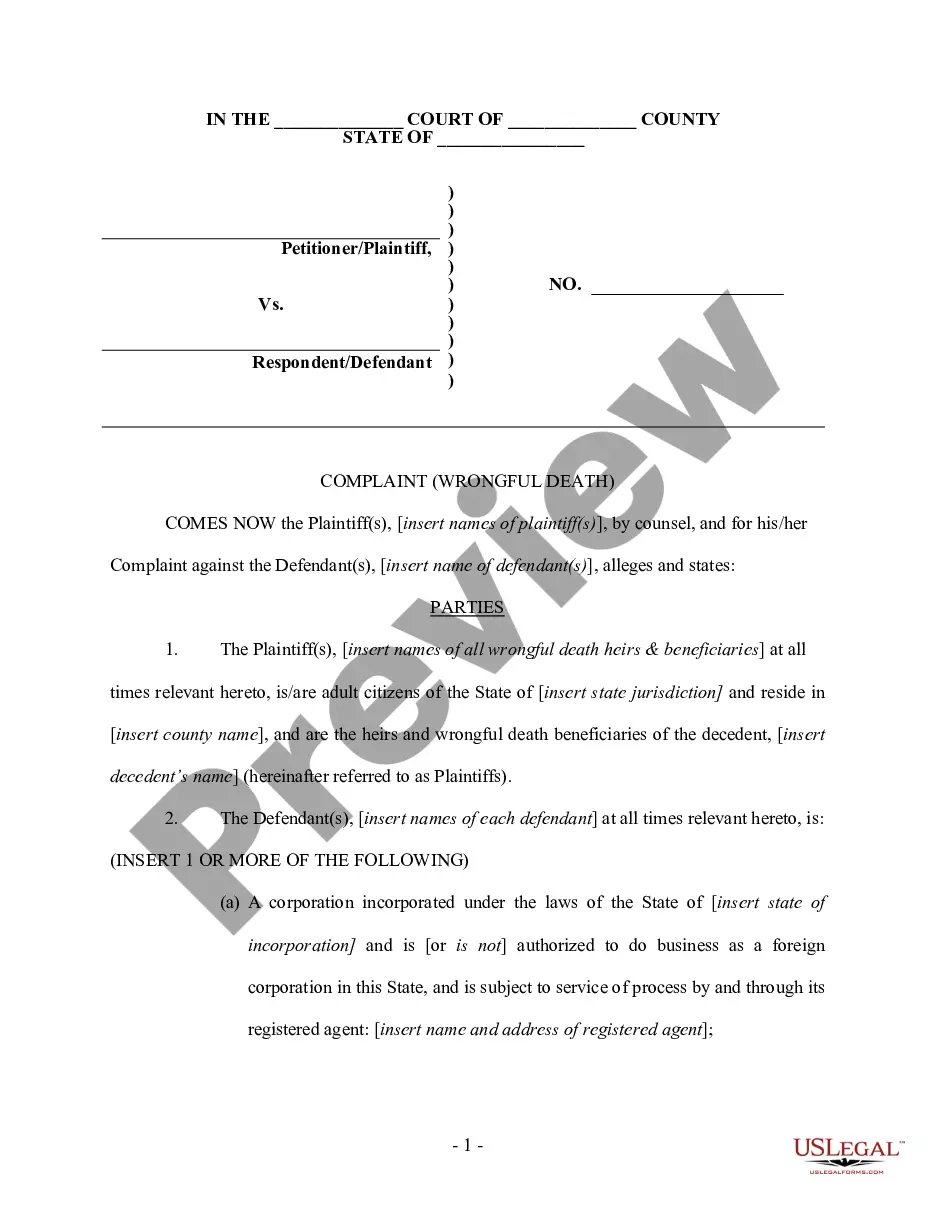
Get your form ready online
Our built-in tools help you complete, sign, share, and store your documents in one place.
Make edits, fill in missing information, and update formatting in US Legal Forms—just like you would in MS Word.
Download a copy, print it, send it by email, or mail it via USPS—whatever works best for your next step.
Sign and collect signatures with our SignNow integration. Send to multiple recipients, set reminders, and more. Go Premium to unlock E-Sign.
If this form requires notarization, complete it online through a secure video call—no need to meet a notary in person or wait for an appointment.
We protect your documents and personal data by following strict security and privacy standards.

Make edits, fill in missing information, and update formatting in US Legal Forms—just like you would in MS Word.

Download a copy, print it, send it by email, or mail it via USPS—whatever works best for your next step.

Sign and collect signatures with our SignNow integration. Send to multiple recipients, set reminders, and more. Go Premium to unlock E-Sign.

If this form requires notarization, complete it online through a secure video call—no need to meet a notary in person or wait for an appointment.

We protect your documents and personal data by following strict security and privacy standards.
Looking for another form?




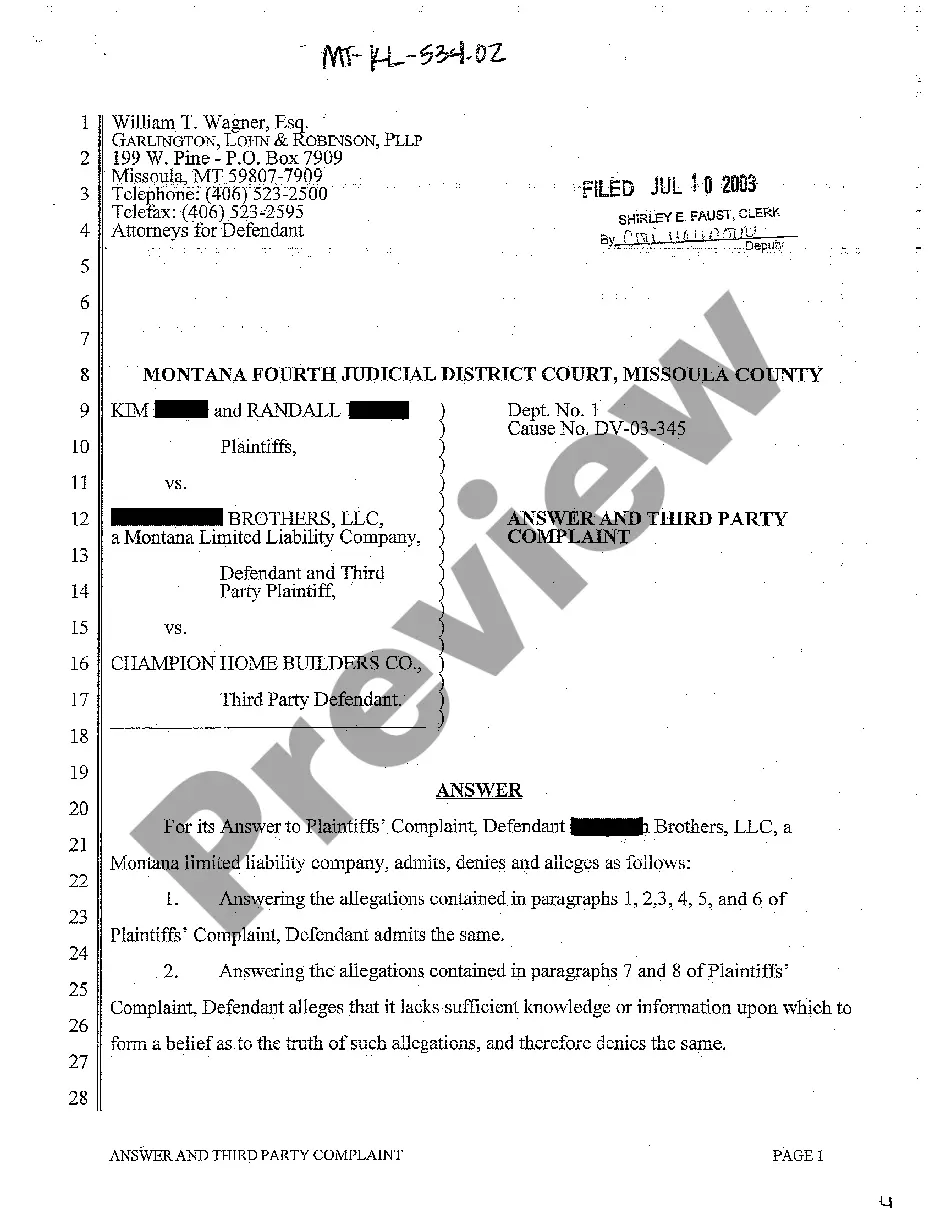


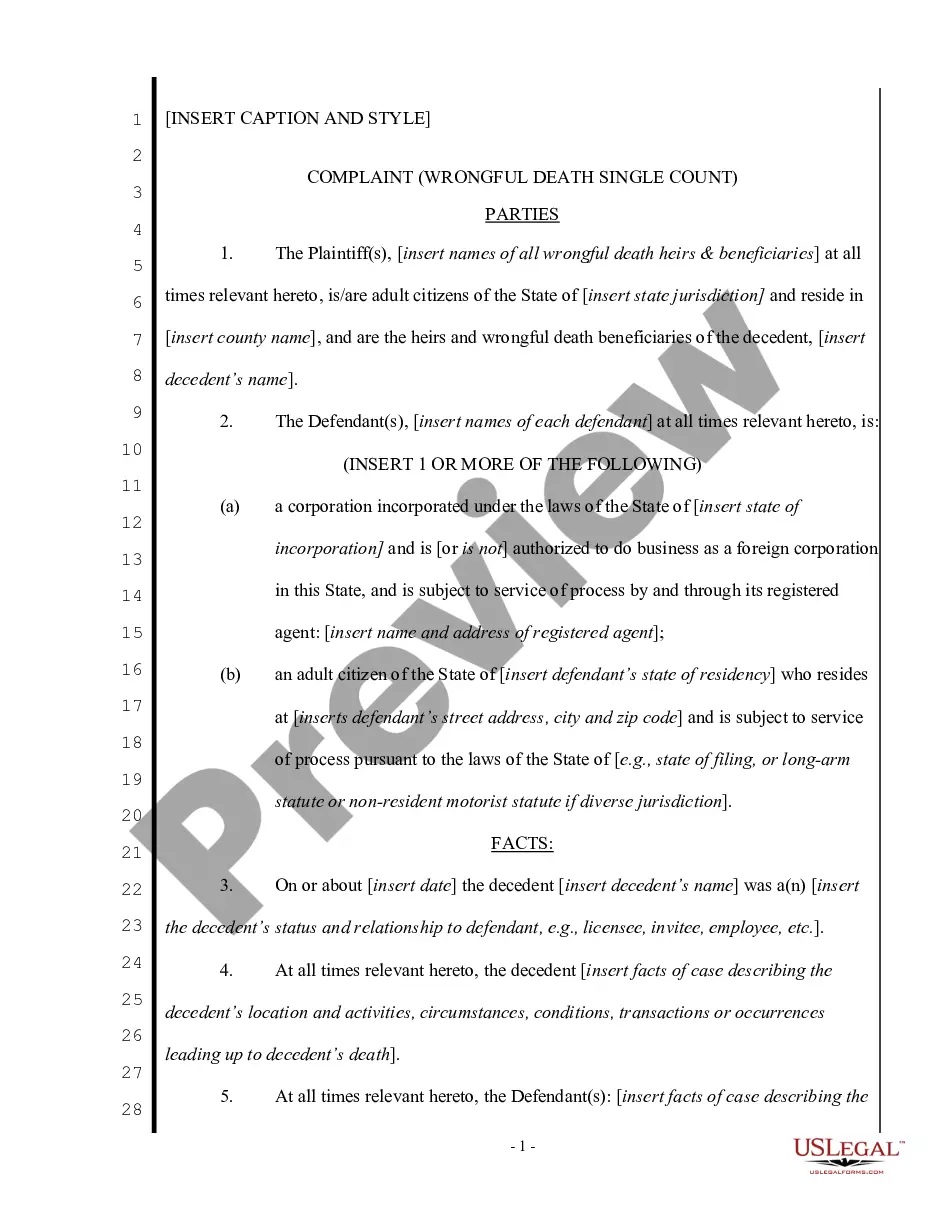
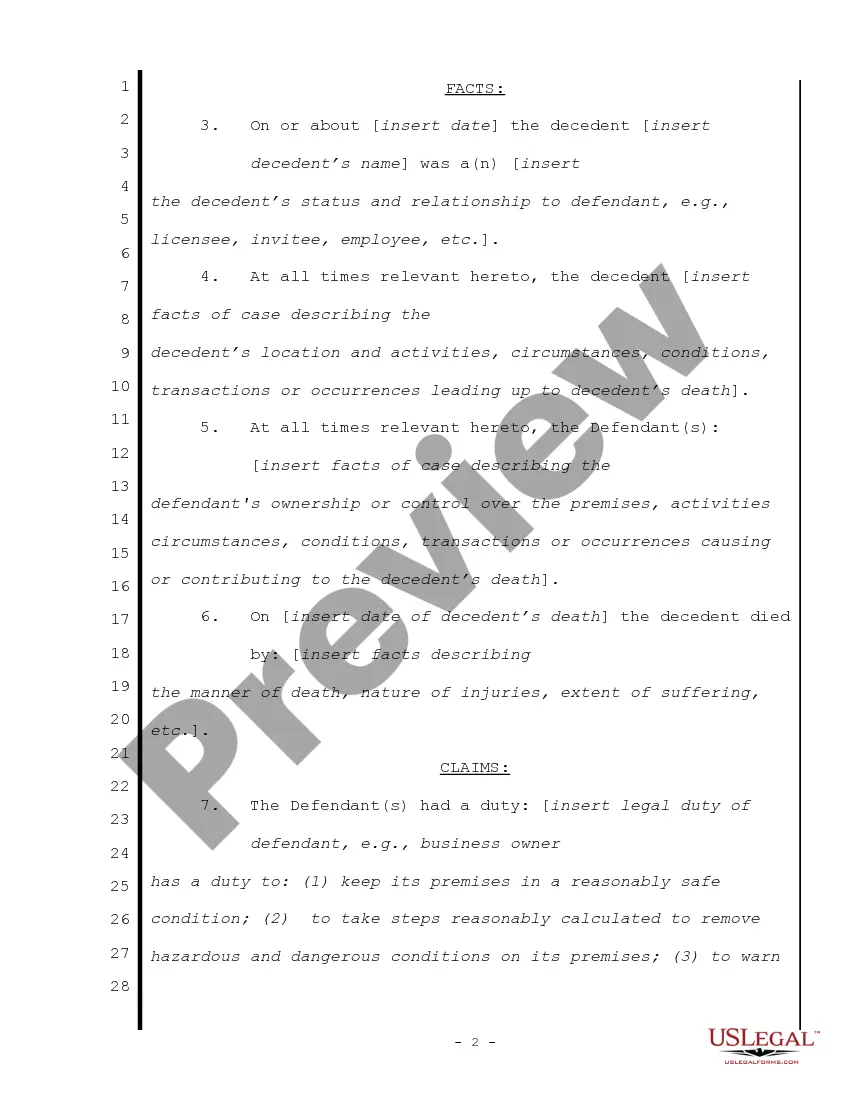
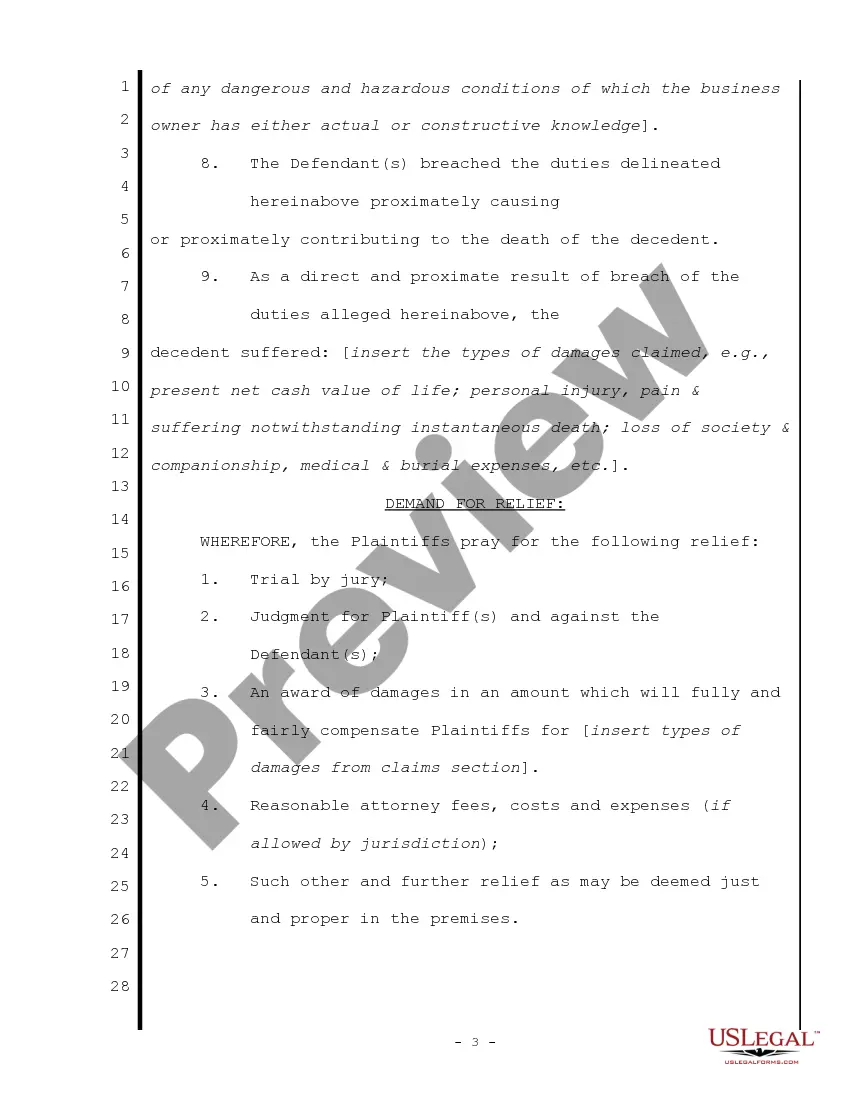
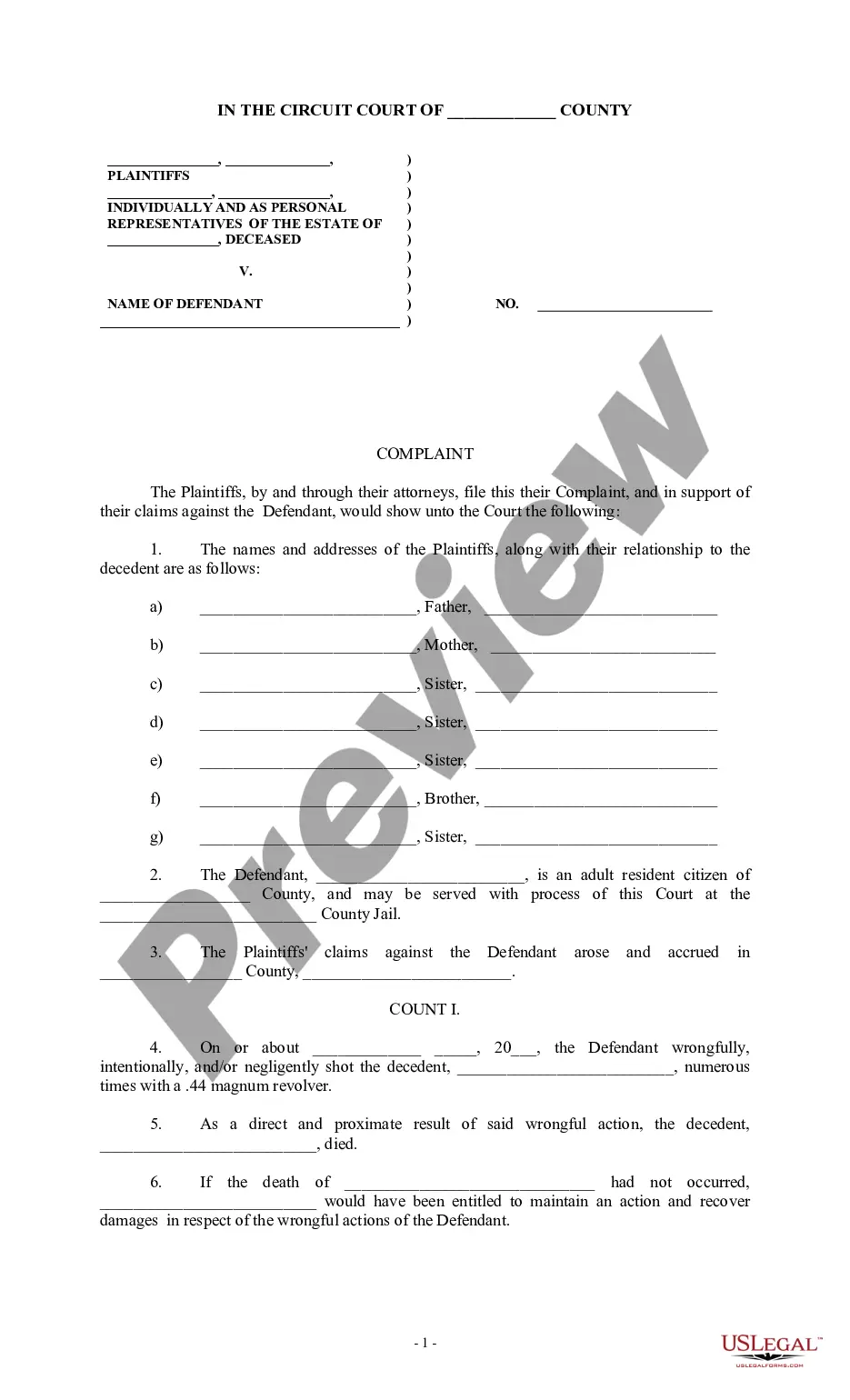
How to fill out Complaint For Wrongful Death - Single Count?
- If you are a returning user, log in to your account and ensure your subscription is active. Click the Download button to save the required form template.
- For first-time users, start by previewing the form descriptions to find one that matches your specific needs and complies with local regulations.
- If necessary, utilize the Search tab to explore additional templates that suit your requirements.
- Select the document you need by clicking on the Buy Now button, then opt for your desired subscription plan and create an account for access.
- Proceed to payment by entering your credit card information or linking your PayPal account to complete the purchase.
- Once payment is confirmed, download your form and save it on your device. Access it anytime through the My Forms section in your profile.
US Legal Forms stands out with its robust collection of over 85,000 legal documents, offering more options at competitive costs than other providers. Additionally, their platform allows easy editing and filling of forms.
Utilize US Legal Forms today to simplify your legal documentation needs with expert assistance. Start now to ensure your forms are precise and legally sound.
Form popularity
FAQ
A criminal record can last a lifetime in the U.S., but certain records may be cleared or expunged based on state laws. While misdemeanors might fade from immediate view after a set period, felonies remain more challenging to remove. If you are navigating issues tied to a wrongful count civil with a criminal record, consider leveraging resources and legal services to explore your options.
In Minnesota, certain serious offenses, such as violent crimes and sexual offenses, cannot be expunged under state law. This permanence can significantly affect your life, especially concerning employment and housing opportunities. If you're facing challenges related to a wrongful count civil with a criminal record, understanding these limitations is essential.
Generally, felonies do not disappear after seven years. Depending on the jurisdiction, felonies can remain on your record indefinitely. If you are dealing with a wrongful count civil with a criminal record, consider seeking legal advice or assistance to explore options for expungement.
To remove a civil suit from your record, you typically need to file a motion in court. This process can include demonstrating that the civil suit was resolved in your favor or that it was unjust. Utilizing platforms like UsLegalForms can streamline the paperwork and provide guidance on handling wrongful count civil with a criminal record.
Indeed, some offenses may not appear on your record after seven years, especially minor infractions or misdemeanors. However, major crimes, such as felonies, often have different implications and do not simply disappear. Understanding the regulations regarding wrongful count civil with a criminal record can help you navigate what remains on your record and what can be legally removed.
The 7 year rule typically refers to the duration that certain criminal records remain visible to the public. In some states, after seven years, specific information may no longer be accessible in background checks. However, it's crucial to understand that this rule may vary depending on the state law, especially when considering wrongful count civil with a criminal record.
When writing a statement about your criminal history, be straightforward and sincere. Begin by acknowledging your past offenses, then discuss the steps you have taken to move forward positively. Conclude with your determination to contribute meaningfully in the future. By addressing a wrongful count civil with a criminal record this way, you can help potential employers see the whole picture.
Explaining your criminal background on an application requires honesty and assurance. Outline the facts of your record briefly, and then pivot to the positive changes you have made since then. Highlight your skills, experiences, and goals to reinforce your suitability for the position, keeping in mind that a wrongful count civil with a criminal record should not overshadow your potential.
In many cases, a criminal record may not clear simply after seven years in the USA. The specific laws governing record expungement vary by state, so it’s crucial to check with legal assistance for guidance. Addressing any wrongful count civil with a criminal record through the proper channels can help improve your situation and options.
Explaining a criminal record on an application involves honesty and clarity. First, state the offense, then provide context and show how you’ve changed since. You should also highlight your qualifications and readiness for the opportunity at hand. Remember, a wrongful count civil with a criminal record does not define your entire character or capabilities.