Landlord Rights For Esa
Description
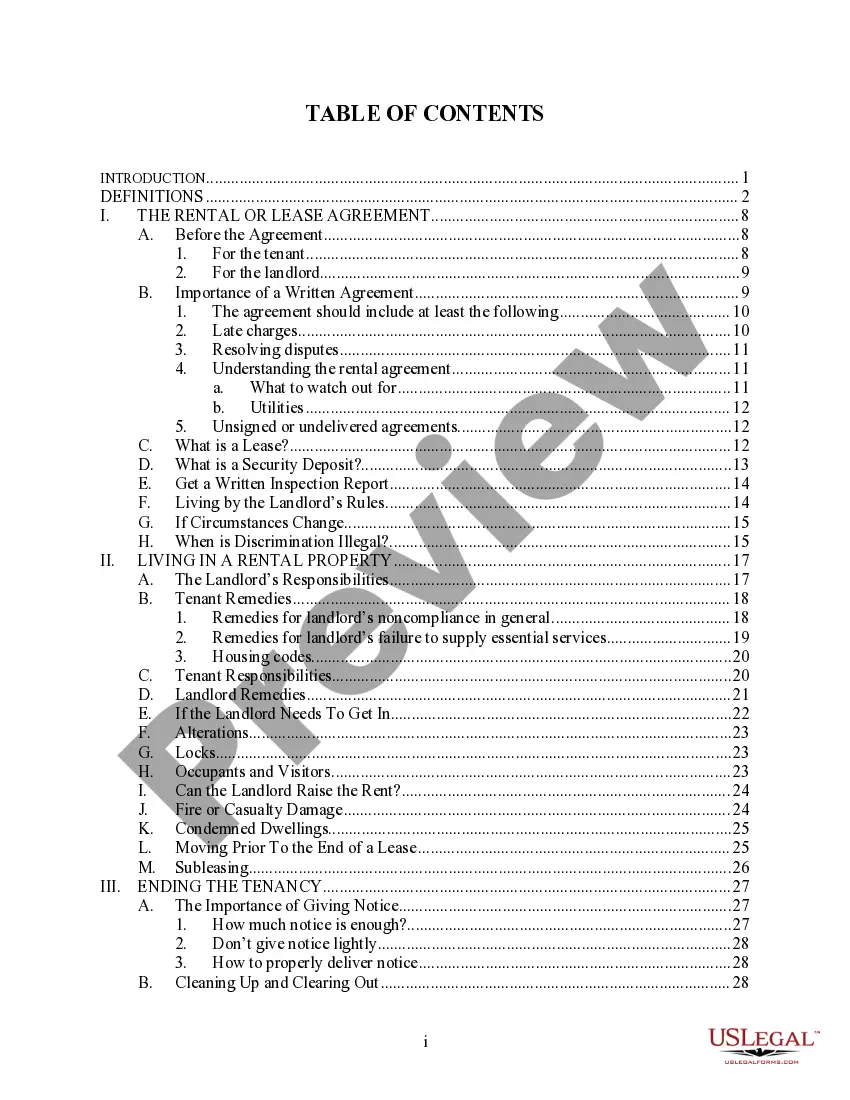

Get your form ready online
Our built-in tools help you complete, sign, share, and store your documents in one place.
Make edits, fill in missing information, and update formatting in US Legal Forms—just like you would in MS Word.
Download a copy, print it, send it by email, or mail it via USPS—whatever works best for your next step.
Sign and collect signatures with our SignNow integration. Send to multiple recipients, set reminders, and more. Go Premium to unlock E-Sign.
If this form requires notarization, complete it online through a secure video call—no need to meet a notary in person or wait for an appointment.
We protect your documents and personal data by following strict security and privacy standards.

Make edits, fill in missing information, and update formatting in US Legal Forms—just like you would in MS Word.

Download a copy, print it, send it by email, or mail it via USPS—whatever works best for your next step.

Sign and collect signatures with our SignNow integration. Send to multiple recipients, set reminders, and more. Go Premium to unlock E-Sign.

If this form requires notarization, complete it online through a secure video call—no need to meet a notary in person or wait for an appointment.

We protect your documents and personal data by following strict security and privacy standards.
Looking for another form?



How to fill out Multistate Landlord Tenant Handbook - Guide - Laws?
Managing legal documents and processes can be a labor-intensive addition to your entire day.
Landlord Rights For Esa and similar forms typically necessitate that you search for them and comprehend how to fill them out properly.
As a result, whether you are addressing financial, legal, or personal issues, utilizing a comprehensive and user-friendly online database of forms readily available will greatly assist you.
US Legal Forms stands as the premier online platform for legal templates, featuring over 85,000 state-specific documents and a variety of tools to help you complete your paperwork with ease.
Simply Log In to your account, find Landlord Rights For Esa, and download it instantly from the My documents section. You can also retrieve stored forms.
- Explore the collection of relevant documents accessible to you with just one click.
- US Legal Forms equips you with state- and county-specific documents available anytime for download.
- Enhance your document management processes using a superior service that enables you to prepare any form within minutes without incurring additional or hidden costs.
Form popularity
FAQ
In Washington state, landlords have specific rights when it comes to Emotional Support Animals (ESA). Under state law, individuals with disabilities can request reasonable accommodations to keep their ESA in housing. However, landlords are allowed to ask for documentation verifying the need for the ESA. Understanding landlord rights for esa helps both tenants and property owners navigate these requirements effectively.
When discussing your emotional support animal with your landlord, start by presenting your ESA documentation clearly. Explain how the animal supports your mental health and complies with relevant laws. Open communication can foster understanding, allowing you and your landlord to discuss any concerns openly. Utilize resources from US Legal Forms to prepare for this conversation effectively.
In Kentucky, landlords cannot arbitrarily deny a request for an emotional support animal if the tenant provides proper documentation. However, they may impose some reasonable restrictions related to the animal's behavior or size. It is important for tenants to familiarize themselves with landlord rights for ESA to ensure proper communication and compliance. Legal resources can aid in understanding these rights better.
Documenting an emotional support animal typically requires obtaining an ESA letter from a licensed mental health professional. This letter must state that the individual has a mental health condition that the ESA helps alleviate. Having proper documentation is vital when communicating with landlords and knowing their rights regarding ESA approval. You can find templates and resources on platforms like US Legal Forms to help with this process.
Yes, there is evidence supporting the benefits of emotional support animals (ESAs). Many studies suggest that ESAs can alleviate symptoms of anxiety, depression, and other mental health issues. These animals provide companionship and comfort, fulfilling an essential role in the lives of those who need them. Therefore, understanding landlord rights for ESA is crucial for both tenants and property owners.
Yes, you can potentially sue a landlord for denying your right to have an emotional support animal. However, this should be considered a last resort after all other options have been exhausted. Before taking legal action, review your documentation and consult with a legal professional to assess your case. Knowing your landlord rights for ESA will be critical in determining the strength of your claim.
If your landlord rejects your emotional support animal request, you should start by asking for clarification on the reason. Document all communications and consider seeking legal advice to understand your rights. Using resources like US Legal Forms can help you prepare a response that clearly outlines your landlord rights for ESA, empowering you to advocate for your needs. Always remember that you have options if your requests are not met.
In Utah, the laws surrounding emotional support animals (ESAs) give certain rights to tenants. Landlords have to allow ESAs as part of their rental agreements, providing the tenant has appropriate documentation. It's important to understand that while landlords can ask for verification of your ESA, they cannot impose unnecessary restrictions on your rights. Always be aware of your landlord rights for ESA to ensure you are treated fairly.
In Vermont, landlords generally cannot deny an emotional support animal if you provide proper documentation. However, they retain rights to verify the legitimacy of the ESA letter. It is beneficial to know the landlord rights for ESA in Vermont to ensure a smooth process regarding your request.
Landlords typically verify an ESA letter by contacting the mental health professional listed in the document. They may ask for confirmation regarding your status and need for an emotional support animal. Understanding landlord rights for ESA can help you prepare for possible verification inquiries.