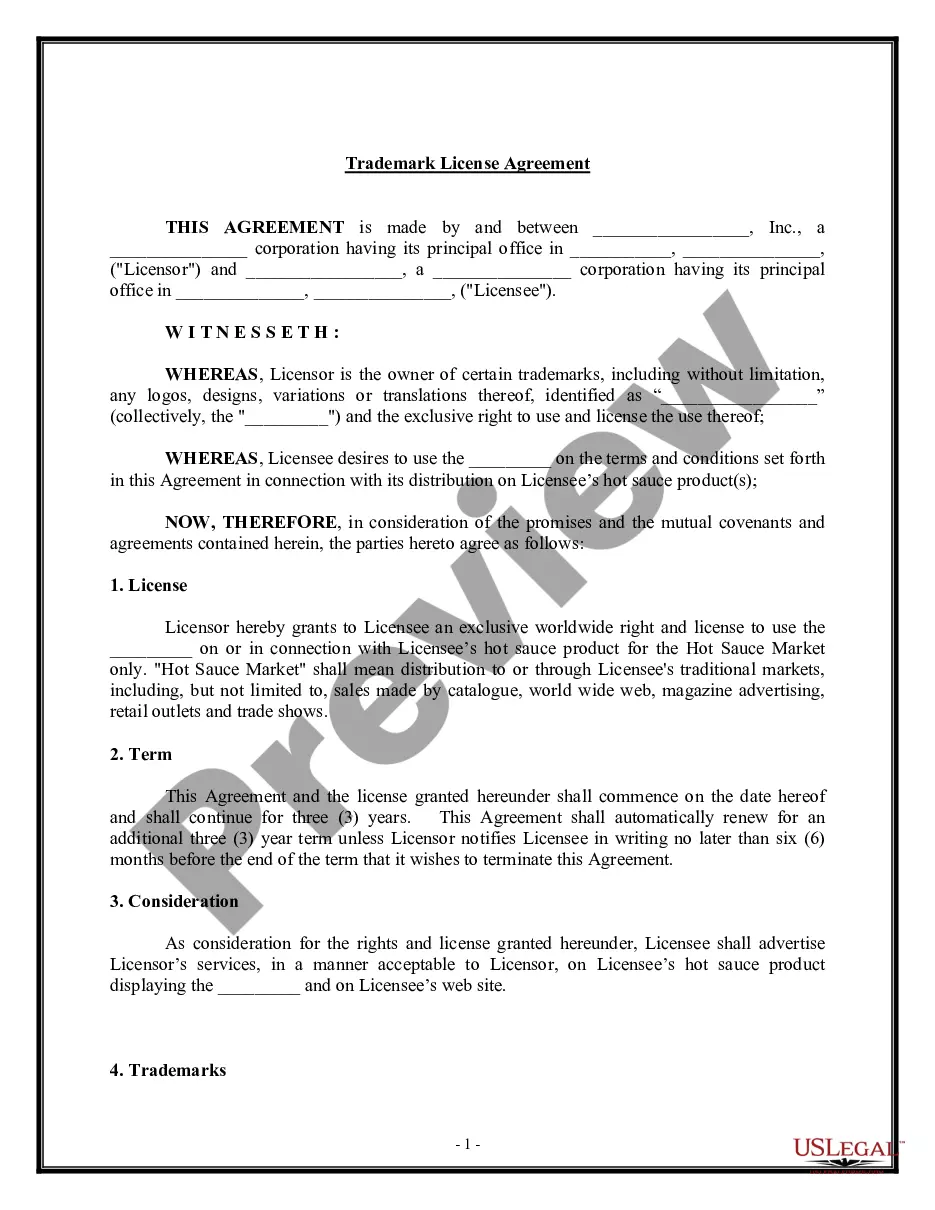
Trademark Settlement Form
Description

Get your form ready online
Our built-in tools help you complete, sign, share, and store your documents in one place.
Make edits, fill in missing information, and update formatting in US Legal Forms—just like you would in MS Word.
Download a copy, print it, send it by email, or mail it via USPS—whatever works best for your next step.
Sign and collect signatures with our SignNow integration. Send to multiple recipients, set reminders, and more. Go Premium to unlock E-Sign.
If this form requires notarization, complete it online through a secure video call—no need to meet a notary in person or wait for an appointment.
We protect your documents and personal data by following strict security and privacy standards.

Make edits, fill in missing information, and update formatting in US Legal Forms—just like you would in MS Word.

Download a copy, print it, send it by email, or mail it via USPS—whatever works best for your next step.

Sign and collect signatures with our SignNow integration. Send to multiple recipients, set reminders, and more. Go Premium to unlock E-Sign.

If this form requires notarization, complete it online through a secure video call—no need to meet a notary in person or wait for an appointment.

We protect your documents and personal data by following strict security and privacy standards.
Looking for another form?
How to fill out Trademark License As A Dispute Settlement Agreement?
Bureaucracy requires accuracy and exactness.
If you do not engage with completing forms like Trademark Settlement Form on a daily basis, it may lead to some misinterpretations.
Choosing the appropriate sample from the beginning will ensure that your document submission proceeds smoothly and avert any hassles of resubmitting a document or starting the entire process from square one.
Obtaining the correct and current samples for your paperwork only takes a few minutes with an account at US Legal Forms. Eliminate bureaucratic issues and simplify your form management.
- Locate the template using the search bar.
- Confirm that the Trademark Settlement Form you’ve found is applicable for your state or locality.
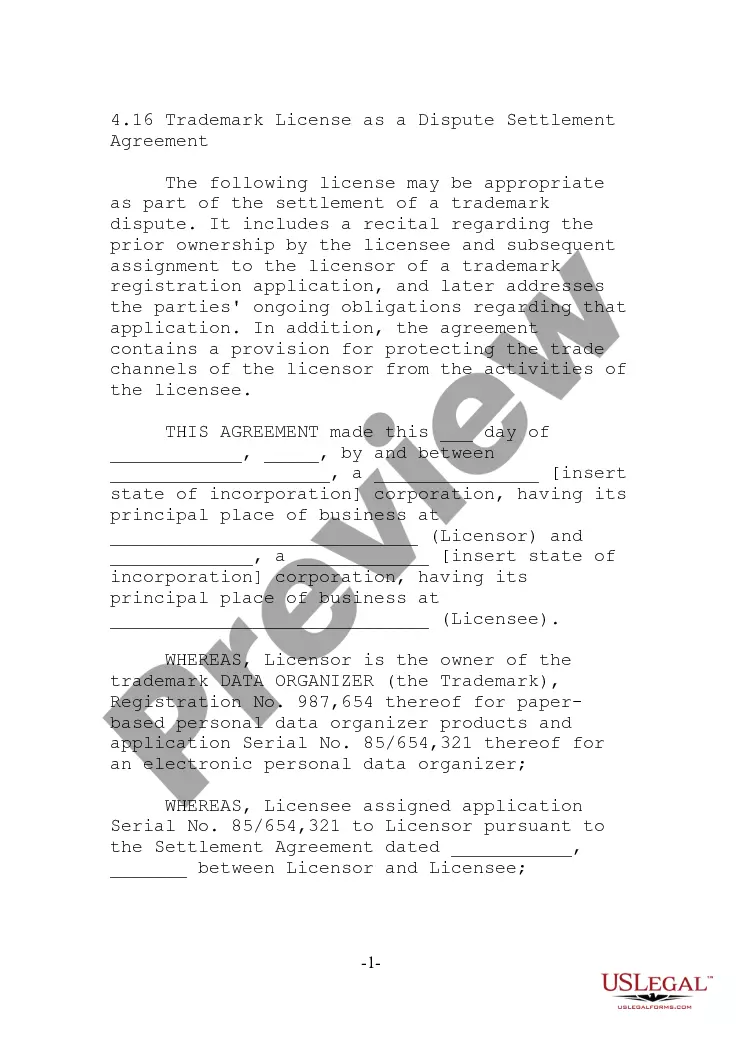
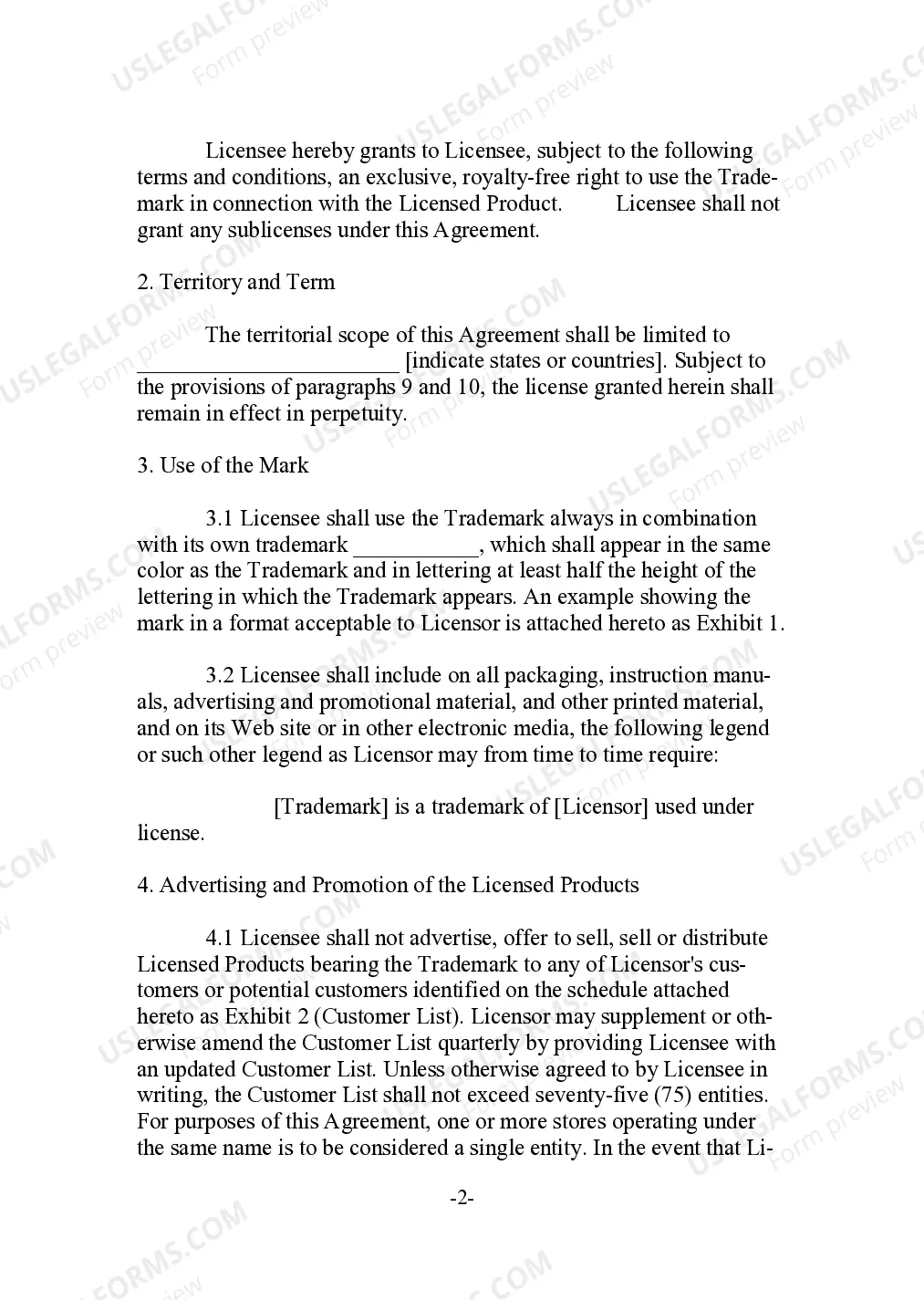
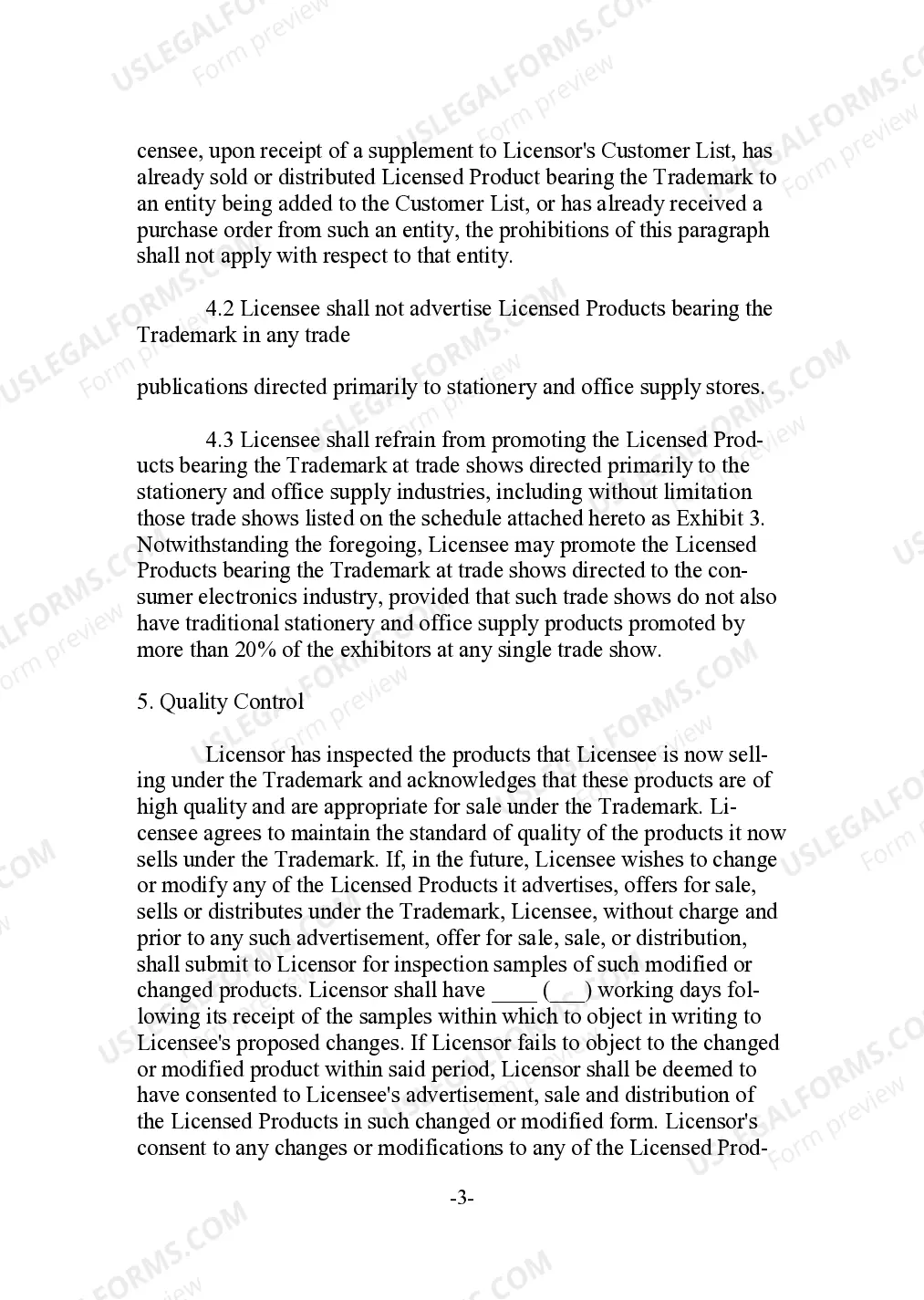
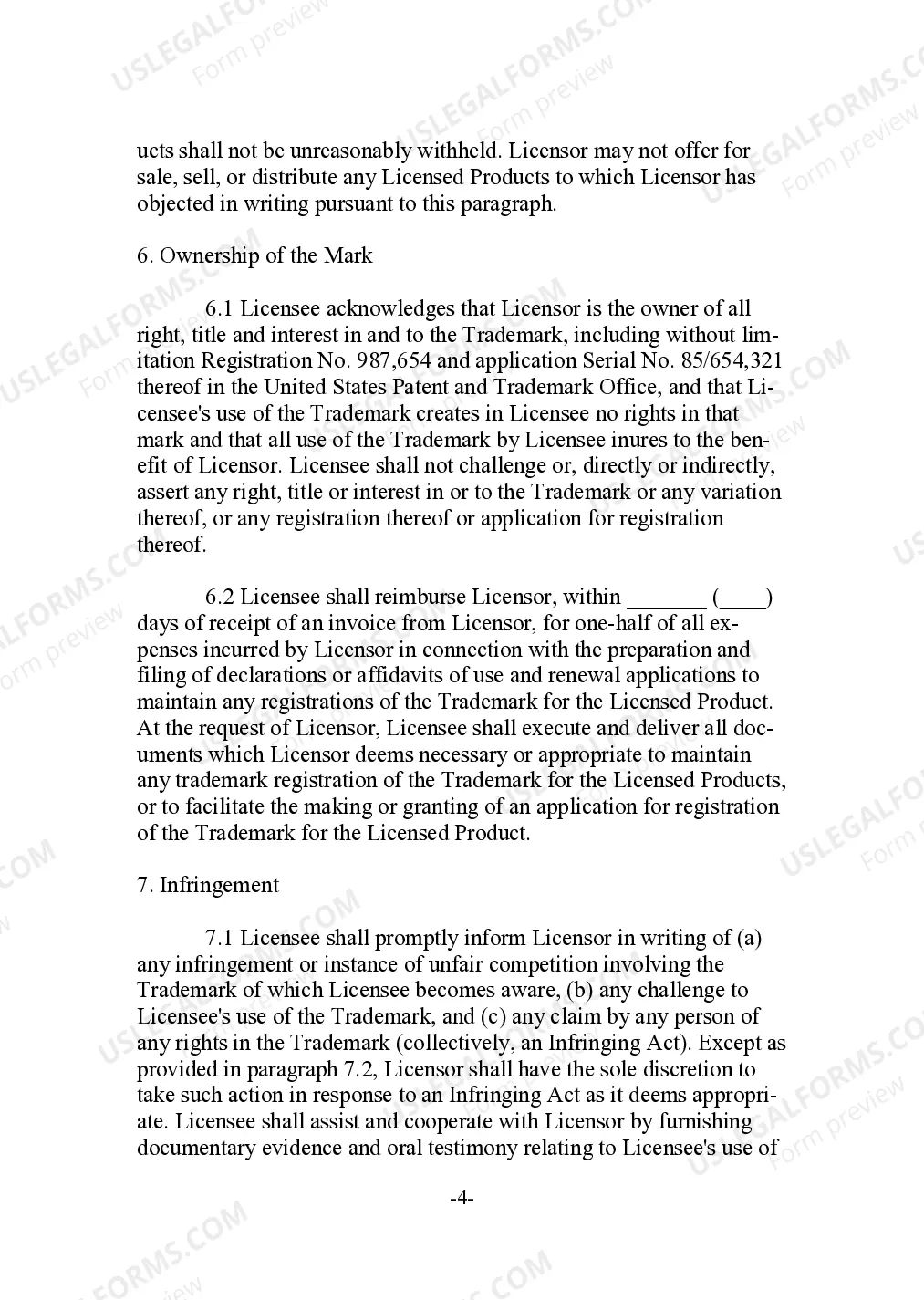
- Open the preview or review the description that contains the details on the use of the sample.
- If the result aligns with your search, click the Buy Now button.
- Select the appropriate option from the suggested pricing plans.
- Log In to your account or sign up for a new one.
- Complete the purchase using a credit card or PayPal account.
- Receive the form in your preferred format.
Form popularity
FAQ
To claim a trademark, start by using your mark in commerce, which is crucial for establishing trademark rights. After that, complete and submit a trademark settlement form to the USPTO to register your claim properly. This application includes several important details about your goods or services and your use of the mark. Following these steps solidifies your claim and protects your intellectual property.
Responding to an office action for a trademark involves carefully reviewing the issues identified by the USPTO. You will need to address these points with accurate information and possibly amend your trademark settlement form if required. It’s crucial to respond within the specified time frame to ensure your application remains active. If you're unsure about the process, consider reaching out to uslegalforms for help and clarification.
Legally using a trademark involves displaying the mark in a manner that identifies and distinguishes the source of goods or services. You must consistently use the trademark in commerce, while also properly marking it with the appropriate symbols, such as TM or ®. Filing a trademark settlement form helps you formalize your usage and gain broader legal protections. Remember, consistent use is vital to maintain your rights.
When filing a trademark registration, you must meet four key requirements. First, the mark must be distinct and not merely descriptive of the goods or services. Second, you need to demonstrate that the mark is currently in use or will be used in commerce. Third, the trademark settlement form requires that you specify the goods or services associated with the trademark. Lastly, you must not have any existing conflicts with other registered marks.
Determining whether to establish an LLC or secure a trademark first depends on your business goals. If you are focused on protecting your brand identity, start with the trademark settlement form to ensure your trademark is secured before launching your business. An LLC offers liability protection and should typically follow after establishing your brand. Both steps are important for a well-rounded approach to safeguarding your business.
To claim a trademark, you must first use the trademark in commerce, which establishes your rights. You can then file a trademark settlement form with the United States Patent and Trademark Office (USPTO) to register your trademark. This form requires you to provide your name, the trademark, and details about the goods or services associated with the mark. Using the right format is essential for protecting your brand effectively.
Calculating damages for trademark infringement typically involves determining the actual losses incurred by the trademark owner and any unjust profits gained by the infringer. This process can be complex and often requires detailed financial records. A trademark settlement form can assist in outlining the specifics of the damages and ensure all relevant information is included.
Punishments for trademark infringement can include monetary damages, injunctions to stop the infringing behavior, or even the destruction of infringing goods. In severe cases, infringers may face criminal penalties. To mitigate risks, using a trademark settlement form to formalize agreements can help protect your rights and provide clear terms for compliance.
Creating a settlement agreement involves drafting a document that outlines the terms agreed upon by both parties to settle a dispute. It is important to clearly detail the rights and obligations of each party, including any compensation terms. A reliable trademark settlement form can serve as a useful template to guide you through this process.
The amount you can sue for trademark infringement often depends on the damages suffered and the profits earned by the infringer. Courts can award statutory damages ranging from $1,000 to $200,000 per infringement, or even up to $2 million for willful infringement. To effectively pursue such claims, a well-crafted trademark settlement form can be instrumental in establishing the basis for the lawsuit.