Form Trademark License Agreement
Description
Get your form ready online
Our built-in tools help you complete, sign, share, and store your documents in one place.
Make edits, fill in missing information, and update formatting in US Legal Forms—just like you would in MS Word.
Download a copy, print it, send it by email, or mail it via USPS—whatever works best for your next step.
Sign and collect signatures with our SignNow integration. Send to multiple recipients, set reminders, and more. Go Premium to unlock E-Sign.
If this form requires notarization, complete it online through a secure video call—no need to meet a notary in person or wait for an appointment.
We protect your documents and personal data by following strict security and privacy standards.

Make edits, fill in missing information, and update formatting in US Legal Forms—just like you would in MS Word.

Download a copy, print it, send it by email, or mail it via USPS—whatever works best for your next step.

Sign and collect signatures with our SignNow integration. Send to multiple recipients, set reminders, and more. Go Premium to unlock E-Sign.

If this form requires notarization, complete it online through a secure video call—no need to meet a notary in person or wait for an appointment.

We protect your documents and personal data by following strict security and privacy standards.
Looking for another form?

How to fill out General Trademark License Agreement?
Bureaucracy necessitates exactness and correctness.
Unless you handle completing documents like Form Trademark License Agreement daily, it may lead to some misunderstanding.
Selecting the right example from the start will guarantee that your document submission proceeds smoothly and avert any troubles of resubmitting a file or repeating the same task from the start.
Review the descriptions of the forms and download any that you require at any time. If you are not a subscribed user, locating the necessary example would involve a few extra steps.
- Obtain the correct example for your documentation at US Legal Forms.
- US Legal Forms is the largest online repository of forms that provides over 85 thousand examples across various subjects.
- You can retrieve the most current and suitable version of the Form Trademark License Agreement by simply searching it on the site.
- Find, save, and download templates in your account, or refer to the description to confirm you have the accurate one at your disposal.
- With an account at US Legal Forms, you can conveniently gather, store in one place, and navigate through the templates you've saved for quick access.
- When on the site, click the Log In button to authenticate.
- Next, navigate to the My documents page, where your document history is maintained.
Form popularity
FAQ
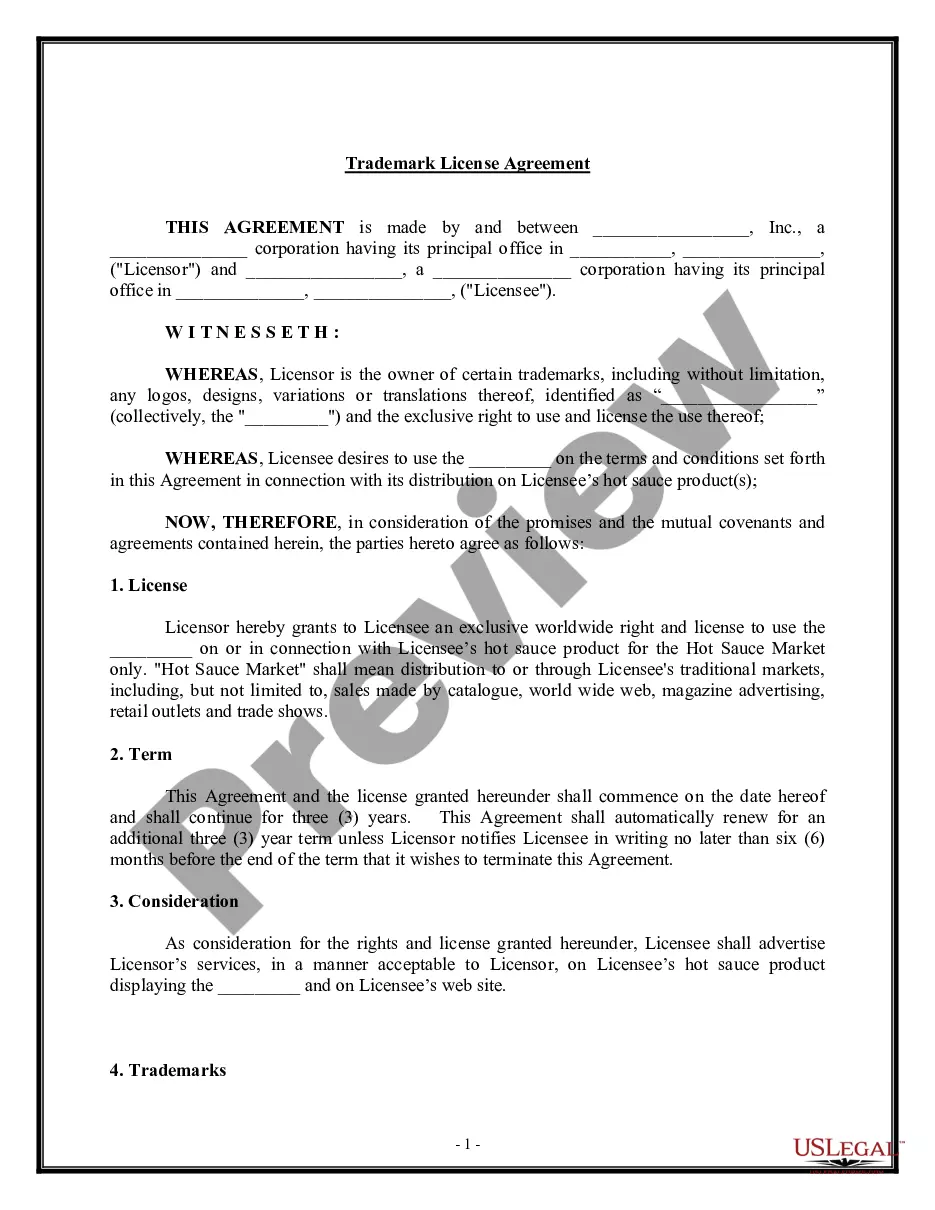
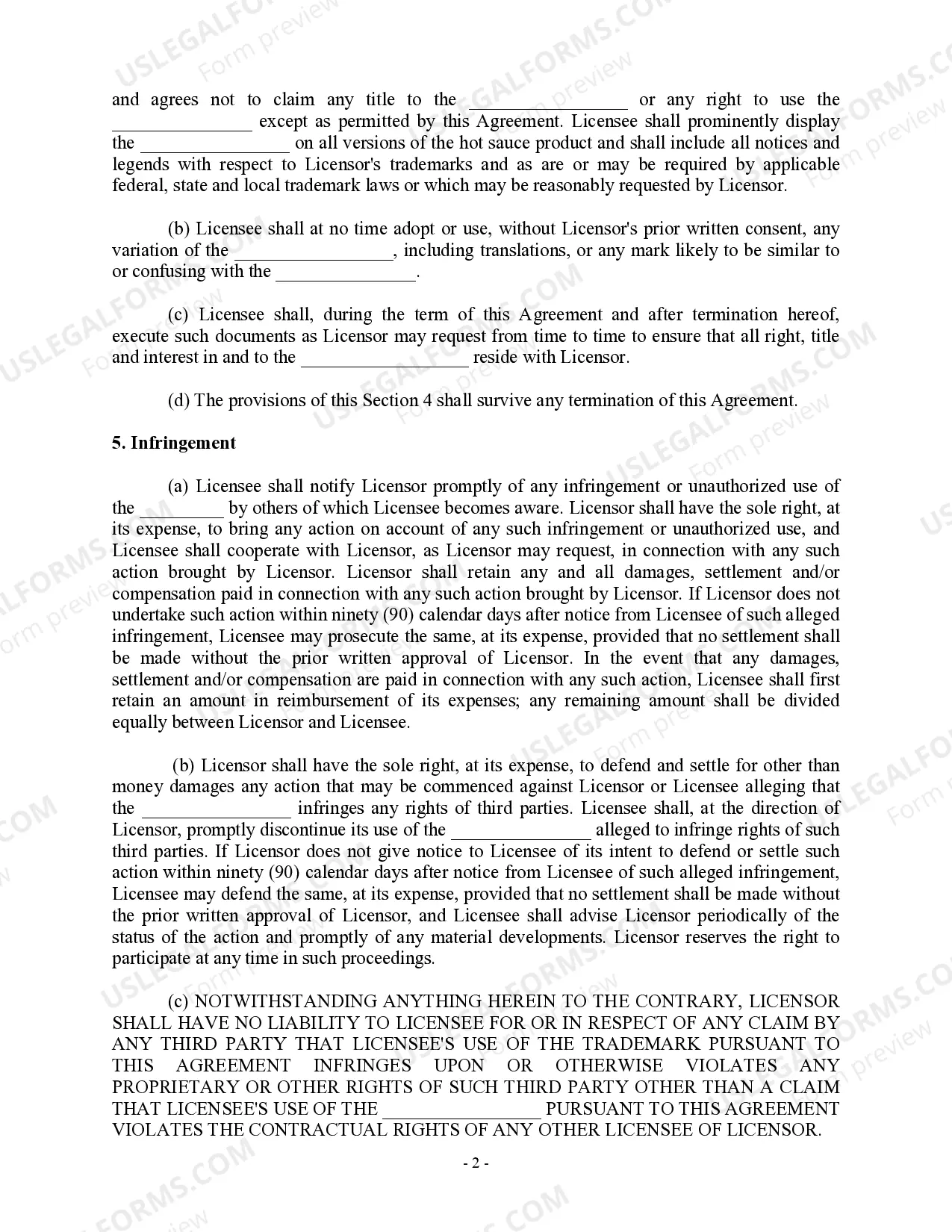
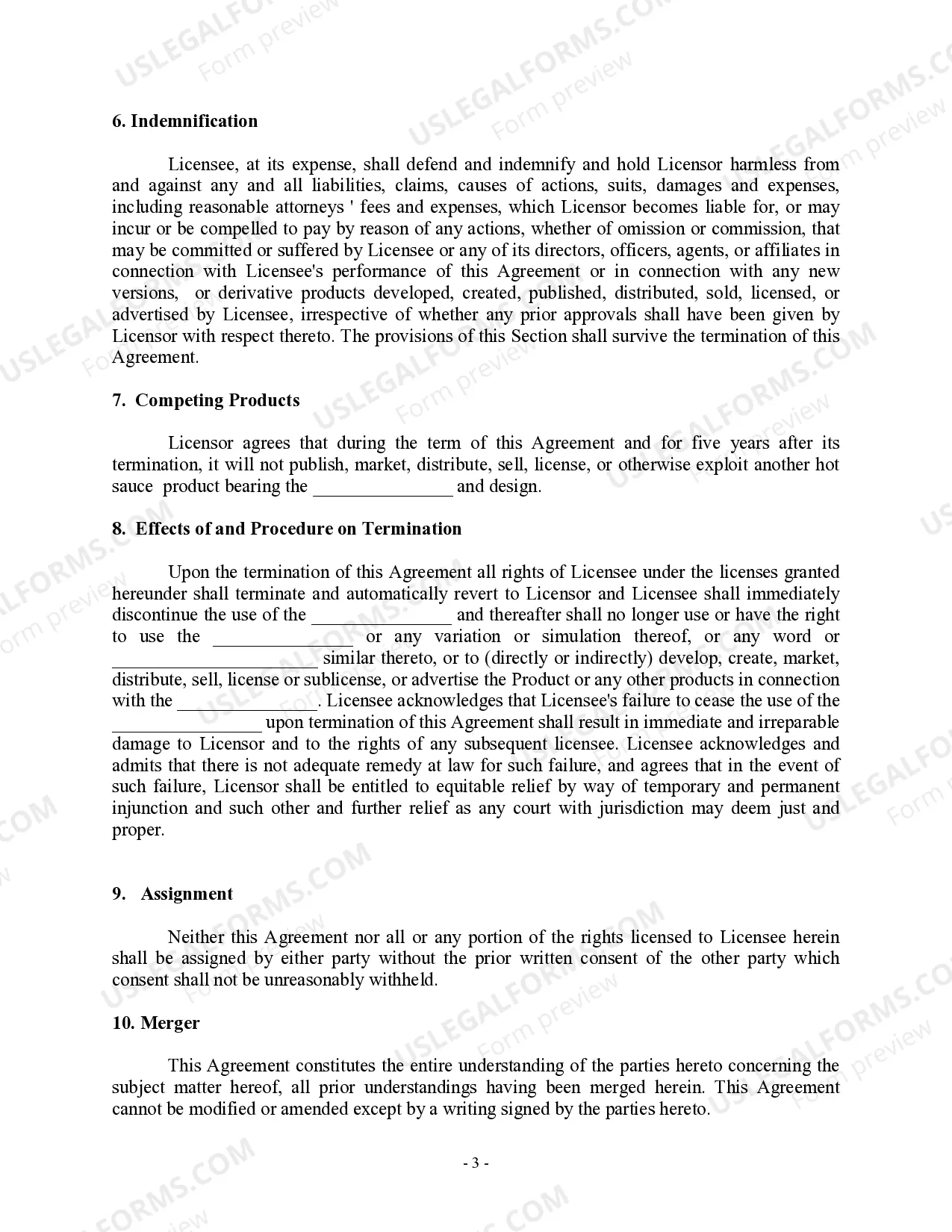
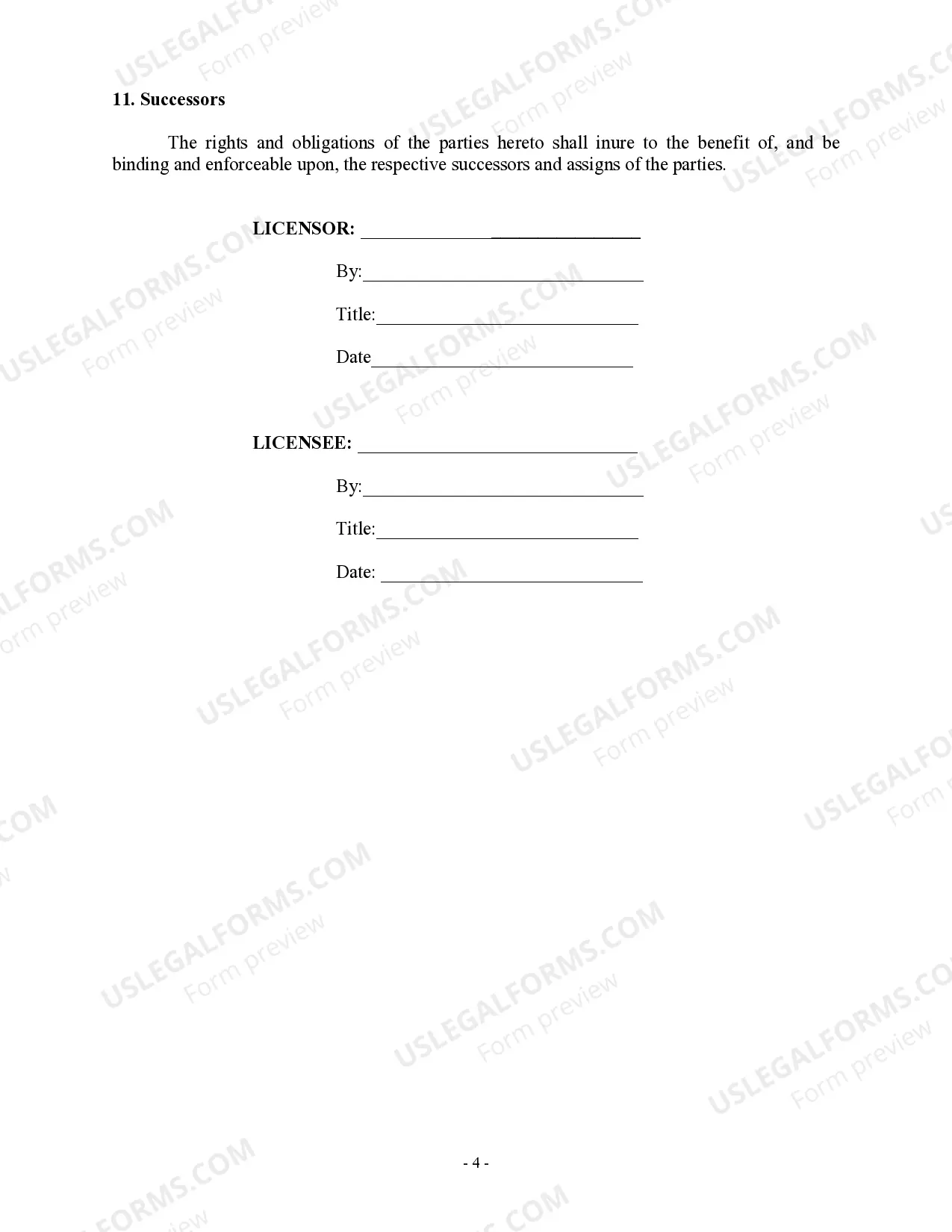
The licensing agreement should explain what the licensee can do with the license. It should say whether the license is exclusive or not. It should also discuss whether the licensor gets to use the license or cedes all rights to the licensee.
In trademark licensing, a trademark owner (Licensor) grants permission to another (Licensee) to use that trademark on mutually agreed terms and conditions.
A licensing agreement allows one party (the licensee) to use and/or earn revenue from the property of the owner (the licensor). Licensing agreements generate revenues, called royalties, earned by a company for allowing its copyrighted or patented material to be used by another company.
In a Trademark licence agreement the proprietor (Licensor) of a registered trademark gives authorization to another company (Licensee) to manufacture and distribute products under this trademark.
The licensing of the trademark allows the registered proprietor to let others use the mark without assigning the ownership of the mark. The proprietor can also put other limitations on the use of the mark through the terms that he puts into the licensing agreement.