Payment Contract Schedule With Interest
Description

Get your form ready online
Our built-in tools help you complete, sign, share, and store your documents in one place.
Make edits, fill in missing information, and update formatting in US Legal Forms—just like you would in MS Word.
Download a copy, print it, send it by email, or mail it via USPS—whatever works best for your next step.
Sign and collect signatures with our SignNow integration. Send to multiple recipients, set reminders, and more. Go Premium to unlock E-Sign.
If this form requires notarization, complete it online through a secure video call—no need to meet a notary in person or wait for an appointment.
We protect your documents and personal data by following strict security and privacy standards.

Make edits, fill in missing information, and update formatting in US Legal Forms—just like you would in MS Word.

Download a copy, print it, send it by email, or mail it via USPS—whatever works best for your next step.

Sign and collect signatures with our SignNow integration. Send to multiple recipients, set reminders, and more. Go Premium to unlock E-Sign.

If this form requires notarization, complete it online through a secure video call—no need to meet a notary in person or wait for an appointment.

We protect your documents and personal data by following strict security and privacy standards.
Looking for another form?


How to fill out Self-Employed Independent Contractor Payment Schedule?
Utilizing legal documents that comply with federal and regional legislation is crucial, and the internet provides numerous alternatives to select from.
However, what is the benefit of wasting time searching for the properly drafted Payment Agreement Schedule With Interest template online when the US Legal Forms online repository already has such documents assembled in one location.
US Legal Forms is the premier online legal database featuring over 85,000 fillable documents created by attorneys for any professional and personal situation.
All templates you discover through US Legal Forms are reusable. To re-download and complete previously acquired forms, visit the My documents section in your profile. Experience the most comprehensive and user-friendly legal documentation service!
- They are simple to navigate with all paperwork organized by state and intended use.
- Our specialists keep abreast of legal changes, ensuring that you can always trust your form is updated and compliant when obtaining a Payment Agreement Schedule With Interest from our site.
- Acquiring a Payment Agreement Schedule With Interest is simple and swift for both existing and new users.
- If you already possess an account with an active subscription, Log In and download the document sample you require in the appropriate format.
- If you are unfamiliar with our website, follow the instructions below.
Form popularity
FAQ
You can use the PMT function in Excel to calculate the monthly payment for a payment contract schedule with interest. The formula is PMT(rate, nper, pv), where 'rate' is the interest rate per period, 'nper' is the total number of payments, and 'pv' is the present value or principal amount. This formula allows you to easily generate precise repayment amounts.
To calculate a payment with interest, first determine your principal and the applicable interest rate. Then, use the formula Payment = Principal × (1 + Interest Rate). This method provides clarity on how interest impacts your total payments in the payment contract schedule with interest.
To calculate 5% interest on $5,000, simply take 5% of that amount, which comes to $250. If you're structuring a payment contract schedule with interest, consider this amount alongside any principal payments to ensure clarity and fair terms.
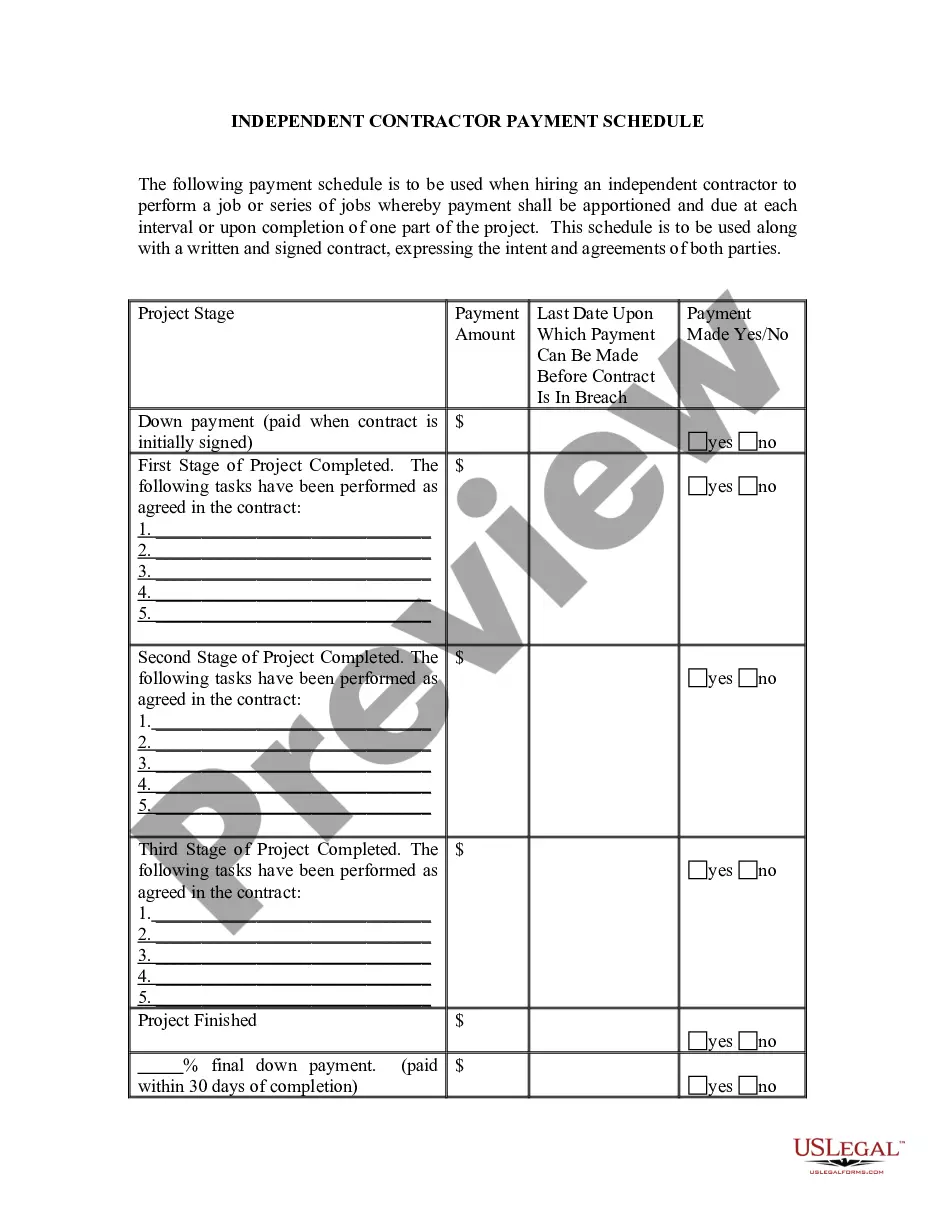
When writing a payment schedule, start by listing the total amount due and the payment frequency. Next, include the payment amounts, interest calculations, and due dates. This structured approach will create a well-organized payment contract schedule with interest, making it clear for all parties involved.
To find the interest for a payment contract schedule with interest, you would calculate 5% of $10,000. This amounts to $500 per month. Therefore, if you include this interest in your payment structure, you would need to ensure that your total payment schedule accommodates this amount.
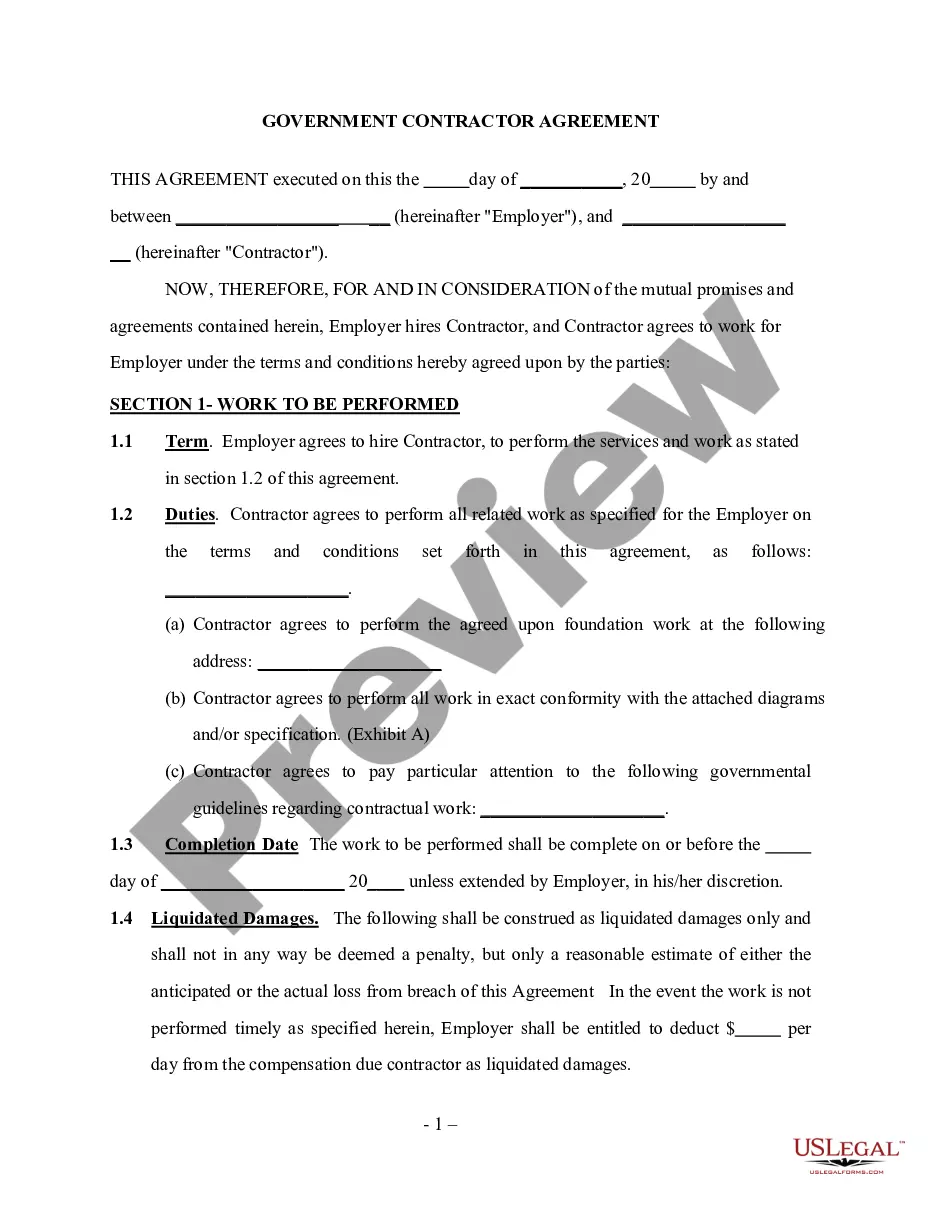
State what each side agrees to do. Clearly write out the terms of the loan. Include information about the date of the loan, the payment terms, interest, schedule of payments, late charges, default, and any other details in the agreement. Explain that the contract represents the entire agreement.
How to calculate loan amortization. You'll need to divide your annual interest rate by 12. For example, if your annual interest rate is 3%, then your monthly interest rate will be 0.25% (0.03 annual interest rate ÷ 12 months). You'll also multiply the number of years in your loan term by 12.
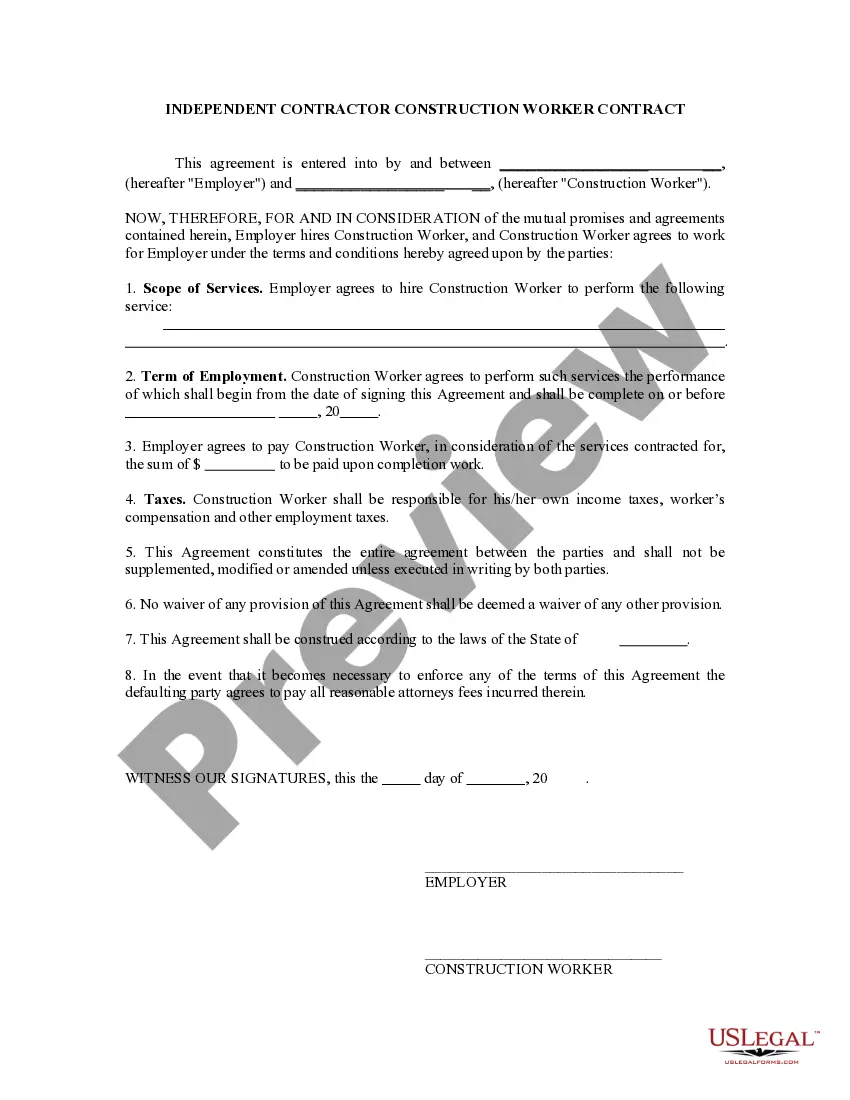
Net 10, Net 30, or Net 60 (found on the invoice) simply indicates that the contractor's payment is due 10, 30, or 60 days from the date of the invoice, respectively. Risks: This is the most common payment term for independent contractors, and there are few risks associated with it.
The most common type of construction payment is a net payment, meaning the invoice is due a set amount of days from the issue date. For longer projects, it's typical to pay an upfront deposit and then to pay the contractor monthly until the job is finished.
Starting in month one, take the total amount of the loan and multiply it by the interest rate on the loan. Then for a loan with monthly repayments, divide the result by 12 to get your monthly interest. Subtract the interest from the total monthly payment, and the remaining amount is what goes toward principal.