Stalking For Years
Description
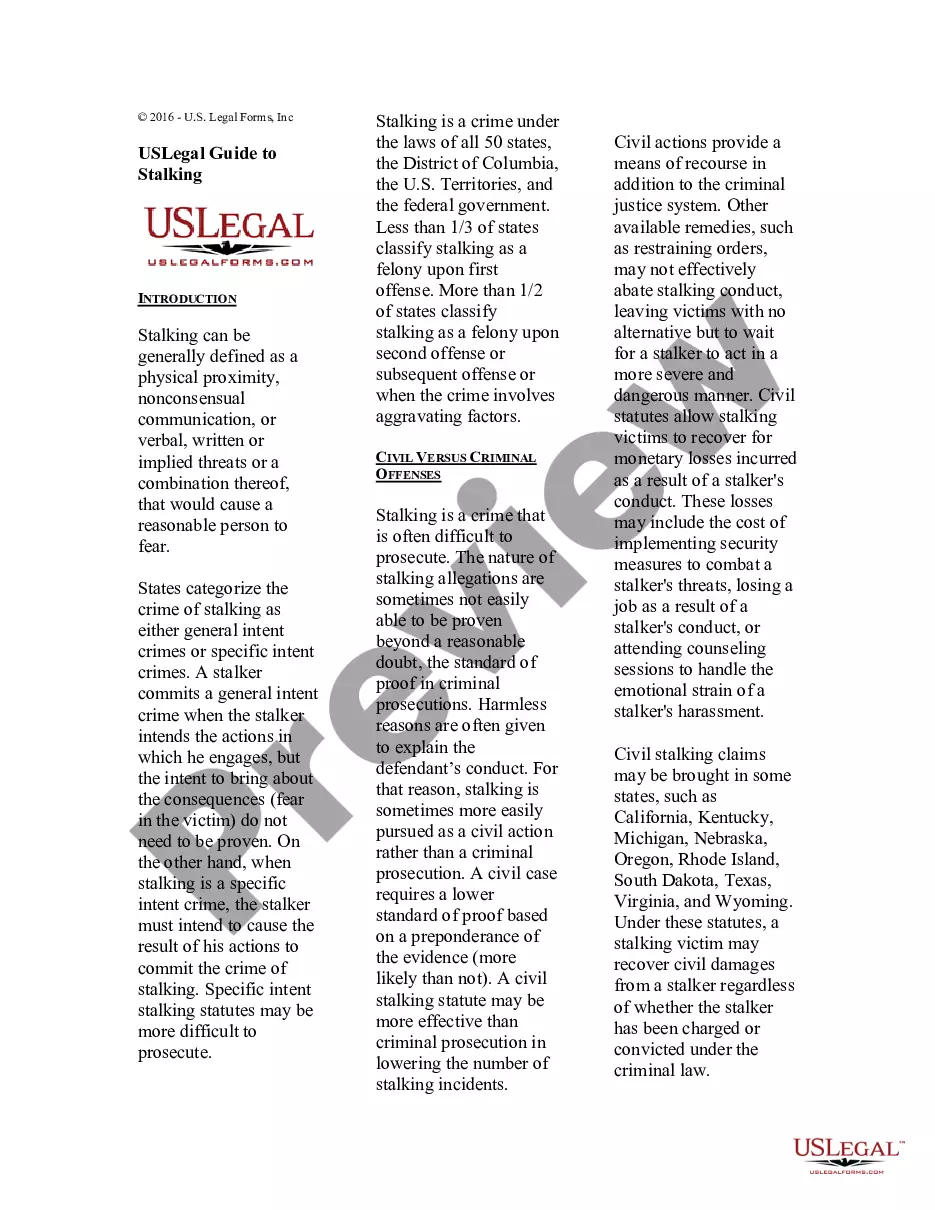
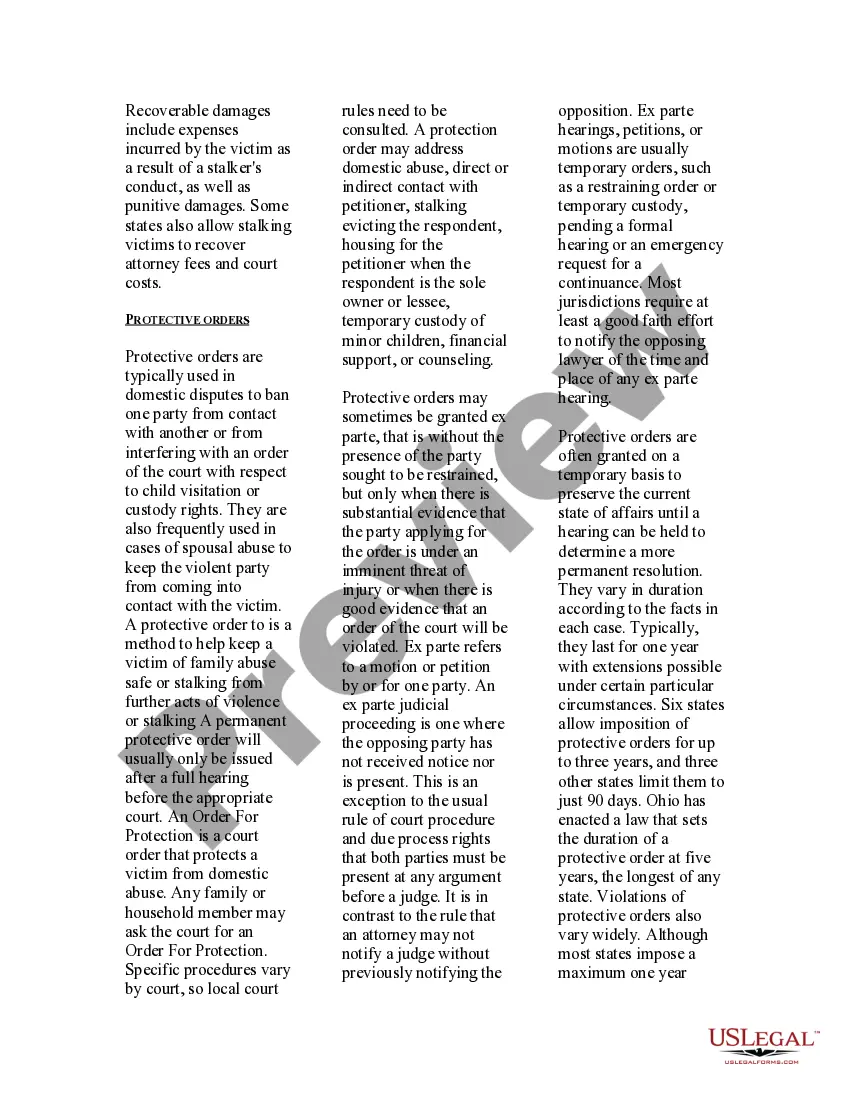
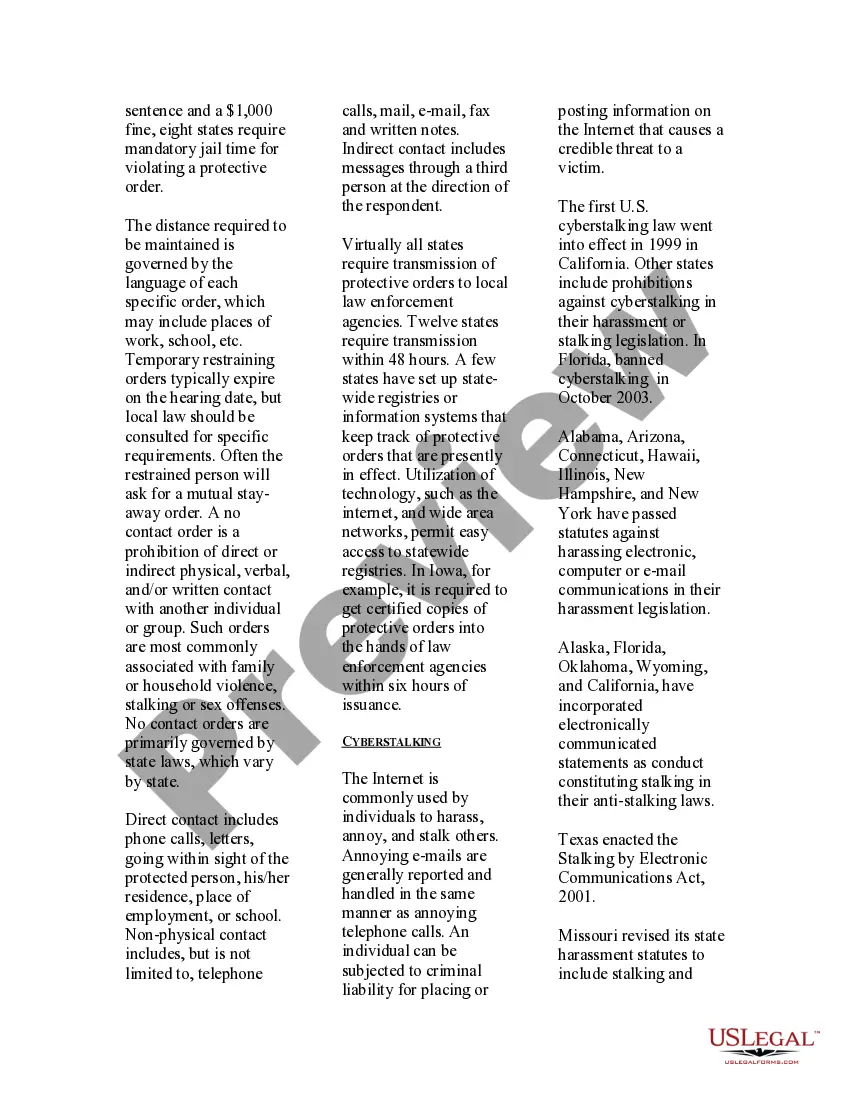
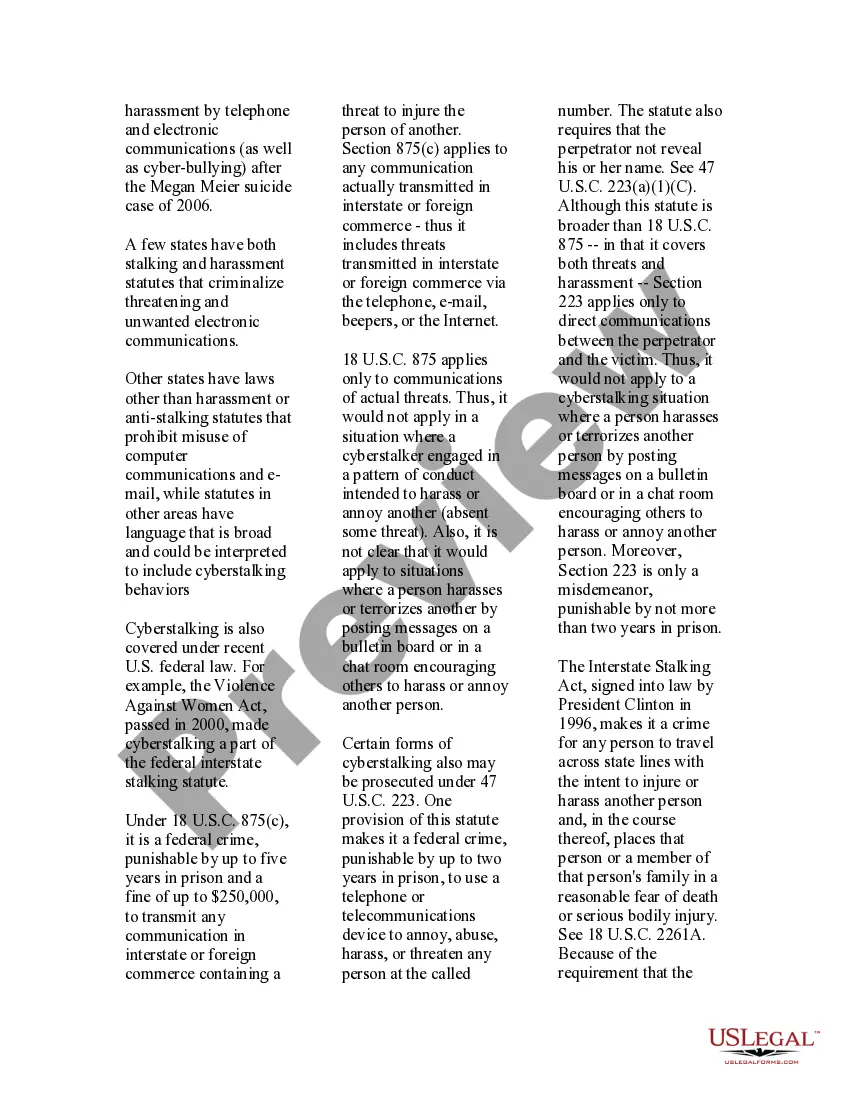
Get your form ready online
Our built-in tools help you complete, sign, share, and store your documents in one place.
Make edits, fill in missing information, and update formatting in US Legal Forms—just like you would in MS Word.
Download a copy, print it, send it by email, or mail it via USPS—whatever works best for your next step.
Sign and collect signatures with our SignNow integration. Send to multiple recipients, set reminders, and more. Go Premium to unlock E-Sign.
If this form requires notarization, complete it online through a secure video call—no need to meet a notary in person or wait for an appointment.
We protect your documents and personal data by following strict security and privacy standards.

Make edits, fill in missing information, and update formatting in US Legal Forms—just like you would in MS Word.

Download a copy, print it, send it by email, or mail it via USPS—whatever works best for your next step.

Sign and collect signatures with our SignNow integration. Send to multiple recipients, set reminders, and more. Go Premium to unlock E-Sign.

If this form requires notarization, complete it online through a secure video call—no need to meet a notary in person or wait for an appointment.

We protect your documents and personal data by following strict security and privacy standards.
Looking for another form?





How to fill out USLegal Guide To Stalking?
Legal oversight can be daunting, even for proficient professionals.
When you are looking for a Stalking For Years and lack the time to invest in finding the correct and current version, the process may be stressful.
With US Legal Forms, you can.
Access an extensive resource hub of articles, manuals, and materials pertinent to your circumstances and requirements.
Confirm it is the correct form by previewing it and reviewing its description.
- Conserve time and effort locating the documents you require, and use US Legal Forms’ enhanced search and Preview function to find Stalking For Years and obtain it.
- If you have a membership, Log In to your US Legal Forms account, search for the form, and retrieve it.
- Check the My documents section to view the documents you previously saved and manage your folders as you wish.
- If it is your first time using US Legal Forms, create a free account for unlimited access to all platform benefits.
- Here are the steps to follow after downloading the desired form.
- Leverage a robust online form repository that can be transformative for anyone wanting to navigate these circumstances efficiently.
- US Legal Forms excels in online legal documentation, offering over 85,000 region-specific legal templates accessible at any moment.
- Utilize sophisticated tools to complete and manage your Stalking For Years.
Form popularity
FAQ
In Oregon, stalking is characterized by unwanted, repeated contact or following someone that instills fear for their safety. This includes acts that cause emotional distress and disrupt the victim's daily life. If you have been facing these issues for years, legal protections are available to support you. Resources from uslegalforms can guide you in seeking the necessary help.
Harassment in Oregon involves behavior that threatens or intimidates another person or causes them distress. This can include threats of violence, unwanted physical contact, or repeated communications that provoke fear. If harassment has affected your life for years, knowing your rights is paramount. Uslegalforms provides valuable resources to help you address the situation legally.
In Georgia, stalking is recognized when a person follows or contacts another person without their consent and causes them alarm or emotional distress. This could involve persistent communication or unwanted visits. If you have faced stalking for years in Georgia, it's important to document these incidents and seek protection. Legal resources, like uslegalforms, can assist you in taking necessary actions.
Stalking is defined as a pattern of behavior that involves following, harassing, or threatening another individual in a way that causes fear for their safety. The actions may include unwanted communications, monitoring, and visits to the person's home or workplace. Understanding this definition is essential, especially if you have been dealing with stalking for years. Legal tools and resources can help you address these issues appropriately.
In Oregon, stalking involves intentionally and repeatedly following or contacting someone, causing them to fear for their safety. This behavior must be persistent over time to qualify as stalking. If you have faced such circumstances for years, you can seek legal recourse. Consider exploring the resources available on uslegalforms to help navigate your situation effectively.
In California, stalking is defined as willfully, maliciously, and repeatedly following or harassing another person. If someone engages in this behavior, it is considered a criminal offense. Victims can seek protection through restraining orders, which can help prevent further incidents. If you have experienced stalking for years, understanding your legal rights is crucial.
Stalking for years can often relate to underlying mental health issues, but not all who engage in this behavior are clinically diagnosed with a mental illness. It is crucial to understand that stalking reflects a pattern of repeated and unwanted behavior that deeply affects the victims. If you feel you are being stalked, we encourage you to seek help and consider legal options. The US Legal Forms platform provides resources and documentation that can support you in addressing stalking effectively.
Yes, stalking is classified as a felony in many states across the USA, particularly when it involves threats or prior convictions. However, some states may categorize it as a misdemeanor depending on the specific circumstances. In cases where stalking has occurred for years, the charges can often escalate to serious felony offenses. It is crucial to understand your state's legal classification and seek assistance through platforms like uslegalforms that specialize in these matters.
The Department of Defense (DOD) defines stalking as a course of conduct directed at a specific person that causes fear or distress. This definition emphasizes the seriousness of repeated actions that can disturb individuals over many years. The DOD takes these matters seriously and has established protocols to protect military personnel from such behaviors. Awareness of these definitions is essential for anyone involved, especially within military communities.
The maximum sentence for stalking varies depending on the severity of the offense and state laws. Generally, stalking can lead to imprisonment, particularly for cases involving repeated offenses or violations of restraining orders. In some cases, offenders may face up to five years in prison if the stalking has persisted for years. Consulting with a legal expert can clarify specific penalties related to your circumstances.