Examples Of Online Stalking
Description
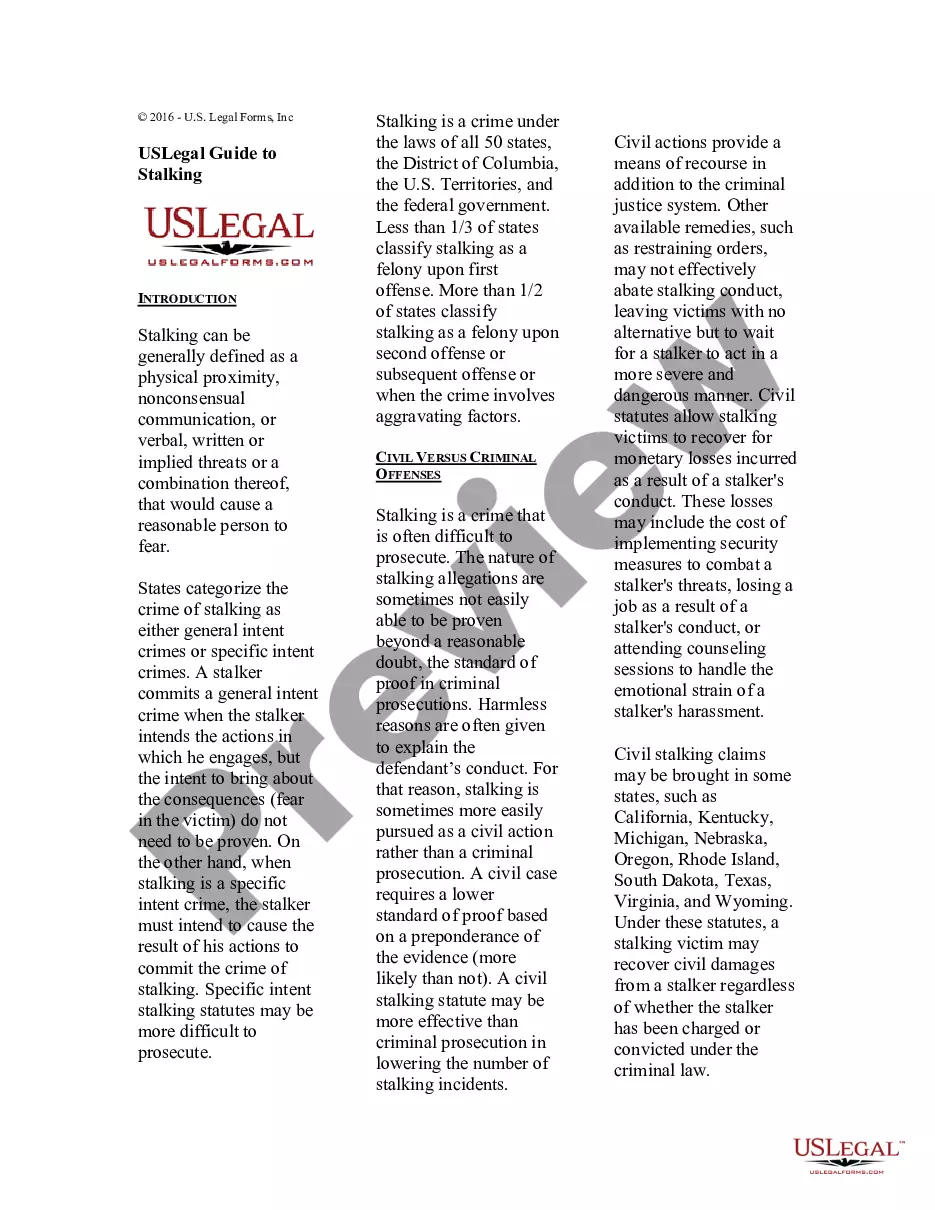
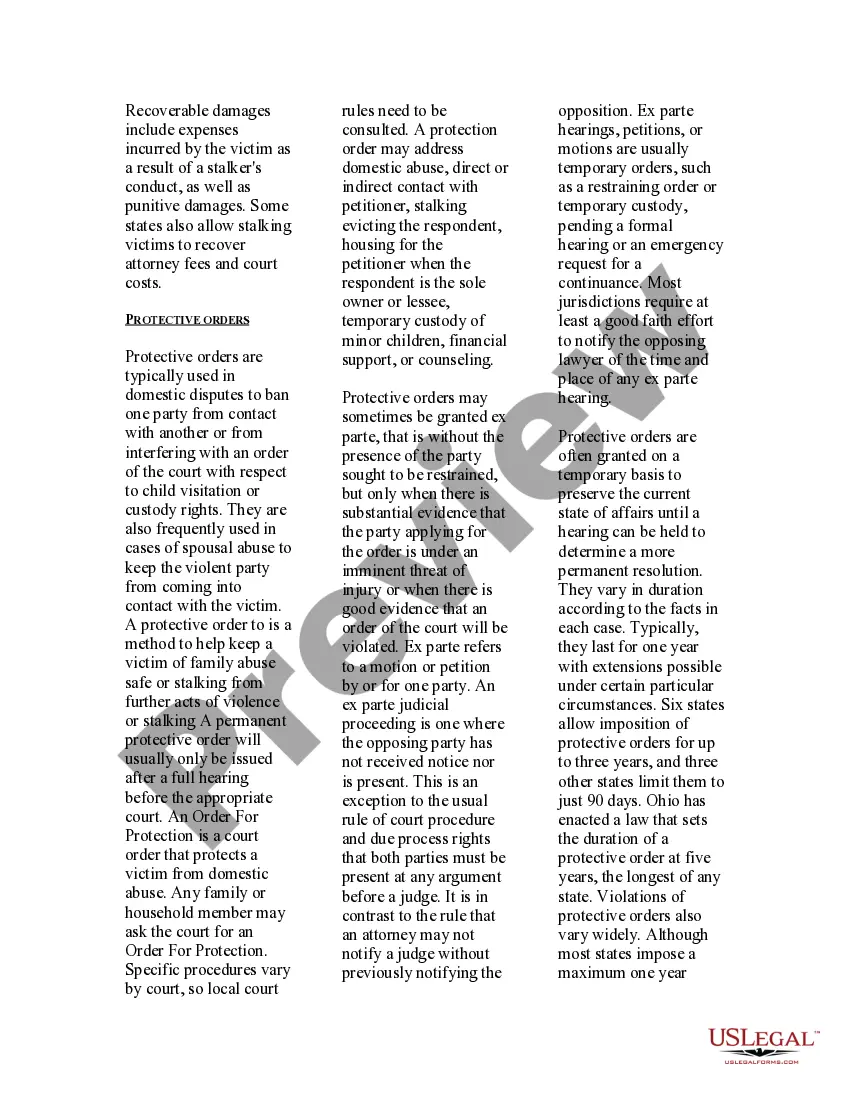
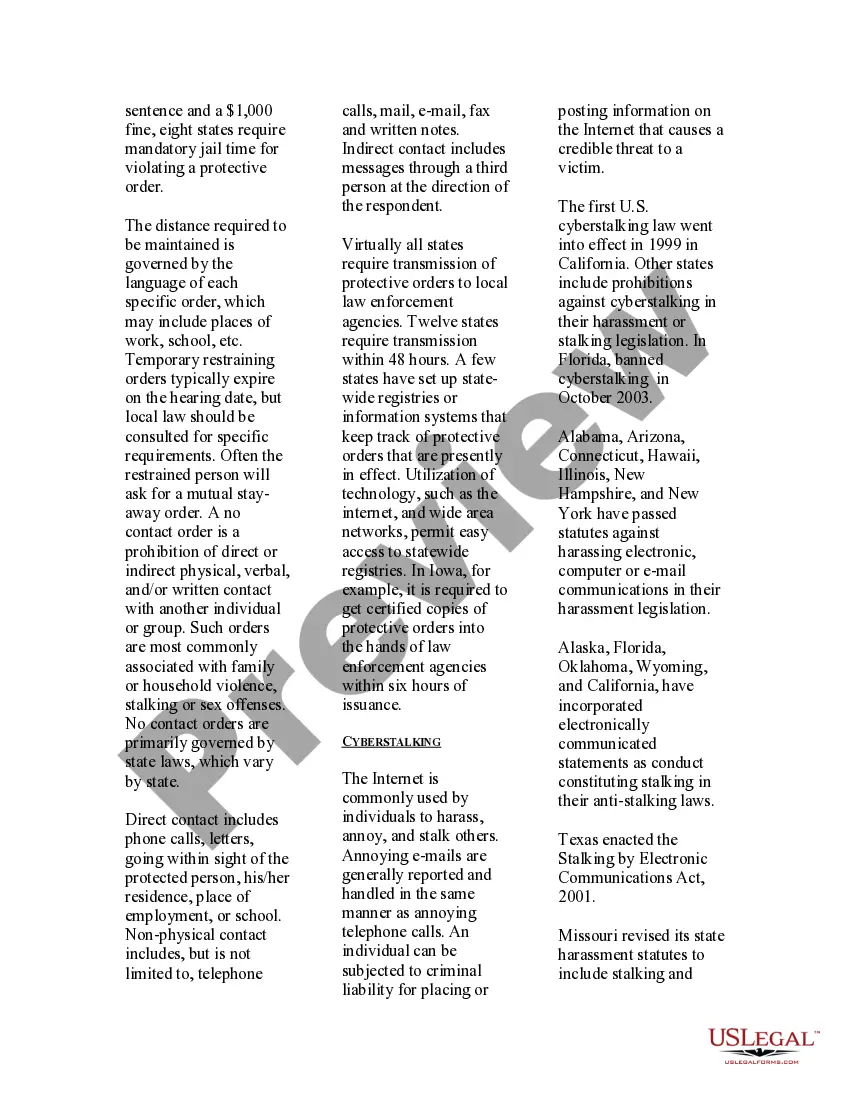
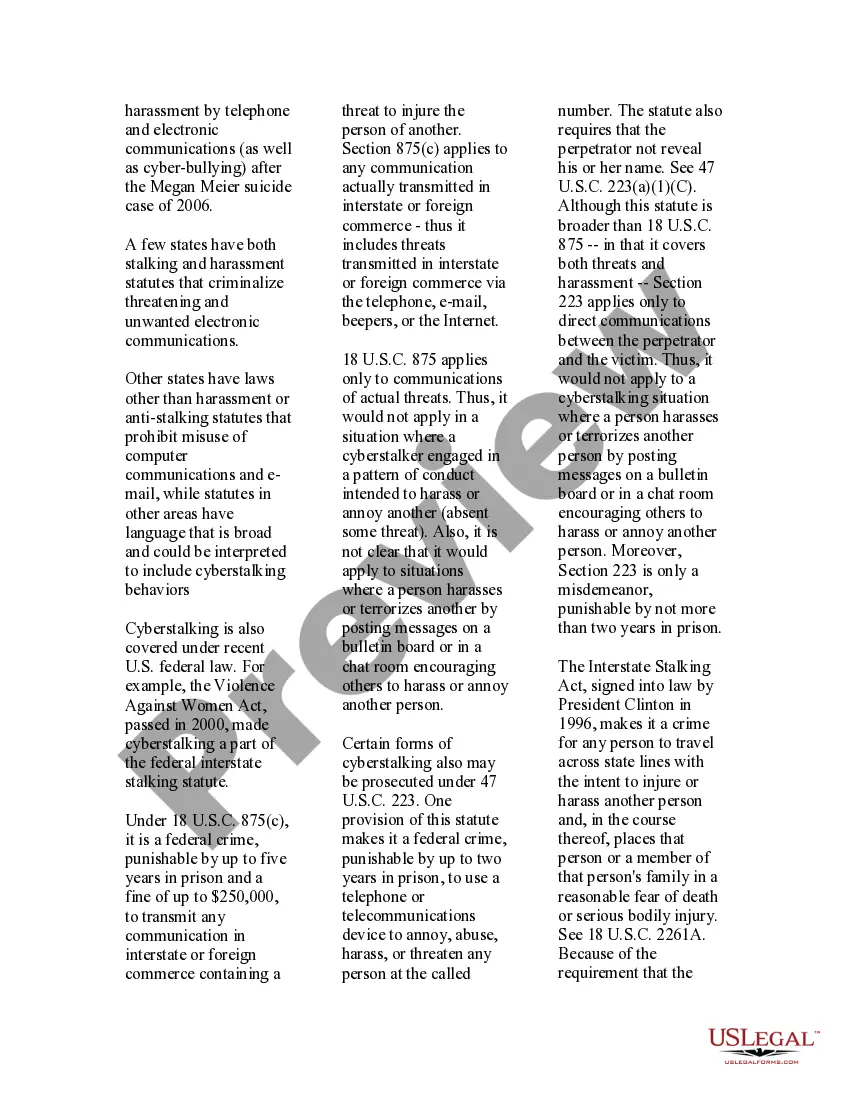
Get your form ready online
Our built-in tools help you complete, sign, share, and store your documents in one place.
Make edits, fill in missing information, and update formatting in US Legal Forms—just like you would in MS Word.
Download a copy, print it, send it by email, or mail it via USPS—whatever works best for your next step.
Sign and collect signatures with our SignNow integration. Send to multiple recipients, set reminders, and more. Go Premium to unlock E-Sign.
If this form requires notarization, complete it online through a secure video call—no need to meet a notary in person or wait for an appointment.
We protect your documents and personal data by following strict security and privacy standards.

Make edits, fill in missing information, and update formatting in US Legal Forms—just like you would in MS Word.

Download a copy, print it, send it by email, or mail it via USPS—whatever works best for your next step.

Sign and collect signatures with our SignNow integration. Send to multiple recipients, set reminders, and more. Go Premium to unlock E-Sign.

If this form requires notarization, complete it online through a secure video call—no need to meet a notary in person or wait for an appointment.

We protect your documents and personal data by following strict security and privacy standards.
Looking for another form?



How to fill out USLegal Guide To Stalking?
Creating legal documents from the beginning can occasionally be overwhelming.
Certain situations may require extensive research and a significant financial investment.
If you're looking for a simpler and more budget-friendly method of producing Examples Of Online Stalking or any additional paperwork without navigating through obstacles, US Legal Forms is always available to assist you.
Our online library of over 85,000 current legal forms encompasses nearly every facet of your financial, legal, and personal matters.
Before directly proceeding to download Examples Of Online Stalking, consider these tips: Review the document preview and descriptions to ensure you have located the form you need. Confirm that the selected form meets the stipulations of your state and county. Opt for the appropriate subscription plan to obtain the Examples Of Online Stalking. Download the form and then complete, sign, and print it out. US Legal Forms prides itself on an impeccable reputation and over 25 years of experience. Join us today and make document preparation a straightforward and efficient process!
- With a few simple clicks, you can efficiently access state- and county-compliant forms expertly prepared for you by our legal experts.
- Utilize our site whenever you require a dependable and trustworthy service to effortlessly find and download the Examples Of Online Stalking.
- If you're familiar with our services and have set up an account previously, simply Log In to your account, find the form, and download it or re-download it at any time in the My documents section.
- No account? No worries. Setting it up takes minimal time and is easy to navigate through the catalog.
Form popularity
FAQ
Stalking is typically recognized when a person's actions cause fear or distress to another individual. This can include persistent unwanted contact or surveillance, where the victim feels threatened. If you suspect you're facing examples of online stalking, it is vital to seek help, and resources like USLegalForms can provide you with the necessary legal documents to address your situation effectively.
Stalking in media often features storylines where a character becomes fixated on another, leading to dangerous situations. A popular movie might show a character using digital means to invade someone's privacy, illustrating the real-world implications of online stalking. These narratives serve as reminders of the importance of staying vigilant about personal safety.
An example of stalking online involves someone repeatedly sending messages or comments to a person with the intent to intimidate or control them. This can also include creating fake profiles to gather information or spread rumors about the victim. Understanding these examples of online stalking can help individuals recognize and respond to such harmful behaviors.
Stalking can include various behaviors aimed at an individual, such as repeated unwanted contact, monitoring someone's activities, or spreading false information. Importantly, these actions can happen both online and offline, blurring the lines of traditional stalking. It is crucial to recognize these behaviors as serious infringements on personal safety.
In media, stalking often appears in news stories or films that depict obsessive behaviors. A well-known example is the portrayal of a celebrity being followed by an obsessed fan, which highlights the invasive nature of stalking. Such representations reinforce the real-life dangers associated with online stalking and the need for legal protection.
Cyberstalking involves using technology to harass or intimidate someone. Examples of online stalking include sending threatening emails, posting harmful content about someone on social media, or using GPS to track someone's location without their consent. Each of these actions can create fear and anxiety for the victim, demonstrating the serious nature of online harassment.
Vindictive cyberstalking involves threats, composed cyberstalking involves annoyance and harassment, intimate involves exes or people infatuated with the victim, and collective involves a person being cyber stalked by a group of individuals.
Most stalking cases involve perpetrators and victims who know each other; 23 percent of all female victims and 36 percent of all male victims are stalked by strangers.
Stalkers use a variety of tactics, including (but not limited to): unwanted contact including phone calls, texts, and contact via social media, unwanted gifts, showing up/approaching an individual or their family/friends, monitoring, surveillance, property damage, and threats.
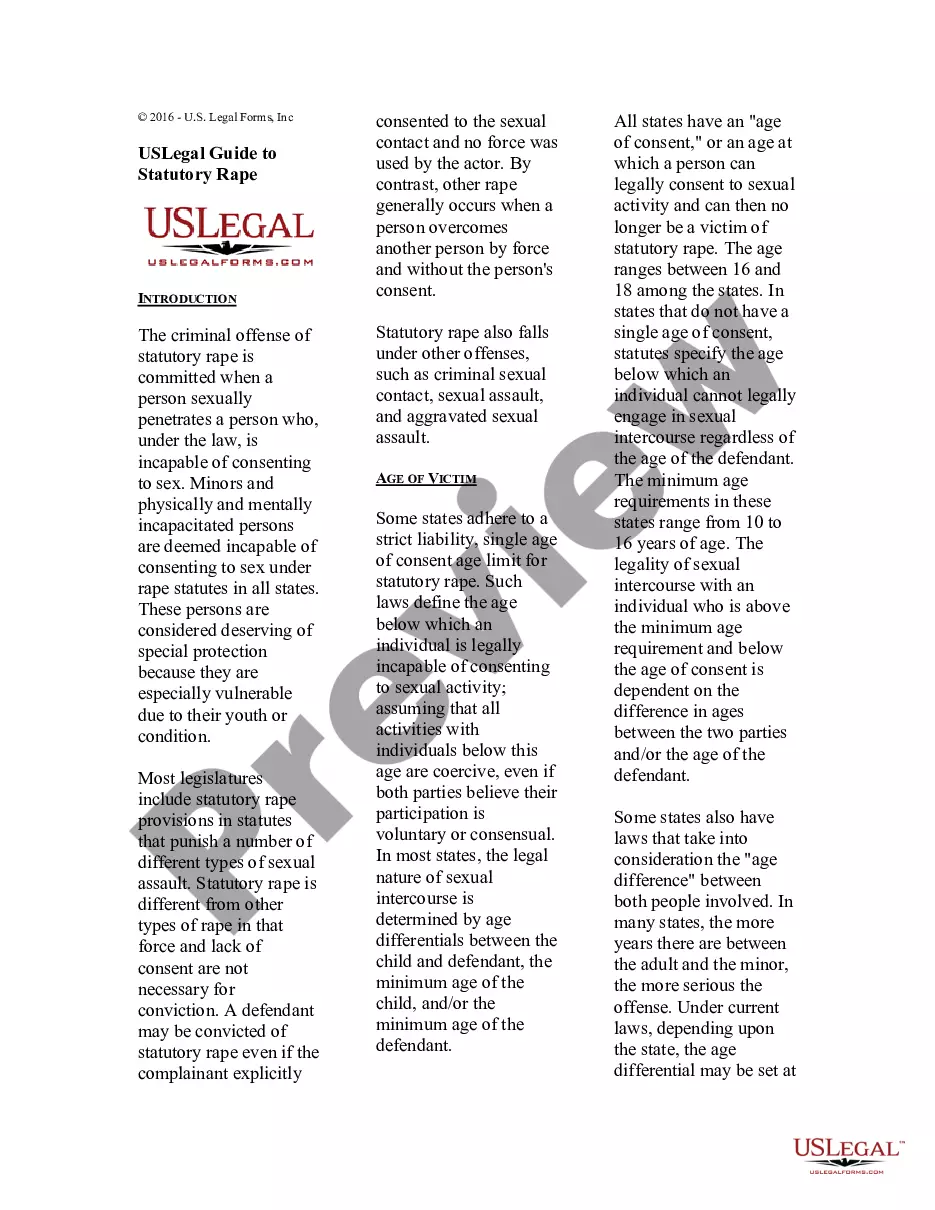
Cyberstalking is the use of the Internet or other electronic means to stalk or harass an individual, group, or organization. It may include false accusations, defamation, slander and libel. It may also include monitoring, identity theft, threats, vandalism, solicitation for sex, doxing, or blackmail.