No Contact Order Rules Ohio
Description
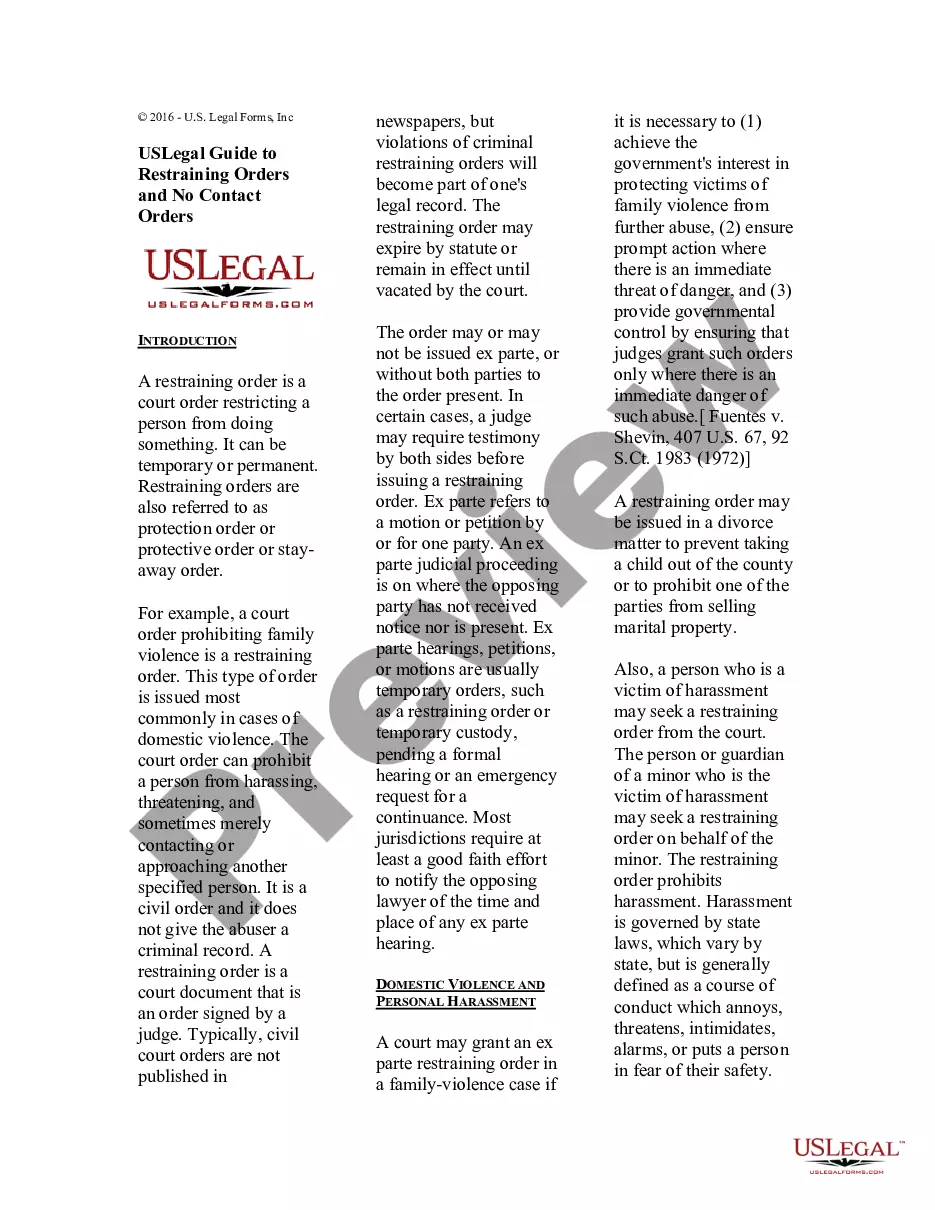
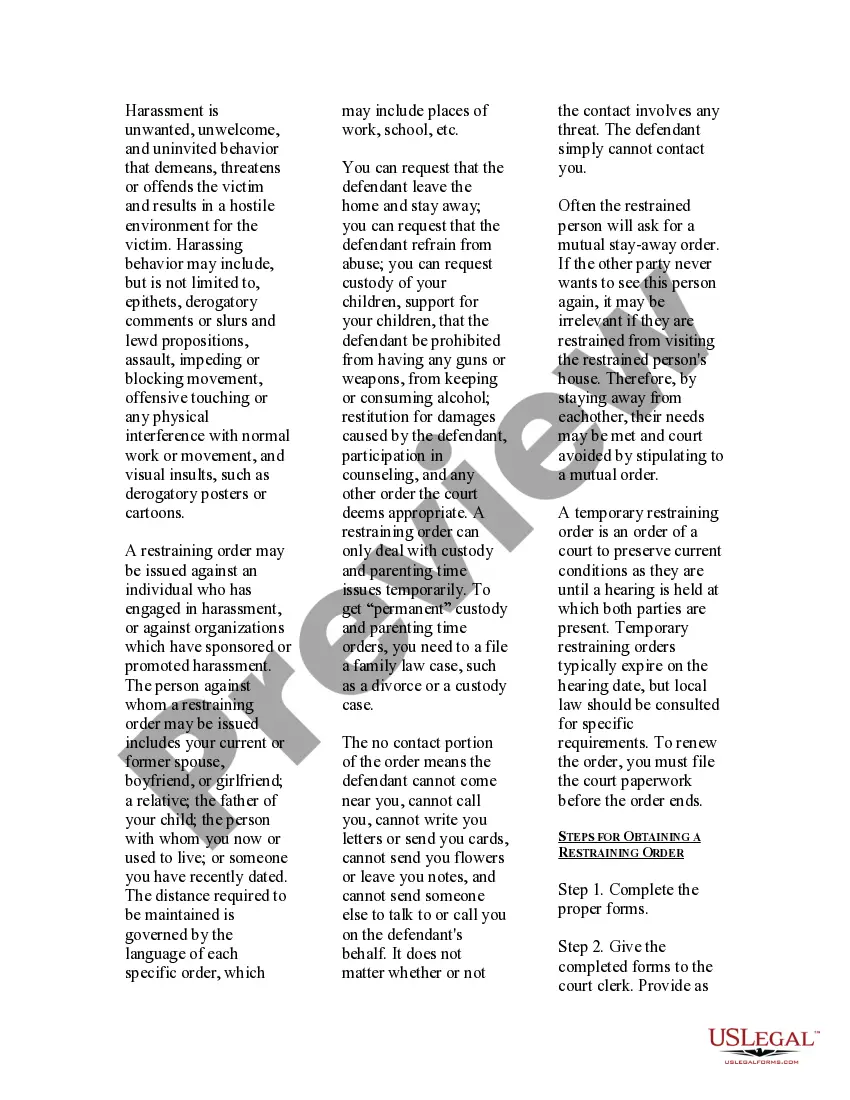
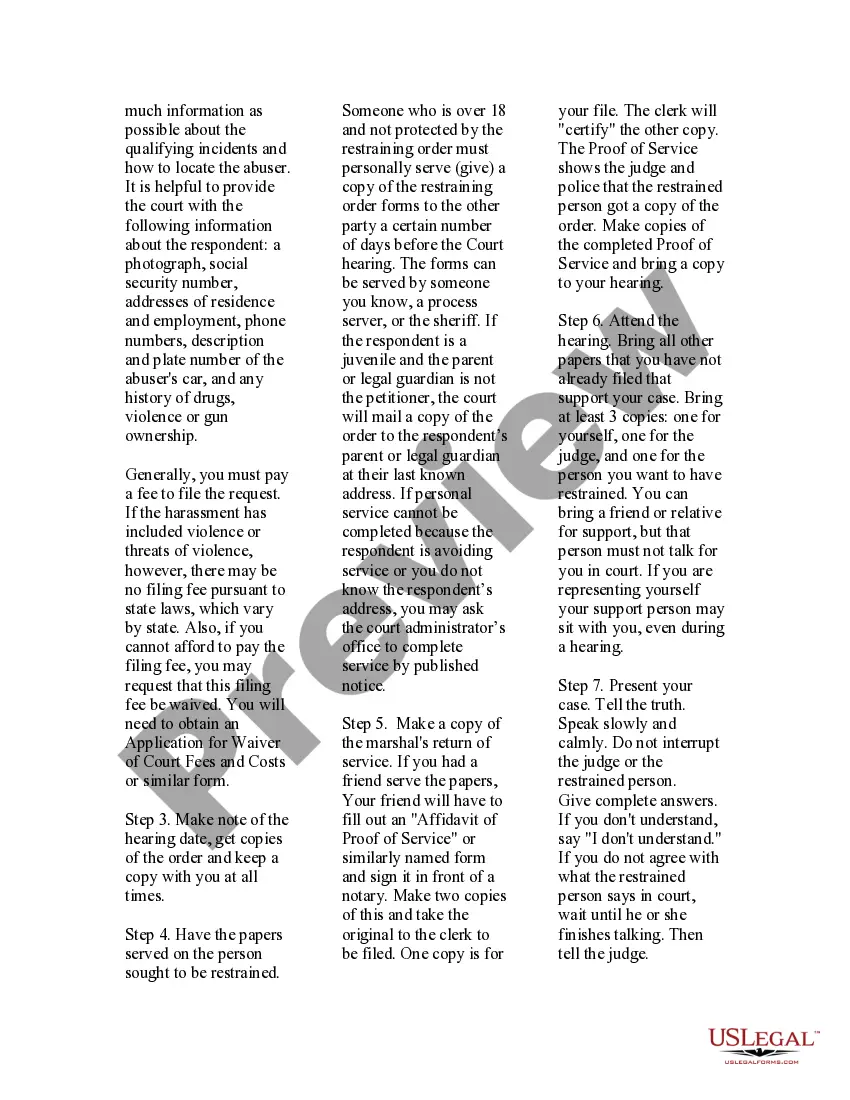

Get your form ready online
Our built-in tools help you complete, sign, share, and store your documents in one place.
Make edits, fill in missing information, and update formatting in US Legal Forms—just like you would in MS Word.
Download a copy, print it, send it by email, or mail it via USPS—whatever works best for your next step.
Sign and collect signatures with our SignNow integration. Send to multiple recipients, set reminders, and more. Go Premium to unlock E-Sign.
If this form requires notarization, complete it online through a secure video call—no need to meet a notary in person or wait for an appointment.
We protect your documents and personal data by following strict security and privacy standards.

Make edits, fill in missing information, and update formatting in US Legal Forms—just like you would in MS Word.

Download a copy, print it, send it by email, or mail it via USPS—whatever works best for your next step.

Sign and collect signatures with our SignNow integration. Send to multiple recipients, set reminders, and more. Go Premium to unlock E-Sign.

If this form requires notarization, complete it online through a secure video call—no need to meet a notary in person or wait for an appointment.

We protect your documents and personal data by following strict security and privacy standards.
Looking for another form?

How to fill out USLegal Guide On Restraining Orders And No Contact Orders?
Whether for commercial objectives or personal matters, everyone encounters legal scenarios at some point in their lives.
Completing legal documentation requires meticulous care, starting from selecting the appropriate template.
With an extensive US Legal Forms catalog available, you do not need to waste time searching for the suitable sample online. Take advantage of the library's straightforward navigation to discover the right form for any circumstance.
- Search for the template you require using the search feature or browsing through the catalog.
- Review the form's description to confirm it suits your case, jurisdiction, and county.
- Click on the form's preview to inspect it.
- If it is not the right form, return to the search tool to locate the necessary No Contact Order Rules Ohio sample.
- Acquire the document if it meets your criteria.
- If you already possess a US Legal Forms account, click Log in to access previously saved files in My documents.
- If you don't yet have an account, you can download the form by clicking Buy now.
- Select the appropriate payment option.
- Complete the account registration form.
- Choose your method of payment: utilize a credit card or PayPal account.
- Select your desired file format and download the No Contact Order Rules Ohio.
- After saving it, you can fill out the form using editing software or print it and complete it by hand.
Form popularity
FAQ
In Ohio, the process for obtaining a temporary restraining order can be quite quick, often decided within a few days. A restraining order can remain in effect for a short period, typically lasting up to 14 days before a hearing is held. To better understand the nuances of temporary orders, refer to the no contact order rules in Ohio. Uslegalforms offers various legal tools to help you initiate and manage this process smoothly.
Discussions on platforms like Reddit indicate that the length of no contact orders can vary, but they typically align with state-specific standards. In Ohio, orders can last from a few weeks to several years, depending on the case's specifics. Engaging with the community can provide insights, but always verify with legal resources to stay informed about the no contact order rules in Ohio. For reliable information and legal forms, you may want to consider uslegalforms.
While no contact orders are legally binding, there are situations where they can be modified or lifted. You can request a hearing to present your case, but you must provide valid reasons for the modification. It’s crucial to follow the no contact order rules in Ohio, as violating them can lead to serious legal consequences. Seeking guidance through uslegalforms can help you understand your options and navigate any required legal processes.
Most no contact orders in Ohio last for a specified duration, often ranging from a few months to one year, depending on the case's circumstances. Court may extend the duration if the initial threat persists or if a further evaluation shows continued risk to the protected individual. It is essential to monitor the order's expiration date, as it is necessary to renew it if protection is still required. Familiarizing yourself with the no contact order rules Ohio will clarify how these time frames work.
To obtain a no contact order in Ohio, individuals usually must file a petition in court demonstrating the necessity of the order. This petition often requires evidence of threats, harassment, or previous acts of violence. A judge will review the petition and determine whether to grant the order based on the facts presented. Knowing what is needed helps in preparing a solid case under the no contact order rules Ohio.
In Ohio, a no contact order works by formally prohibiting one party from reaching out to another, typically issued during legal proceedings such as domestic violence cases. Once the order is in place, it provides a clear legal framework that the affected individual can rely on for protection. Law enforcement can intervene if the order is violated, offering immediate recourse for the victim. Overall, understanding how the no contact order rules Ohio operate ensures you can safeguard your interests effectively.
The rules of a no contact order in Ohio typically include a ban on all forms of contact, including indirect communication through third parties. Violating these rules can lead to serious legal consequences, such as fines or jail time. Therefore, it is crucial to comprehend the specific terms of your order, which will be outlined in the documentation. Familiarizing yourself with no contact order rules Ohio can ensure compliance and protect your rights.
unlawful contact order prohibits an individual from contacting another person in ways deemed unlawful. This means that any form of communication, whether in person, through phone calls, or via social media, is restricted. Understanding the no contact order rules Ohio helps you navigate the legal landscape effectively. Essentially, these orders aim to protect individuals from unwanted interactions that could be harmful or threatening.
In Ohio, you can obtain a protection order, which falls under the no contact order rules Ohio, to keep someone away from you. This type of order restrains the individual from contacting or approaching you in any location. It is particularly effective if you feel threatened or have experienced domestic violence. Seek assistance from legal resources or professionals to ensure your safety and navigate the legal process properly.
Filing for a no contact order in Ohio involves submitting a petition to the appropriate court. This petition should include your reason for the request, detailed information about the parties involved, and any supporting evidence. You may also need to appear in a hearing where you present your case before a judge. Platforms like USLegalForms can provide you with essential forms and guidance to make this process easier.