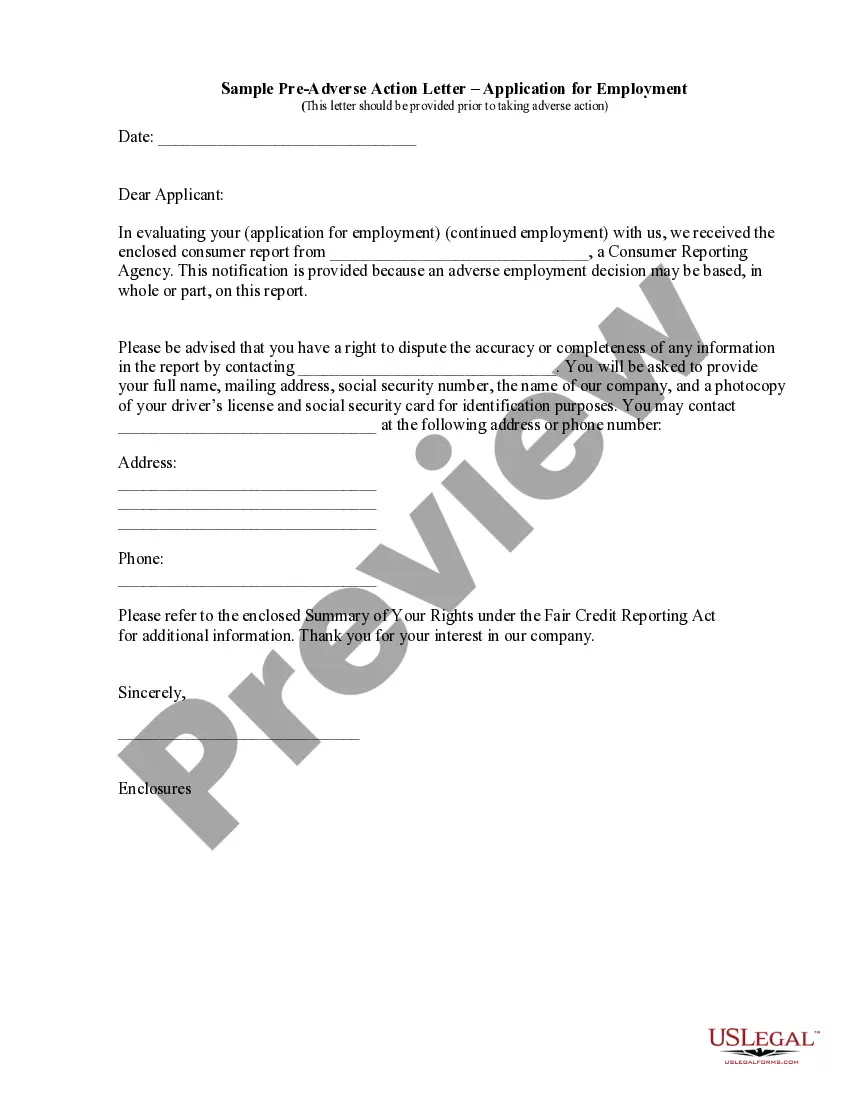
Pre Adverse Action Letter Response For Failed Drug Screen
Description
Get your form ready online
Our built-in tools help you complete, sign, share, and store your documents in one place.
Make edits, fill in missing information, and update formatting in US Legal Forms—just like you would in MS Word.
Download a copy, print it, send it by email, or mail it via USPS—whatever works best for your next step.
Sign and collect signatures with our SignNow integration. Send to multiple recipients, set reminders, and more. Go Premium to unlock E-Sign.
If this form requires notarization, complete it online through a secure video call—no need to meet a notary in person or wait for an appointment.
We protect your documents and personal data by following strict security and privacy standards.

Make edits, fill in missing information, and update formatting in US Legal Forms—just like you would in MS Word.

Download a copy, print it, send it by email, or mail it via USPS—whatever works best for your next step.

Sign and collect signatures with our SignNow integration. Send to multiple recipients, set reminders, and more. Go Premium to unlock E-Sign.

If this form requires notarization, complete it online through a secure video call—no need to meet a notary in person or wait for an appointment.

We protect your documents and personal data by following strict security and privacy standards.
Looking for another form?
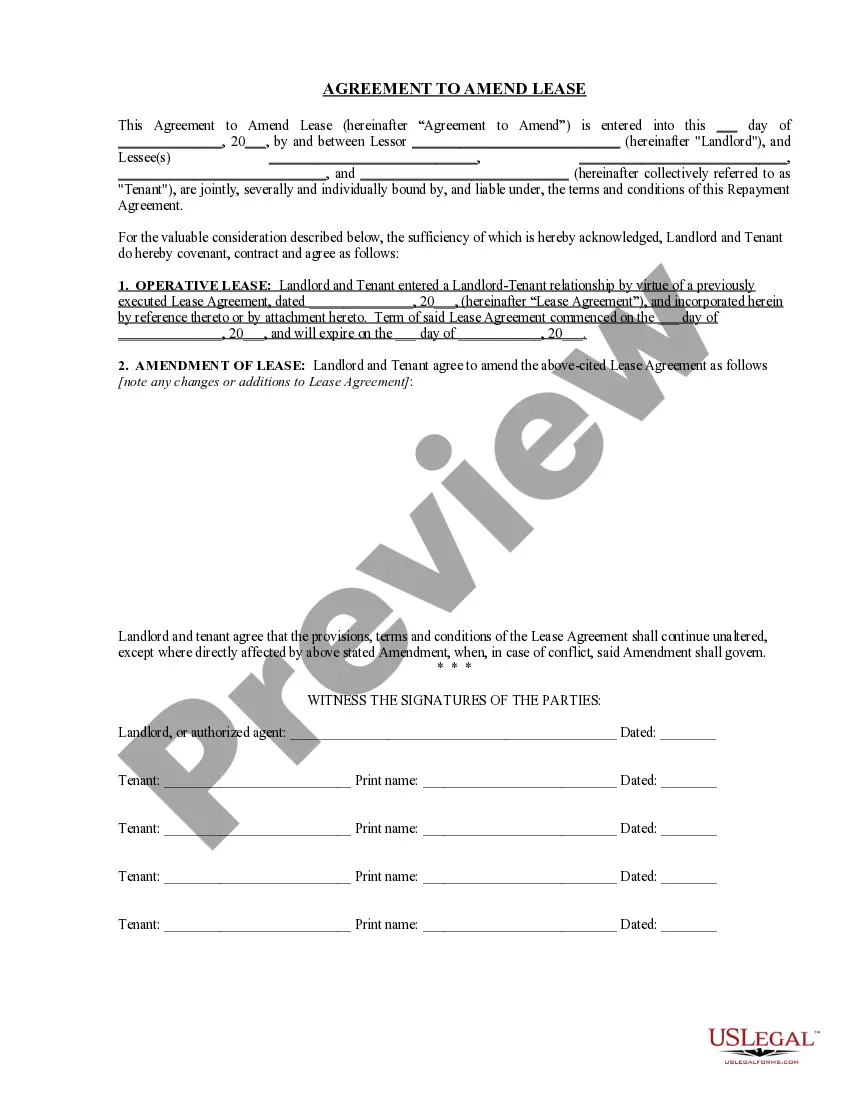
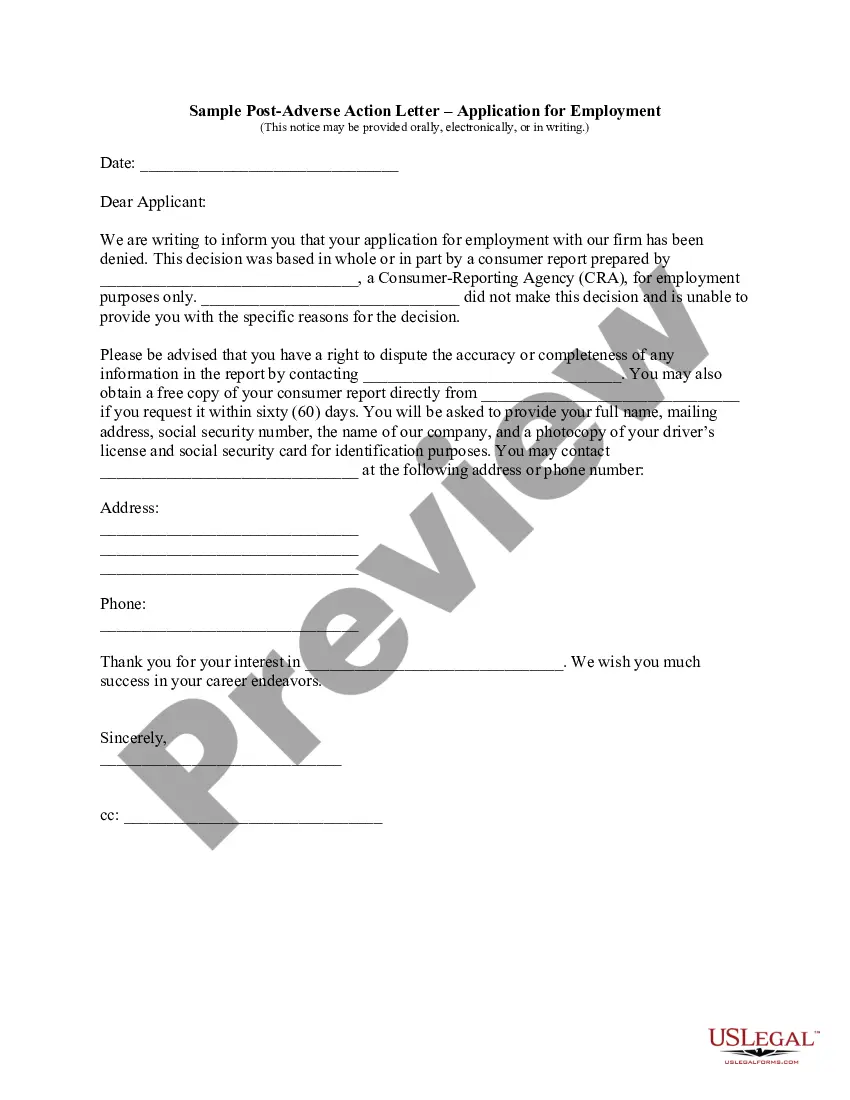
How to fill out Sample Pre-Adverse Action Letter Regarding Application For Work Or Employment?
Regardless of whether for commercial reasons or personal matters, everyone must handle legal circumstances at some point in their life.
Completing legal documents necessitates meticulous focus, beginning with selecting the correct form template.
Once it is saved, you can fill out the form using editing software or print it and complete it by hand. With a comprehensive US Legal Forms catalog available, you don’t have to waste time searching for the suitable template online. Utilize the library’s straightforward navigation to find the correct template for any situation.
- For instance, if you choose an incorrect version of the Pre Adverse Action Letter Response For Failed Drug Screen, it will be rejected upon submission.
- Thus, it is essential to have a trustworthy source of legal documents like US Legal Forms.
- If you need to obtain a Pre Adverse Action Letter Response For Failed Drug Screen template, follow these straightforward steps.
- Acquire the template you require using the search bar or catalog browsing.
- Review the form’s description to ensure it aligns with your situation, region, and county.
- Click on the form’s preview to view it.
- If it is the incorrect form, return to the search feature to find the Pre Adverse Action Letter Response For Failed Drug Screen example you need.
- Obtain the template if it fulfills your needs.
- If you already possess a US Legal Forms account, simply click Log in to access previously stored files in My documents.
- If you do not have an account yet, you can download the form by clicking Buy now.
- Select the appropriate pricing option.
- Complete the profile registration form.
- Choose your payment method: use a credit card or PayPal account.
- Select the file format you desire and download the Pre Adverse Action Letter Response For Failed Drug Screen.
Form popularity
FAQ
adverse action letter for failed drug screen is a notification sent to an employee before any negative employment action is taken due to a failed drug test. This letter serves as a formal communication, allowing the employee to understand the situation and respond appropriately. Using this letter is crucial for maintaining compliance with legal standards and promoting transparency in the hiring process. For employers seeking a streamlined solution, US Legal Forms offers templates to create these letters easily.
Yes, employers are generally required to send an adverse action letter if they decide to take action based on a failed drug test. This letter informs the employee of the decision and provides them with important information about their rights. Specifically, a pre adverse action letter response for failed drug screen allows the employee to address any potential issues before the final decision is made. Following this procedure protects both the employer and the employee.
When an employee fails a drug test, employers typically follow a set protocol. First, they may conduct a review of the test results to confirm accuracy. Then, they often initiate a pre adverse action letter response for failed drug screen, giving the employee a chance to explain or contest the results. This process helps ensure fair treatment and adherence to legal requirements.
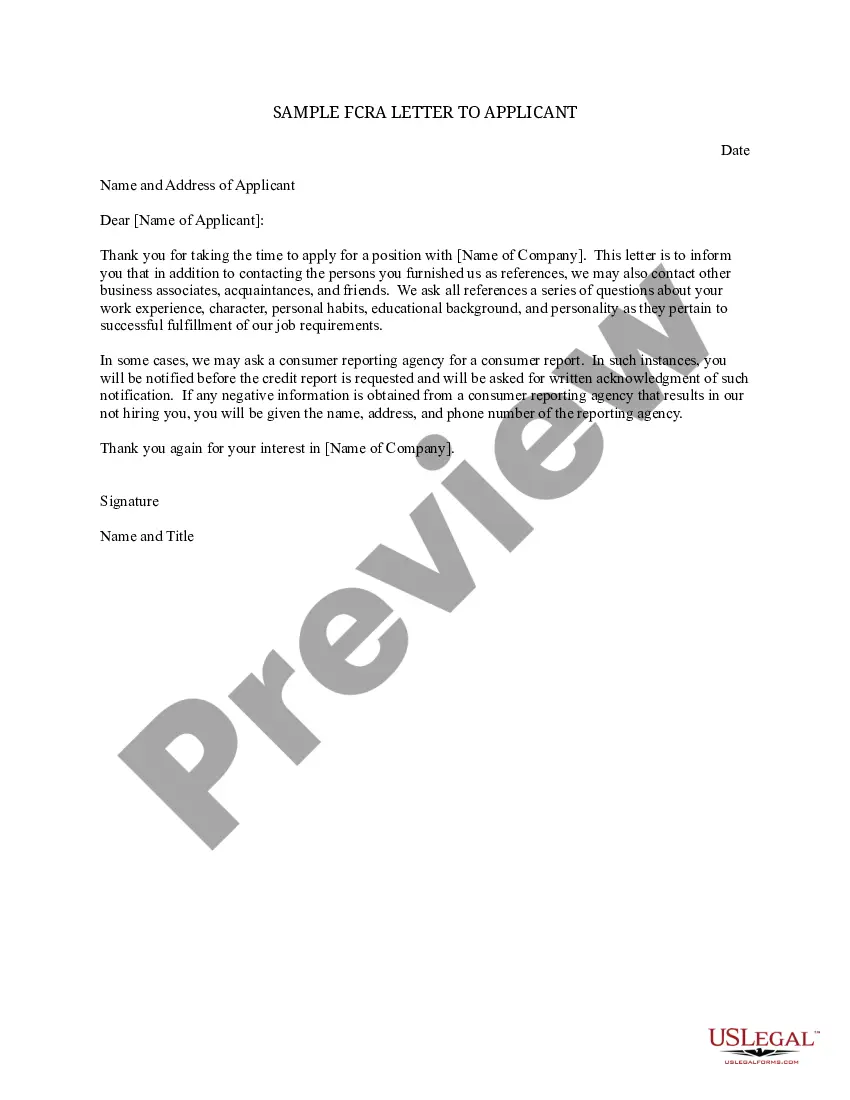
Can you still hire someone after issuing a pre-adverse action letter? Organizations may still hire candidates who receive pre-adverse action letters, depending on the specific situation.
In such a situation, a candidate remains eligible for consideration and may receive an offer depending on an organization's preferences.
I received a Pre-Adverse Letter? What Should I do Now? Be honest about your mistakes. Explain to your employer what you learned from the experience, and why your past will not prevent you from thriving in the new position. If you've obtained new training or skills, consider describing how you'd use them in the position.
What is a pre-adverse action letter? The purpose of a pre-adverse action letter is to inform the consumer that you have completed the background check or drug test that was conducted during the application process and that you may or may not be making an adverse decision based on the pre-employment screening.