Technology License Regarding Force
Description
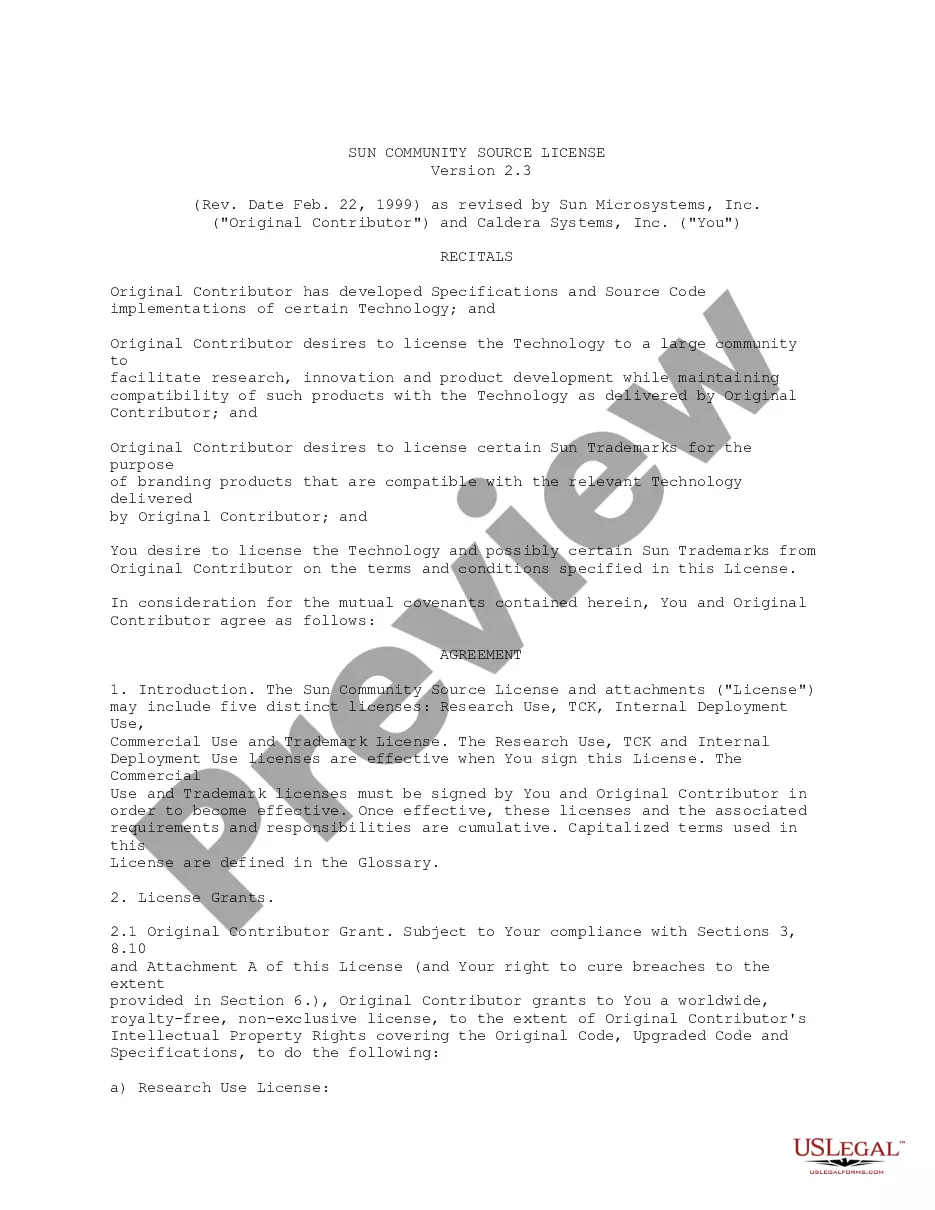
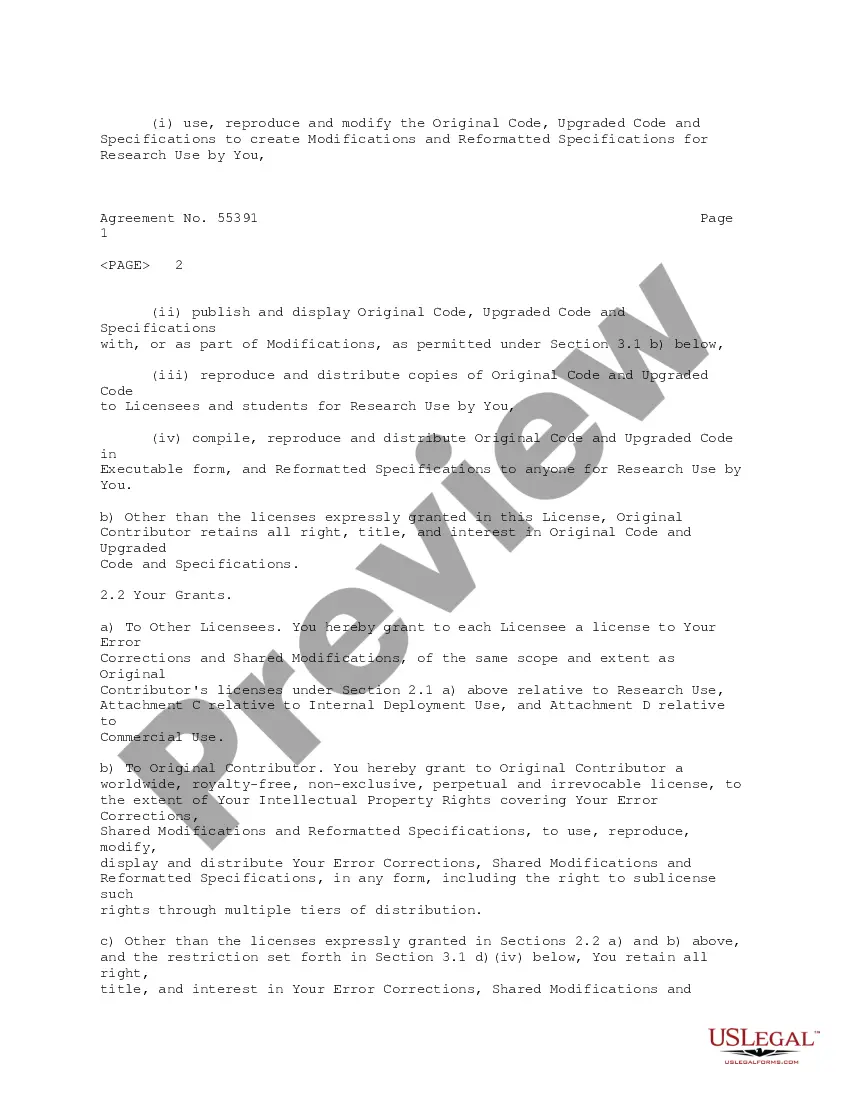
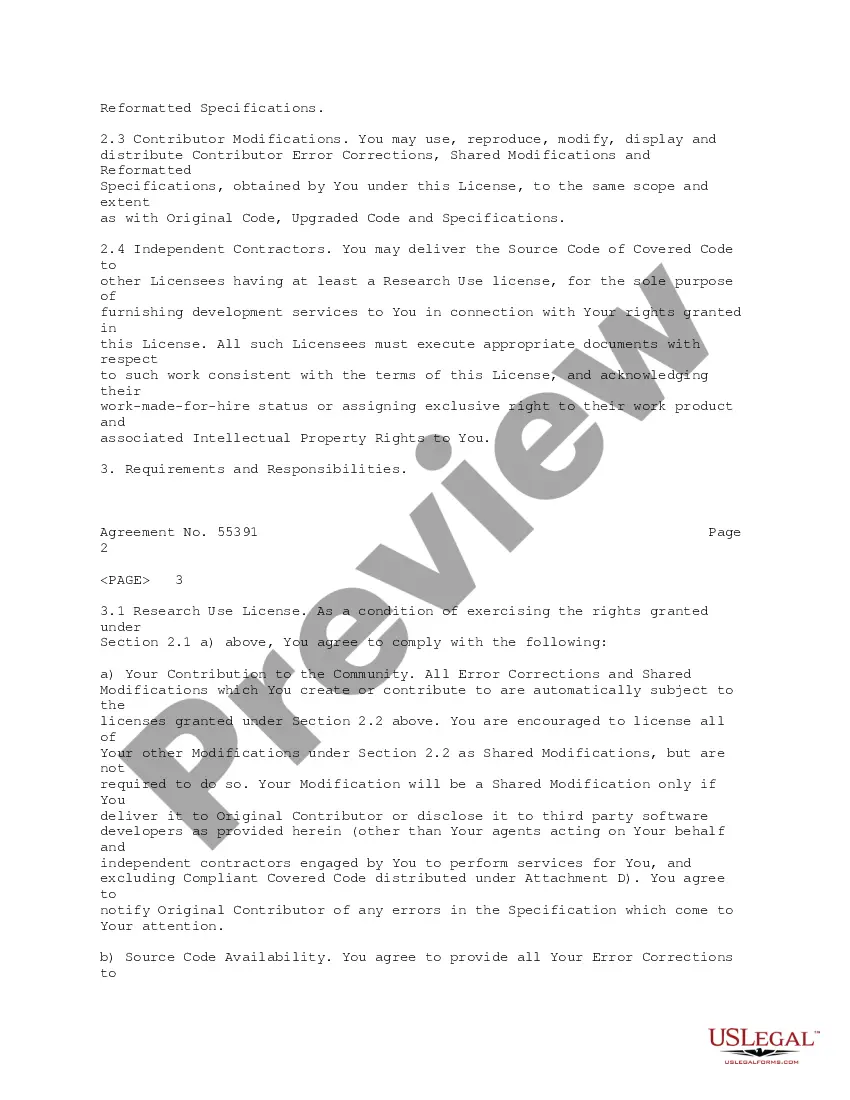
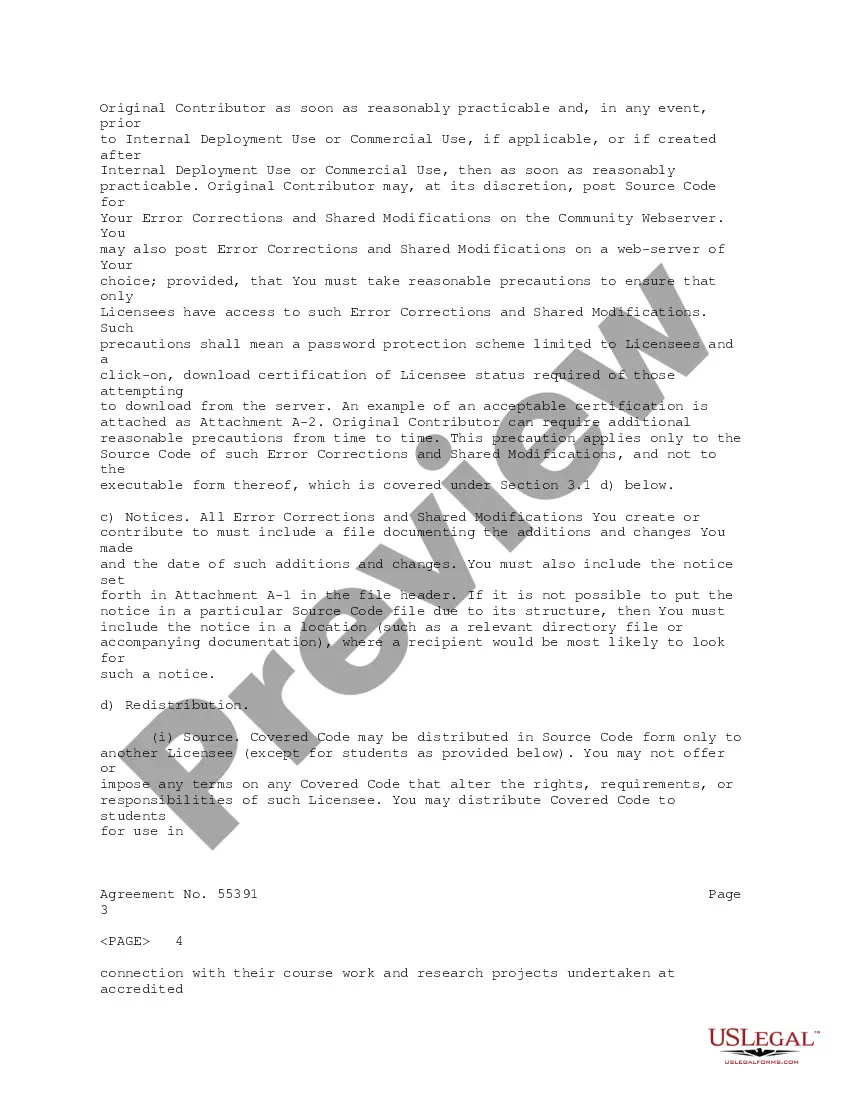




How to fill out Technology License Agreement Regarding The Development And Specifications And Source Code Implementations?
Whether for commercial objectives or for personal matters, everyone must confront legal circumstances eventually in their lifetime.
Completing legal paperwork requires meticulous attention, beginning with choosing the right form exemplar.
With an extensive US Legal Forms catalog available, you do not need to waste time searching for the suitable template online. Take advantage of the library’s straightforward navigation to find the correct template for any circumstance.
- Locate the template you require by utilizing the search field or catalog browsing.
- Examine the form’s description to confirm it fits your situation, jurisdiction, and area.
- Click on the form’s preview to view it.
- If it is the wrong document, return to the search feature to locate the Technology License Regarding Force template you need.
- Obtain the file when it satisfies your criteria.
- If you already possess a US Legal Forms profile, simply click Log in to access previously saved documents in My documents.
- If you do not have an account at this time, you may acquire the form by clicking Buy now.
- Select the appropriate pricing option.
- Complete the profile registration form.
- Choose your payment method: you can utilize a credit card or PayPal account.
- Select the file format you desire and download the Technology License Regarding Force.
- Once it is saved, you can fill out the form using editing software or print it and complete it manually.
Form popularity
FAQ
A technician's license is a certification that allows individuals to practice specific technical skills within their field. This license often requires individuals to meet educational and training requirements, demonstrating their proficiency. While not directly related to a technology license regarding force, holding a technician's license can enhance your credibility when working with licensed technologies.
The process of technology licensing typically begins with identifying the technology and its owner. Next, you negotiate terms, which may include payment and usage rights. After finalizing the terms, a licensing contract is drafted and signed, formalizing the agreement. Companies often use platforms like USLegalForms to streamline this licensing process and ensure all legal requirements are met.
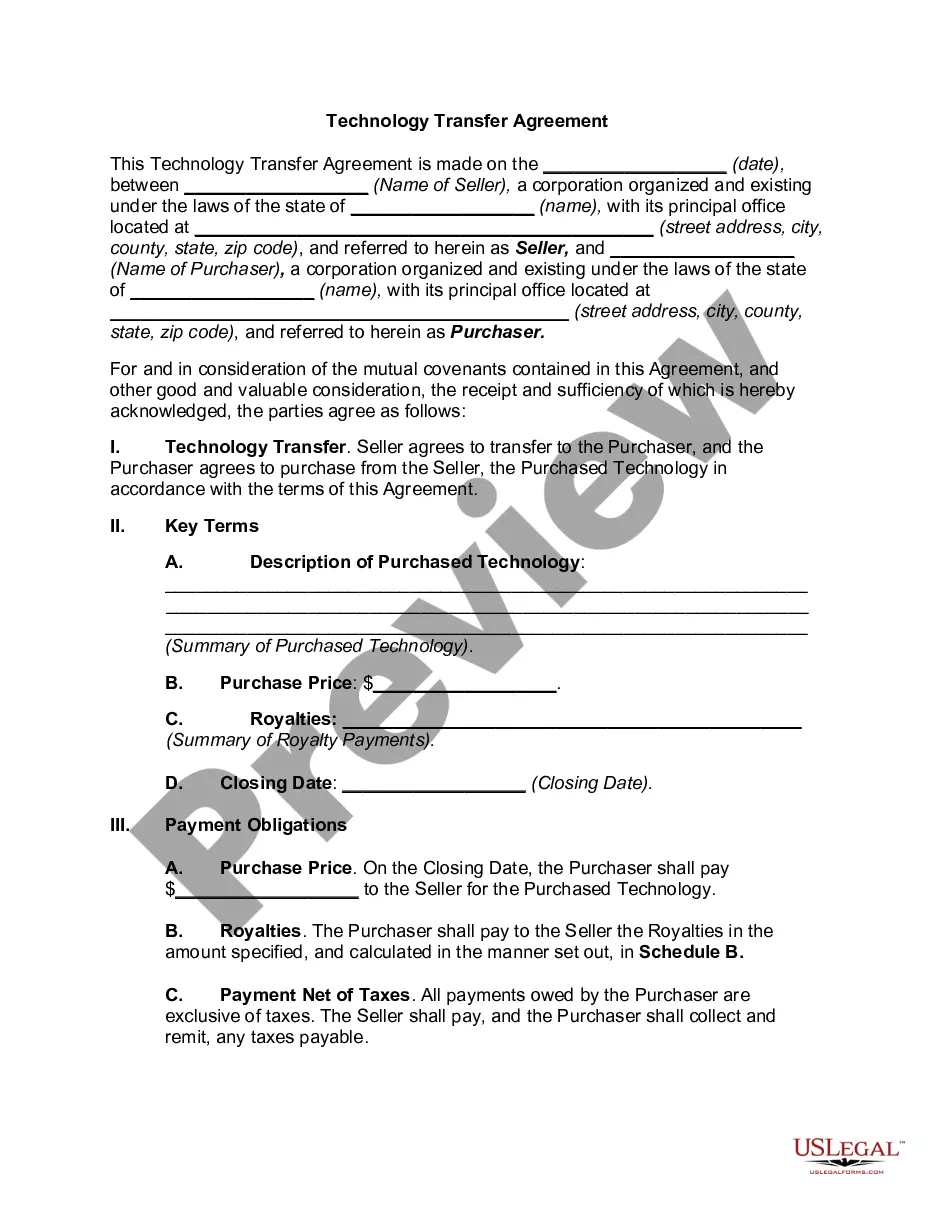
A technology license regarding force is a legal agreement that permits a party to use a specific technology within certain parameters. This type of license outlines the rights and responsibilities of both the technology owner and the licensee. It can cover various aspects, such as usage rights, duration, and financial arrangements, ensuring clarity for both parties involved.
To obtain a technology license regarding force, you should first identify the technology you wish to use. After that, it is important to seek permission from the technology’s owner or rights holder. You may need to draft a licensing agreement that outlines the terms of use, including any fees involved. Platforms like USLegalForms can help you create the necessary documents and guide you through this process.
Generally, there are three types of licensing agreements: exclusive, sole, or non-exclusive. In an exclusive license, the licensee is only the party that can use the licensed intellectual property.
Licensing Process STEP 1 ? Identify Technologies. ... STEP 2 ? Contact a Licensing & Patenting Manager. ... STEP 3 ? Complete and Submit a License Application. ... STEP 4 ? Review Model Agreement and Negotiate Terms. ... STEP 5 ? Receive the Completed License Agreement.
Technology licensing agreements allow technology companies to be compensated for the use of their software or intellectual property. The technology licensing agreement often includes payment or deposit, registration and licensing keys, and whether the company can sublicense the software or intellectual property.
For example, a book publisher may enter a licensing agreement with another party to use a piece of artwork on the hardcover editions of a book, but not on the covers of subsequent paperback issuances. The publisher may also be restricted from using the artistic image in certain advertising campaigns.
An example of a licensing agreement is a contract between the copyright holders of software and another company, allowing the latter to use the computer software for their daily business operations.