Trust Agreement
Description

Get your form ready online
Our built-in tools help you complete, sign, share, and store your documents in one place.
Make edits, fill in missing information, and update formatting in US Legal Forms—just like you would in MS Word.
Download a copy, print it, send it by email, or mail it via USPS—whatever works best for your next step.
Sign and collect signatures with our SignNow integration. Send to multiple recipients, set reminders, and more. Go Premium to unlock E-Sign.
If this form requires notarization, complete it online through a secure video call—no need to meet a notary in person or wait for an appointment.
We protect your documents and personal data by following strict security and privacy standards.

Make edits, fill in missing information, and update formatting in US Legal Forms—just like you would in MS Word.

Download a copy, print it, send it by email, or mail it via USPS—whatever works best for your next step.

Sign and collect signatures with our SignNow integration. Send to multiple recipients, set reminders, and more. Go Premium to unlock E-Sign.

If this form requires notarization, complete it online through a secure video call—no need to meet a notary in person or wait for an appointment.

We protect your documents and personal data by following strict security and privacy standards.
Looking for another form?


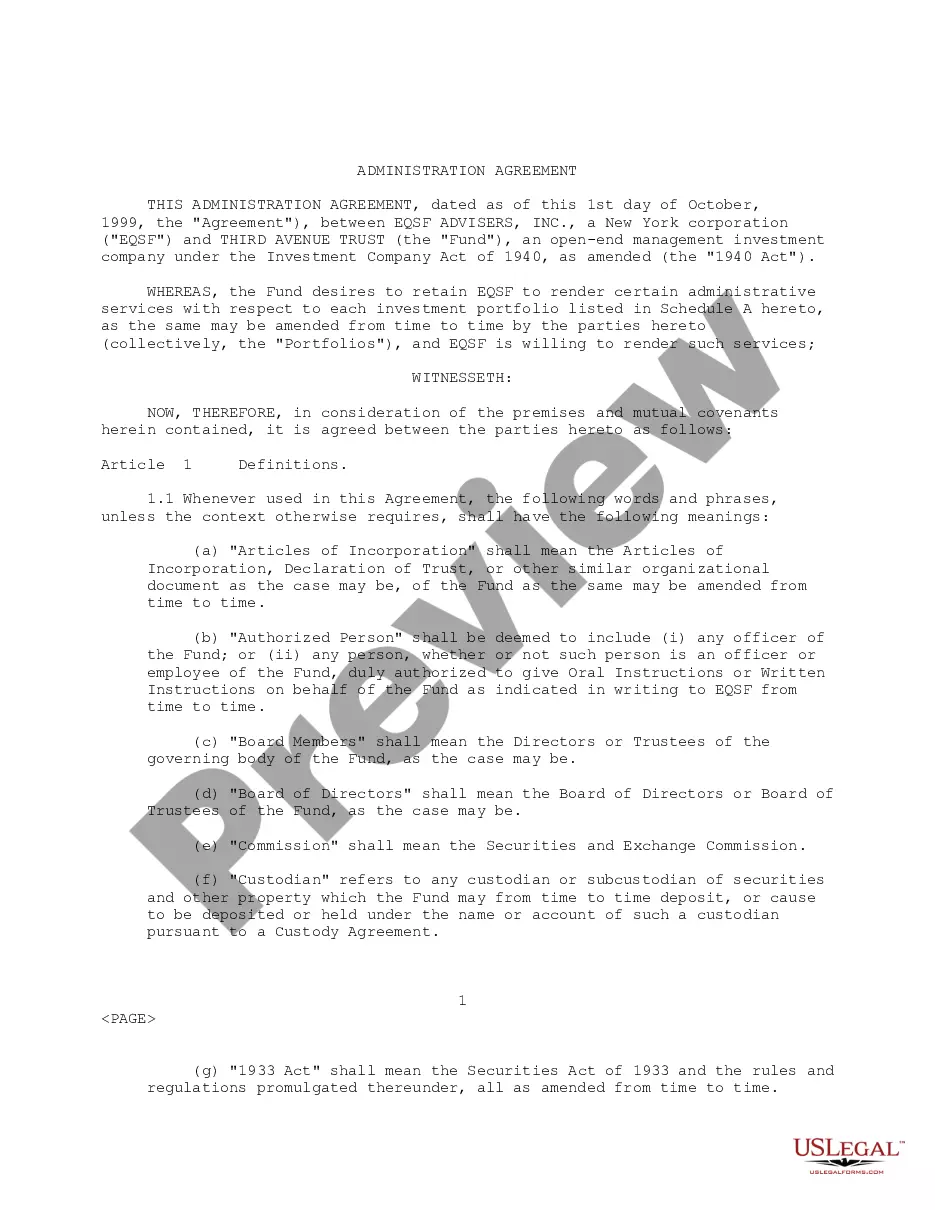
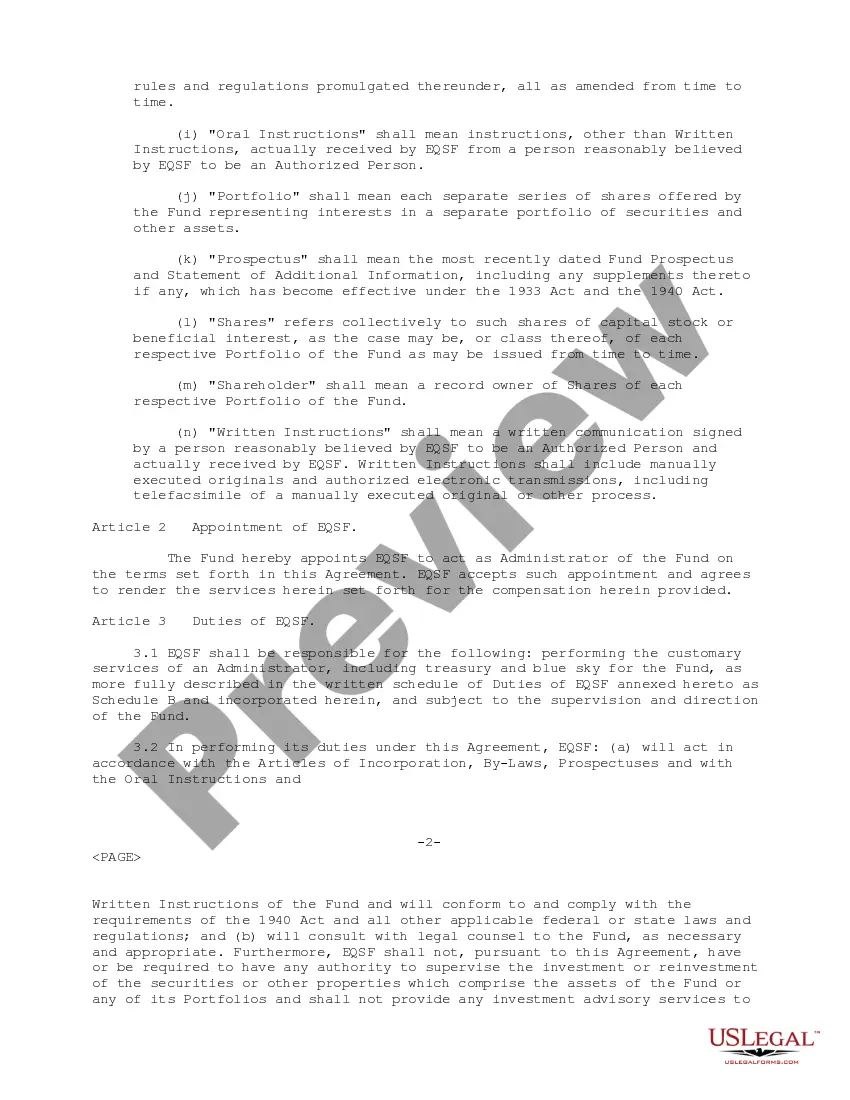
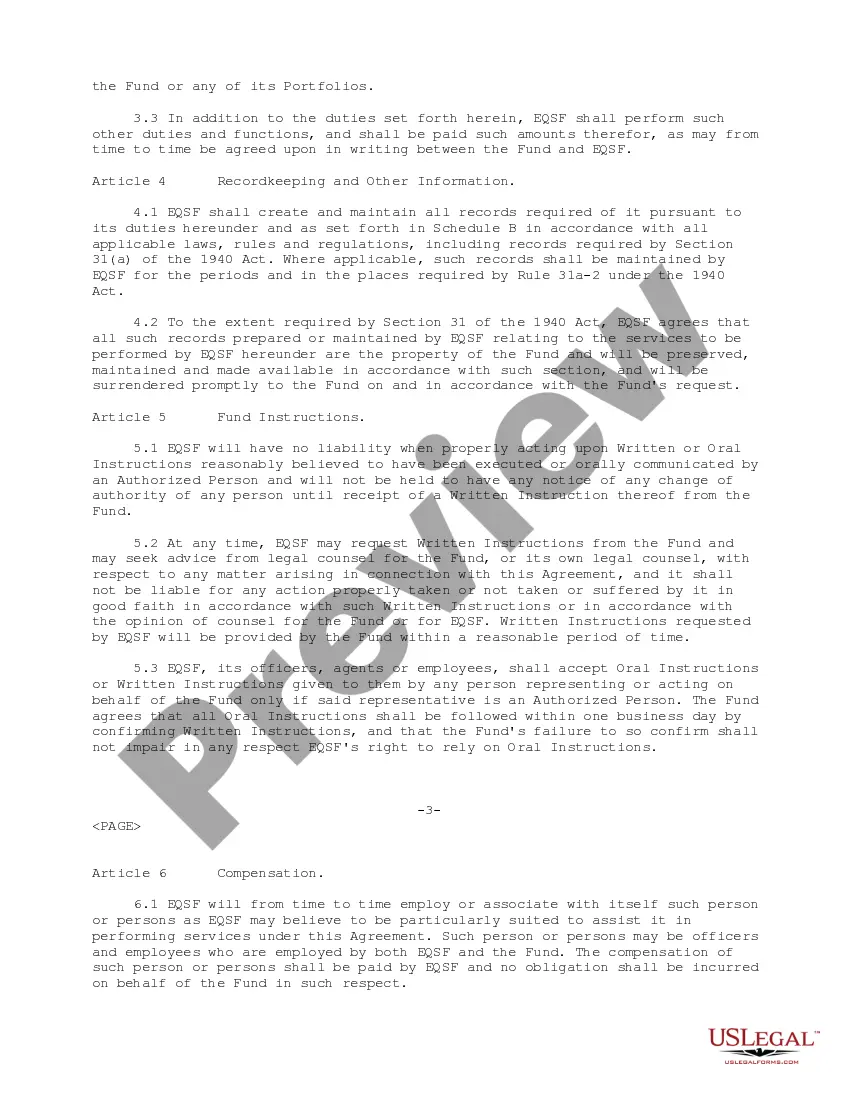
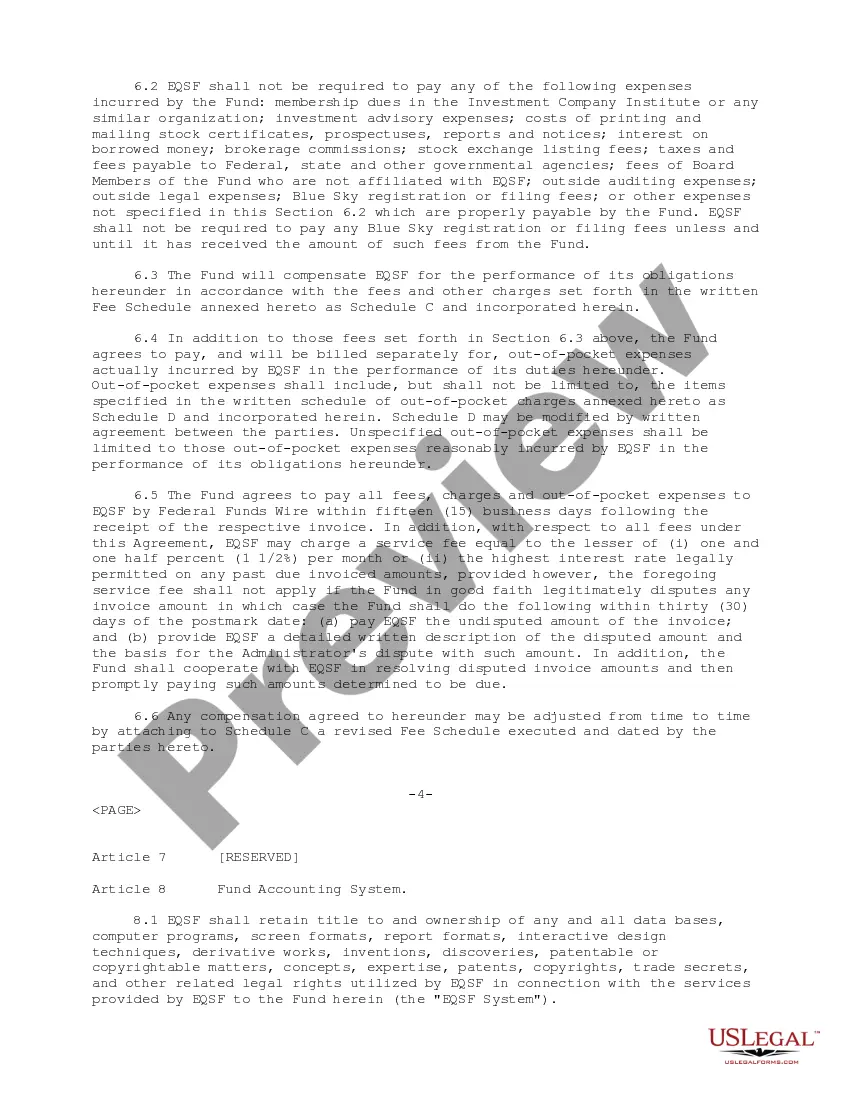
How to fill out Administration Agreement Between EQSF Advisors, Inc. And Third Avenue Trust Regarding Retaining EQSF To Render Administrative Services With Respect To Investment?
- Log in to your account at US Legal Forms. If this is your first time, create an account to gain access to exclusive resources.
- Browse the extensive online library and locate the trust agreement template that meets your specific needs and jurisdiction.
- Review the template in Preview mode to ensure it accurately reflects your requirements.
- Select the template and click on the 'Buy Now' button to choose a suitable subscription plan.
- Complete the purchase by entering your payment details through credit card or PayPal.
- Download the completed trust agreement form to your device and access it anytime through the 'My Forms' section of your profile.
Upon completing these steps, you will have your trust agreement ready for execution.
US Legal Forms makes it straightforward to create legally sound documents quickly. Explore the benefits today and start creating your trust agreement!
Form popularity
FAQ
Deciding whether to gift a house or put it in a trust depends on your financial and estate planning goals. Gifting may result in immediate tax implications and transfer concerns. In contrast, placing the house in a trust can provide a structured approach to asset management and distribution, extending control over the property. Consulting with professionals at US Legal Forms can provide tailored advice based on your unique situation.
One significant downfall of having a trust is the potential for complex legal requirements and the need for ongoing management. Trusts can be more costly to establish than a will, and changes to the trust may require legal assistance, adding to the expense. Additionally, understanding the tax implications and restrictions on assets can be challenging. Engaging with resources like US Legal Forms can simplify the process and ensure you meet regulations.
A nursing home may be able to access your house under certain conditions, even if it is in a trust. Typically, if you set up a revocable trust, you might still maintain control of your assets, which could affect Medicaid eligibility. However, irrevocable trusts can offer more protection. It's important to understand each type and consult with an expert to effectively safeguard your assets.
The major disadvantage of a trust is that it requires a thorough understanding and careful management. Unlike a will, a trust agreement can be complex, and any mismanagement may lead to disputes or unintended consequences. Some individuals might find the initial time and financial investment daunting. Consulting with a knowledgeable resource, such as US Legal Forms, can alleviate these concerns.
While a trust agreement offers many advantages, there are some disadvantages to consider. Trusts can incur setup fees, ongoing maintenance costs, and potential tax implications. Additionally, certain types of trusts may limit your control over the assets during your lifetime. Understanding these factors is crucial, and resources like US Legal Forms can help clarify your options.
To file a trust agreement, you typically need a trust document that outlines the terms and conditions of the trust. This document may need to be signed in front of witnesses or notarized, depending on state laws. You might also need additional forms for specific types of trusts, such as revocable or irrevocable trusts. For precise guidance, consider using platforms like US Legal Forms, which offer tailored templates and instructions.
To obtain proof of trust, you should request a certificate of trust from the trustee or access the original trust agreement. This documentation verifies the trust's existence and outlines its terms. If needed, USLegalForms can provide templates to create or organize necessary proof of trust easily.
You can prove you have a trust by presenting the trust agreement along with a certificate of trust if applicable. These documents serve as legal evidence of the trust's existence and terms. If you need further validation or assistance, consider using USLegalForms to create necessary documentation that confirms your trust status.
Yes, in many cases, you can look up trust documents online, depending on state regulations and whether the trust is a public trust or under a court's jurisdiction. Some databases and document retrieval services are available for finding relevant trust agreements. However, if the trust is private, you may need to contact the trustee directly. USLegalForms can assist you with tutorials on accessing these documents efficiently.
Typically, the trust agreement is prepared by the grantor, who establishes the trust, often with legal assistance. Legal professionals can provide guidance to ensure the trust agreement meets legal standards and reflects the grantor's intentions. Using USLegalForms, you can access user-friendly templates that simplify drafting your trust agreement without needing extensive legal knowledge.