Distribution Agreement Trust With Franking Credits
Description


Get your form ready online
Our built-in tools help you complete, sign, share, and store your documents in one place.
Make edits, fill in missing information, and update formatting in US Legal Forms—just like you would in MS Word.
Download a copy, print it, send it by email, or mail it via USPS—whatever works best for your next step.
Sign and collect signatures with our SignNow integration. Send to multiple recipients, set reminders, and more. Go Premium to unlock E-Sign.
If this form requires notarization, complete it online through a secure video call—no need to meet a notary in person or wait for an appointment.
We protect your documents and personal data by following strict security and privacy standards.

Make edits, fill in missing information, and update formatting in US Legal Forms—just like you would in MS Word.

Download a copy, print it, send it by email, or mail it via USPS—whatever works best for your next step.

Sign and collect signatures with our SignNow integration. Send to multiple recipients, set reminders, and more. Go Premium to unlock E-Sign.

If this form requires notarization, complete it online through a secure video call—no need to meet a notary in person or wait for an appointment.

We protect your documents and personal data by following strict security and privacy standards.
Looking for another form?







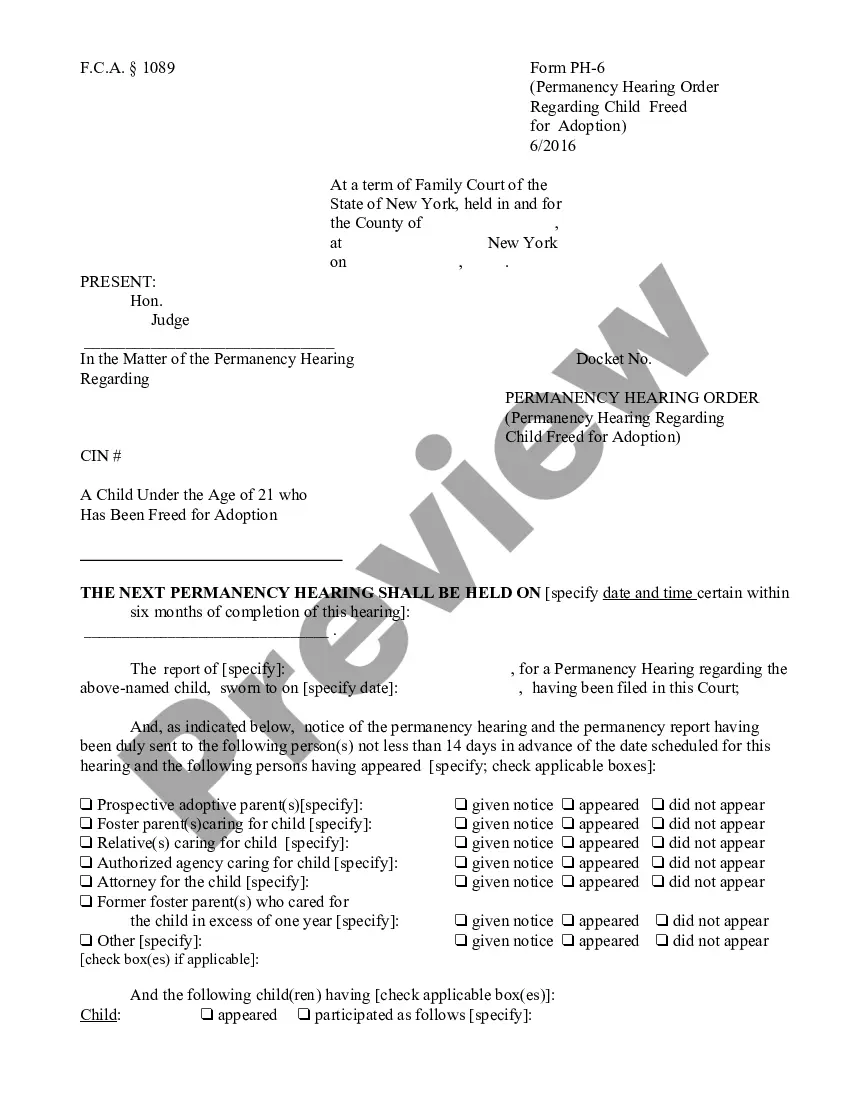

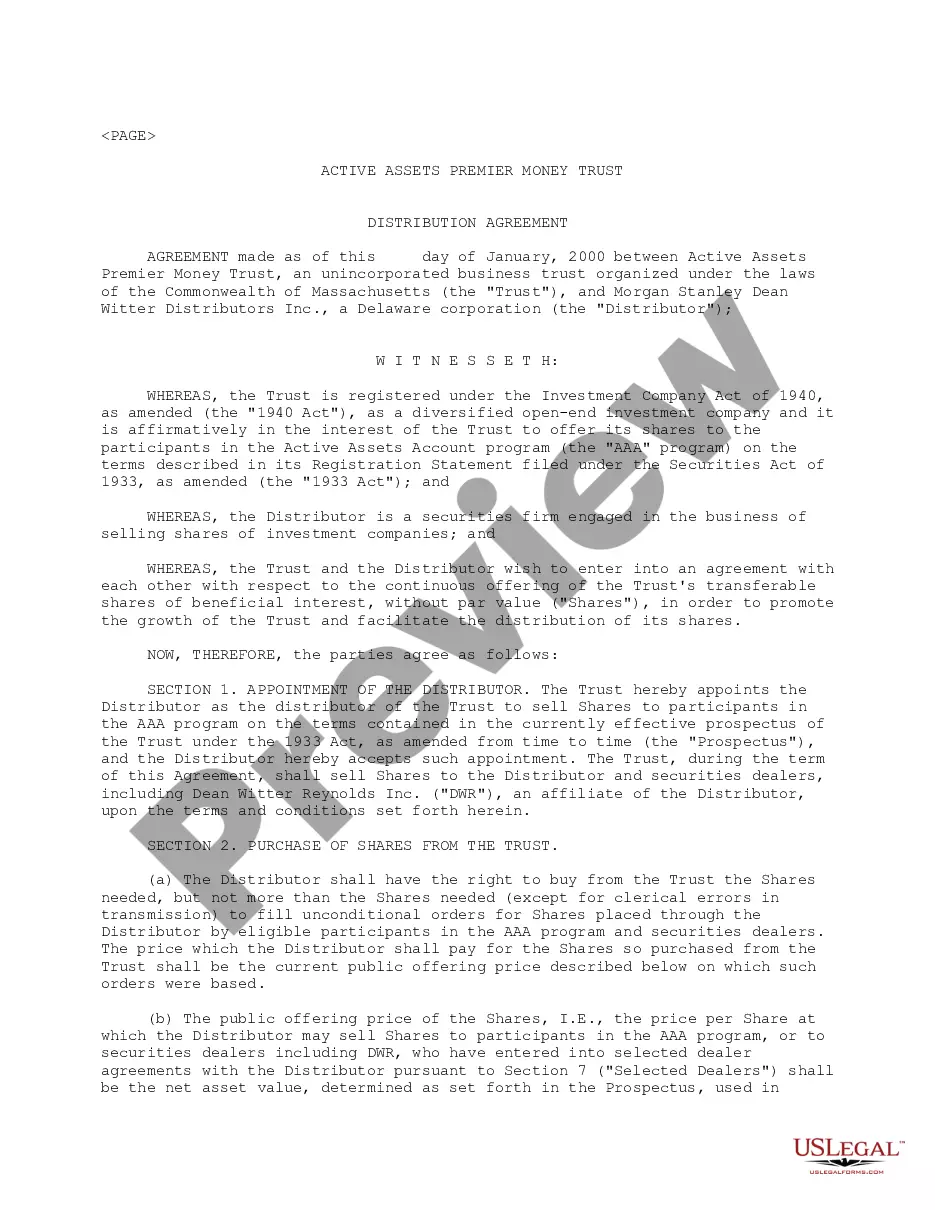
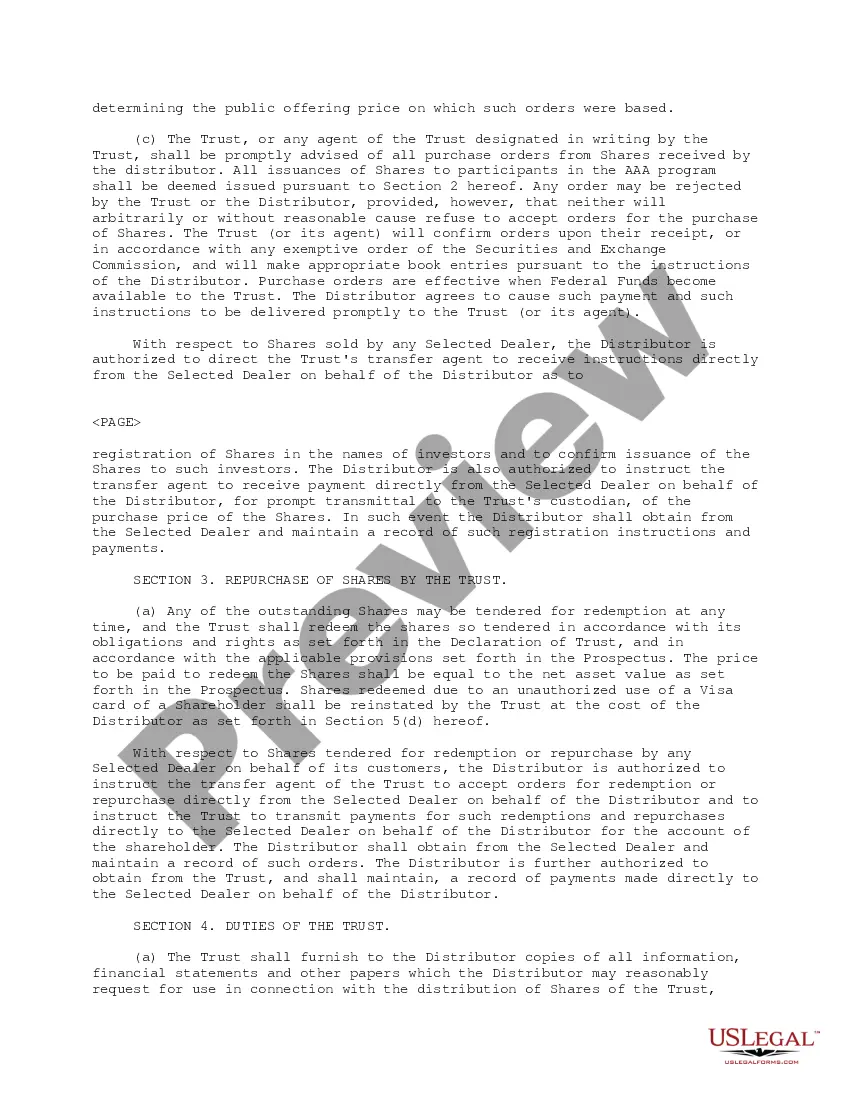
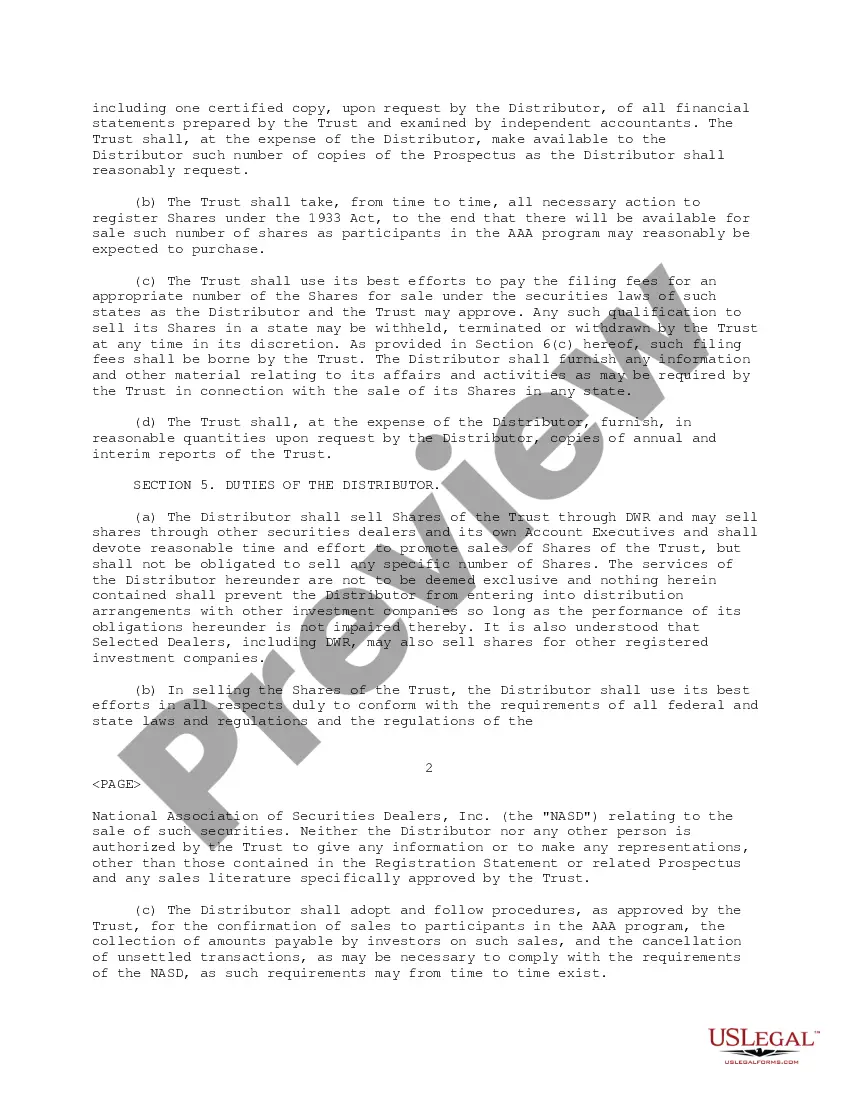
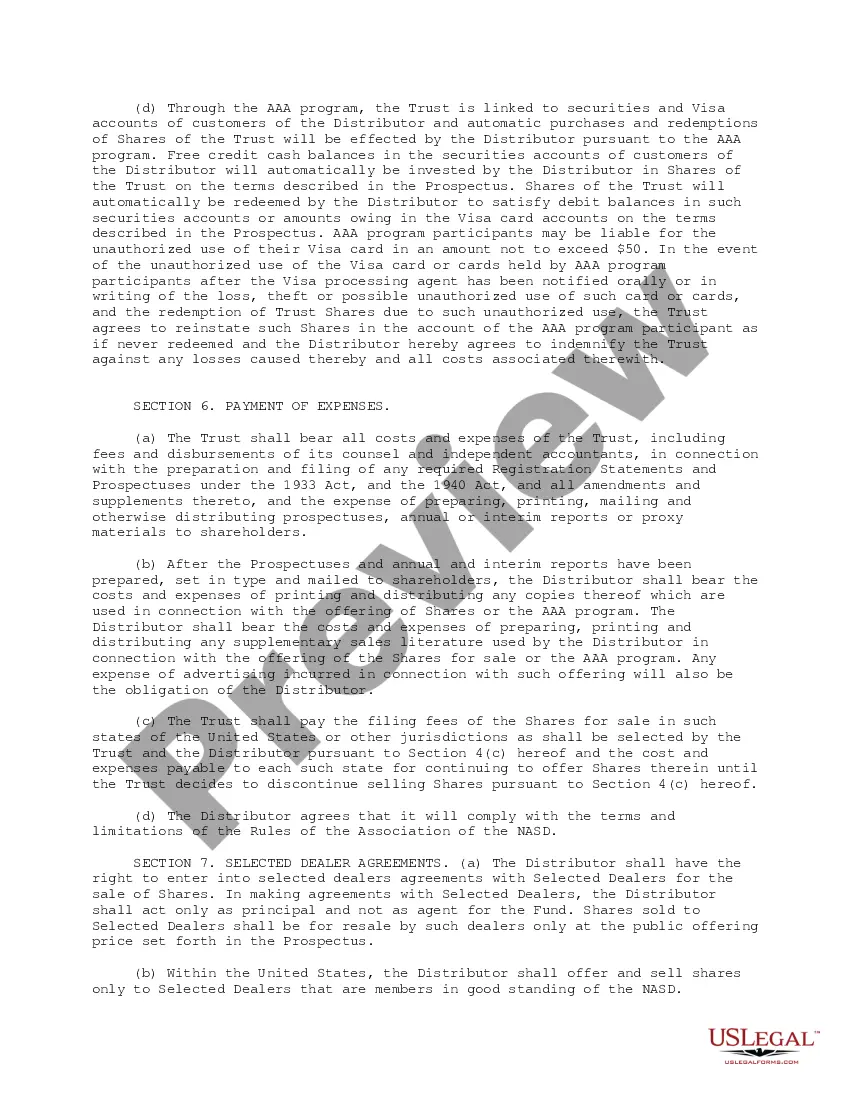
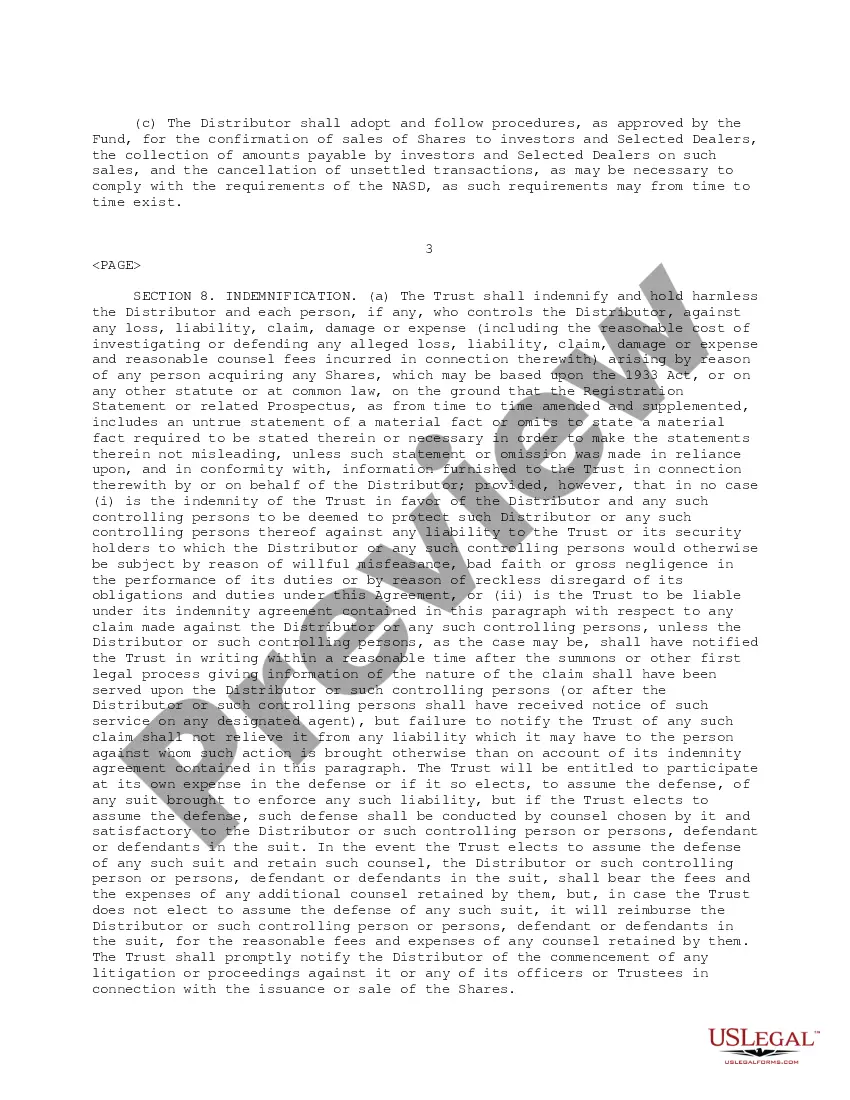
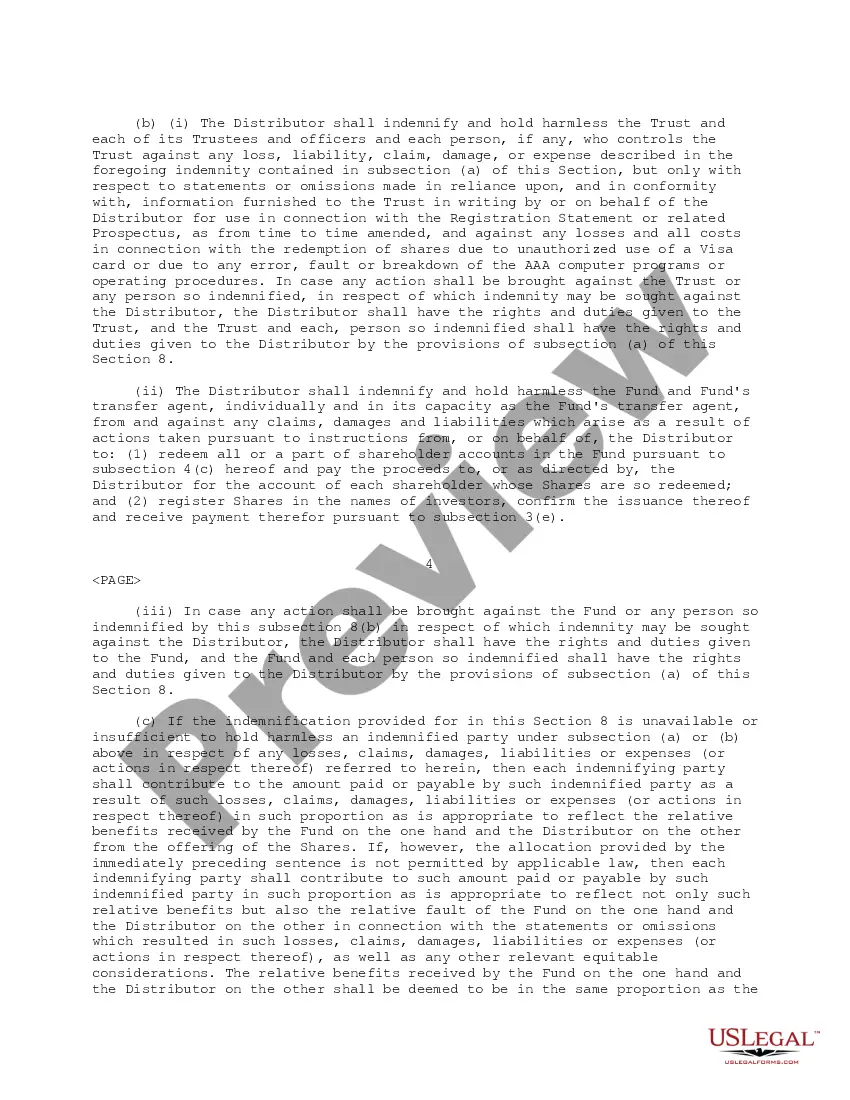
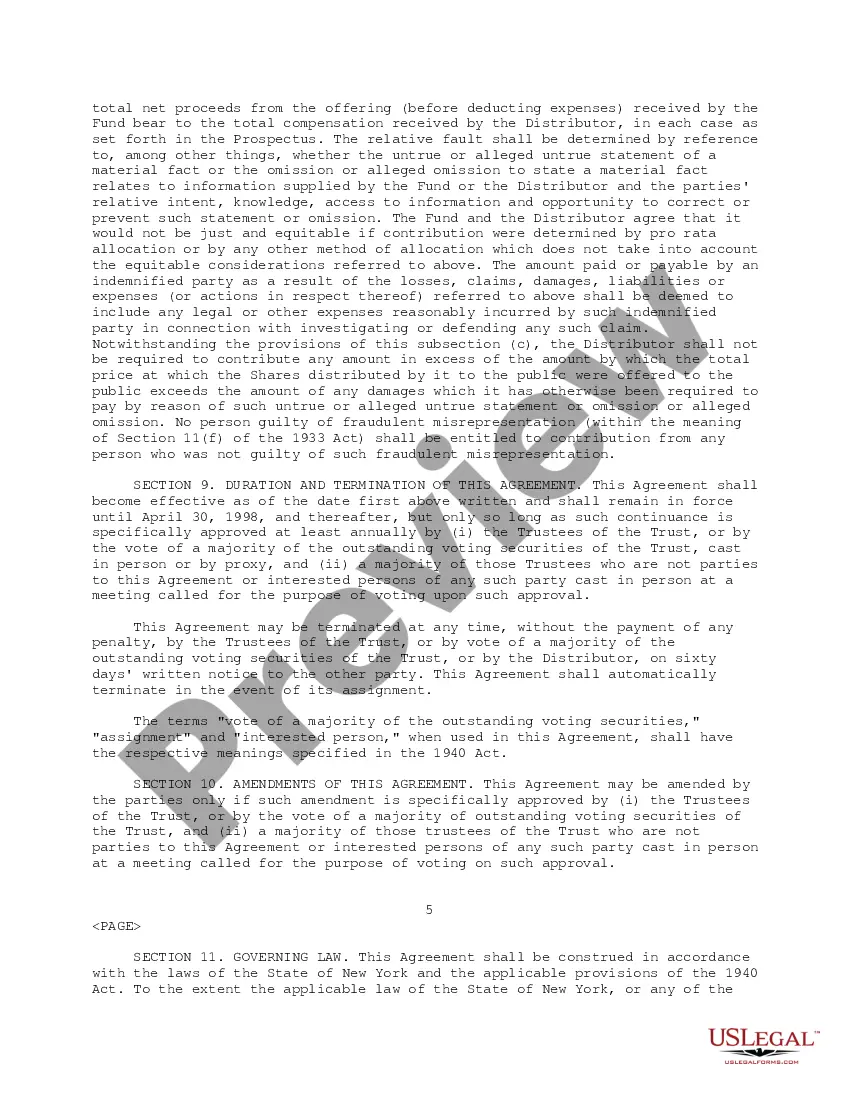
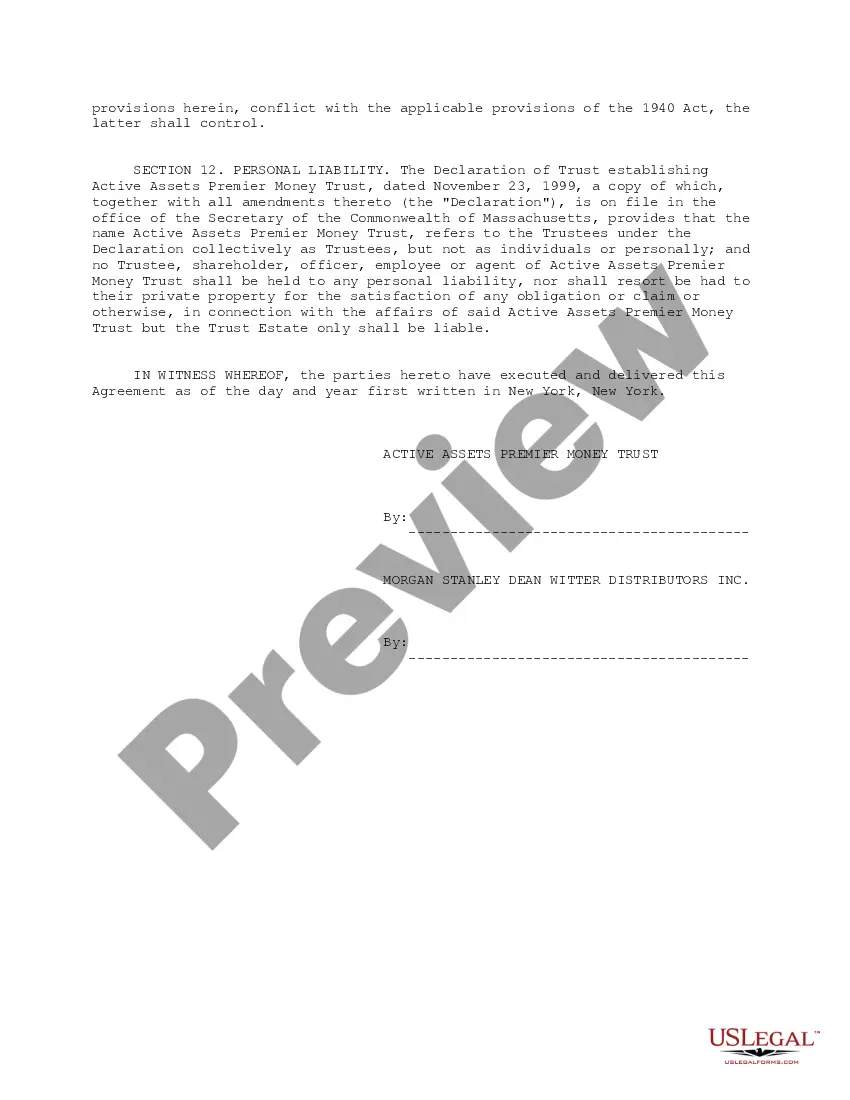
How to fill out Distribution Agreement Regarding The Continuous Offering Of The Trust's Transferable Shares Of Beneficial Interest?
Individuals often link legal documentation with a level of complexity that only an expert can handle.
In some respects, this is accurate, as composing a Distribution Agreement Trust With Franking Credits necessitates a comprehensive knowledge of subject matter standards, including federal and local statutes.
Nonetheless, with US Legal Forms, the process has become more user-friendly: pre-prepared legal documents for any personal or business scenario tailored to state laws are compiled in a singular online repository and are now accessible to all.
All templates within our repository are reusable: once obtained, they remain saved in your profile. You can maintain access to them whenever required via the My documents tab. Explore all the benefits of utilizing the US Legal Forms platform. Subscribe today!
- Investigate the page content carefully to confirm it aligns with your needs.
- Examine the form description or validate it using the Preview option.
- Search for an alternate template using the Search bar above if the previous one does not meet your criteria.
- Select Buy Now once you identify the appropriate Distribution Agreement Trust With Franking Credits.
- Choose the pricing plan that fits your needs and budget.
- Establish an account or Log In to proceed to the payment interface.
- Complete the payment for your subscription via PayPal or with your credit card.
- Select the format for your document and click Download.
- Print your document or upload it to an online editor for quicker completion.
Form popularity
FAQ
A beneficiary who is specifically entitled to a capital gain or franked distribution that has been received by a trust is generally assessed for tax on the gain or distribution. They also get the benefit of any franking credits attached to a franked dividends (subject to integrity rules).
If you are the beneficiary of a trust and the trust makes a loss for tax purposes, there is no net income of the trust and any franking credit is lost. Trust losses cannot be distributed to beneficiaries.
Trustees who are eligible for a refund of excess imputation credits can claim the refund in their trust tax return. They must retain the dividend statements from the company that paid the franked dividends or the trust that made the franked distributions in their records.
Trusts. A trustee receiving a franked dividend includes both the amount of the dividend and the franking credit in the trust's assessable income when calculating the trust's taxable income or loss. This is subject to the trust satisfying the integrity rules.
The amount of a franking credit may be included in the calculation of the trust's net income under subsection 207-35(1) of the ITAA 1997, but does not form part of the distributable income of the trust estate.