Agreement Exclusive Supply For Contracting
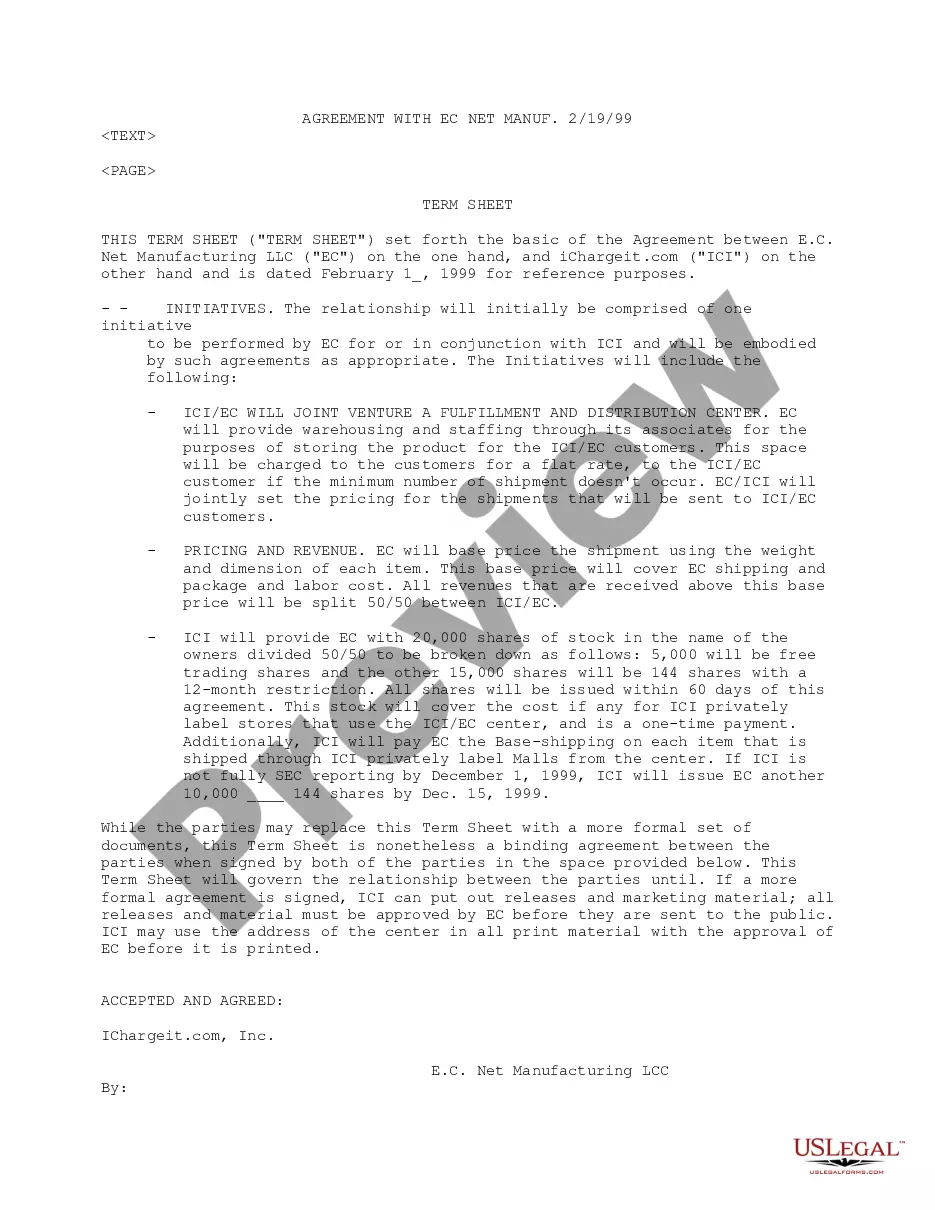
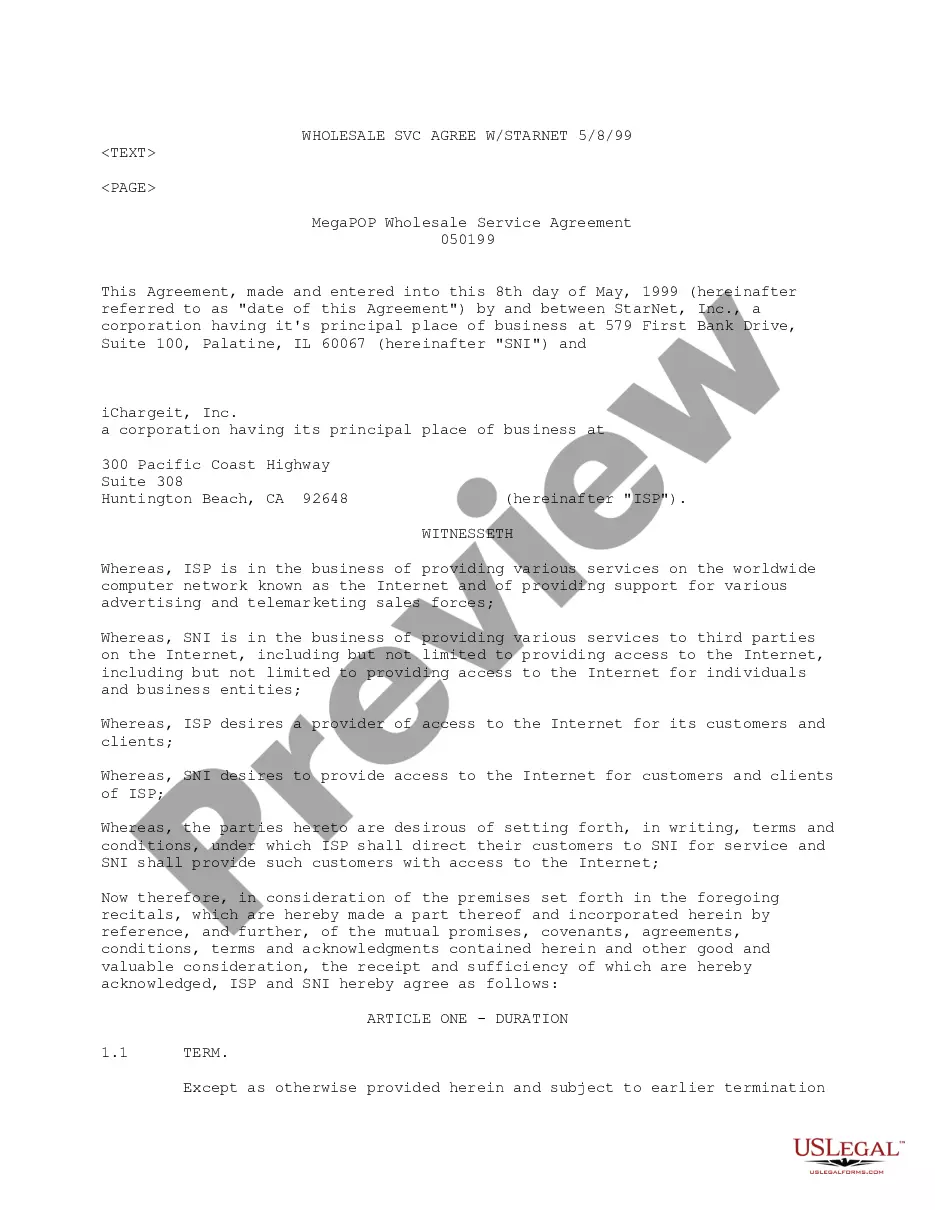
Description

Get your form ready online
Our built-in tools help you complete, sign, share, and store your documents in one place.
Make edits, fill in missing information, and update formatting in US Legal Forms—just like you would in MS Word.
Download a copy, print it, send it by email, or mail it via USPS—whatever works best for your next step.
Sign and collect signatures with our SignNow integration. Send to multiple recipients, set reminders, and more. Go Premium to unlock E-Sign.
If this form requires notarization, complete it online through a secure video call—no need to meet a notary in person or wait for an appointment.
We protect your documents and personal data by following strict security and privacy standards.

Make edits, fill in missing information, and update formatting in US Legal Forms—just like you would in MS Word.

Download a copy, print it, send it by email, or mail it via USPS—whatever works best for your next step.

Sign and collect signatures with our SignNow integration. Send to multiple recipients, set reminders, and more. Go Premium to unlock E-Sign.

If this form requires notarization, complete it online through a secure video call—no need to meet a notary in person or wait for an appointment.

We protect your documents and personal data by following strict security and privacy standards.
Looking for another form?









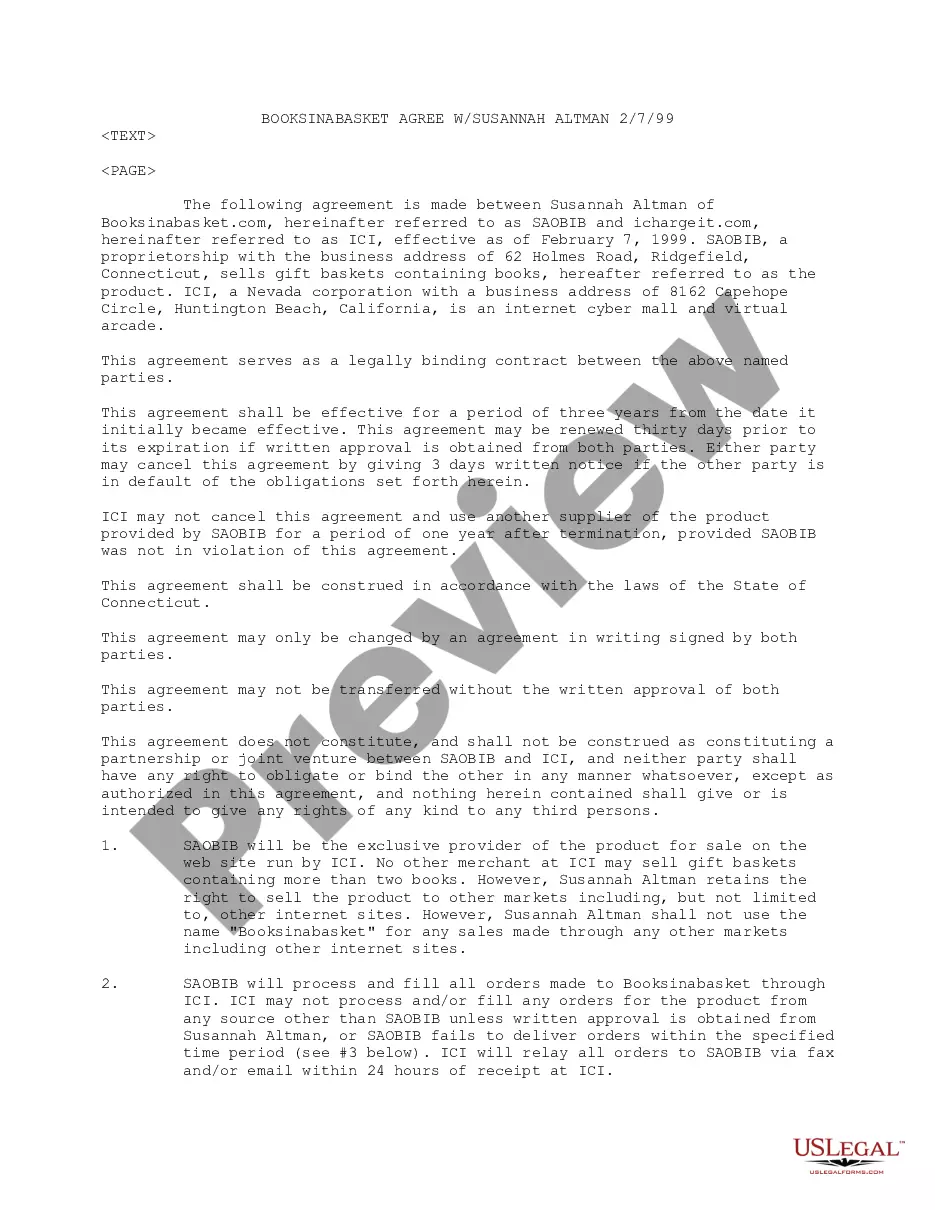
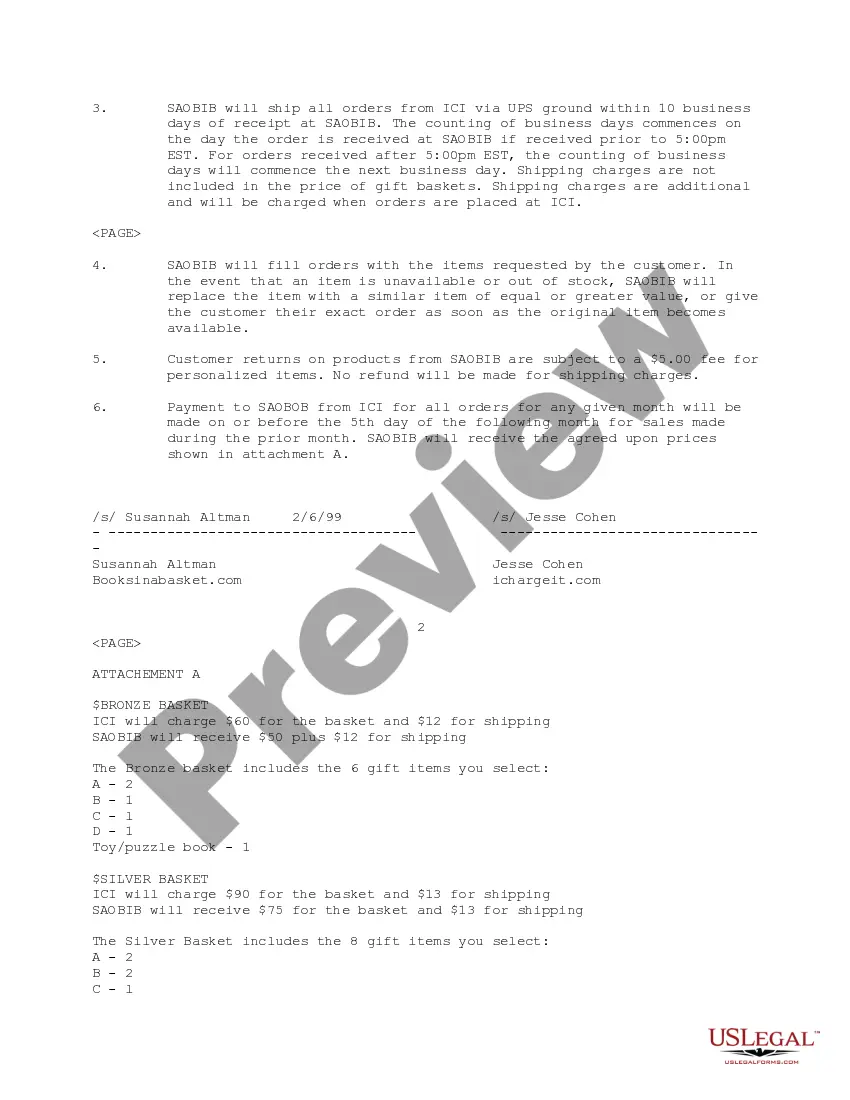
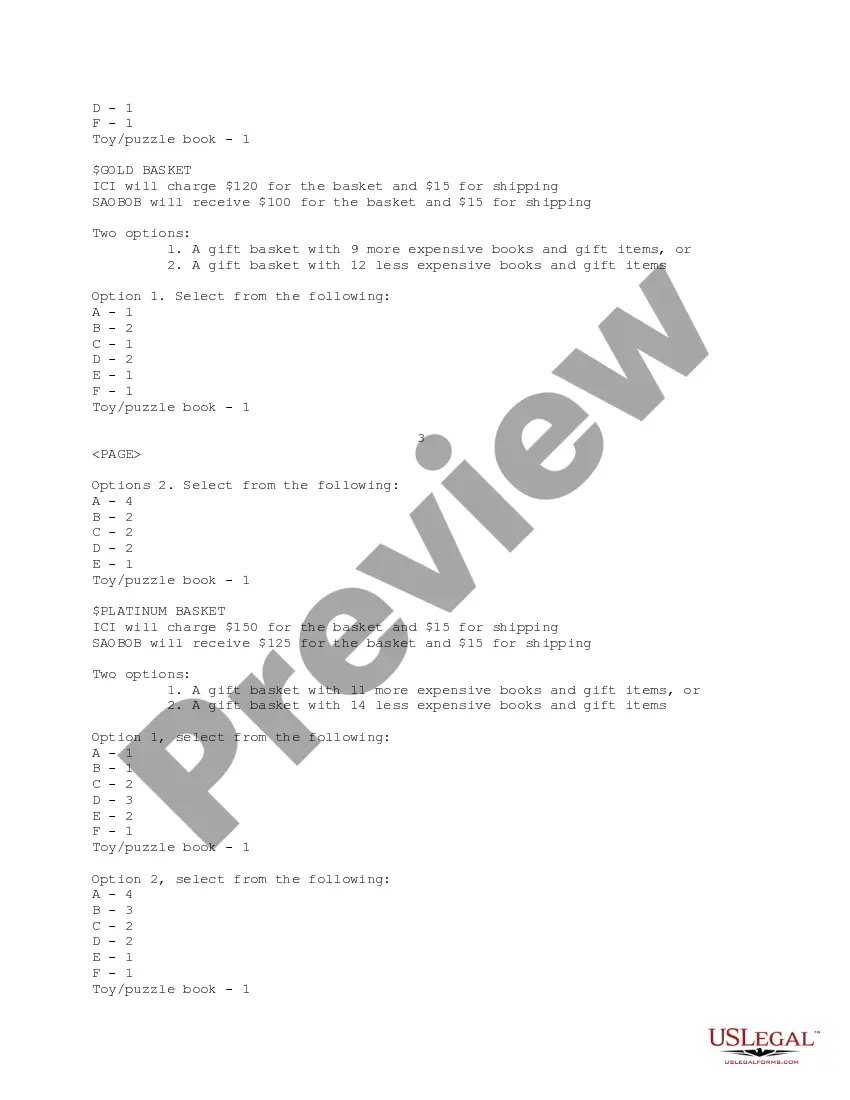
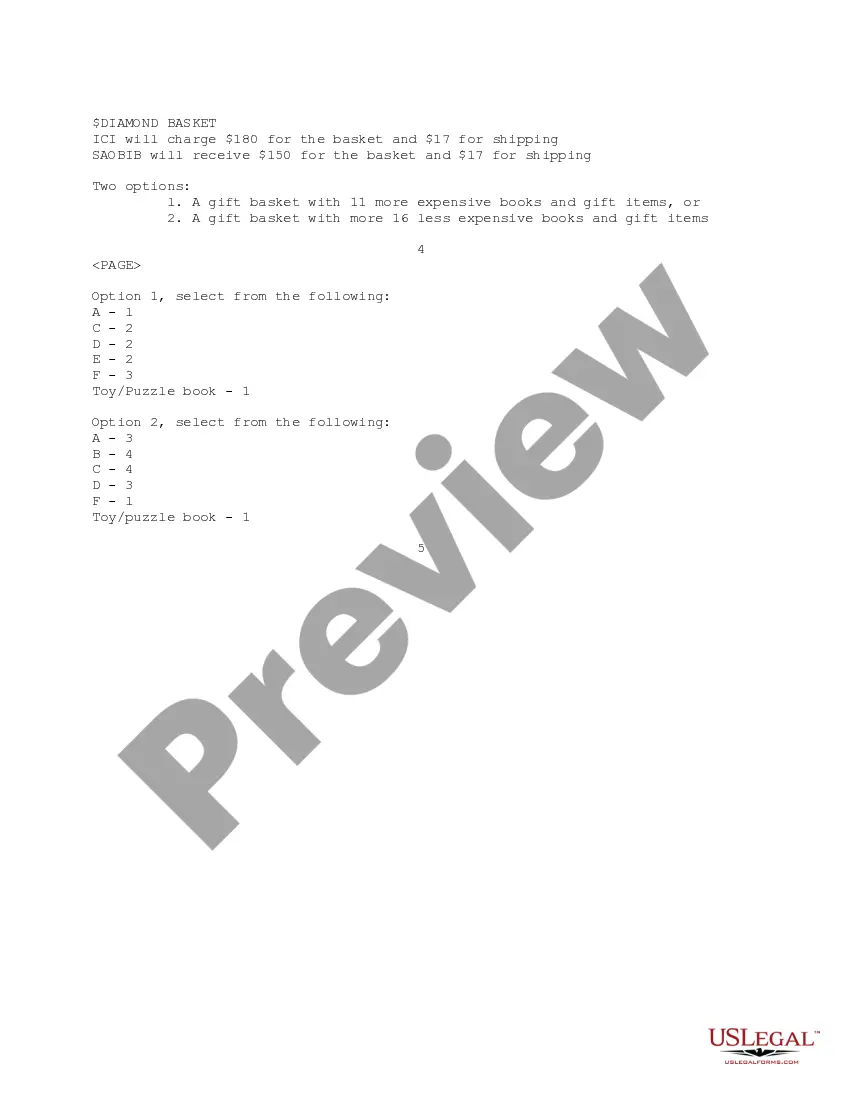
How to fill out Agreement Between Bookinabasket.Com And Ichargeit.Com, Inc. Regarding Exclusive Supply Of Product?
- Log in to your existing US Legal Forms account to access previously downloaded documents. Ensure that your subscription is active; if not, renew it accordingly.
- For new users, begin by examining the form descriptions and utilizing the Preview mode to confirm that the agreement exclusive supply for contracting meets your specific needs and local jurisdiction criteria.
- If you require a different template, utilize the Search tab to find suitable alternatives. Once you locate the appropriate form, proceed to the next step.
- Select the preferred version of the document by clicking the Buy Now button, then choose a subscription plan. You will need to create an account to access the extensive library.
- Complete your purchase by providing payment details via credit card or PayPal.
- Finally, download the form to your device. It will also be available in the My Forms section of your profile for future access.
In conclusion, US Legal Forms offers a robust collection of over 85,000 editable and fillable templates, ensuring that you can find the perfect legal document for your needs. With the option of consulting premium experts, you can ensure your forms are not only correctly filled out but also legally sound.
Start your journey today by signing up for US Legal Forms and discover the advantages of having quick access to essential legal documents!
Form popularity
FAQ
Yes, exclusive agreements are legal in the U.S. as long as they do not violate antitrust laws. These agreements can help parties streamline operations and solidify partnerships for mutual benefit. When forming an agreement exclusive supply for contracting, it is crucial to consider the competitive landscape to ensure compliance and sustainability.
The exclusivity clause in a supplier agreement grants the supplier exclusive rights to provide specific goods or services to a particular buyer. This clause helps ensure that the supplier maintains a focused relationship with the buyer, eliminating conflict with other distributors. Understanding the terms of this agreement is essential when entering into an agreement exclusive supply for contracting, as it can affect supply chain dynamics.
No, exclusive dealing contracts are not always illegal; their legality depends on the context and effects on competition. Courts often evaluate these contracts based on whether they substantially lessen competition or create monopolistic conditions. By carefully crafting an agreement exclusive supply for contracting, businesses can create legitimate and beneficial exclusivity arrangements.
Yes, exclusive distribution agreements are legal in the United States, provided they comply with antitrust laws. These laws prevent businesses from engaging in practices that restrain trade and competition. When structured correctly, an agreement exclusive supply for contracting can be beneficial for manufacturers and distributors alike, fostering a reliable supply chain.
An example of an exclusive supply agreement is when a manufacturer grants a retailer the sole right to sell its products in a particular region. This type of agreement ensures that the retailer has a continuous stock of the manufacturer's goods without competition in that area. By entering into an agreement exclusive supply for contracting, both parties can build a strong partnership, leading to increased sales and brand awareness.
Exclusive dealing occurs when a supplier restricts a buyer from purchasing from competitors. For example, a manufacturer might require a retailer to sell only its products, thereby limiting the retailer’s ability to offer alternatives. This practice can create a strategic advantage in an agreement exclusive supply for contracting, leading to enhanced loyalty and branding for the involved parties.
Filling out a contract agreement involves several key steps. First, clearly define the parties involved and outline the terms of the agreement. Next, ensure you include details such as obligations, timelines, and compensation, making sure to cover aspects of an agreement exclusive supply for contracting, if applicable. Finally, review the contract thoroughly before both parties sign to confirm mutual understanding.
An exclusivity clause often appears in agreements that dictate a party's commitments. For instance, if a supplier agrees to sell only to a specific retailer, this creates an exclusive supply scenario. In the context of an agreement exclusive supply for contracting, this clause ensures that the retailer cannot source the same product from competitors, thereby protecting the supplier's market position.
A supplier exclusivity clause might state that a retailer agrees to sell only one brand of a specific product for a defined period. For example, a store could be required to sell only one brand of electronics, which restricts other brands from entering that market segment. This clause helps maintain strong supplier relationships while also providing clear terms for both parties. For more tailored solutions, exploring an agreement exclusive supply for contracting is a great option.
An exclusive agreement means one party agrees to work solely with another party, precluding relationships with competitors. This can apply in various contexts, including supplies, services, or distribution. By establishing trust and minimizing competition, businesses can thrive under exclusive arrangements. Utilizing an agreement exclusive supply for contracting ensures these important aspects are captured effectively.