Agreement And Disagreement Expressions
Description

Get your form ready online
Our built-in tools help you complete, sign, share, and store your documents in one place.
Make edits, fill in missing information, and update formatting in US Legal Forms—just like you would in MS Word.
Download a copy, print it, send it by email, or mail it via USPS—whatever works best for your next step.
Sign and collect signatures with our SignNow integration. Send to multiple recipients, set reminders, and more. Go Premium to unlock E-Sign.
If this form requires notarization, complete it online through a secure video call—no need to meet a notary in person or wait for an appointment.
We protect your documents and personal data by following strict security and privacy standards.

Make edits, fill in missing information, and update formatting in US Legal Forms—just like you would in MS Word.

Download a copy, print it, send it by email, or mail it via USPS—whatever works best for your next step.

Sign and collect signatures with our SignNow integration. Send to multiple recipients, set reminders, and more. Go Premium to unlock E-Sign.

If this form requires notarization, complete it online through a secure video call—no need to meet a notary in person or wait for an appointment.

We protect your documents and personal data by following strict security and privacy standards.
Looking for another form?





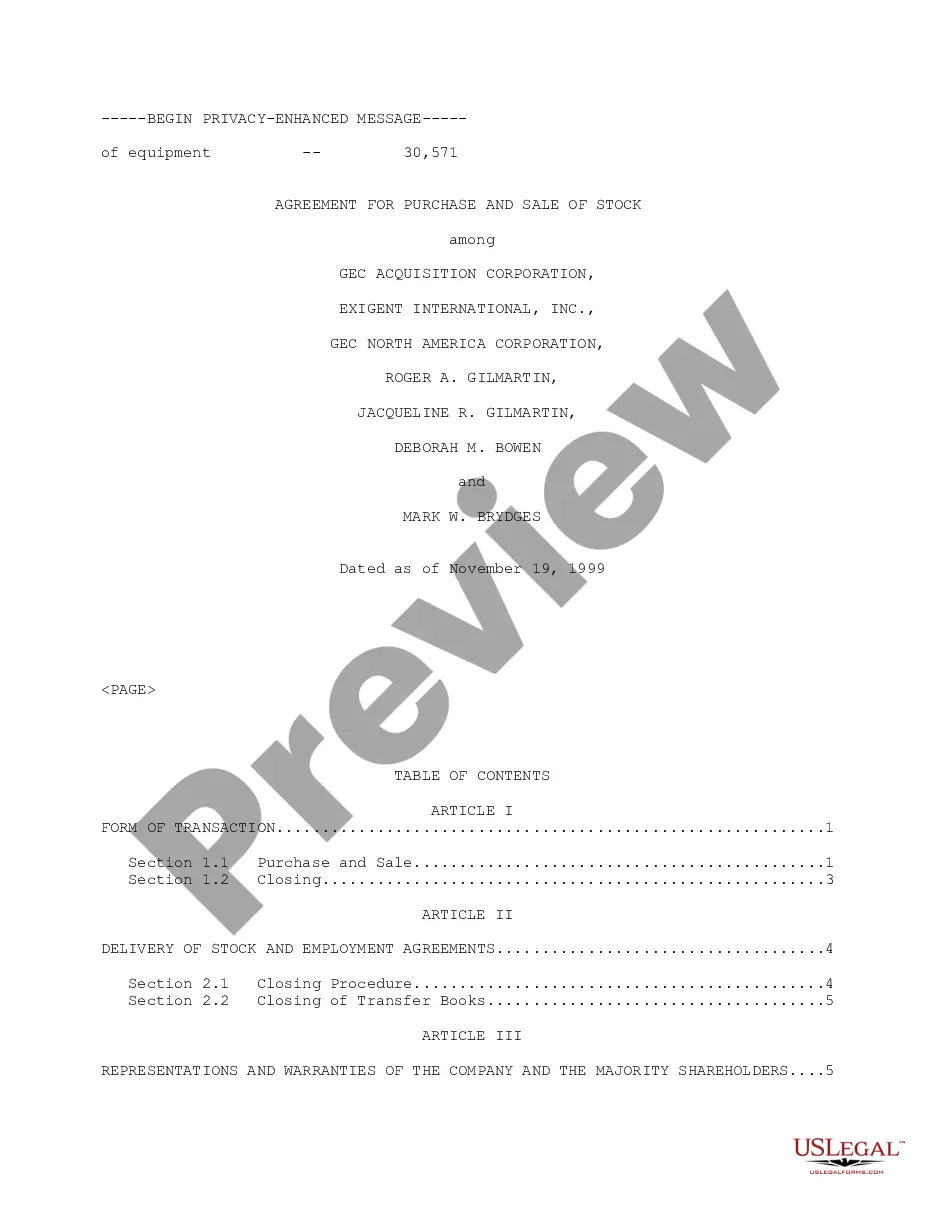
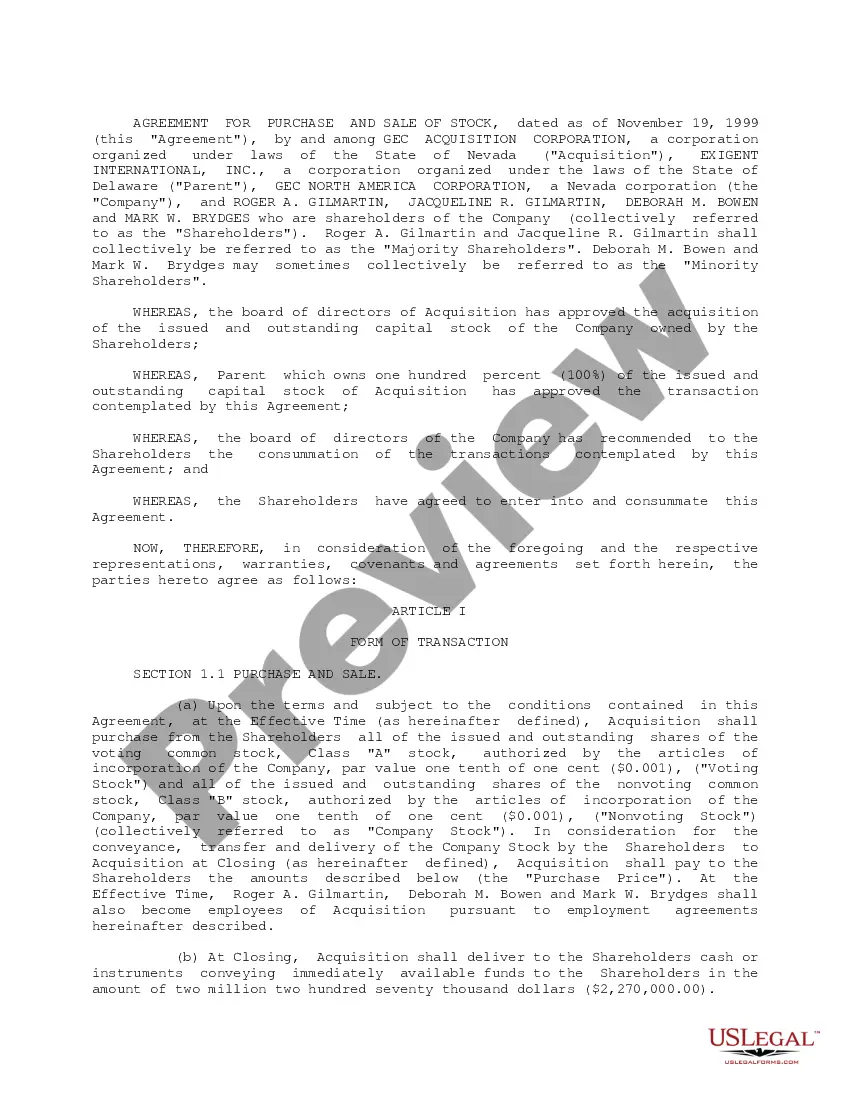
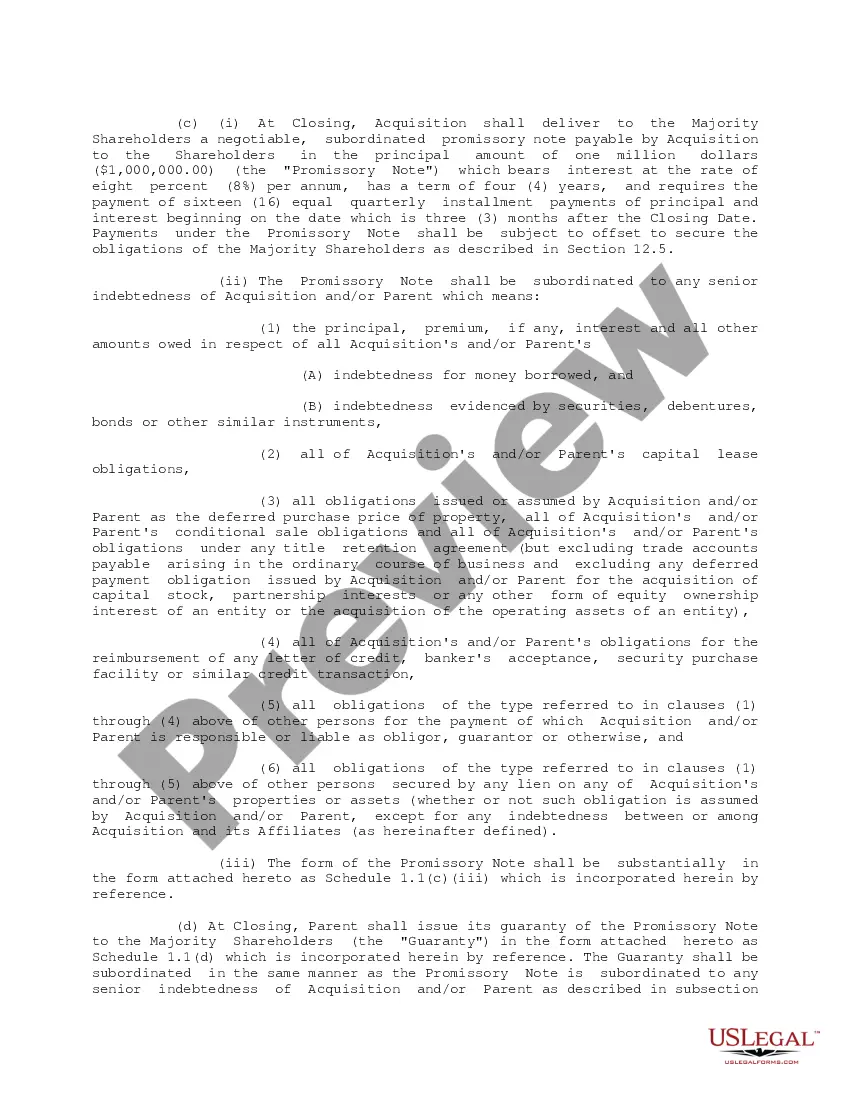
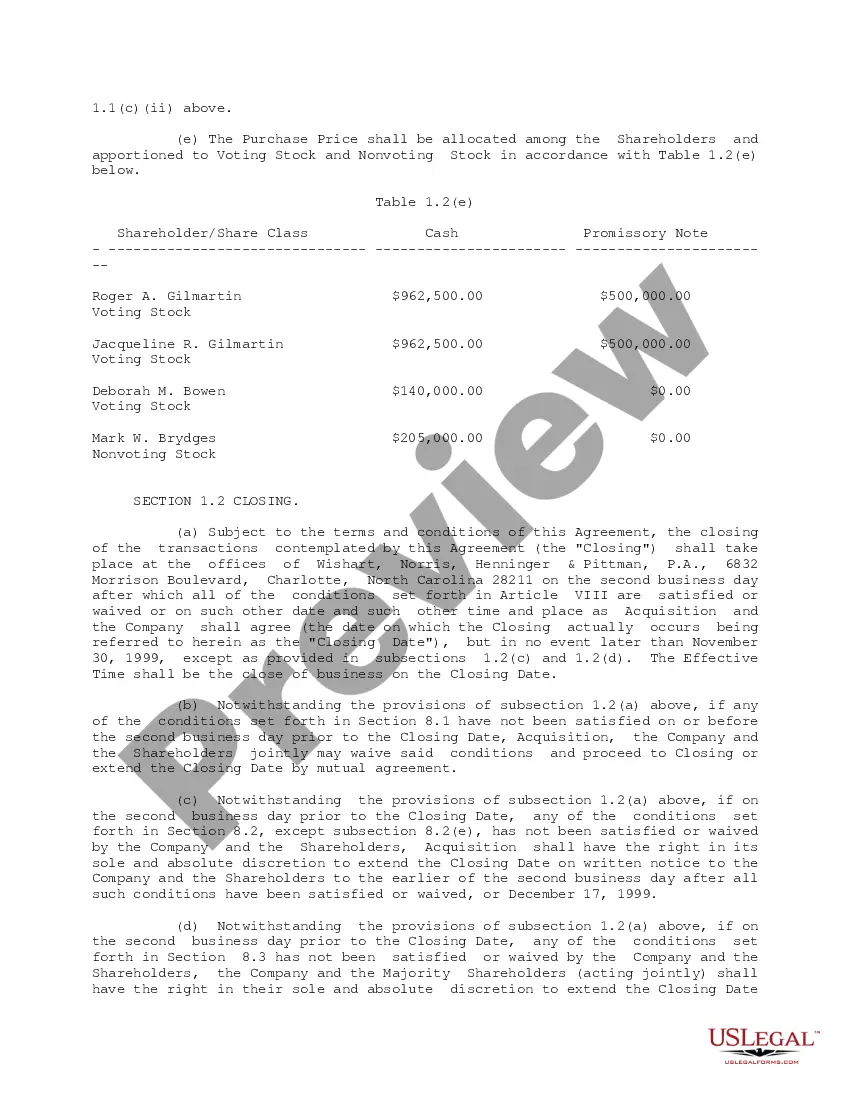
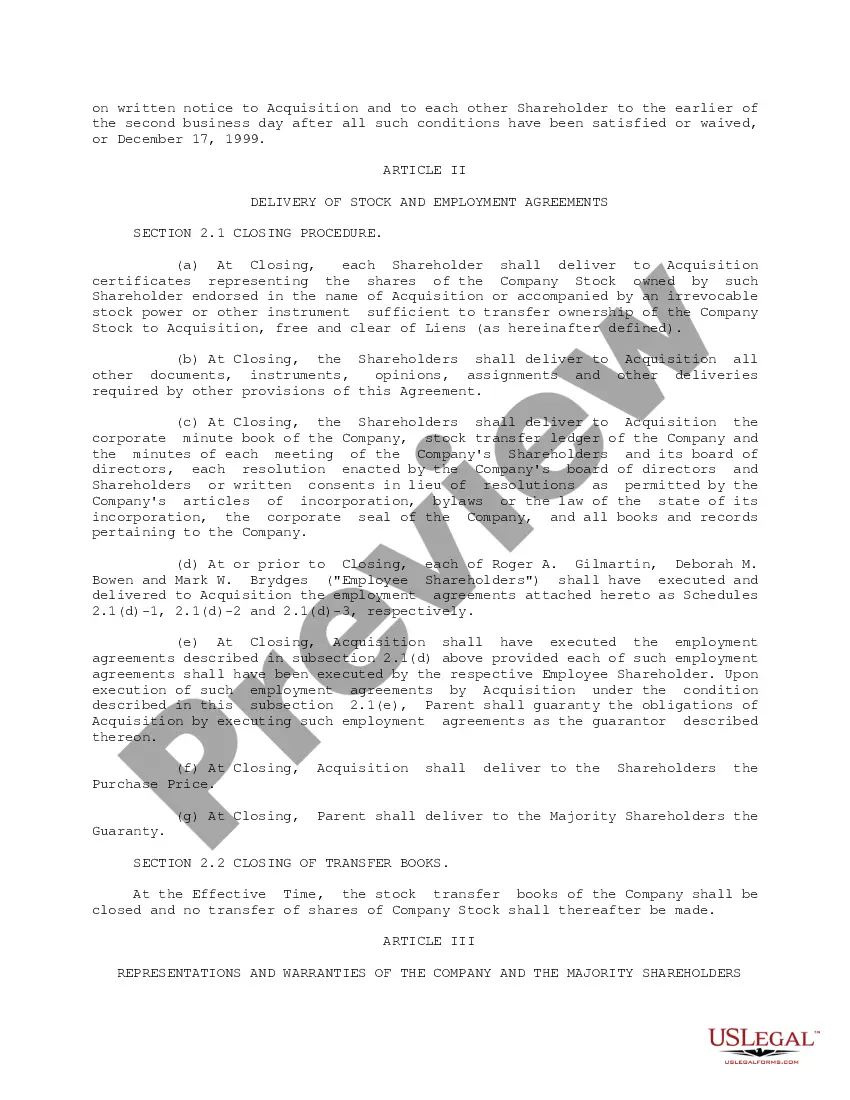
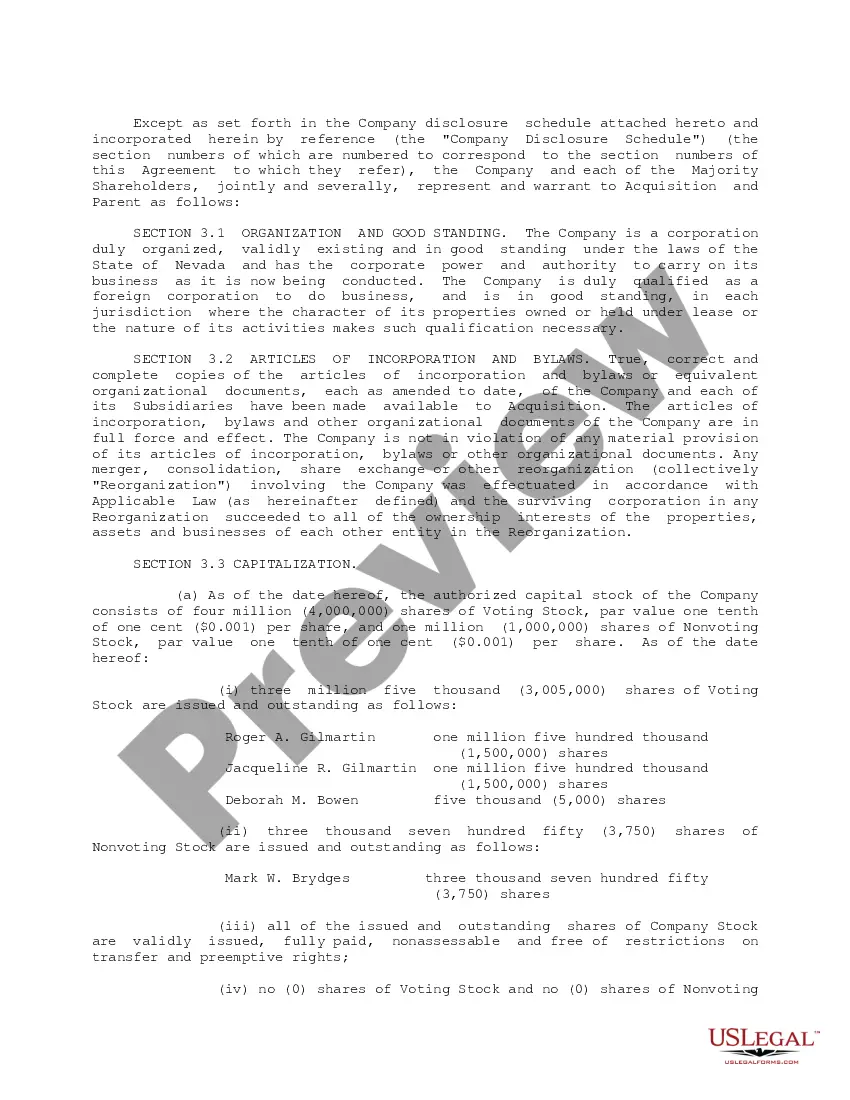
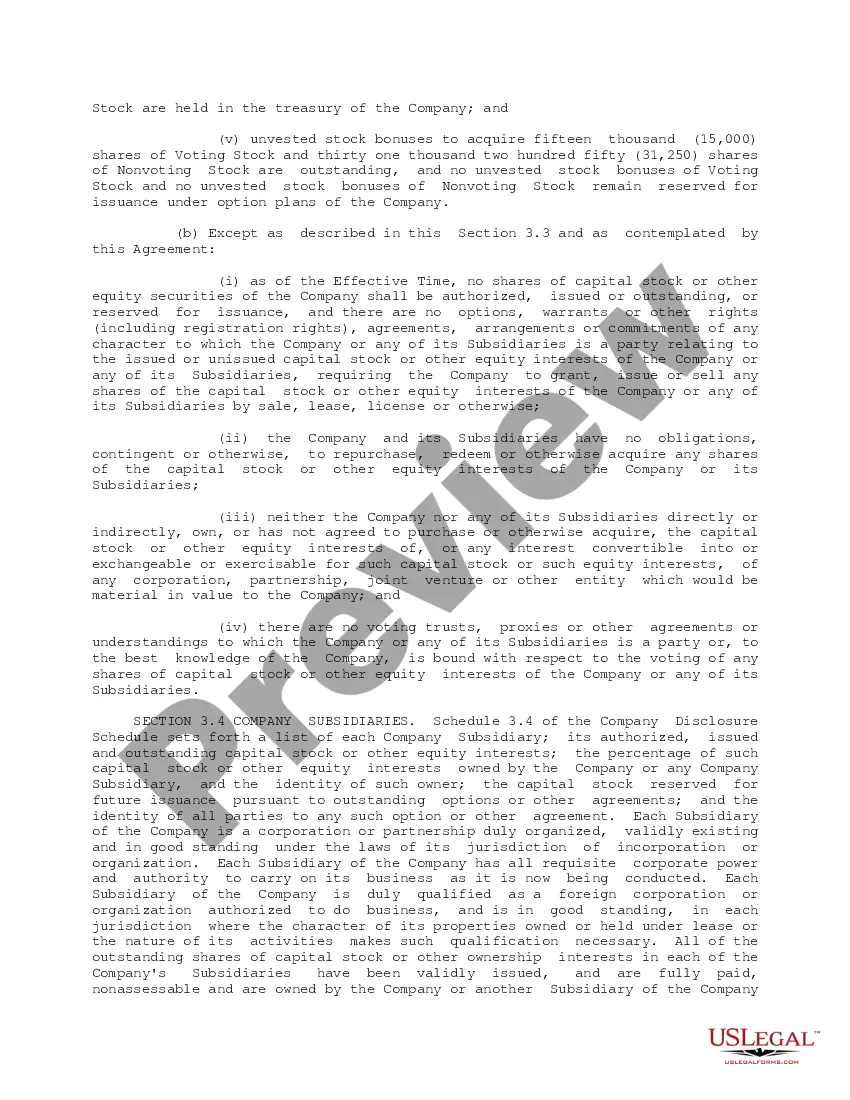
How to fill out Sample Purchase And Sale Agreement Purchase And Sale Of Stock Between GEC Acquisition Corp., Exigent International, Inc., GEC North America Corp.?
- If you already have an account, log in to access your previous documents. Ensure your subscription is active, and renew it if necessary.
- For new users, start by exploring the Preview mode for the relevant form description to confirm it meets your needs and adheres to local jurisdiction requirements.
- If the initial template doesn’t fit, utilize the Search tab at the top to find a suitable document or template that aligns better with your requirement.
- Proceed to purchase the selected document by clicking the Buy Now button. Choose a subscription plan that matches your needs, and create an account to gain access to the legal library.
- Complete your purchase by entering your payment information, whether through credit card or PayPal, to finalize your subscription.
- Download your document to your device for immediate use and easy access anytime via the My Forms section of your profile.
US Legal Forms not only offers a robust collection of legal templates, but it also ensures that users are equipped with the tools needed for precise and legally sound documentation through expert assistance.
Start your journey with US Legal Forms today and experience the peace of mind that comes with having the right legal forms at your fingertips!
Form popularity
FAQ
Expressing strong agreement can be done with phrases like 'I wholeheartedly agree' or 'I couldn't agree more.' Such agreement and disagreement expressions communicate not only alignment but also enthusiasm for the topic. They significantly enhance the dialogue, strengthening connections between listeners.
You can express disagreement in a sentence by stating, 'I disagree with that conclusion because...'. This clear use of agreement and disagreement expressions allows for transparent communication. It’s crucial to articulate your thoughts respectfully, ensuring a productive conversation.
To express disagreement politely, you might say, 'I see your point, but I believe...'. Such agreement and disagreement expressions help maintain respect and understanding in discussions. This approach encourages open dialogue without conflict.
You can express both agreement and disagreement by saying phrases like 'I agree with your point, but I think we should also consider...'. This method of using agreement and disagreement expressions allows for balanced conversations. It demonstrates that you value both perspectives, fostering constructive dialogue.
Commonly used phrases to indicate agreement include 'I completely agree,' or 'Absolutely, I share your viewpoint.' Such agreement and disagreement expressions reinforce mutual understanding and clear communication. They effectively convey support and consensus in discussions.
When people want to express agreement, they might use phrases like 'I think you are right' or 'That makes sense to me.' These agreement and disagreement expressions help foster understanding and collaboration. Utilizing such phrases can enhance communication and ensure everyone is on the same page.
Examples of agreement include phrases like 'I think that solution will work' or 'Your argument is compelling.' On the other hand, examples of disagreement can include statements such as 'I can't support that decision, as it may cause issues' or 'I see where you're coming from, but I have a different perspective.' Understanding these expressions is key to navigating discussions.
To show agreement, you can use several expressions, such as 'I concur with your thoughts', 'That is a valid point', and 'I share your view on this matter.' These phrases effectively communicate your alignment with someone's ideas and demonstrate strong agreement and disagreement expressions.
Disagreement can be defined as a difference in opinion between two or more parties. An example might involve two colleagues discussing a budget proposal, where one suggests cutting costs, and the other argues for maintaining current funding due to its impact on project quality. Such exchanges illustrate common disagreement expressions.
An example of agreeing can be found in a discussion about team collaboration. If someone says, 'We need to improve our communication to enhance teamwork,' and another person replies, 'I completely agree; better communication can truly lead to greater efficiency,' this exchange depicts positive agreement expressions.