Transfer Between Mortgage For Bad Credit
Description

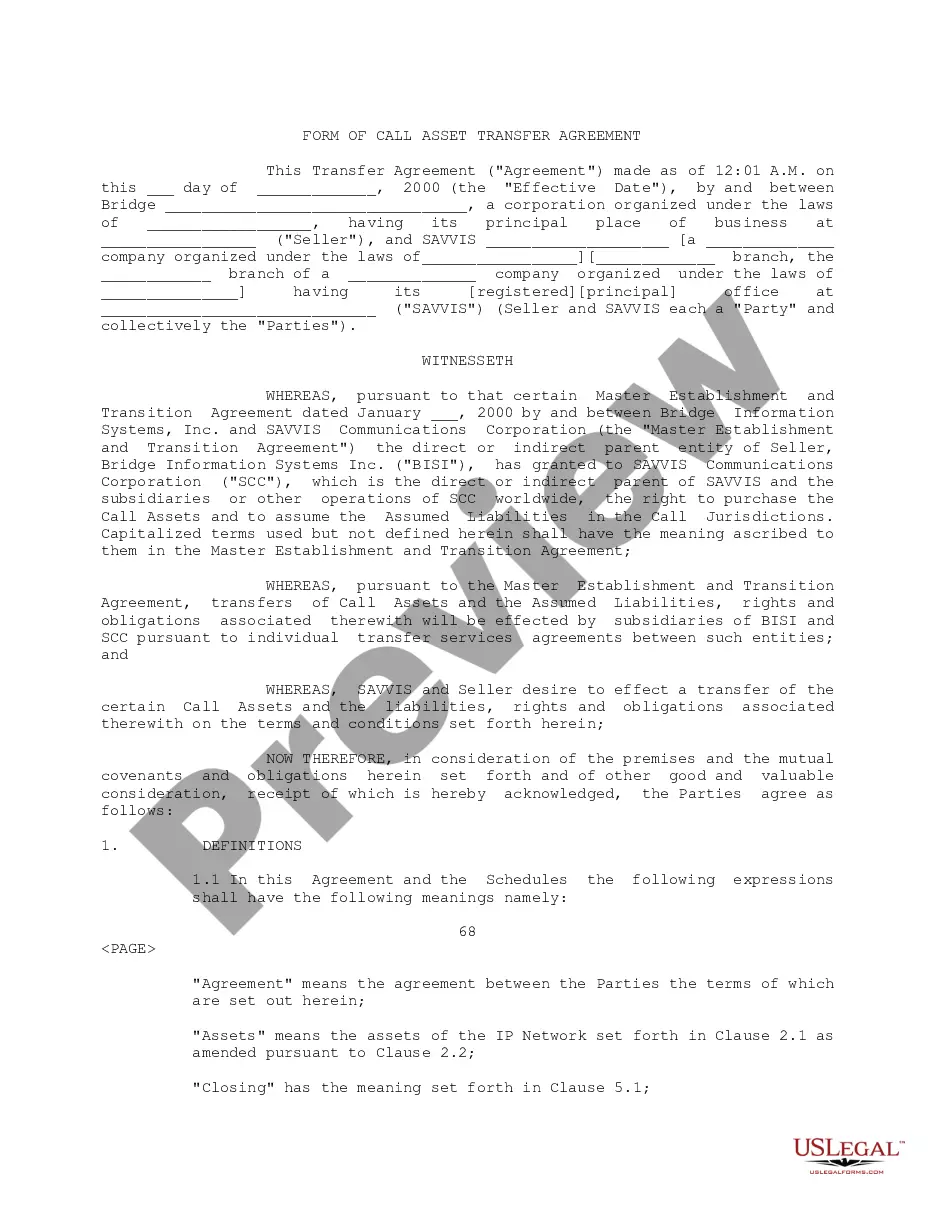
Get your form ready online
Our built-in tools help you complete, sign, share, and store your documents in one place.
Make edits, fill in missing information, and update formatting in US Legal Forms—just like you would in MS Word.
Download a copy, print it, send it by email, or mail it via USPS—whatever works best for your next step.
Sign and collect signatures with our SignNow integration. Send to multiple recipients, set reminders, and more. Go Premium to unlock E-Sign.
If this form requires notarization, complete it online through a secure video call—no need to meet a notary in person or wait for an appointment.
We protect your documents and personal data by following strict security and privacy standards.

Make edits, fill in missing information, and update formatting in US Legal Forms—just like you would in MS Word.

Download a copy, print it, send it by email, or mail it via USPS—whatever works best for your next step.

Sign and collect signatures with our SignNow integration. Send to multiple recipients, set reminders, and more. Go Premium to unlock E-Sign.

If this form requires notarization, complete it online through a secure video call—no need to meet a notary in person or wait for an appointment.

We protect your documents and personal data by following strict security and privacy standards.
Looking for another form?



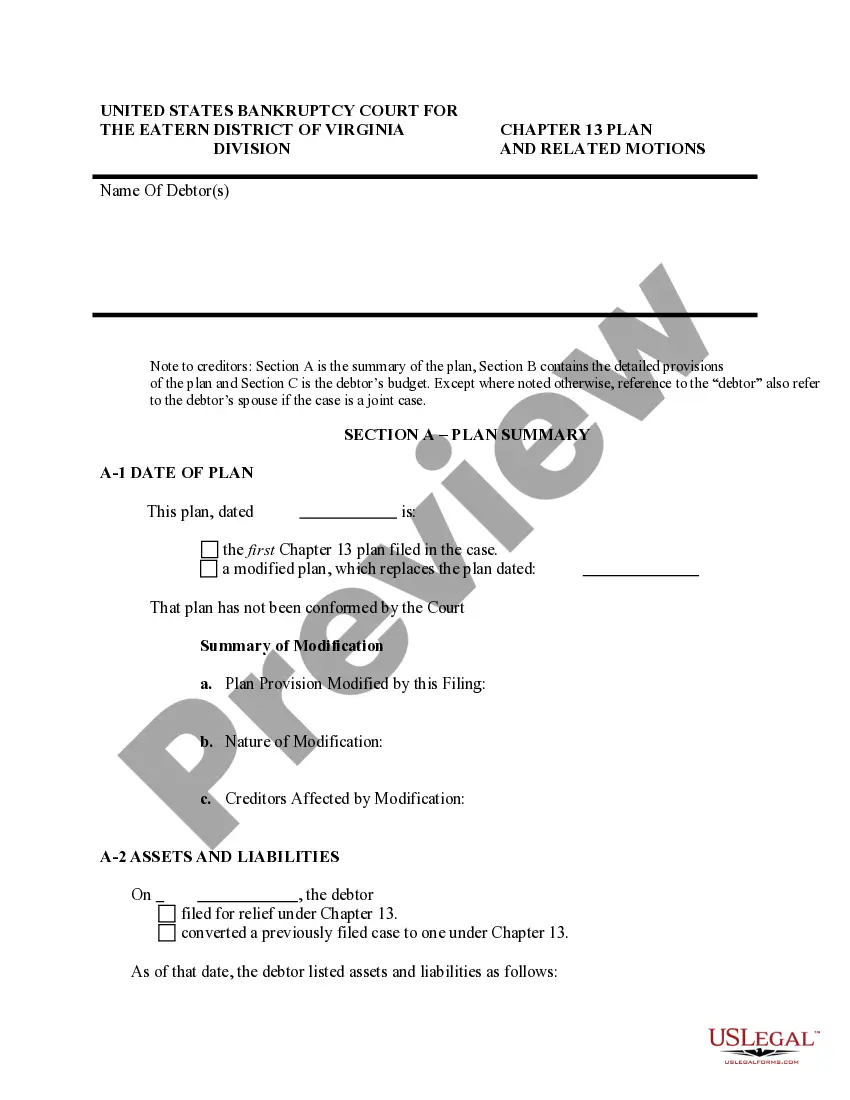



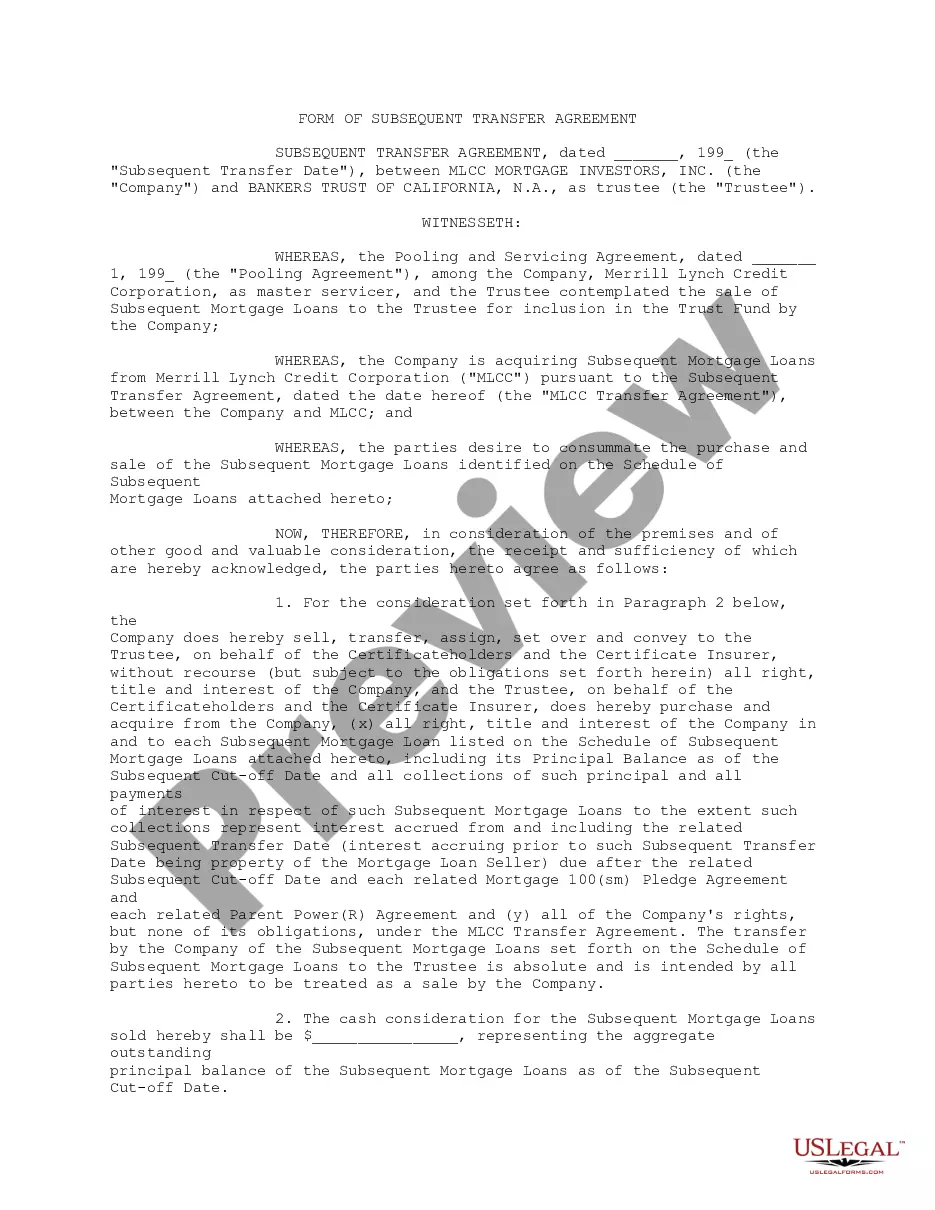
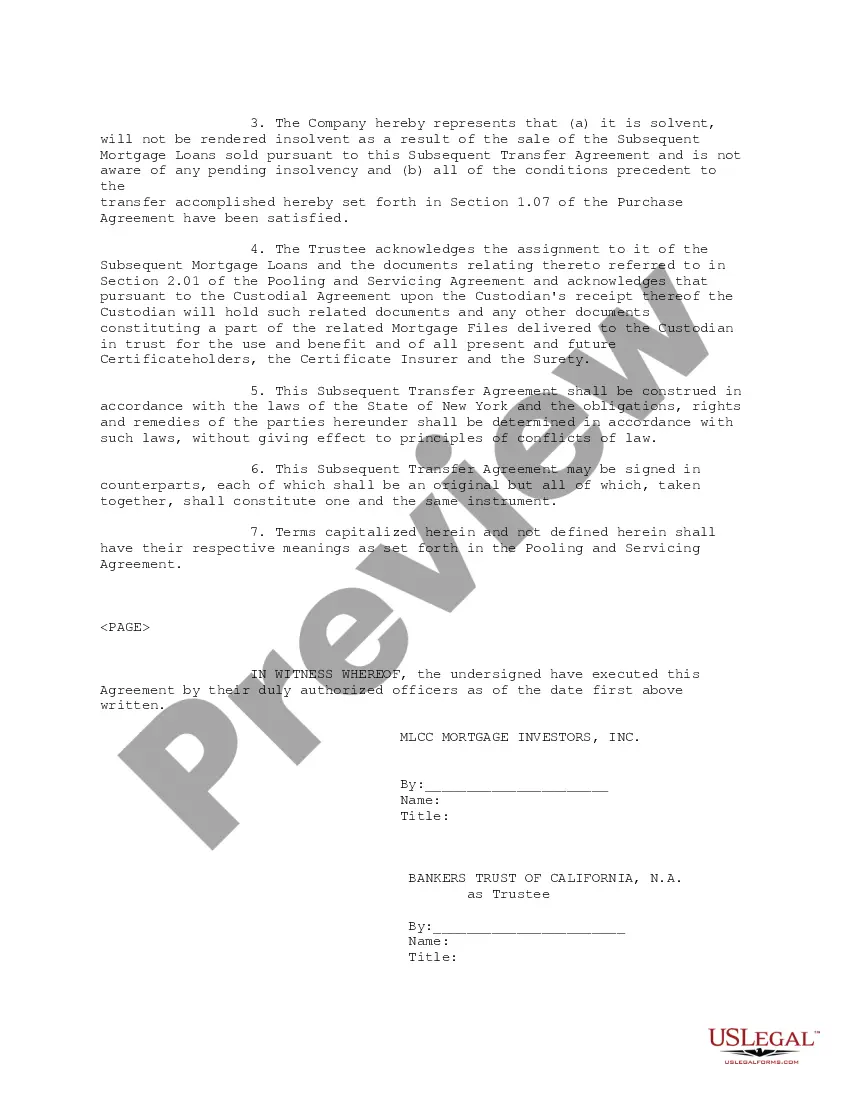
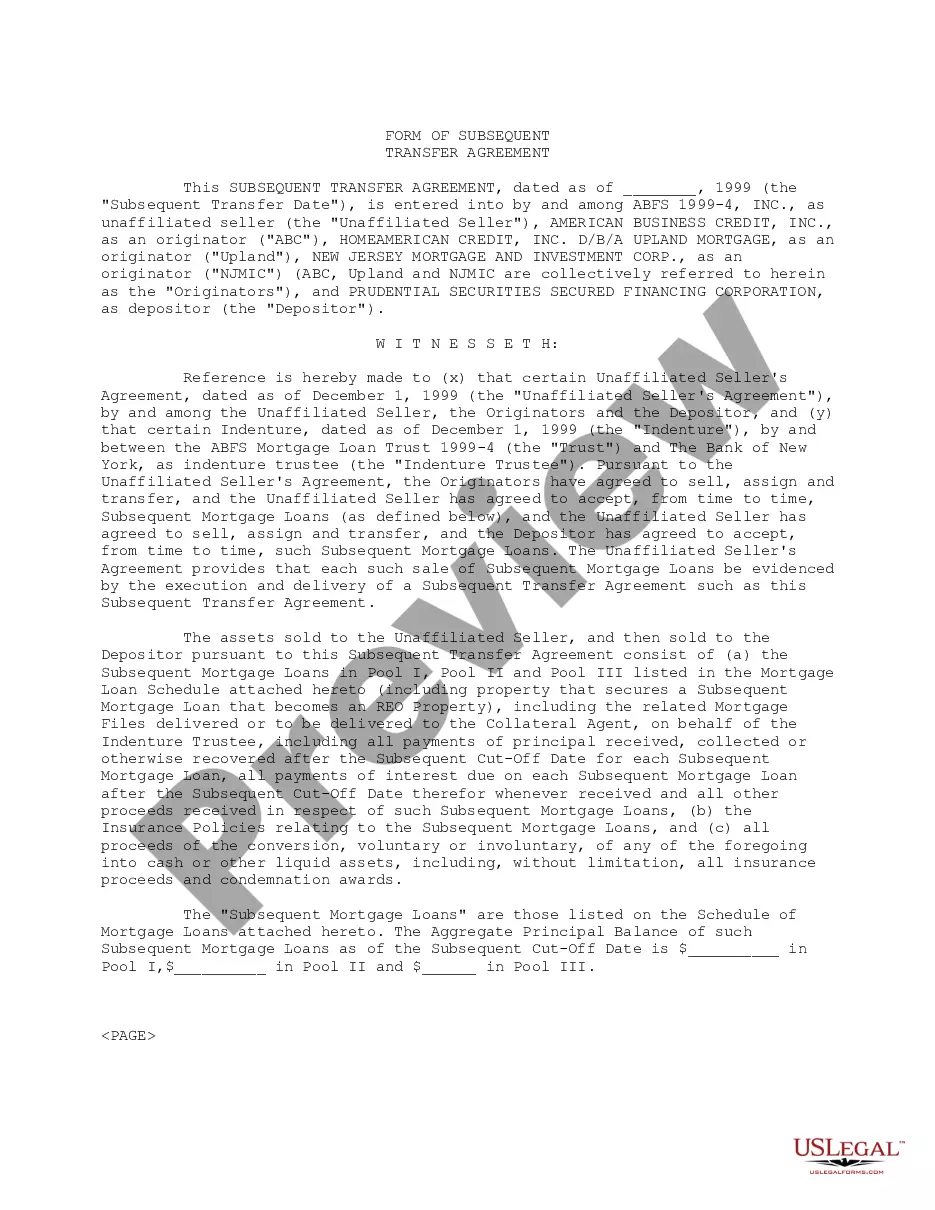
How to fill out Subsequent Transfer Agreement Between MLCC Mortgage Investors, Inc. And Bankers Trust Of CA, N.A. Regarding Consummation For Purchase And Sale Of Mortgage Loans?
Managing legal documents can be daunting, even for seasoned professionals.
When you are looking for a Transfer Between Mortgage For Bad Credit and lack the time to search for the correct and up-to-date version, the tasks can become challenging.
US Legal Forms meets all your needs, from personal to business documents, all located in one place.
Employ sophisticated tools to complete and oversee your Transfer Between Mortgage For Bad Credit.
Here are the steps to follow after accessing the form you need: Verify that this is the correct form by previewing it and checking its details. Ensure that the sample is validated in your state or county. Click Buy Now when you are prepared. Choose a subscription plan. Select the file format you require, and Download, complete, sign, print, and send your documents. Take advantage of the US Legal Forms online library, supported by 25 years of experience and reliability. Revolutionize your document management process into a straightforward and user-friendly experience today.
- Access a collection of articles, guides, and materials pertinent to your situation and requirements.
- Conserve time and effort searching for the documents you need, and use US Legal Forms’ advanced search and Review tool to find Transfer Between Mortgage For Bad Credit and download it.
- If you possess a monthly subscription, Log In to your US Legal Forms account, search for the form, and download it.
- Check the My documents tab to review the documents you have previously downloaded and manage your folders as needed.
- If you are new to US Legal Forms, create an account and gain unlimited access to all the advantages of the library.
- A comprehensive online form repository can be a significant advantage for anyone aiming to handle these matters effectively.
- US Legal Forms is a leader in the realm of online legal forms, offering over 85,000 state-specific legal documents accessible to you at any time.
- With US Legal Forms, you can access state- or county-specific legal and organizational forms.
Form popularity
FAQ
Yes, you can remortgage even if one of you on the joint application has adverse credit. Most lenders will add your credit scores together, and you'll need to meet their minimum score to be considered. Some mortgage companies prefer to look at your scores individually.
It is certainly possible to remortgage with poor credit. Different bad credit situations will require different mortgage solutions. Don't worry if you have a bad credit score, it doesn't always mean you can't remortgage your property. There are likely to be options available to you.
On a joint mortgage, all borrowers' credit scores matter. Lenders collect credit and financial information including credit history, current debt and income. Lenders determine what's called the "lower middle score" and usually look at each applicant's middle score.
As long as your new loan-to-value ratio is 90% or lower, you'll only need a 500 credit score to qualify for an FHA refinance. If it's higher than this, a 580 score is required. Keep in mind these are just the minimums set out by the Department of Housing and Urban Development.
Porting a mortgage ? transferring an existing loan to a different property ? is relatively common in Canada and the United Kingdom but rare in the United States. In any jurisdiction, porting can only happen if the lender allows it and, especially in America, few lenders will approve porting.