Tenant Improvement Allowance For Restaurant
Description

Get your form ready online
Our built-in tools help you complete, sign, share, and store your documents in one place.
Make edits, fill in missing information, and update formatting in US Legal Forms—just like you would in MS Word.
Download a copy, print it, send it by email, or mail it via USPS—whatever works best for your next step.
Sign and collect signatures with our SignNow integration. Send to multiple recipients, set reminders, and more. Go Premium to unlock E-Sign.
If this form requires notarization, complete it online through a secure video call—no need to meet a notary in person or wait for an appointment.
We protect your documents and personal data by following strict security and privacy standards.

Make edits, fill in missing information, and update formatting in US Legal Forms—just like you would in MS Word.

Download a copy, print it, send it by email, or mail it via USPS—whatever works best for your next step.

Sign and collect signatures with our SignNow integration. Send to multiple recipients, set reminders, and more. Go Premium to unlock E-Sign.

If this form requires notarization, complete it online through a secure video call—no need to meet a notary in person or wait for an appointment.

We protect your documents and personal data by following strict security and privacy standards.
Looking for another form?

Form popularity
FAQ
The average tenant improvement allowance for restaurants varies widely depending on location and lease terms, but it typically ranges from $10 to $50 per square foot. Factors such as the restaurant's size, concept, and current demand in the area can influence this amount. Landlords may be more willing to offer a higher allowance for tenants that demonstrate solid business plans and potential profitability. Understanding these dynamics can help you negotiate the best possible tenant improvement allowance for your restaurant.
To negotiate a tenant improvement allowance for your restaurant, start by determining your project costs and the improvements you want. Present your findings to the landlord and emphasize how these enhancements can increase the property's value. Clearly outline the benefits your restaurant brings, such as attracting more customers and enhancing the neighborhood's appeal. By making a compelling case, you can often secure a more favorable tenant improvement allowance.
You can record a tenant improvement allowance by documenting the financial transaction and classification in your accounting records. This process typically involves creating an asset account that reflects the improvements made to the restaurant. Proper recording ensures you accurately reflect the costs and benefits associated with the tenant improvement allowance for a restaurant. Using platforms like uslegalforms can simplify this process and help you stay compliant with regulations.
An example clause for a tenant improvement allowance might state: 'The landlord agrees to provide a tenant improvement allowance of $X per square foot for the renovation of the premises.' This clause details the financial support available for improvements, ensuring both parties understand the expectations and responsibilities. It's important for both landlords and tenants, especially in the restaurant space, to clearly outline this allowance in the lease agreement.
A tenant improvement refers to any modifications made to a rental space to suit a tenant's needs. For instance, if a restaurant needs custom kitchen equipment, the installation of this equipment falls under tenant improvements. These enhancements create a more functional environment for business operations. Utilizing a tenant improvement allowance for a restaurant can help cover these costs effectively.
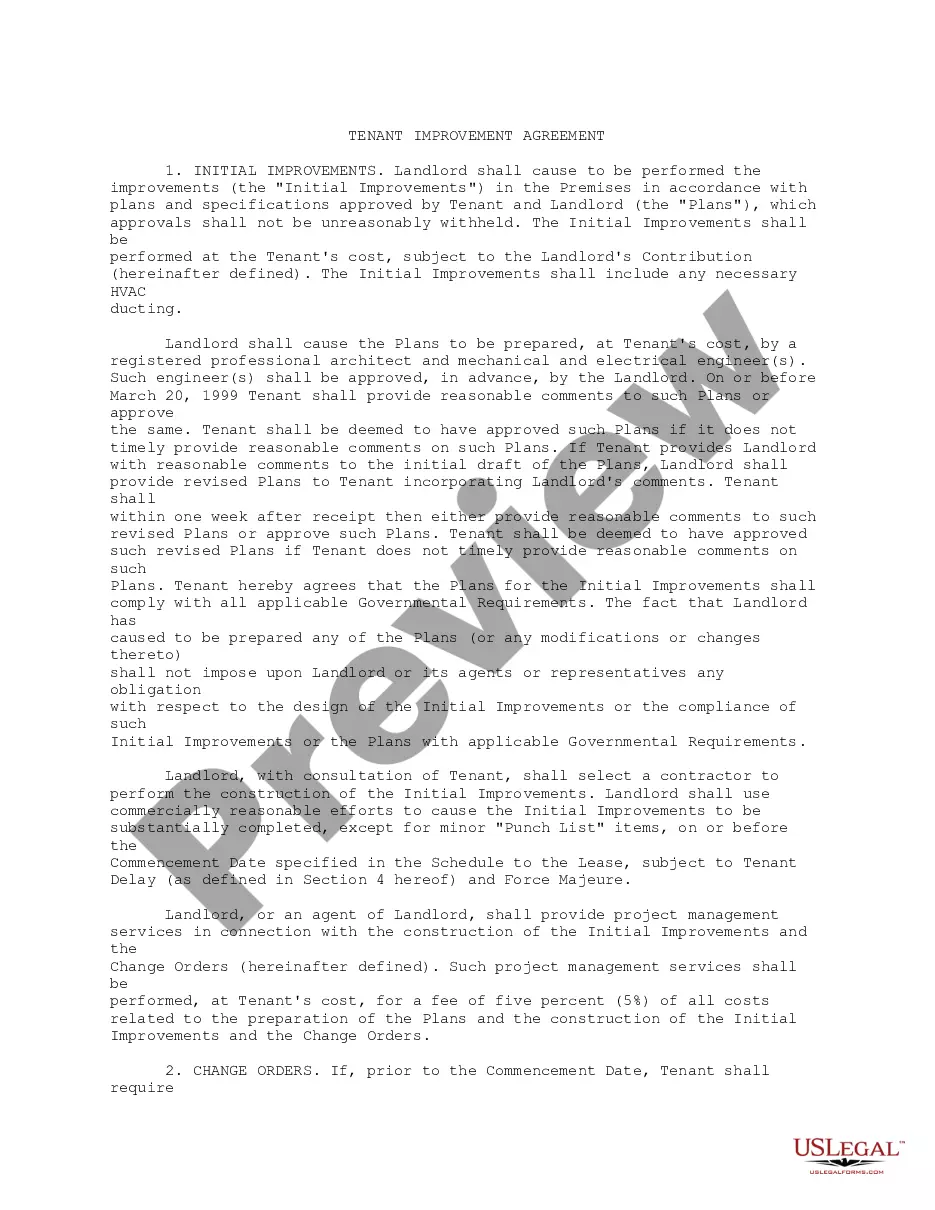
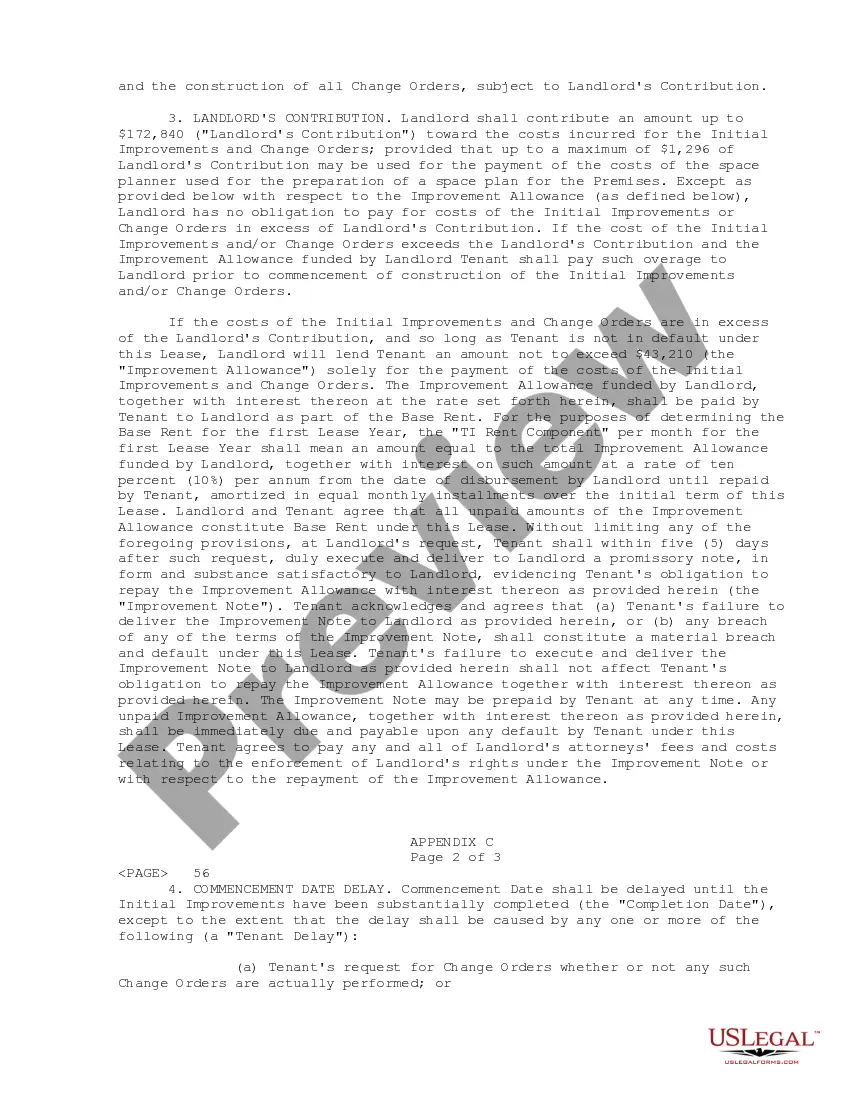
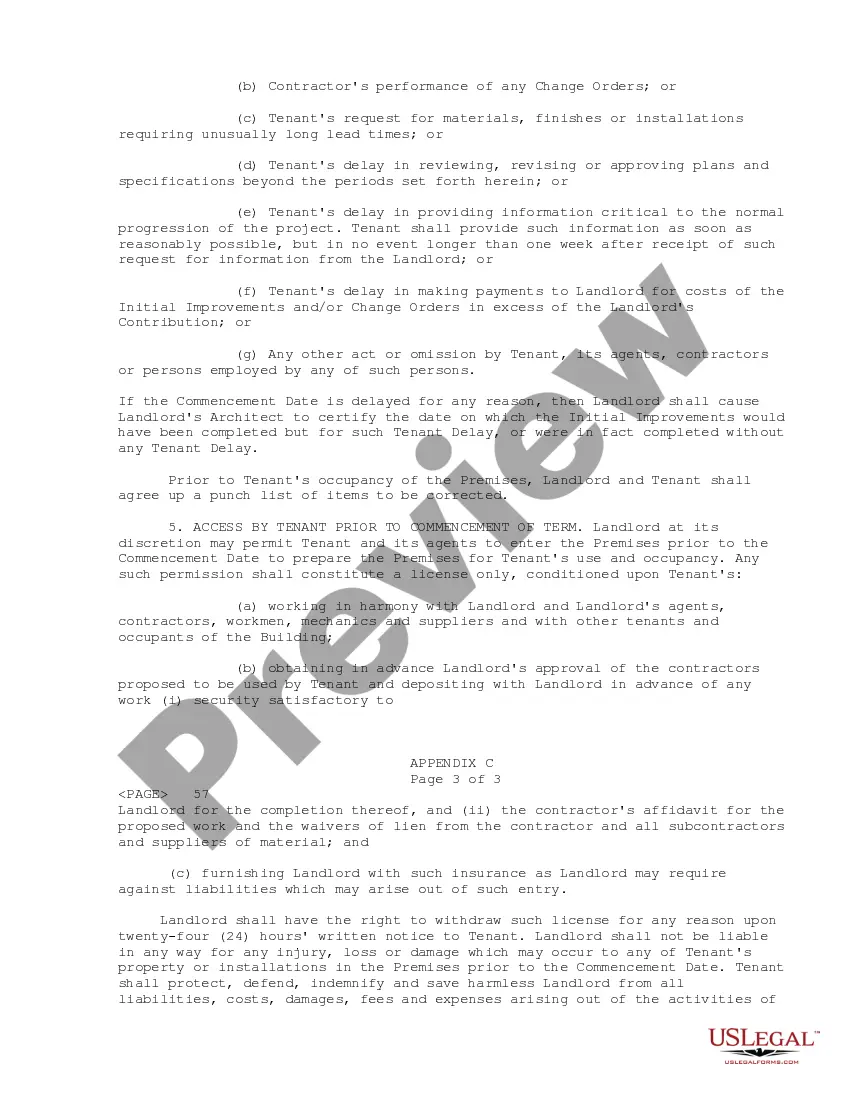
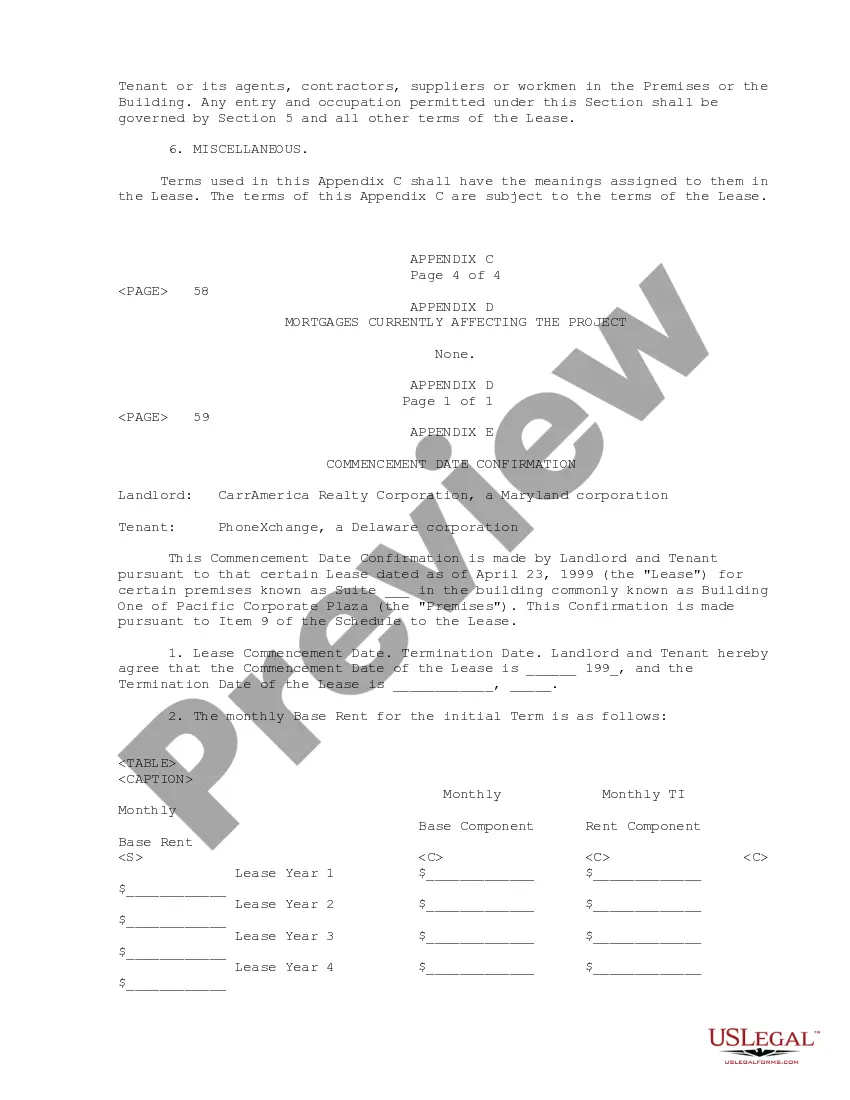
A tenant improvement allowance for a restaurant is a negotiated amount allocated by the landlord to assist tenants in renovating or enhancing their leased space. This financial support helps cover costs related to fixtures, equipment, or interior finishes that meet the unique needs of food service establishments. Essentially, it serves as a vital resource for tenants aiming to create an inviting atmosphere for patrons.
Reporting tenant improvement allowance involves keeping accurate records of how much allowance you received and the related expenditures for improvements. It is critical to classify these correctly in your accounting records to provide clarity in your financial reports. If you encounter challenges in reporting, the uslegalforms platform offers templates and tools to assist you in determining the correct procedures.
To report tenant improvement allowance for a restaurant, you should first determine if it impacts your taxable income. Document the total amounts received and any expenses that relate to improvements made in the restaurant space. Ensure that you follow the guidelines set by the IRS and consider using accounting software to streamline the reporting process.
When reporting a housing allowance, you must include it as part of your taxable income unless you qualify for specific exemptions. For tenant improvement allowance for restaurants, this may mean categorizing any received allowance based on your leasing agreement. Always keep clear records to ensure compliance with IRS regulations and consult a tax professional if needed.
A tenant improvement allowance for a restaurant works as a financial agreement between landlords and tenants. The allowance provides funds that tenants can use to make necessary improvements to their leased dining space. Tenants typically submit plans for improvement to the landlord, who then reimburses or deducts costs from the rent based on the agreed-upon amount.
