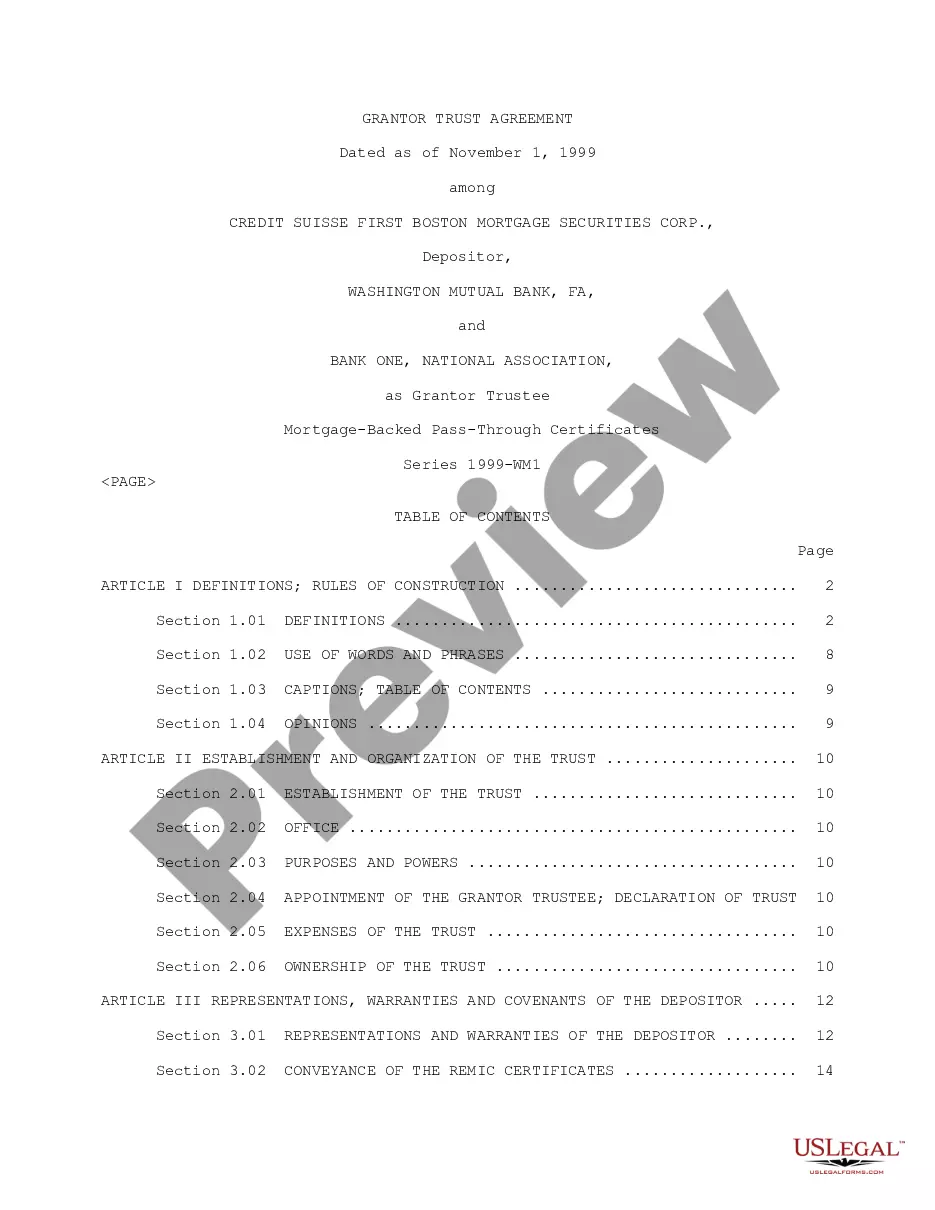
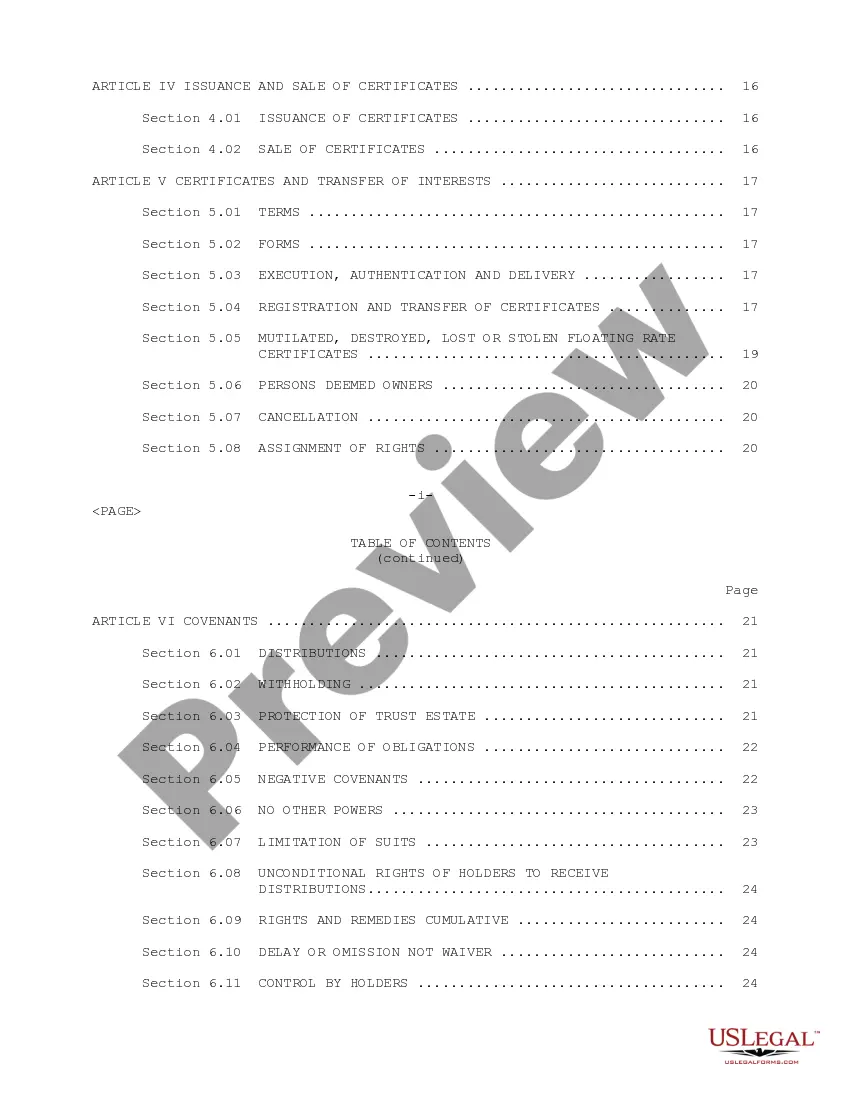
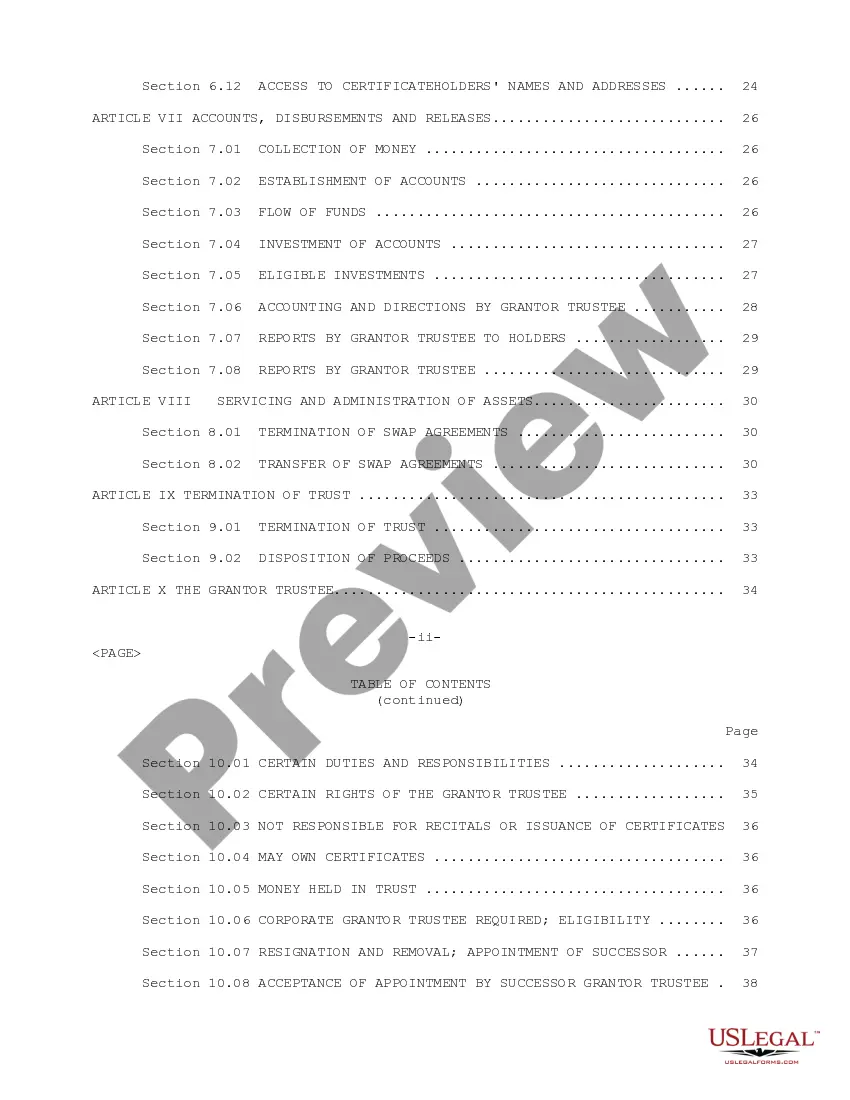
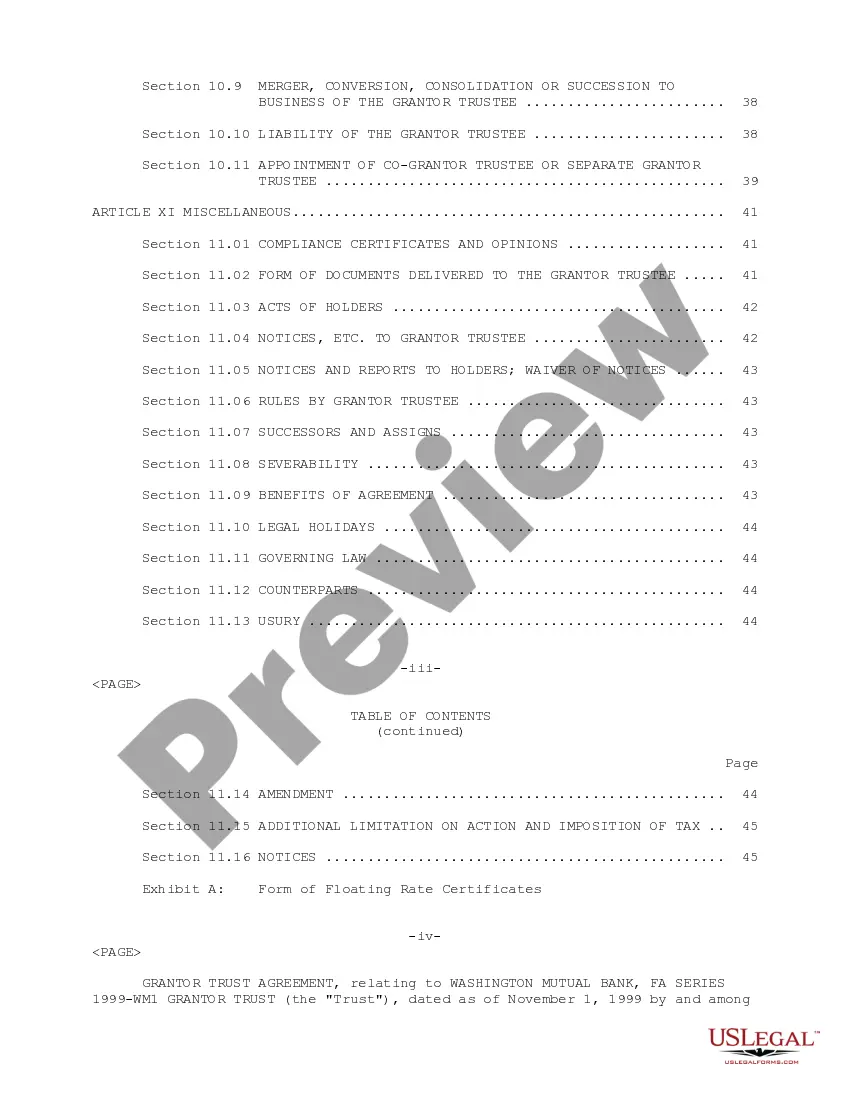
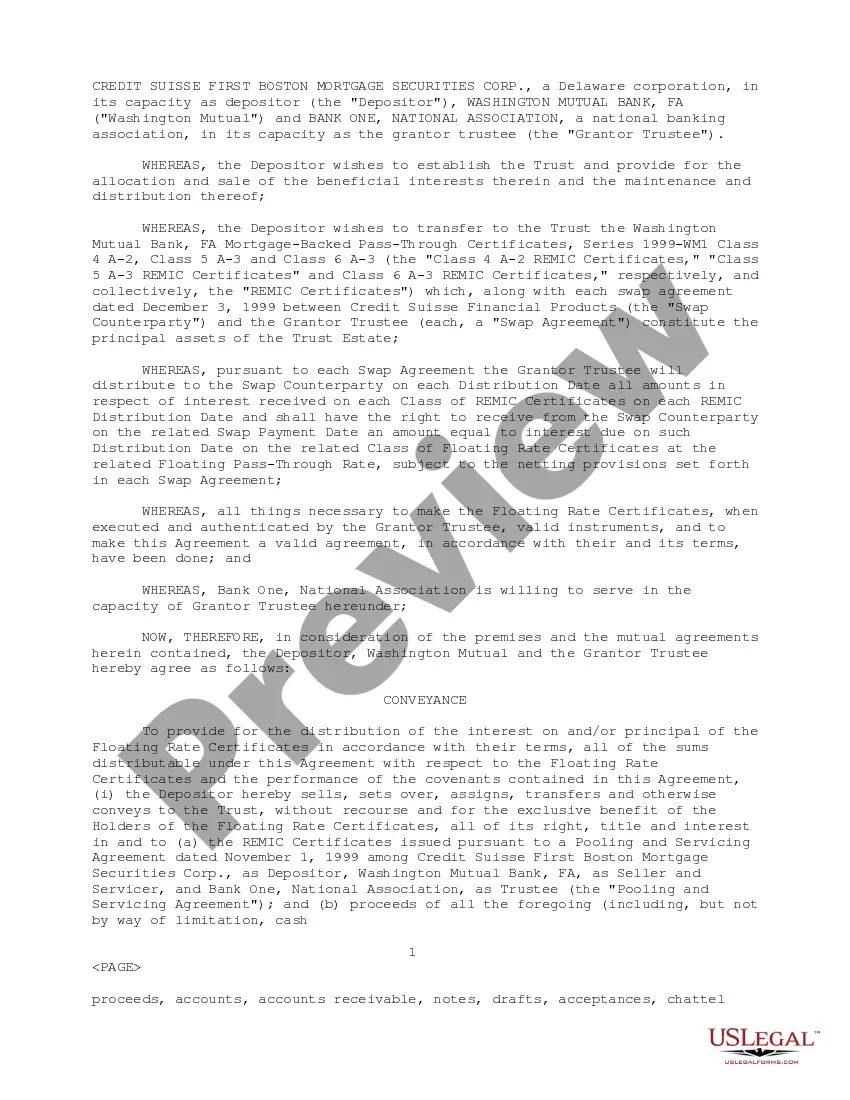
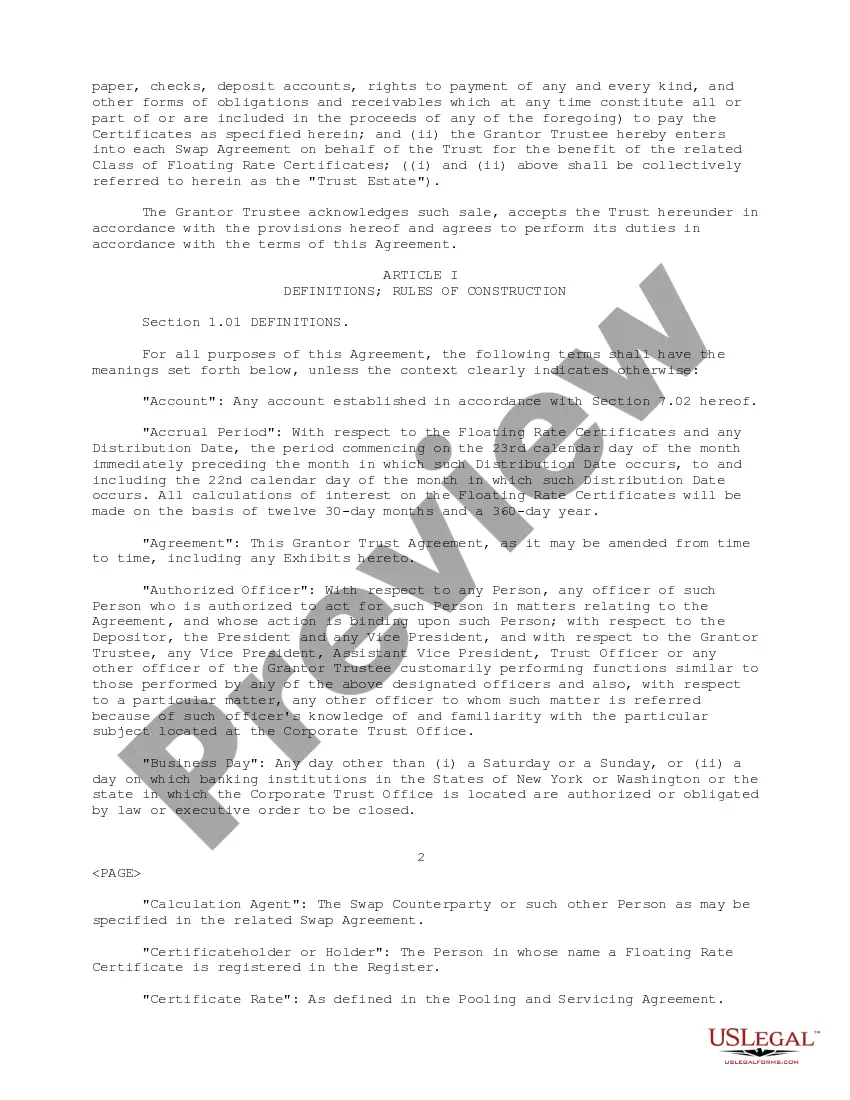
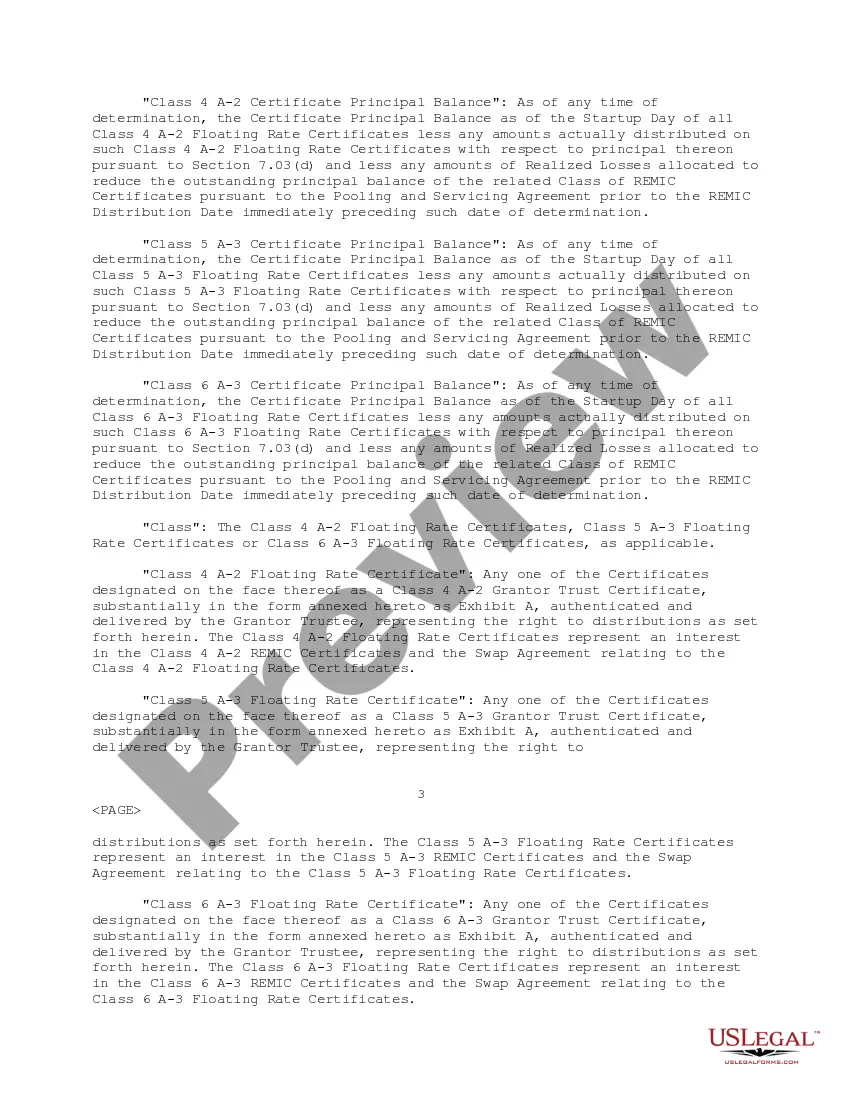
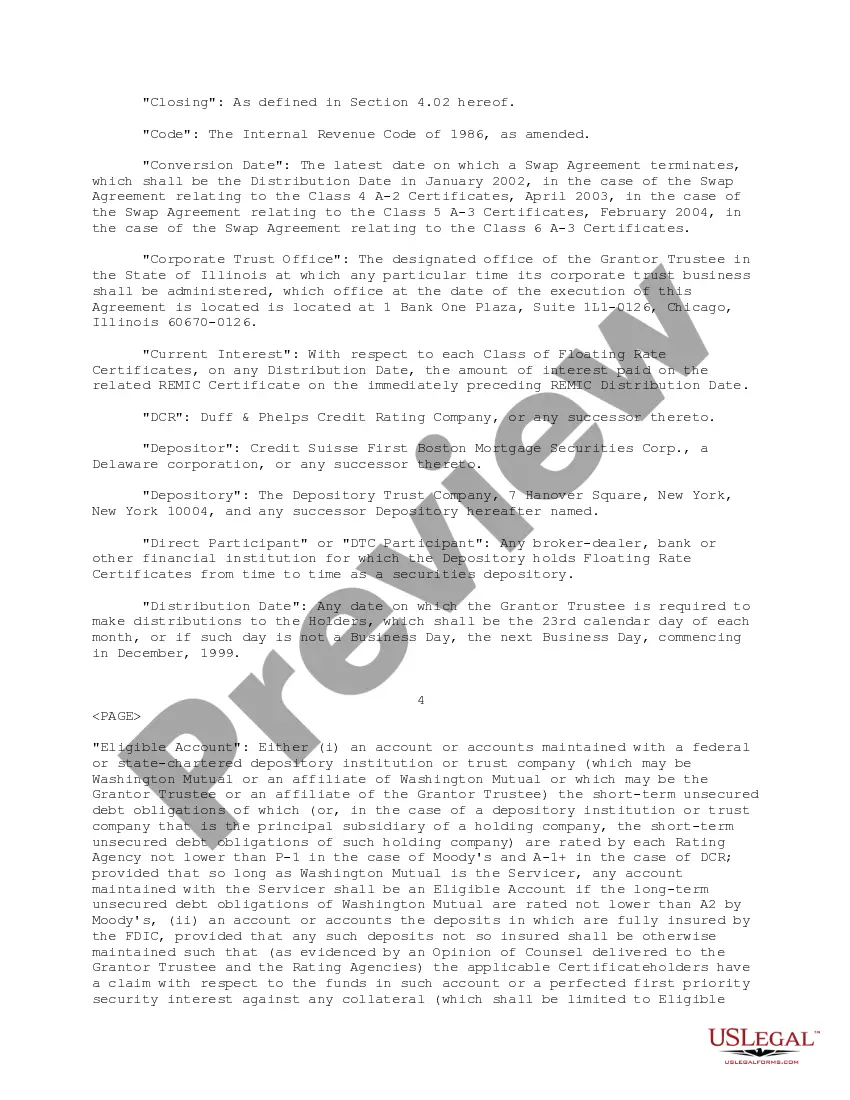
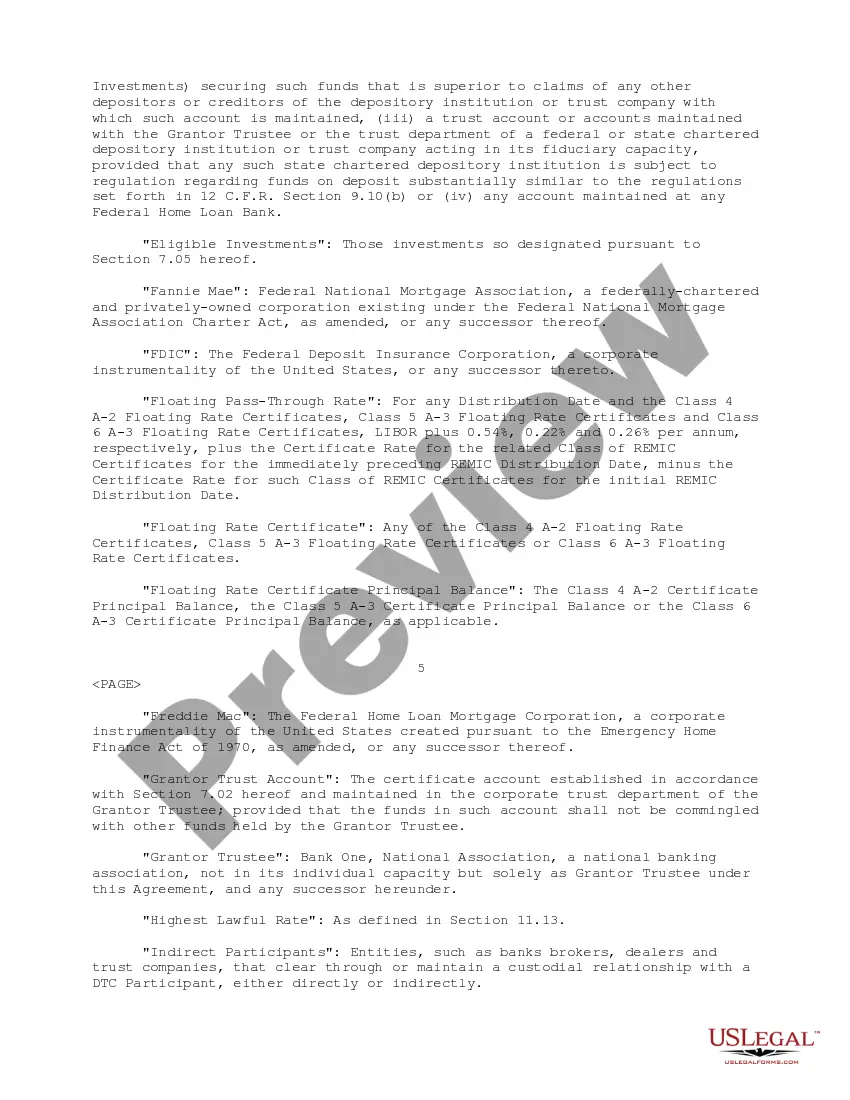
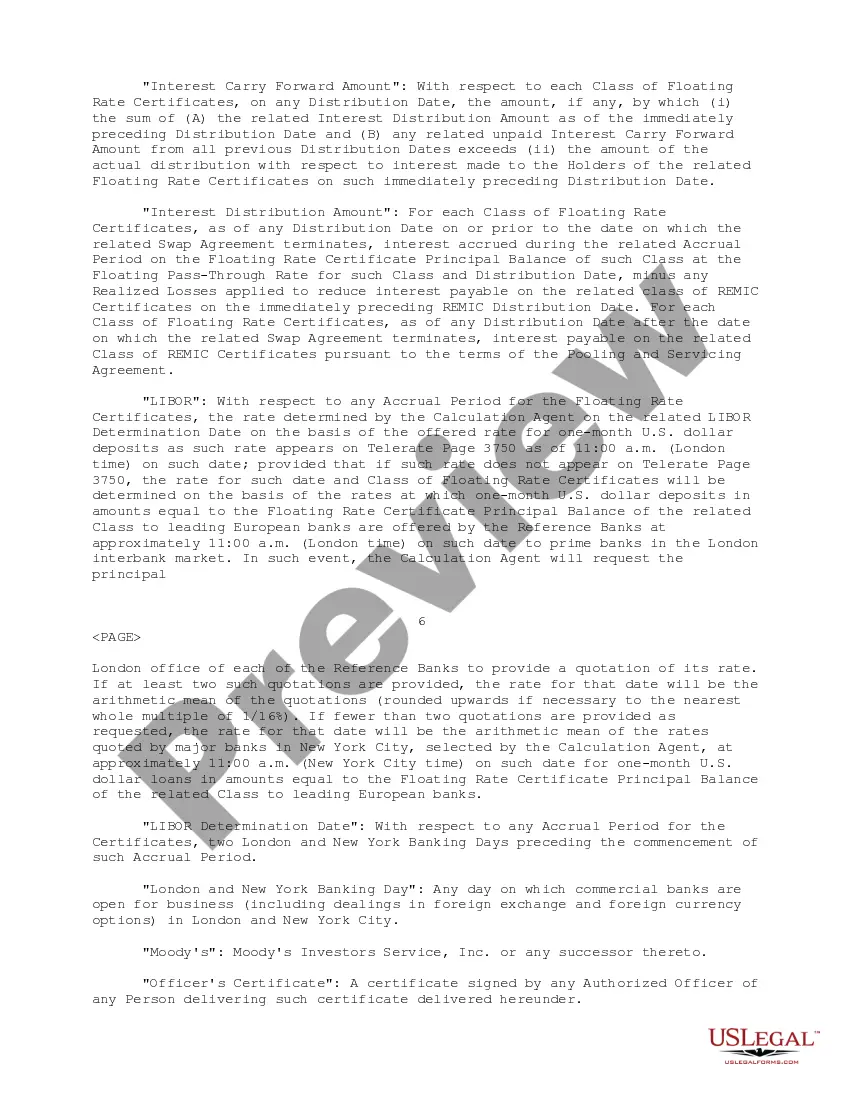
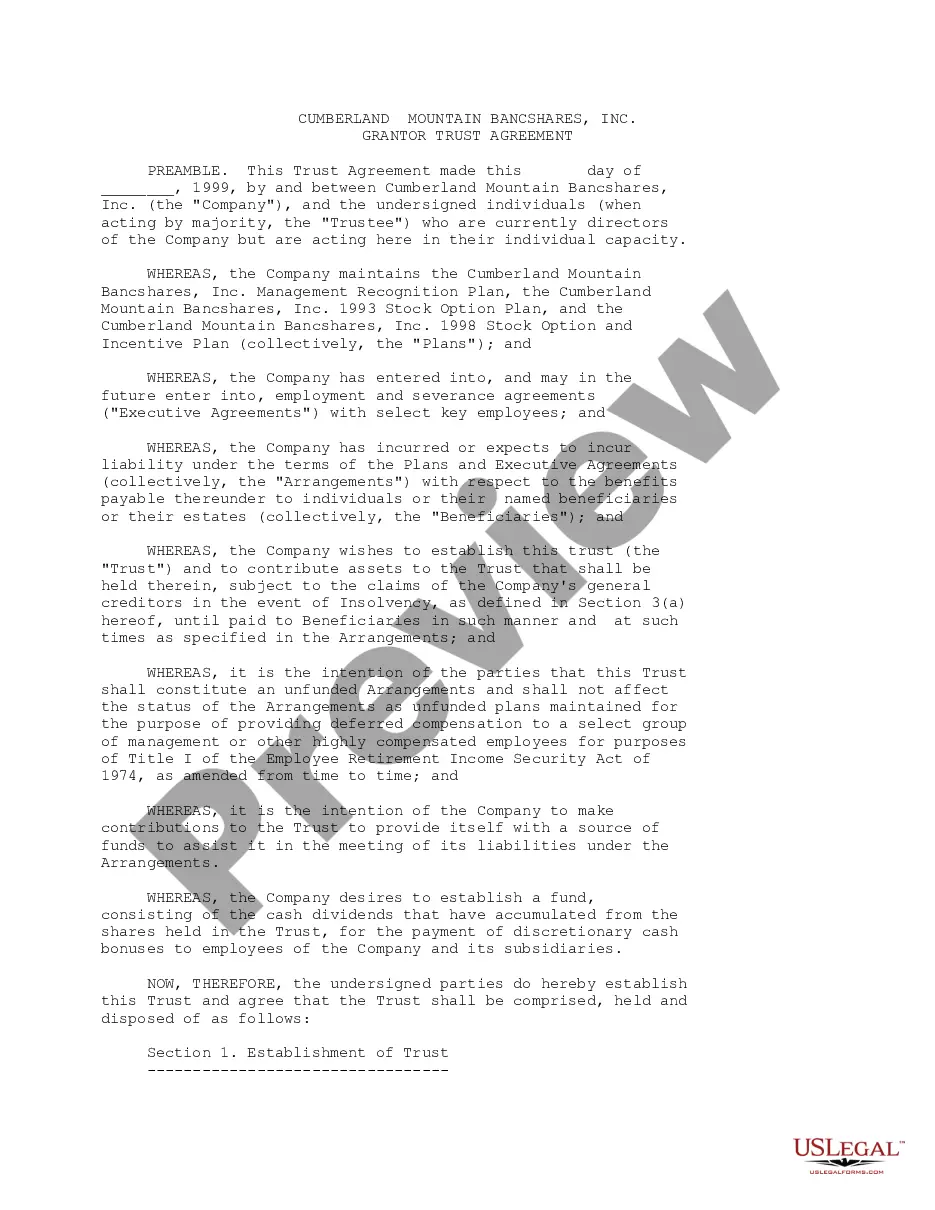
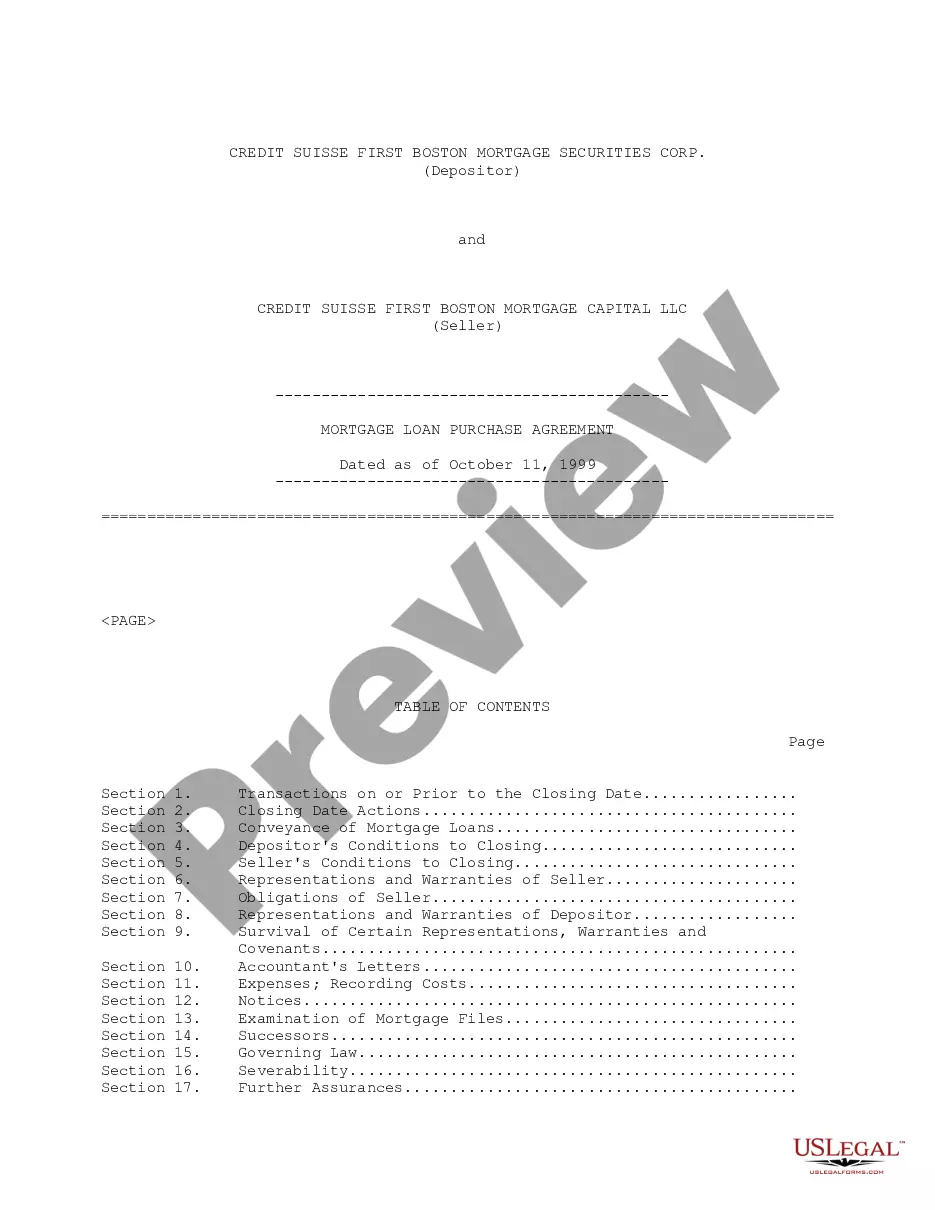
Grantor Trust Agreement With Trust
Description

Get your form ready online
Our built-in tools help you complete, sign, share, and store your documents in one place.
Make edits, fill in missing information, and update formatting in US Legal Forms—just like you would in MS Word.
Download a copy, print it, send it by email, or mail it via USPS—whatever works best for your next step.
Sign and collect signatures with our SignNow integration. Send to multiple recipients, set reminders, and more. Go Premium to unlock E-Sign.
If this form requires notarization, complete it online through a secure video call—no need to meet a notary in person or wait for an appointment.
We protect your documents and personal data by following strict security and privacy standards.

Make edits, fill in missing information, and update formatting in US Legal Forms—just like you would in MS Word.

Download a copy, print it, send it by email, or mail it via USPS—whatever works best for your next step.

Sign and collect signatures with our SignNow integration. Send to multiple recipients, set reminders, and more. Go Premium to unlock E-Sign.

If this form requires notarization, complete it online through a secure video call—no need to meet a notary in person or wait for an appointment.

We protect your documents and personal data by following strict security and privacy standards.
Looking for another form?






How to fill out Grantor Trust Agreement Between Credit Suisse First Boston Mortgage Securities Corp., Washington Mutual Bank FA And Bank One, National Assoc.?
Managing legal documents and processes can be a lengthy addition to your whole day.
Grantor Trust Agreement With Trust and similar forms usually require you to locate them and comprehend how to fill them out correctly.
Consequently, if you are addressing financial, legal, or personal issues, utilizing a comprehensive and user-friendly online directory of forms readily available will greatly assist you.
US Legal Forms is the premier online platform for legal templates, boasting over 85,000 state-specific forms and various resources to aid you in completing your documents swiftly.
Simply Log In to your account, search for Grantor Trust Agreement With Trust, and download it instantly from the My documents section. You can also access previously downloaded forms.
- Browse the directory of pertinent documents accessible with just one click.
- US Legal Forms provides state- and county-specific forms available for download at any time.
- Protect your document management tasks with exceptional support that enables you to prepare any form within minutes without any additional or hidden fees.
Form popularity
FAQ
To determine if a trust is grantor or non-grantor, examine the trust agreement for specific provisions regarding tax responsibilities. If the grantor retains control and is responsible for the taxes on the trust's income, it is likely a grantor trust. Additionally, resources like uslegalforms can provide guidance in assessing the nature of your trust. Clarity in this distinction can lead to better financial planning.
The disadvantages of the grantor trust are the flipsides of the advantages. The grantor may not want to make pay the tax on the income the trust generates, even though it's a transfer free from gift tax. For example, let's say the grantor sets up an irrevocable trust for children from a prior marriage or an ex-spouse.
A simple example can illustrate the power of this fea- ture. Assuming that a grantor trust receives interest income of $100,000 in a given calendar year, the grantor trust status would cause all such income to flow through to and be reported on the grantor's personal income tax return.
Yes, once the trust grantor becomes incapacitated or dies, his revocable trust is now irrevocable, meaning that generally the terms of the trust cannot be changed or revoked going forward. This is also true of trusts established by the grantor with the intention that they be irrevocable from the start.
Depending on the type of trust they create, a grantor may choose to be their own trustee and manage the trust while they're alive and capable. In this case, they must nominate a successor trustee to take over the role after they pass away or if they become incapacitated.
Upon the grantor's death, the trustee continues managing the irrevocable trust or distributes the assets ing to the trust's terms. Unlike a will, an irrevocable trust avoids probate, often expediting the asset distribution process and making it an appealing option for some families.