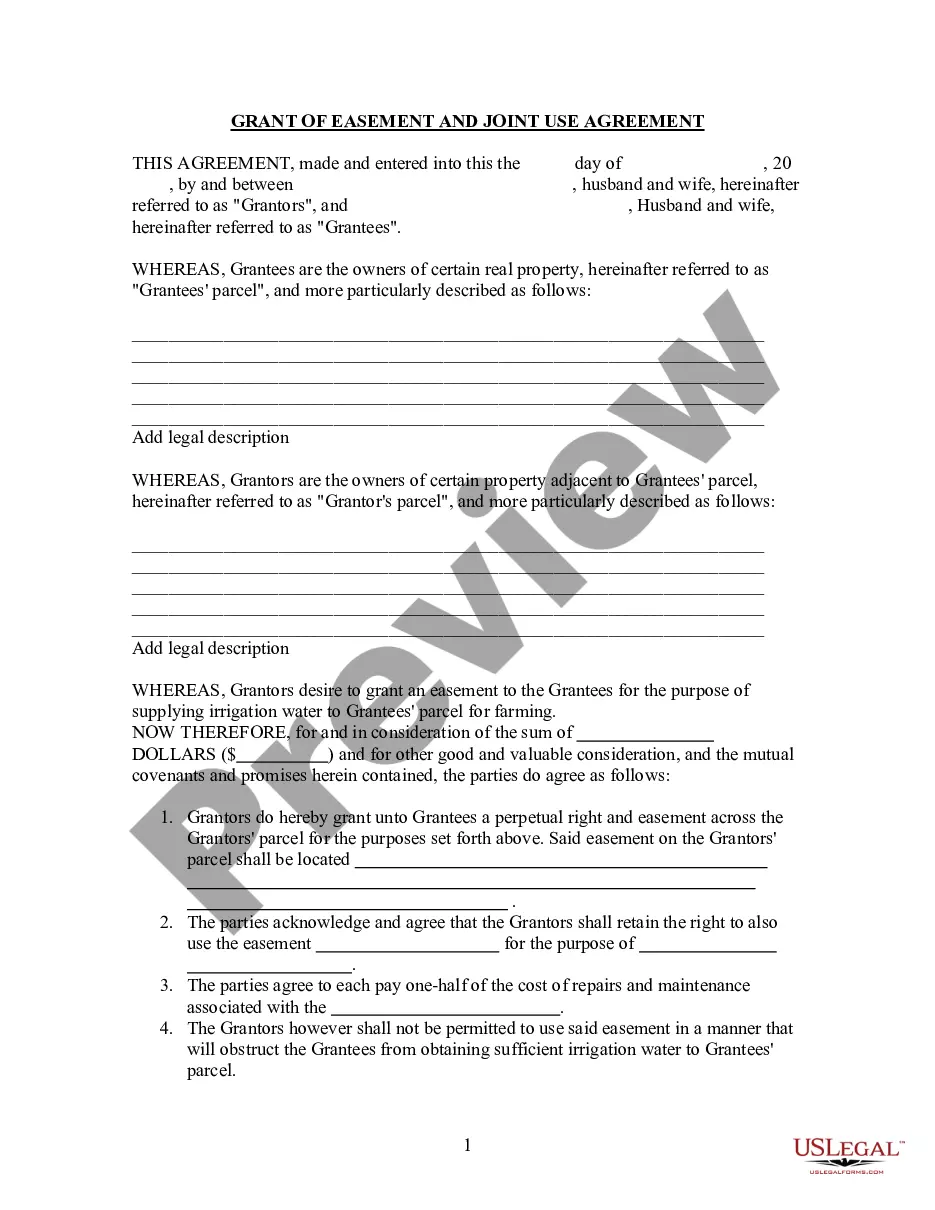
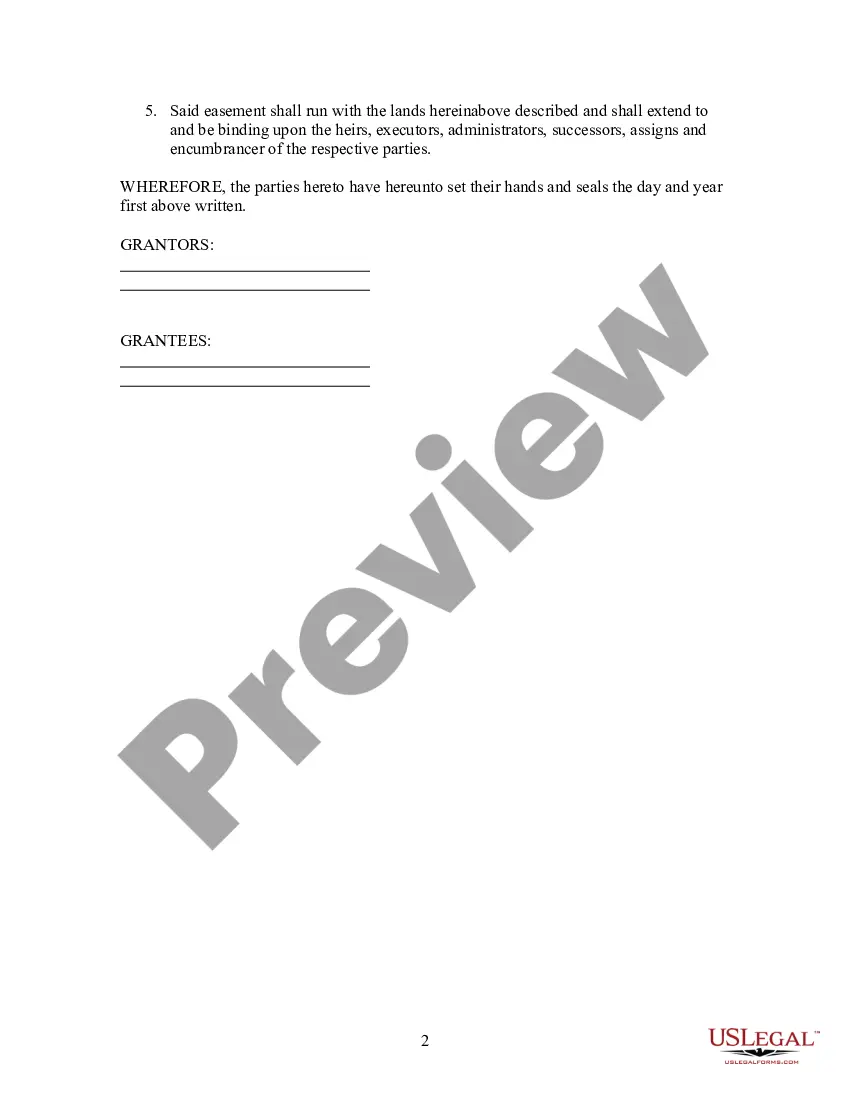
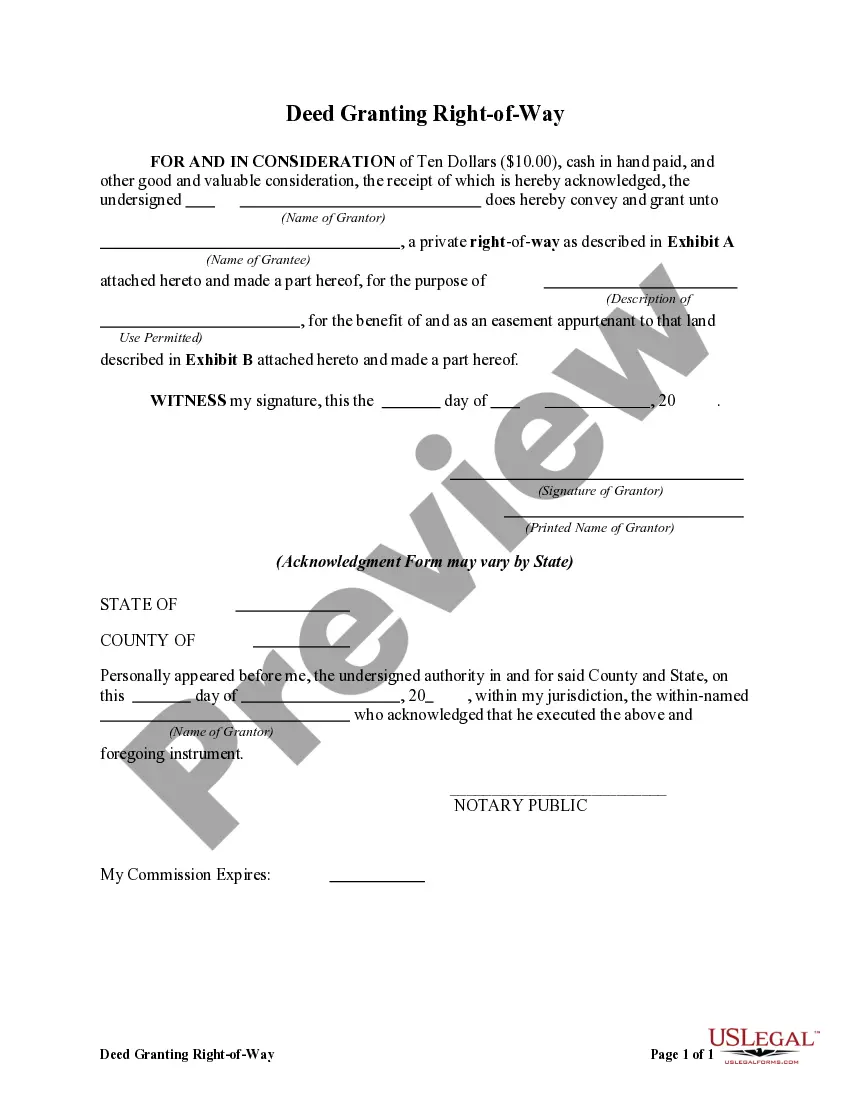
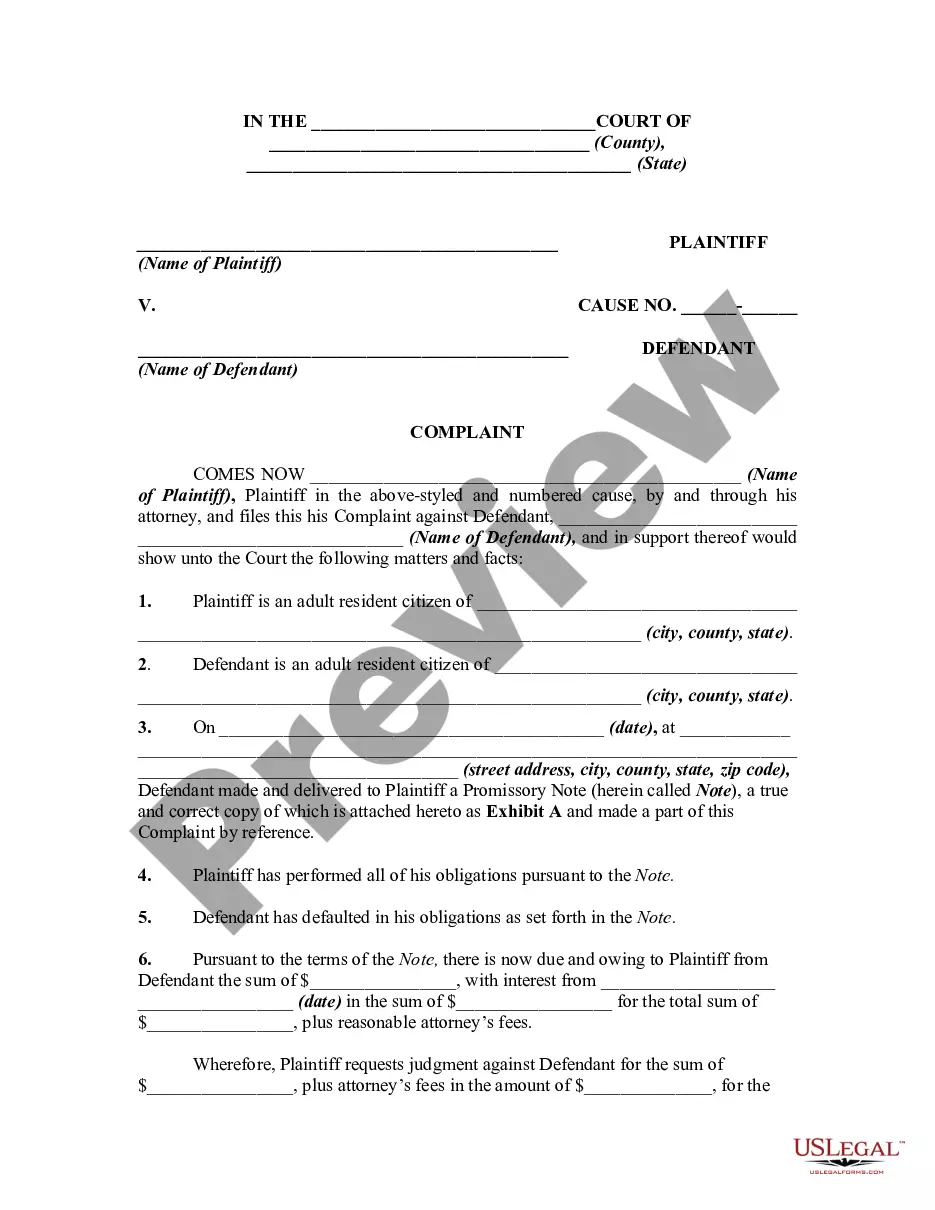
Easement Rights For Utilities
Description
Get your form ready online
Our built-in tools help you complete, sign, share, and store your documents in one place.
Make edits, fill in missing information, and update formatting in US Legal Forms—just like you would in MS Word.
Download a copy, print it, send it by email, or mail it via USPS—whatever works best for your next step.
Sign and collect signatures with our SignNow integration. Send to multiple recipients, set reminders, and more. Go Premium to unlock E-Sign.
If this form requires notarization, complete it online through a secure video call—no need to meet a notary in person or wait for an appointment.
We protect your documents and personal data by following strict security and privacy standards.

Make edits, fill in missing information, and update formatting in US Legal Forms—just like you would in MS Word.

Download a copy, print it, send it by email, or mail it via USPS—whatever works best for your next step.

Sign and collect signatures with our SignNow integration. Send to multiple recipients, set reminders, and more. Go Premium to unlock E-Sign.

If this form requires notarization, complete it online through a secure video call—no need to meet a notary in person or wait for an appointment.

We protect your documents and personal data by following strict security and privacy standards.
Looking for another form?






How to fill out Grant Of Easement And Joint Use Agreement?
Creating legal documents from the ground up can occasionally feel quite daunting. Certain instances may require extensive research and significant financial investment.
If you’re seeking a more straightforward and cost-effective method for preparing Easement Rights For Utilities or any other forms without having to navigate complex procedures, US Legal Forms is always available to assist you.
Our online library of over 85,000 current legal forms encompasses nearly every aspect of your financial, legal, and personal affairs. With just a few clicks, you can promptly obtain state- and county-compliant forms carefully assembled for you by our legal professionals.
Utilize our platform whenever you require a dependable and trustworthy service through which you can easily locate and download the Easement Rights For Utilities. If you’re already familiar with our services and have set up an account with us before, simply Log In to your account, choose the template, and download it, or re-download it at any time from the My documents section.
Download the file, then fill it out, authenticate it, and print it. US Legal Forms boasts a solid reputation and over 25 years of expertise. Join us today and make document execution a simple and efficient process!
- Don't have an account? No worries. It only takes a few minutes to establish one and explore the library.
- Before directly proceeding to download Easement Rights For Utilities, follow these guidelines.
- Examine the form preview and descriptions to ensure you are on the document you desire.
- Verify if the template you choose adheres to the laws and regulations of your state and county.
- Select the appropriate subscription plan to acquire the Easement Rights For Utilities.
Form popularity
FAQ
A utility easement is a designated parcel of land that gives utility companies the right to access private property for the good of the community. For example, a utility company may have the right to trim a tree in your backyard if it's interfering with telephone lines.
An easement is a real property right authorizing the easement owner to do something or maintain something on the land of another. They are usually created by a granting instrument such as a deed. Most easements are ?appurtenant,? meaning they are attached to and benefit a particular property.
Typical easements are 12 - 20 feet wide, the main transmission lines for water or sewer may have up to 50-foot easements and in most cases the easements will not be cut to full width.
Easements are areas designated for overhead and underground utility access, and are usually defined when a lot or neighborhood is first platted. Easements are implemented because it is more efficient and less expensive to run utility lines straight through neighborhoods than it is to run them around parcels of land.
Your rights as a property owner include deciding who has access to and use of your property. You can refuse a utility easement request, especially if there are alternate properties that the company could use instead of yours.