Sample Easement Agreement For Property
Description
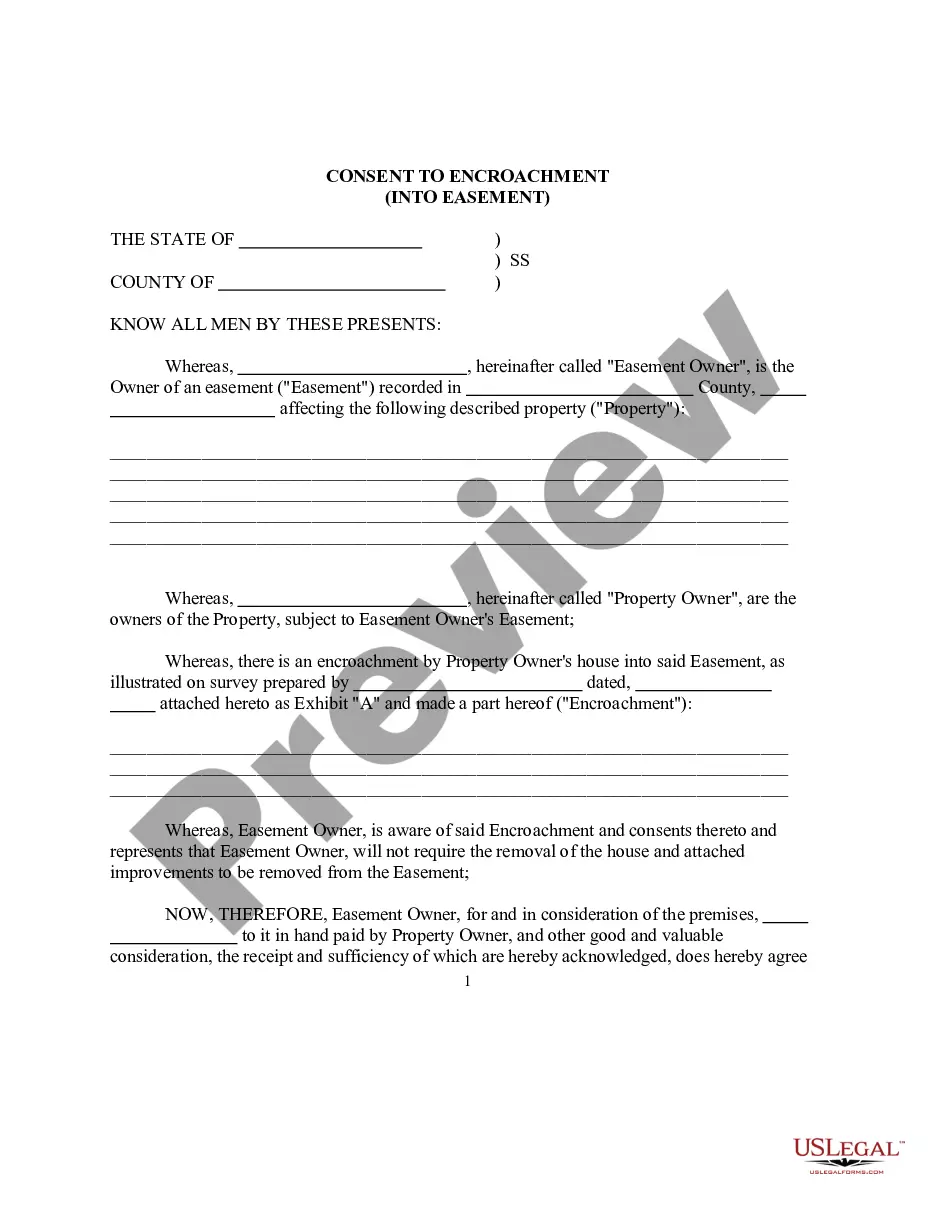
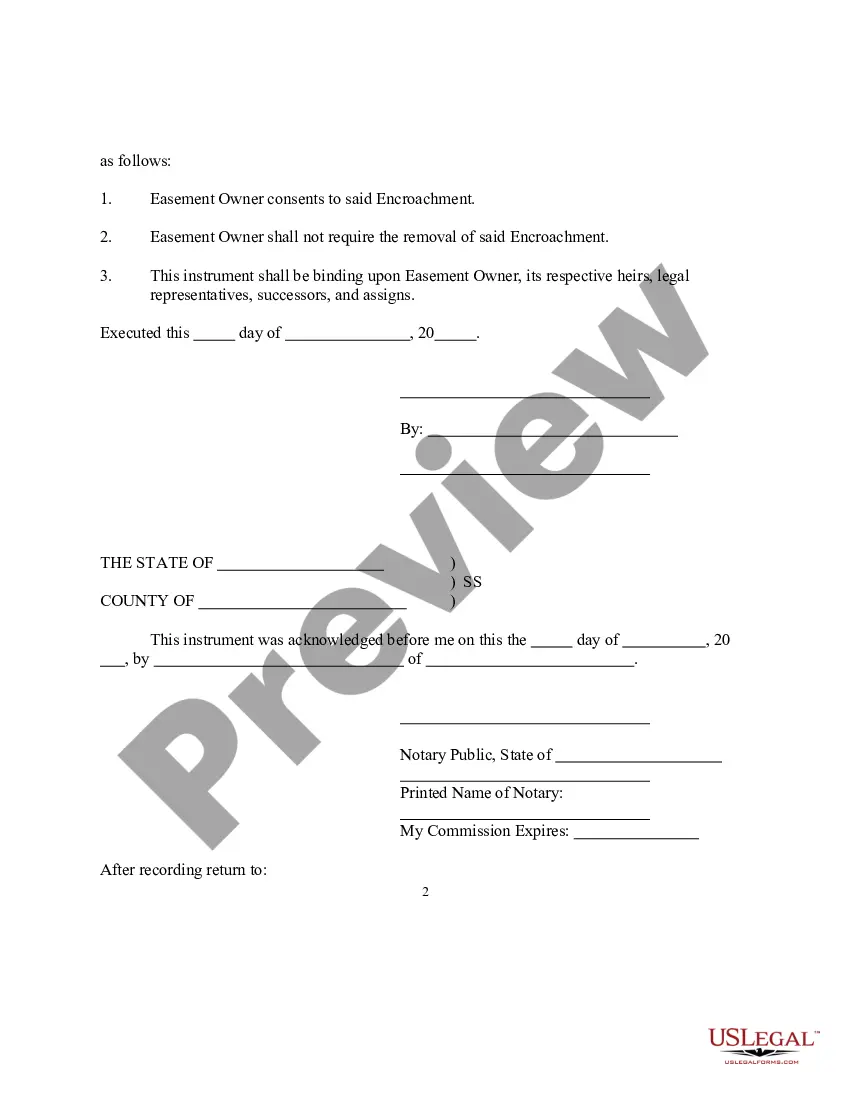




How to fill out Consent To Encroachment - Into Easement?
Managing legal documents and processes can often be a time-consuming addition to your daily workload.
Example Easement Agreement For Property and similar forms frequently require you to look for them and learn how to fill them out properly.
For this reason, whether you are handling financial, legal, or personal issues, utilizing a thorough and functional online directory of documents when needed will be extremely beneficial.
US Legal Forms is the leading online platform for legal documents, providing over 85,000 state-specific templates and various resources to assist you in completing your paperwork with ease.
Is this your first time using US Legal Forms? Register and create a free account in a few minutes and you will gain access to the document directory and Example Easement Agreement For Property. Then, follow the steps outlined below to complete your document: Ensure you have the correct template by utilizing the Preview option and reviewing the document details. Select Buy Now when ready, and choose the subscription plan that fits your needs. Click Download then fill out, sign, and print the document. US Legal Forms has twenty-five years of experience assisting users manage their legal documents. Find the document you need today and simplify any task effortlessly.
- Browse the selection of relevant documents available to you with a single click.
- US Legal Forms provides you access to state- and county-specific templates available for download at any time.
- Protect your document management processes with a dependable service that allows you to create any form in minutes without any additional or hidden fees.
- Simply Log In to your account, locate Example Easement Agreement For Property and acquire it immediately from the My documents section.
- You can also access previously downloaded forms.
Form popularity
FAQ
An easement is a benefit based in land ownership, other than the sharing of profits, that gives someone the right of use or enjoyment of another person's land for a special purpose not inconsistent with the general property rights of the owner.
Illinois law recognizes an easement by necessity as one of the two types of an implied easement (along with an easement arising from a pre-existing use). An easement by necessity is created when a landowner is landlocked and needs access for ingress and egress over another's property.
Both involve a property owner making extensions over their neighbor's property. While encroachments are the unauthorized use of the neighbor's property, easements are agreed upon by both parties. In many cases, the party responsible for the easement compensates the other neighbor.
Termination of Easements Termination occurs by release when all the dominant owners agree to abandon the easement. City of Chicago v Hogberg, 217 Ill 180, 75 NE 542 (1905). To terminate an easement by abandonment, the party must first prove that the dominant estate owner intended to abandon use of the easement.
An easement allows another person the right to use your land for a specific purpose. The most usual easements are those granted to public utility or telephone companies to run lines on or under your private property and to neighboring houses to use a common driveway to give access to their home.