Hardship License
Description
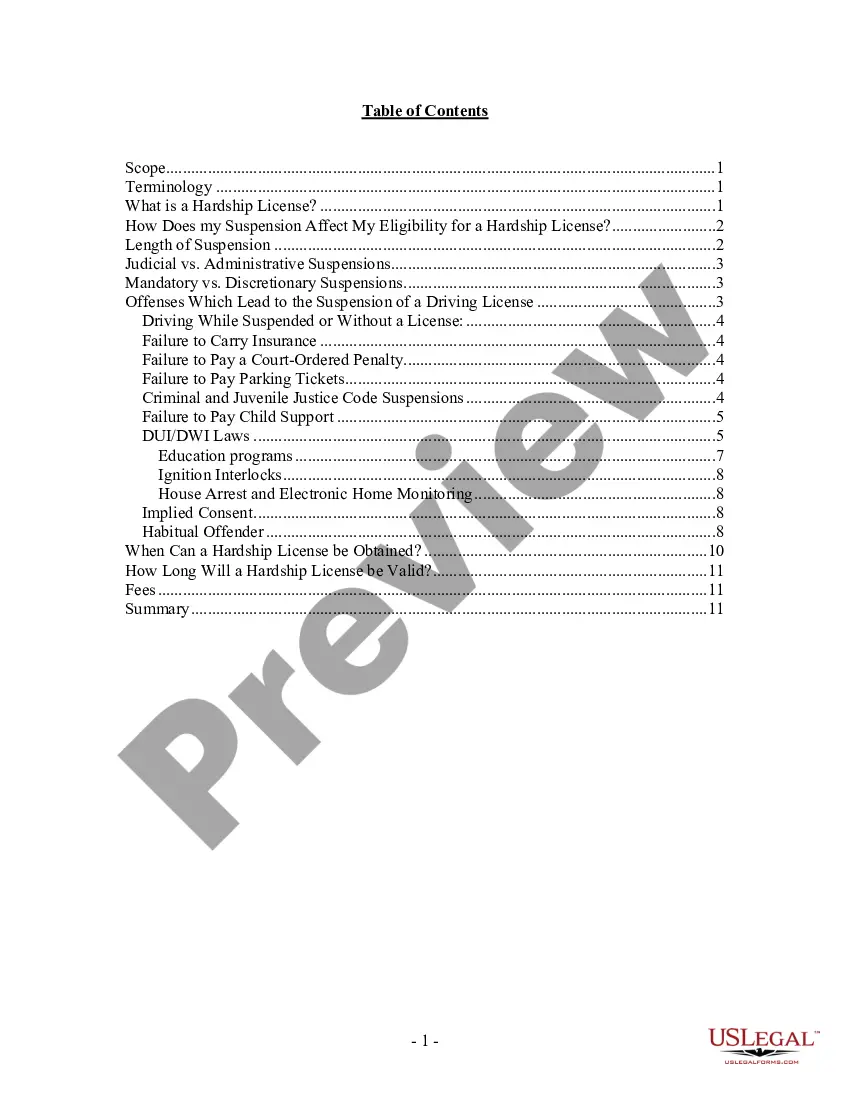
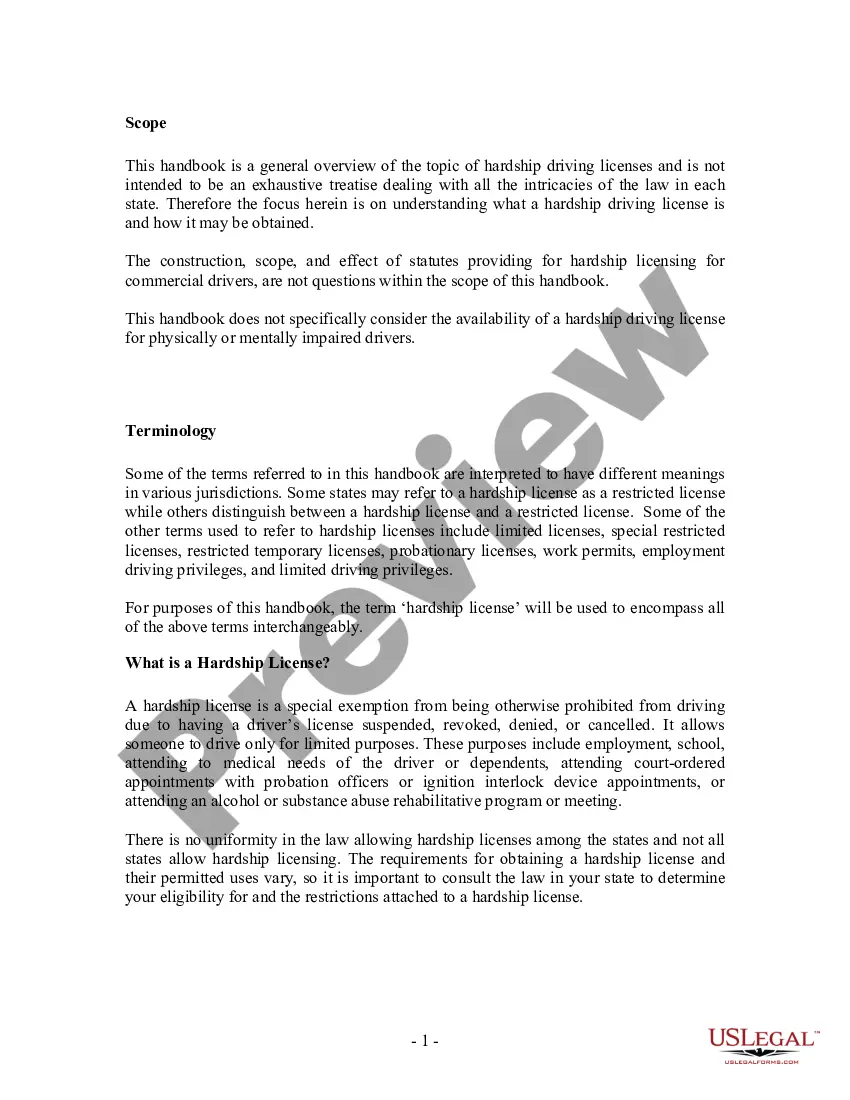
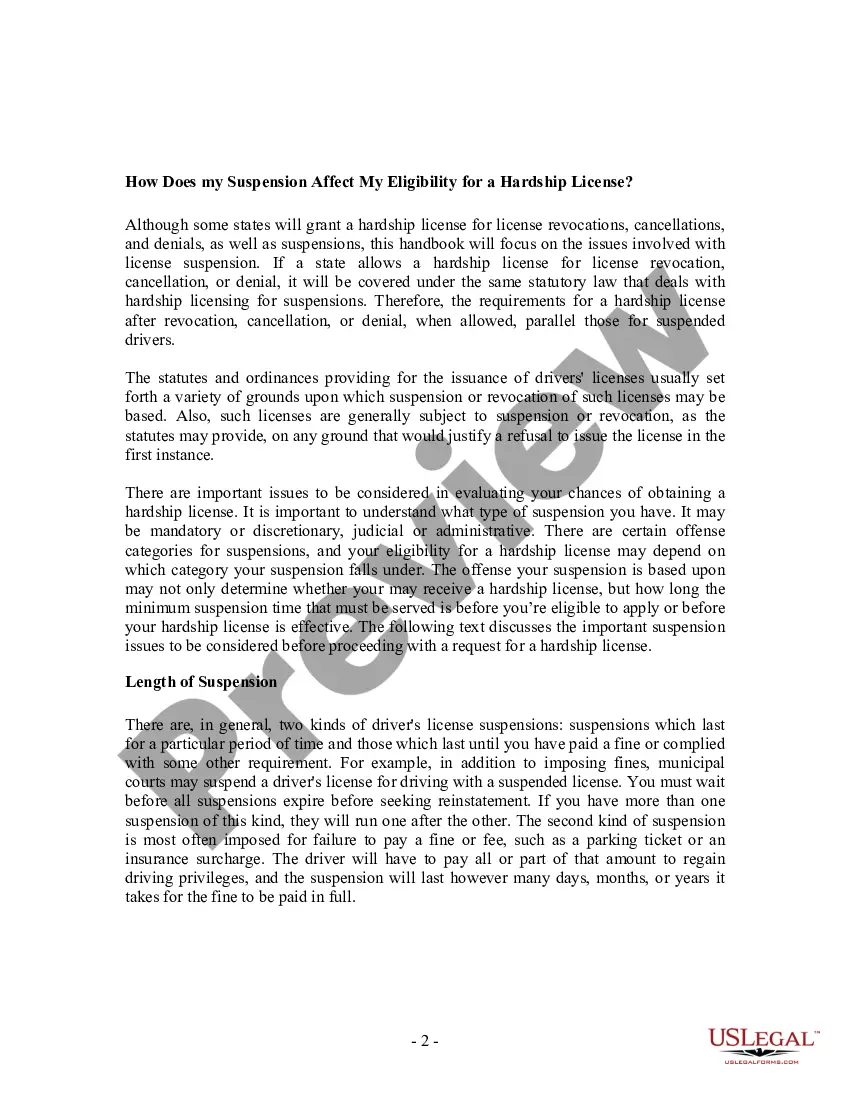
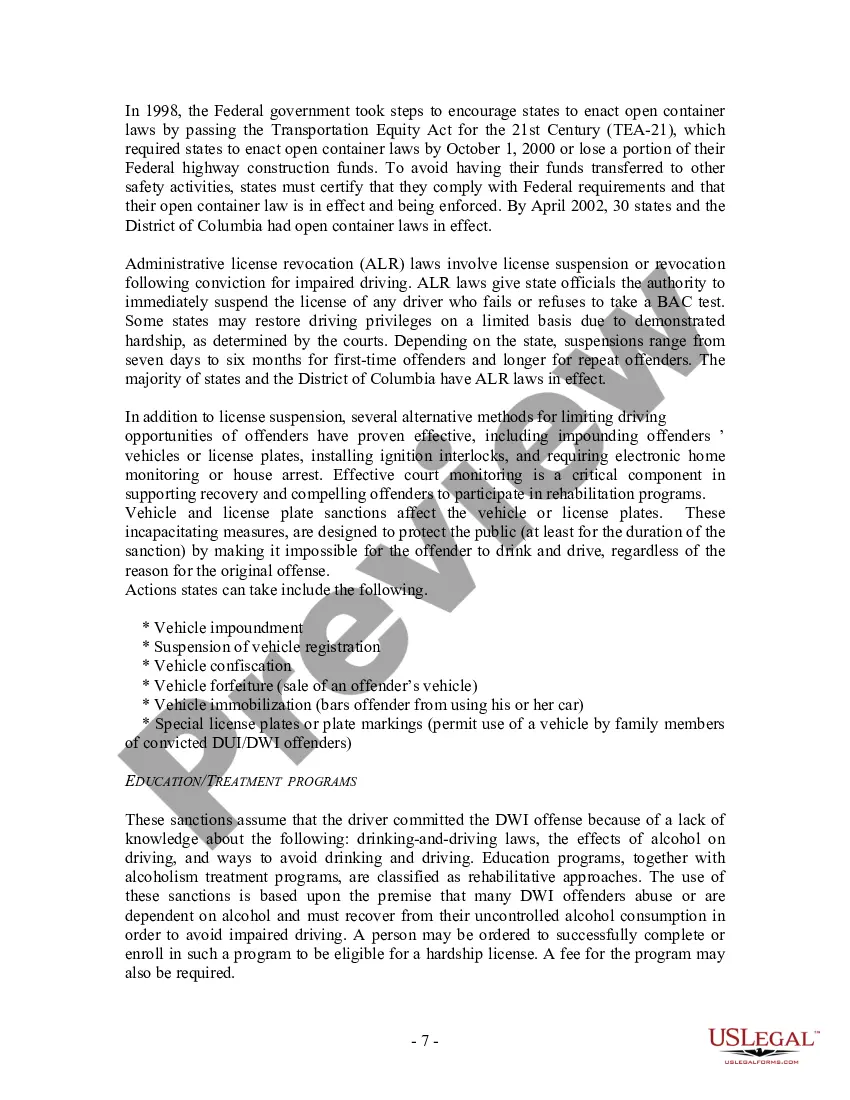
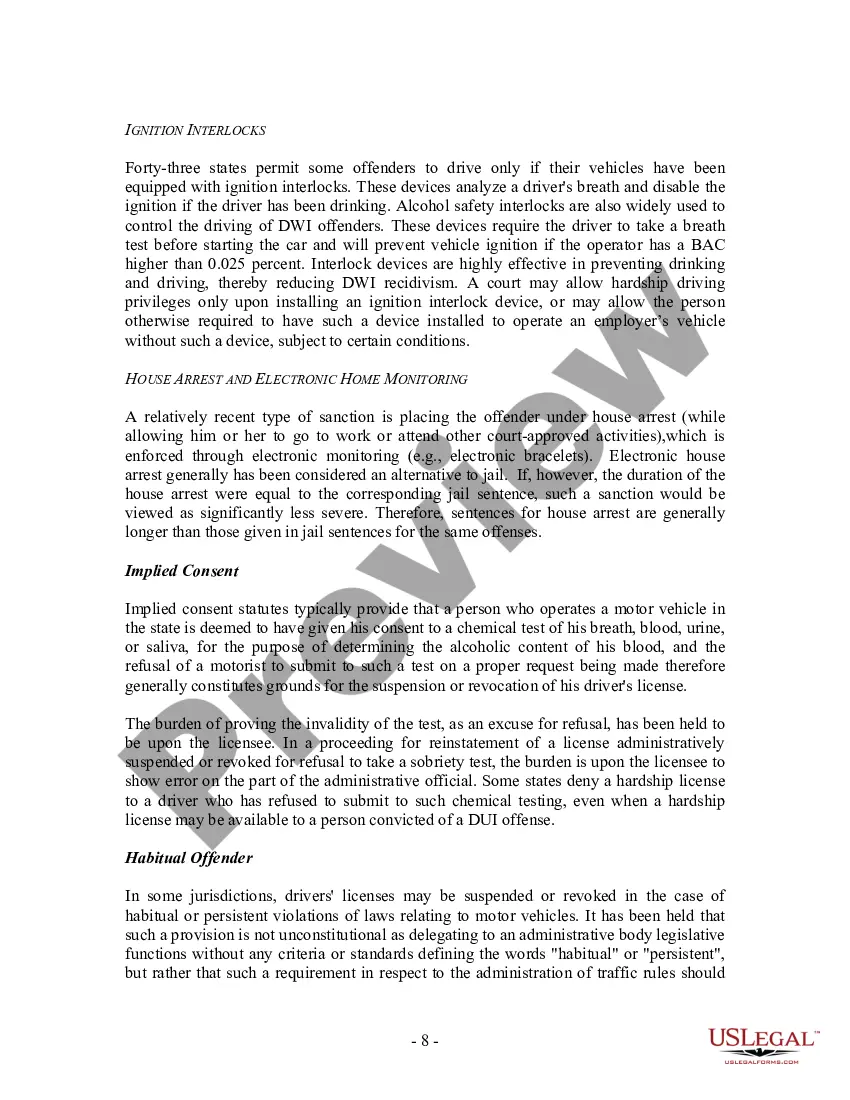

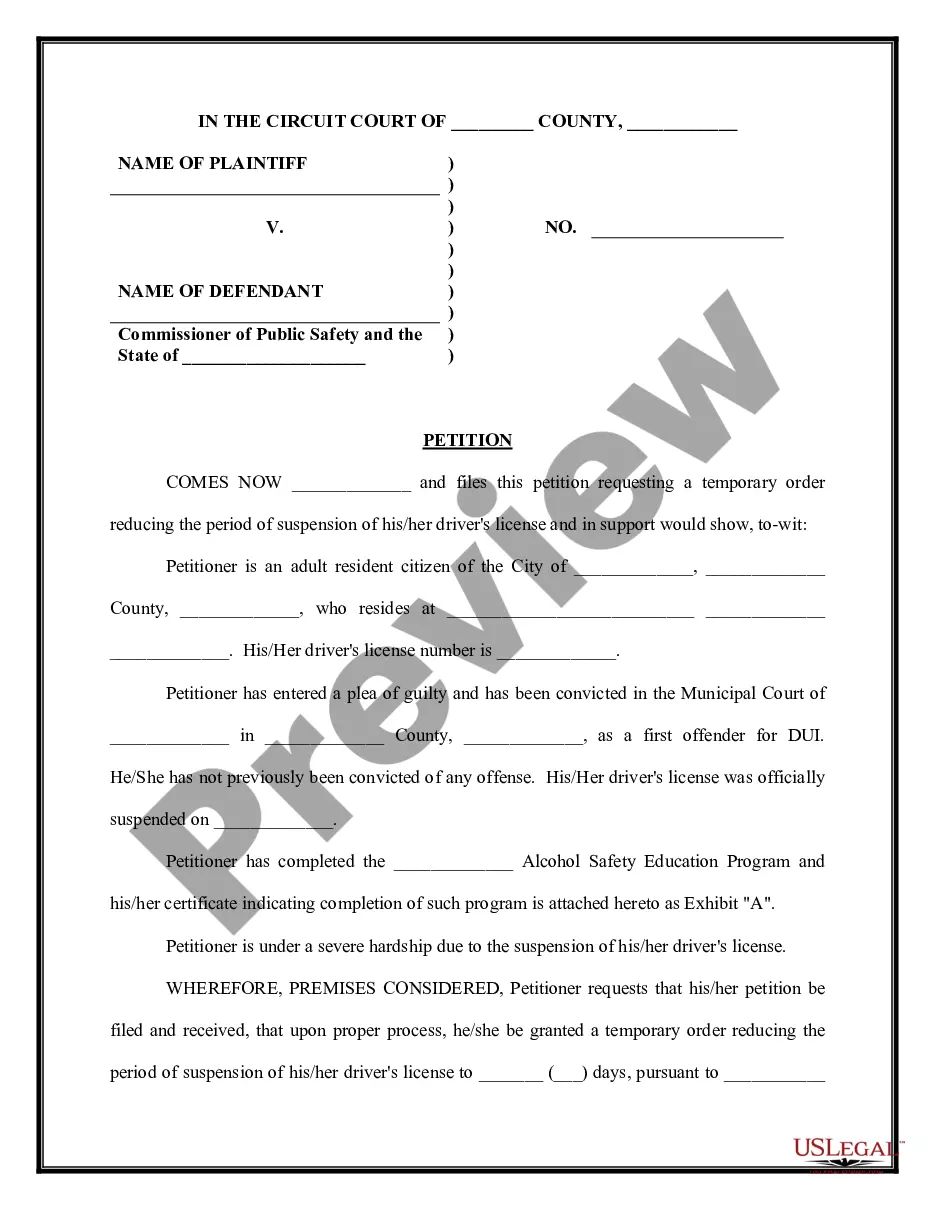
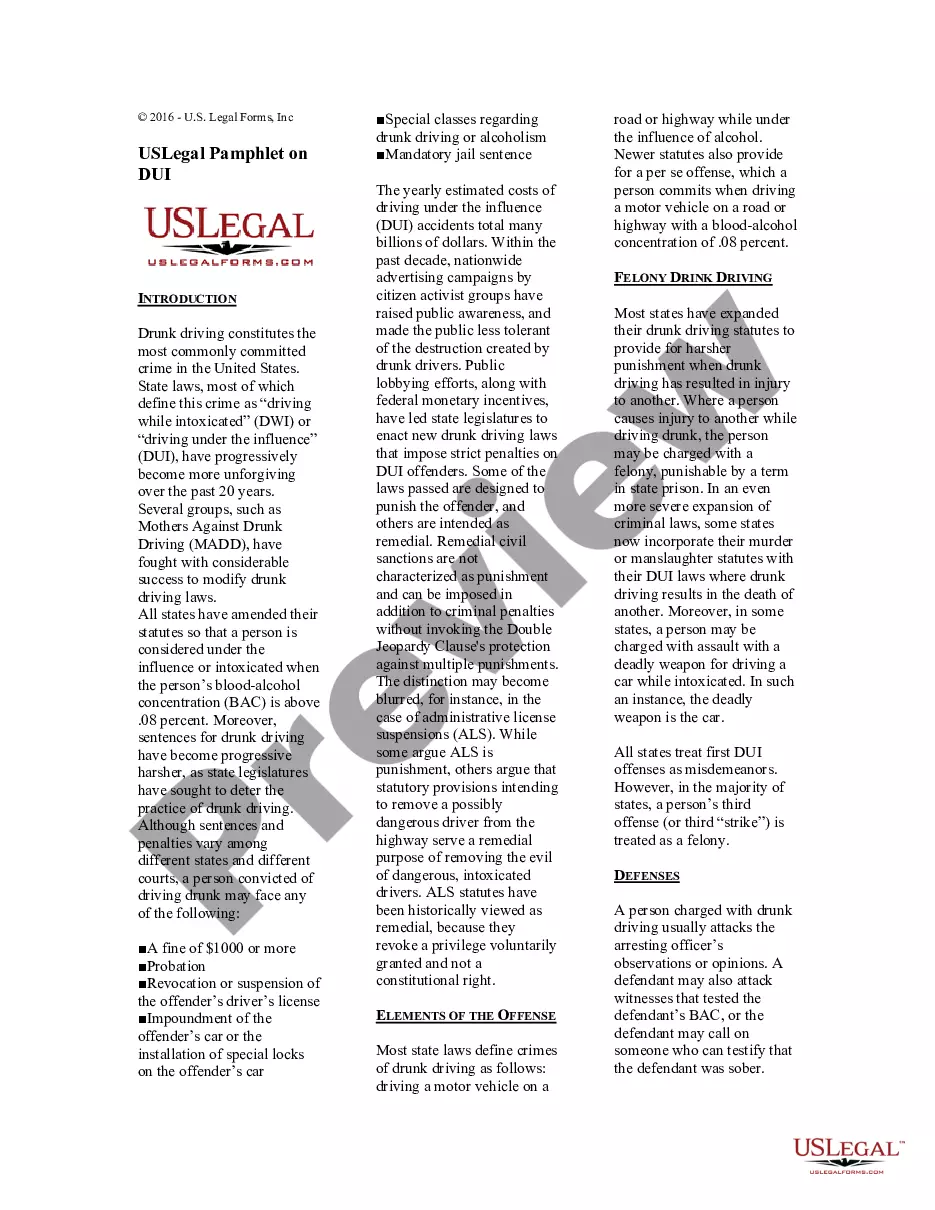
Get your form ready online
Our built-in tools help you complete, sign, share, and store your documents in one place.
Make edits, fill in missing information, and update formatting in US Legal Forms—just like you would in MS Word.
Download a copy, print it, send it by email, or mail it via USPS—whatever works best for your next step.
Sign and collect signatures with our SignNow integration. Send to multiple recipients, set reminders, and more. Go Premium to unlock E-Sign.
If this form requires notarization, complete it online through a secure video call—no need to meet a notary in person or wait for an appointment.
We protect your documents and personal data by following strict security and privacy standards.

Make edits, fill in missing information, and update formatting in US Legal Forms—just like you would in MS Word.

Download a copy, print it, send it by email, or mail it via USPS—whatever works best for your next step.

Sign and collect signatures with our SignNow integration. Send to multiple recipients, set reminders, and more. Go Premium to unlock E-Sign.

If this form requires notarization, complete it online through a secure video call—no need to meet a notary in person or wait for an appointment.

We protect your documents and personal data by following strict security and privacy standards.
Looking for another form?





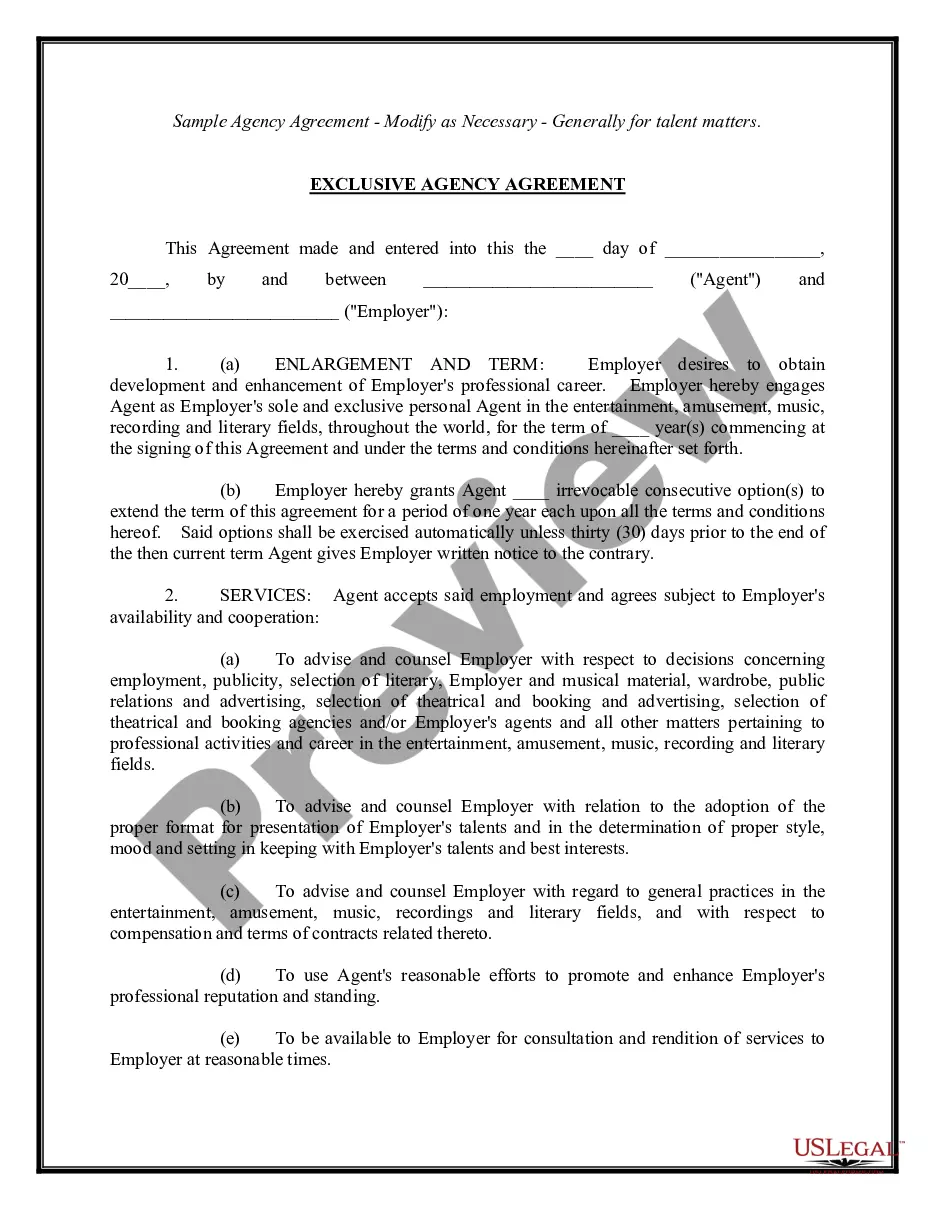


How to fill out Driving Hardship Licenses Handbook - Driver's Hardship?
- If you're already a member, log in to your account. Check your subscription status and click the Download button to save the required form template to your device.
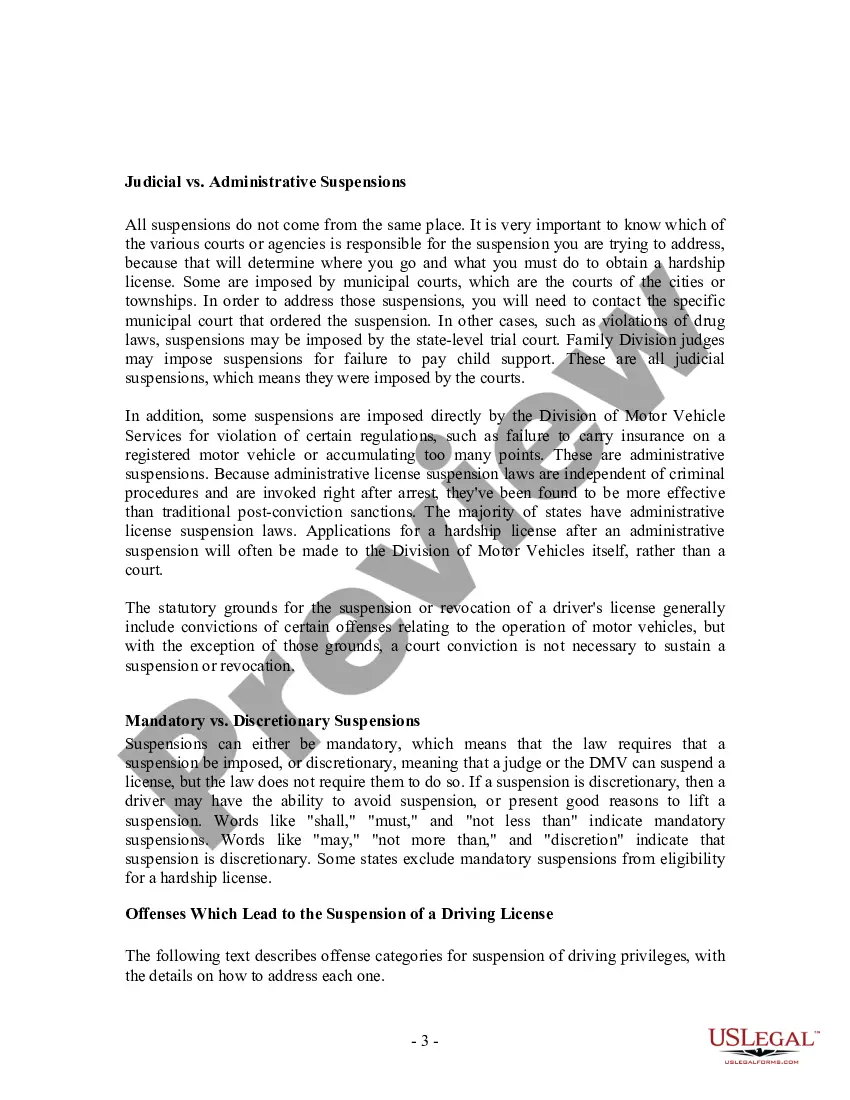
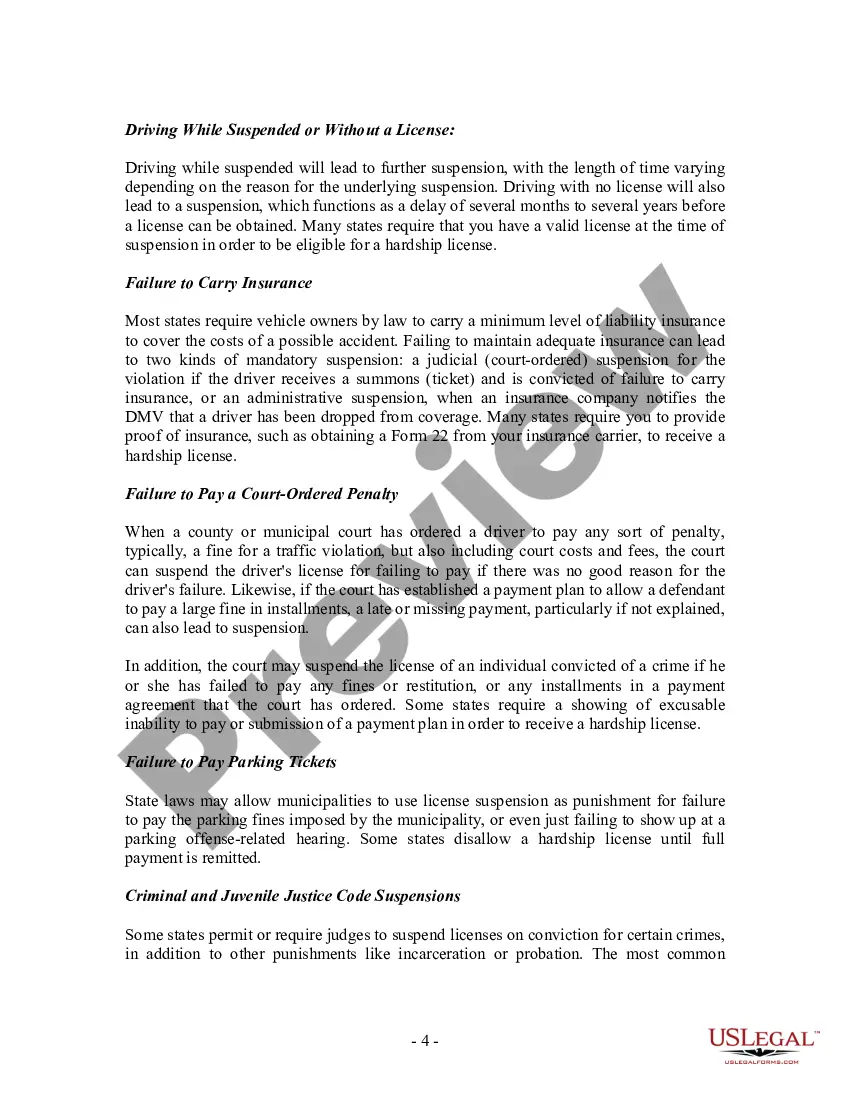
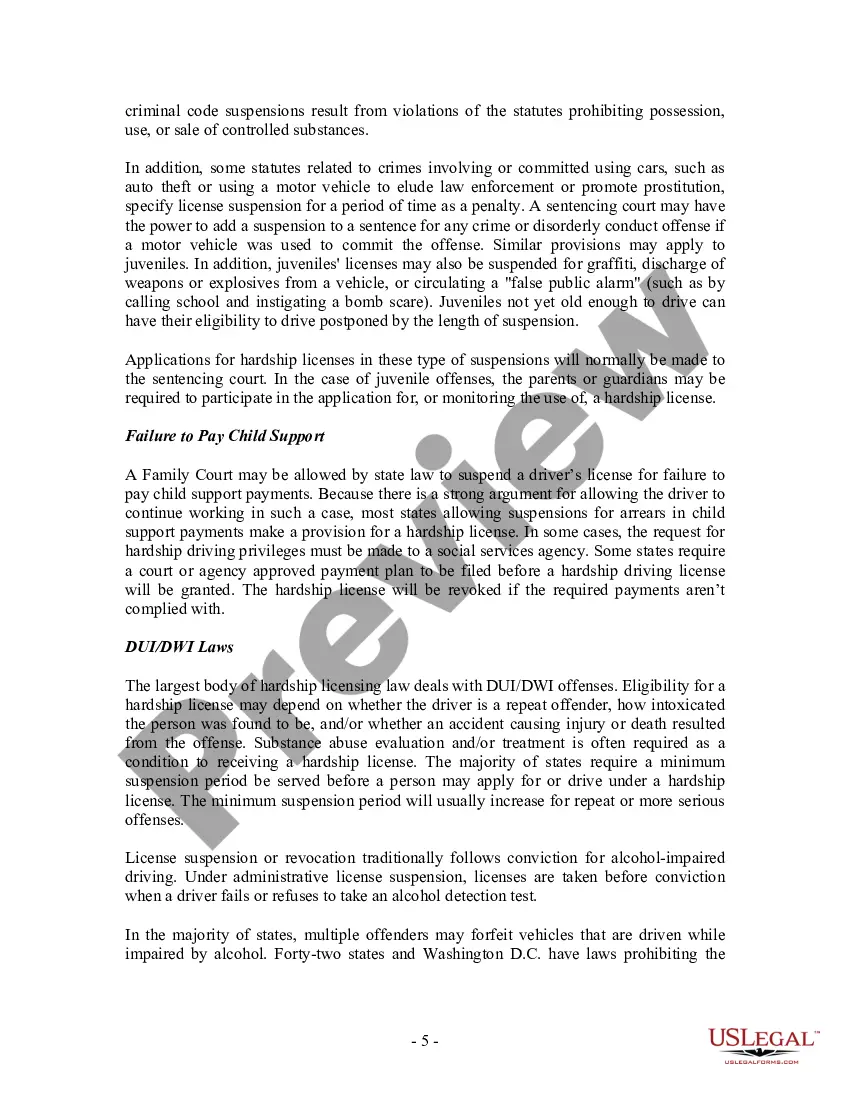
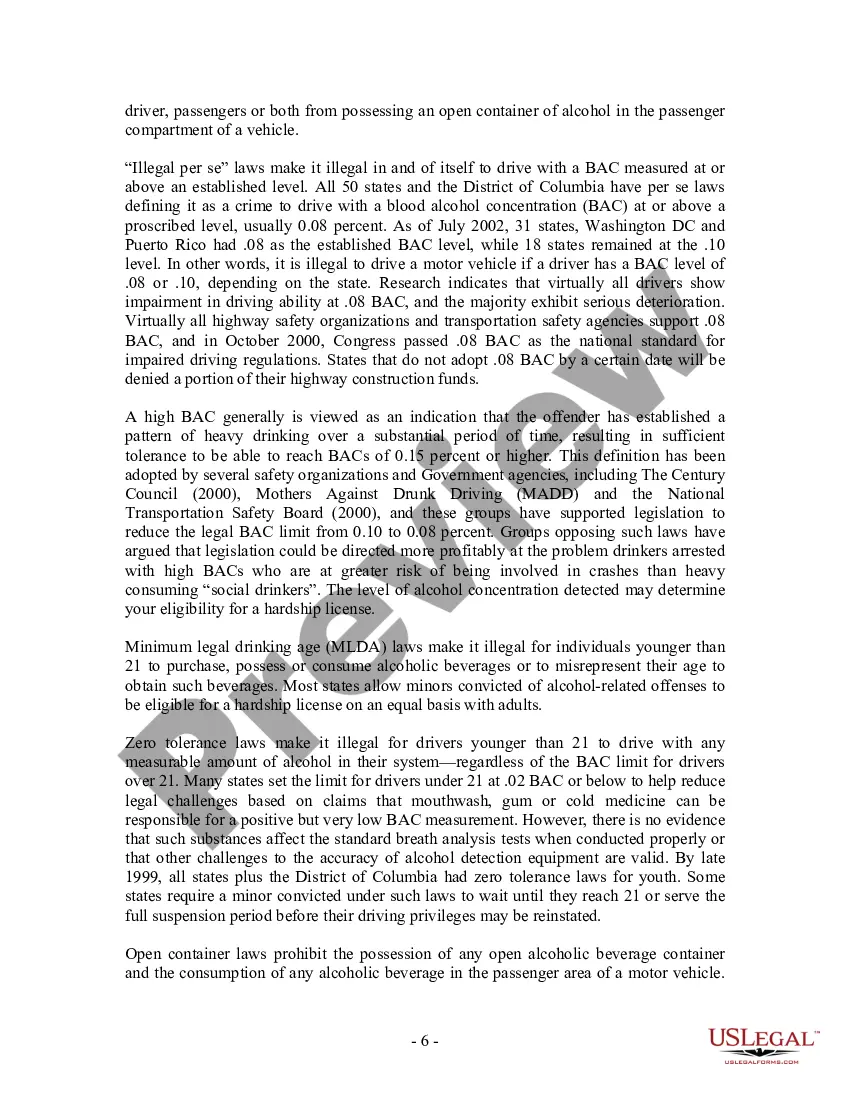
- For first-time users, start by exploring the Preview mode and form description to confirm you have selected the correct hardship license template that adheres to your local jurisdiction.
- If the form isn't right, utilize the Search feature at the top to locate the specific template that fits your situation.
- Once satisfied with your choice, select the Buy Now button and choose a subscription plan to proceed.
- Complete your purchase by entering your payment details, either through a credit card or PayPal.
- After payment, download your document and keep it stored on your device for easy access. You can also revisit it anytime in the My Forms section of your profile.
In conclusion, US Legal Forms enables you to efficiently handle your hardship license application with its extensive collection of forms. Their user-friendly interface and expert support ensure you create accurate and legally compliant documents.
Visit US Legal Forms today and make your application process simpler!
Form popularity
FAQ
The Supreme Court has recognized the right to travel as a fundamental part of American liberty. However, this right does not eliminate the requirement for a driver's license when driving a vehicle. For individuals unable to hold a standard license due to circumstances, a hardship license may represent a viable solution. Consulting with legal resources, such as uslegalforms, can help clarify how this ruling impacts your personal situation.
While the right to travel exists, operating a vehicle on public roads usually requires a valid driver's license. However, those facing specific challenges may qualify for a hardship license, which can allow limited driving privileges. It's essential to explore legal resources to understand how to maintain your travel rights, even without a conventional license. Using uslegalforms can provide you with the tools to navigate these options effectively.
The distinction between driving and traveling is significant. Driving typically refers to operating a motor vehicle on public roads, which requires a valid driver's license. Traveling, on the other hand, is a broader term that encompasses moving from one place to another, regardless of the method. For those in need of a hardship license, knowing this difference can be crucial in navigating legal requirements while still meeting travel needs.
In the United States, the right to travel is often discussed but has nuances regarding driving. Specifically, driving is considered a regulated activity that generally requires a driver's license. However, a hardship license may offer individuals the opportunity to travel under specific circumstances, especially if they've lost their driving privileges. Understanding your rights in relation to travel can be complex, and using platforms like uslegalforms can help clarify your options.
To apply for a hardship license in New York, you must first meet specific eligibility criteria, such as demonstrating a need for driving to maintain employment or other essential activities. Next, you need to complete the application form and gather necessary documentation, including proof of your identification and residency. After you compile your materials, submit your application to the New York Department of Motor Vehicles. If approved, the hardship license will allow you to drive under certain restrictions while you work toward restoring your full driving privileges.
Restrictions for a hardship license often include limitations on driving hours and specific purposes for which you can drive, such as work or school. Some states may require you to install an ignition interlock device if your suspension was related to alcohol. Understanding these restrictions is crucial, as violating them can lead to further penalties.
In Georgia, to get a hardship license, you must apply through the Georgia Department of Driver Services (DDS). Begin by completing the required application and gathering documents that prove your need for driving, such as proof of employment or school enrollment. Once submitted, the DDS will review your application, and if approved, you can receive your hardship license.
To obtain a hardship license in California, start by completing the necessary application forms available from the DMV. You will need to gather supporting documents that demonstrate your need for driving and any additional requirements specific to your case. Submitting all documentation correctly will facilitate a smoother review process, so be thorough and clear in your application.
To qualify for a hardship license in California, you must demonstrate a genuine need for driving, such as work or medical reasons. You will need to provide documentation proving your circumstances, along with a completed application and any applicable fees. Additionally, showing proof of enrollment in a treatment program may be necessary if your license was suspended due to alcohol or drug-related offenses.
The speed at which you can obtain a hardship license varies by state and your unique situation. Typically, if you meet all the requirements and submit your application promptly, you might receive your license within a few weeks. Your preparation, including gathering necessary documents and completing any required courses, can significantly expedite the process.