Debt Validation Letter By Email
Description
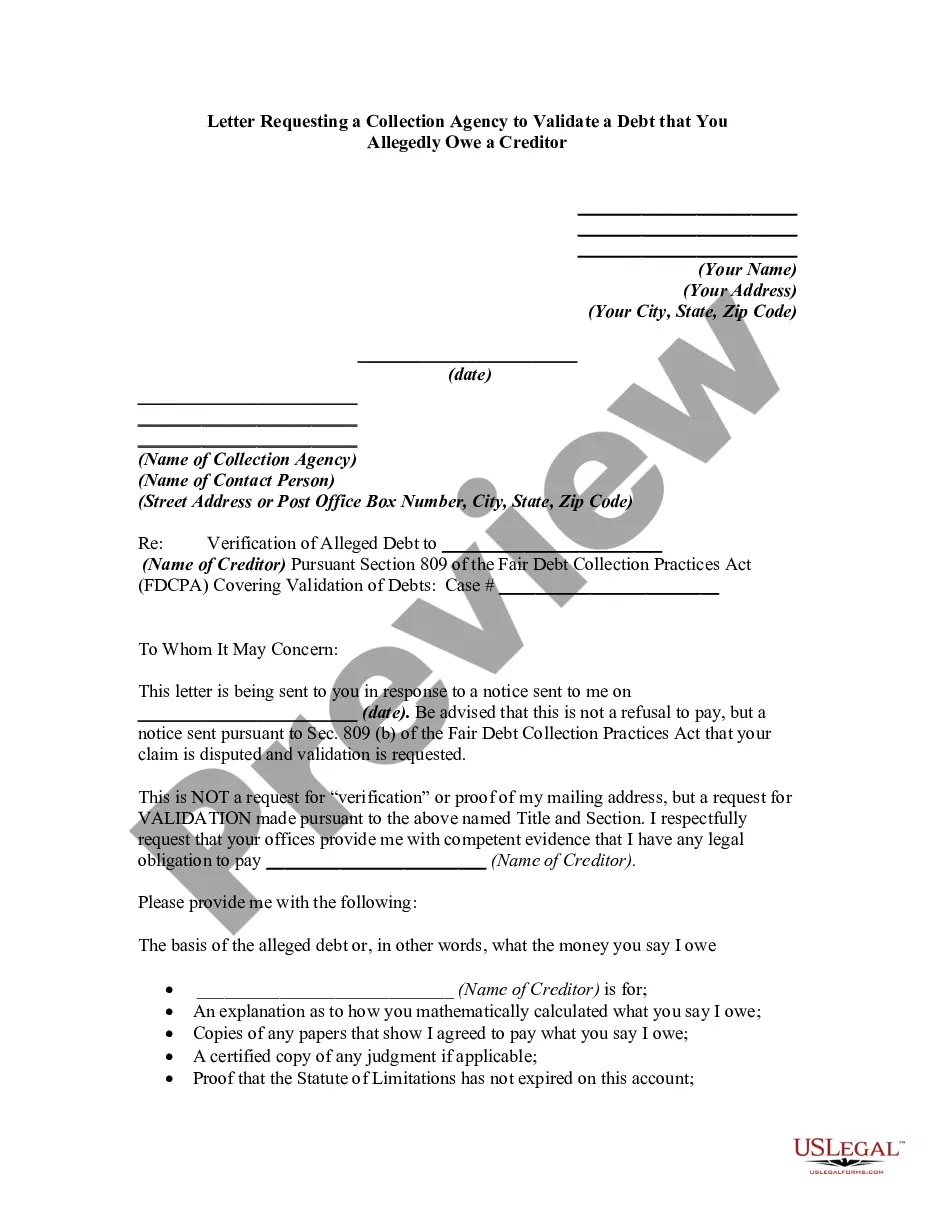
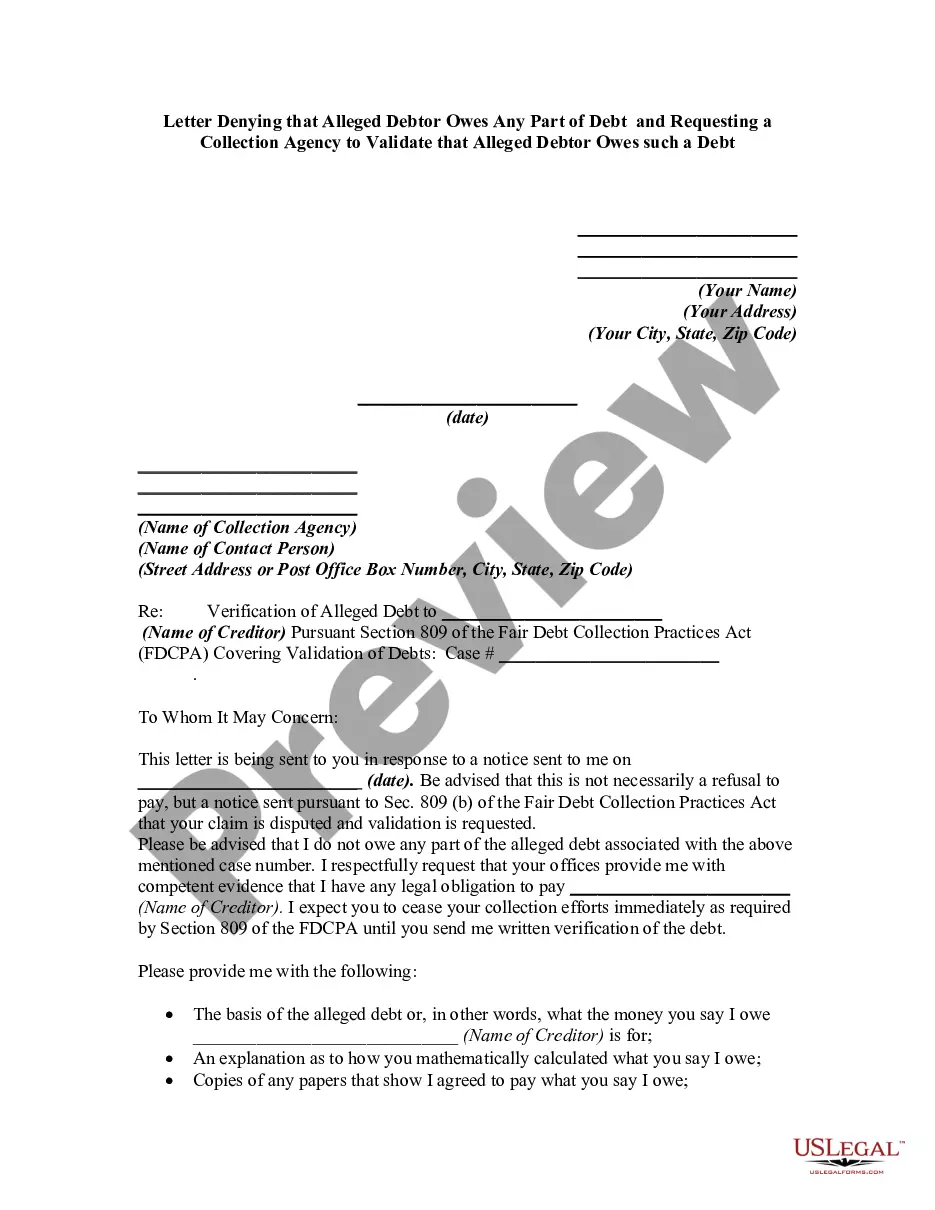
Get your form ready online
Our built-in tools help you complete, sign, share, and store your documents in one place.
Make edits, fill in missing information, and update formatting in US Legal Forms—just like you would in MS Word.
Download a copy, print it, send it by email, or mail it via USPS—whatever works best for your next step.
Sign and collect signatures with our SignNow integration. Send to multiple recipients, set reminders, and more. Go Premium to unlock E-Sign.
If this form requires notarization, complete it online through a secure video call—no need to meet a notary in person or wait for an appointment.
We protect your documents and personal data by following strict security and privacy standards.

Make edits, fill in missing information, and update formatting in US Legal Forms—just like you would in MS Word.

Download a copy, print it, send it by email, or mail it via USPS—whatever works best for your next step.

Sign and collect signatures with our SignNow integration. Send to multiple recipients, set reminders, and more. Go Premium to unlock E-Sign.

If this form requires notarization, complete it online through a secure video call—no need to meet a notary in person or wait for an appointment.

We protect your documents and personal data by following strict security and privacy standards.
Looking for another form?
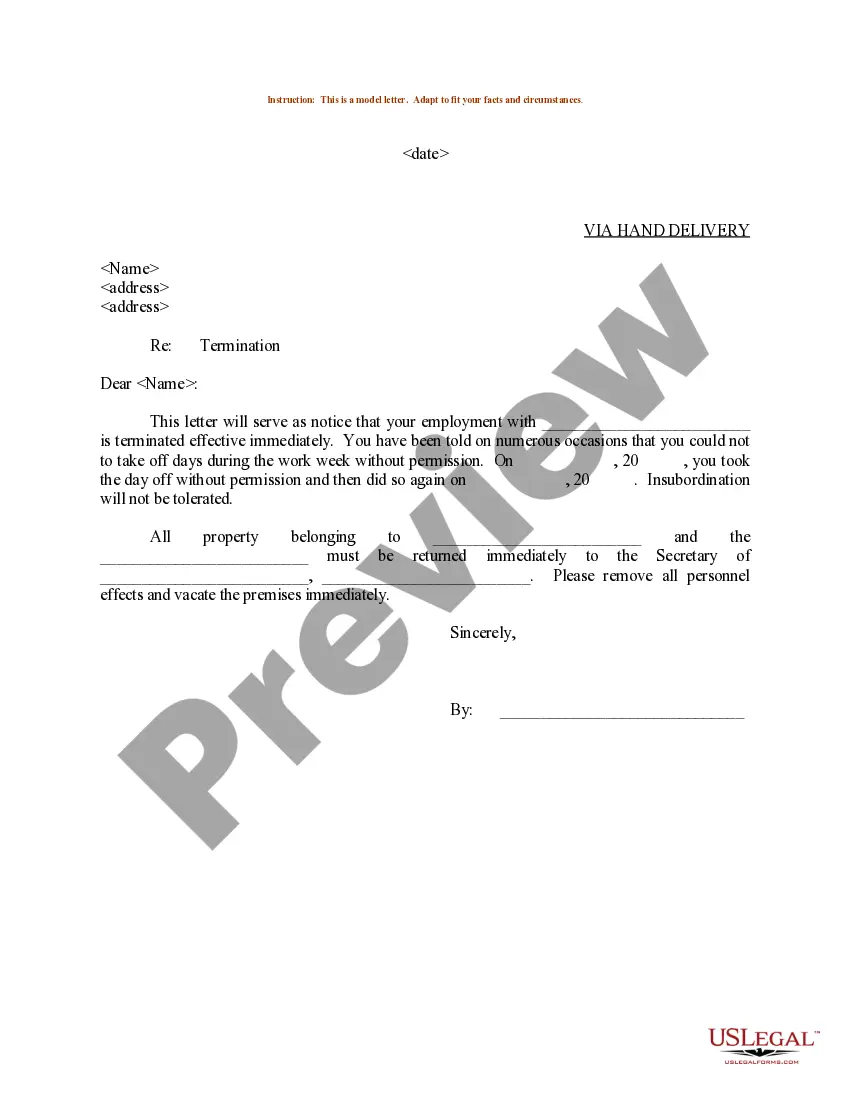
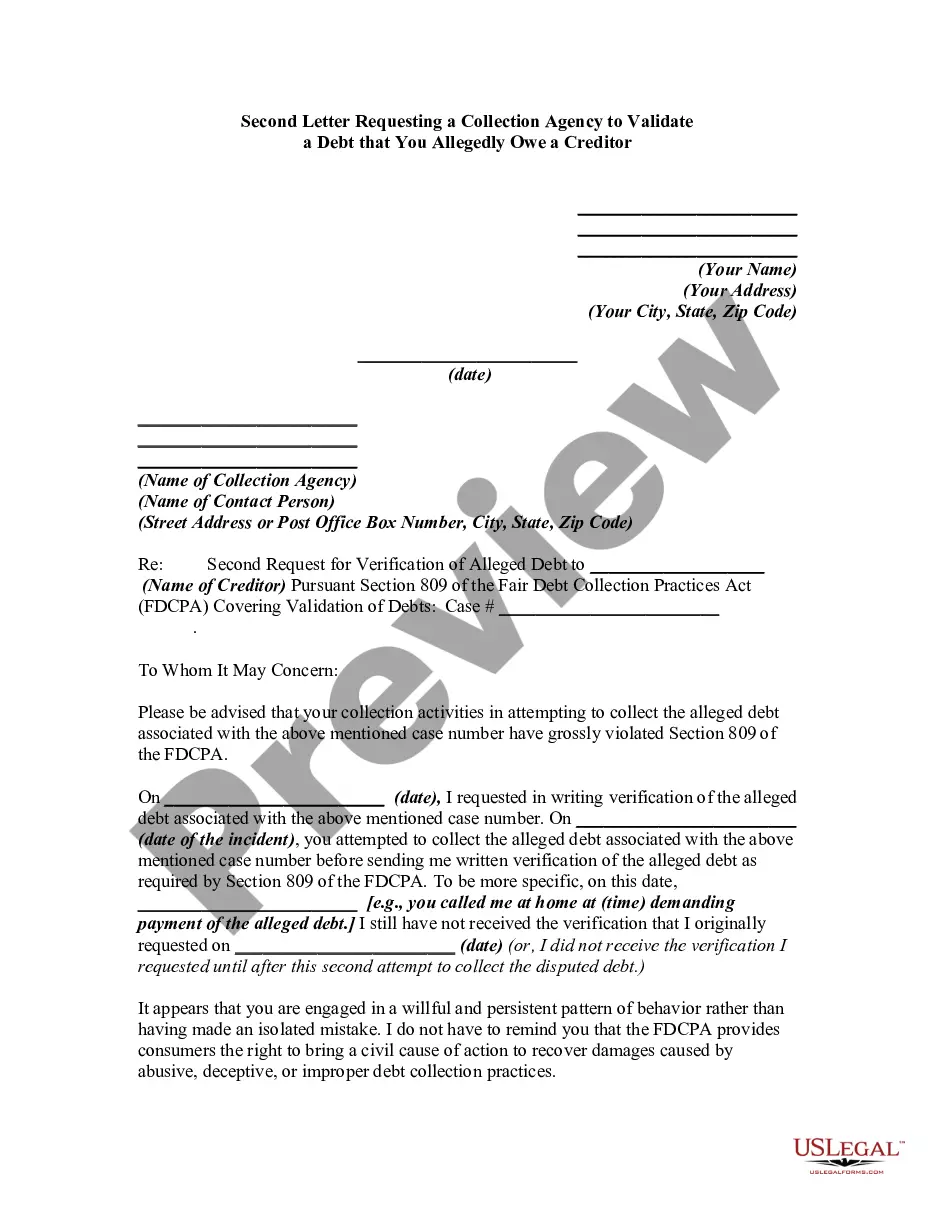
How to fill out Second Letter Requesting A Collection Agency To Validate A Debt That You Allegedly Owe A Creditor?
It’s well known that you cannot transform into a legal authority instantly, nor can you swiftly learn to compose a Debt Validation Letter By Email without having a dedicated background.
Drafting legal documents is an elaborate task that necessitates specific education and abilities. So why not entrust the formulation of the Debt Validation Letter By Email to the experts.
With US Legal Forms, one of the most comprehensive legal document repositories, you can discover everything from court documents to templates for internal corporate correspondence.
If you need a different template, restart your search.
Sign up for a free account and select a subscription plan to acquire the form. Then, click Buy now. Once the purchase is finalized, you can access the Debt Validation Letter By Email, complete it, print it, and send or mail it to the relevant individuals or organizations.
- We recognize how vital compliance and adherence to federal and local regulations and laws are.
- That’s why, on our platform, all forms are location-specific and current.
- Start by visiting our website and obtaining the document you need in just minutes.
- Utilize the search bar at the top of the page to locate the form you require.
- Preview it (if this option is available) and examine the supporting description to determine if the Debt Validation Letter By Email suits your needs.
Form popularity
FAQ
Yes, it is legal for a debt collector to email you. However, they must comply with fair debt collection practices, just as they would with phone calls or letters. When you receive a debt validation letter by email, it is crucial to review it carefully to understand your rights and obligations.
The 777 rule refers to a guideline that debt collectors must adhere to, governing how often they can contact you. This rule includes that they should not call you more than seven times in a week, and it helps protect you from harassment. Understanding this can empower you when dealing with creditors, making the debt validation letter by email an important tool.
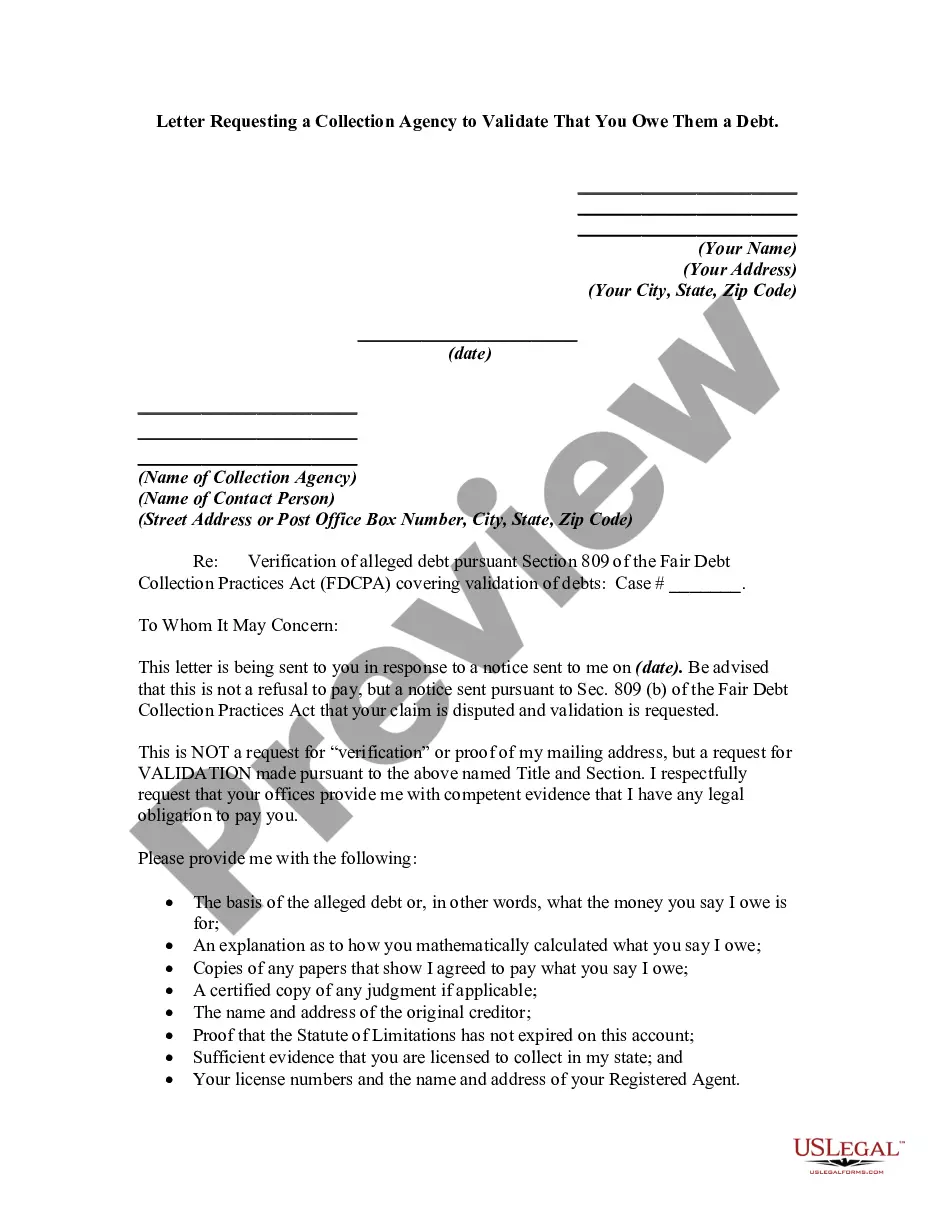
Yes, you can send a debt validation letter via email. In fact, a debt validation letter by email is an efficient way to communicate with debt collectors quickly. Ensure you keep a copy of the sent email for your records, as this can be beneficial later if disputes arise.
No, a debt validation letter does not need to be notarized. Sending a debt validation letter by email is sufficient, and it maintains a clear record of your correspondence. Focus on ensuring the letter is clear and includes relevant information about the debt.
Yes, debt validation letters can work effectively. When you send a debt validation letter by email, it prompts the collector to provide proof of the debt. This step can help you verify the legitimacy of the debt, and it may even lead to the debt being dismissed if they fail to validate it.
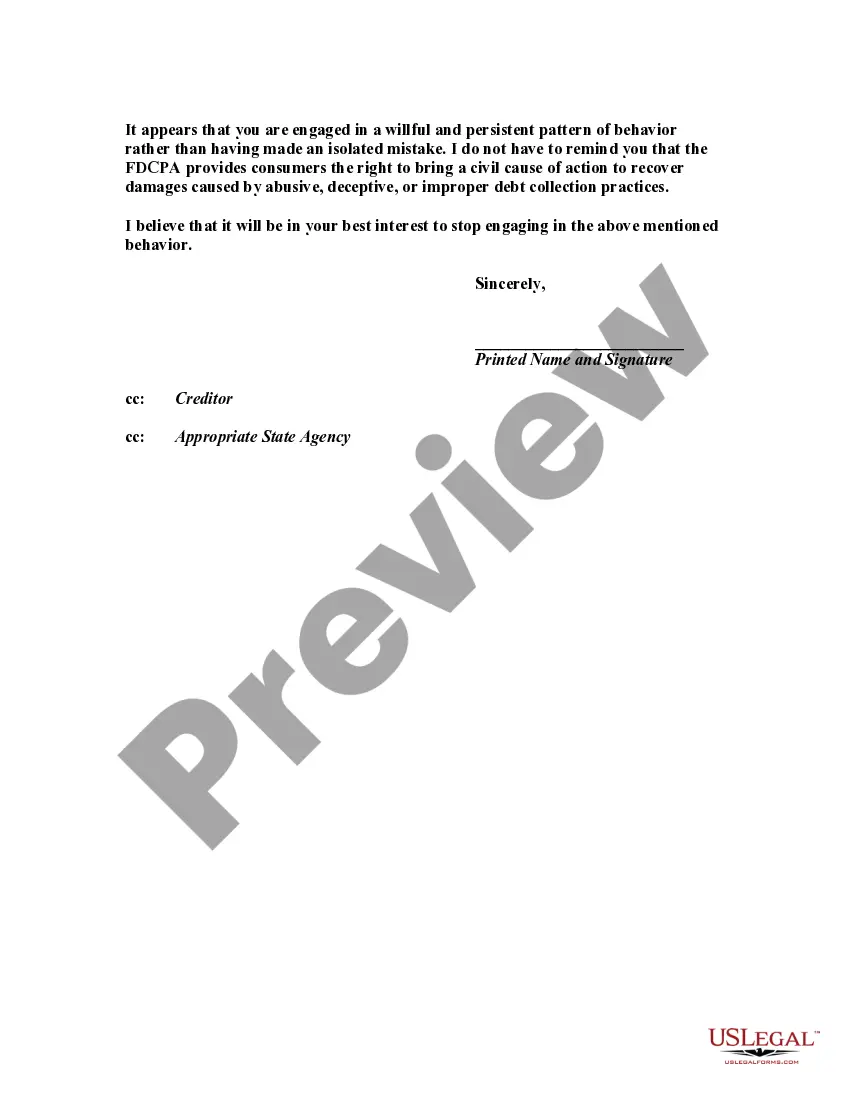
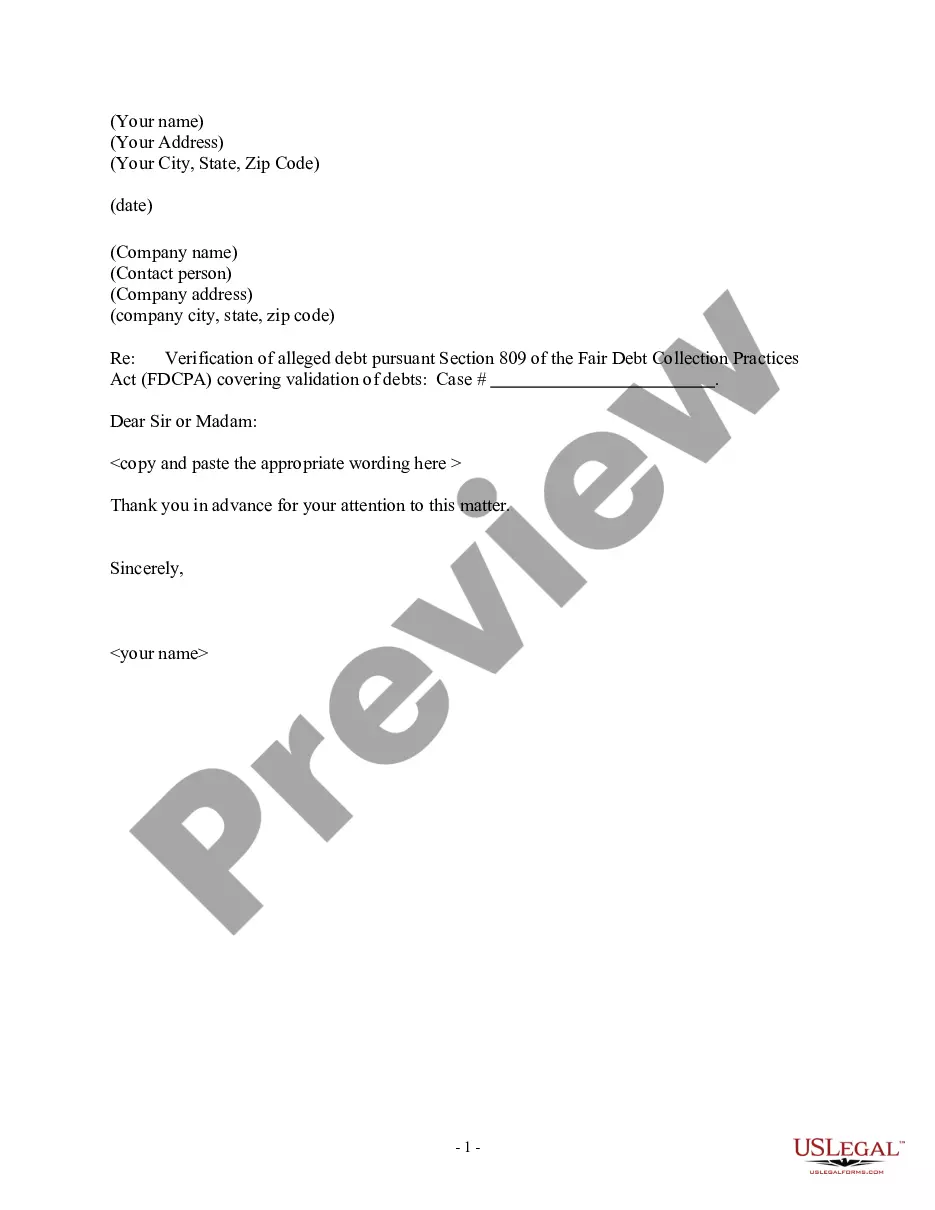
To fill out a debt validation letter by email, start by including your name and contact information at the top. Clearly state the request for debt validation and include details like the account number and the amount owed. Additionally, specify that you expect a response within 30 days, which is your right under the Fair Debt Collection Practices Act. Using a streamlined service like US Legal Forms can simplify this process, helping you create and send a professional debt validation letter by email effectively.
If you never received a debt validation letter, you should follow up with the creditor or collector promptly. Send a polite email requesting the debt validation letter by email again, emphasizing your right to receive this information. If necessary, consider filing a complaint with the Consumer Financial Protection Bureau (CFPB) if your request is ignored. Staying proactive can help you resolve the situation effectively.
To complete proof of debt, start by gathering all relevant information regarding the alleged debt. This includes statements, communication records, and any debt validation letter by email you receive from the creditor. Once you have the documentation, review it carefully to confirm the details are accurate. Keep all evidence stored securely to support your position if needed.
Yes, you can send a collection letter via email, and this method is often more efficient. When using email, ensure the language remains professional and direct. Requesting a debt validation letter by email is a suitable way to initiate the collections process while maintaining a clear record of the communication. Just ensure the email complies with applicable laws and regulations.
Evidence of debt typically includes documents like a debt validation letter by email, statements from the creditor, and your account records. These documents should outline the debt amount, origin, and any payments made. Collecting such evidence helps clarify your financial standing and supports your case if disputes arise. Always keep these records organized and accessible.