Letter Debt Using For The Future
Description
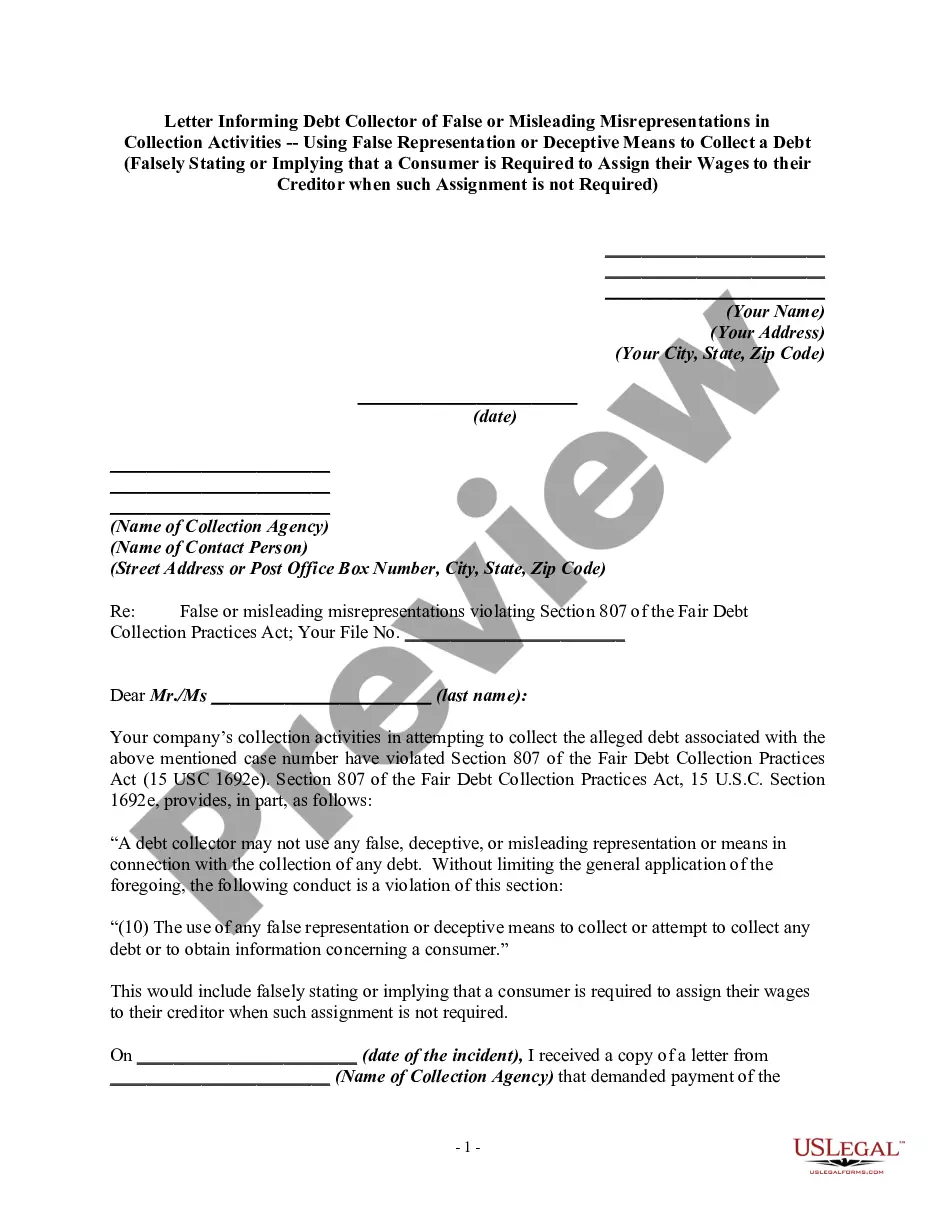
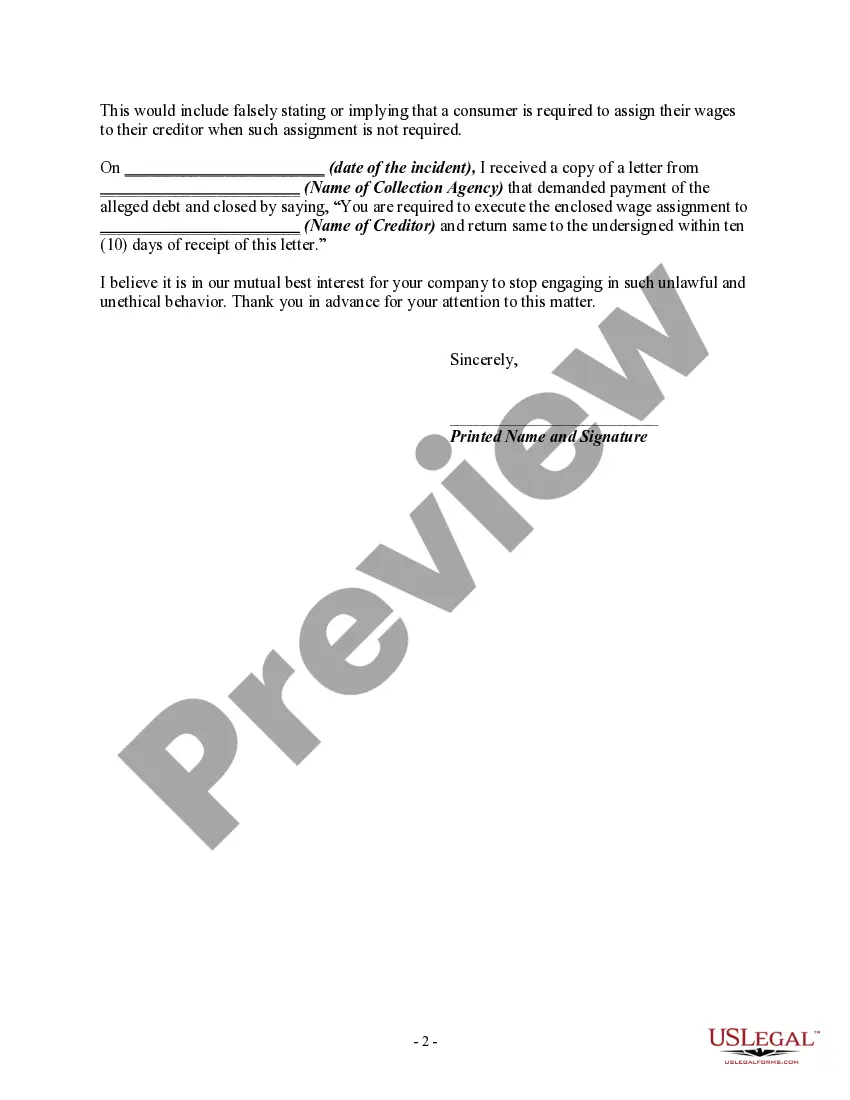
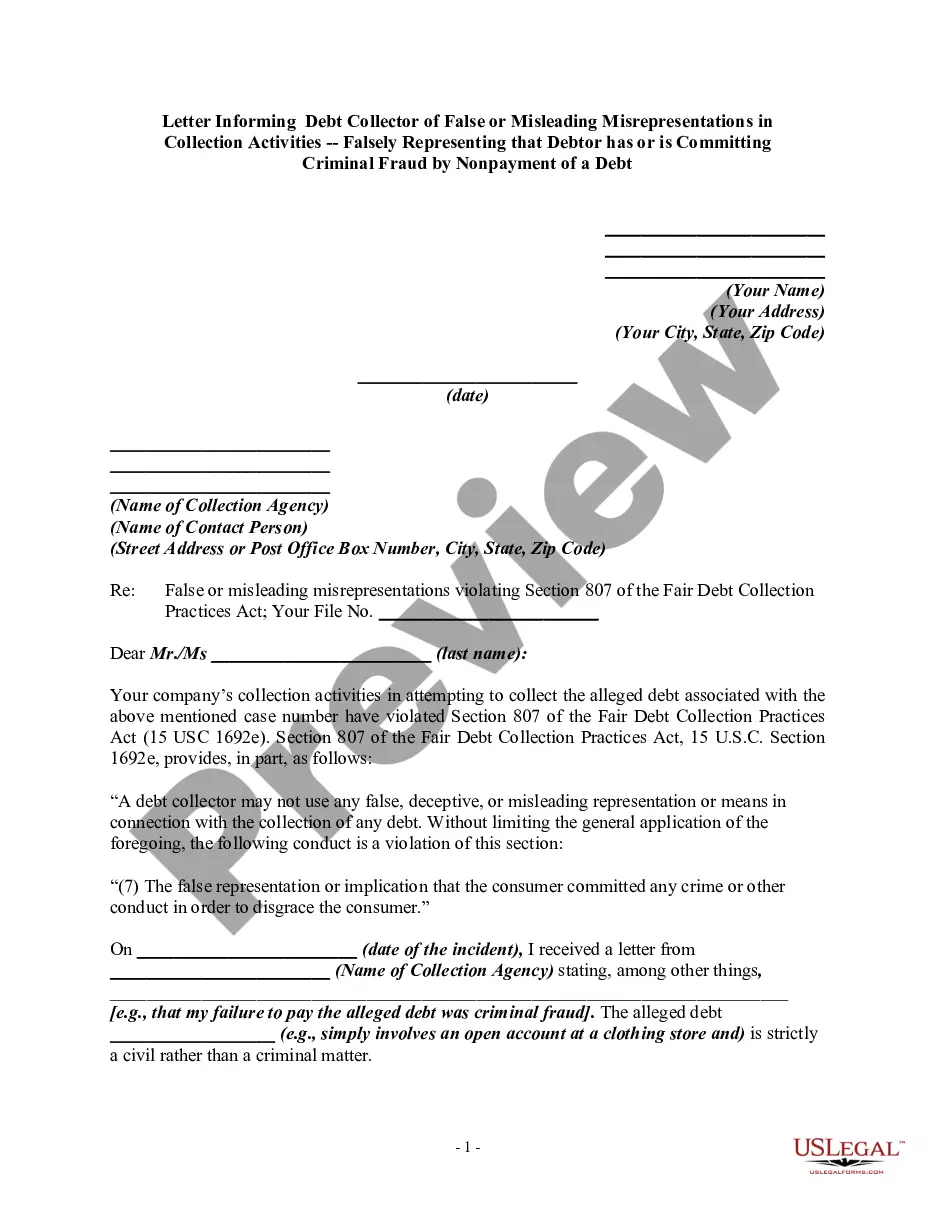
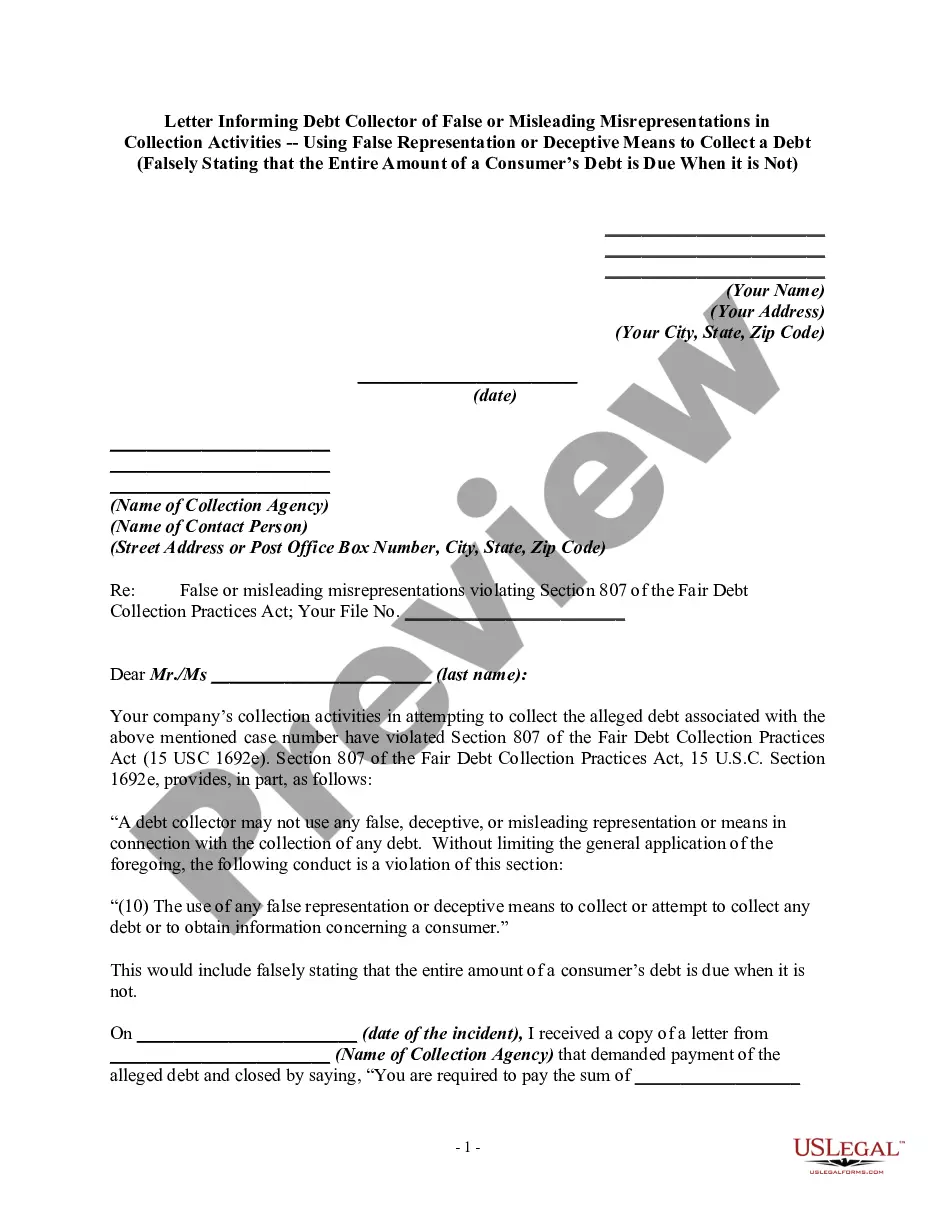
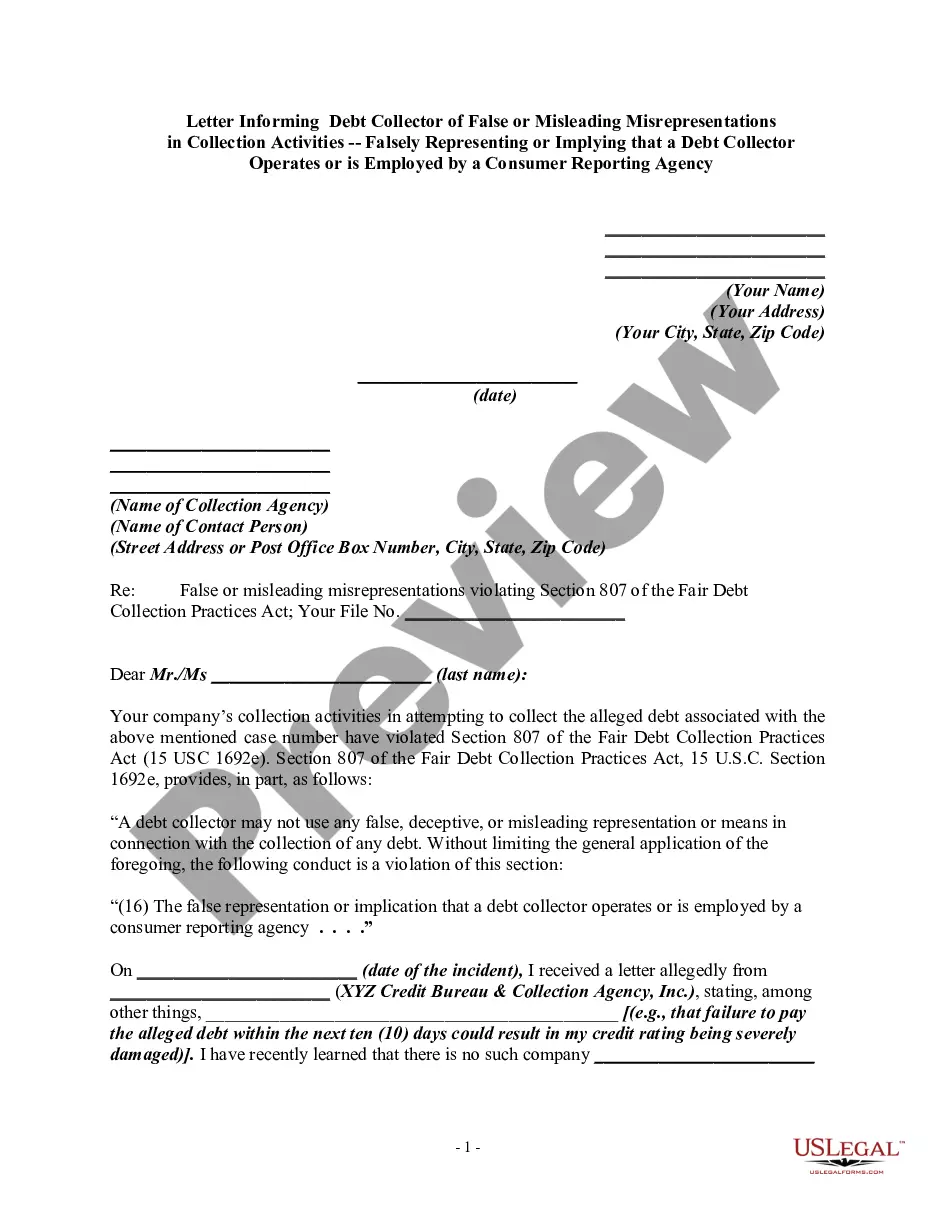




How to fill out Letter Informing Debt Collector Of False Or Misleading Misrepresentations In Collection Activities - Using False Representation Or Deceptive Means To Collect A Debt?
- Log into your US Legal Forms account if you're a returning user, then select 'Download' for your desired form template.
- Review the 'Preview mode' to confirm the document fits your specific needs and adheres to local jurisdiction requirements.
- Utilize the 'Search' feature to find alternative templates if necessary, ensuring you choose the correct form.
- Click 'Buy Now' to proceed with your selected subscription plan, registering an account if this is your first visit.
- Input your payment details to finalize your purchase and gain access to the full library of forms.
- Download the completed template to your device for easy access and editing, available anytime under 'My Forms' in your profile.
In conclusion, utilizing US Legal Forms simplifies the process of managing your debt letters, offering you expert support every step of the way.
Don’t wait! Start crafting your legal documents today and secure your financial future with ease.
Form popularity
FAQ
Yes, sending a debt validation letter is often a wise choice. It allows you to formally request proof of the debt and can buy you time while you assess your options. This proactive approach can safeguard your future, making it easier to manage your finances and ensure you are only paying legitimate debts.
Debt validation can be quite successful, especially if the creditor cannot provide the required documentation. Many consumers find that disputes based on debt validation yield positive outcomes, leading to debt dismissal or negotiation. Using clear and concise communication in your letter can significantly influence the results.
After sending a debt validation letter, wait for the collector to respond and provide the necessary proof of the debt. If they do not respond, you can dispute the debt further and might need to inform credit bureaus about the lack of validation. Timely follow-up can strengthen your position and is essential for your future decisions regarding the debt.
If you don’t respond to a debt collector letter, they may take further action to collect the debt, which could include calling you or reporting it to credit agencies. Ignoring the letter can lead to additional fees and legal consequences. It is crucial to address such letters promptly to protect your financial future and maintain your credit score.
Writing a letter to clear debt begins with addressing the creditor directly. You should clearly state your intention to settle the debt, include your account information, and outline how you plan to resolve the issue. Be sure to mention any specific amounts and timelines. Crafting this letter with care can set a positive tone for your future financial dealings.
The 777 rule for debt collectors establishes parameters regarding communication and actions taken during the collection process. It helps consumers recognize their rights and the responsibilities of debt collectors, ensuring that communication remains transparent and fair. When facing debt collection, consider leveraging a letter debt to articulate your stance and potentially dispute any inaccuracies or initiate negotiations. Platforms like US Legal Forms can assist you in drafting effective letters tailored to your needs.
The 777 rule refers to a guideline that can provide consumers with a clearer understanding of debt collection practices. According to this rule, debt collectors must provide information about the debts they are collecting within a reasonable period after they first contact you. It is advisable to respond appropriately to any communications, especially with a letter debt that outlines your position. Staying informed can help you navigate the complexities of debt collection more smoothly.
To write an effective letter to get out of debt, start by clearly stating your intention and summarizing your financial situation. Be honest and provide supporting details, such as your income and outstanding debts. Suggest a payment plan that you can realistically stick to, and communicate that this letter debt is a step towards a more manageable financial future. Utilizing resources like the US Legal Forms platform can streamline the process and help you craft a professional letter.
In general, a debt becomes uncollectible after a certain period, usually between three to six years, depending on your state laws. This means that creditors can no longer pursue collection through legal action. However, it's important to document any communication about your debts. Using a letter debt as a tool can help you manage your obligations and possibly negotiate settlements that benefit you in the future.
Filling out a debt validation letter starts with your name and address, followed by the creditor's details. Clearly ask for validation of the debt, including its amount and the original creditor's information. It's essential to reference your right to dispute the debt under the Fair Debt Collection Practices Act. A thoughtful letter debt using for the future can ensure your rights are upheld and provides clarity in your financial journey.