Restatement Of Contract 347
Description

Get your form ready online
Our built-in tools help you complete, sign, share, and store your documents in one place.
Make edits, fill in missing information, and update formatting in US Legal Forms—just like you would in MS Word.
Download a copy, print it, send it by email, or mail it via USPS—whatever works best for your next step.
Sign and collect signatures with our SignNow integration. Send to multiple recipients, set reminders, and more. Go Premium to unlock E-Sign.
If this form requires notarization, complete it online through a secure video call—no need to meet a notary in person or wait for an appointment.
We protect your documents and personal data by following strict security and privacy standards.

Make edits, fill in missing information, and update formatting in US Legal Forms—just like you would in MS Word.

Download a copy, print it, send it by email, or mail it via USPS—whatever works best for your next step.

Sign and collect signatures with our SignNow integration. Send to multiple recipients, set reminders, and more. Go Premium to unlock E-Sign.

If this form requires notarization, complete it online through a secure video call—no need to meet a notary in person or wait for an appointment.

We protect your documents and personal data by following strict security and privacy standards.
Looking for another form?


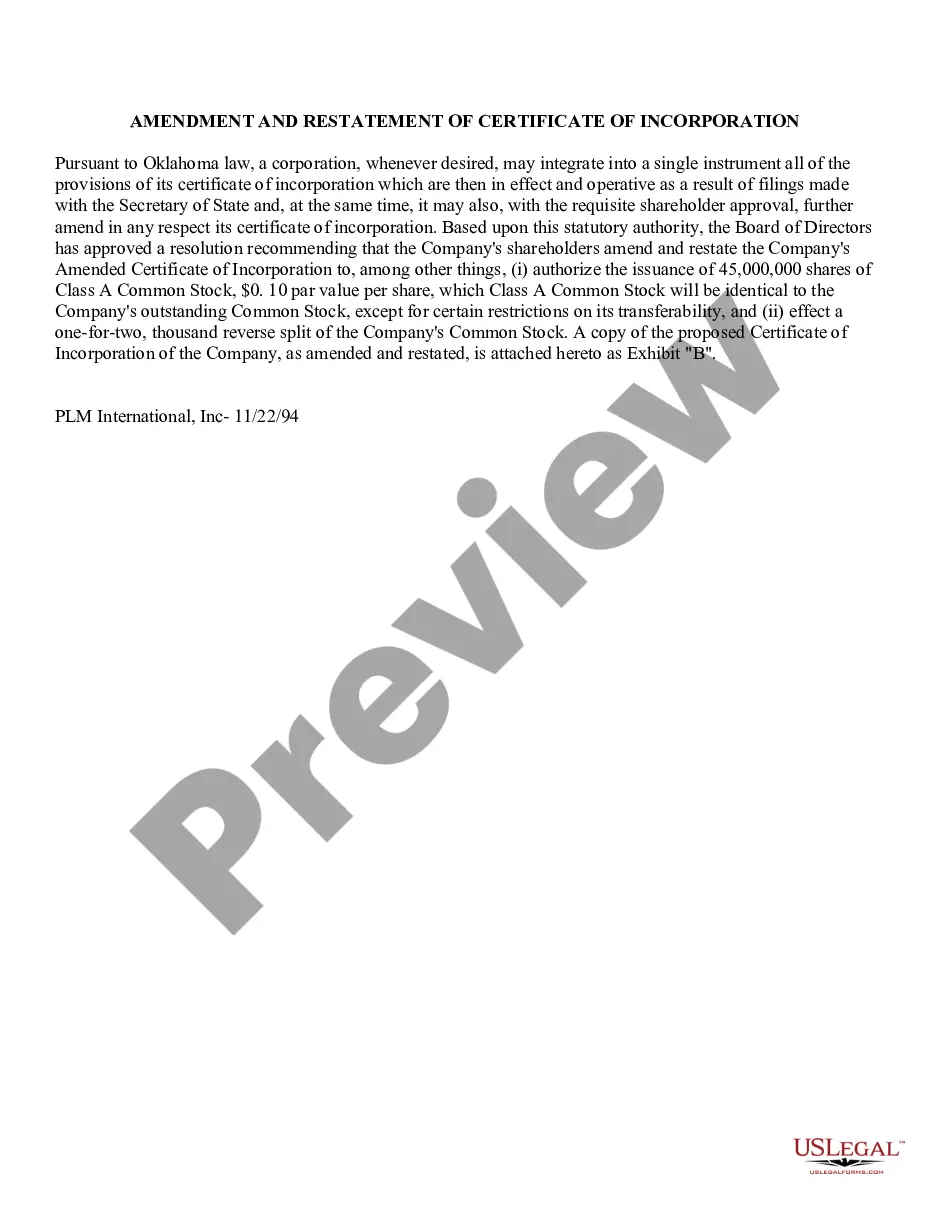
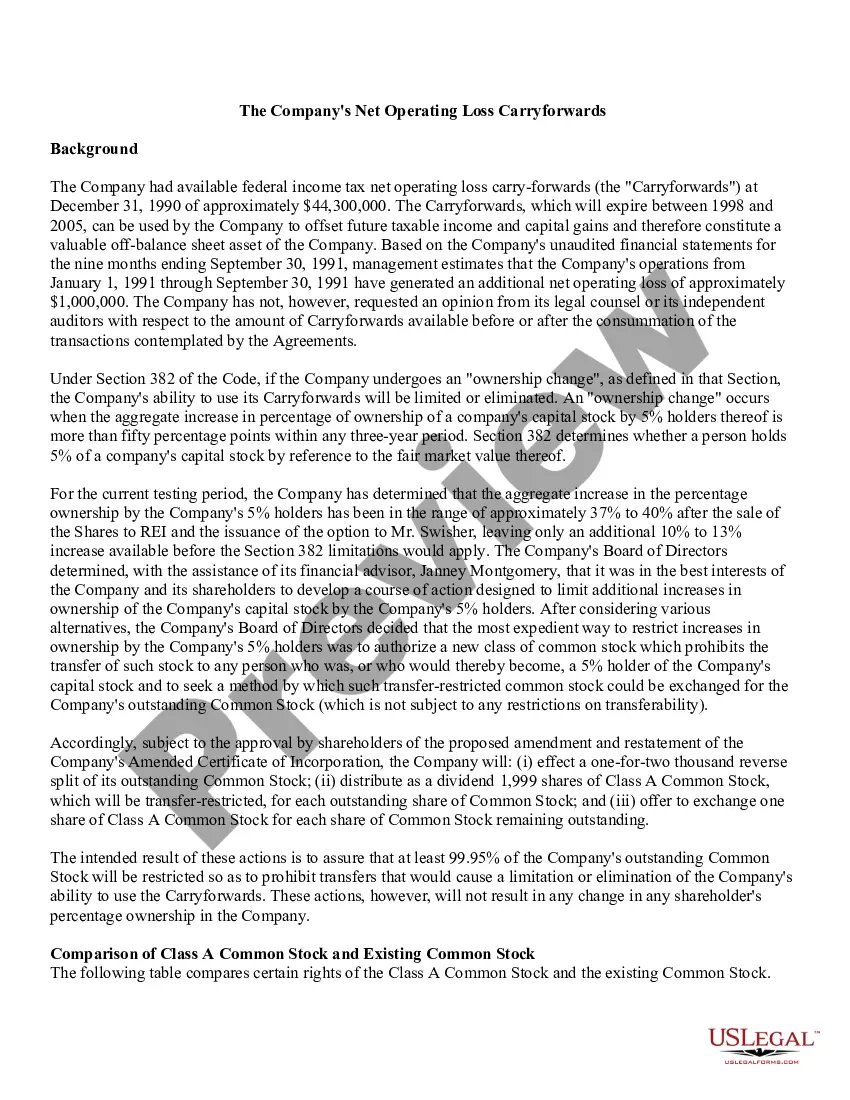
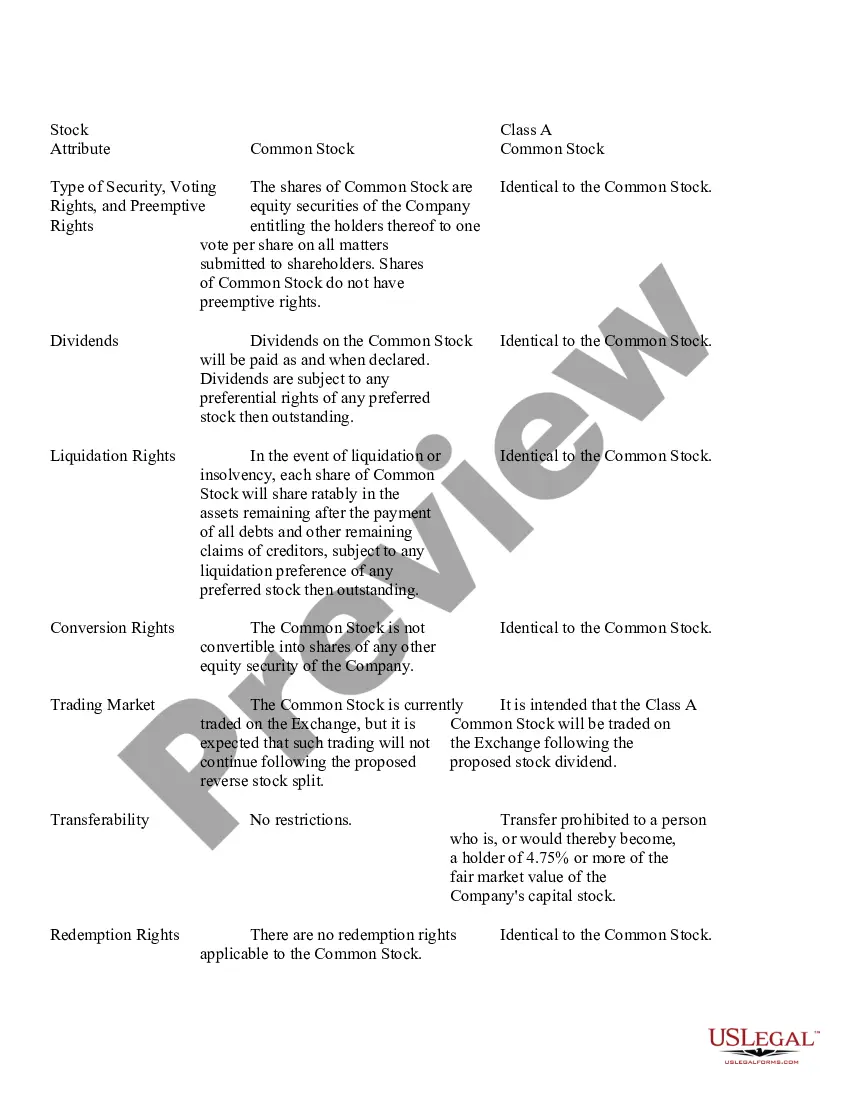
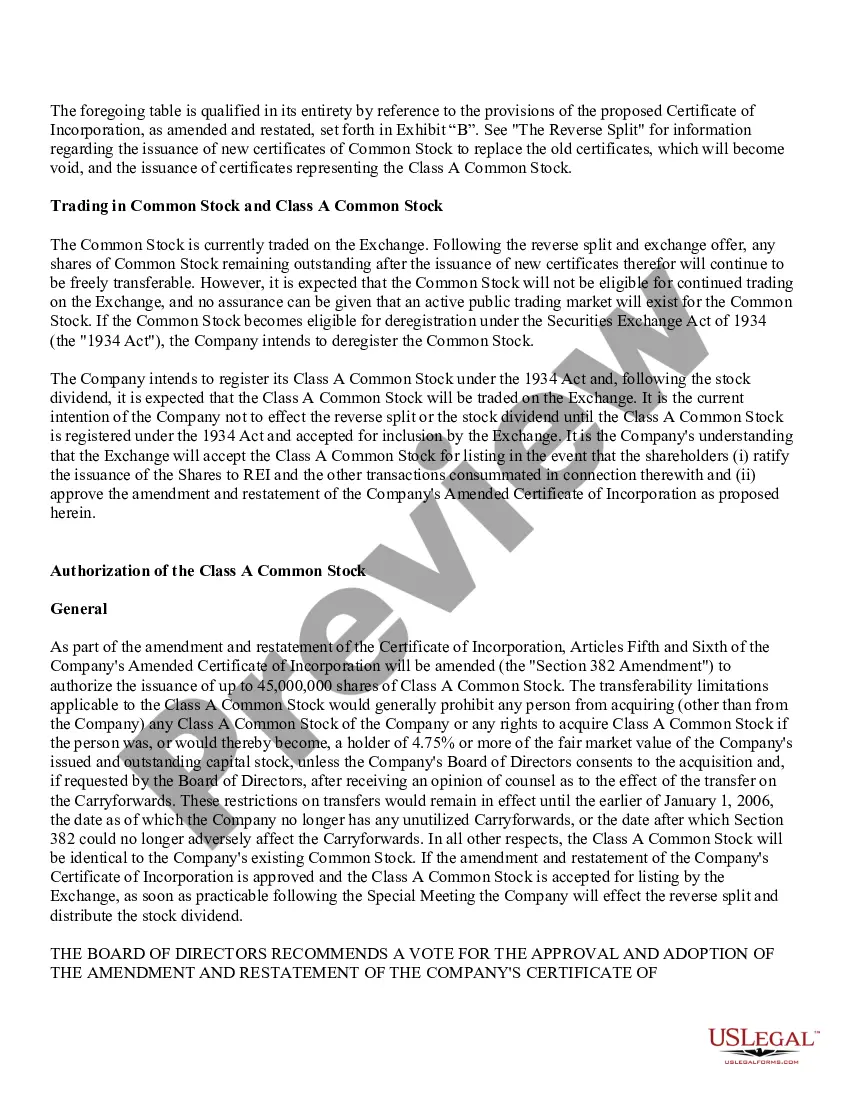
How to fill out Amendment And Restatement Of Certificate Of Incorporation With Exhibit?
The Restatement Of Contract 347 displayed on this page is a reusable legal framework crafted by professional attorneys in accordance with federal and local laws and regulations.
For over 25 years, US Legal Forms has offered individuals, companies, and legal practitioners with more than 85,000 authenticated, state-specific documents for any business or personal need. It is the fastest, easiest, and most reliable way to obtain the necessary paperwork, as the service ensures bank-level data security and malware protection.
Subscribe to US Legal Forms to have verified legal templates for all of life's situations readily available.
- Search for the document you require and examine it.
- Browse through the file you searched and preview it or review the form description to confirm it meets your needs. If it doesn't, utilize the search feature to find the suitable one. Click Buy Now once you've found the template you need.
- Sign up and Log In.
- Select the payment plan that fits you and establish an account. Use PayPal or a credit card for a quick transaction. If you already have an account, Log In and check your subscription to move forward.
- Obtain the fillable template.
- Select the format you desire for your Restatement Of Contract 347 (PDF, DOCX, RTF) and save the document to your device.
- Complete and sign the document.
- Print the template to fill it out manually. Alternatively, utilize an online multifunctional PDF editor to efficiently and accurately complete and sign your form with an eSignature.
- Download your documents again.
- Use the same document again whenever necessary. Access the My documents tab in your profile to redownload any previously saved forms.
Form popularity
FAQ
The Restatement of contract section 347 addresses the measure of damages for breach of contract, focusing on the expectations of the aggrieved party. It provides essential guidelines on how to evaluate lost benefits and necessary compensation. Understanding this section is crucial for both contract drafters and those involved in contract disputes. You can find further clarification and examples through resources provided by uslegalforms.
When a contract is restated, it means the original document has been rewritten to incorporate new terms or clarify existing ones, consolidating amendments into a single document. This helps avoid confusion and ensures all parties understand their obligations. A restated contract maintains the original intent of the agreement while reflecting any changes made over time. To navigate this process, referring to the Restatement of contract 347 is beneficial.
Reinstating a contract typically involves reviewing the original terms and determining if both parties agree to the previous conditions. You may need to prepare a formal notice to confirm the intent to reinstate the agreement. It is vital to follow any specific legal procedures outlined in the original contract. Incorporating insights from the Restatement of contract 347 can help ensure this process is compliant and effective.
To draft an amended and restated agreement, start by reviewing the original contract to understand its terms. Next, clearly indicate what changes are being made, while ensuring that the new document supersedes the old one. Use straightforward language to outline the amendments, and make sure to include essential details like effective dates and signatures. Remember, the Restatement of contract 347 can provide helpful guidance on key principles to include.
An example of a restatement of contracts can be seen when parties renegotiate their agreement after a change in circumstances. For instance, if one party experiences financial difficulties, the terms may be revised to better reflect the current situation. Analyzing such cases using the Restatement of contract 347 allows for transparency and consistency in understanding the new terms.
Section 341 of the Restatement of Contracts outlines the types of damages that are recoverable in the event of a breach. It emphasizes that damages should reflect the loss suffered by the aggrieved party and the gain realized by the breaching party. By consulting the Restatement of contract 347 alongside Section 341, you can gain comprehensive insights into recoverable damages.
Restatement 347 of contracts addresses the measure of damages for breach of contract, emphasizing expectation damages. It serves as a foundation for understanding how to calculate what a party expected to receive from the contract. Utilizing the Restatement of contract 347 provides essential guidance for legal practitioners and individuals dealing with contract disputes.
Section 374 of the Restatement Second of Contracts elaborates on reliance damages, specifically focusing on the losses incurred by a party that relied on a contract. It outlines when these damages can be claimed, clarifying the circumstances under which recovery can occur. Understanding this section aids individuals in navigating their legal rights under the Restatement of contract 347.
Section 374 of the Restatement of Contracts focuses on the expectation damages involved when a contract is breached. It defines the remedies available to a party who suffers losses due to a breach, emphasizing recovery for losses that were foreseeable at the time of contracting. This section is critical for understanding parties' rights under the Restatement of contract 347.
The primary purpose of the Restatement of contracts is to consolidate and clarify the legal principles governing contracts. It serves as a reference for courts and legal practitioners, providing a comprehensive framework for understanding contract law. By referencing the Restatement of contract 347, individuals can obtain key insights on contractual obligations and remedies.