Phantom Stock Plan Sample
Description
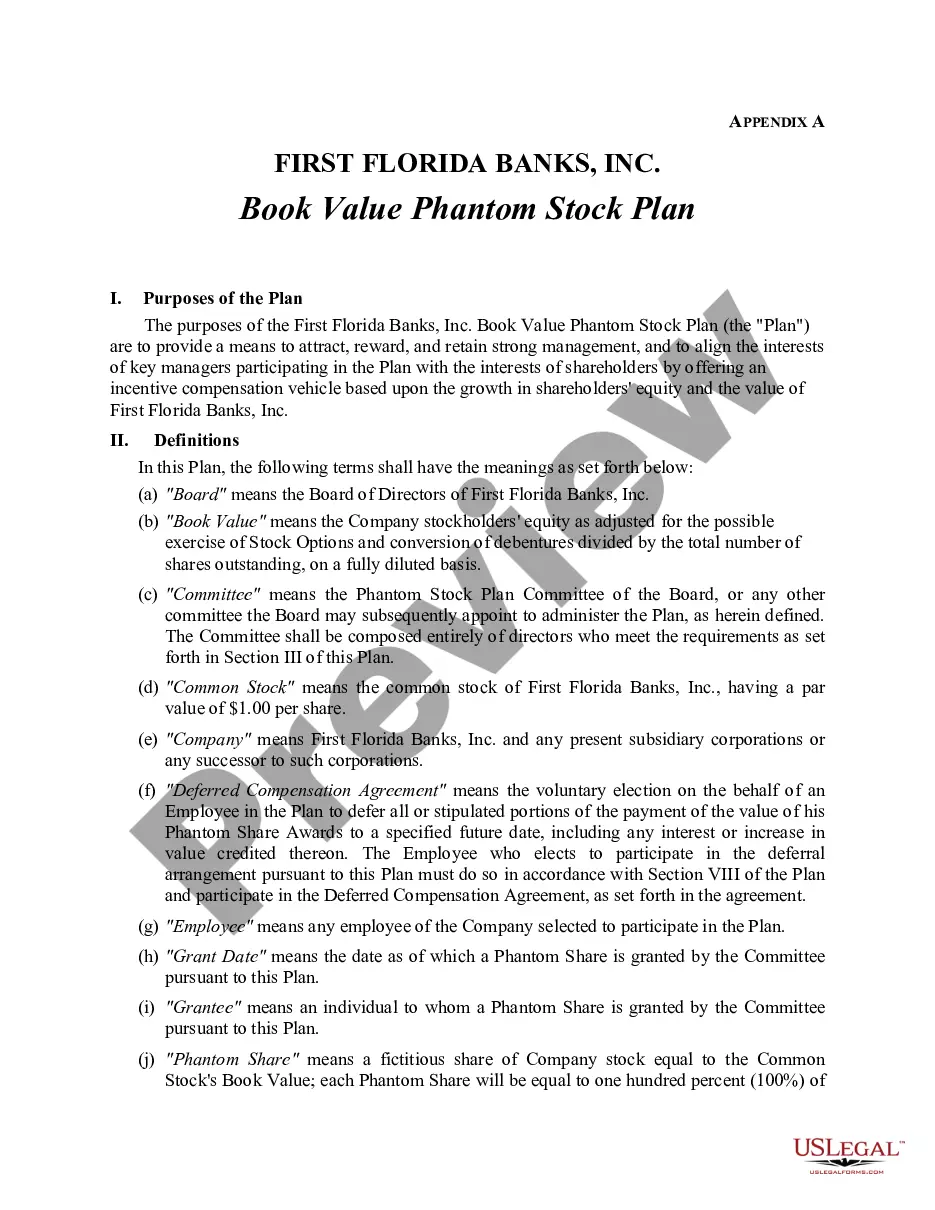
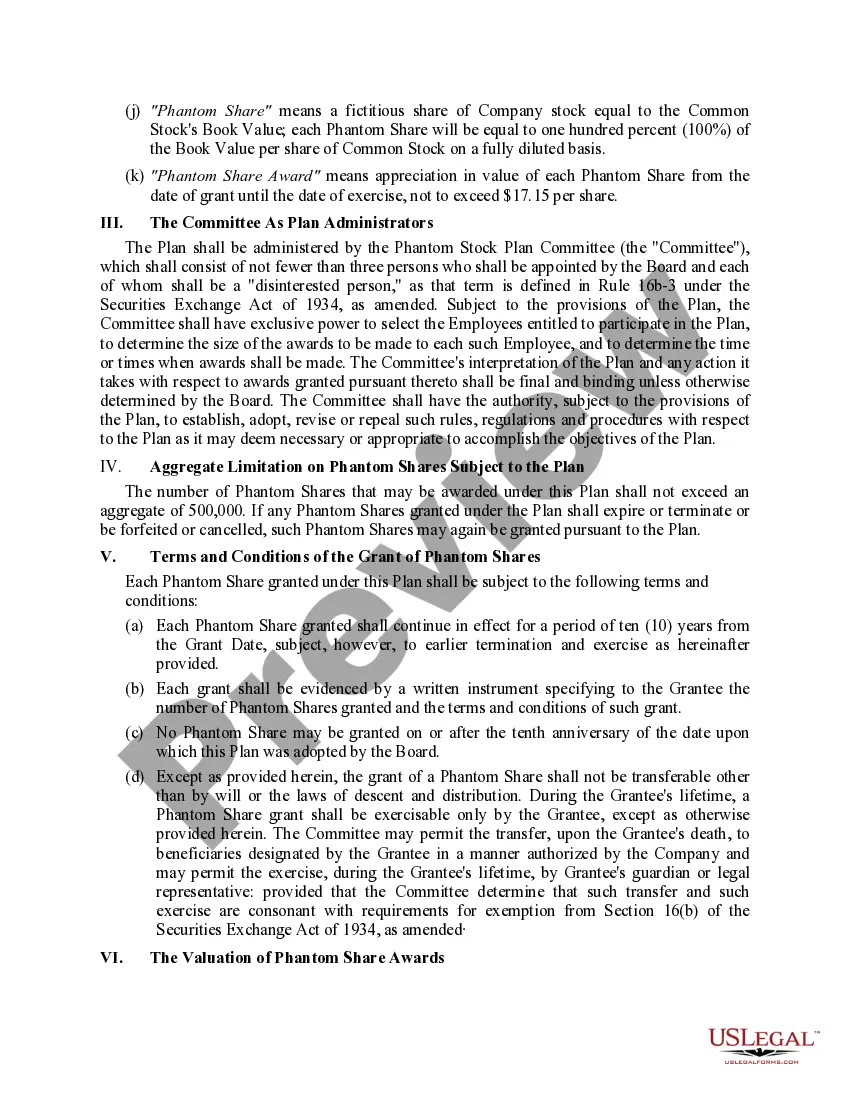
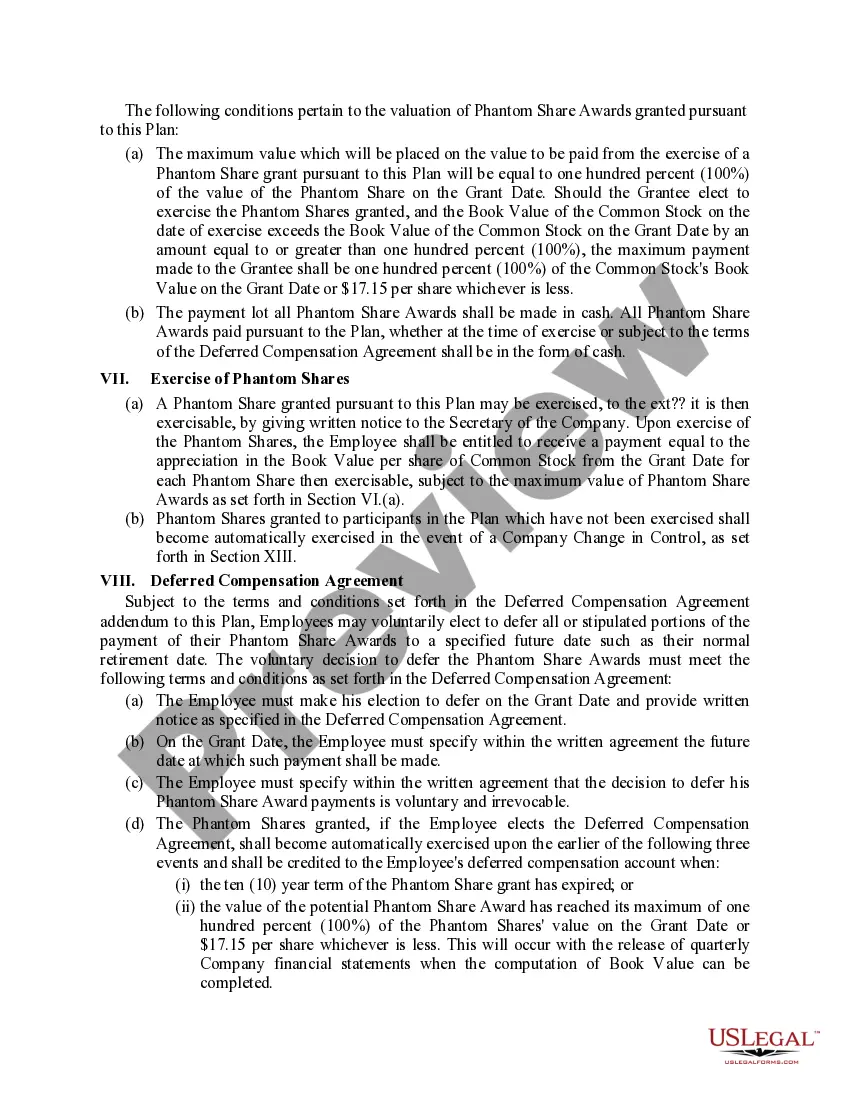
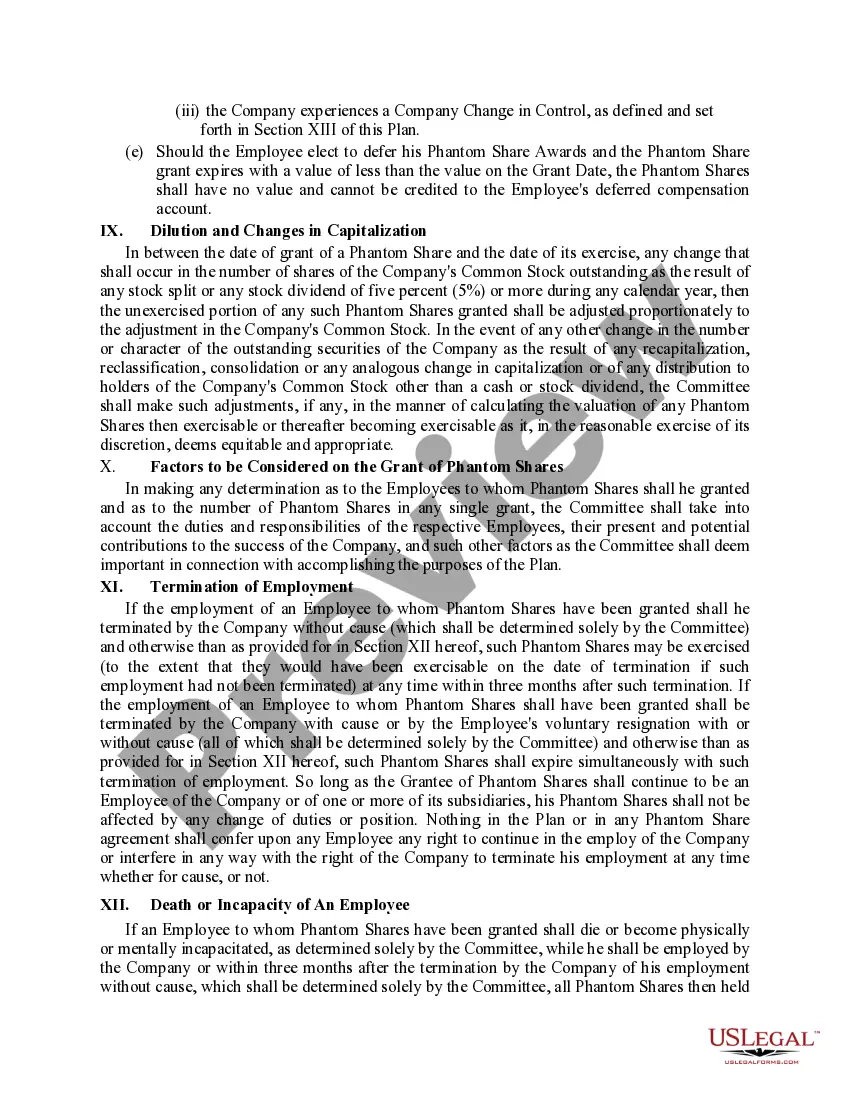
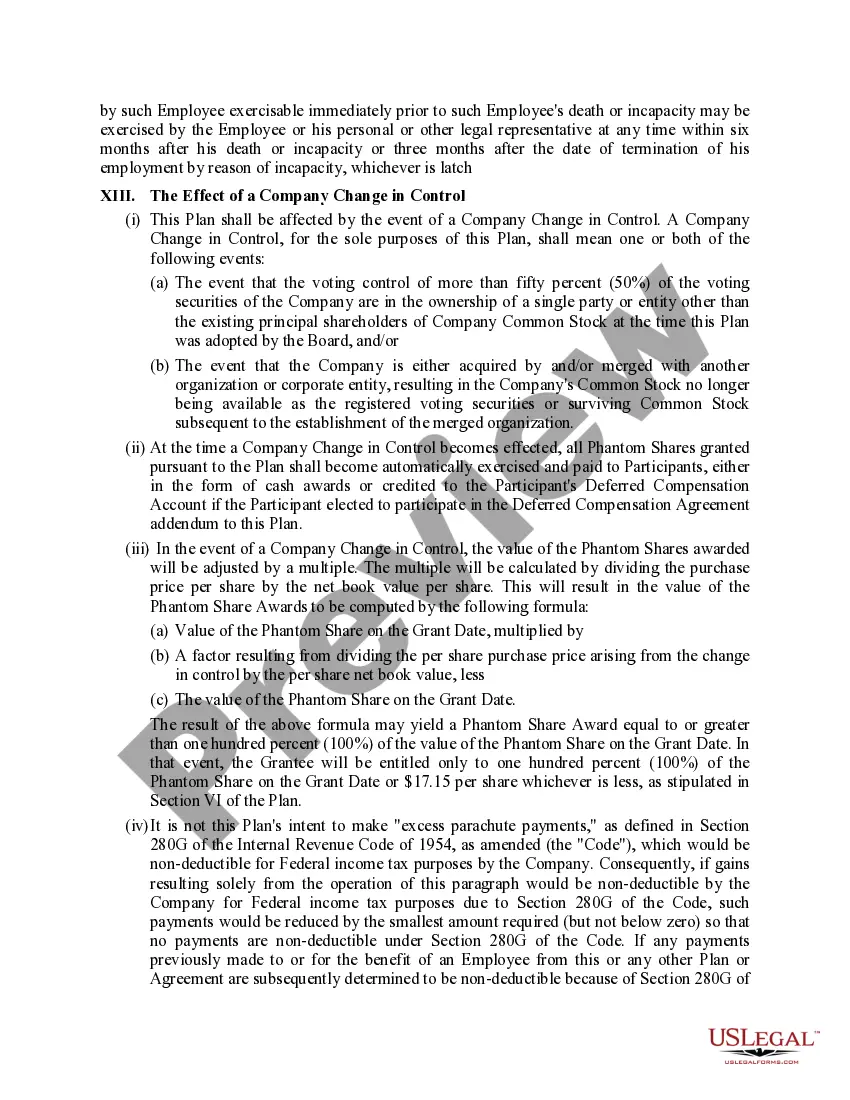
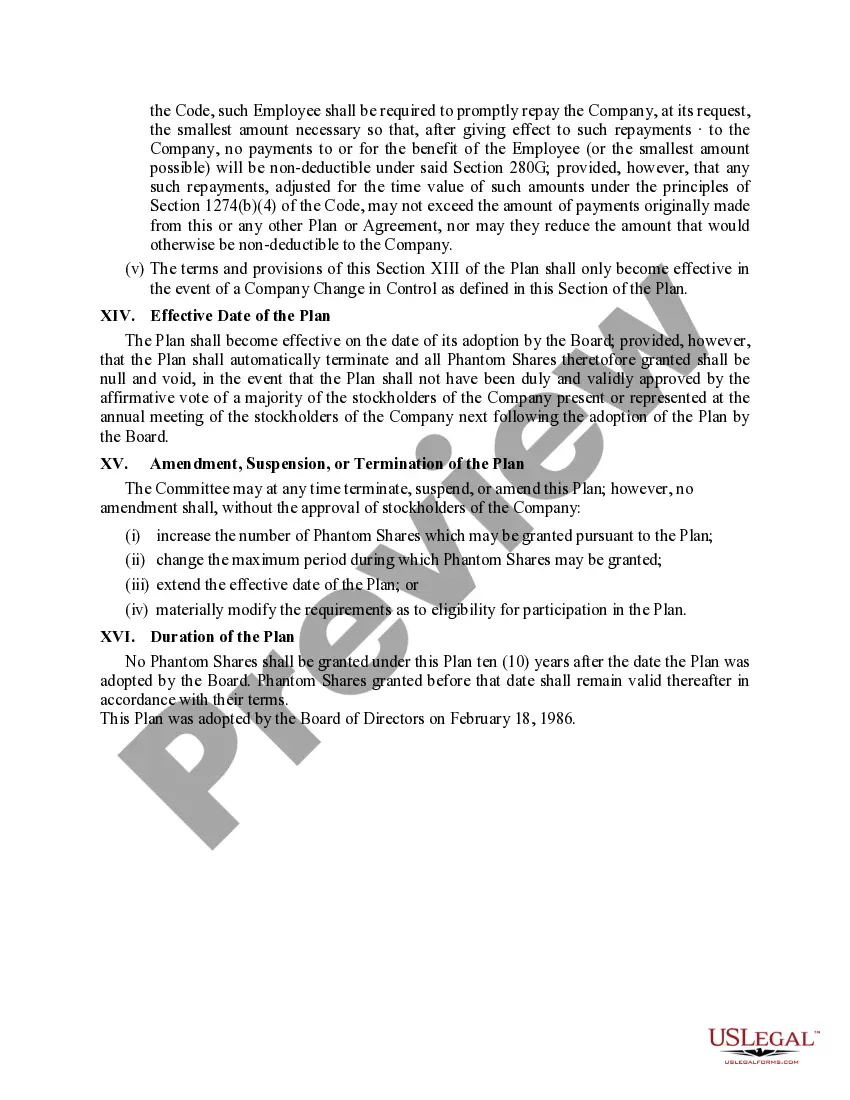
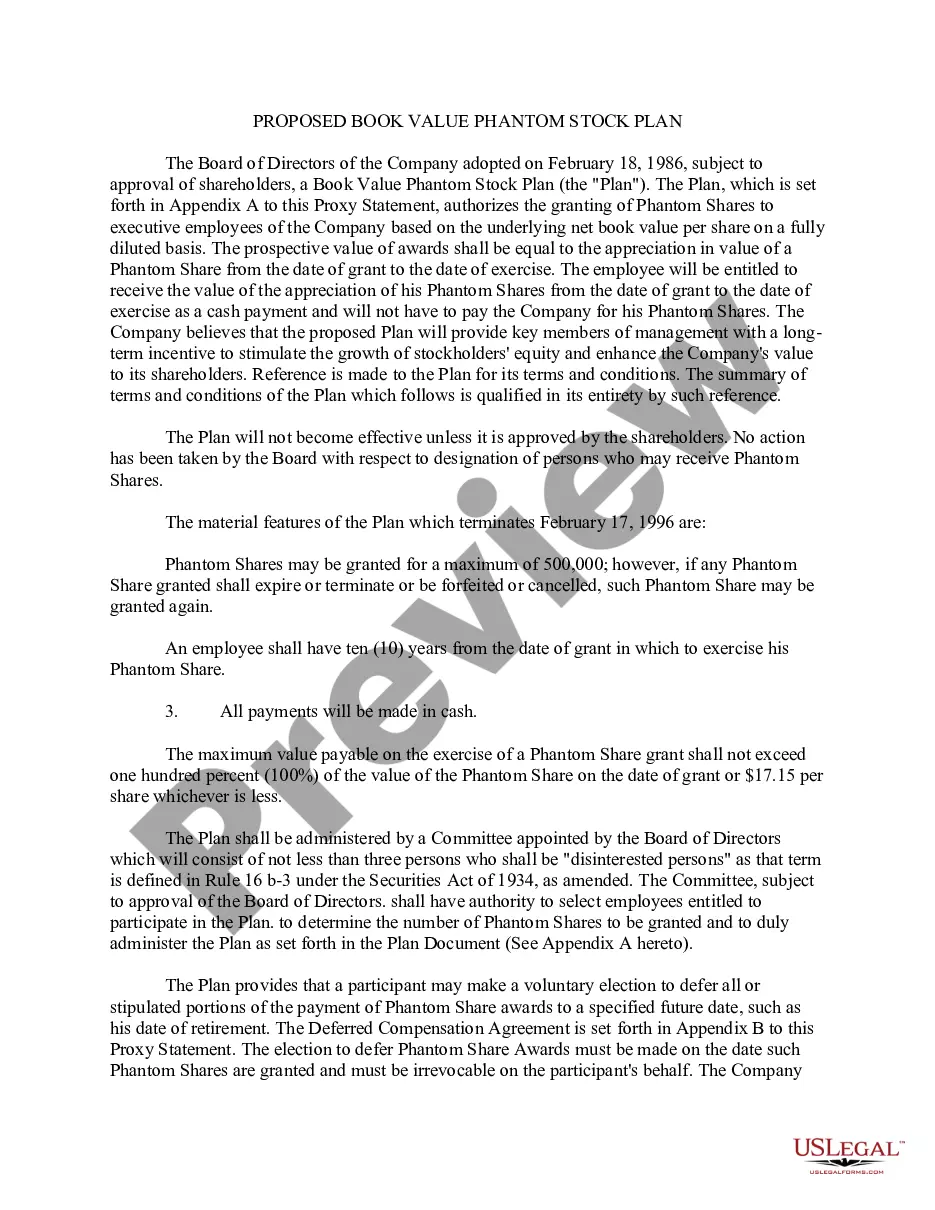
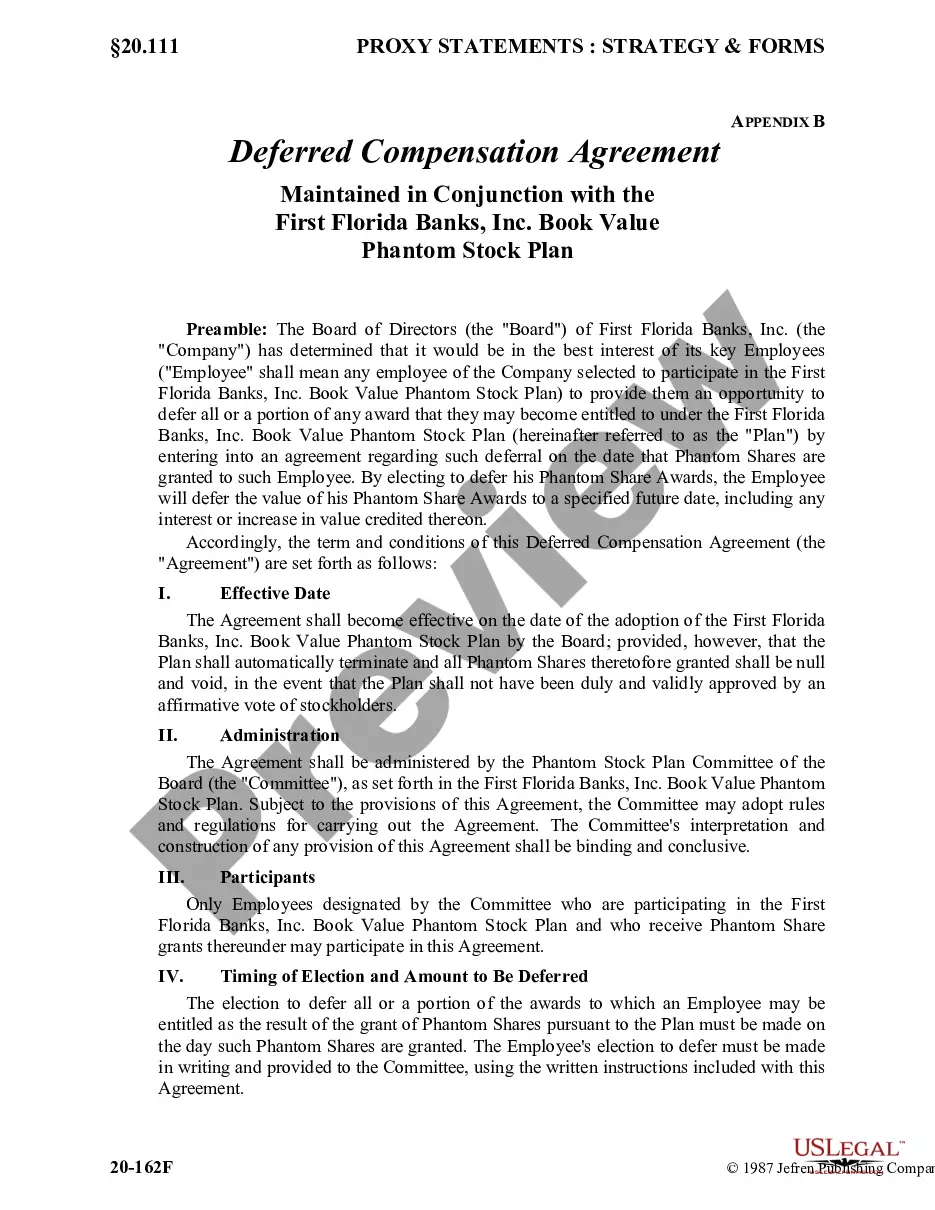



How to fill out Book Value Phantom Stock Plan Of First Florida Banks, Inc.?
- Begin by logging into your US Legal Forms account. If you're a new user, you’ll need to create an account first.
- Once logged in, inspect the Preview mode and form description. Verify that it fits your criteria and complies with local jurisdiction requirements.
- If the initial sample doesn’t meet your needs, use the Search feature to find alternative templates that suit your situation.
- After selecting the appropriate document, click 'Buy Now' and choose your preferred subscription plan. You will need to register if you haven’t already done so.
- Proceed to make your payment by providing credit card details or opting for PayPal for a smooth transaction.
- Finally, download your chosen Phantom Stock Plan sample to your device. You can access it later in the My Forms section of your account.
In conclusion, US Legal Forms offers a user-friendly experience, enabling both individuals and legal professionals to create vital legal documents with ease. With over 85,000 templates at your fingertips, finding the right form has never been easier.
Start your journey to effective legal documentation today by visiting US Legal Forms and explore the resources available for you!
Form popularity
FAQ
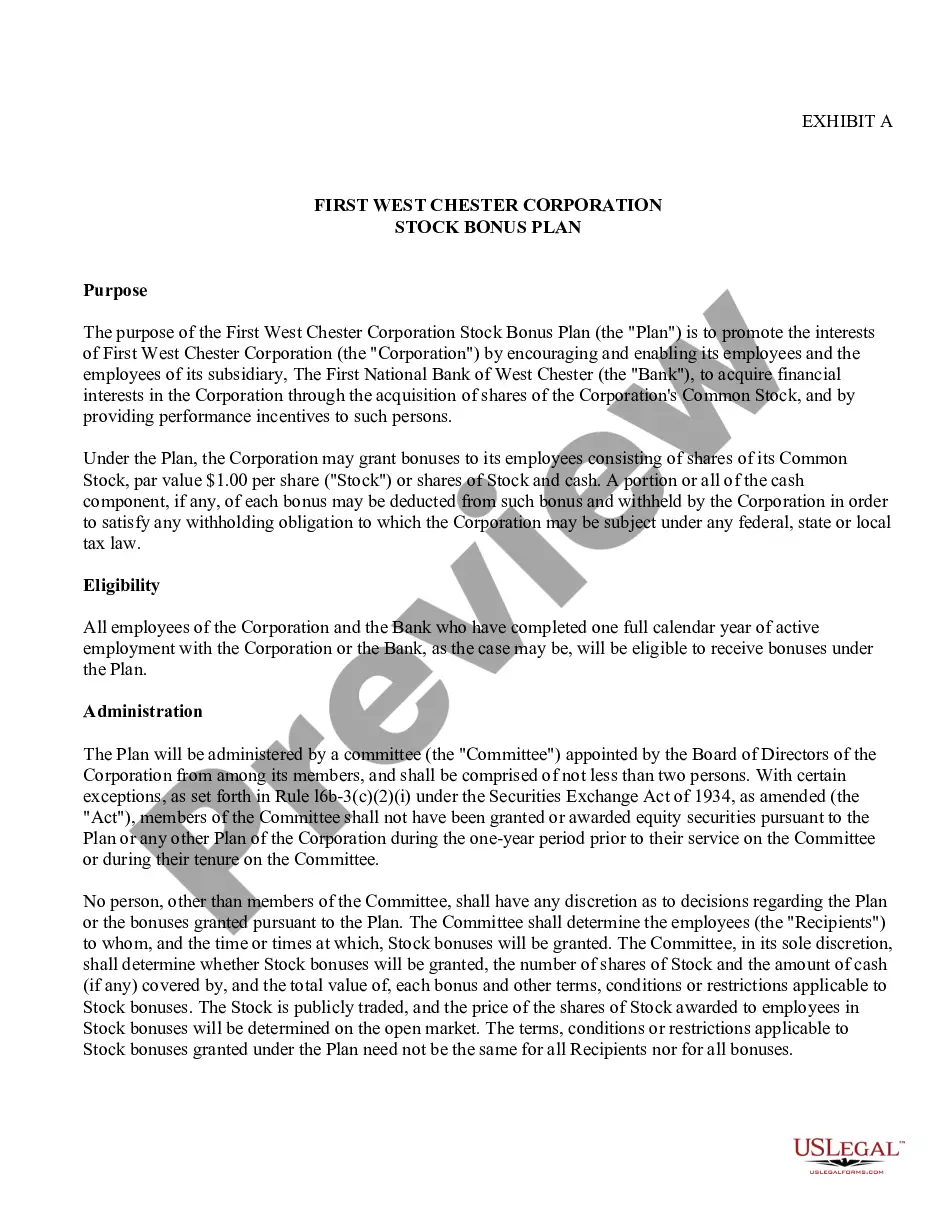
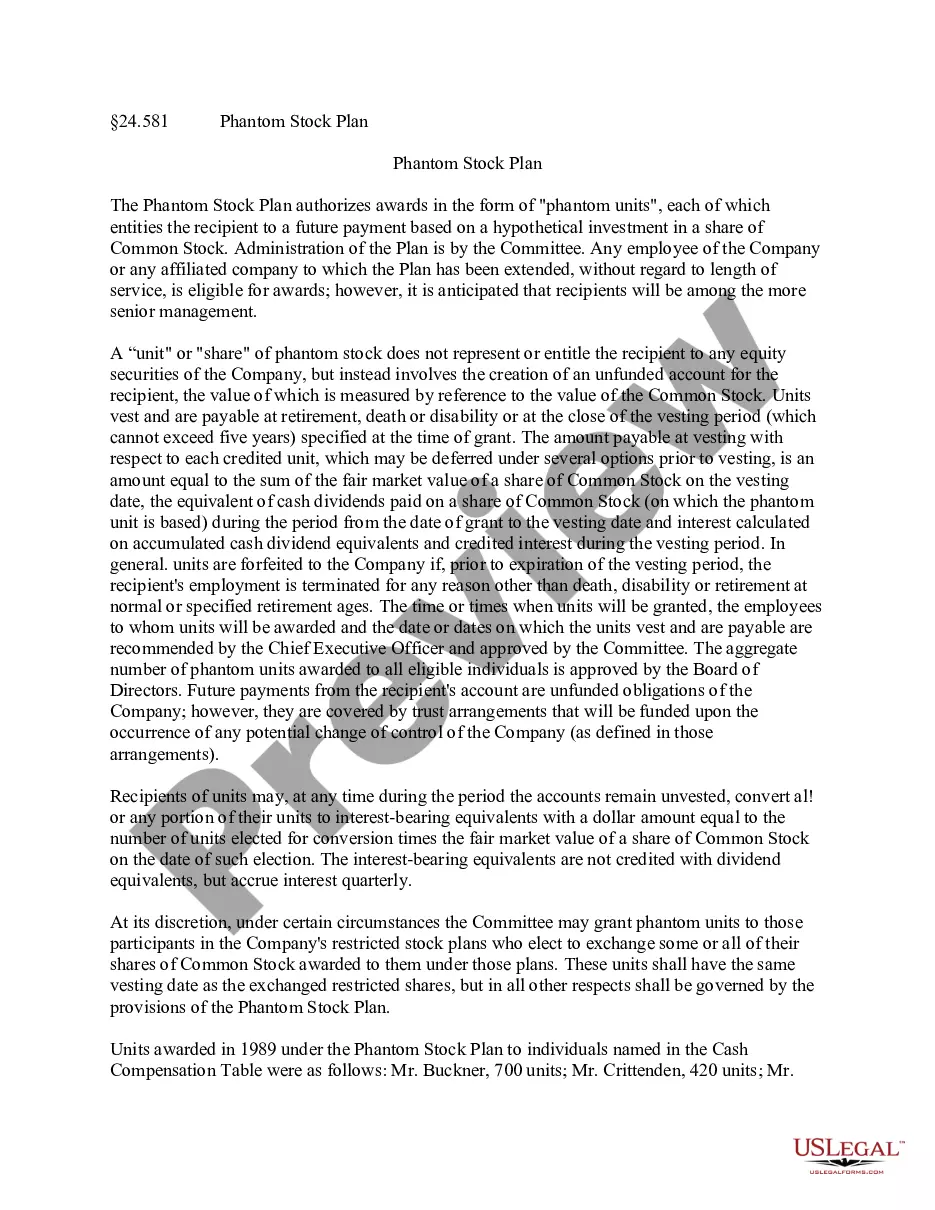
Phantom share plans are compensation arrangements that provide employees with the benefits of stock ownership without actual shares being issued. These plans are designed to motivate employees by reflecting the value of the company's stock, often linked to performance milestones. Reviewing a phantom stock plan sample can offer insights into structuring such an incentive program.
An example of a phantom share could be a company that grants employees units equivalent to the value of its stock. When the company’s stock appreciates, the value of these phantom shares increases, providing employees with a financial benefit similar to owning actual shares. Utilizing a phantom stock plan sample can help illustrate how these units work in practice.
Phantom shares are often referred to as phantom stock units or synthetic equity. These terms highlight their purpose: to align the interests of employees with company performance without issuing actual stock. When considering a phantom stock plan sample, understanding the terminology can help you navigate your options more effectively.
The purpose of a phantom stock plan is to incentivize key employees by giving them a financial interest in the company's growth. This type of plan can enhance employee retention, essentially rewarding them based on the company's performance over time. By using a phantom stock plan sample, organizations can better understand how to structure these benefits effectively. The practical design of such plans helps foster loyalty and drive long-term success.
Creating a phantom stock plan involves carefully outlining the plan's terms and conditions. You’ll want to define the valuation metrics, payout triggers, and vesting to balance employee incentives with company goals. Utilizing a service like US Legal Forms can simplify the documentation process, providing templates and legal guidance tailored to your specific needs.
Phantom stock can be a smart choice for companies looking to motivate employees without diluting equity. This type of plan aligns employee interests with company performance, potentially enhancing productivity and loyalty. However, a careful evaluation of the company's structure and future growth is essential before implementing a phantom stock plan to ensure it aligns with your long-term goals.
Setting up a phantom stock plan involves several steps, starting with defining the plan's structure and objectives. You’ll need to determine factors such as the total value to allocate, eligibility criteria, and vesting schedules. Collaborating with HR and legal professionals can streamline the process, making platforms like US Legal Forms particularly helpful for drafting the necessary documents and ensuring compliance with regulations.
One potential downside of a phantom stock plan is that employees do not receive actual equity, which can limit their commitment to the company's long-term success. Additionally, if the company's value does not increase as expected, employees may feel disappointed with their payout. It is crucial for businesses to clearly communicate the benefits and limitations of these plans to ensure everyone has realistic expectations.
Phantom stock can hold significant value for employees, especially when tied to the performance of a company. This compensation method mimics actual shares, offering potential financial gain without the need for equity transfer. When a company performs well, the value of phantom stock increases, which can be beneficial for both employees and employers. To explore a phantom stock plan sample, consider leveraging platforms like US Legal Forms that simplify the creation of effective compensation strategies.