Stock Purchase Plan Taxes
Description
Get your form ready online
Our built-in tools help you complete, sign, share, and store your documents in one place.
Make edits, fill in missing information, and update formatting in US Legal Forms—just like you would in MS Word.
Download a copy, print it, send it by email, or mail it via USPS—whatever works best for your next step.
Sign and collect signatures with our SignNow integration. Send to multiple recipients, set reminders, and more. Go Premium to unlock E-Sign.
If this form requires notarization, complete it online through a secure video call—no need to meet a notary in person or wait for an appointment.
We protect your documents and personal data by following strict security and privacy standards.

Make edits, fill in missing information, and update formatting in US Legal Forms—just like you would in MS Word.

Download a copy, print it, send it by email, or mail it via USPS—whatever works best for your next step.

Sign and collect signatures with our SignNow integration. Send to multiple recipients, set reminders, and more. Go Premium to unlock E-Sign.

If this form requires notarization, complete it online through a secure video call—no need to meet a notary in person or wait for an appointment.

We protect your documents and personal data by following strict security and privacy standards.
Looking for another form?








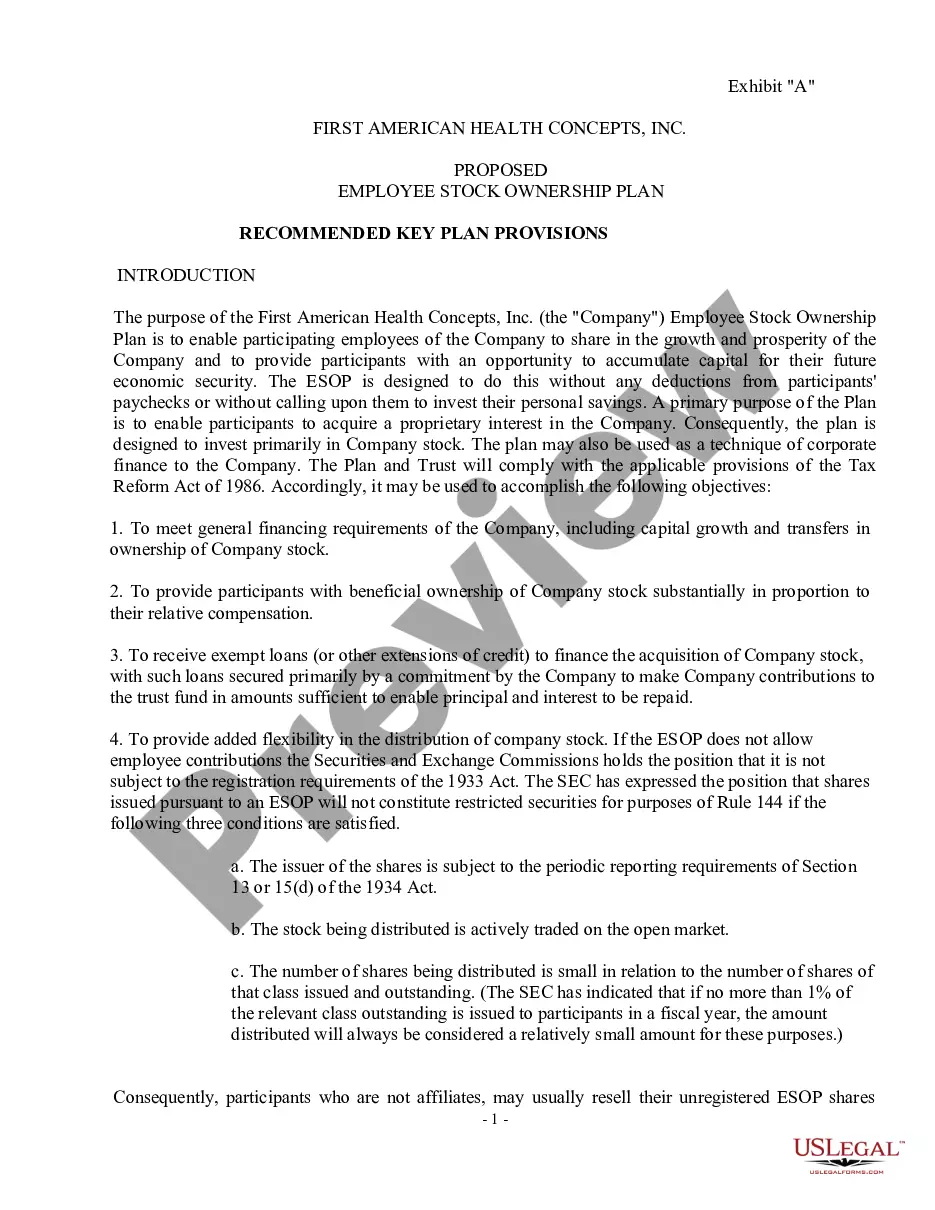
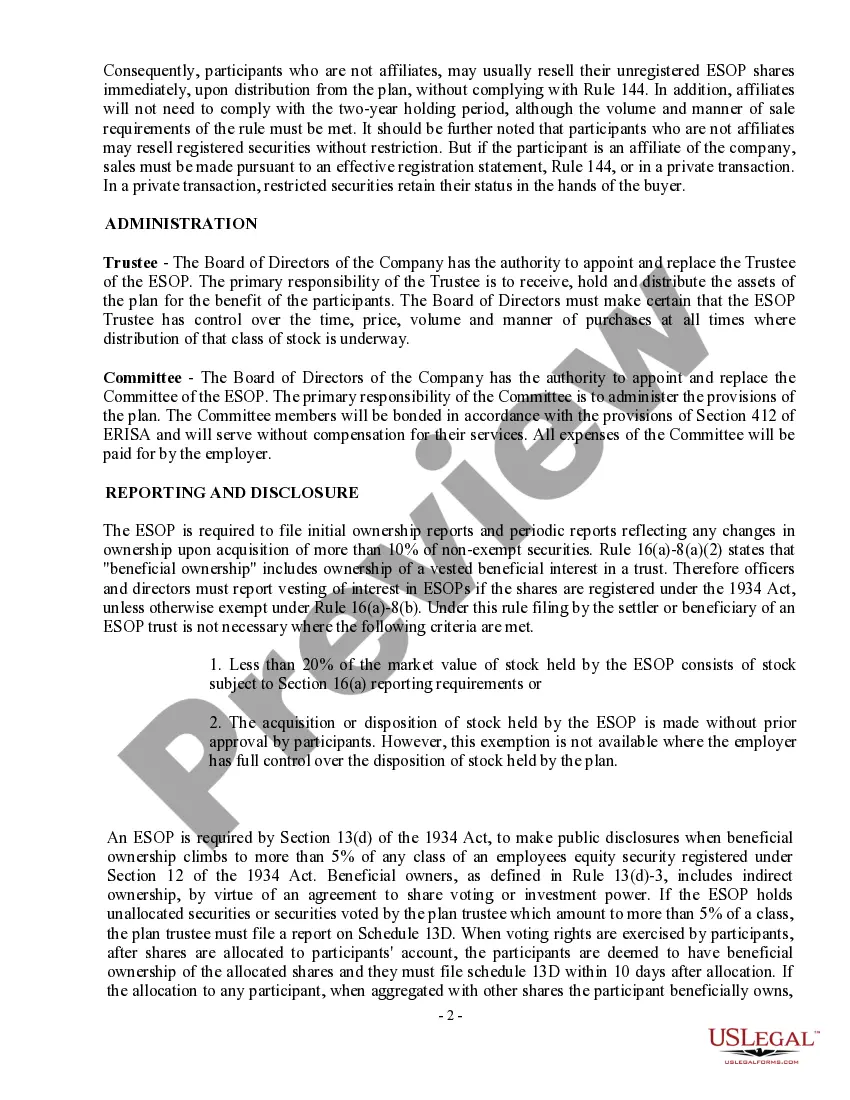
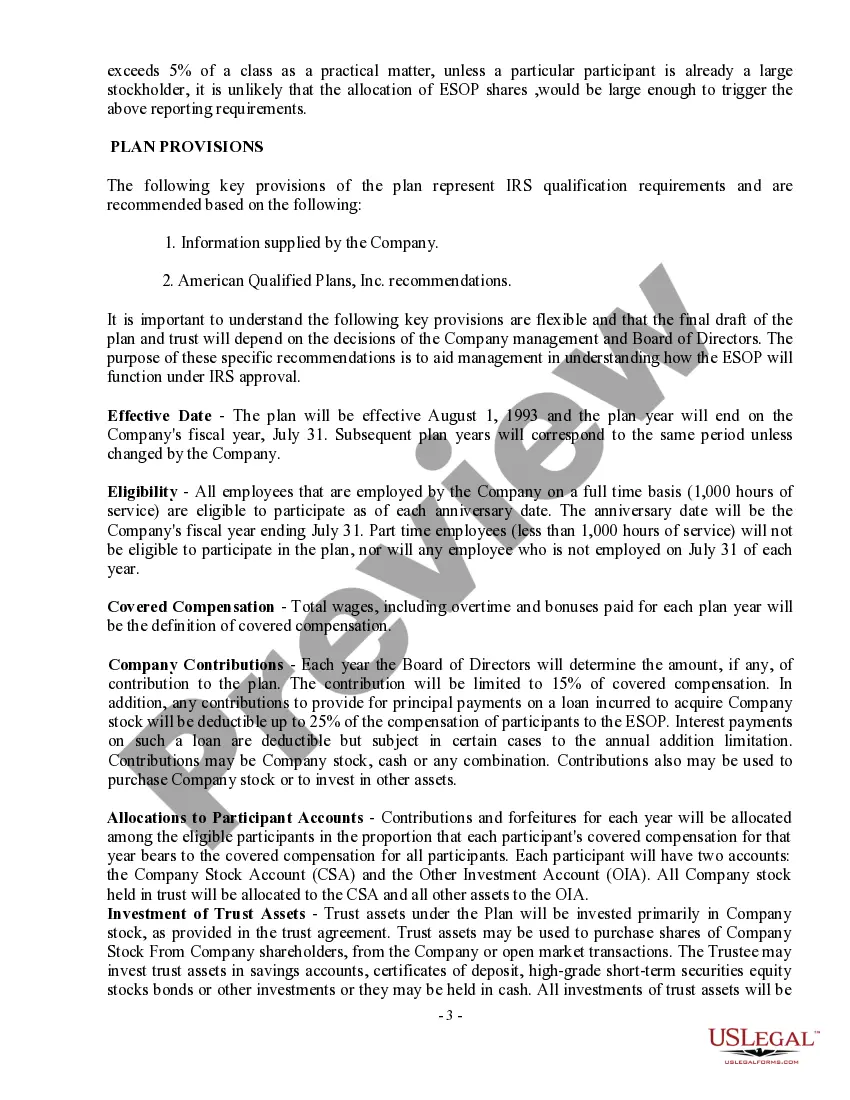
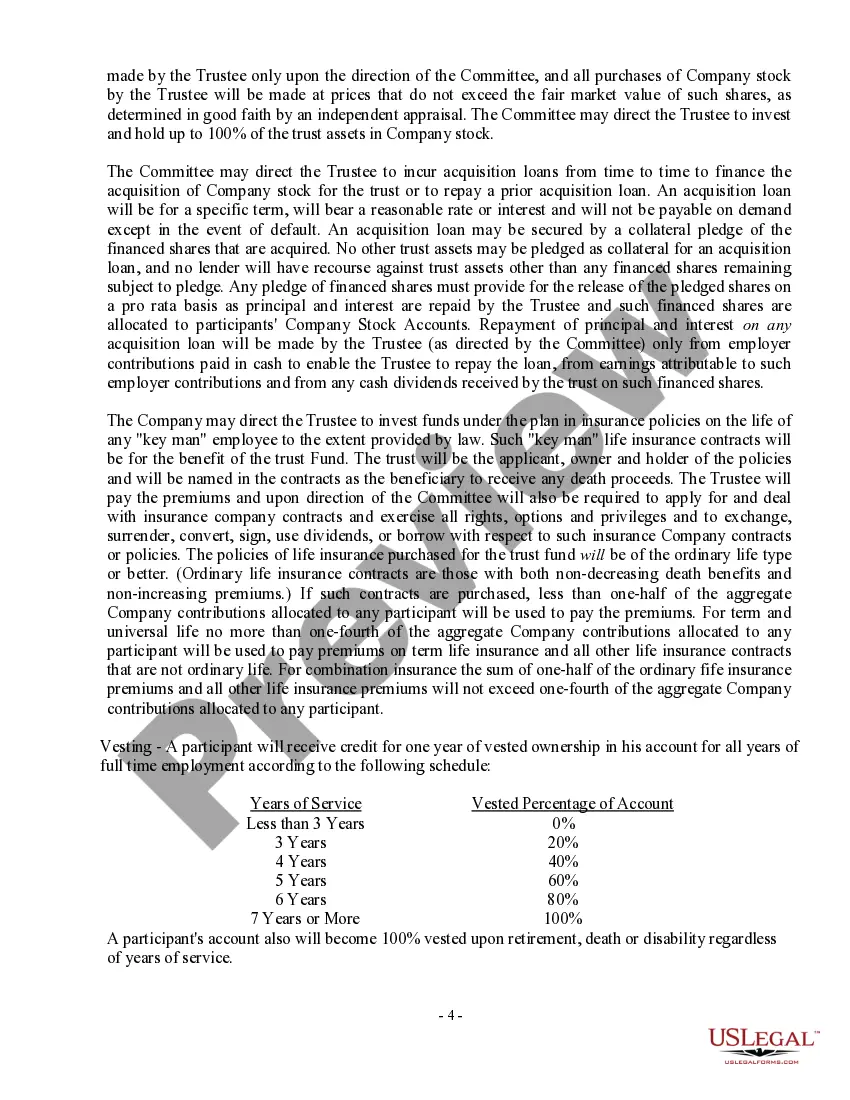
How to fill out Employee Stock Ownership Plan Of First American Health Concepts, Inc.?
Managing legal documents and procedures can be a labor-intensive contribution to your whole day.
Stock Purchase Plan Taxes and similar forms usually require you to search for them and comprehend how to fill them out accurately.
As a result, if you are handling financial, legal, or personal issues, having a thorough and user-friendly online directory of forms at your disposal will greatly assist.
US Legal Forms is the leading online source of legal templates, boasting over 85,000 state-specific documents and several tools to aid you in completing your paperwork easily.
Is this your first time using US Legal Forms? Sign up and create a free account in just a few minutes, and you'll gain access to the form directory and Stock Purchase Plan Taxes. Then, follow the steps below to complete your document.
- Browse the collection of relevant documents available to you with just one click.
- US Legal Forms provides state- and county-specific templates accessible anytime for downloading.
- Protect your document management processes with a superior service that enables you to create any form within moments without extra or concealed charges.
- Simply Log In to your account, locate Stock Purchase Plan Taxes and obtain it instantly within the My documents section.
- You can also retrieve previously stored forms.
Form popularity
FAQ
Filing an ESPP tax return involves reporting your income accurately from both your shares and any dividends received. You must use Form 8949 and Schedule D to report sales of stock acquired through the ESPP. Additional information regarding stock purchase plan taxes can be found through platforms like USLegalForms, which can help guide you through the necessary steps to ensure compliance and maximize your tax situation.
Yes, dividends received from an Employee Stock Purchase Plan (ESPP) are generally taxable. When you receive dividends, they should be reported as income on your tax return for the year you receive them. To stay compliant and aware of your stock purchase plan taxes, consider how these dividends fit into your overall tax situation and adjust your withholdings as necessary.
You must report stock purchases on your taxes, particularly if you sell the shares later. While buying stock itself does not trigger a tax obligation, selling it will typically result in capital gains or losses that you need to include in your tax return. Keeping thorough records of your transactions can simplify the process when reporting stock purchase plan taxes to the IRS.
When you sell stocks, you typically receive a tax form called a 1099-B from your broker. This form provides details about your stock transactions, which you must include in your tax filings related to stock purchase plan taxes. Also, if you participate in a stock purchase plan, you may receive additional documentation. For comprehensive guidance, consider using uslegalforms to clarify the documentation you need.
Yes, you need to report stock purchases on your taxes, especially when they lead to gains or losses. It’s essential to track your transactions accurately to comply with stock purchase plan taxes regulations. When you sell stocks, the profits or losses must be reported on your tax return. If you're unsure about the specifics, the uslegalforms platform offers resources to help you navigate these requirements.
Restricted Stock Units (RSUs) may appear to be taxed at 40% due to withholding requirements on the income you're receiving when the units vest. This withholding rate often reflects your highest income bracket, resulting in a higher initial tax deduction. However, you might recover some of this amount when filing your taxes if your overall income is lower. Resources on uslegalforms can provide additional insights into managing these taxes efficiently.
Stock options are taxed twice due to the differences in when taxes are assessed. Initially, you incur taxes when you exercise the option, as this generates ordinary income. Later, if you sell the stock and make a profit, you may face capital gains taxes. Understanding these taxation phases is crucial for effective financial planning, and uslegalforms can help clarify the details for you.
The tax amount on stock options varies based on several factors, including your income level and the type of stock options you hold. Typically, the tax can range from ordinary income tax to capital gains tax, depending on when you exercise the options and sell the stocks. It's important to keep accurate records to calculate your liability accurately. Uslegalforms provides tools and resources to help manage and understand these calculations.
When you receive Form 3922, it’s crucial for reporting your stock purchase plan taxes accurately. This form provides details about the exercise of your options and the number of shares acquired. You will use the information on Form 3922 to complete your IRS tax return and ensure you claim any applicable capital gains or losses. Using services like US Legal Forms can simplify this process, providing clear guidance on how to handle your stock purchase plan taxes effectively.