Non-qualified Stock Options For Dummies
Description
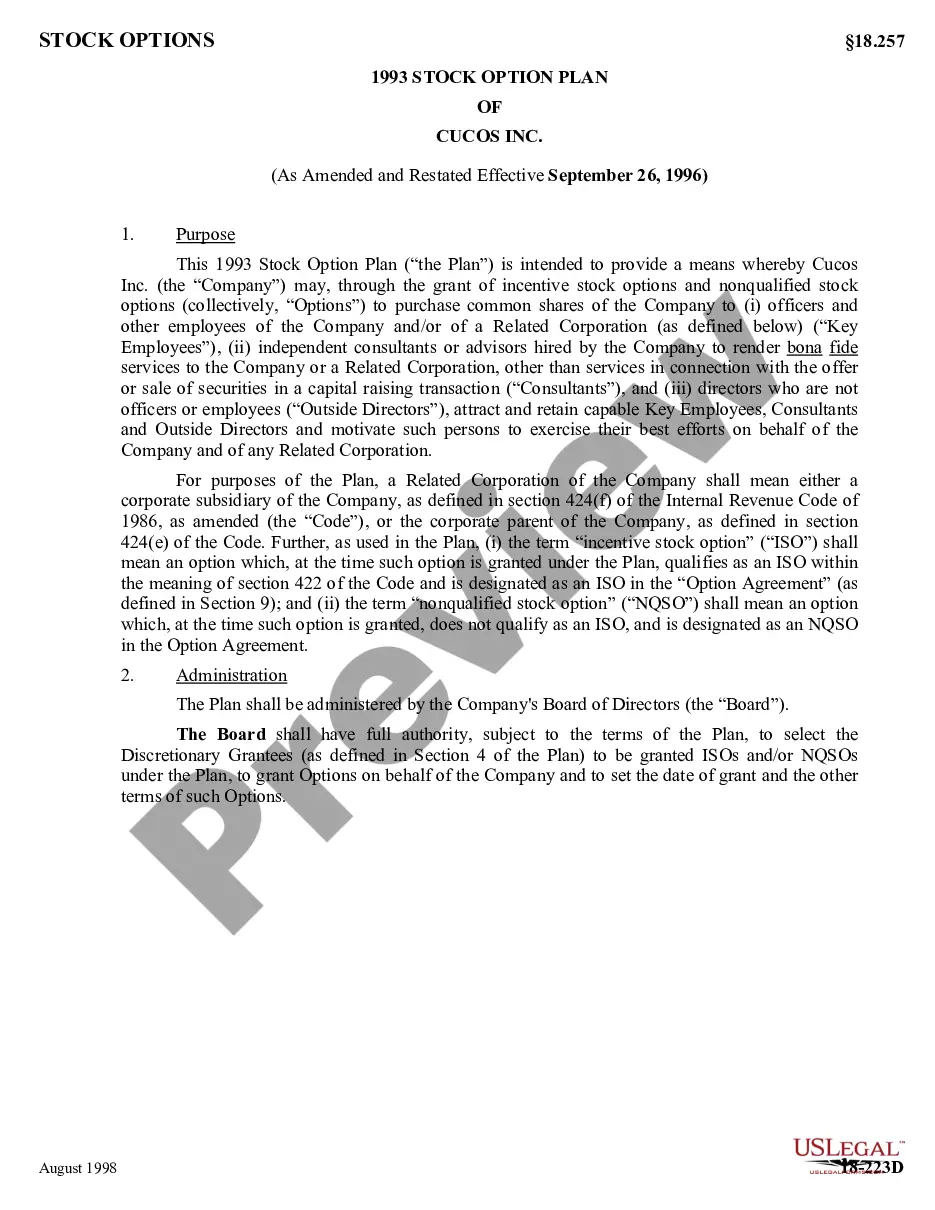
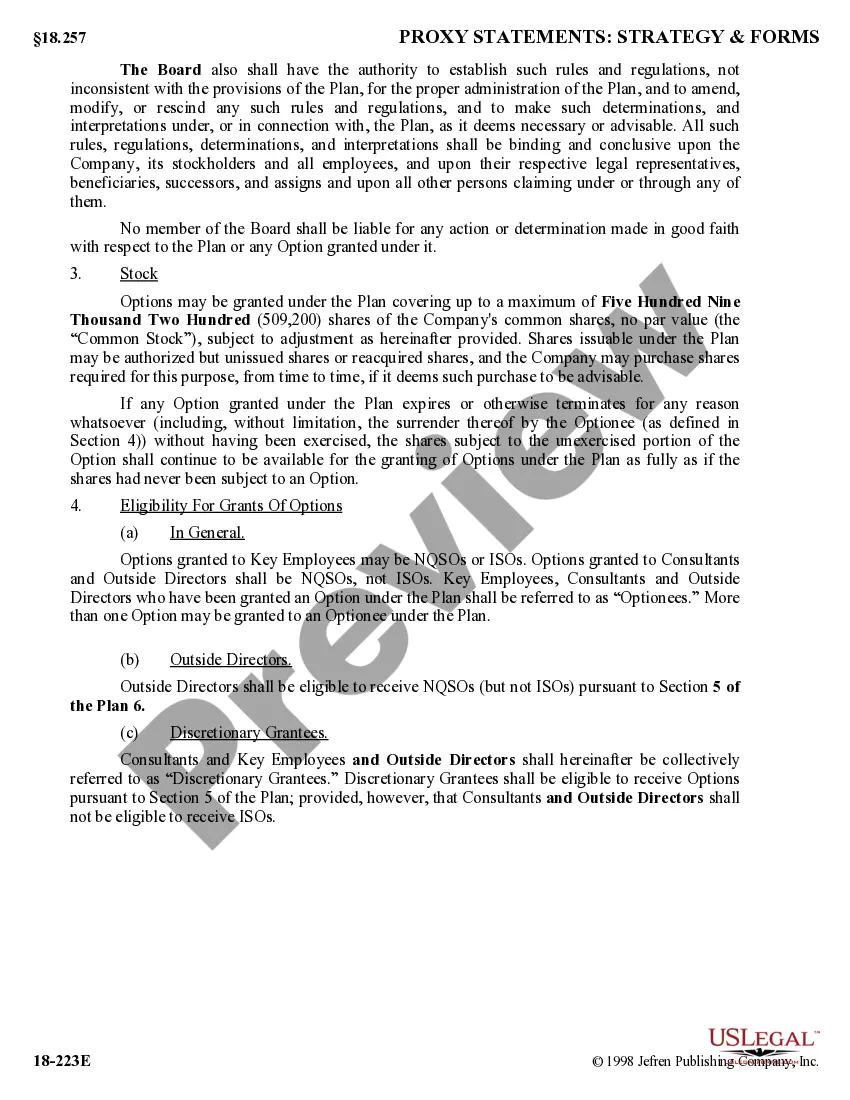
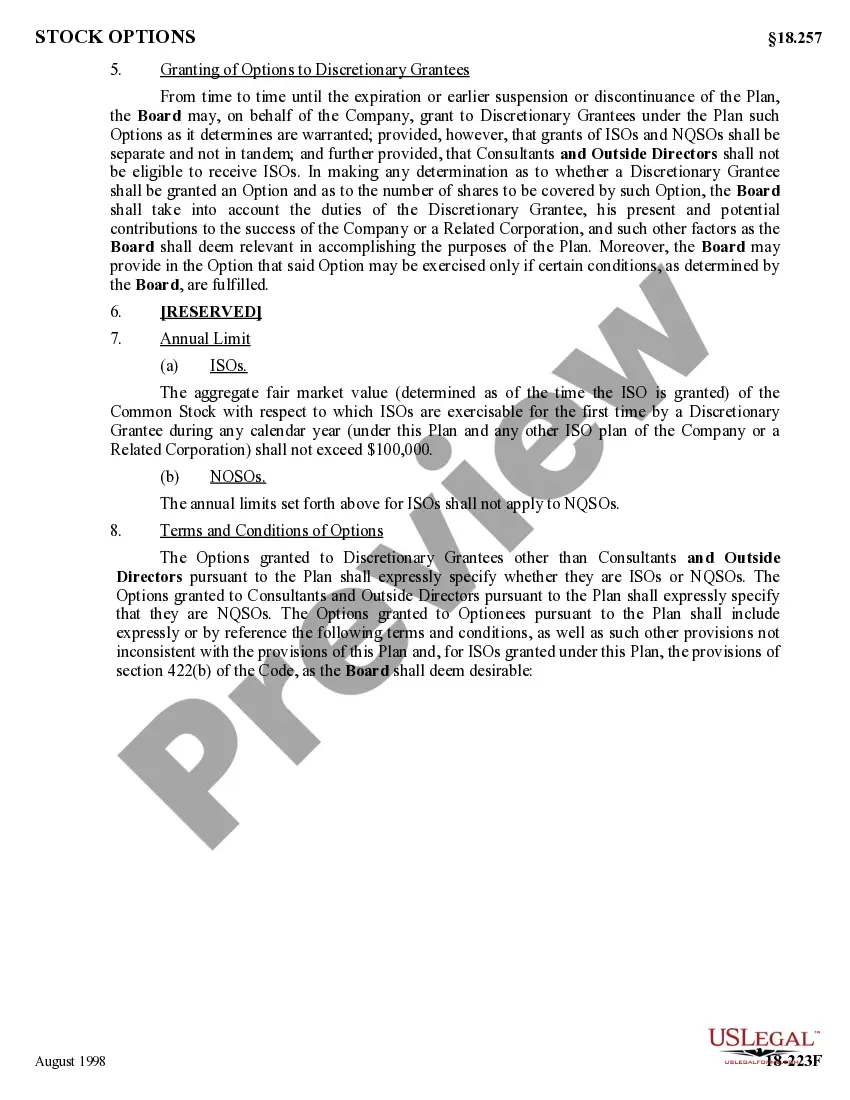

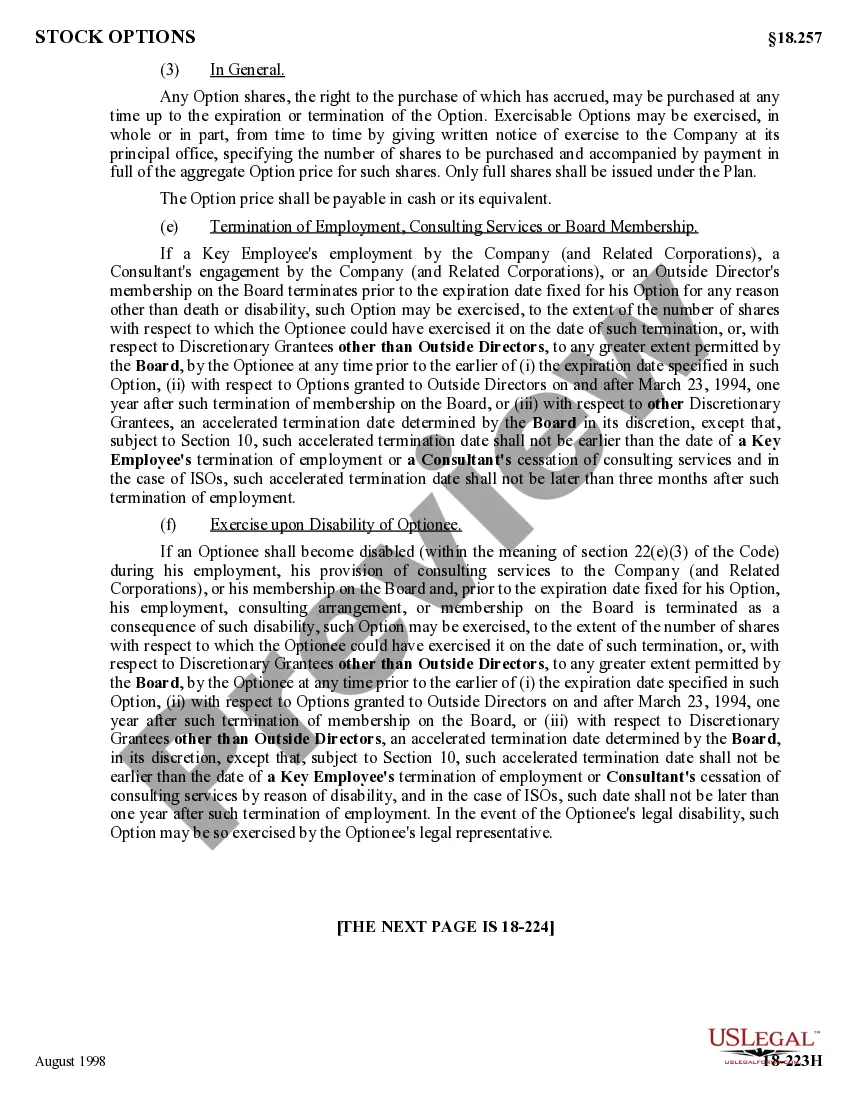






How to fill out Nonemployee Directors Nonqualified Stock Option Plan Of Cucos, Inc.?
Accessing legal document templates that comply with federal and state regulations is crucial, and the web provides numerous choices.
However, what is the benefit of spending time searching for the correctly crafted Non-qualified Stock Options For Dummies template online when the US Legal Forms digital library already houses such documents in one location.
US Legal Forms is the largest online legal repository with over 85,000 editable templates created by attorneys for both professional and personal matters. They are easy to navigate, with all documents organized by state and intended use. Our experts keep up with legal changes, ensuring that your documents are always current and compliant when you acquire a Non-qualified Stock Options For Dummies from our platform.
All documents you find through US Legal Forms are reusable. To re-download and complete previously saved documents, navigate to the My documents section in your account. Enjoy the most comprehensive and user-friendly legal document service!
- Acquiring a Non-qualified Stock Options For Dummies is straightforward and quick for both existing and new users.
- If you already possess an account with an active subscription, Log In and store the document template you require in the appropriate format.
- If you are a newcomer to our site, follow the steps below.
- Review the template using the Preview feature or through the text outline to ensure it meets your requirements.
- Search for another template using the search tool at the top of the page if necessary.
- Click Buy Now when you've identified the suitable document and select a subscription plan.
- Create an account or Log In and complete the payment via PayPal or credit card.
- Select the format for your Non-qualified Stock Options For Dummies and download it.
Form popularity
FAQ
The $100,000 rule refers to the limit on the amount of non-qualified stock options that can be exercised in a calendar year without triggering immediate tax consequences. This rule helps manage the tax implications of exercising options. Understanding this limit is vital for effective financial planning. US Legal Forms can provide further insights into this rule and its impact on your options.
While you cannot entirely avoid taxes on non-qualified stock options, you can manage your tax burden effectively. Timing your exercise and sale can make a difference in your tax bracket. Additionally, consulting with a tax advisor can provide strategies tailored to your situation. US Legal Forms offers resources to help you understand these tax implications.
Avoiding tax on non-qualified stock options is challenging, as they are taxable upon exercise. However, you can strategize your exercise timing and consider holding the shares for more than a year to benefit from long-term capital gains rates. Additionally, using tax-advantaged accounts or making donations of appreciated stock can also help minimize your tax liability. Learning about non-qualified stock options for dummies can guide you in making informed decisions to manage your taxes effectively.
When considering non-qualified stock options for dummies, developing a solid strategy is crucial. First, assess your financial goals and risk tolerance. Then, determine the right time to exercise your options, as this can significantly impact your tax obligations. Additionally, consider consulting resources like US Legal Forms to ensure you fully understand your options and make informed decisions.
Income tax upon exercise When you exercise NSOs and opt to purchase company shares, the difference between the market price of the shares and your NSO strike price is called the ?bargain element.? The bargain element is taxed as compensation, which means you'll need to pay ordinary income tax on that amount.
The income related to the option exercise should be included in the Form W-2 you receive from your employer or 1099-NEC from the company if you are a non-employee. Any capital gain or loss amount may also be reportable on your US Individual Income Tax Return (Form 1040), Schedule D and Form 8949 in the year of sale.
Here's a real-world example: If you exercise one of these NSOs, you'll pay your company $3 to buy a share. But the IRS views that share to be worth $35. The difference between the $3 and the $35 counts as a $32 phantom gain (also called the spread). The phantom gain is taxed at ordinary income rates.
Non-qualified stock options often reduce the cash compensation employees earn from employment. The price of these stock options is typically the same as the market value of the shares when the company makes such options available, also known as the grant date.
The income related to the option exercise should be included in the Form W-2 you receive from your employer or 1099-NEC from the company if you are a non-employee. Any capital gain or loss amount may also be reportable on your US Individual Income Tax Return (Form 1040), Schedule D and Form 8949 in the year of sale.