Non Qualified Stock Options Example
Description
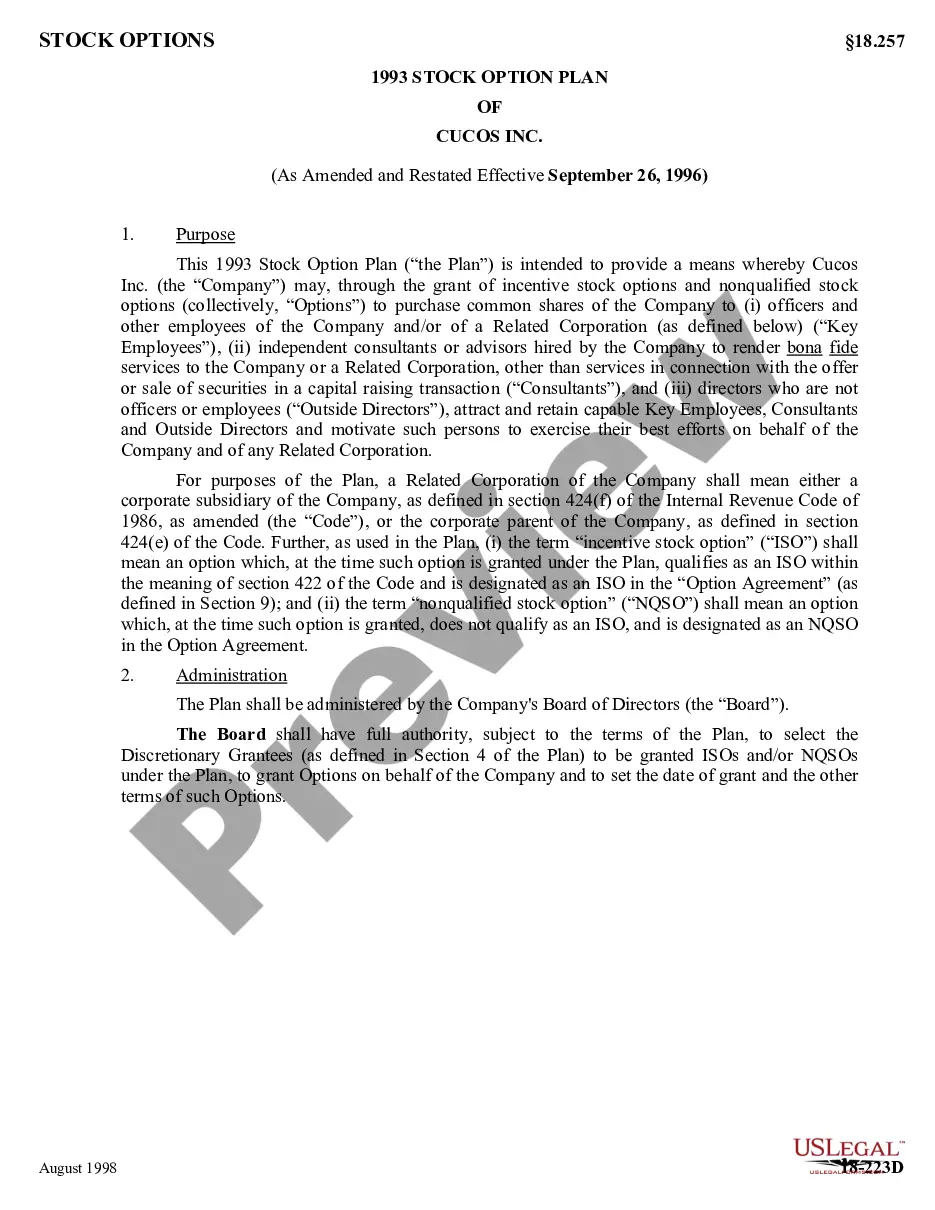

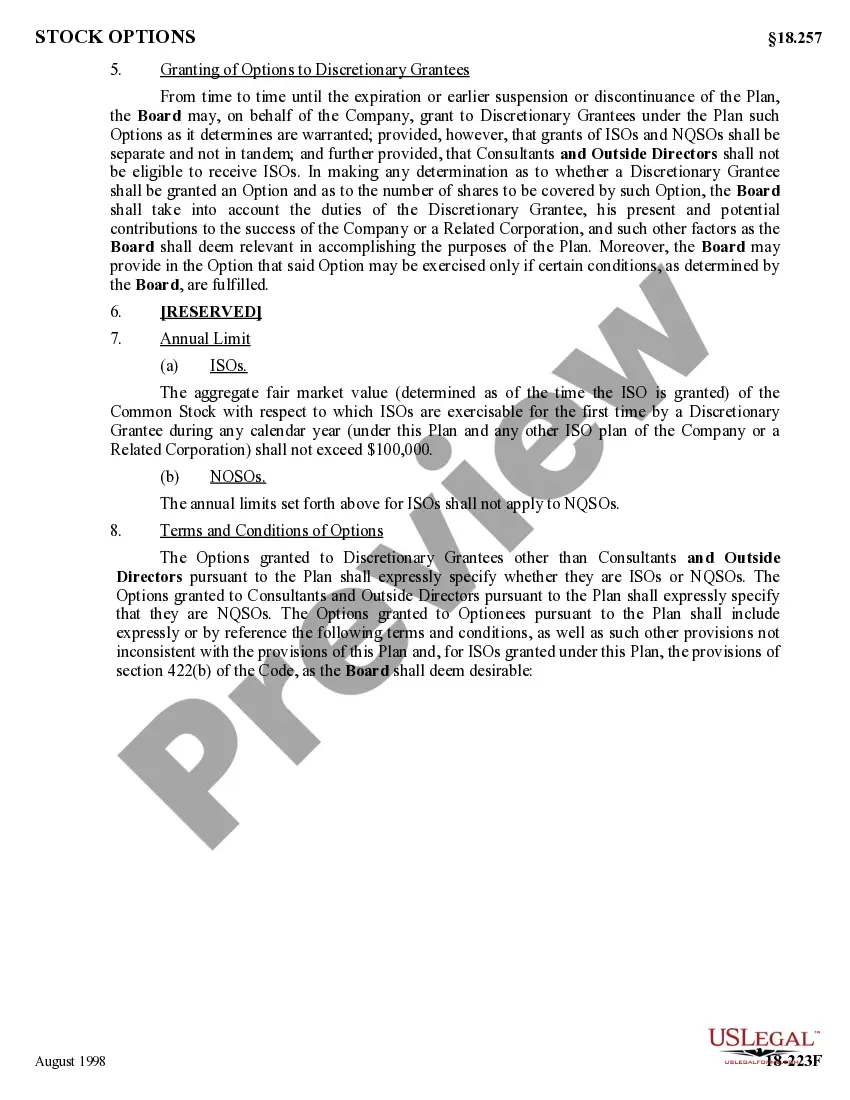

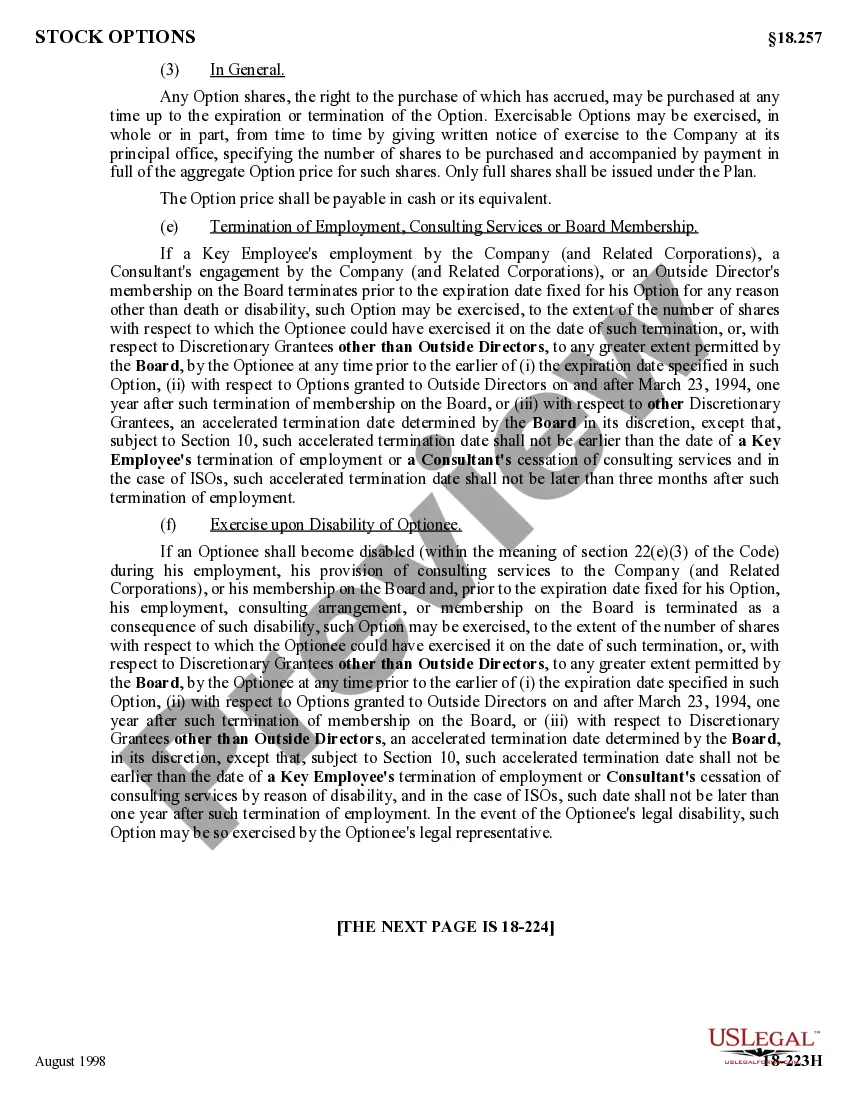
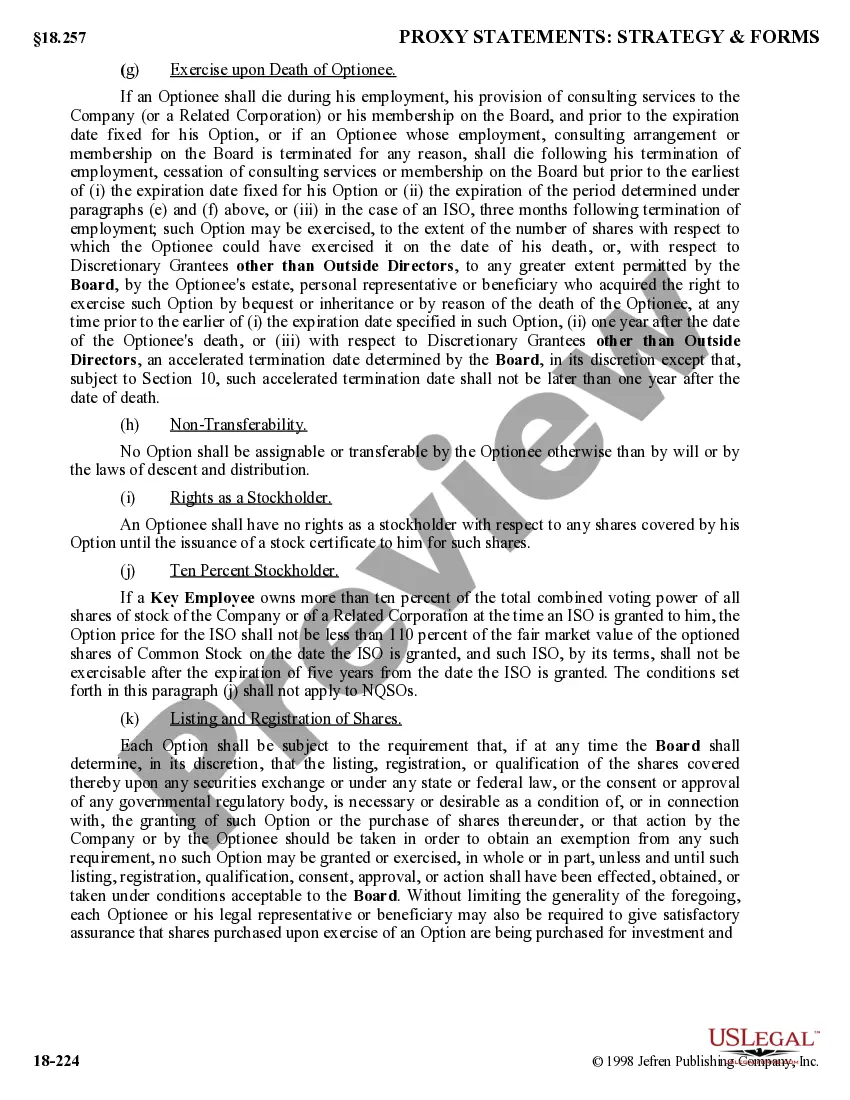
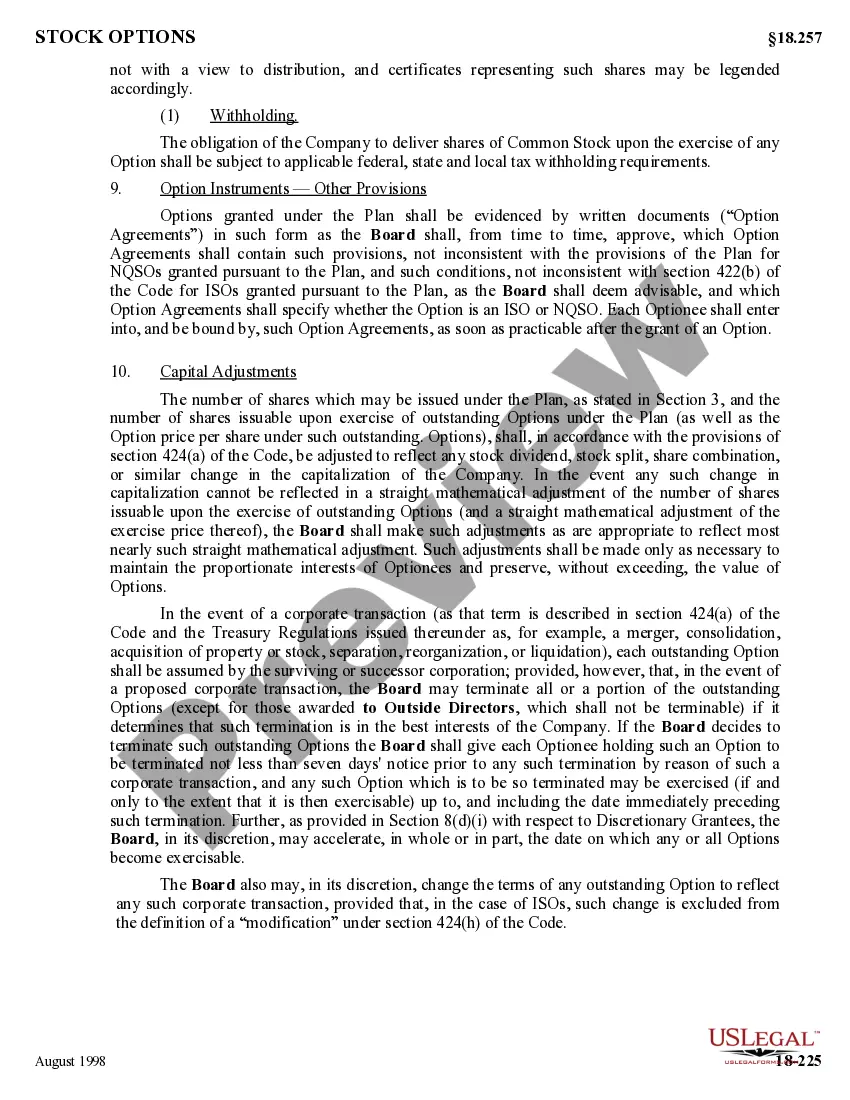

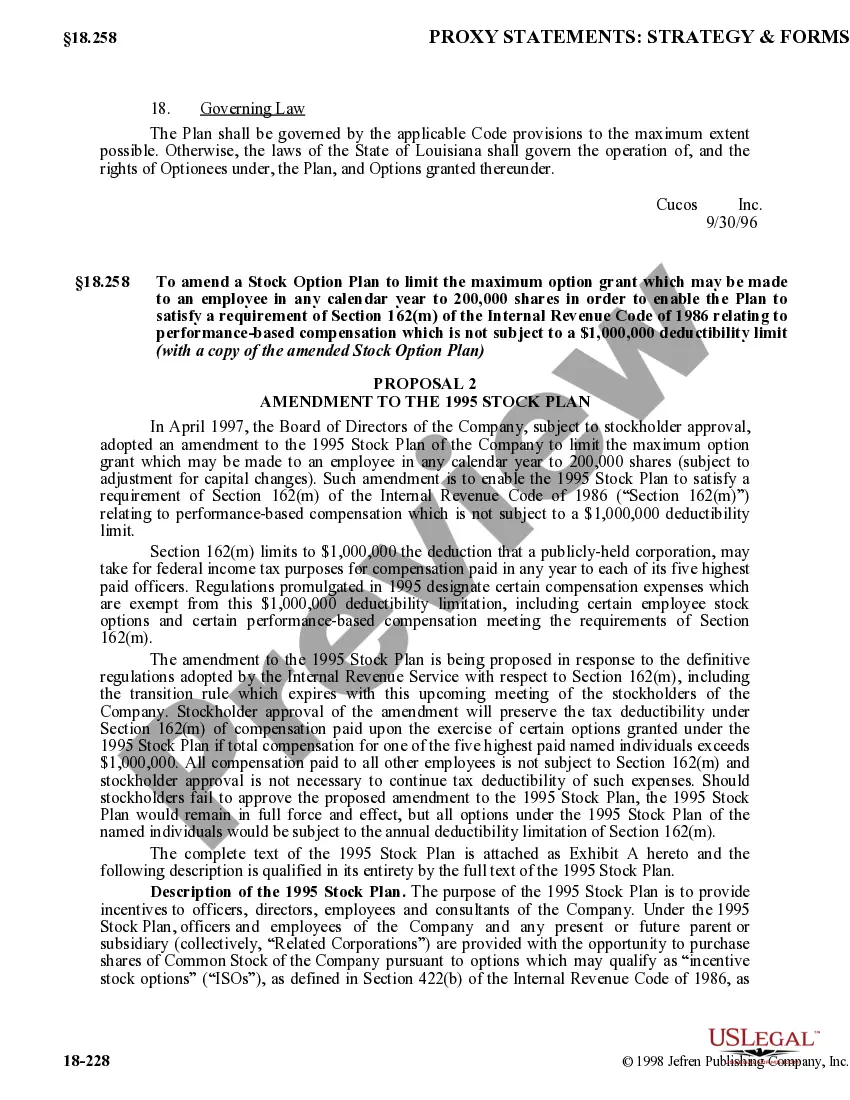


How to fill out Nonemployee Directors Nonqualified Stock Option Plan Of Cucos, Inc.?
Utilizing legal document examples that comply with national and local regulations is essential, and the web provides numerous choices to select from.
However, what’s the sense in spending time searching for the suitable Non Qualified Stock Options Example template online when the US Legal Forms digital repository already consolidates such forms in one location.
US Legal Forms is the largest online legal archive with over 85,000 customizable documents prepared by legal experts for various business and personal circumstances. They are straightforward to navigate, with all files organized by state and intended purpose. Our experts stay updated with legal amendments, ensuring your documentation is current and compliant when acquiring a Non Qualified Stock Options Example from our site.
- Review the template using the Preview feature or through the text outline to confirm it meets your requirements.
- Search for an alternative example using the search bar at the top of the site if needed.
- Click Buy Now once you’ve located the correct document and choose a subscription option.
- Set up an account or Log In and complete the purchase using PayPal or a credit card.
- Select the appropriate format for your Non Qualified Stock Options Example and download it.
Form popularity
FAQ
When you exercise non-qualified stock options, the income you earn is typically reported on your W2 form. This income appears in Box 1, which includes total wages, tips, and other compensation. Additionally, the amount from your exercised options is subject to federal, state, and payroll taxes. For a clear understanding and examples of how this works, you can refer to a non-qualified stock options example, which can help you navigate the reporting process effectively.
A stock option is considered non-qualified when it fails to meet specific guidelines set forth by the IRS. For instance, it does not adhere to the rules about the timing of stock option grants or the holding periods required for favorable tax treatment. This classification gives employers greater flexibility in offering stock options, but it also means employees must be aware of the tax implications. To fully grasp the concept, reviewing a non qualified stock options example can illustrate the differences between qualified and non-qualified options.
A nonqualified stock option, often referred to as a NQSO, is a type of employee stock option that does not meet the requirements set by the Internal Revenue Code. When you exercise a nonqualified stock option, the profit you make is subject to regular income tax, as opposed to capital gains tax. This financial structure allows companies to provide employees with an incentive, aligning their interests with company performance. For a clearer understanding, look at a non qualified stock options example to see how these options work in practice.
While you cannot entirely avoid tax on non-qualified stock options, you can strategize to minimize your tax burden. One approach is to exercise options in a year where your income is lower, reducing the overall tax impact. Additionally, consulting resources like US Legal Forms can provide guidance on tax strategies tailored to your situation, helping you navigate the complexities of nonqualified stock options.
To report stock options on your tax return, you need to include the income from the exercise of your nonqualified stock options. This income is usually reported as ordinary income on your tax return, and you should receive a Form 1099-B from your broker detailing the transactions. It is essential to keep accurate records of your options, including the grant date, exercise date, and sale date, to ensure accurate reporting.
Non-qualified Stock Options (NSOs) are stock options that, when exercised, result in ordinary income under US tax laws on the difference, calculated on the exercise date, between the exercise price and the fair market value of the underlying shares.
Non-qualified stock options often reduce the cash compensation employees earn from employment. The price of these stock options is typically the same as the market value of the shares when the company makes such options available, also known as the grant date.
Here's a real-world example: If you exercise one of these NSOs, you'll pay your company $3 to buy a share. But the IRS views that share to be worth $35. The difference between the $3 and the $35 counts as a $32 phantom gain (also called the spread). The phantom gain is taxed at ordinary income rates.
The income related to the option exercise should be included in the Form W-2 you receive from your employer or 1099-NEC from the company if you are a non-employee. Any capital gain or loss amount may also be reportable on your US Individual Income Tax Return (Form 1040), Schedule D and Form 8949 in the year of sale.
Paying Taxes on Non-Qualified Stock Options For example, after exercising at $20 per share, suppose the stock rose to $30 per share. If you sold your 100 shares at that price, you would pay capital gains taxes on the additional $1,000 in earnings. Capital gains taxes are dependent on how long you hold the shares.