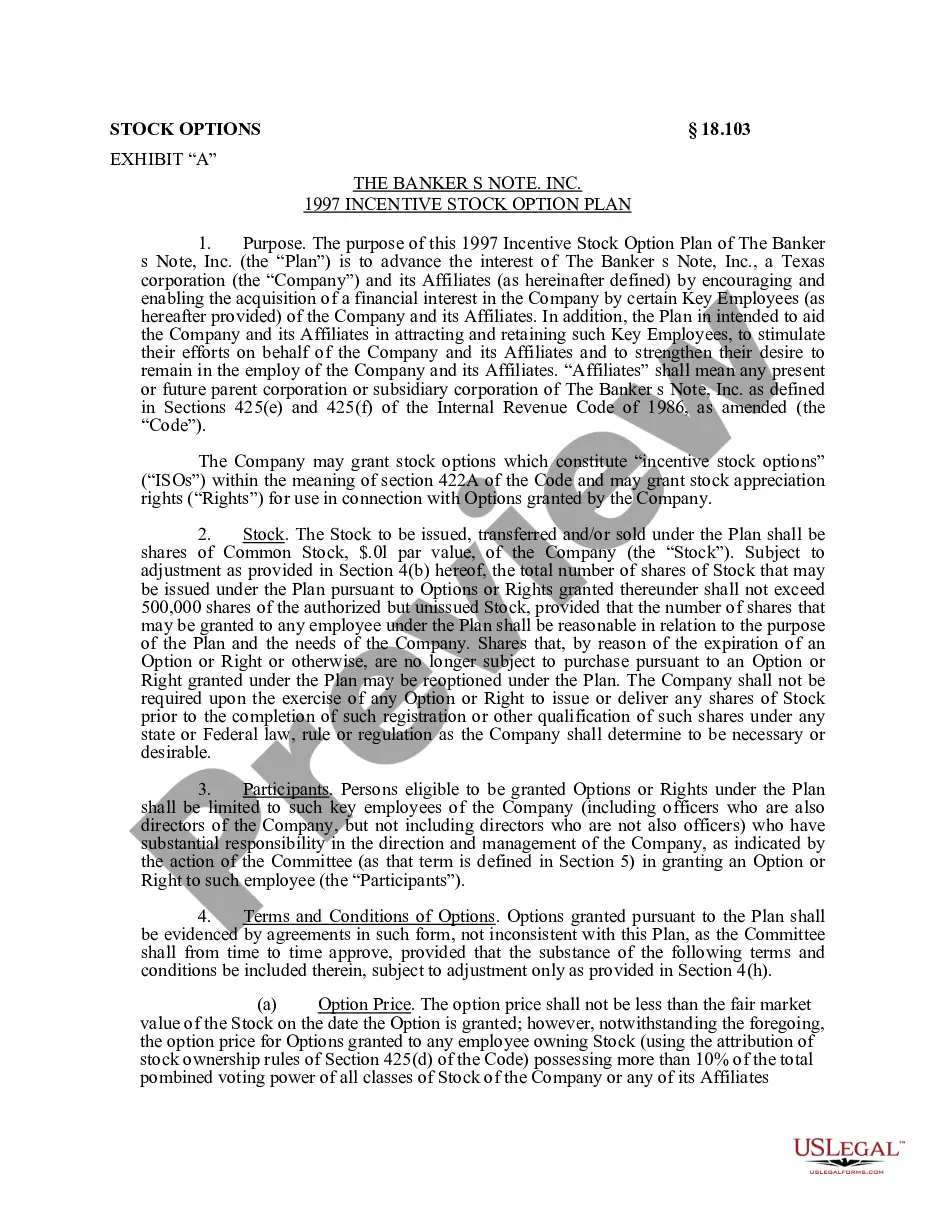
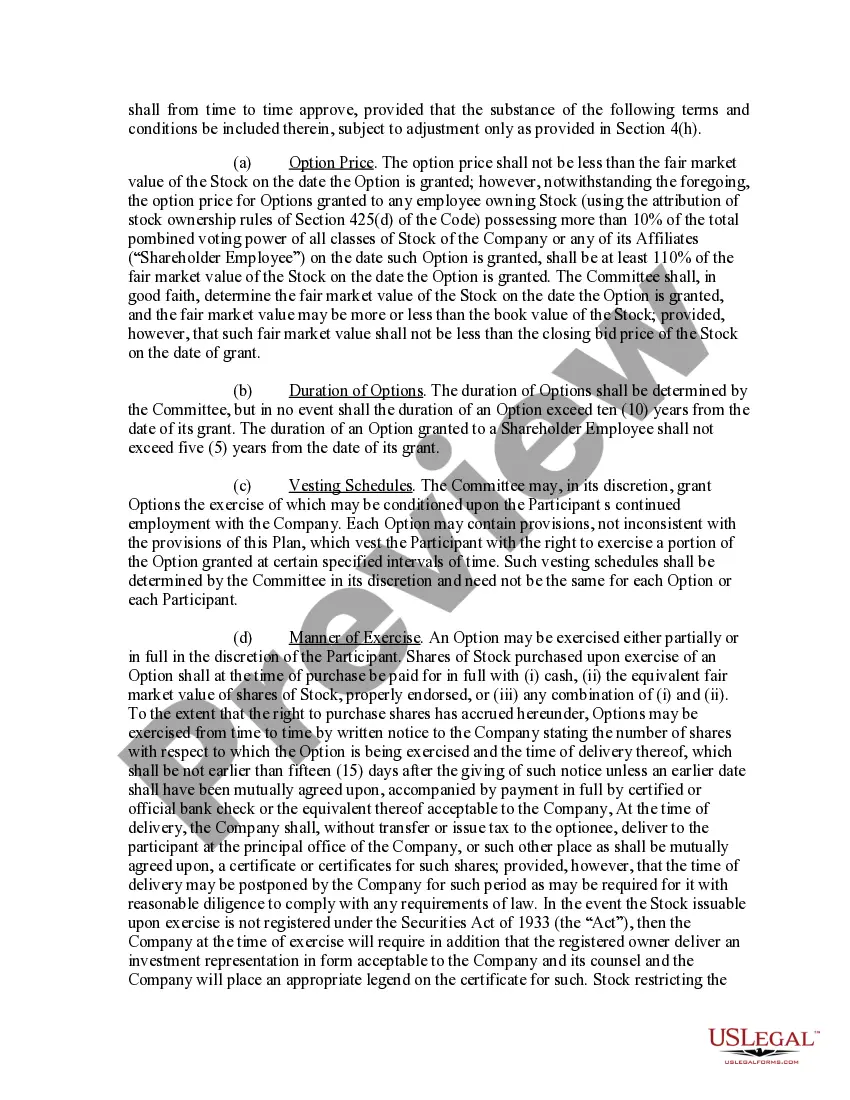
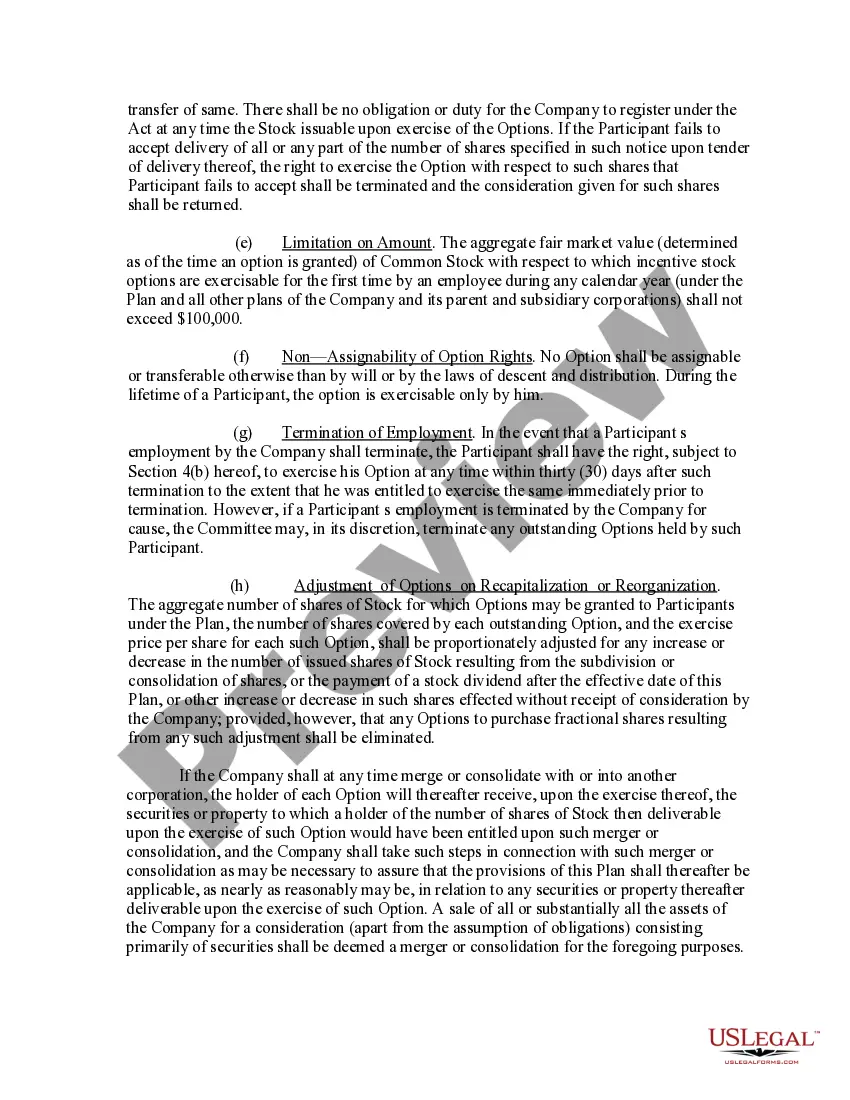
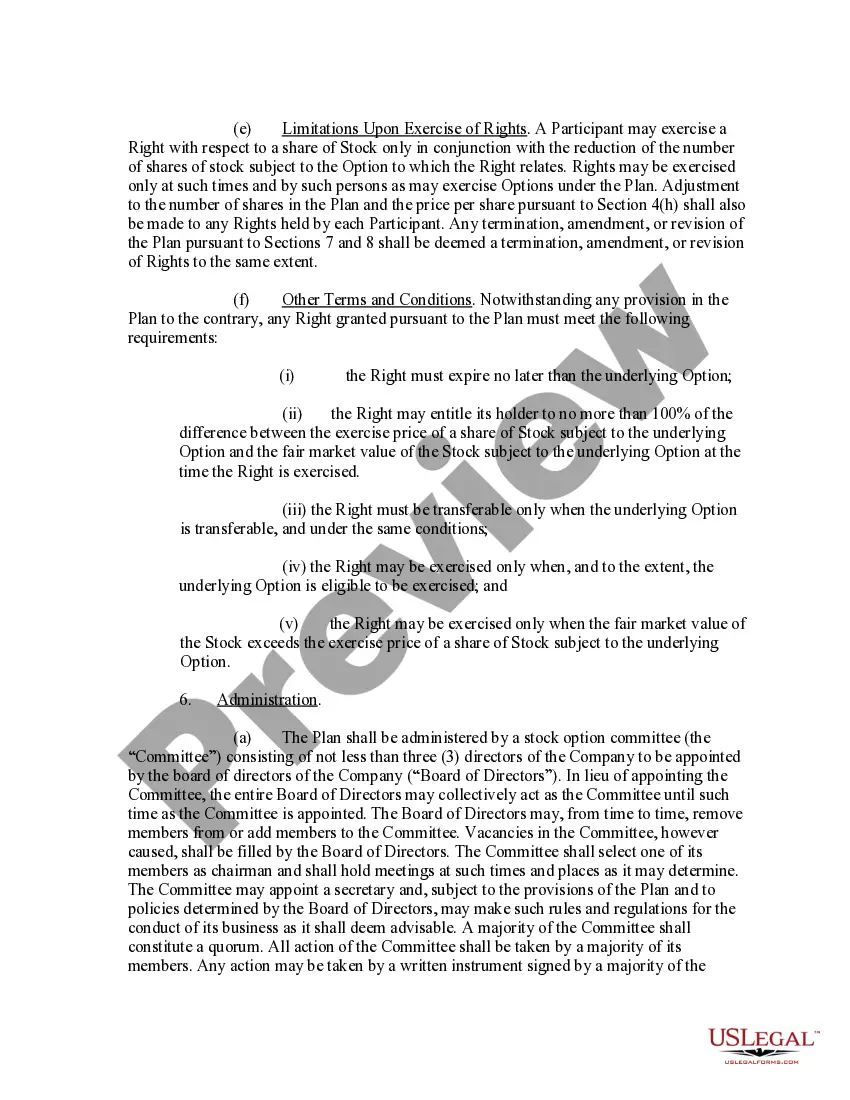
Incentive Stock Option Form 3921
Description


Get your form ready online
Our built-in tools help you complete, sign, share, and store your documents in one place.
Make edits, fill in missing information, and update formatting in US Legal Forms—just like you would in MS Word.
Download a copy, print it, send it by email, or mail it via USPS—whatever works best for your next step.
Sign and collect signatures with our SignNow integration. Send to multiple recipients, set reminders, and more. Go Premium to unlock E-Sign.
If this form requires notarization, complete it online through a secure video call—no need to meet a notary in person or wait for an appointment.
We protect your documents and personal data by following strict security and privacy standards.

Make edits, fill in missing information, and update formatting in US Legal Forms—just like you would in MS Word.

Download a copy, print it, send it by email, or mail it via USPS—whatever works best for your next step.

Sign and collect signatures with our SignNow integration. Send to multiple recipients, set reminders, and more. Go Premium to unlock E-Sign.

If this form requires notarization, complete it online through a secure video call—no need to meet a notary in person or wait for an appointment.

We protect your documents and personal data by following strict security and privacy standards.
Looking for another form?








Form popularity
FAQ
The $100,000 incentive stock option limit refers to the maximum fair market value of stock options that can be treated as incentive stock options in a given year. If the value of options granted exceeds this amount, the excess options become non-qualified stock options, which have different tax implications. This limit is important for both employees and employers to understand as it can affect income taxation and financial planning. Utilizing the Incentive Stock Option Form 3921 helps ensure that all options are reported correctly.
Incentive stock options can come in many forms, such as performance-based grants, which are awarded when certain company goals are met, or time-based grants, which vest after a specific period of employment. For example, a tech startup might offer employees stock options that vest after four years to encourage long-term commitment. These examples show how organizations can align employee interests with their growth. Always remember to report these transactions accurately on the Incentive Stock Option Form 3921.
To enter the Incentive Stock Option Form 3921 on your tax return, you need to report the information from the form on your IRS Form 1040. Start by including the details in the income section, ensuring you list the correct amounts from the form. Additionally, you may need to complete Schedule D if you sold the stock, as any gain or loss must be reported. Using our platform, US Legal Forms, can help simplify this process with easy-to-follow instructions.
To qualify for an incentive stock option, both the employee and the stock must meet specific criteria set by the IRS. The employee must hold the stock for at least one year after exercising the option and two years from the date of grant. Additionally, the total value of shares granted cannot exceed $100,000 in a year. Proper documentation, including the Incentive stock option form 3921, is essential to ensure compliance and to report the transaction accurately.
When reporting stock options on your tax return, you must first determine if the options are non-qualified or incentive stock options. Report the exercise of options using the Incentive Stock Option Form 3921, and include any resulting gains in your tax calculations. With the right resources, including our platform, you can navigate these reporting requirements confidently.
Reporting the Incentive Stock Option Form 3921 on your tax return is crucial for accurate tax filing. You'll typically report it on Schedule D and Form 8949 to capture your capital gains or losses. Be sure to gather all relevant documents, such as your Form 3921, for a smooth reporting experience.
To record stock options, you need to track the grant date, exercise date, and fair market value. The Incentive Stock Option Form 3921 shows essential details that should be entered into your financial records. Our platform offers tools that simplify the recording process, allowing for accurate and efficient data entry.
Stock options, particularly those reported on the Incentive Stock Option Form 3921, have specific tax treatments. If you choose to exercise these options, you may benefit from favorable tax rates upon sale if certain holding periods are met. Understanding your obligations helps ensure compliance and optimizes your tax outcomes.
Accountability for stock options involves recognizing expenses related to stock-based compensation. When using the Incentive Stock Option Form 3921, the tax implications depend on whether you have exercised the options. Proper documentation is essential for accurate accounting, and our platform provides an easy way to record these transactions.
Incentive stock options are typically not included in gross income at the time of exercise. Instead, you report them when you sell the shares. This unique treatment offers significant tax benefits, making them an attractive option for employees.
