Stock Option Accounting
Description
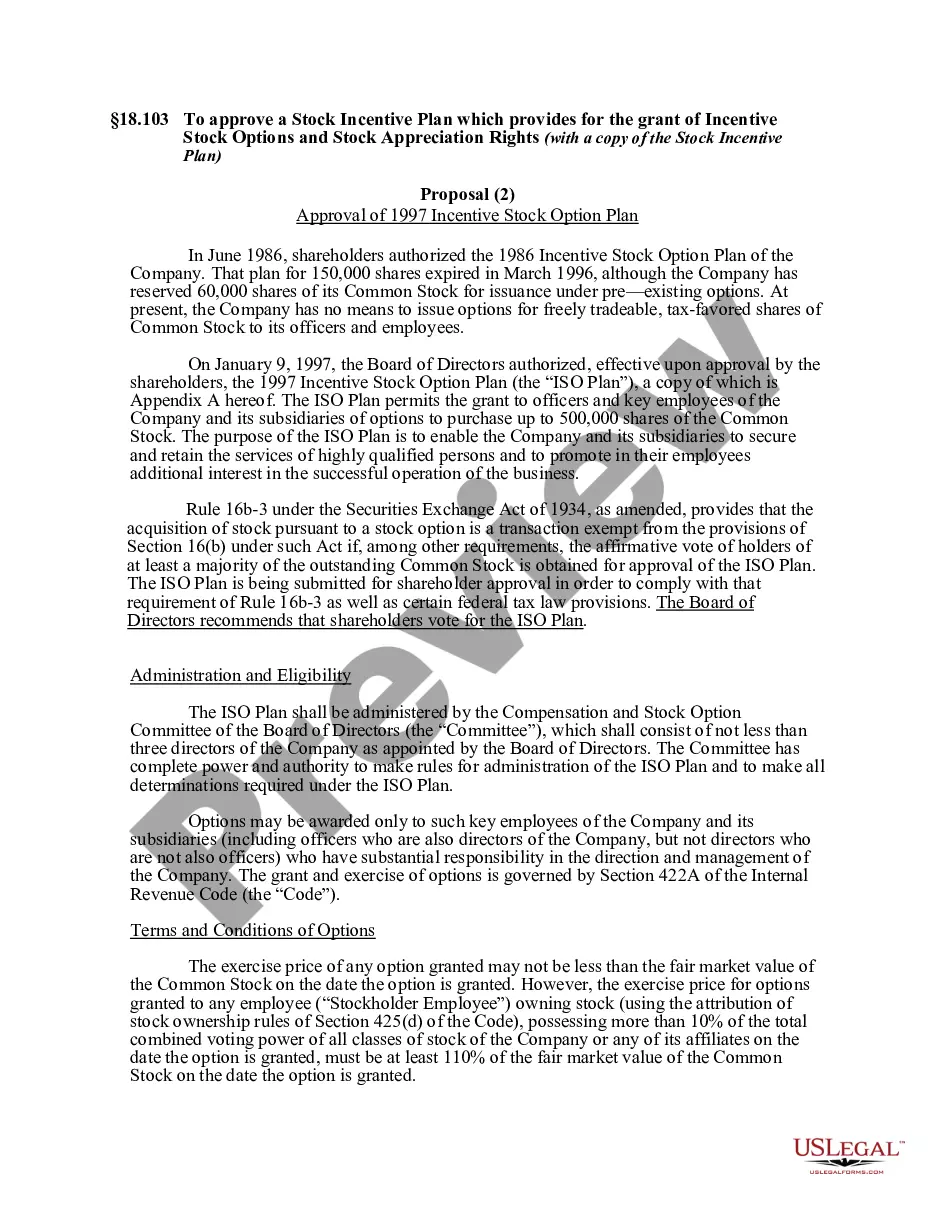
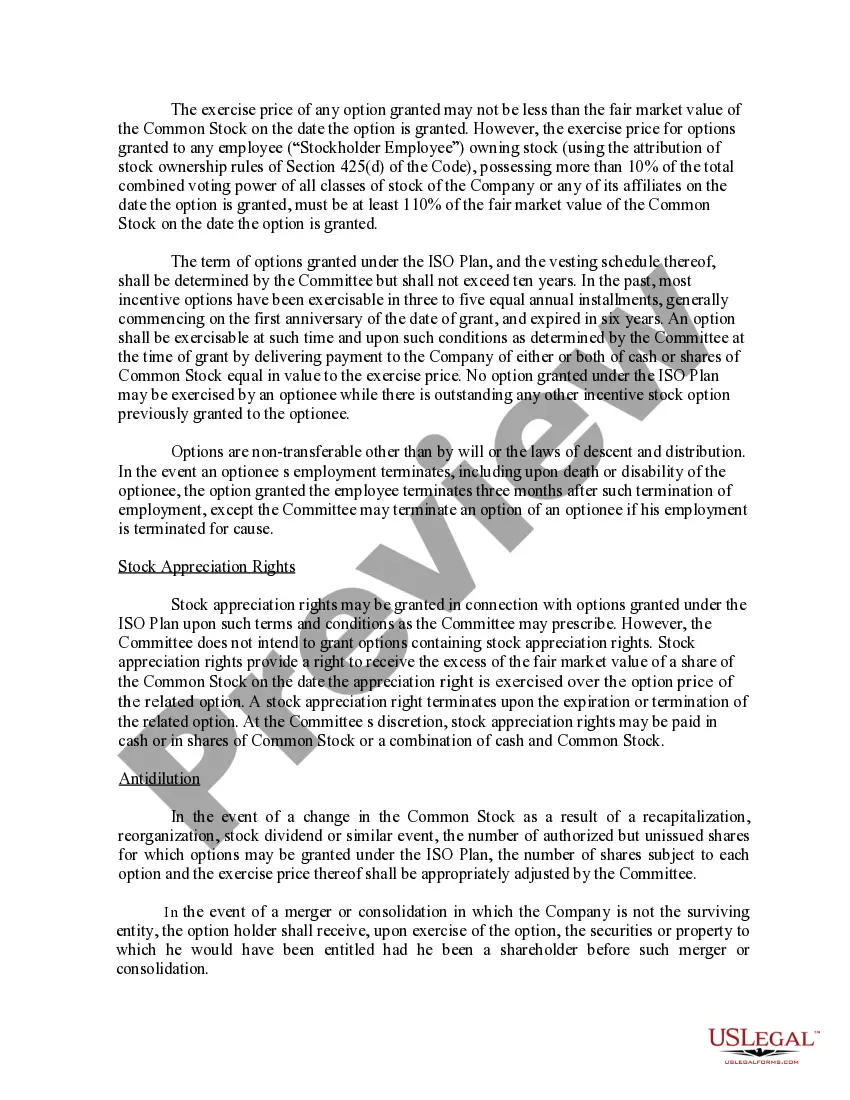
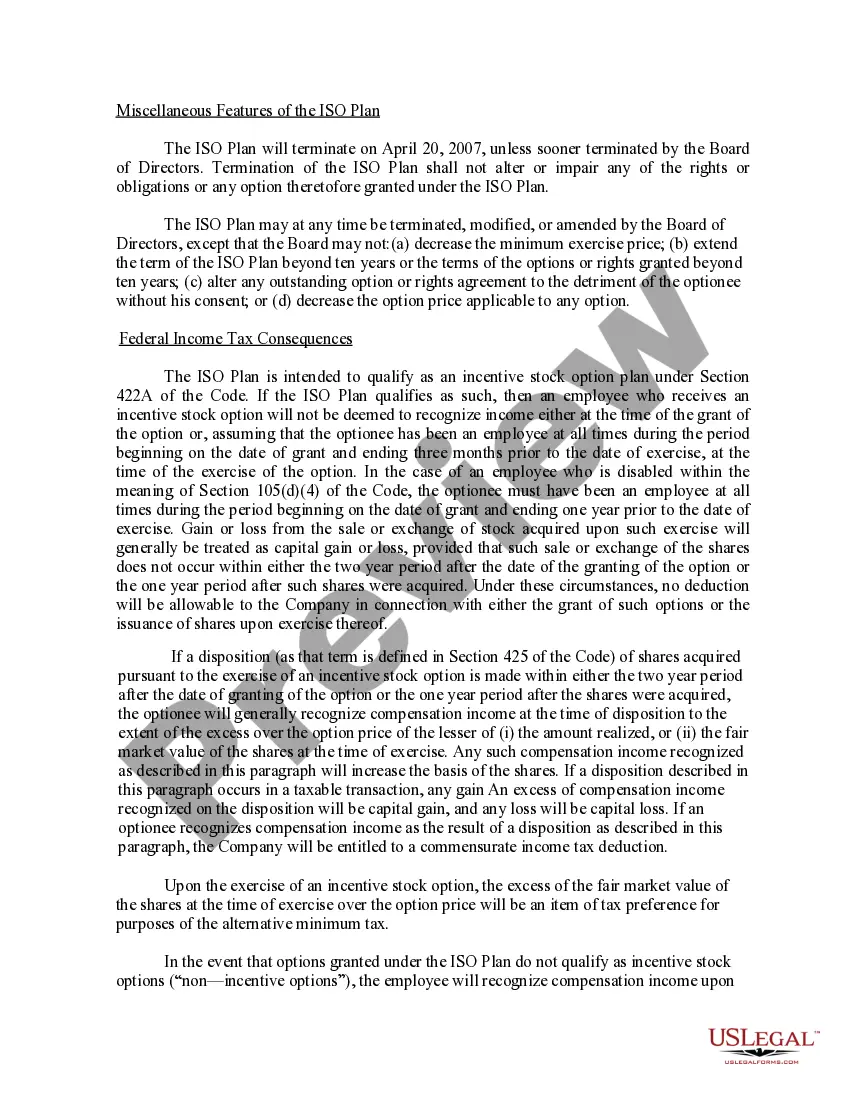
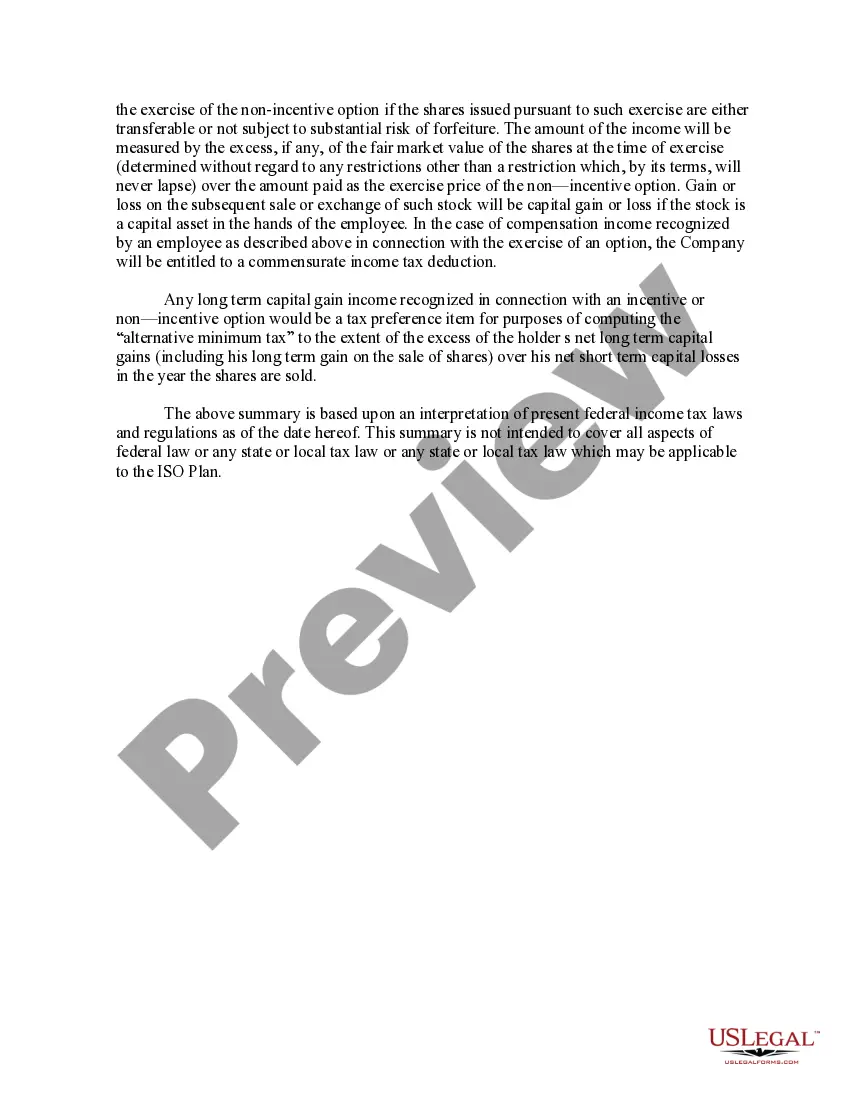
Get your form ready online
Our built-in tools help you complete, sign, share, and store your documents in one place.
Make edits, fill in missing information, and update formatting in US Legal Forms—just like you would in MS Word.
Download a copy, print it, send it by email, or mail it via USPS—whatever works best for your next step.
Sign and collect signatures with our SignNow integration. Send to multiple recipients, set reminders, and more. Go Premium to unlock E-Sign.
If this form requires notarization, complete it online through a secure video call—no need to meet a notary in person or wait for an appointment.
We protect your documents and personal data by following strict security and privacy standards.

Make edits, fill in missing information, and update formatting in US Legal Forms—just like you would in MS Word.

Download a copy, print it, send it by email, or mail it via USPS—whatever works best for your next step.

Sign and collect signatures with our SignNow integration. Send to multiple recipients, set reminders, and more. Go Premium to unlock E-Sign.

If this form requires notarization, complete it online through a secure video call—no need to meet a notary in person or wait for an appointment.

We protect your documents and personal data by following strict security and privacy standards.
Looking for another form?

How to fill out Approval Of Incentive Stock Option Plan?
- If you're an existing user, log in to your account to access your saved documents. Check that your subscription is current; if expired, renew it based on your plan.
- For first-time users, start by browsing the extensive library. Use the Preview mode and check the form description to choose a template that fits your needs and complies with local jurisdiction.
- If you need another form, utilize the Search tab to find other templates that address any inconsistencies you encounter.
- Once your desired document is identified, click on the Buy Now button and select your preferred subscription plan. Register for an account to access the full library.
- Complete your purchase by entering your credit card information or opting for PayPal to finalize your subscription.
- Finally, download your form and save it on your device. You can revisit your documents anytime via the My Forms section of your profile.
US Legal Forms empowers users with a vast collection of over 85,000 easily editable legal forms, ensuring you find the right documentation for stock option accounting.
Get started today and simplify your legal documentation with US Legal Forms!
Form popularity
FAQ
The Accounting Standards Codification (ASC) 718 specifically addresses stock options in accounting. This guidance provides instructions on how to measure and recognize compensation costs related to stock options. Understanding the ASC helps organizations comply with stock option accounting requirements while providing clarity on the financial impact of these options.
Stock options do not count as assets on the balance sheet until they are exercised. Once exercised, the shares become part of the company's equity, but before that, they represent potential future value under stock option accounting. Understanding this distinction helps you accurately report your company's financial position and prepares you for investment evaluations.
In stock option accounting, you account for stock options by recognizing their fair value as an expense on your income statement. You need to follow the guidelines set by accounting standards like GAAP or IFRS, which require companies to estimate the value of options granted. Additionally, you would adjust equity accounts as options are exercised, promoting transparency in your financial disclosures.
In accounting, stock options are treated as a form of employee compensation that must be recognized over their vesting period. Each expense recorded corresponds to the fair value of the options granted. Proper stock option accounting ensures that financial statements accurately reflect the company's compensation strategies.
Stock option expense is calculated based on the fair value of the options granted, which you need to assess at the grant date. Various models, like Black-Scholes or the Binomial model, can help determine this value. Accurate calculations are essential for effective stock option accounting and reporting.
Booking stock option expenses requires recording the expense over the vesting period of the options. You should make journal entries that reflect the expense based on the fair value determined on the grant date. This process is vital in maintaining proper stock option accounting for financial accuracy.
To calculate stock option expense, you need to use a valuation method, typically the Black-Scholes model. This model estimates the fair value of the options at the time of the grant. Knowing how to manage stock option accounting helps ensure accurate reporting on your financial statements.
Typically, stock options are offered by employers as part of your compensation package. You can receive stock options as an incentive for your work or as part of a benefits program. Understanding stock option accounting helps you grasp the potential value of these options in your financial planning.
When you sell stock options, it's essential to know how to report that income correctly. You should report any income from stock options on your tax return. Stock option accounting involves recognizing the income when you exercise the options or when you sell the shares, depending on your situation.
Filing taxes on stock options involves reporting income at the time of exercise under stock option accounting rules. Typically, you must include any gain from the stock options as part of your taxable income. Ensuring you accurately classify and report this can be complex, so using platforms like US Legal Forms can simplify the process with clear guidance.