List Chapter 7 With Explanation
Description
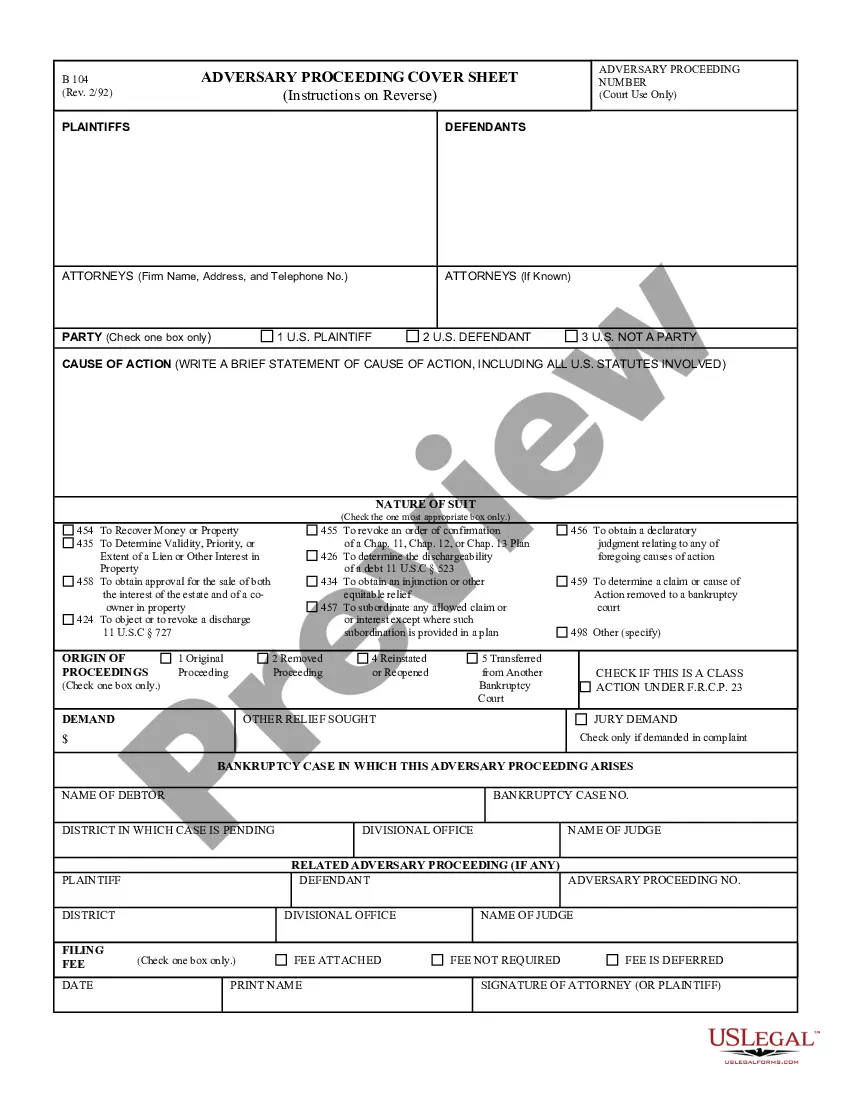
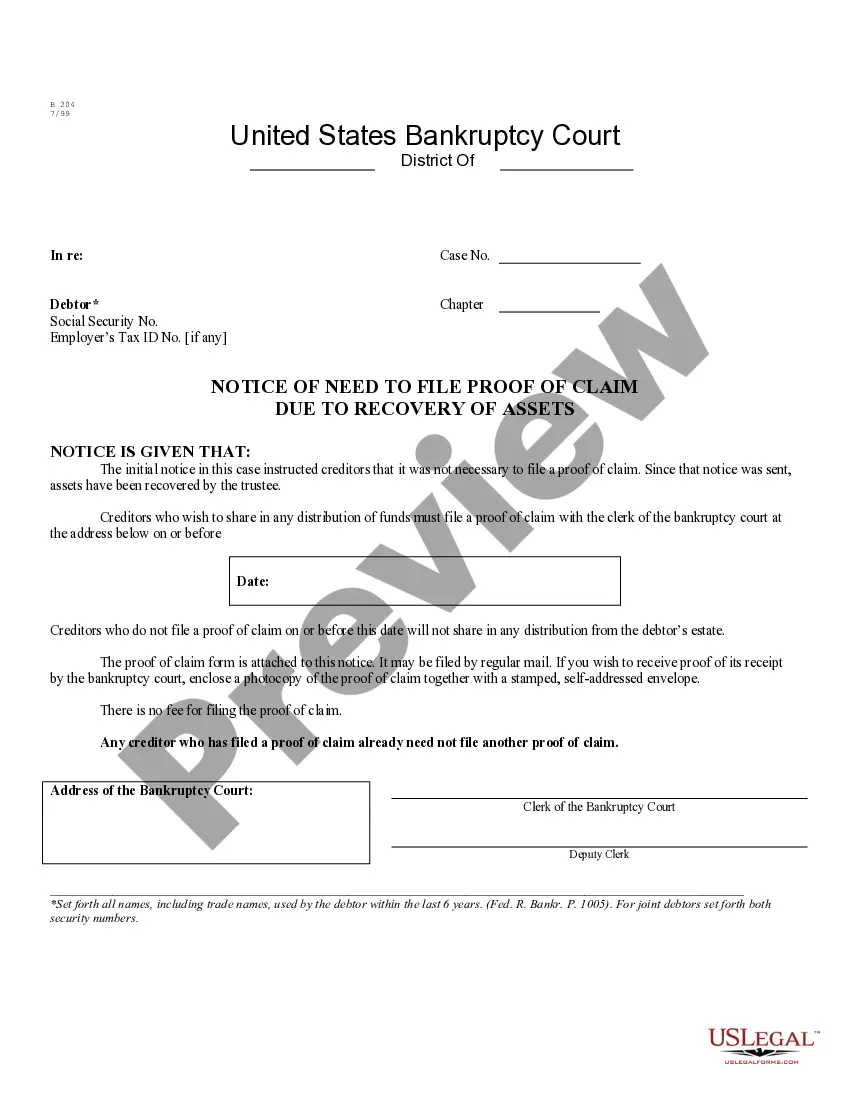
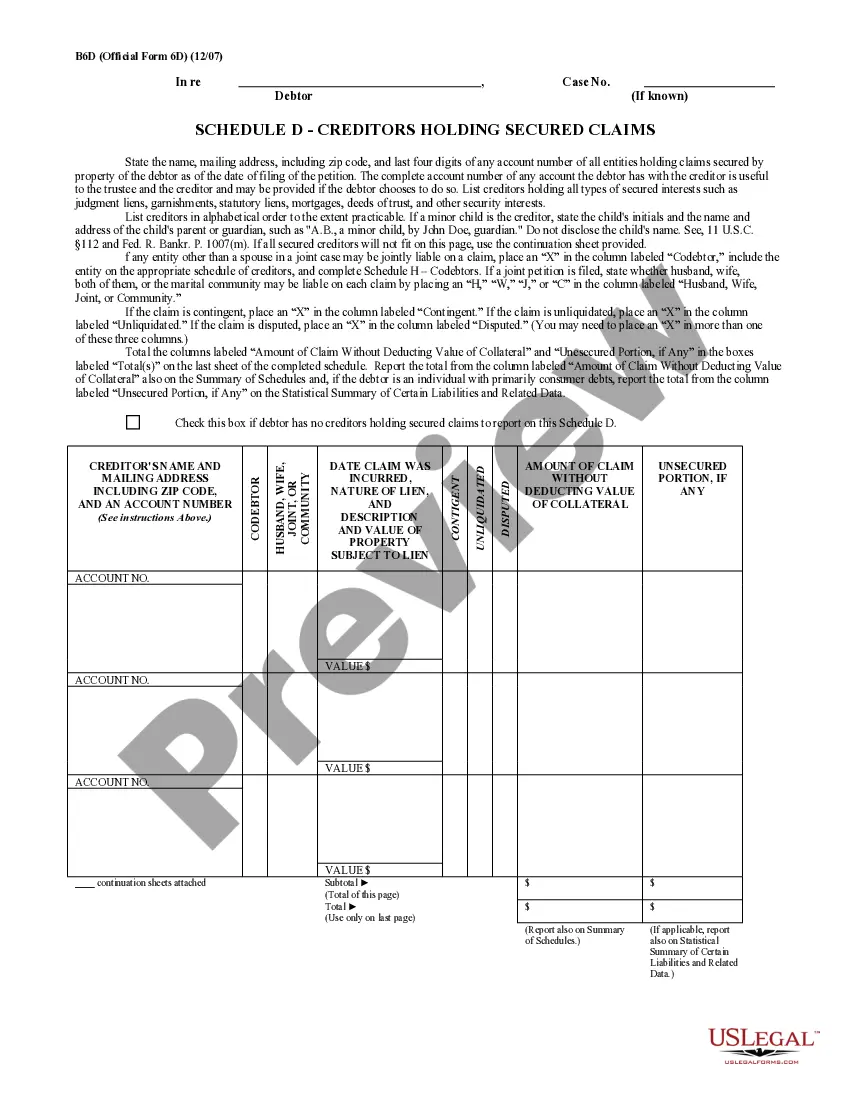
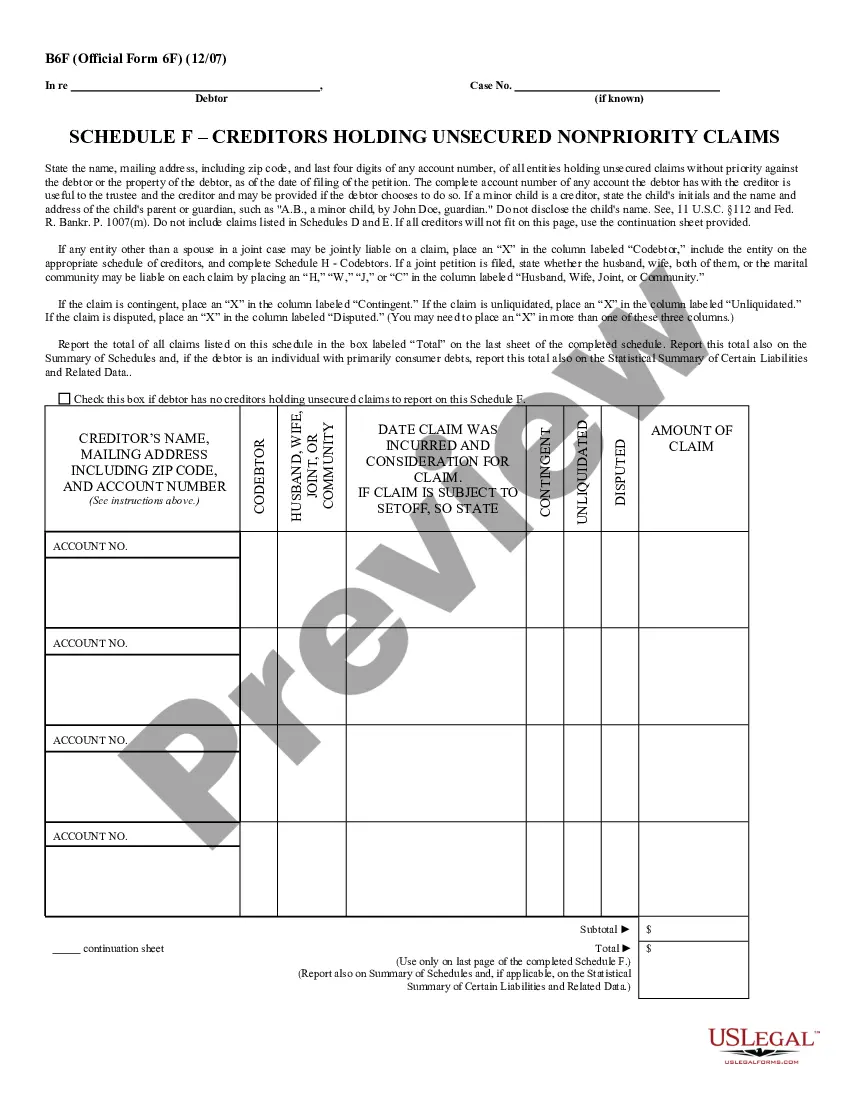




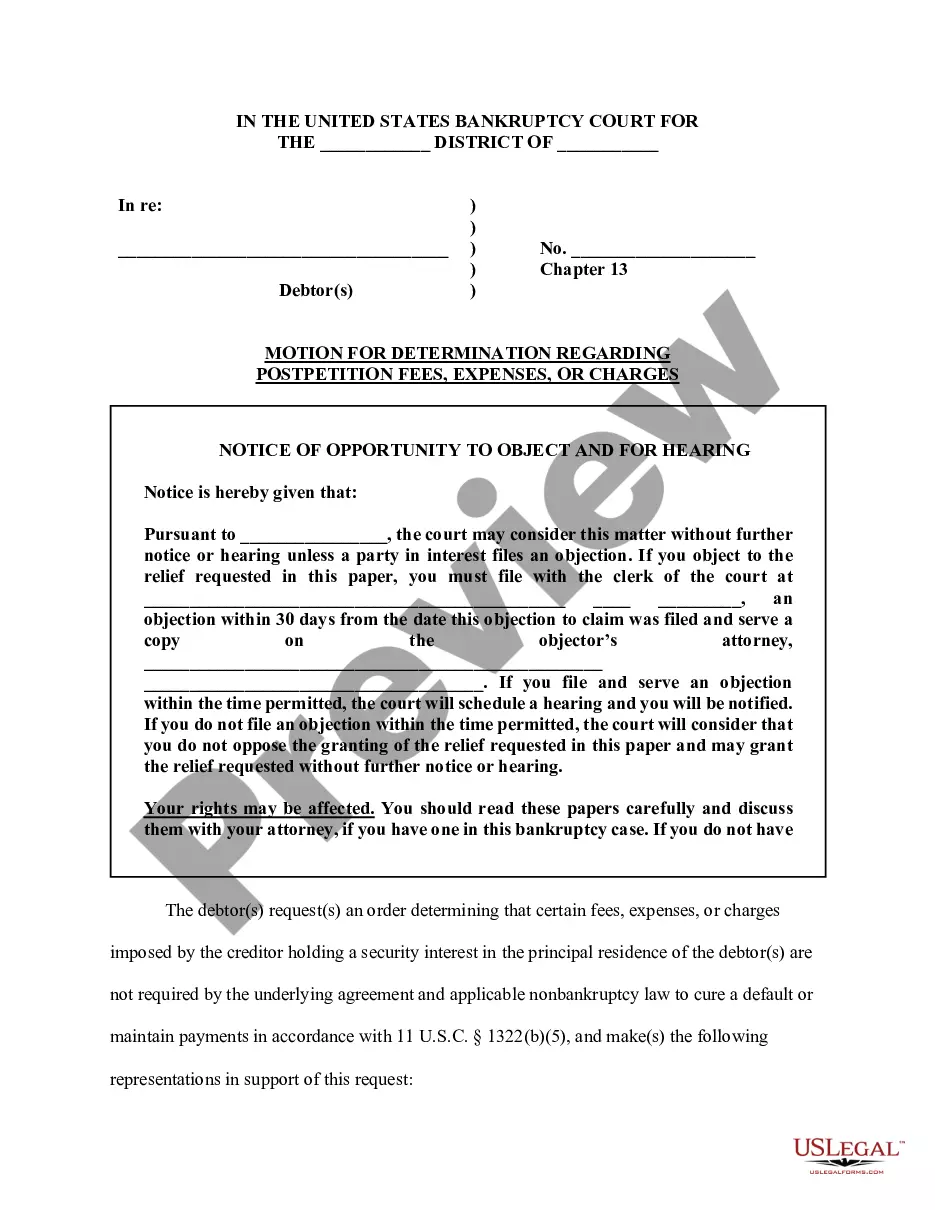
How to fill out List Of Creditors Holding 20 Largest Secured Claims - Not Needed For Chapter 7 Or 13 - Form 4 - Post 2005?
The List Chapter 7 With Explanation you observe on this page is a reusable official template crafted by expert attorneys in accordance with federal and state statutes and regulations.
For over 25 years, US Legal Forms has supplied individuals, organizations, and lawyers with more than 85,000 validated, state-specific forms for every business and personal circumstance. It’s the fastest, simplest, and most dependable method to acquire the documents you require, as the service ensures bank-level data security and anti-malware safeguards.
Register for US Legal Forms to have validated legal templates for all of life’s scenarios at your fingertips.
- Search for the document you require and examine it.
- Register and Log In.
- Acquire the fillable template.
- Fill out and sign the document.
- Re-download your documents.
Form popularity
FAQ
A Chapter 7 bankruptcy is also called a liquidation bankruptcy because you have to sell nonexempt possessions and use the proceeds to repay your creditors. You do get to keep exempt assets and possessions, up to a limit. Once the process is complete, the remainder of your included debts is discharged.
The first considers whether the filer's income is below the Chapter 7 income limit, which is the median in the state where the petition is filed. If income is less than the median for the prior six months and there is no reason to assume it will soon increase, the test is passed, and the Chapter 7 filing can proceed.
Examples of nonexempt assets that can be subject to liquidation: Additional home or residential property that is not your primary residence. Investments that are not part of your retirement accounts. An expensive vehicle(s) not covered by bankruptcy exemptions.
A bankruptcy trustee will look for recent financial transactions see if any are reversable, voidable or claw-back transactions (the money is being ?clawed back? from where it went). They are financial transactions that can be canceled so that the money can be returned to the estate to pay creditors.
Examples of nonexempt assets that can be subject to liquidation: Additional home or residential property that is not your primary residence. Investments that are not part of your retirement accounts. An expensive vehicle(s) not covered by bankruptcy exemptions.