Claims Chapter 13 Withdrawal
Description
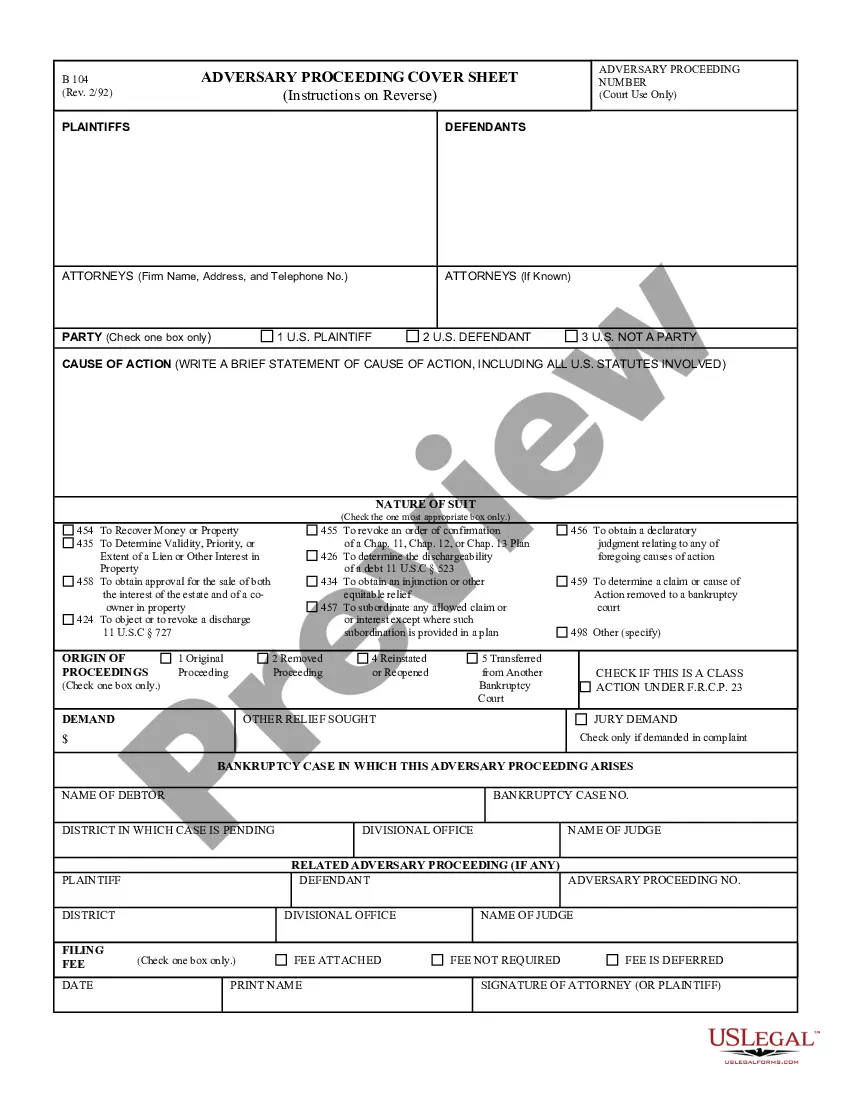
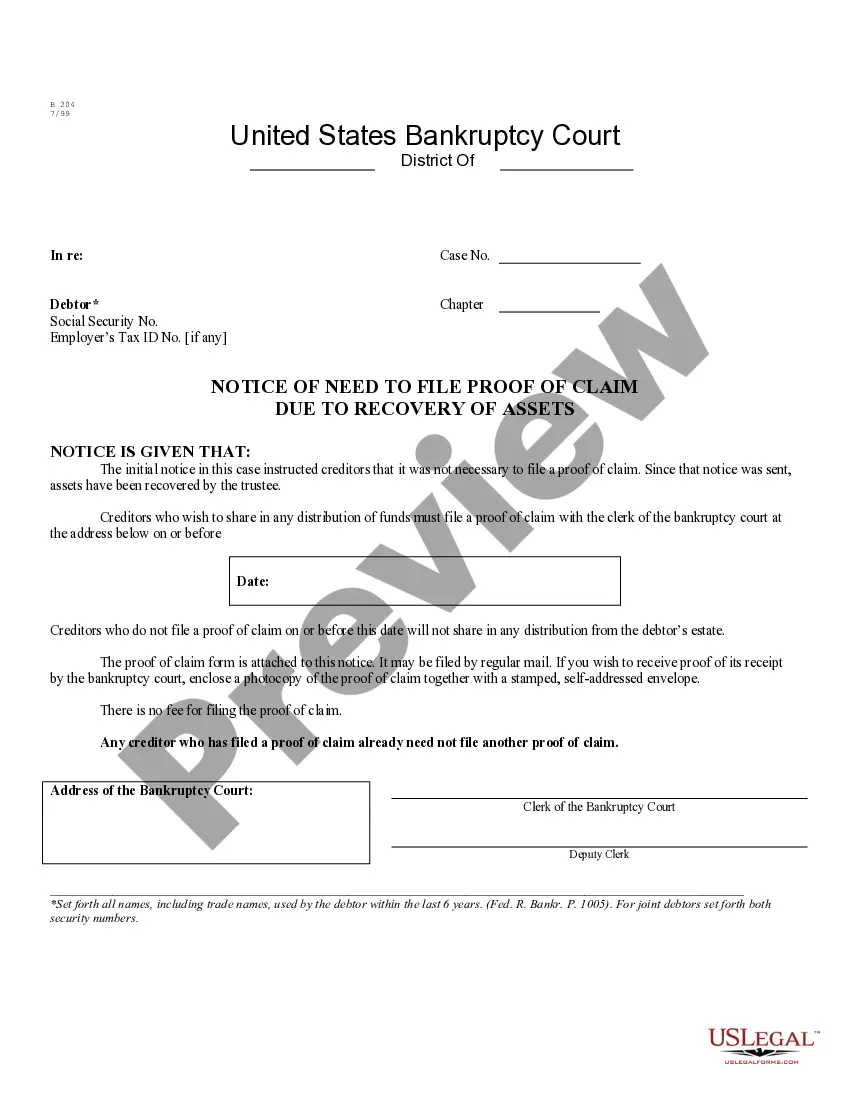
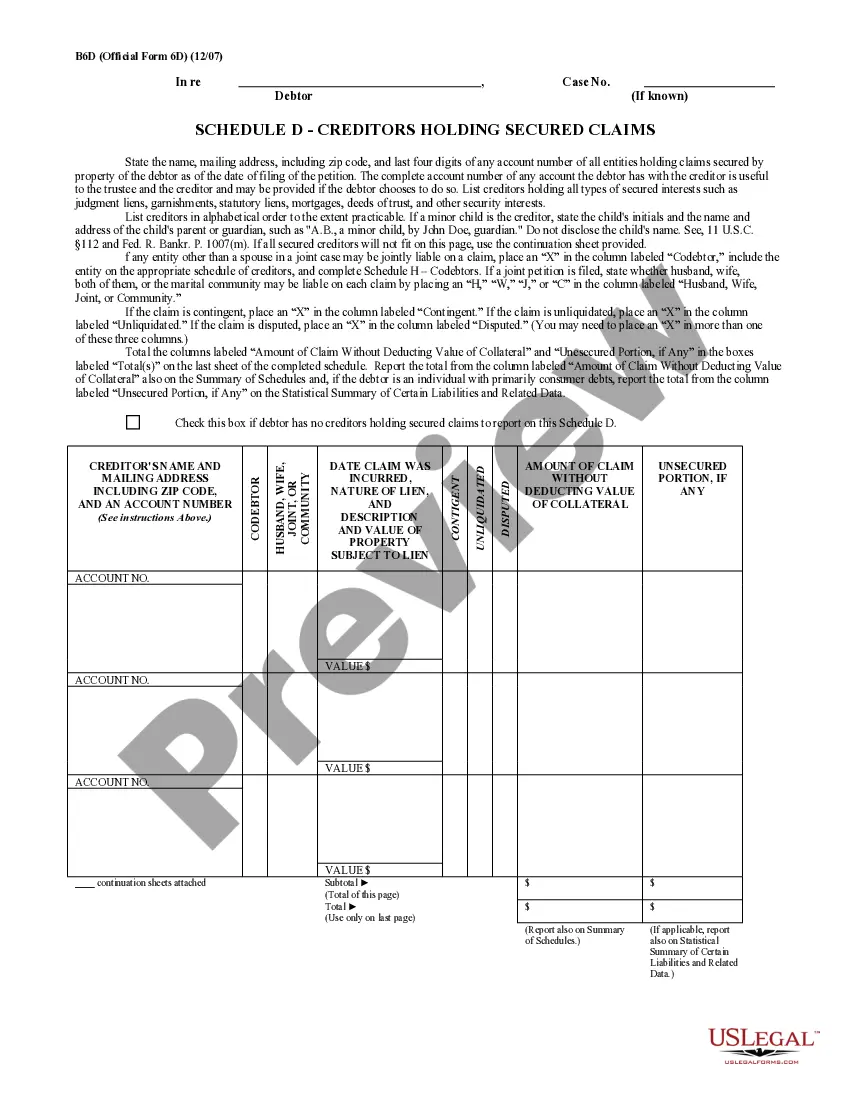
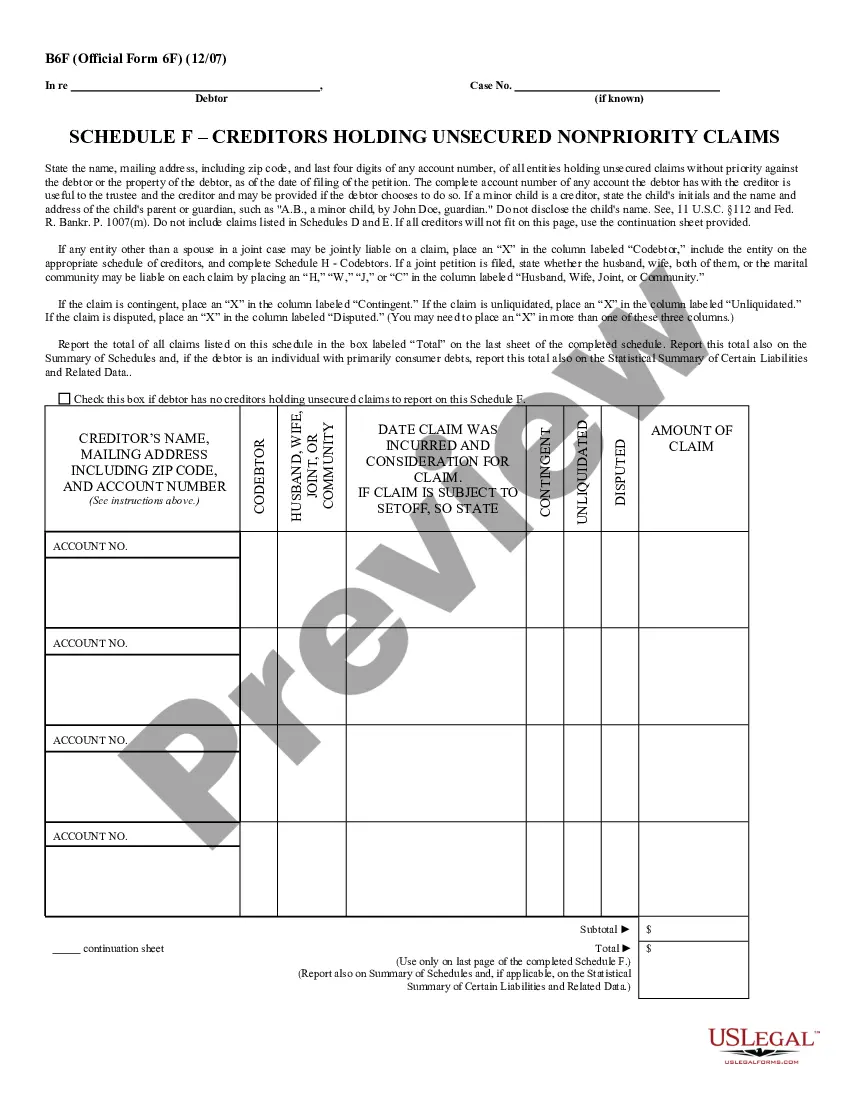




How to fill out List Of Creditors Holding 20 Largest Secured Claims - Not Needed For Chapter 7 Or 13 - Form 4 - Post 2005?
It’s well known that you cannot become a legal authority instantly, nor can you learn how to swiftly prepare Claims Chapter 13 Withdrawal without a professional background.
Drafting legal documents is a lengthy process that demands specific education and expertise. So why not entrust the creation of the Claims Chapter 13 Withdrawal to the experts.
With US Legal Forms, one of the most extensive legal template collections, you can discover everything from court documents to templates for office communication.
If you need any other form, begin your search anew.
Create a free account and choose a subscription plan to buy the template. Select Buy now. Once the transaction is finalized, you can obtain the Claims Chapter 13 Withdrawal, fill it out, print it, and send it or mail it to the specified individuals or organizations.
- We understand the significance of compliance and adherence to federal and local regulations.
- That’s why, on our platform, all forms are location-specific and current.
- Here’s how to get started on our platform and acquire the document you need in just minutes.
- Locate the form you require using the search bar at the top of the page.
- Preview it (if this option is available) and read the supporting description to see if Claims Chapter 13 Withdrawal is what you seek.
Form popularity
FAQ
This chapter of the Bankruptcy Code provides for adjustment of debts of an individual with regular income. Chapter 13 allows a debtor to keep property and pay debts over time, usually three to five years.
The addendum should set forth the pertinent background facts of the relationship between the debtor(s) and the creditor, and the manner in which the creditor believes that the claim arose.
Unlike other types of consumer bankruptcy, Chapter 11 bankruptcy does not strictly define what will happen to debts. Certain types of debts (such as student loans, unpaid child support, and unpaid taxes) are not dischargeable, so if these are part of the bankruptcy, the plan must include a way to pay those back.
The main difference between Chapter 11 and Chapter 13 is that a Chapter 13 bankruptcy requires that the debtor pay his or her debts within five years. On the other hand, Chapter 11 allows the filer to extend the five-year period unlike Chapter 13.
How to File for Chapter 13 Bankruptcy Make sure Chapter 13 is the right choice. ... Analyze your debt. ... Value your property. ... Gauge your income. ... Fill out the bankruptcy forms. ... Take the required pre-filing course. ... File your forms and pay a fee. ... Provide the trustee with documents proving your income and other assets.