Chapter 7 Of Bankruptcy Code
Description
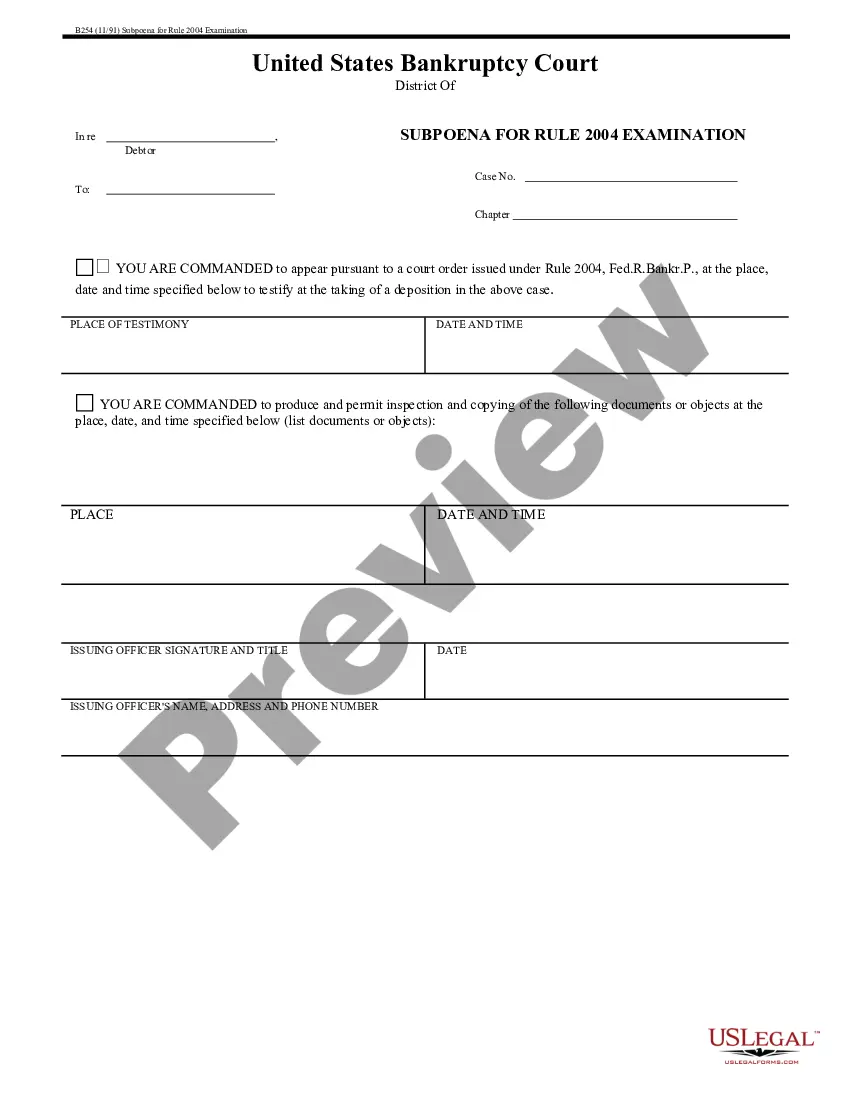
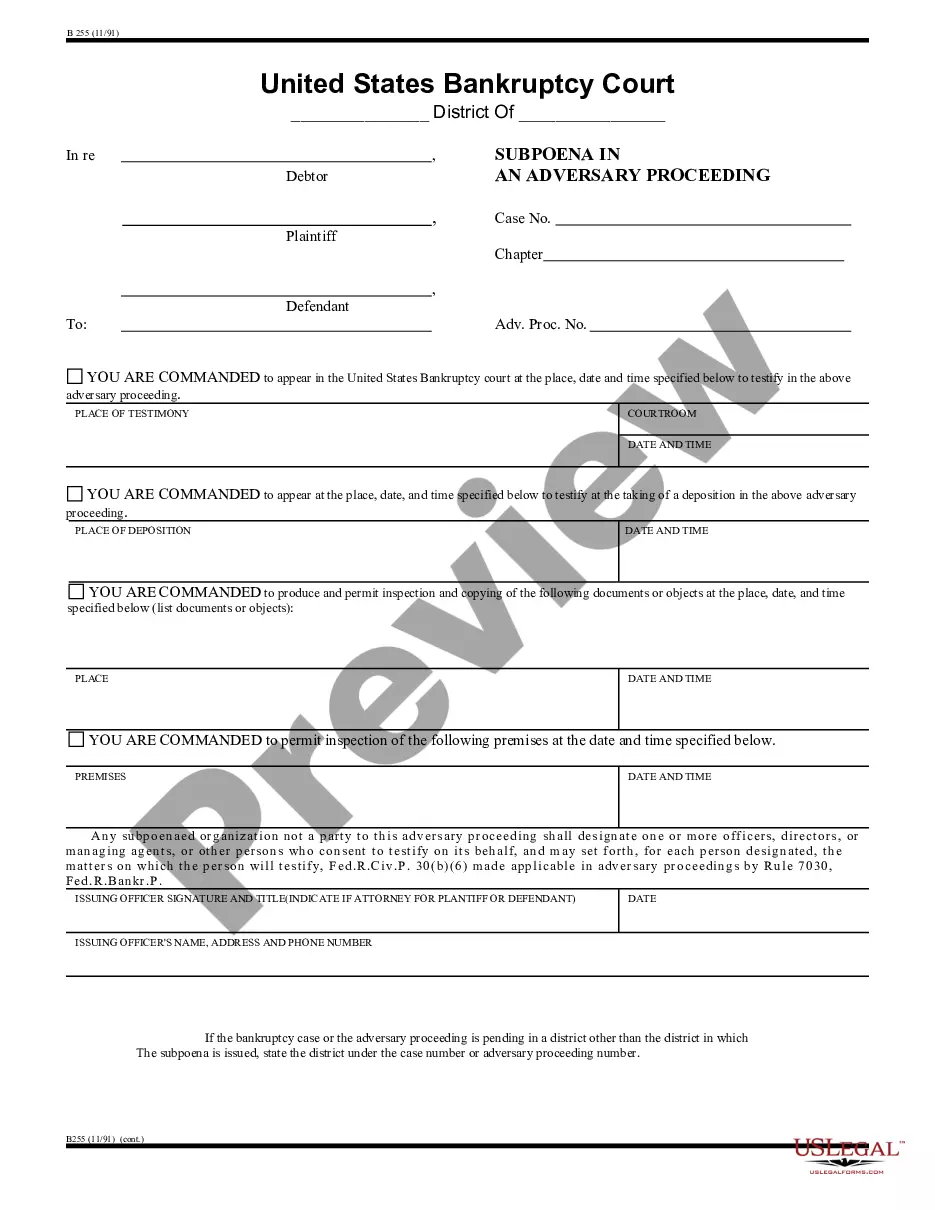



How to fill out Subpoena In A Case Under The Bankruptcy Code - B 256?
Creating legal documents from the ground up can occasionally be daunting.
Certain situations may require extensive investigation and significant financial commitment.
If you’re looking for a more straightforward and economical method to generate Chapter 7 of Bankruptcy Code or any other documentation without hassle, US Legal Forms is always within reach.
Our online repository of more than 85,000 current legal forms covers nearly all aspects of your financial, legal, and personal issues. With only a few clicks, you can swiftly obtain state- and county-compliant documents meticulously prepared for you by our legal professionals.
Review the form preview and descriptions to ensure you have located the document you need. Ensure the form you choose adheres to the rules and regulations of your state and county. Select the appropriate subscription plan to receive the Chapter 7 of Bankruptcy Code. Download the file. Then fill it out, certify, and print it. US Legal Forms boasts a flawless reputation and over 25 years of experience. Join us now and make document processing effortless and efficient!
- Utilize our platform whenever you require dependable services to easily locate and download the Chapter 7 of Bankruptcy Code.
- If you’re familiar with our services and have previously registered an account with us, simply Log In to your profile, choose the form, and download it or re-download it anytime later in the My documents section.
- Don’t possess an account? No problem. It only takes a few minutes to sign up and browse the collection.
- However, before directly proceeding with downloading Chapter 7 of Bankruptcy Code, consider these suggestions.
Form popularity
FAQ
Chapter 7 provides relief to debtors regardless of the amount of debts owed or whether a debtor is solvent or insolvent. A Chapter 7 Trustee is appointed to convert the debtor's assets into cash for distribution among creditors.
You will be able to get rid of your tax debts in Chapter 7 bankruptcy if you meet the following requirements: The taxes are income-based. Income taxes are the only kind of debt that Chapter 7 is able to discharge. The tax debt must be for federal or state income taxes or taxes on gross receipts.
Secured creditors generally get priority, while unsecured creditors are paid pro-rata on their claims. The intent of Chapter 7 is to give the debtor a ?fresh start? and for the creditors to recover as much as they otherwise would've been able to under non-bankruptcy law.
Chapter 7 of Title 11 U.S. Code is the bankruptcy code that governs the process of liquidation under the bankruptcy laws of the U.S. In contrast to bankruptcy under Chapter 11 and Chapter 13, which govern the process of reorganization of a debtor, Chapter 7 bankruptcy is the most common form of bankruptcy in the U.S.
Chapter 7 provides relief to debtors regardless of the amount of debts owed or whether a debtor is solvent or insolvent. A Chapter 7 Trustee is appointed to convert the debtor's assets into cash for distribution among creditors.