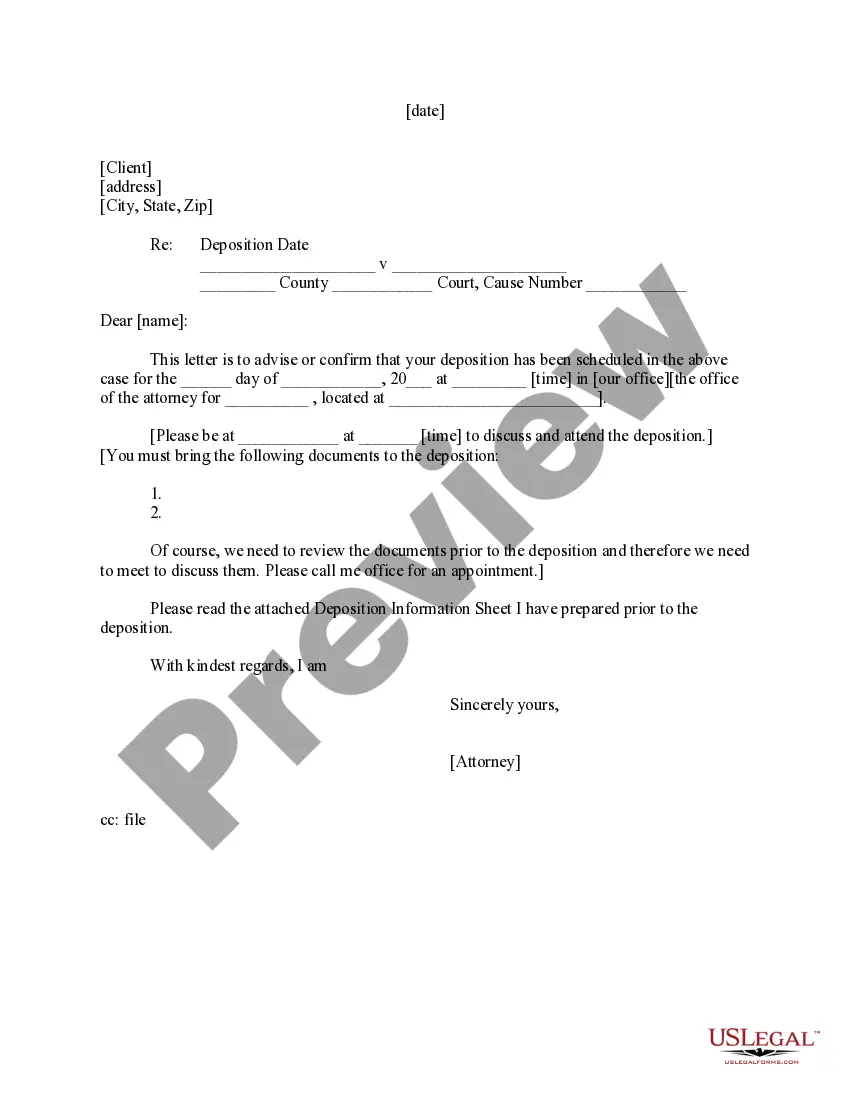
Deposition Instructions To Client
Description
Get your form ready online
Our built-in tools help you complete, sign, share, and store your documents in one place.
Make edits, fill in missing information, and update formatting in US Legal Forms—just like you would in MS Word.
Download a copy, print it, send it by email, or mail it via USPS—whatever works best for your next step.
Sign and collect signatures with our SignNow integration. Send to multiple recipients, set reminders, and more. Go Premium to unlock E-Sign.
If this form requires notarization, complete it online through a secure video call—no need to meet a notary in person or wait for an appointment.
We protect your documents and personal data by following strict security and privacy standards.

Make edits, fill in missing information, and update formatting in US Legal Forms—just like you would in MS Word.

Download a copy, print it, send it by email, or mail it via USPS—whatever works best for your next step.

Sign and collect signatures with our SignNow integration. Send to multiple recipients, set reminders, and more. Go Premium to unlock E-Sign.

If this form requires notarization, complete it online through a secure video call—no need to meet a notary in person or wait for an appointment.

We protect your documents and personal data by following strict security and privacy standards.
Looking for another form?
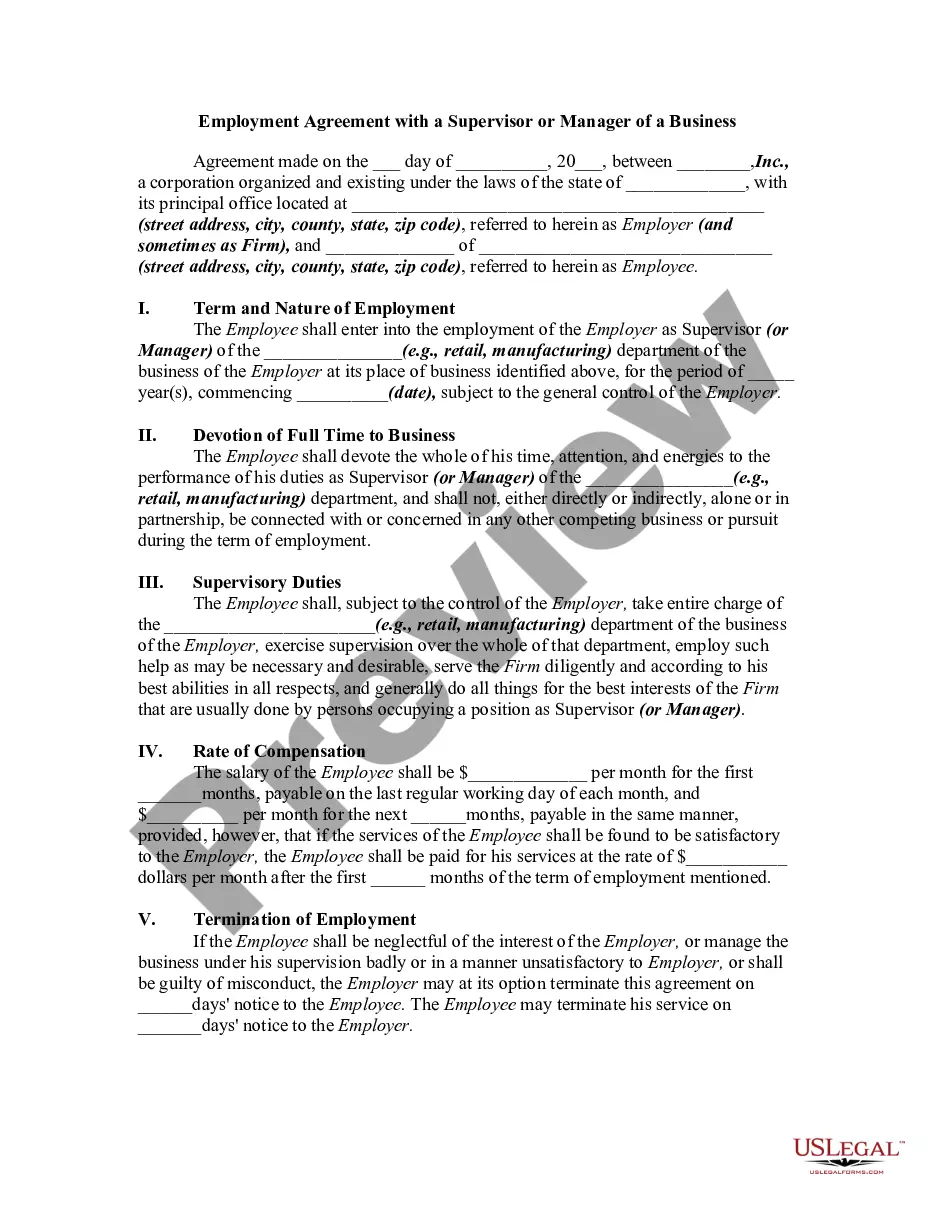
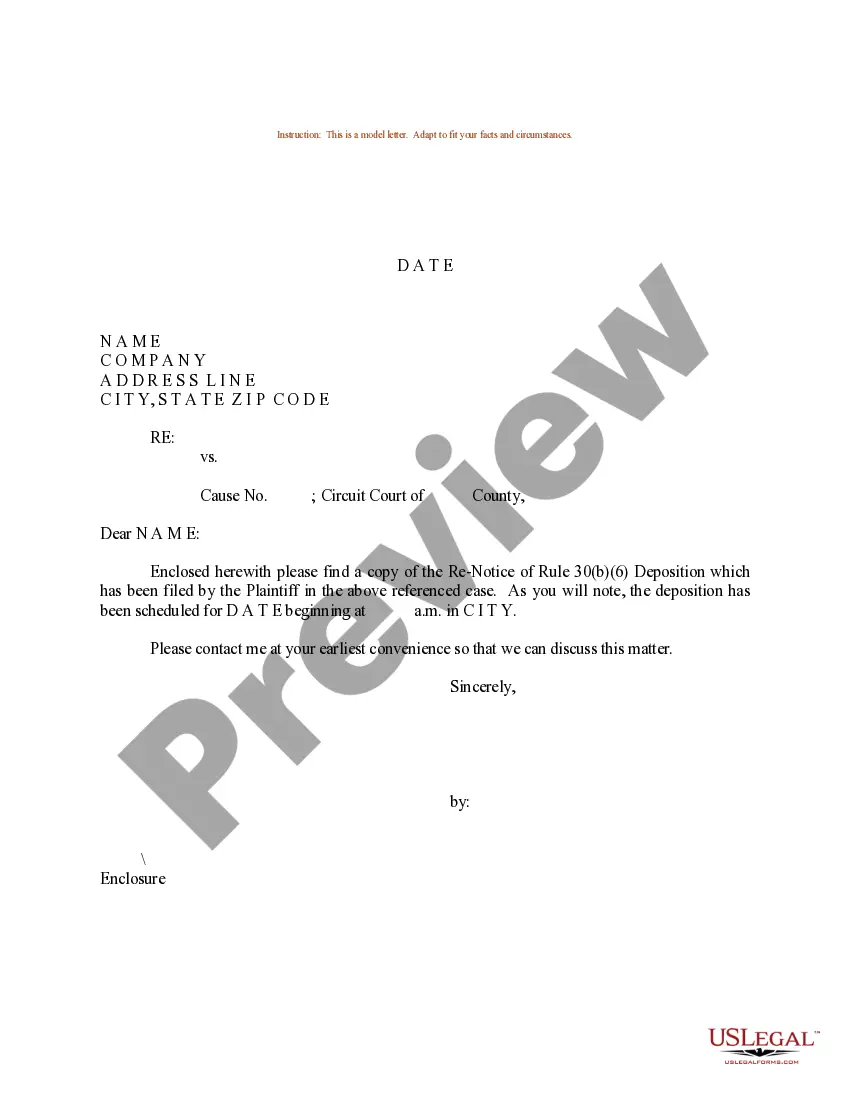
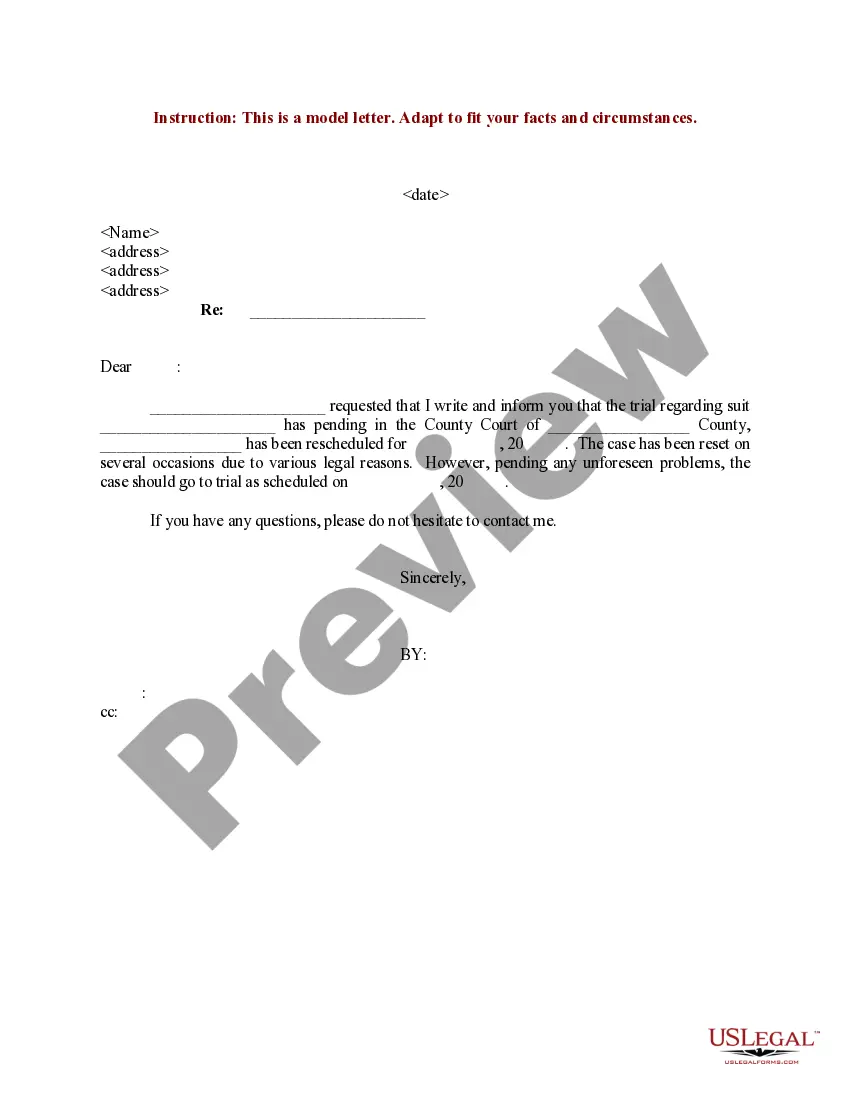
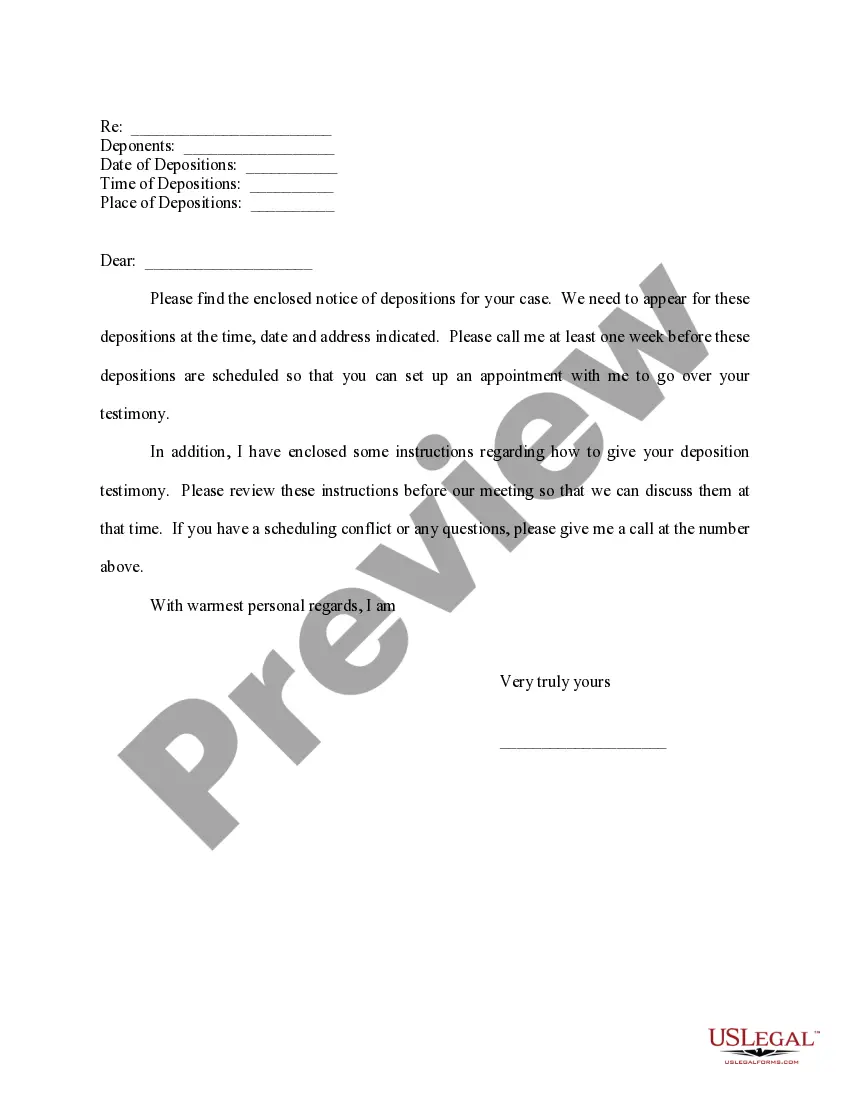
How to fill out Letter To Client - Deposition Of Client Scheduled?
Whether for corporate objectives or personal affairs, everyone must confront legal circumstances at some point in their lifetime. Completing legal documents necessitates precise attention, starting from selecting the appropriate form template.
For instance, if you choose an incorrect version of Deposition Instructions To Client, it will be rejected upon submission. Thus, it is essential to obtain a trustworthy source of legal forms such as US Legal Forms.
With a comprehensive US Legal Forms catalog available, you do not need to waste time searching for the suitable template online. Use the library’s user-friendly navigation to find the right template for any situation.
- Acquire the template you require by using the search field or catalog navigation.
- Review the form’s description to ensure it fits your circumstances, state, and county.
- Select the form’s preview to inspect it.
- If it is not the correct document, return to the search function to find the Deposition Instructions To Client example you need.
- Download the file if it aligns with your requirements.
- If you already have a US Legal Forms account, click Log in to access previously saved templates in My documents.
- If you do not possess an account yet, you can download the form by clicking Buy now.
- Select the relevant pricing option.
- Complete the account registration form.
- Choose your payment method: you can use a credit card or PayPal account.
- Select the file format you prefer and download the Deposition Instructions To Client.
- Once saved, you can fill out the form using editing software or print it and complete it manually.
Form popularity
FAQ
What Should You Not Say During a Deposition? Guessing or Speculating on Things. ... Saying Things Out of Anger. ... Rambling. ... Speaking in Absolutes. ... Stick to the Facts. ... Take Your Time When Answering Questions. ... Use ?Yes? or ?No? Answers Whenever Possible. ... Get Through Each Question on Its Own.
At this point, the court reporter will administer an oath to the deponent. After that, you can dig into your outline with the standard opening question, "Please state your name for the record," or, if you want to sound like an old pro, "Tell us your name, please."
Guessing or Speculating on Things It is in your best interest to stick to the facts at hand. If you are unsure about the answer to a question, you can always respond, ?I do not know,? or, ?I cannot answer that.? Both of these responses are acceptable and help you avoid guessing or speculating on things.
The key to effectively preparing and presenting a cli- ent for a deposition is to know the case. You must review the pleadings, the discovery responses of all parties, all records relevant to the claim or defense the deponent is expected to testify about, and the relevant case law.
?Once the deposition has begun, the preparation period is over.??28 Counsel should, therefore, refrain from speaking with his or her client during the deposition about the testimony, unless the attorney is prepared for the disclosure of that communication.