Examples Of Goals For Work Performance
Description
Get your form ready online
Our built-in tools help you complete, sign, share, and store your documents in one place.
Make edits, fill in missing information, and update formatting in US Legal Forms—just like you would in MS Word.
Download a copy, print it, send it by email, or mail it via USPS—whatever works best for your next step.
Sign and collect signatures with our SignNow integration. Send to multiple recipients, set reminders, and more. Go Premium to unlock E-Sign.
If this form requires notarization, complete it online through a secure video call—no need to meet a notary in person or wait for an appointment.
We protect your documents and personal data by following strict security and privacy standards.

Make edits, fill in missing information, and update formatting in US Legal Forms—just like you would in MS Word.

Download a copy, print it, send it by email, or mail it via USPS—whatever works best for your next step.

Sign and collect signatures with our SignNow integration. Send to multiple recipients, set reminders, and more. Go Premium to unlock E-Sign.

If this form requires notarization, complete it online through a secure video call—no need to meet a notary in person or wait for an appointment.

We protect your documents and personal data by following strict security and privacy standards.
Looking for another form?




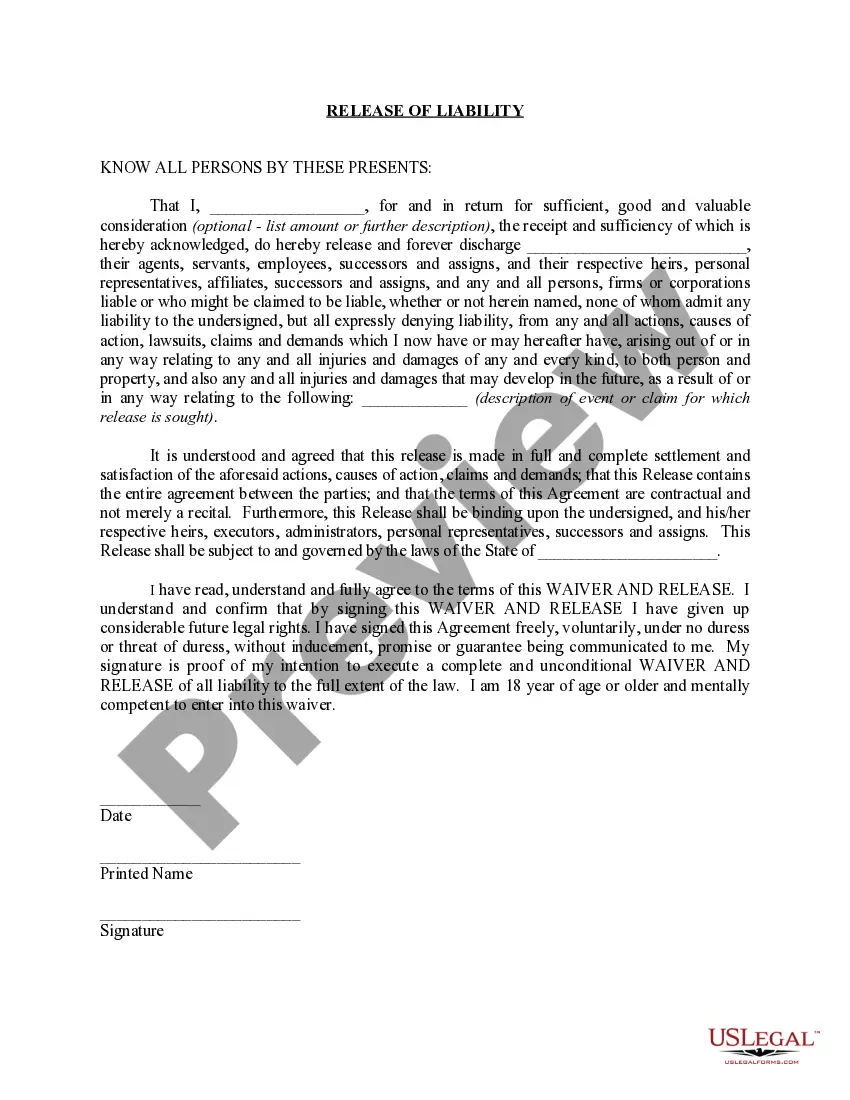

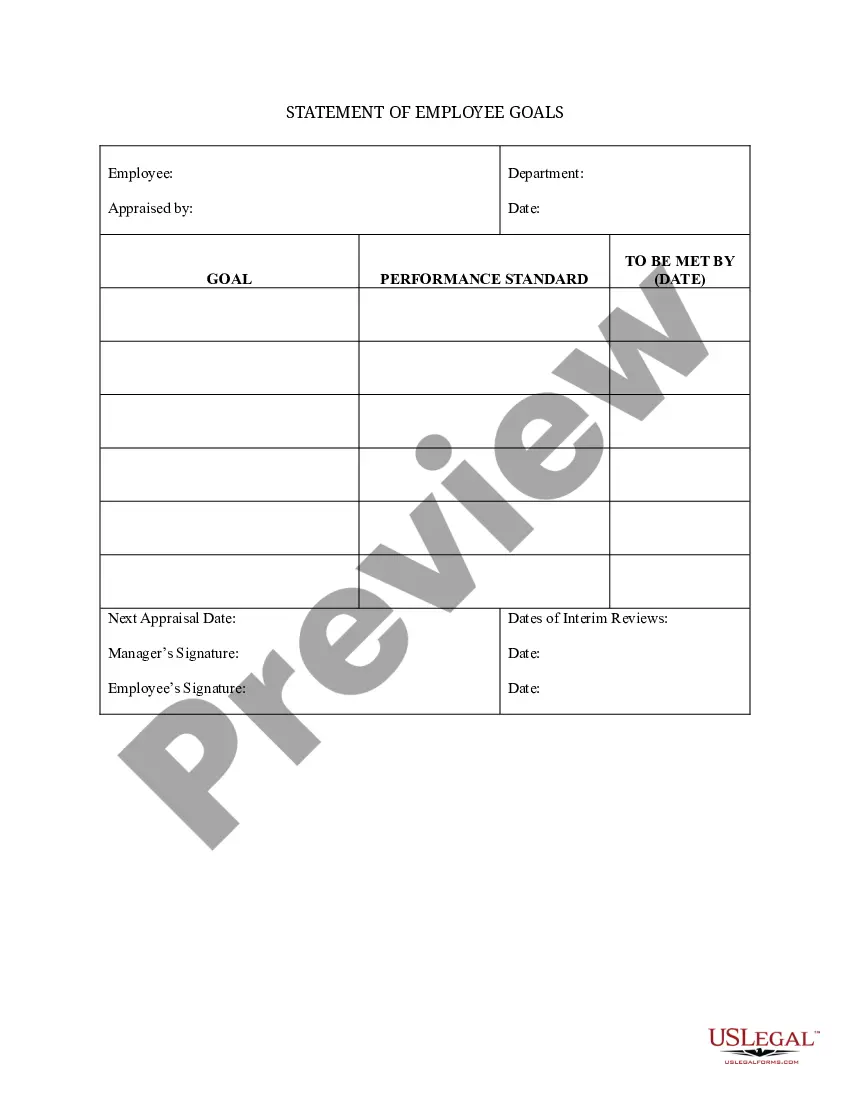
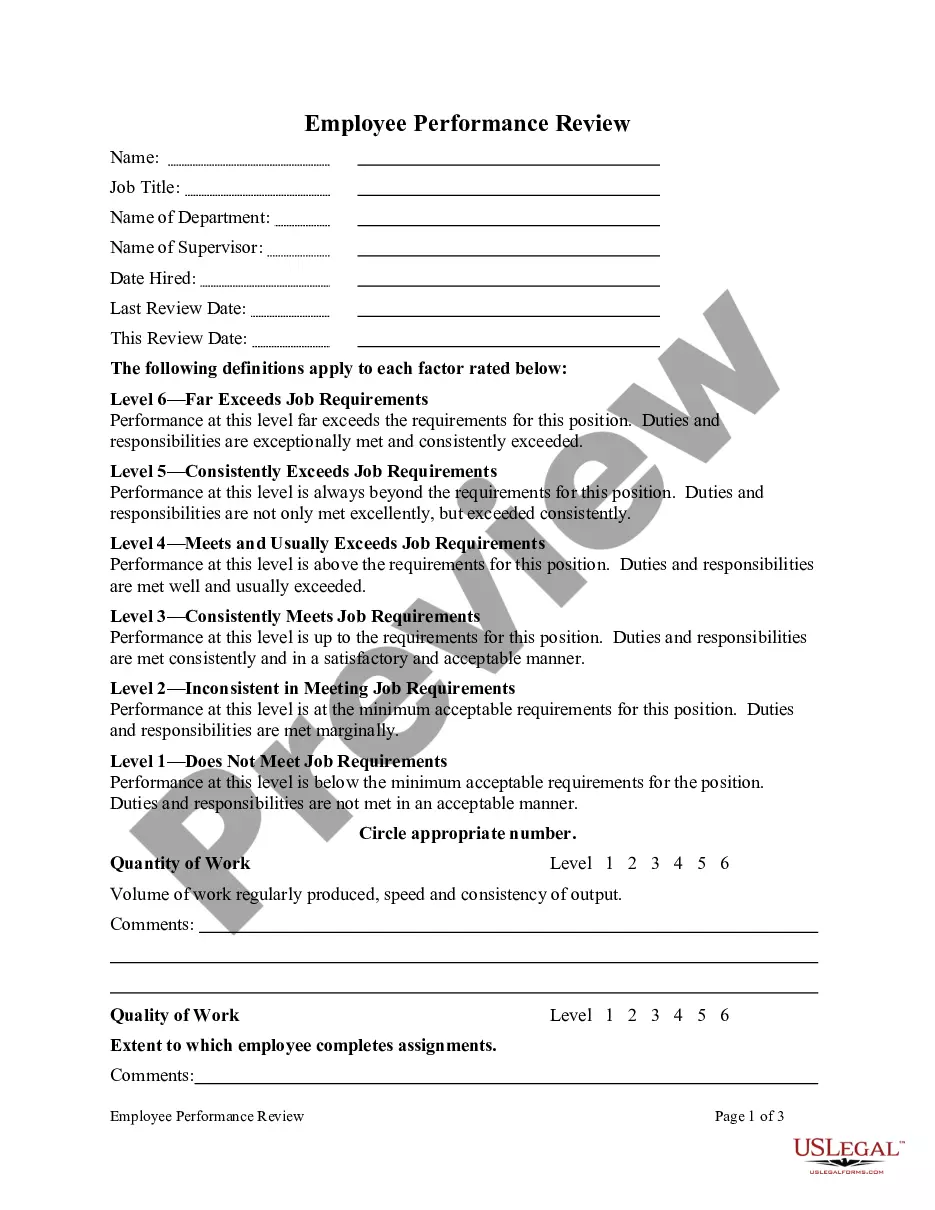
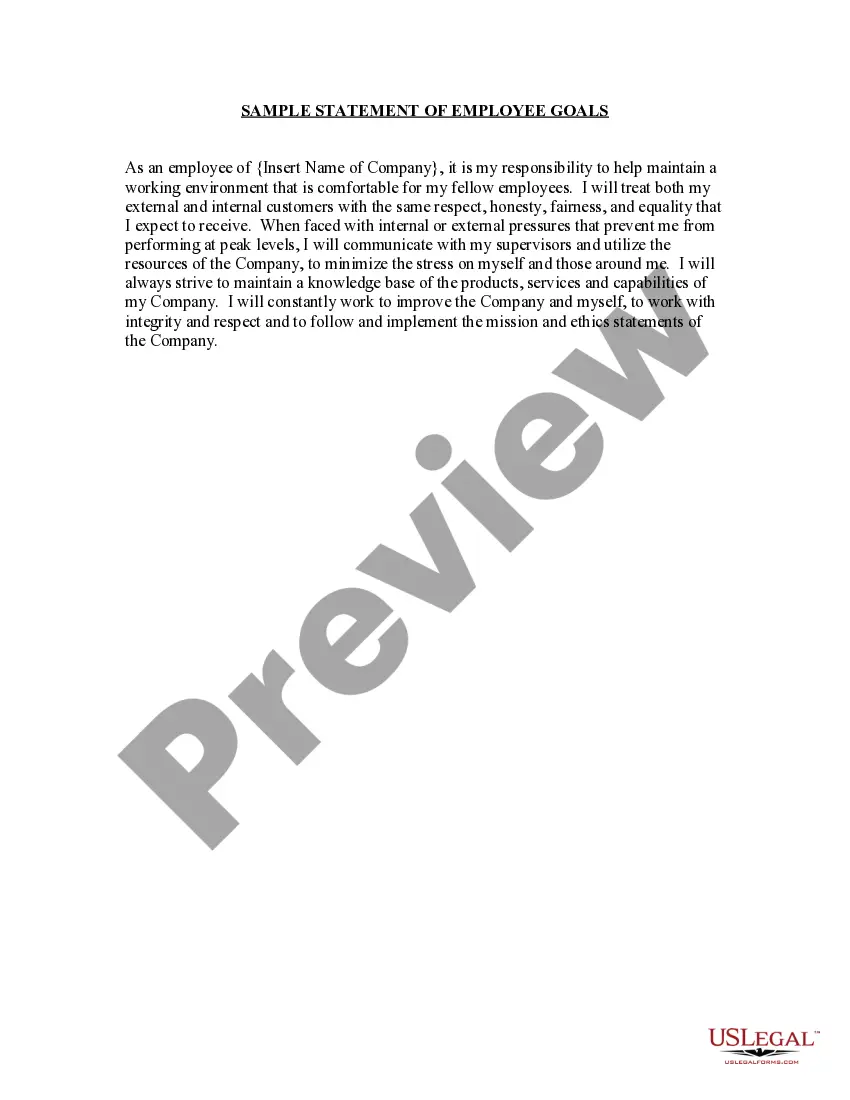
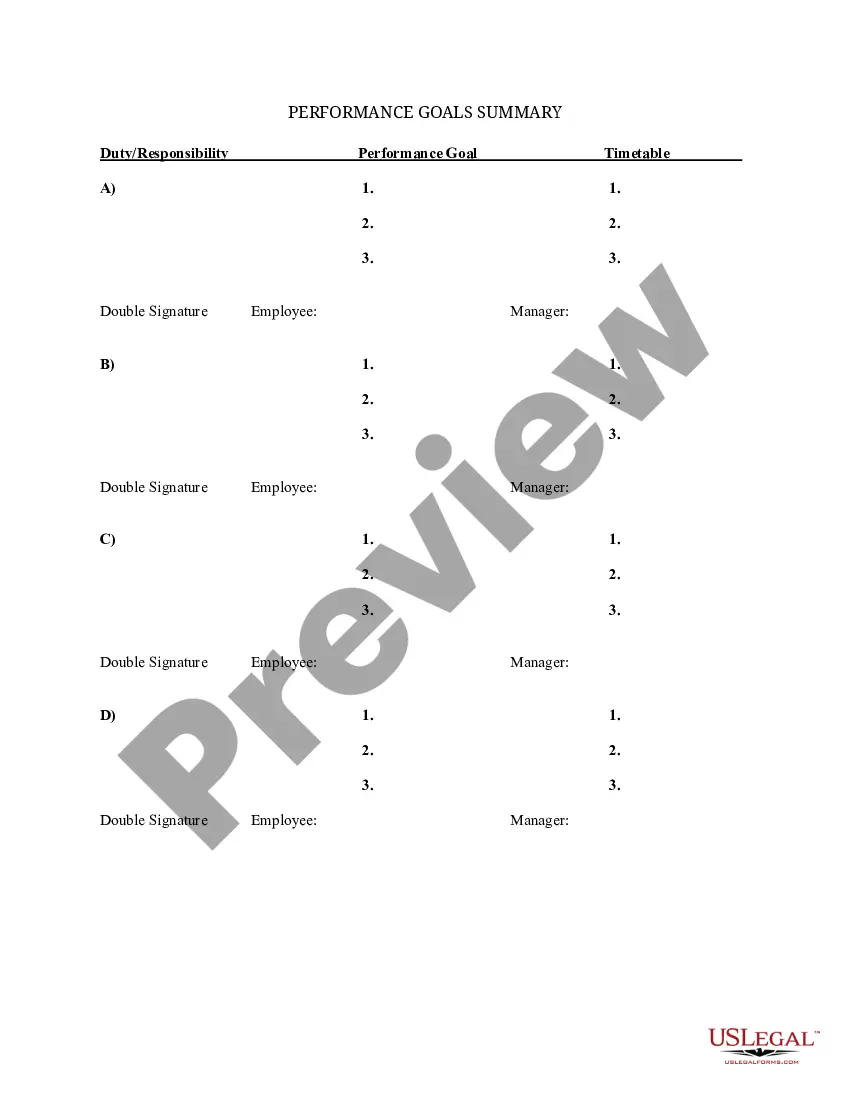
How to fill out Statement Of Employee Goals?
- Begin by logging in to your existing US Legal Forms account. If you're a new user, you'll need to create an account to get started.
- Browse through the Preview mode to check the form description. Ensure it meets your specific needs and complies with local jurisdiction requirements.
- If adjustments are necessary, utilize the Search tab to locate a different form that best suits your purpose.
- Proceed by selecting the desired form and clicking on the 'Buy Now' button. Choose a subscription plan that works for you.
- Complete your purchase by entering your payment information through credit card or PayPal.
- Finally, download the form onto your device for immediate access or future use by visiting the 'My Forms' section of your profile.
In conclusion, using US Legal Forms grants you access to a vast repository of legal documents that can significantly improve your work performance. By following these steps, you can easily obtain the forms you need.
Ready to enhance your productivity? Explore US Legal Forms today for comprehensive legal documentation solutions!
Form popularity
FAQ
Examples of goals for work can range widely depending on the role and objectives. Common examples include enhancing team collaboration, increasing productivity by a specific percentage, or completing training to learn a new skill. By specifying these targets, teams can work towards collective success while also measuring individual contributions.
A SMART goal for an employee is a clearly defined objective that is specific, measurable, achievable, relevant, and time-bound. For instance, an employee might set a goal to improve customer satisfaction ratings by 20% over the next six months. This type of structure not only sets a clear expectation but also serves as a practical example of goals for work performance that can motivate and engage employees.
Writing good goals for work requires clarity and focus. Start by aligning objectives with both team and company priorities. Use clear and direct language, and ensure that each goal contains relevant metrics to track progress. For enhanced effectiveness, consider using examples of goals for work performance to guide you in framing achievable and meaningful targets.
To create effective performance goals examples, start by identifying key areas of improvement or focus for each role. Consider what metrics matter most, such as productivity, quality of work, or team collaboration. Next, formulate specific, actionable goals that are easily measurable. This approach helps to ensure that your examples of goals for work performance resonate with employees and provide clear direction.
To write effective performance goals, start by identifying what you want to achieve, focusing on measurable outcomes. Use the SMART criteria: specific, measurable, achievable, relevant, and time-bound. Think about examples of goals for work performance that fit your role and enhance your skills. By clearly defining your goals, you can track your progress and stay motivated.
Performance objectives serve as a foundation for individual and team success in the workplace. Examples of goals for work performance could include completing training sessions to improve employee skills, achieving set sales targets, maintaining a project timeline, improving communication among team members, and enhancing task efficiency through better time management practices. By setting clear performance objectives, organizations can foster growth and encourage a results-driven culture.
Performance goals at work should focus on measurable achievements that contribute to organizational success. Examples of goals for work performance include reducing operational costs by 10% within six months, increasing team productivity by implementing new software, or enhancing quality control to achieve fewer defects. These performance goals not only motivate employees but also align individual efforts with the company's vision.
Setting SMART goals is an effective way to enhance work performance. Examples of goals for work performance include increasing sales by 20% over the next quarter, completing a project ahead of schedule, improving customer satisfaction ratings by 15%, developing a new skill through a training program, and fostering team collaboration to launch a new product within a defined timeframe. Each of these goals meets specific criteria that drive accountability and measurable results.