Employee Goals With Customer
Description
Get your form ready online
Our built-in tools help you complete, sign, share, and store your documents in one place.
Make edits, fill in missing information, and update formatting in US Legal Forms—just like you would in MS Word.
Download a copy, print it, send it by email, or mail it via USPS—whatever works best for your next step.
Sign and collect signatures with our SignNow integration. Send to multiple recipients, set reminders, and more. Go Premium to unlock E-Sign.
If this form requires notarization, complete it online through a secure video call—no need to meet a notary in person or wait for an appointment.
We protect your documents and personal data by following strict security and privacy standards.

Make edits, fill in missing information, and update formatting in US Legal Forms—just like you would in MS Word.

Download a copy, print it, send it by email, or mail it via USPS—whatever works best for your next step.

Sign and collect signatures with our SignNow integration. Send to multiple recipients, set reminders, and more. Go Premium to unlock E-Sign.

If this form requires notarization, complete it online through a secure video call—no need to meet a notary in person or wait for an appointment.

We protect your documents and personal data by following strict security and privacy standards.
Looking for another form?







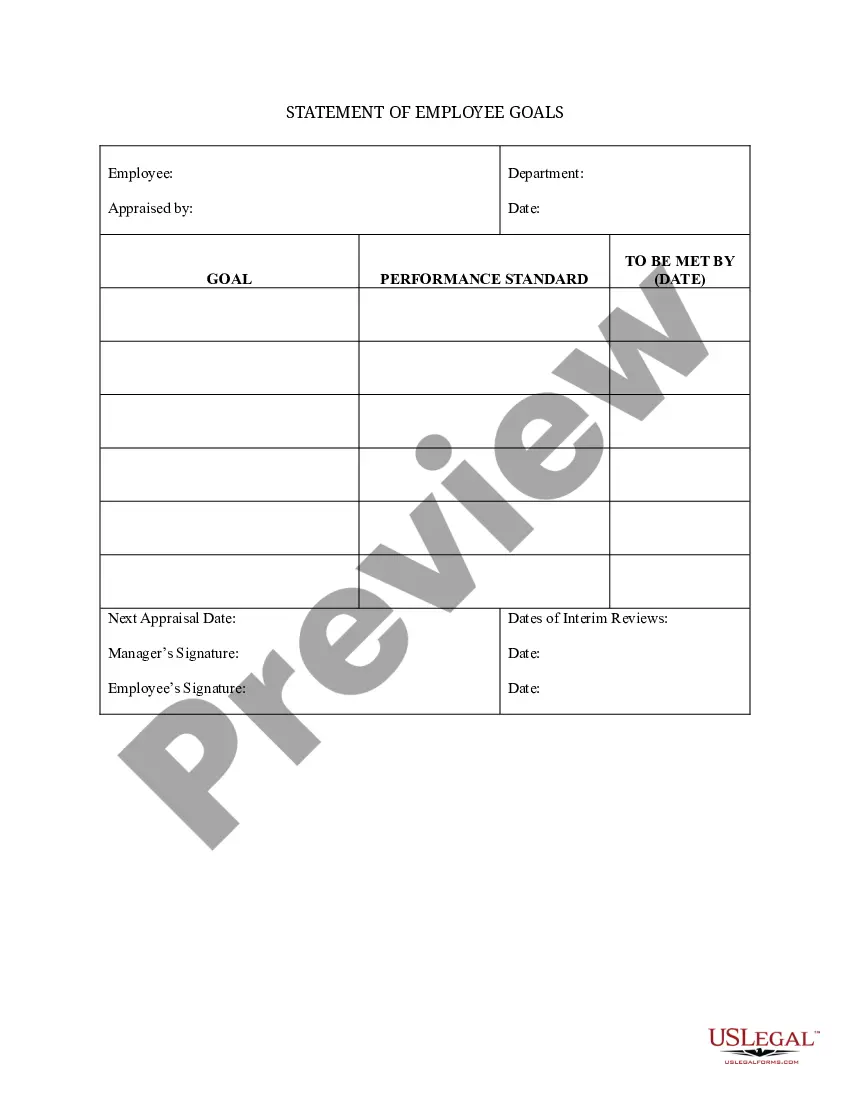
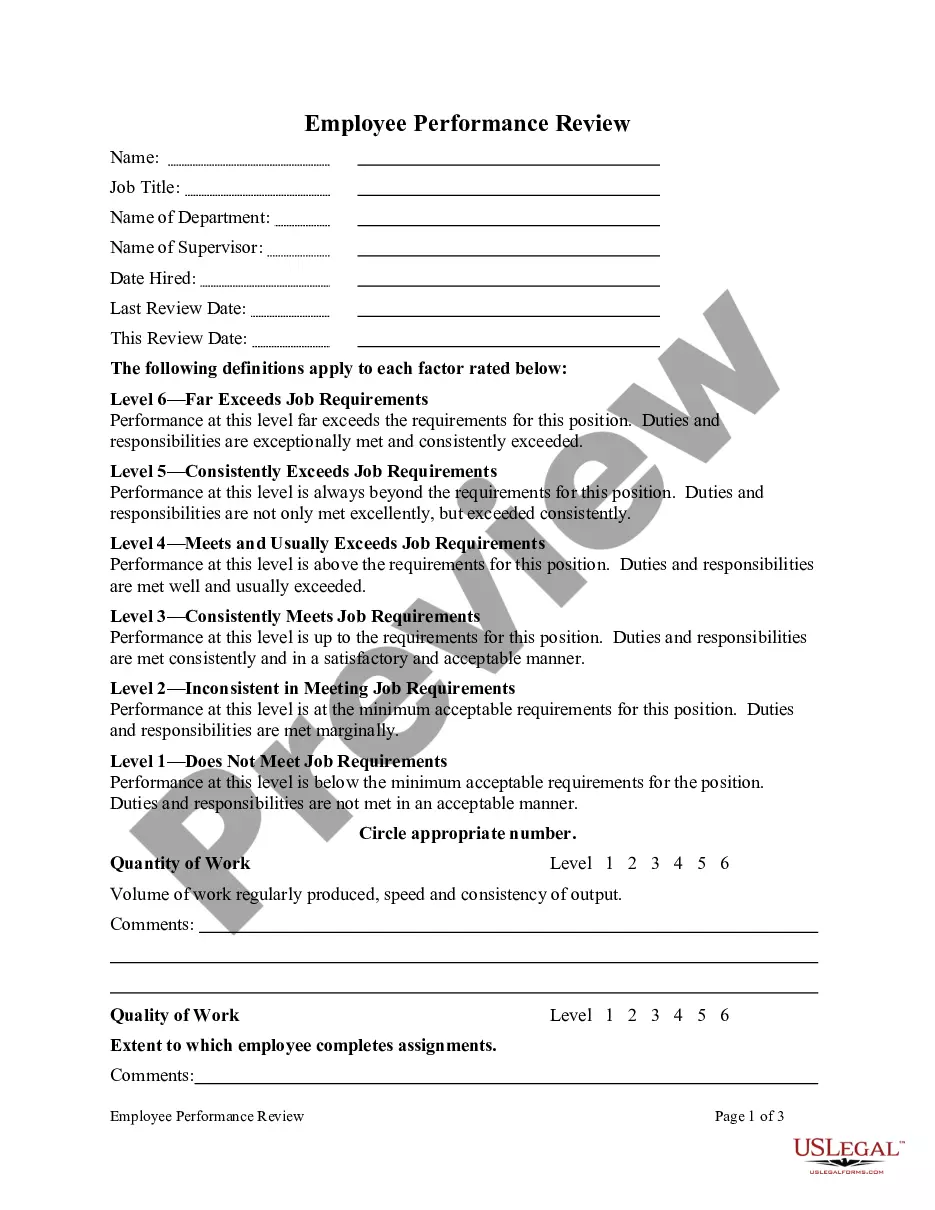
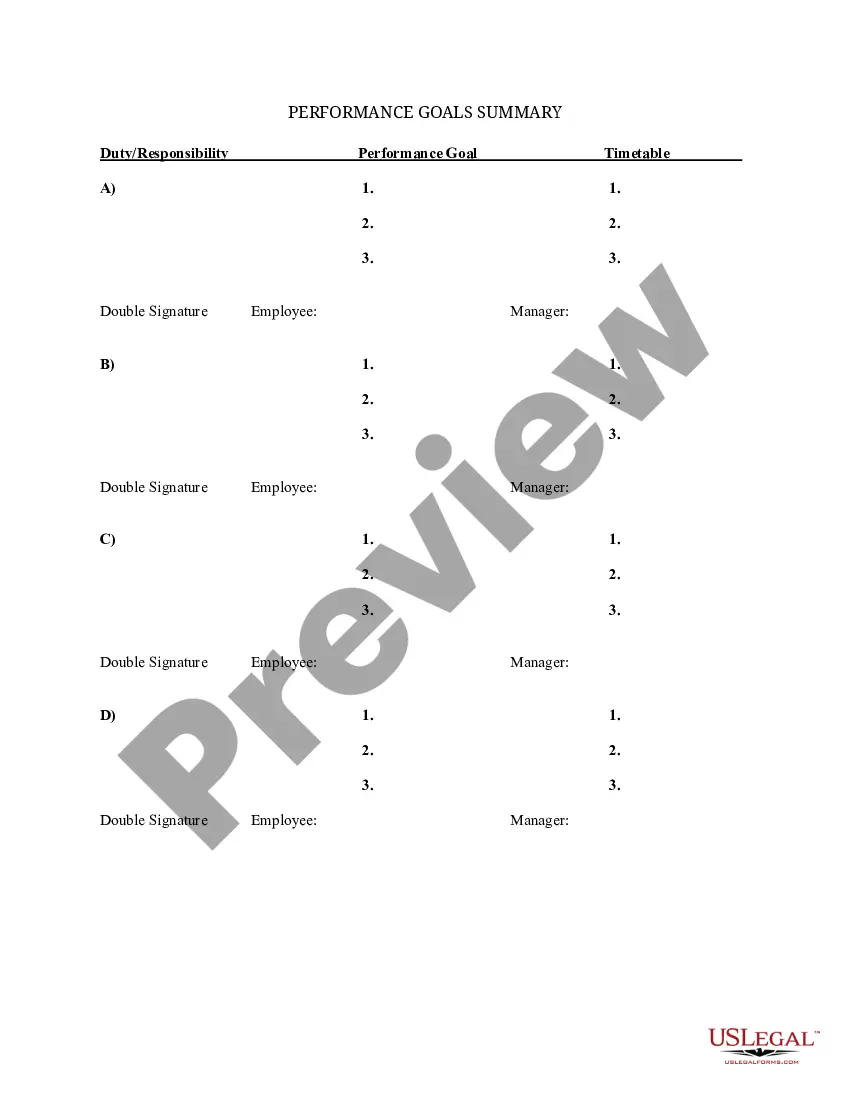
How to fill out Statement Of Employee Goals?
- Return to your US Legal Forms account by logging in and ensure your subscription is active. If it requires renewal, follow your payment plan to update.
- Review the form preview and descriptions to ensure they fit your specific legal needs and local regulations.
- If necessary, use the search function to locate a more suitable form. Don't proceed until you've found the right document.
- Select the desired form and click the Buy Now button. Choose your preferred subscription plan and create an account for further access.
- Complete your purchase by entering your credit card information or using PayPal for payment.
- Download the finished document to your device. You can also access it anytime through the My Forms section of your account.
By following these steps, you’ll efficiently navigate the US Legal Forms platform to find the resources you need. This allows both employees and customers to align their goals and improve communication.
Start today and leverage the benefits of US Legal Forms to empower your team and foster successful customer relationships!
Form popularity
FAQ
To develop effective employee goals with customer focus, start by aligning individual objectives with the broader company vision. Involve employees in the goal-setting process to ensure they feel ownership, which leads to better engagement. Utilize tools available on the US Legal Forms platform to provide clear guidelines and ensure that all employee goals with customer relevance are measurable, attainable, and tailored to specific roles. This collaborative approach fosters accountability and drives success.
The seven skills of good customer service include effective communication, empathy, problem-solving, adaptability, patience, product knowledge, and a positive attitude. These skills empower employees to meet customer needs and enhance their overall experience. By setting employee goals with customer-focused training, you can ensure that your team excels in these areas. Investing in these skills can create a significant competitive advantage for your business.
A good goal for customer service is to create a seamless and responsive experience that delights your customers. This can involve training employees to resolve issues on the first contact and thoroughly understanding customer needs. Setting employee goals with customer awareness helps your team prioritize customer-focused actions. Over time, this can lead to improved relationships and loyalty, benefiting the entire organization.
Five examples of SMART goals for work include increasing sales by 15% within six months, reducing customer complaints by 20% in the next quarter, improving employee training completion rates by 30%, enhancing product knowledge among staff, and launching a customer feedback program within two months. These goals align team efforts with business objectives while keeping employee goals with customer satisfaction at the forefront. Tracking progress on these goals can drive results.
A SMART goal for customer satisfaction is Specific, Measurable, Achievable, Relevant, and Time-bound. For example, a good goal could be to increase customer satisfaction scores by 10% over the next quarter by implementing feedback from customer surveys. By aligning your employee goals with customer expectations, you create a clear path for success. This approach not only boosts morale but also enhances customer loyalty.
Good goals for customer service focus on enhancing the experience of your customers. These could include improving response times, ensuring effective communication, and achieving higher satisfaction scores. Setting specific employee goals with customer feedback can help you understand areas for improvement. Remember, a well-defined goal is a powerful motivator for your team.
Five SMART goals examples for employees might include increasing customer feedback scores by 20% within three months, completing project deadlines consistently, or achieving a 15% sales growth in the next quarter. Each of these goals should promote accountability and contribute to overall company success. When framing these employee goals with customer outcomes, always highlight how they lead to improved service and satisfaction.
Writing ten performance goals examples for work can start with identifying key areas that align with both business objectives and employee roles. These could include improving customer response time, enhancing team collaboration, or increasing sales by a certain percentage. Focus on practical employee goals with customer engagement in mind, ensuring each goal drives performance and customer satisfaction.
When setting employee performance goals, ensure they are specific, measurable, attainable, relevant, and time-bound (SMART). This structure helps employees understand their targets and enhances focus. Consider incorporating customer-oriented metrics to create employee goals with customer impact, which will foster an environment of accountability and improvement.
To set effective performance goals for employees, begin by aligning them with your organization's objectives. Clearly define what success looks like and involve employees in the goal-setting process to increase buy-in. Remember, employee goals with customer satisfaction are crucial, as they help enhance team performance and service quality.